In a hurry? Want to learn the camera, not its philosophy?
Jump to Lesson 3: Using Your Camera’s Settings or play with the Camera Simulator. This lesson is about how to see before you shoot. Come back when you want to slow down.
Discovering Deeper Ways of Seeing and Thinking About the World
Hello and welcome to your first lesson!
Before we start playing with our cameras, you first need to learn to experience reality a little differently. In our fast-paced world, we often forget about the importance of deep, rich experiences. We overlook the details around us. As a photographer, you must practice slowing down and becoming significantly more aware of the world and the elements you want to capture.
This lesson is not about camera settings or technical skills. Those will come in later lessons. This lesson is about the most fundamental skill in photography: learning to see. Every great photographer, regardless of their genre or equipment, shares this ability to notice what others overlook. It is a skill you can develop, and it starts right now.
Seeing Beyond the Surface
For instance, many would glance at the picture of a portrait and simply come to a conclusion about it being “attractive” or “unattractive.” However, a portrait’s main purpose is to speak about the person in the frame. It is about facial expression, posture, the look in the eyes, the texture of the skin, the wrinkles in the forehead, the attire of the model, and any other features which might provide a glimpse into the character of the individual.
The truth is that most of us want to see in photography and art what we would like to see in reality. Think about this concept for a minute. What does the art you enjoy say about the type of person you are?
Let’s use an example. When the great painter Peter Paul Rubens painted his little boy, he was undoubtedly proud of his son’s charm. He tried to capture his little boy in all his glory. The result looks as follows:

Now take a look at this sketch:

Your initial reaction may have been “old,” “ugly,” or “wrinkly,” but this sketch, by the German artist Albrecht Durer, was created with as much love as Rubens’ painting. The subject is Durer’s mother. His goal was to freeze her in time, capturing her true essence without making her appear younger or dressed up. Now that you know this, take another look at the sketch.
This is the first lesson in seeing: context changes everything. The same image can appear ugly or beautiful depending on what the viewer knows and feels. As a photographer, you control that context through your choices of framing, lighting, angle, and moment. You have the power to help others see what you see.
The Photographer’s Mindset
The difference between a photographer and a non-photographer is not the camera. It is the way they look at the world. Non-photographers see a cup of coffee. A photographer sees the steam catching a shaft of morning light, the curve of the handle creating a shape, the dark liquid reflecting the window above it.
Developing this mindset takes practice and intentionality. Here are the habits that will transform how you see:
- Slow down. Speed is the enemy of observation. When you rush through a space, you see nothing. When you pause and look carefully, details emerge: patterns, textures, light, reflections, moments.
- Look at light, not just objects. Notice where the light is coming from, how it falls across surfaces, where it creates shadows, and how it changes the color and mood of a scene. Light is the raw material of photography.
- Notice relationships. How do objects relate to each other in space? How do people interact with their environment? How does a splash of color interact with a neutral background? Photography is about relationships between elements, not just the elements themselves.
- Challenge your assumptions. We label things quickly: “boring,” “ugly,” “ordinary.” These labels stop us from looking more closely. The most powerful photographs often come from subjects that everyone else has dismissed as uninteresting.
Re-Examining a Plant
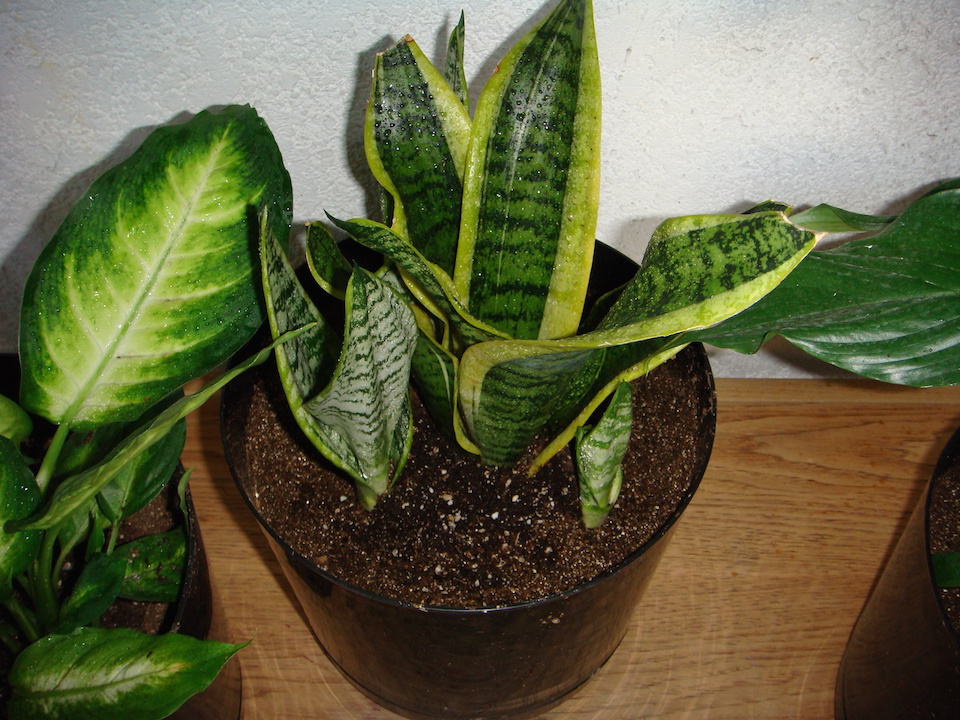
For your first exercise, find a portable living plant in or around your home. This exercise will test your dedication to self-education. While you may be tempted to skip it, completing these exercises will significantly help you improve as a photographer.
Now, explore the plant with an open mind. Get really close and notice colors, shapes, textures, and details that you might not have seen before. Look at the earth the plant is potted in, examine a leaf, and notice its irregularities.
You will soon realize you have likely never been this close to a plant before. The plant is more complex than you initially thought. Now think about how this concept applies to the broader world. Really get to know this plant and spend five minutes with it. Consider its growth, its irregularities, and its role in your environment.
Once you have thoroughly examined the plant, think about how this plant would look to a camera. How would changing your angle, zooming in, or altering the light affect the photo?
The point of this exercise is to show that there is beauty in even the most mundane things. As a photographer, you can capture and highlight that beauty. Photography allows you to freeze these details in time, helping others appreciate them as you do.
The purpose of this exercise is to show you that even the most forgettable objects around you have beauty. You do not need to go outside or have special props to start building your photography skills. The possibilities are endless within your own home. You just need to learn to think like a photographer.
Try This: The Five-Minute Deep Look
Choose any single object in your home: a coffee mug, a shoe, a set of keys. Set a timer for five minutes and do nothing but look at the object. Do not pick up your camera yet. Notice its shape, its texture, the way light falls across it, the shadows it casts, the colors within it that you have never noticed. After five minutes, write down three observations that surprised you. Then, and only then, pick up your camera and photograph the object. You will find that the photographs you take after genuinely observing are dramatically different from the photographs you would have taken by walking up and snapping quickly.
Transforming the Ordinary
Take a look at the following picture:

photo by quinet
You may think the image is lifeless and dull. It seems like nothing can be done to make it interesting. However, as a photographer, you can bring life to such an image by changing perspective, altering the background, or focusing on details.
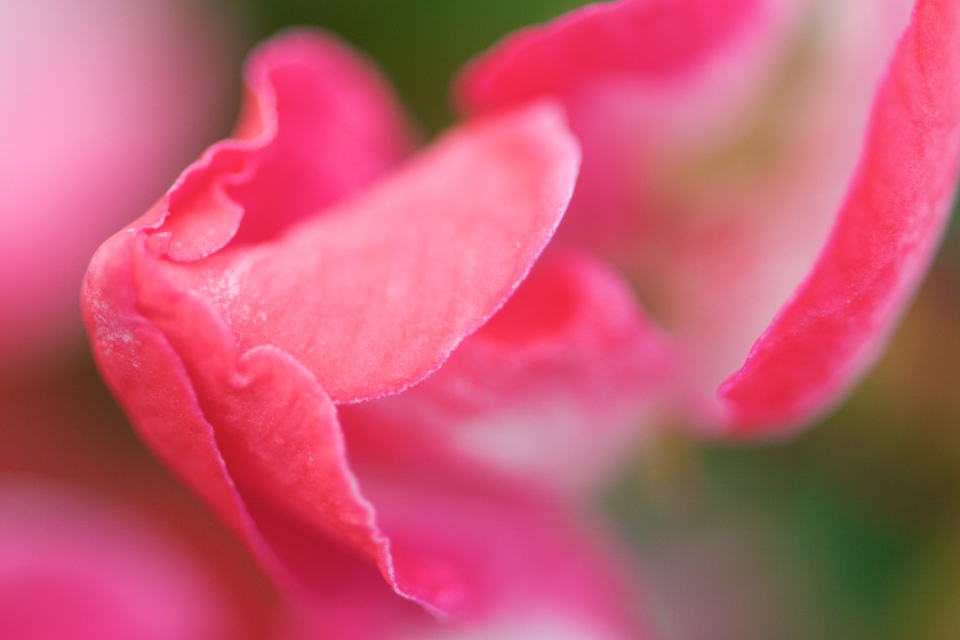
Notice how the following image captures drama and interest, despite being a similar subject:

What changed? The photographer moved closer, found more dramatic light, simplified the background, and found an angle that gave the flower dimension and depth. The subject is the same; the seeing is different. This is the core lesson of photography: the world does not change; the way you look at it does.
The Power of Perspective
One of the most transformative tools in photography is simply changing your position. Most people photograph everything from eye level while standing. This is the perspective we experience every waking moment, which is precisely why it is the least interesting angle for most photographs.
Consider these alternative perspectives:
- Low angle – Get down to ground level. Shoot upward. Subjects photographed from below appear larger, more powerful, and more dramatic. This works particularly well with architecture, flowers, and portraits where you want to convey authority.
- High angle – Shoot from above, looking down. This works for flat lay compositions, for showing patterns in crowds or landscapes, and for simplifying cluttered scenes by changing what is visible in the background.
- Extreme close-up – Get as close as your lens allows. Details that are invisible from normal viewing distance become the entire photograph. The texture of a leaf, the weave of a fabric, the surface of a coin.
- Wide view – Step back and include the full context. Show the subject in its environment. A flower in a vast field tells a different story than a close-up of the same flower.
Try This: Four Perspectives Exercise
Choose a single subject: a tree, a building, a person, a pet, or even a piece of furniture. Take four photographs of it from four dramatically different perspectives: eye level, ground level, from above, and an extreme close-up of one detail. Compare the four images. Which one is the most interesting? Which one tells the best story? You will discover that the “boring” object you started with becomes four completely different photographs depending on where you place yourself.
Simulating a Camera Frame
Create a frame using your hands. Put your right thumb to your left index finger and your left thumb to your right index finger. You have now created a frame that simulates a photograph. Walk around your subject (in this case, the plant) and notice how your perspective changes as you zoom in, zoom out, or blur your vision.
Change your angle. Instead of taking a straight-on photo, try getting below the plant and shooting upwards. Or shoot it from an aerial view. Changing your perspective can lead to dramatically different photos.
Quick aside: Horizontal photos are typically called “landscape” while vertical photos are called “portrait” due to their typical use. Learn more about the different types of photography here.
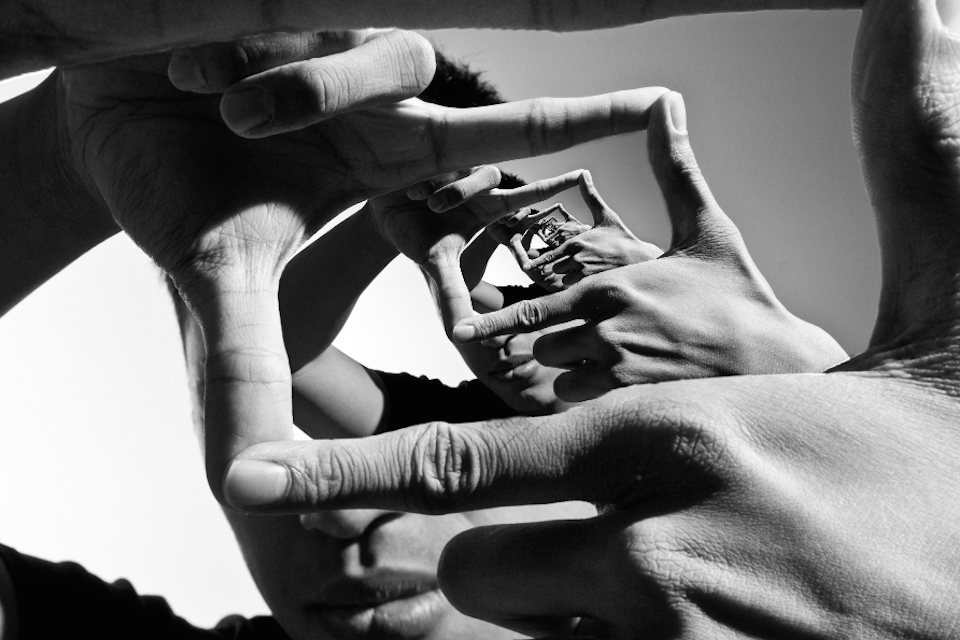
photo by d_pham
The point of this exercise is to show you how even the most common subjects can be shot in thousands of different ways. Focus, zoom, perspective: small changes can make a world of difference in photography.
Amateur photographers often approach a subject and take the most convenient shot. However, by thinking carefully about composition and actively exploring different angles, you can unlock limitless creative possibilities.
Building a Daily Seeing Practice
Like any skill, learning to see improves with regular practice. Here are habits you can build into your daily routine:
- The morning light check. Each morning, spend one minute noticing how light enters your home. Where is the brightest spot? Where are the deepest shadows? How does the light change from room to room? This daily observation will attune you to the quality and direction of light in every environment.
- The commute observation. If you travel the same route regularly, challenge yourself to notice one new thing each day. A shadow pattern you have never seen, a reflection in a window, the way two buildings frame a slice of sky. Routine blinds us; intentional observation overcomes that blindness.
- The single-subject challenge. Once a week, choose one ordinary subject and photograph it for 15 minutes. Do not move on to a different subject until your time is up. This constraint forces you past the obvious first shots and into the genuinely creative territory that only patience reveals.
Try This: The Before-and-After Exercise
Choose an object that you consider completely uninteresting: a pair of scissors, a roll of tape, a pencil. Take one photograph of it exactly as you first see it, with no thought or preparation, just a quick snapshot. Now spend five minutes applying what you have learned in this lesson. Change the angle, move closer, find better light, simplify the background, and look for an unexpected detail. Take a second photograph.
Compare the two images side by side. The difference will demonstrate, more clearly than any lecture could, the power of intentional observation. The object did not change. You did.
Lesson Summary
This lesson has asked you to do something that feels simple but is actually quite difficult: to slow down and truly look at the world around you. The exercises here, examining a plant, observing from different perspectives, framing with your hands, and taking time to really see, are not just warm-up activities. They are the foundation of everything that follows in this course.
Every technical skill you will learn (aperture, shutter speed, ISO, composition, lighting) is a tool for expressing what you see. But the seeing must come first. A photographer who understands every camera setting but does not truly observe the world will produce technically correct but emotionally empty images. A photographer who sees deeply but knows only the basics of camera operation will still produce photographs worth looking at.
Start building your observation habits today. Carry the mindset of this lesson into every room you enter and every scene you encounter. In the next lesson, we will explore inspiration from the masters of photography, whose work demonstrates what becomes possible when deep observation meets technical mastery.