Photography touches a handful of areas of law: copyright (who owns a picture), licensing (who may use it and how), contracts (the deal with a client), releases (permission from the people and property in the frame), privacy and public places, trespass and permits, drones, and insurance. This page explains the core idea of each in plain terms and points you to the detailed guide for that topic. The law differs from country to country, and sometimes between regions of the same country, so treat this as orientation and speak to a lawyer where you live before relying on it for a real decision.
How to use this map
Most legal questions photographers ask fall into one of two moments. The first is when you press the shutter: may I take this picture here, of this person, from this spot, with this drone? The second is when the picture is used: who owns it, who may publish it, and for what? Mixing the two up causes most of the confusion. It is often perfectly lawful to take a photograph that you could not lawfully use in an advertisement, and the reverse can also happen.
Keep that split in mind as you read. Privacy, trespass, permits and drone rules mostly concern taking pictures. Copyright, licensing, contracts and releases mostly concern using them. Insurance sits across both, covering what happens when something goes wrong.
| Question | Area of law | Detailed guide |
|---|---|---|
| Who owns this photo? | Copyright | Copyright basics |
| What can a client do with it? | Licensing and contracts | Photography contracts |
| Can I sell a photo of this person? | Releases and image rights | Model release forms |
| Can I shoot here? | Privacy, trespass, permits | Etiquette and ethics |
| Can I fly here? | Aviation rules | Drone photography |
| What if gear is stolen or someone is hurt? | Insurance | Photography insurance |
Copyright: who owns a photograph
Copyright is the right to control copying of an original work. In most countries it exists automatically from the moment a photograph is taken; there is no form to fill in and no need for a copyright symbol. It normally belongs to the person who made the picture, and it lasts for a long time, typically the photographer’s lifetime plus several decades.
Three points trip people up. First, owning a print or a file is not the same as owning the copyright. A client who pays for a shoot and receives the images usually owns those copies, not the right to reproduce them, unless the contract says so. Second, pictures made as part of a job are different: in many countries, work an employee creates in the course of employment belongs to the employer. Freelancers generally keep copyright unless they sign it away. Third, copyright protects the photograph, not the idea. Someone else can photograph the same view from the same spot; they cannot copy your photograph.
Some countries offer a registration system, and in some of them registering before an infringement matters a great deal for what you can recover in court. Other countries have no registration at all. Visible credit lines and watermarks do not create copyright, but they make ownership clear to anyone who finds the image. The copyright basics guide covers ownership, registration, fair use and protecting images online in depth.
Licensing: renting out permission
A license is permission to use a photograph in a defined way while the photographer keeps ownership. Almost every commercial use of a photograph, from a magazine cover to a product page, is a license. Selling the copyright outright is called an assignment or transfer, and it is much rarer; in many countries it has to be in writing to be valid.
A clear license answers five questions: where the image will appear (website, print, packaging, billboard), for how long, in which territories, whether the client alone may use it (exclusive) or you may license it to others too (non-exclusive), and whether the client may alter it. The price follows from those answers. A one-year regional web license and a worldwide, unlimited, exclusive license are very different things, even for the same photograph.
Stock photography uses standard license types. “Royalty-free” does not mean free: it means the buyer pays once and can use the image repeatedly within the license terms, without paying a fee for each use. Open licenses, such as the Creative Commons family, let you give permission to everyone in advance under set conditions, such as crediting you or not using the image commercially. Selling stock photography explains how agencies apply these licenses.
Contracts: putting the deal in writing
A contract turns an understanding into something both sides can point to later. It does not need to be long or written in legal language to be useful. What makes it useful is that it answers the questions that cause disputes: what you will deliver and by when, what the client pays and when, what happens if either side cancels or the date moves, what license the client receives, and what happens if something outside anyone’s control, such as illness or equipment failure, stops the work.
Handshake agreements can be legally binding in many places, but they are hard to prove and easy to remember differently. A short written agreement, even an email that both sides confirm, protects the client as much as the photographer. Many disputes are really about the license: a client who assumed they could put the pictures on a billboard, or a photographer who assumed they could use them in a portfolio. Say it in writing either way.
Contracts are also where you set limits on your responsibility, such as capping liability at the fee paid. Whether a particular clause is enforceable depends on local consumer and contract law, which is a strong reason to have a lawyer review any template you plan to reuse. See photography contracts for what to include for different kinds of work.
Releases: people, property and artworks in the frame
A model release is a signed permission from a person who appears in a photograph, allowing it to be used in agreed ways. The key word is use. In many countries you do not need a release to take a picture of someone in public, or to publish it in a news or documentary context. You usually do need one before the picture is used to advertise, promote or endorse something, because that use suggests the person supports it. For anyone under the age of majority, a parent or guardian signs.
Some places give people a much stronger right over their own image than others. In France, Germany and Quebec, for example, publishing a recognizable image of someone without their consent can be unlawful even outside advertising. If you work internationally, as many travel photographers do, check the rules in the country where the picture was taken and where it will be published.
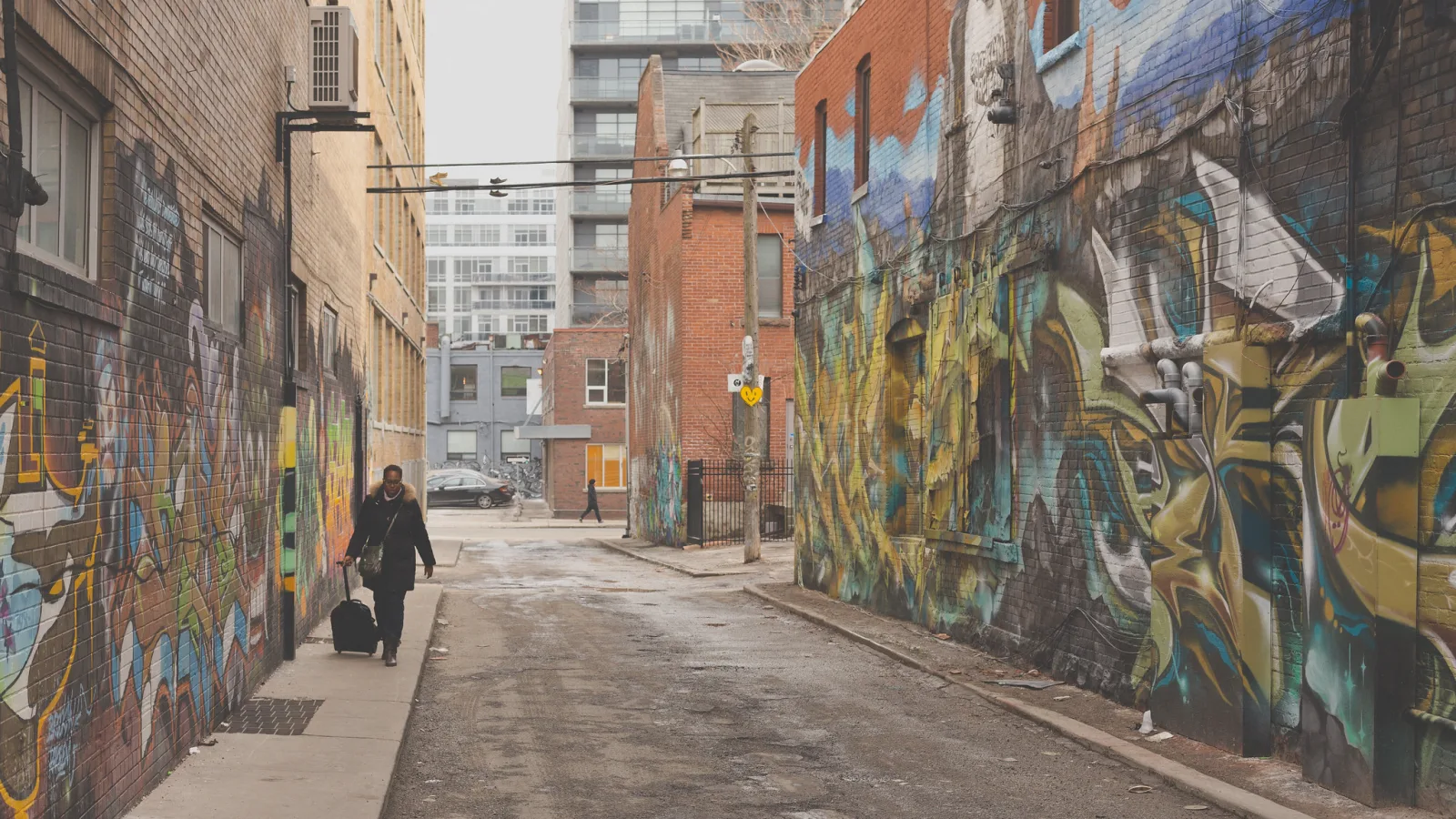
Property releases cover recognizable private property, such as the interior of a house, a distinctive privately owned building, or a pet or horse, when the image will be used commercially. Stock agencies often ask for them. Separate from property is other people’s creative work in your frame: a sculpture, a mural, a painting, a logo. Those can have their own copyright or trademark protection. Many countries allow you to photograph buildings and public artworks from public places, an exception often called freedom of panorama, but its scope varies widely, especially for commercial use and for artworks as opposed to buildings. The model release guide covers what a release should contain and how to get one signed.
Photographing in public and respecting privacy
In many countries, you may photograph anything and anyone clearly visible from a public place such as a street, park or beach. The reasoning is that people in public have a lower expectation of privacy. That general freedom has limits everywhere:
- Private spaces seen from public ones. Pointing a long lens into someone’s home, a changing area or a bathroom is unlawful in many places, even if you stand on a public pavement.
- Harassment. Following, blocking or repeatedly photographing a person who has asked you to stop can cross into harassment, regardless of where you are standing.
- Sensitive sites. Some countries restrict photography of military installations, certain government buildings or critical infrastructure. Airports and border areas often have their own rules.
- Stronger image rights. As noted above, some jurisdictions restrict publishing identifiable people even when taking the picture was lawful.
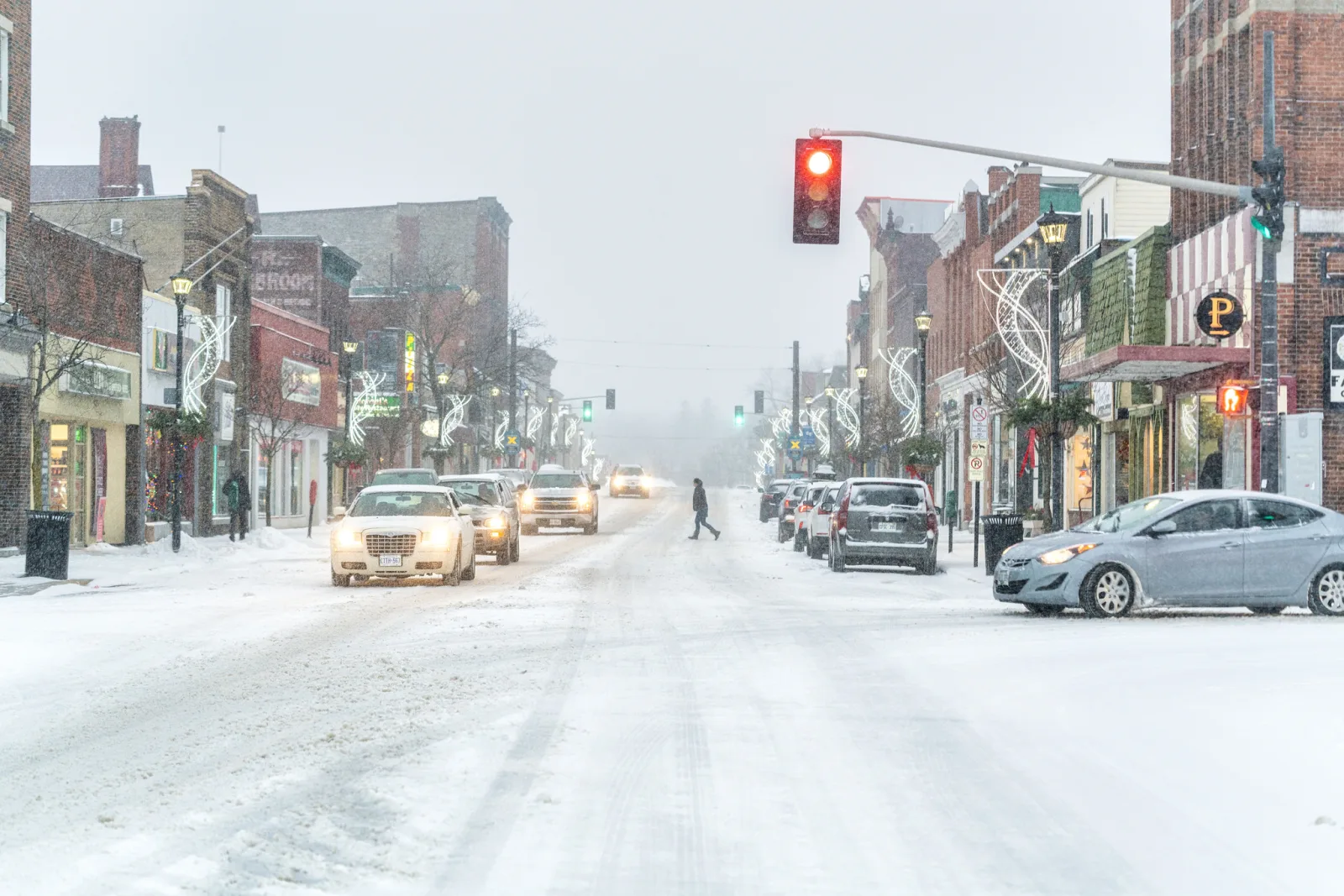
What the law allows and what is decent are not the same. A picture can be legal and still unkind, especially of people who are vulnerable, grieving or unable to object. Street photography and photography etiquette and ethics go into how to work respectfully. Privacy also matters after the shot: faces, license plates, home locations embedded in file metadata and pictures of children all deserve thought before you post. Sharing photos online safely covers that side.
Private property, trespass and permits
On private land, the owner sets the rules. That includes places that feel public but are privately owned: shopping centers, stadiums, museums, theme parks, many train stations and plazas. The owner, or staff acting for them, can ban cameras, ban tripods, or ask you to stop and leave. If you refuse to leave when asked, you may be trespassing. Being asked to stop is not the same as being required to hand over or delete pictures you have already taken; the rules on that differ between countries, and it is worth knowing them where you live.
Entering land or buildings without permission is trespass in most places, and in some it is a criminal offence rather than a civil matter. That applies to abandoned buildings too, which is why urban exploration carries legal as well as physical risk.
Permits are a separate layer. Many cities, parks and heritage sites require a permit for commercial shoots, for crews above a certain size, or for equipment such as tripods, lighting or anything that blocks a path. Casual personal photography is usually exempt, but the dividing line between personal and commercial varies. Before a paid shoot on location, check with the landowner or managing authority, and allow time for the application.
Drones and the airspace above
A drone is an aircraft, so aviation law applies on top of every other rule on this page. Most countries now regulate drones by weight and by type of use. Common requirements include registering the drone, passing a basic knowledge test or holding a pilot certificate, keeping the drone within your direct line of sight, staying below a maximum height (often around 120 meters, or 400 feet), and keeping away from airports, crowds and emergency operations. Many protected areas and national parks ban launching drones altogether.
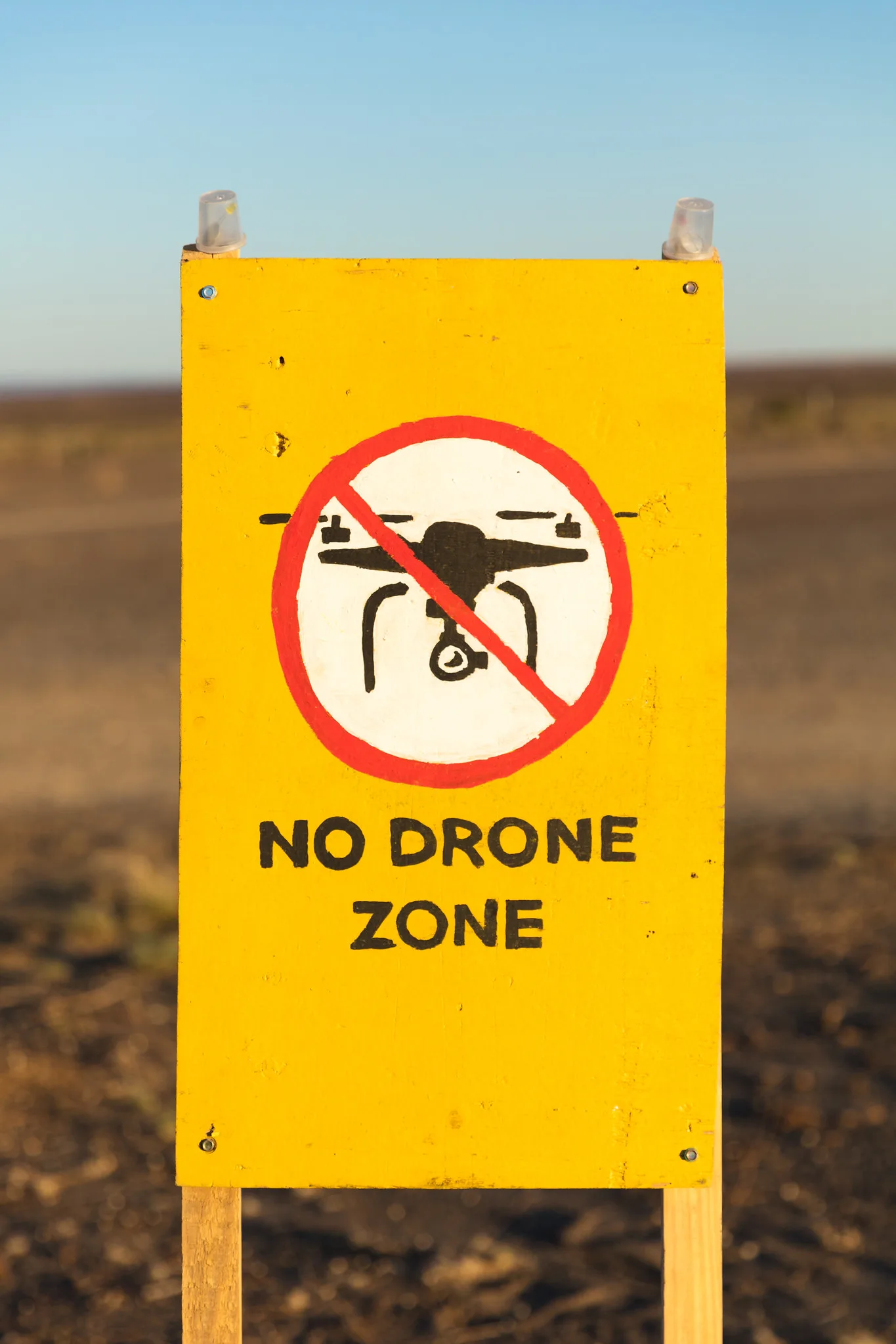
Commercial drone work often carries extra licensing requirements, and a client may ask for proof of both qualification and insurance. Privacy law still applies from the air: a drone hovering beside a private garden raises the same concerns as a long lens aimed over a fence. Rules change as the technology does, so check your national aviation authority’s current guidance before every trip, especially when flying abroad. Drone photography covers the photographic side and the main categories of rules, and how to practice flying a drone covers building skill safely before a real job.
Insurance: when something goes wrong
Insurance is not law in itself, but it is how photographers manage legal and financial risk. Three kinds matter most. Equipment cover pays to repair or replace gear that is stolen, lost or damaged; home policies often exclude equipment used for paid work. Public liability cover protects you if someone is injured or property is damaged because of your work, such as a guest tripping over a light stand. Professional indemnity cover, sometimes called errors and omissions, protects you if a client claims your mistake cost them money, for example after a memory card failure at a once-only event.
Venues increasingly ask for proof of liability cover before they let a professional photographer work on site. Even a hobbyist who never charges for work should know whether their home policy covers equipment away from home. Photography insurance explains the types of cover and how to judge how much you need.
Common mistakes
- Assuming a paying client owns the copyright. Unless you have assigned it in writing, you normally keep it. Spell out the license the client gets so there is no surprise.
- Confusing taking with using. A lawful street photograph may still need a release before it is used in an advertisement. Ask what the picture will be used for, not just where it was taken.
- Relying on another country’s rules. Advice from online forums often reflects one country’s law. Check the rules where you shoot and where you publish.
- Working without anything in writing. A short confirmed email beats a perfect contract you never sent. Put deliverables, dates, payment and license in writing every time.
- Treating royalty-free or found images as free. Using someone else’s photograph without a license is infringement, whatever the credit line says.
- Flying a drone before checking the airspace. Many restrictions are invisible on the ground. Check an official airspace map before takeoff.
- Taking legal advice from a general article, including this one. Use it to know what to ask, then ask a lawyer who practices where you live.
Try this
Spend 20 minutes building your own legal checklist. Pick the three kinds of photography you do most often, for example street, portraits for friends and landscapes you sell as prints. For each one, write down:
- Where you usually shoot, and whether it is public land, private land open to the public, or private land.
- Whether identifiable people appear, and whether the pictures are ever used commercially.
- What you tell anyone who receives the pictures about how they may use them.
- Whether your equipment is covered if it is stolen from your car.
Any line where you are unsure is a question to research in the detailed guide above, or to put to a lawyer or insurer where you live. You will end up with a short list of real gaps instead of vague worry.
Frequently asked questions
Do I need to register my photos to own the copyright?
Not in most countries; copyright arises automatically when you take the picture. Some countries offer registration, and in some of them it affects what you can recover if someone infringes. Check the rules in your country.
Can I post photos of strangers online?
In many countries, yes, if the pictures were taken in public and are not used commercially. Some countries give people stronger rights over images of themselves, and harassing or humiliating uses can be unlawful anywhere. Consider the ethics as well as the law.
Does giving credit let me use someone else’s photo?
No. Credit is courtesy, not permission. You need a license from the copyright owner, or an exception in your country’s law that clearly applies.
Is a model release needed for a portfolio?
In many countries it is not strictly required, but it is good practice to ask, and many contracts include portfolio permission for exactly that reason. It avoids disputes if a client later objects to seeing their pictures online.
Related guides
- Copyright basics for photographers: ownership, registration, fair use and protecting your images.
- Photography contracts: what to include for weddings, portraits and commercial work.
- Model release forms: when releases are needed and what they should say.
- Photography insurance: equipment, liability and professional indemnity cover.
- Photography etiquette and ethics: consent, respect and doing the right thing beyond the law.
- Sharing photos online: privacy, metadata and posting pictures of other people.
- Drone photography: flying, shooting and the main categories of rules.
- Selling stock photography: licenses and releases in practice.