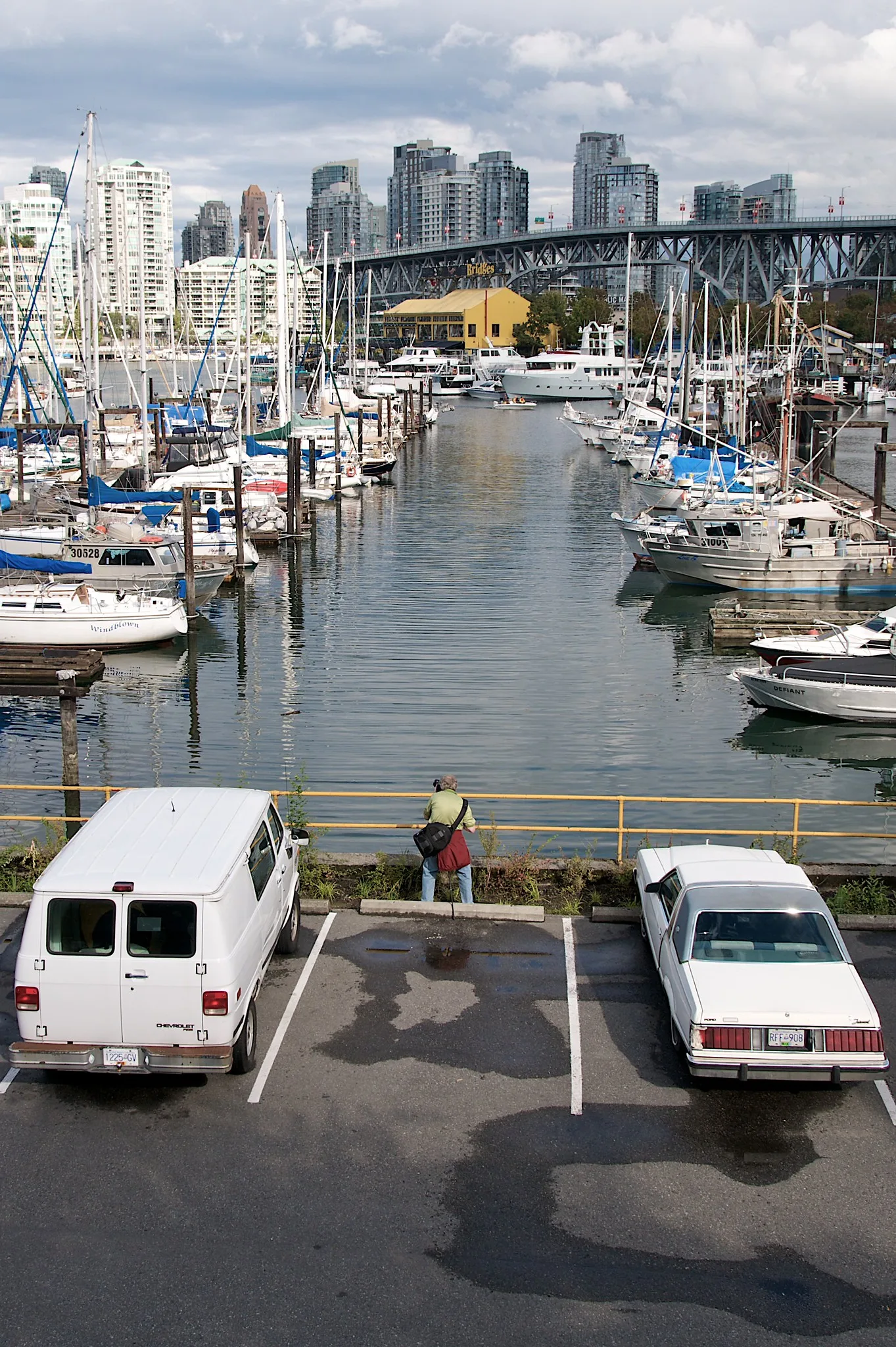
More than 160 photography quotes, each as a graphic, from Ansel Adams, Robert Capa, Paul Strand, Henri Cartier-Bresson, Steve McCurry and many others, grouped by the question each one answers. Skim the headings, find the one that matches what you are stuck on, and read that group.
Together the quotes say that you need something worth saying about the world, that your position and your attention matter more than your equipment, that the picture is made rather than found, and that you improve by doing it again. They are also a good way to capture emotion in words before you try to capture it in a frame. Some quotes contradict each other, which is useful: each is one photographer’s answer to one problem, not a rule.
The list changes over time. If you know a good one, send it in.
How to use a quote
- Read it as a question. “A good photograph is knowing where to stand” asks where you are standing, and why there.
- Turn it into one concrete action for your next outing, such as walking closer, waiting for the light, or taking one picture that says what you feel.
- Notice which ones annoy you. A quote you disagree with is showing you what you believe about your own work.
Seeing: where to stand and what to notice
Most of these quotes agree that the camera is the easy part. The hard part is noticing, and deciding where to put your feet. Ansel Adams and Robert Capa both reduce it to position, Henri Cartier-Bresson to small human detail, and Dorothea Lange says the camera teaches you to see without one. If this is your question, how to see like a photographer turns it into practice.
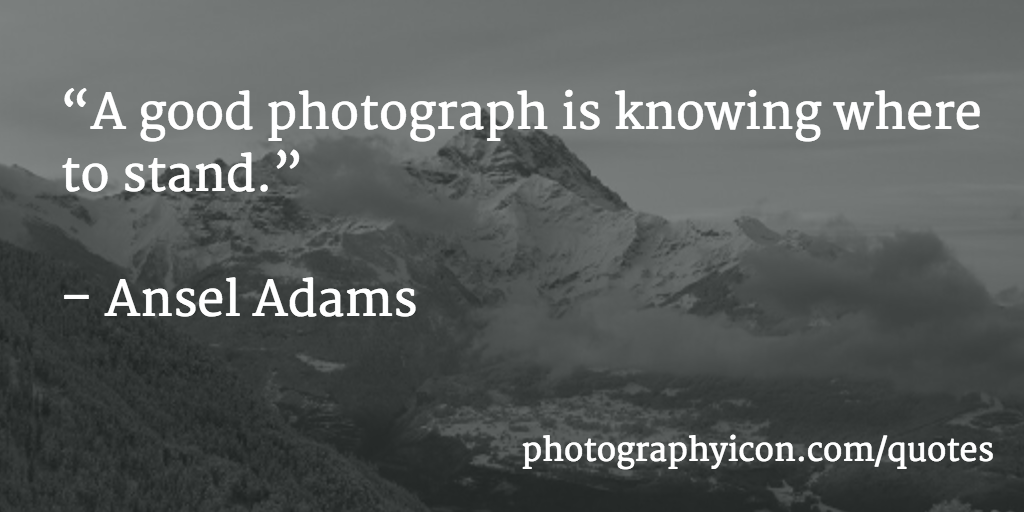
- A good photograph is knowing where to stand.
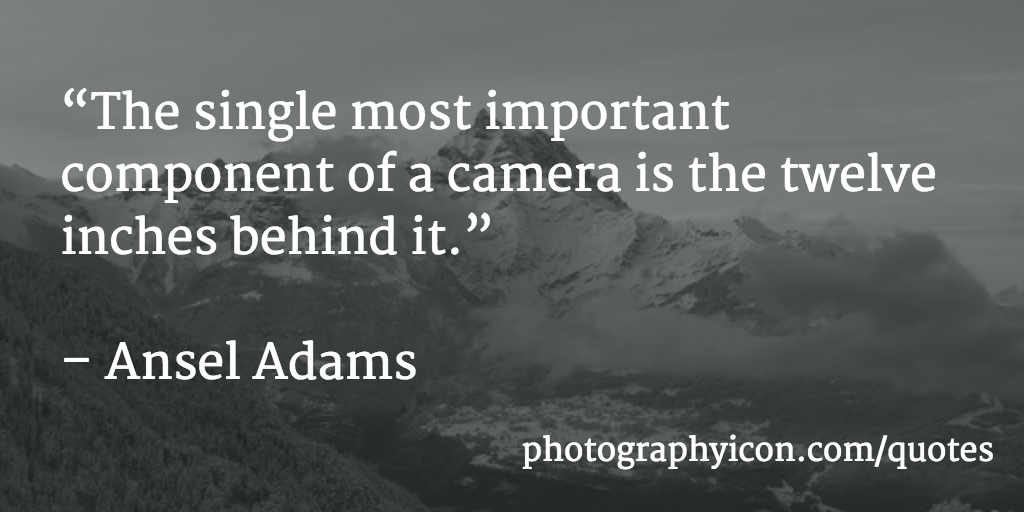
- The single most important component of a camera is the twelve inches behind it.
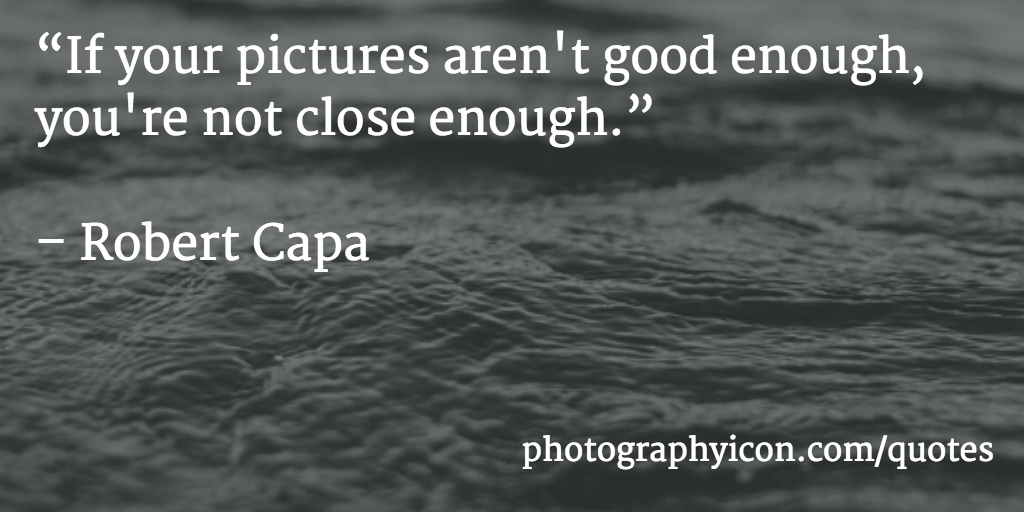
- If your pictures aren’t good enough, you’re not close enough.
- In photography, the smallest thing can be a great subject. The little, human detail can become a Leitmotiv.
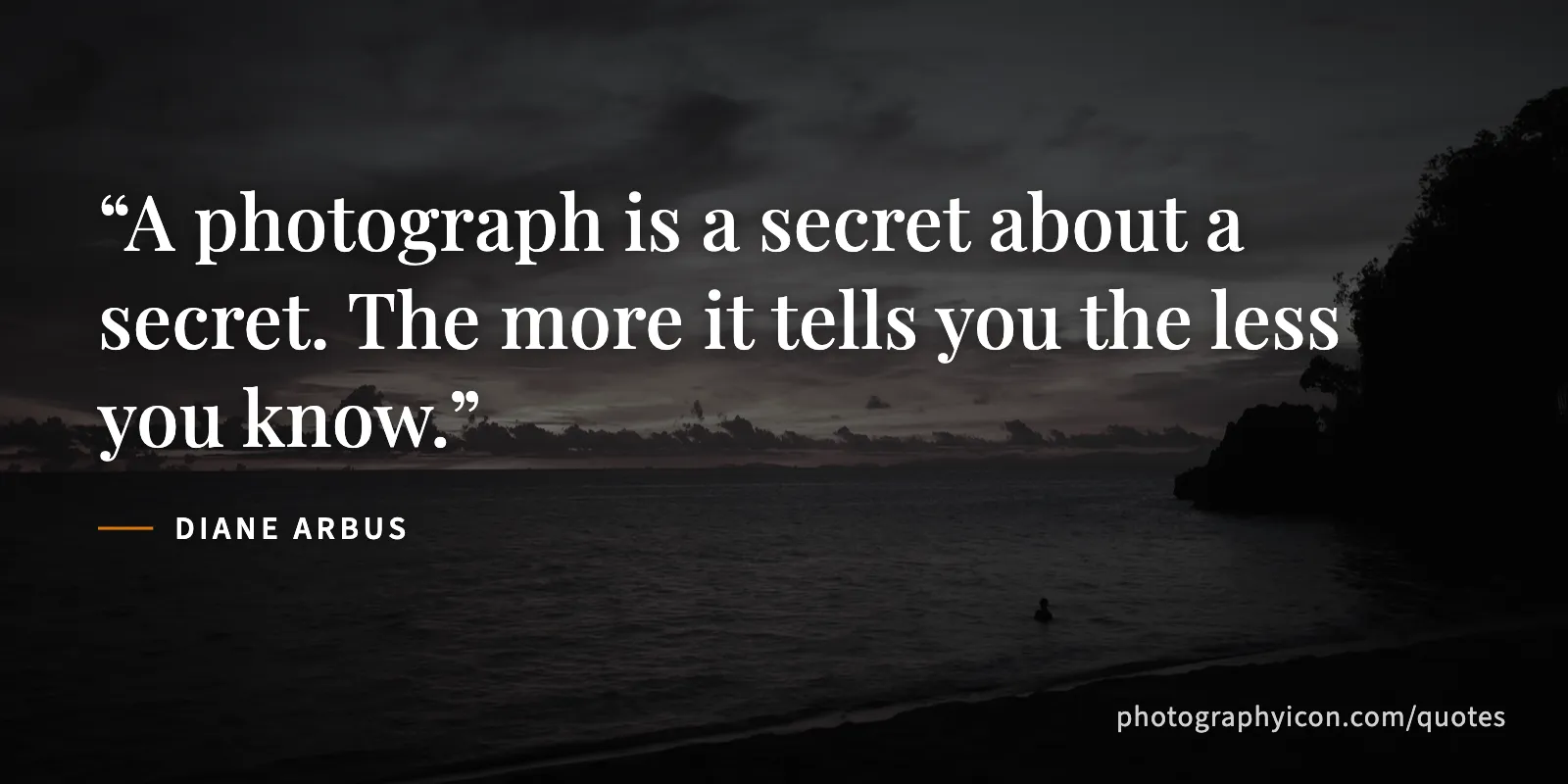
- A photograph is a secret about a secret. The more it tells you the less you know.
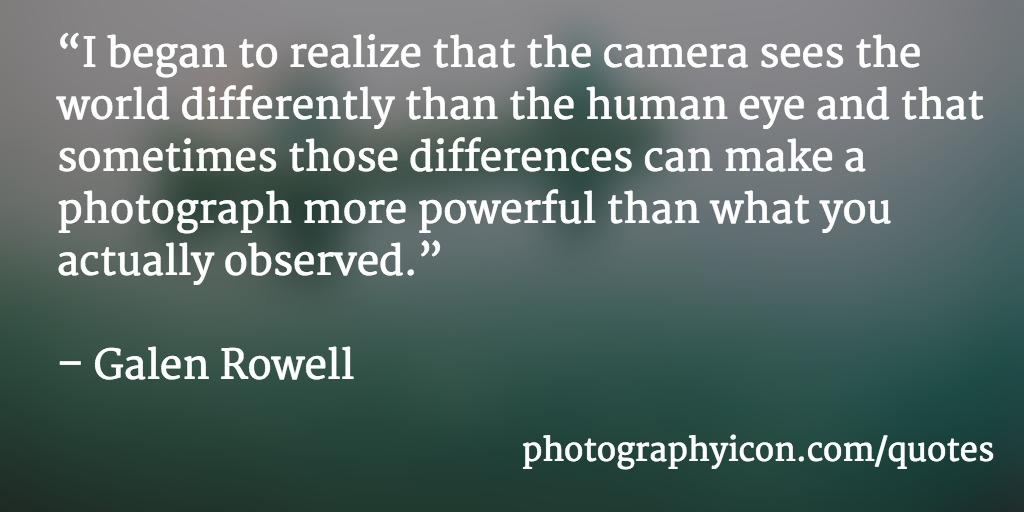
- I began to realize that the camera sees the world differently than the human eye and that sometimes those differences can make a photograph more powerful than what you actually observed.
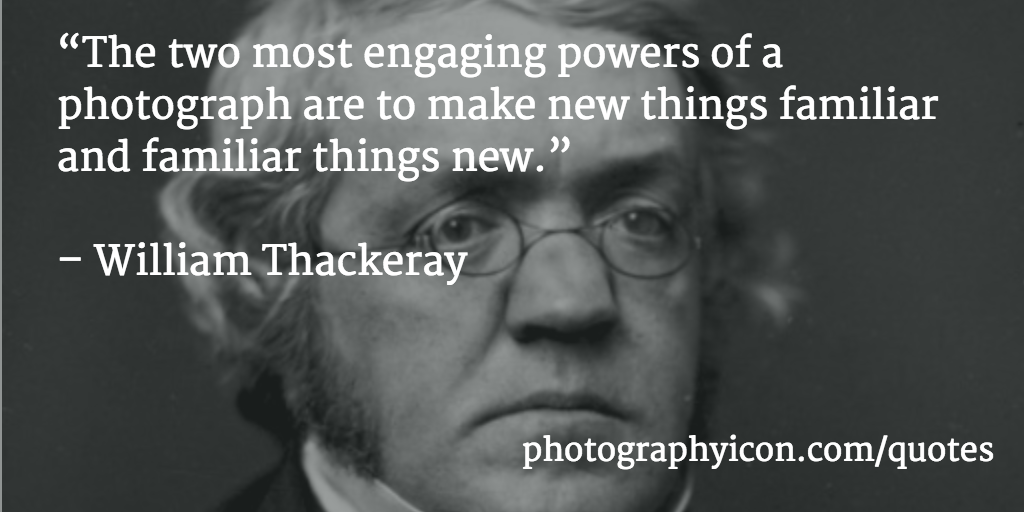
- The two most engaging powers of a photograph are to make new things familiar and familiar things new.
- The camera sees more than the eye, so why not make use of it?
- Photography is the recording of strangeness and beauty with beguiling precision.
- Photography is (a means by which we)…learn to see the ordinary.
- Photography is a contest between a photographer and the presumptions of approximate and habitual seeing. The contest can be held anywhere …
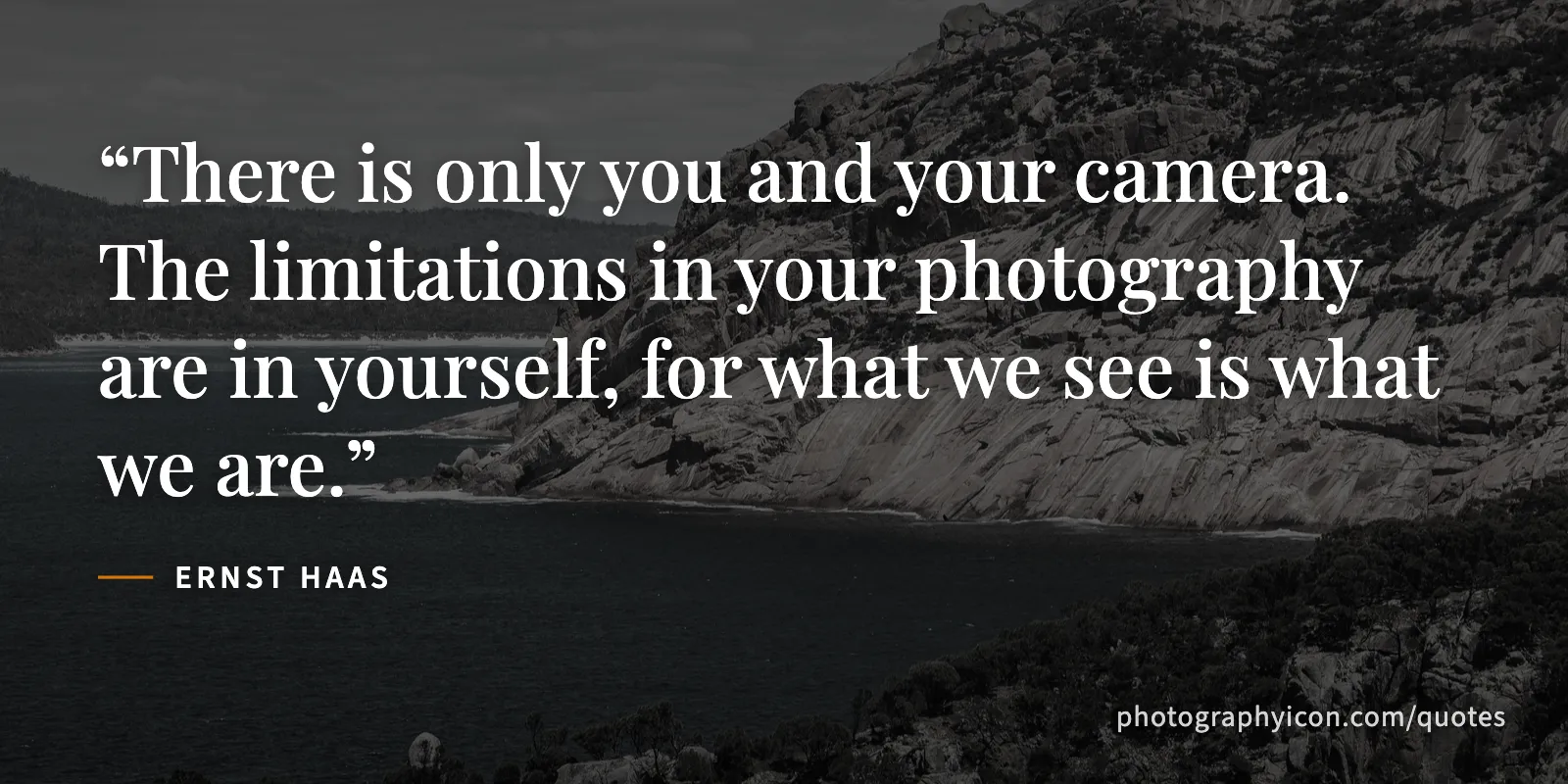
- There is only you and your camera. The limitations in your photography are in yourself, for what we see is what we are.
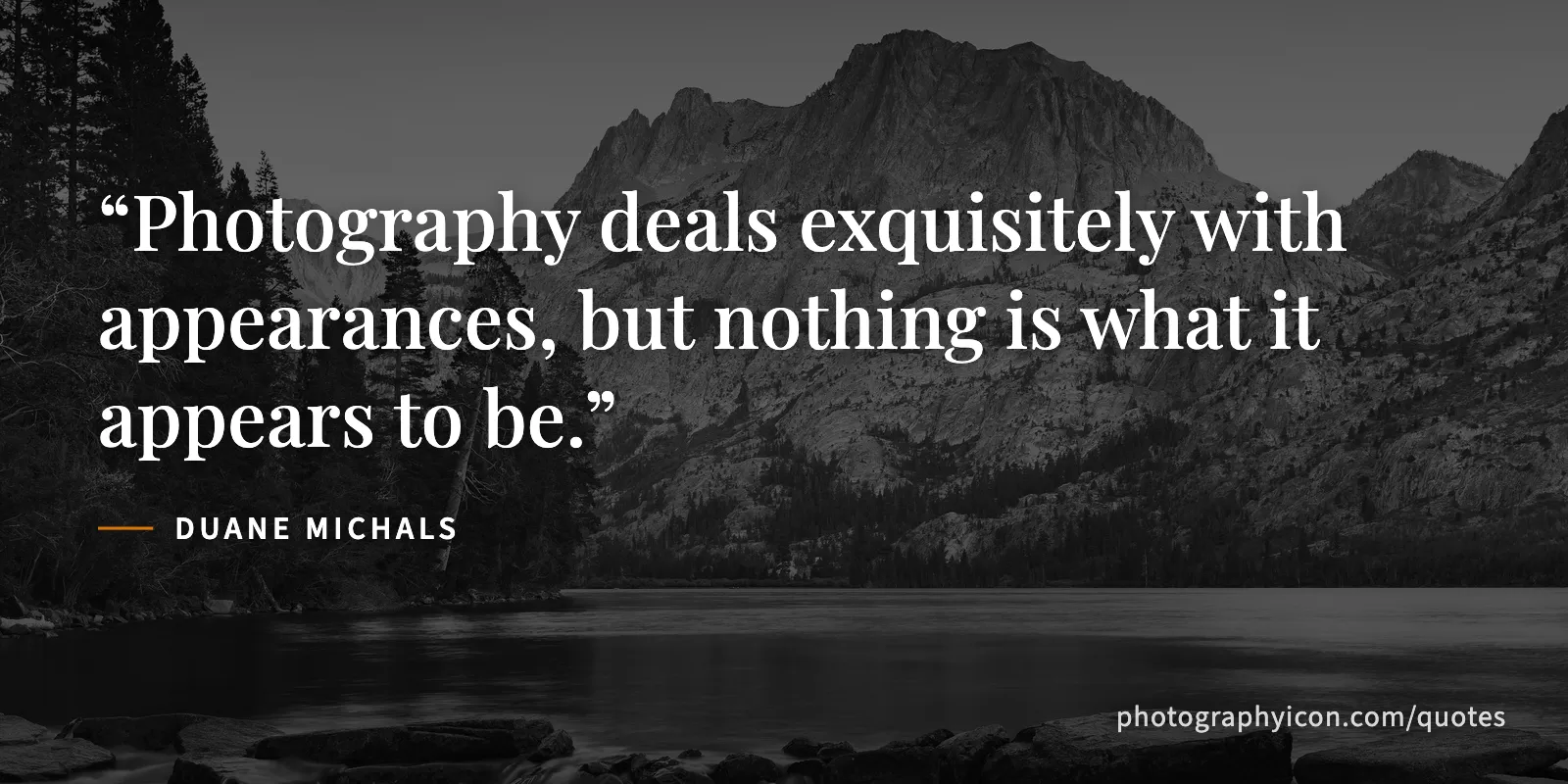
- Photography deals exquisitely with appearances, but nothing is what it appears to be.
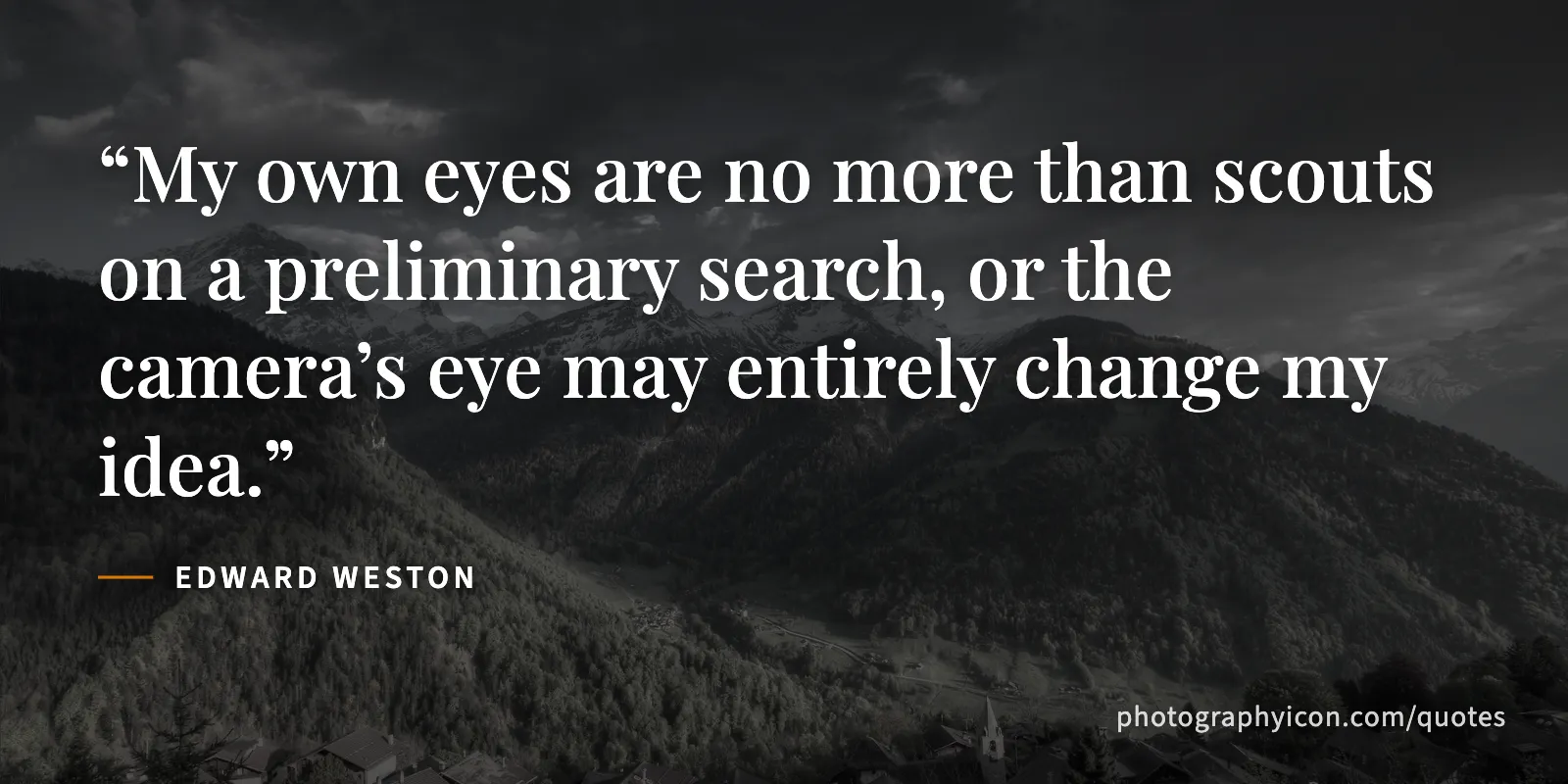
- My own eyes are no more than scouts on a preliminary search, or the camera’s eye may entirely change my idea.
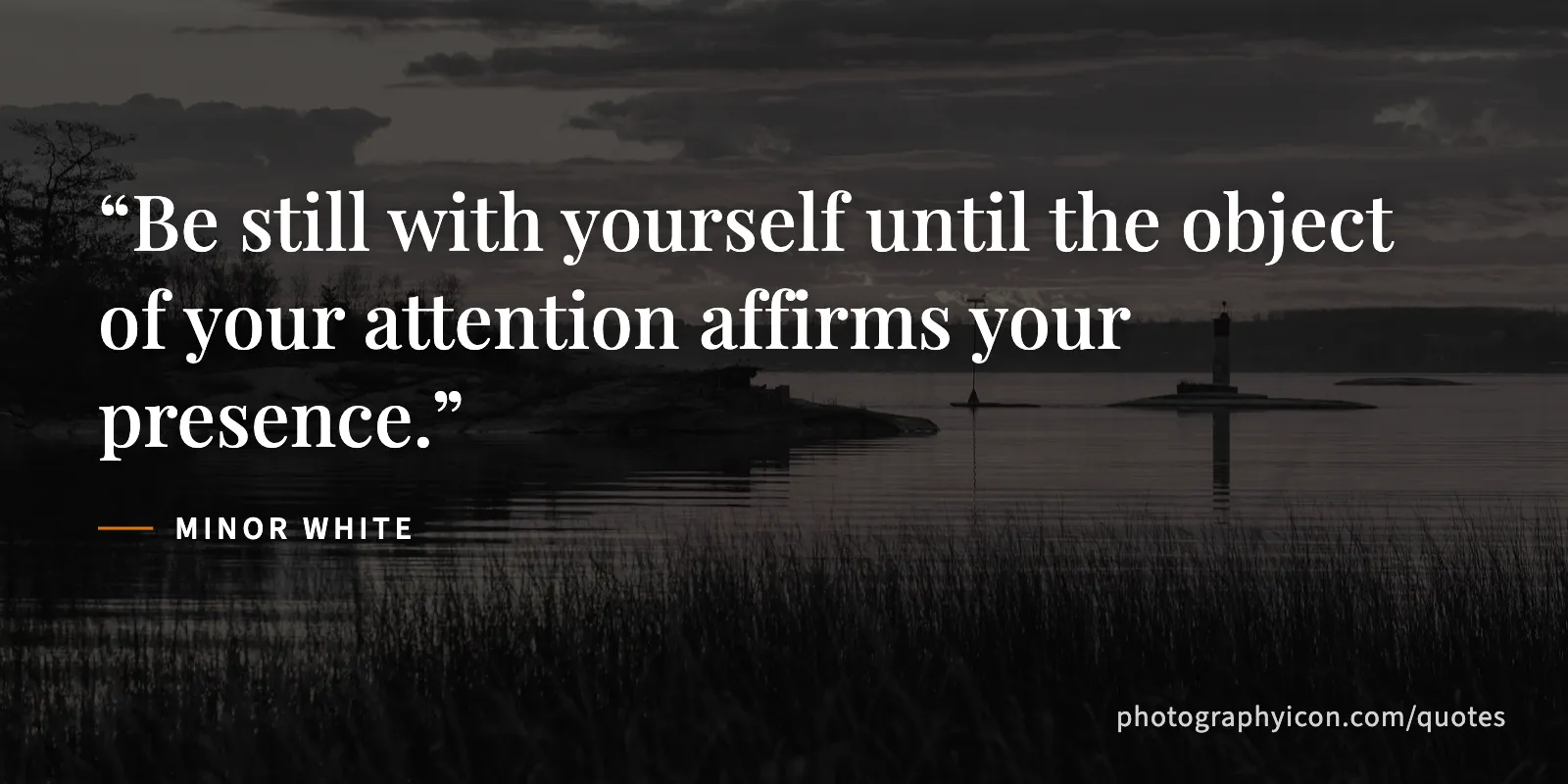
- Be still with yourself until the object of your attention affirms your presence.
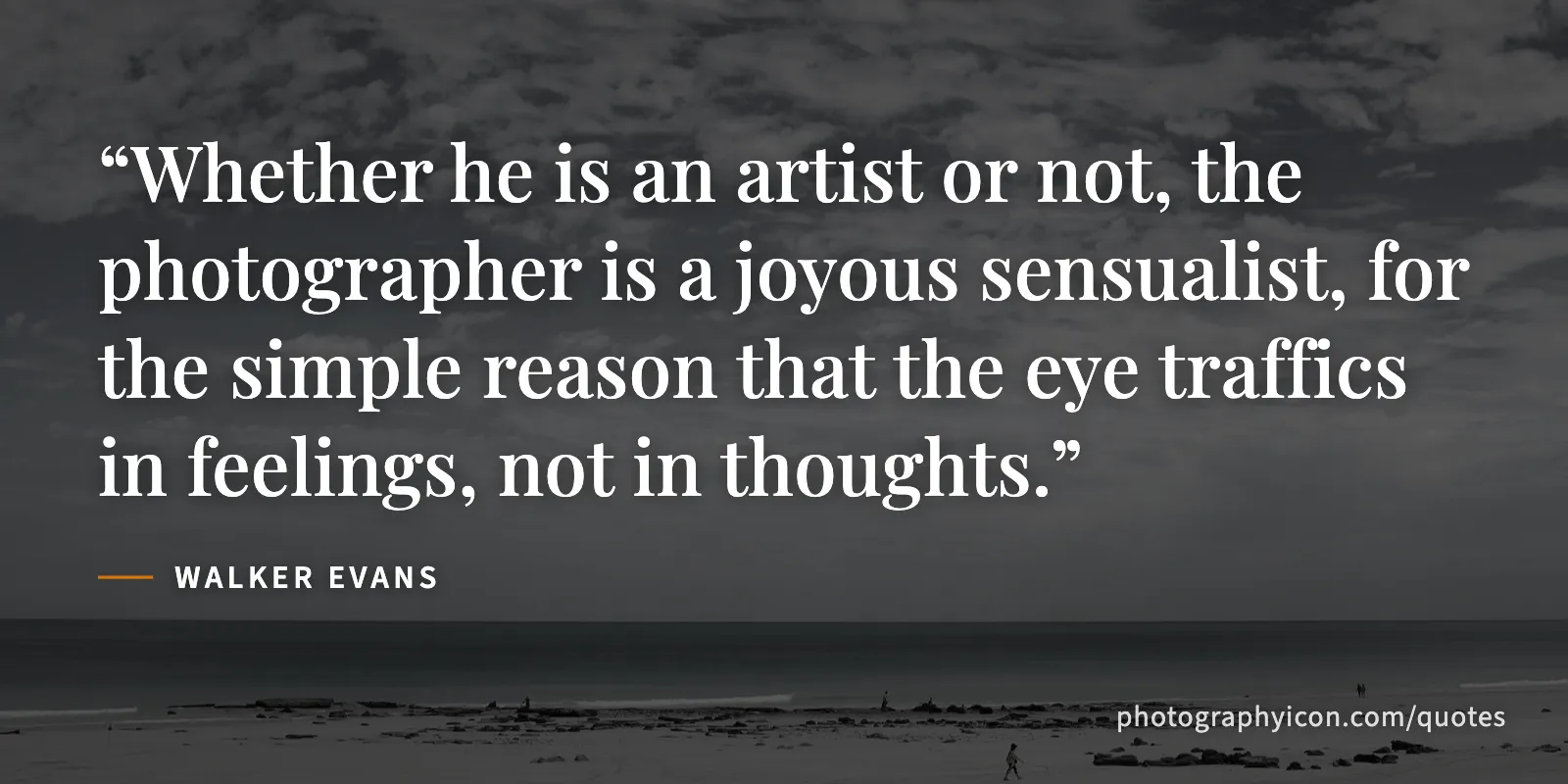
- Whether he is an artist or not, the photographer is a joyous sensualist, for the simple reason that the eye traffics in feelings, not in thoughts.
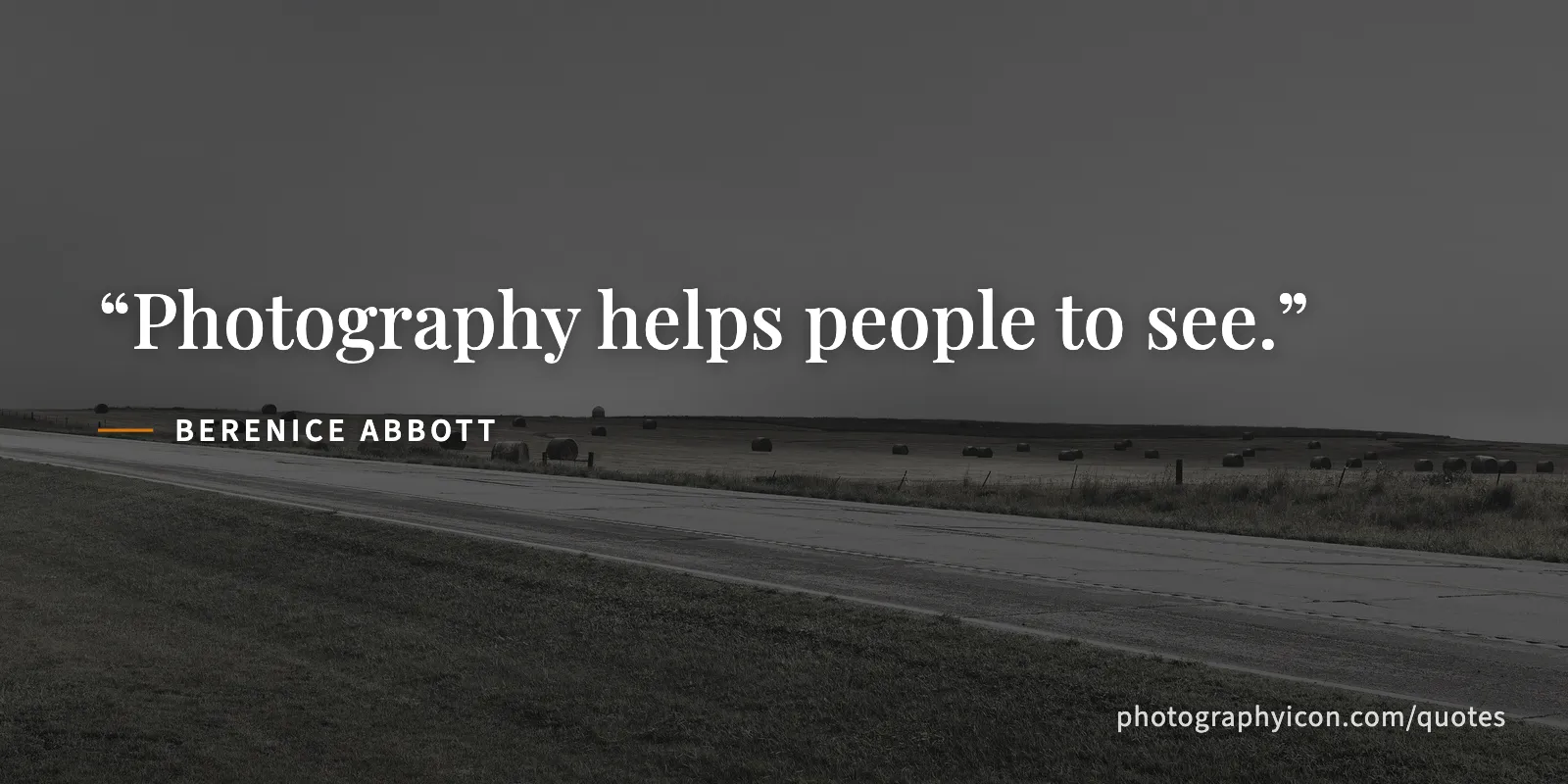
- Photography helps people to see.
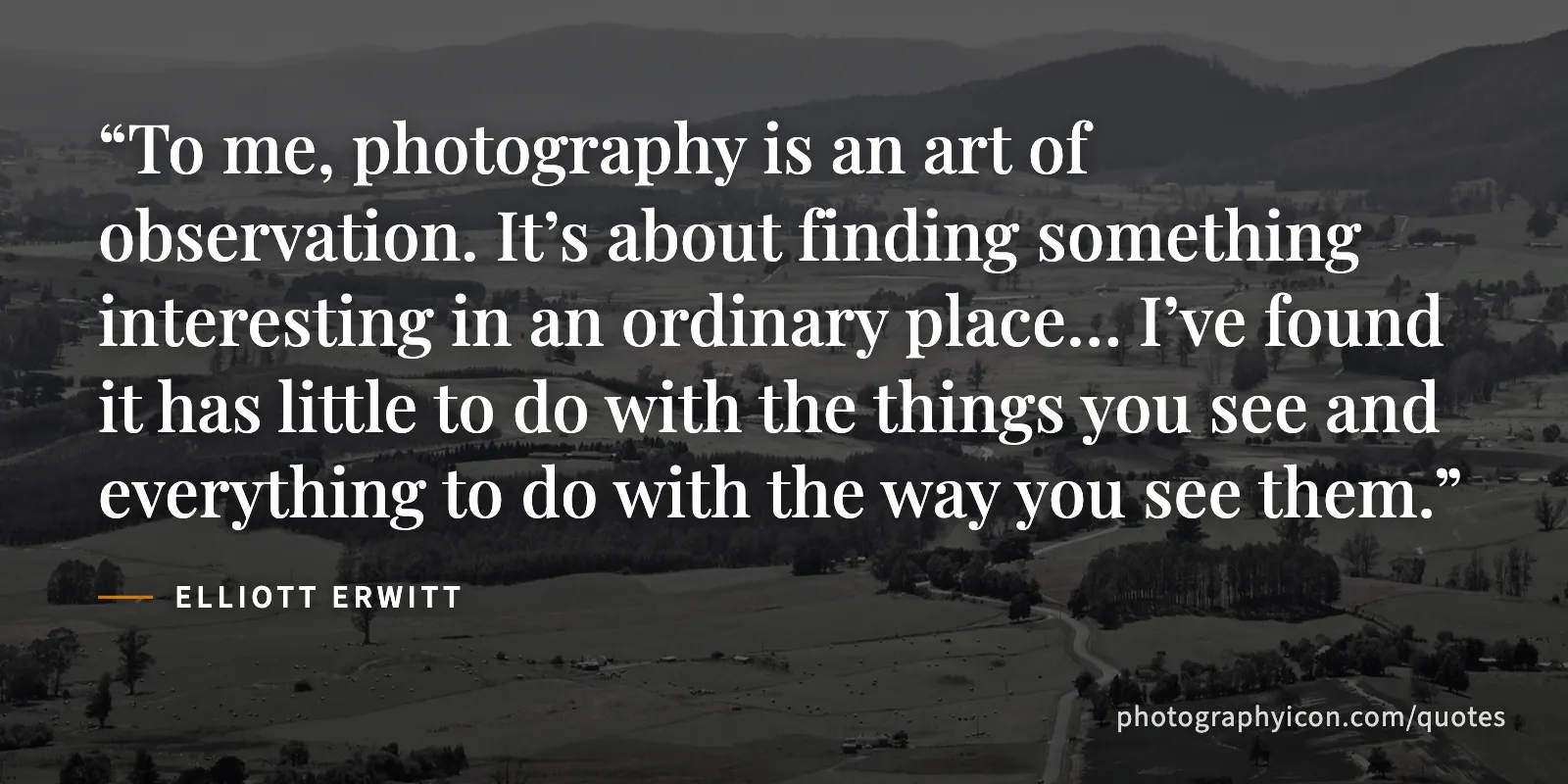
- To me, photography is an art of observation. It’s about finding something interesting in an ordinary place… I’ve found it has little to do with the things you see and everything to do with the way you see them.
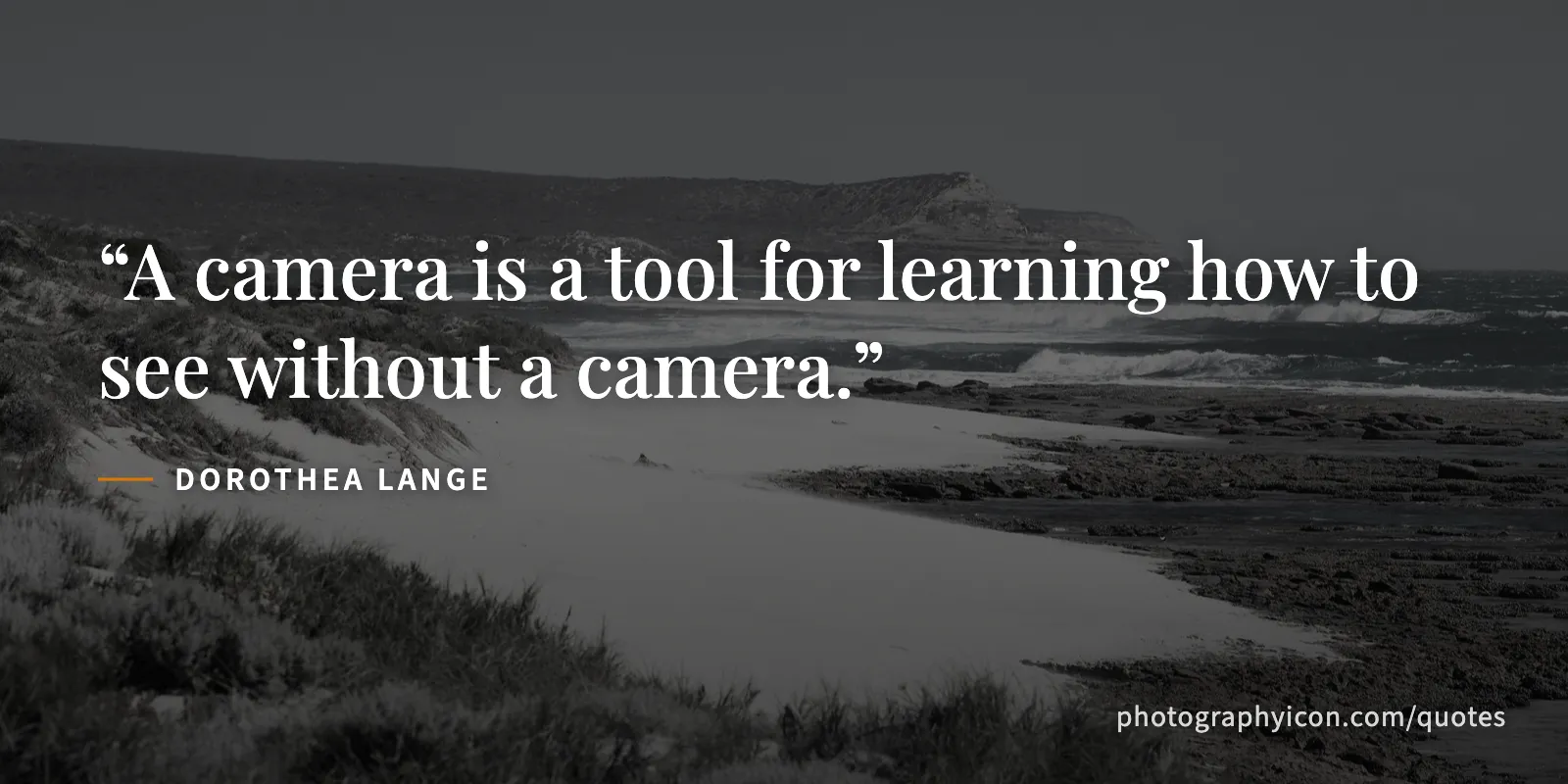
- A camera is a tool for learning how to see without a camera.
- A photograph is a secret about a secret. The more it tells you the less you know.
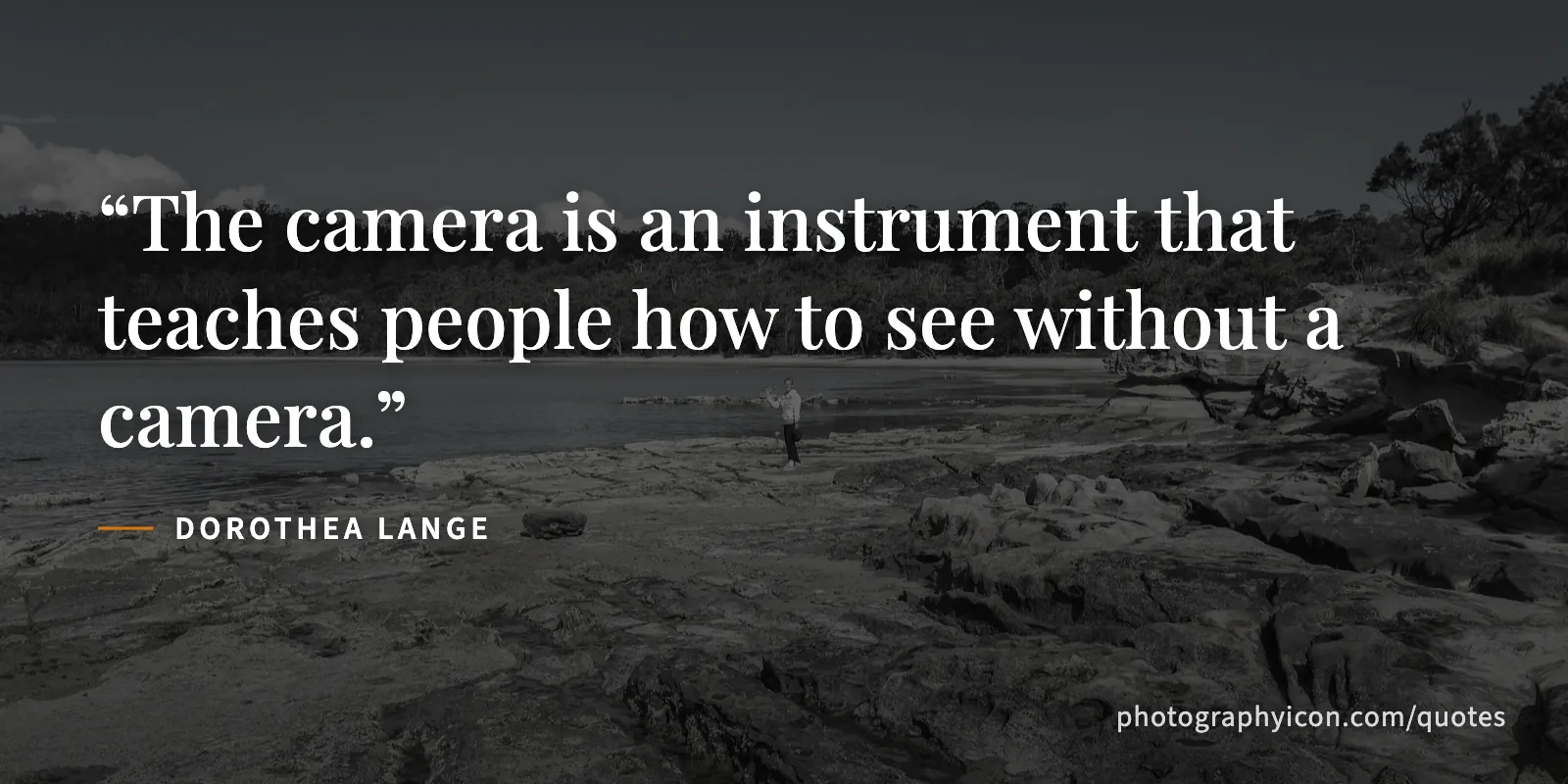
- The camera is an instrument that teaches people how to see without a camera.
- I’m not interested in shooting new things – I’m interested to see things new.
- Photography is not about the thing photographed. It is about how that thing looks photographed.




Light, time and the moment
A photograph is time cut out and kept, and these quotes keep circling that fact: the instant, memory, the way a still image outlasts the people in it. Cartier-Bresson gives the best-known account of the instant, and a few lines here turn to light itself as the raw material. For the craft side of light, see understanding light in photography.
- Photography is the simultaneous recognition, in a fraction of a second, of the significance of an event as well as the precise organization of forms which gives that event its proper expression.
- To me, photography is the simultaneous recognition, in a fraction of a second, of the significance of an event.
- Photography is an immediate reaction, drawing is a meditation.
- A photograph is like a recipe memory the finished dish.
- Photography is the art of frozen time… the ability to store emotion and feelings within a frame.
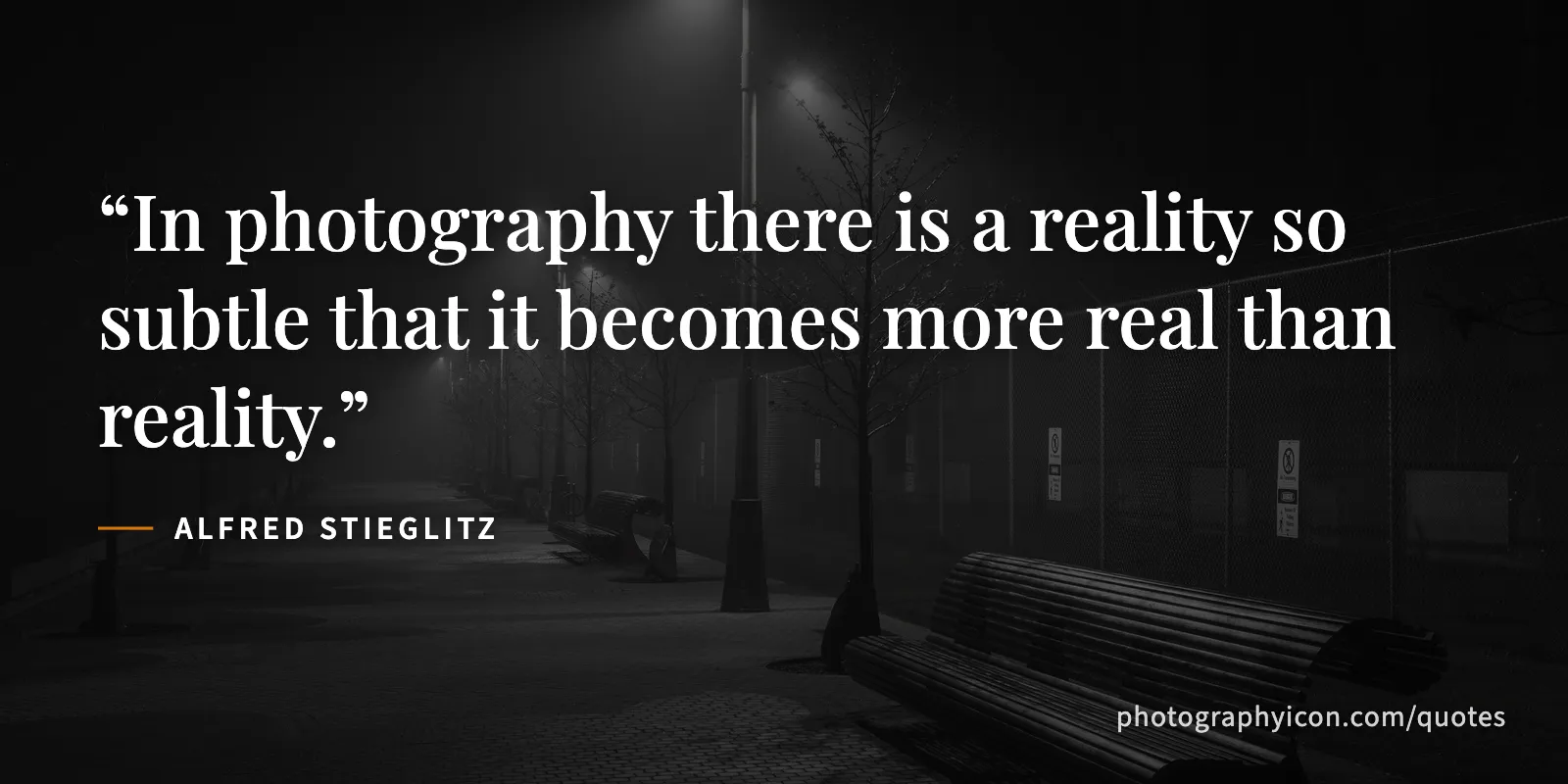
- Photography is a reality so subtle that it becomes more real than reality.
- Photography to me is catching a moment which is passing, and which is true.
- Photography is a way of feeling, of touching, of loving. What you have caught on film is captured forever… it remembers little things, long after you have forgotten everything.
- Photography does not create eternity, as art does; it embalms time, rescuing it simply from its proper corruption.
- In photography there are no shadows that cannot be illuminated.
- Character, like a photograph, develops in darkness.
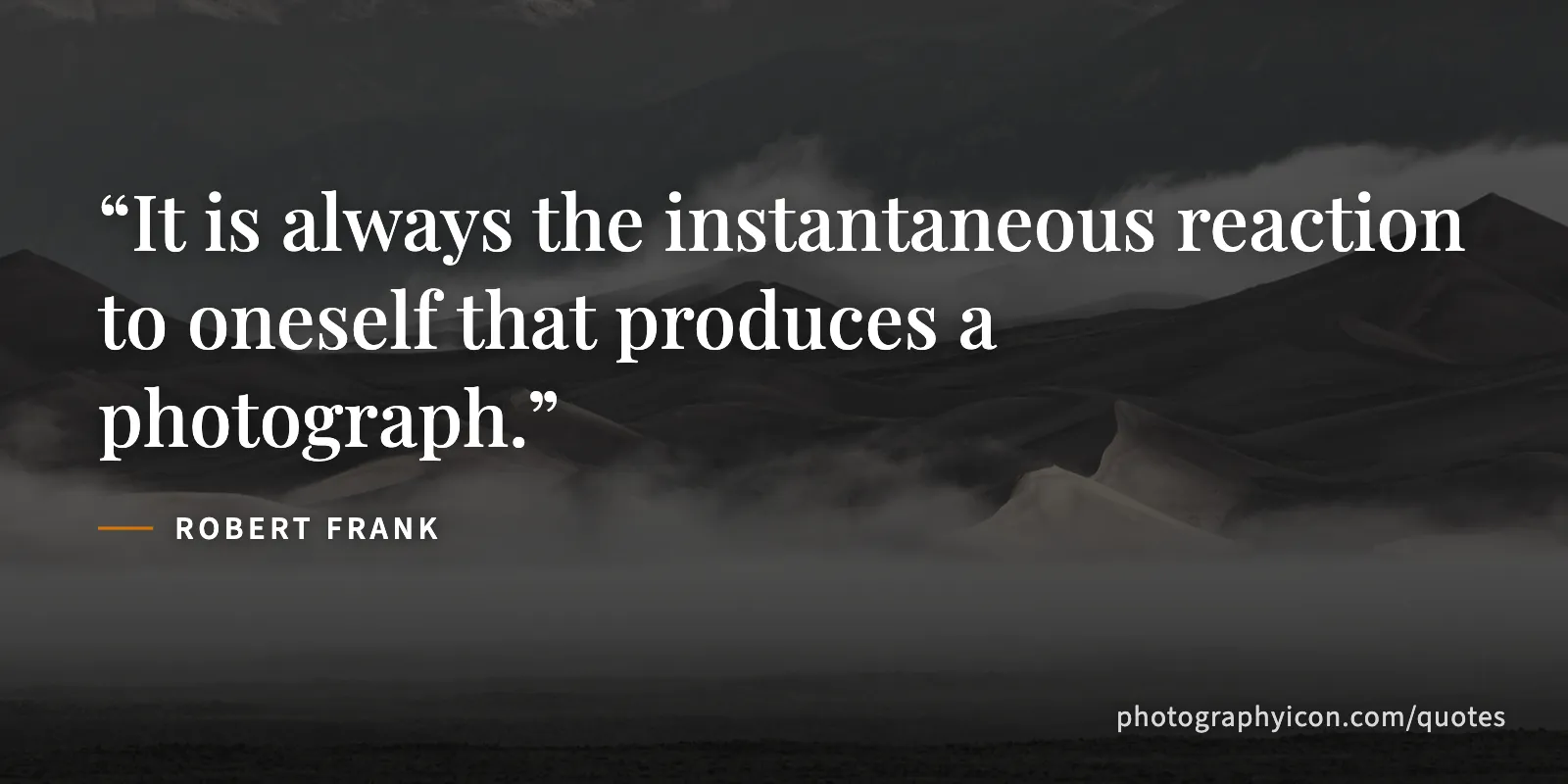
- It is always the instantaneous reaction to oneself that produces a photograph.
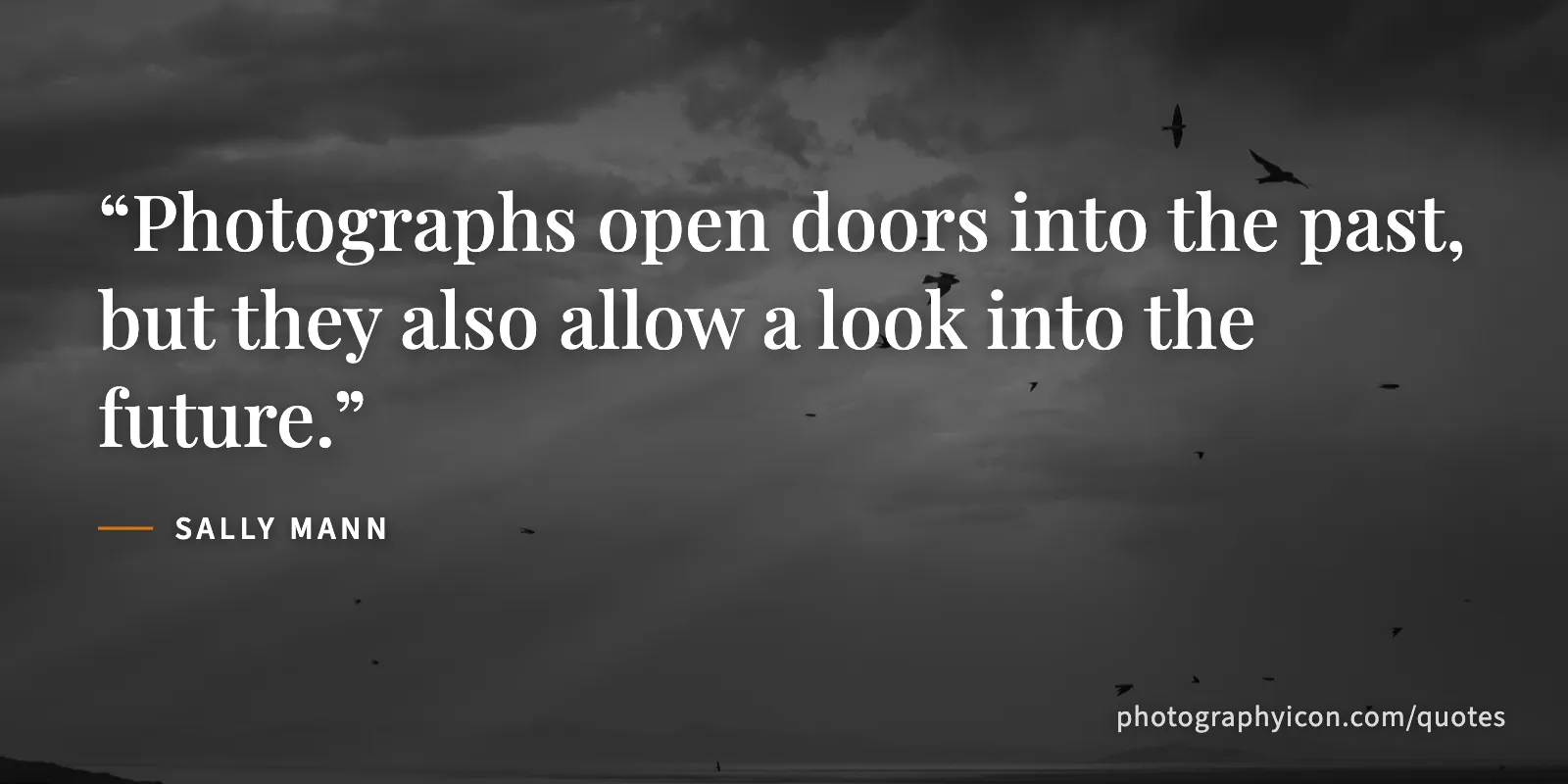
- Photographs open doors into the past, but they also allow a look into the future.
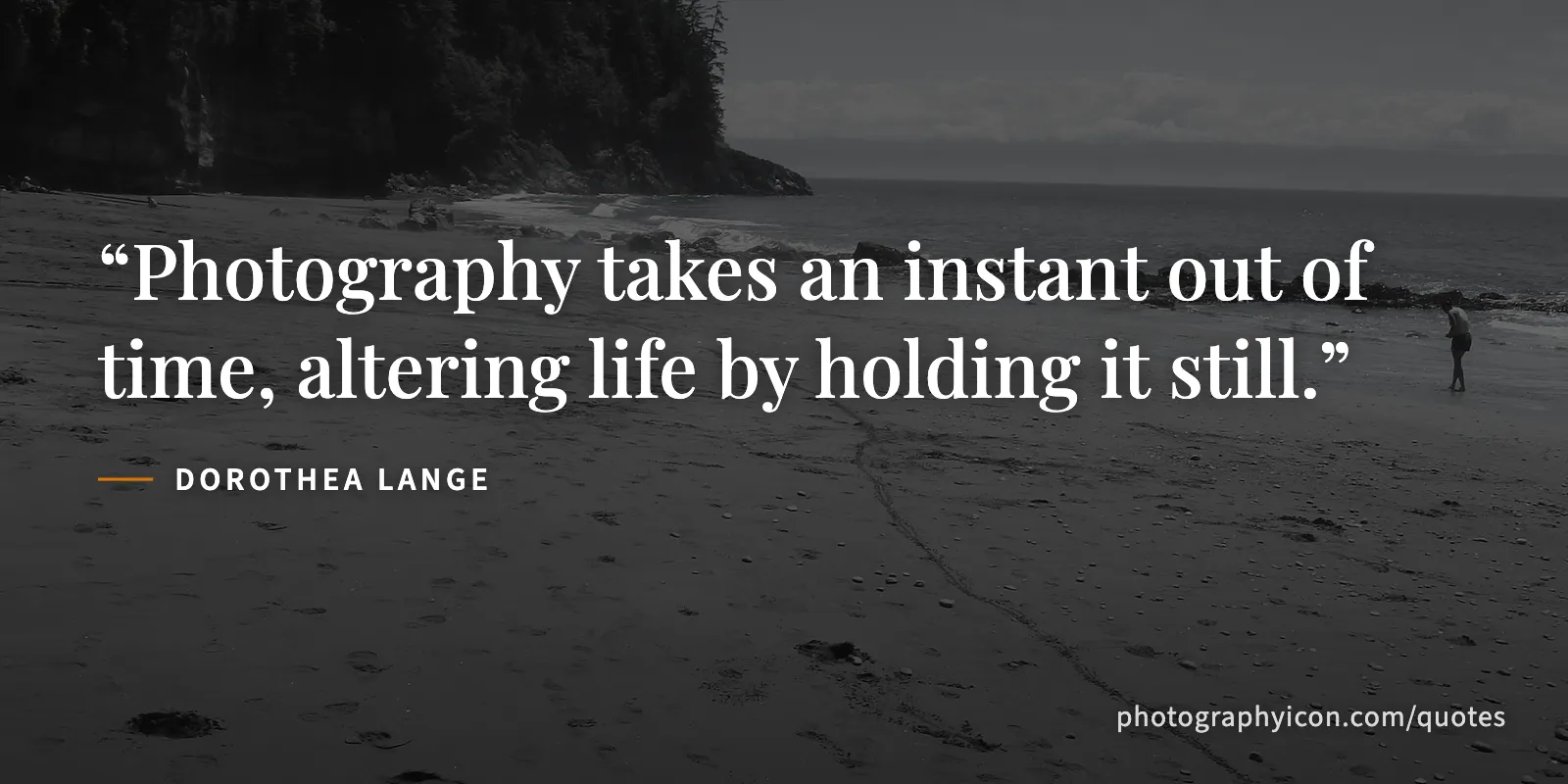
- Photography takes an instant out of time, altering life by holding it still.
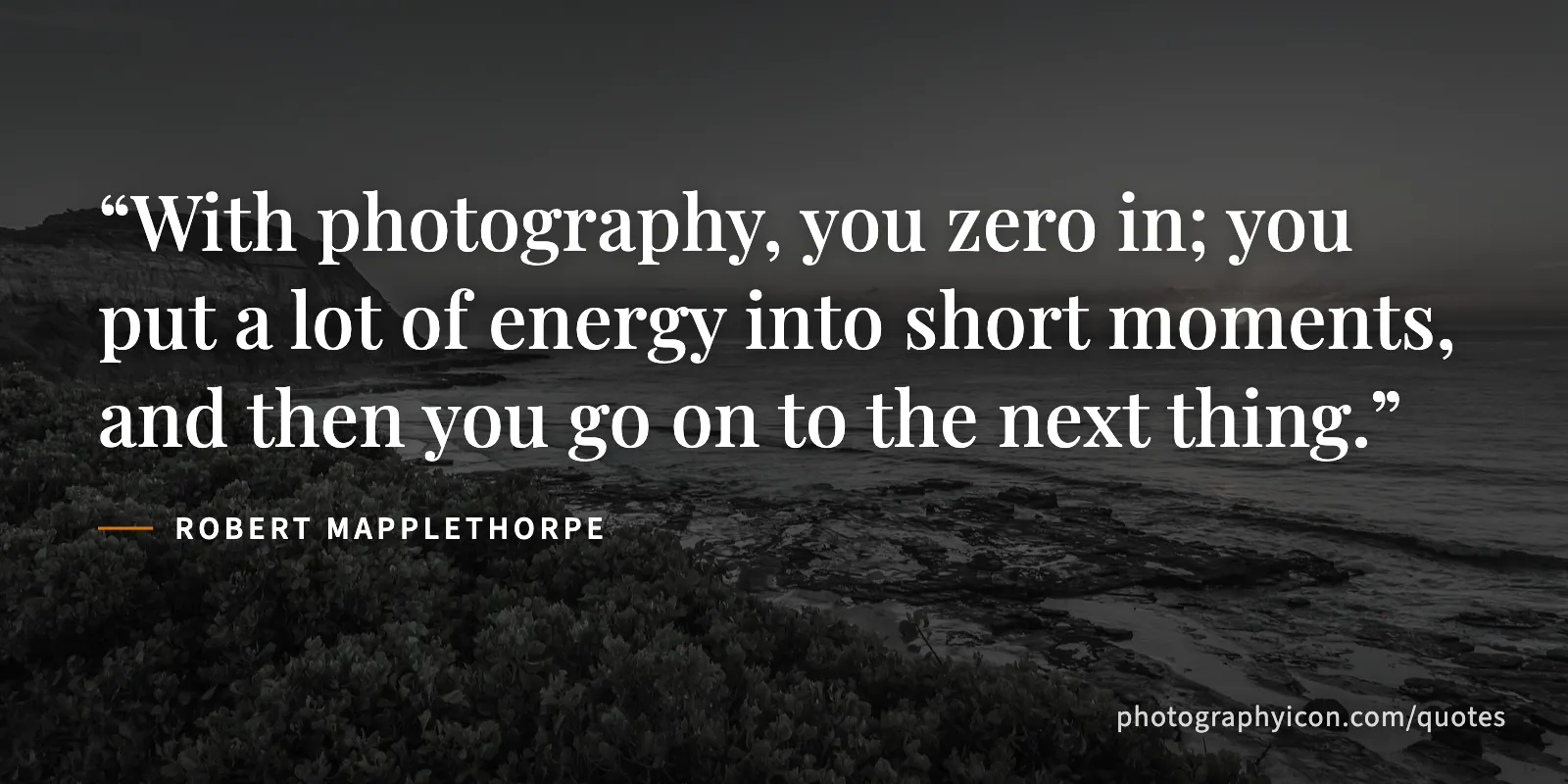
- With photography, you zero in; you put a lot of energy into short moments, and then you go on to the next thing.
- In photography there is a reality so subtle that it becomes more real than reality.
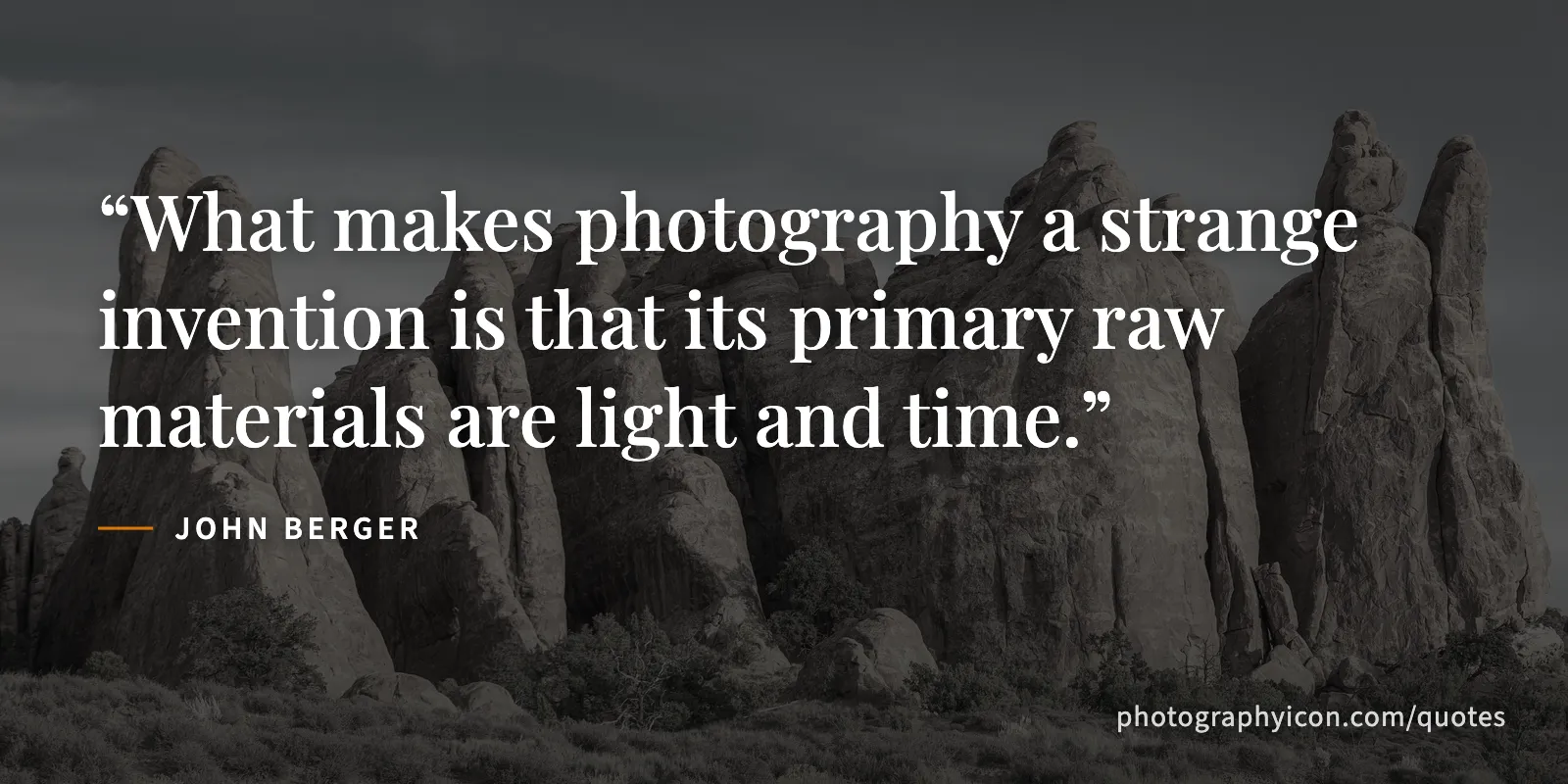
- What makes photography a strange invention is that its primary raw materials are light and time.
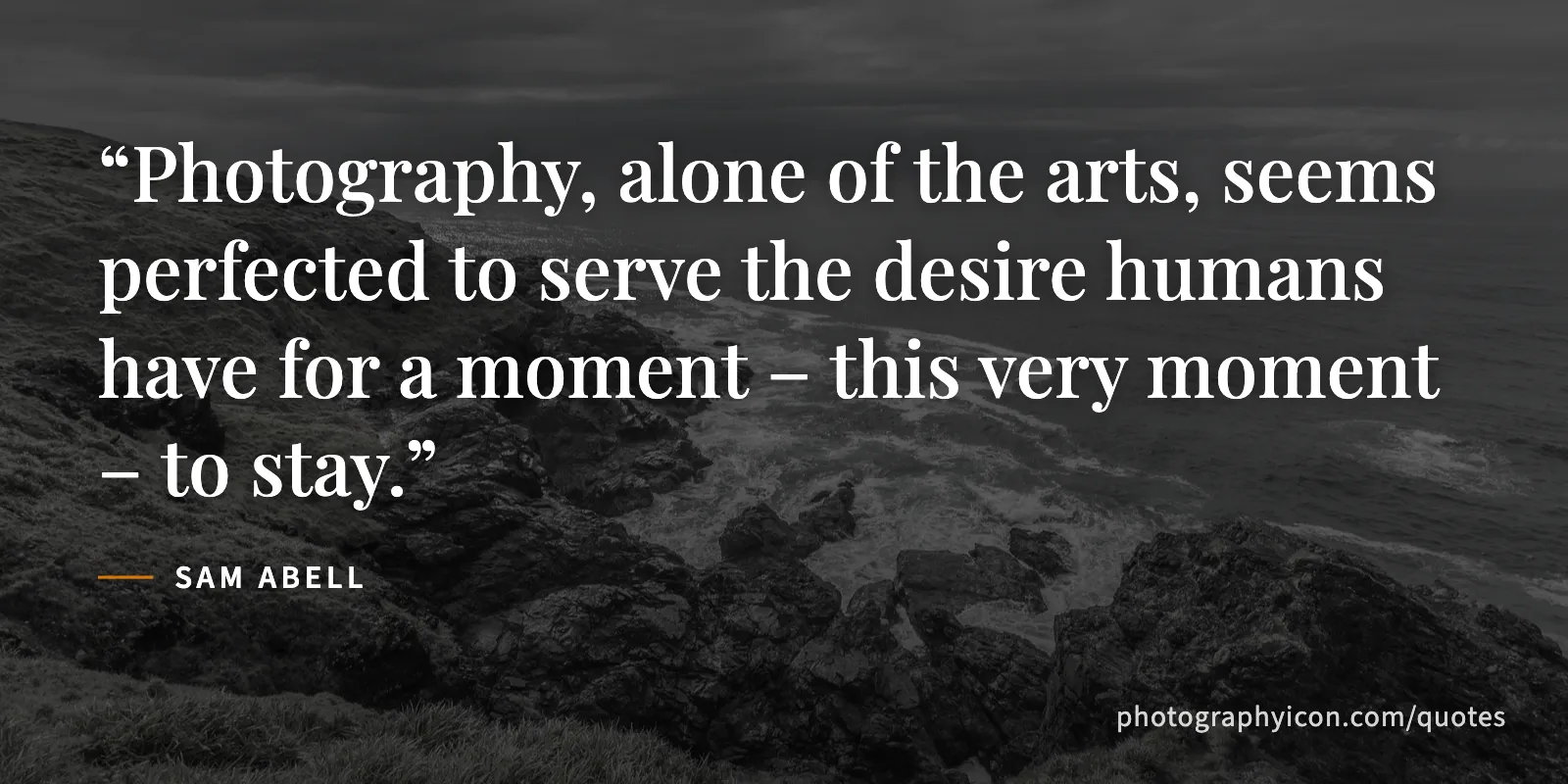
- Photography, alone of the arts, seems perfected to serve the desire humans have for a moment – this very moment – to stay.
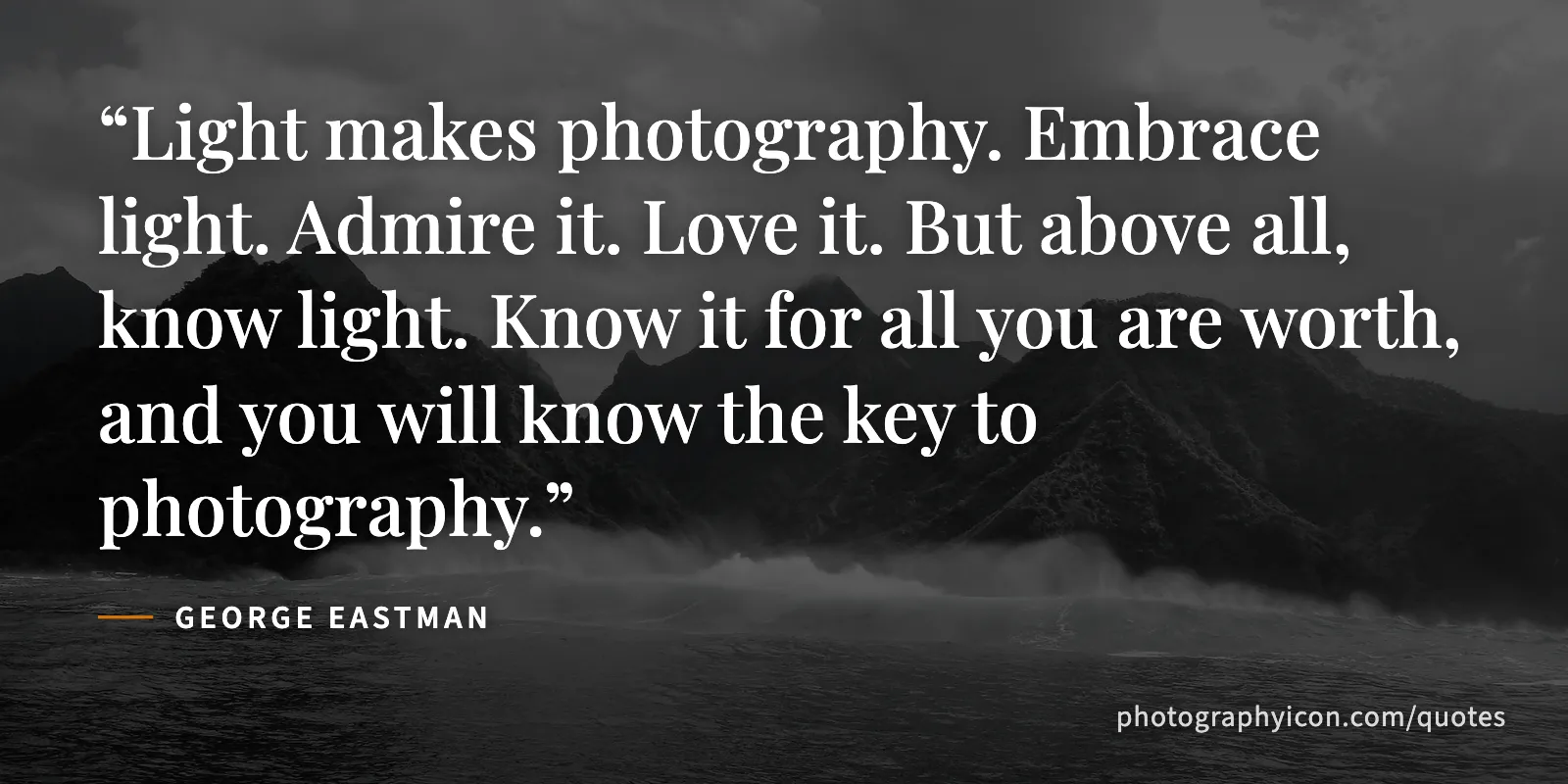
- Light makes photography. Embrace light. Admire it. Love it. But above all, know light. Know it for all you are worth, and you will know the key to photography.
- Traditionally, photography is supposed to capture an event that has passed; but that is not what I’m looking for. Photography brings the past into the present when you look at it.
- Photography can only represent the present. Once photographed, the subject becomes part of the past.
- Photography is, in essence, the art of capturing light using a device that doesn’t very well support it.
- The best thing about a picture is that it never changes, even when the people in it do.
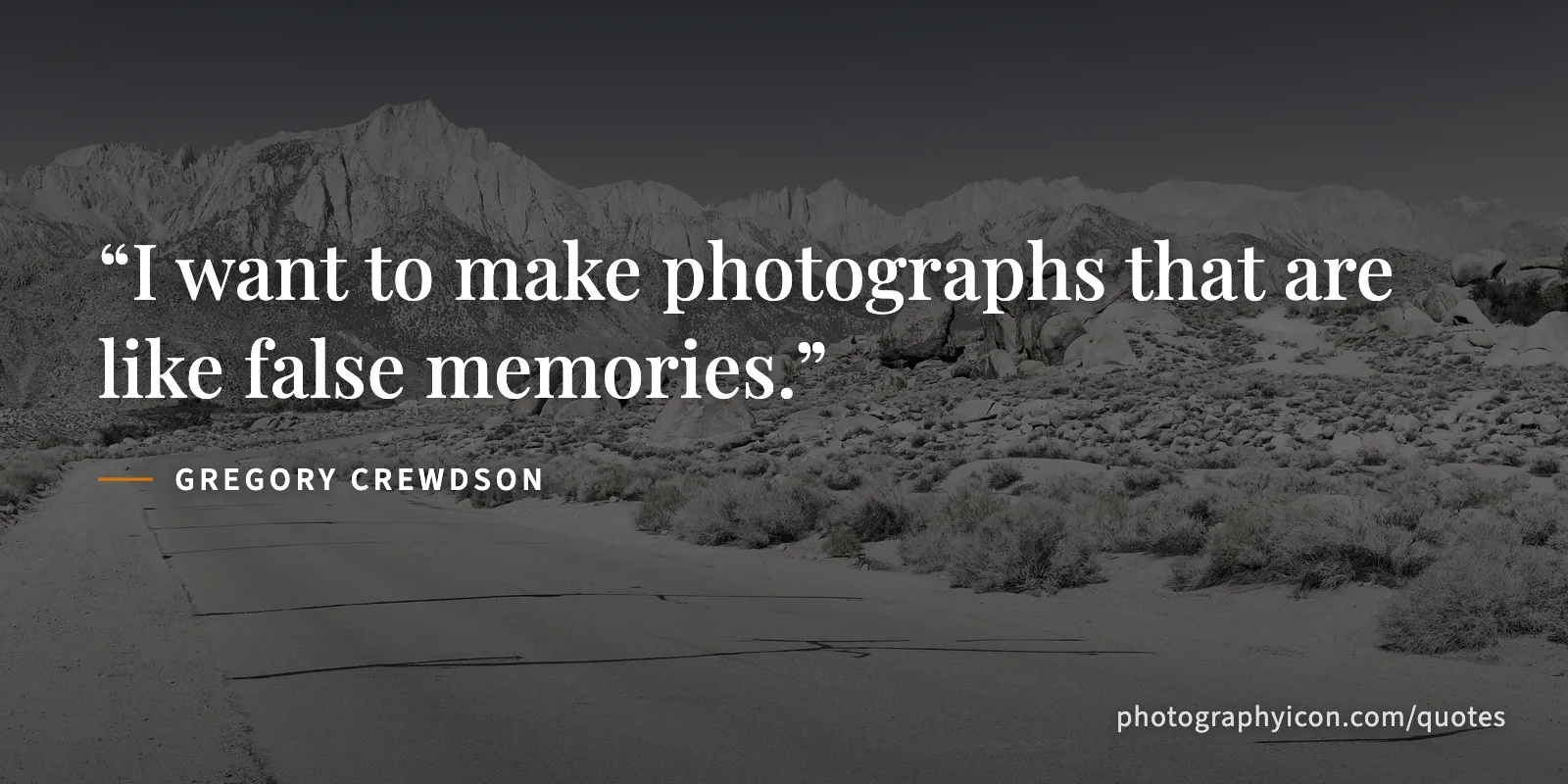
- I want to make photographs that are like false memories.


Carrie Latet

Unknown

Unknown
People, portraits and the subject
Photographing people is mostly about the relationship, and the quotes say so: Paul Strand on making others care, Gordon Parks on the subject outranking the photographer, and Paul Caponigro on the difference between a likeness and a portrait. For the practice, see portrait photography and street portraits.
- There are always two people in every picture: the photographer and the viewer.
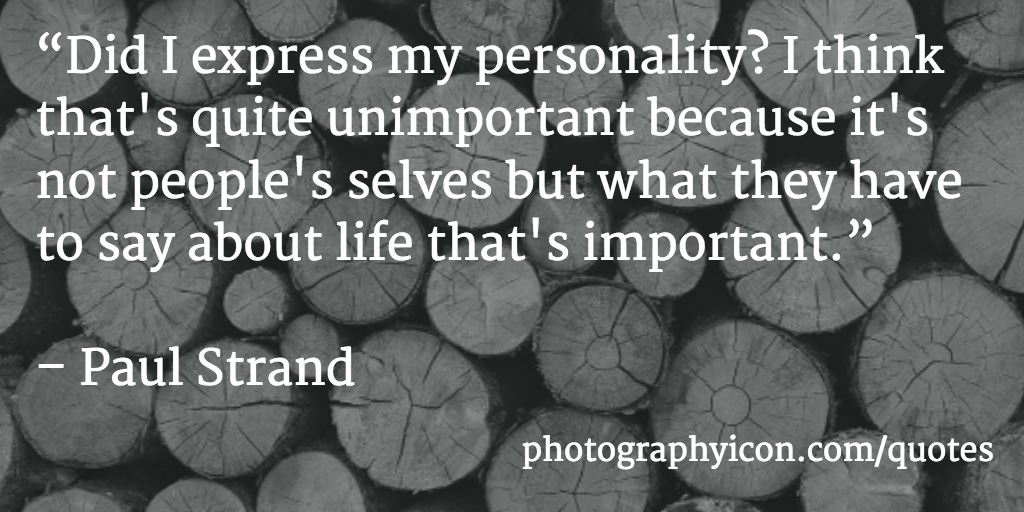
- Did I express my personality? I think that’s quite unimportant because it’s not people’s selves but what they have to say about life that’s important.
- Your photography is a record of your living, for anyone who really sees.
- It is one thing to photograph people. It is another to make others care about them by revealing the core of their humanness.
- You don’t take a photograph. You ask, quietly, to borrow it.
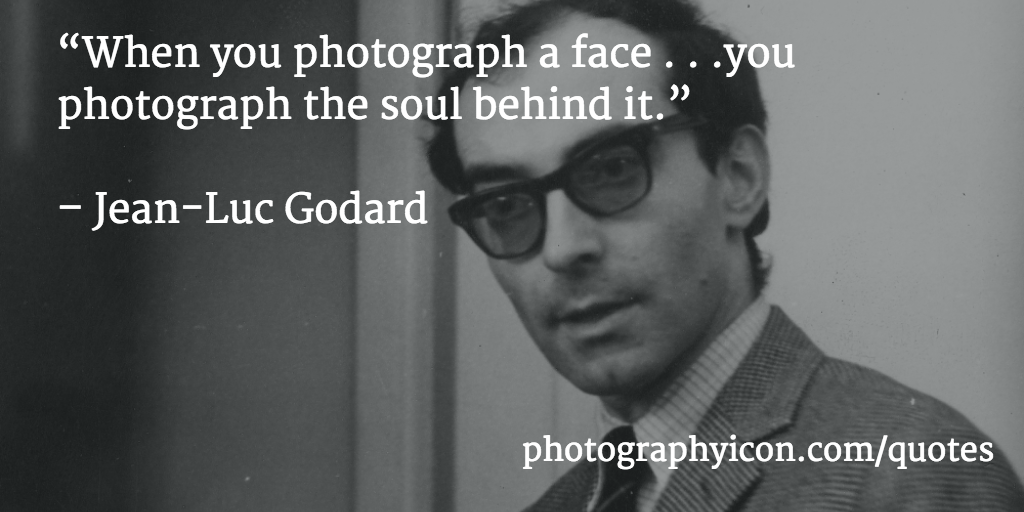
- When you photograph a face . . .you photograph the soul behind it.
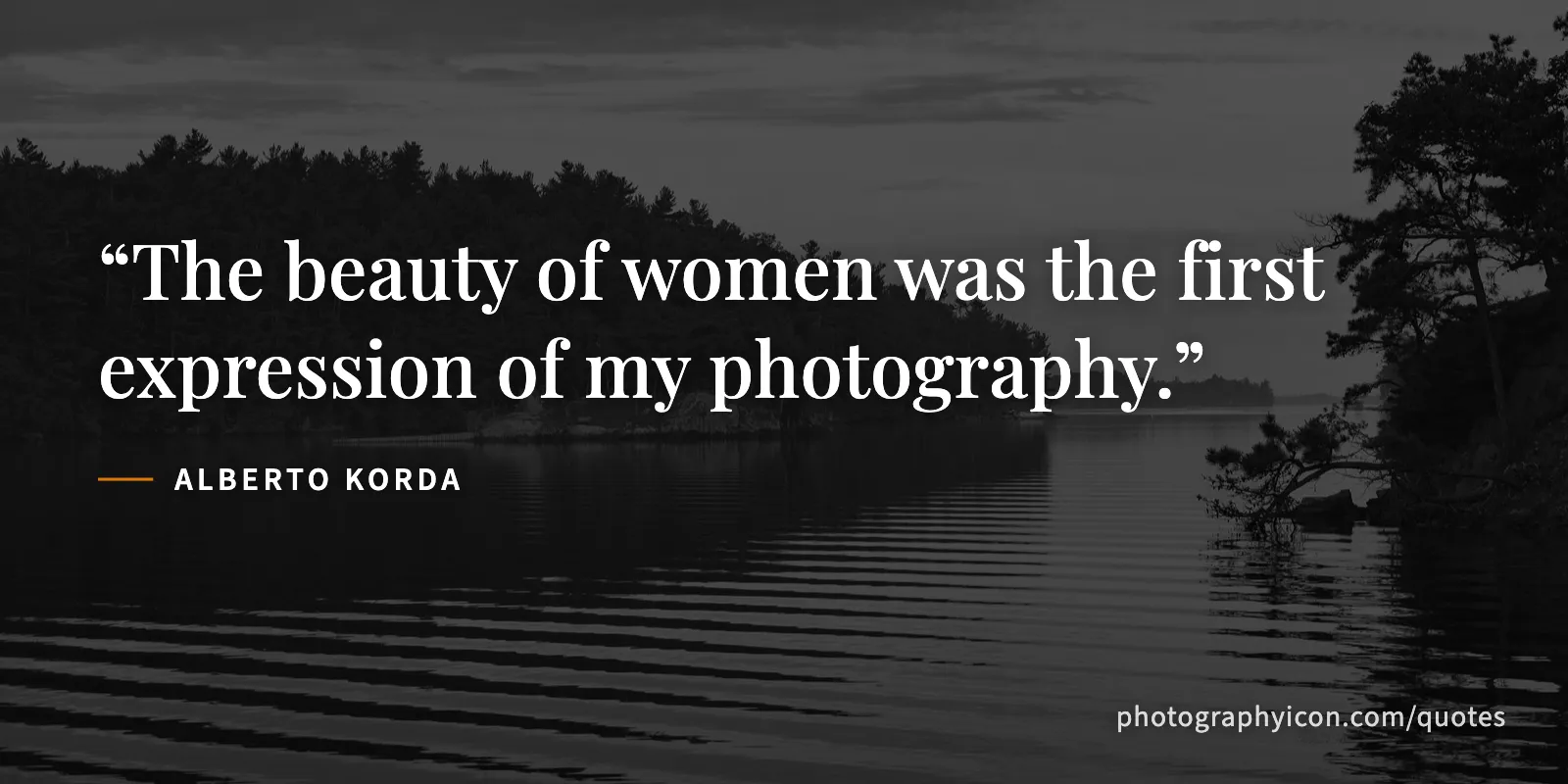
- The beauty of women was the first expression of my photography.
- The subject matter is so much more important than the photographer.
- It doesn’t matter if you’re photographing a porter in a market in Marrakech or you’re photographing the king of Morocco. You have the same sympathetic approach to everybody. You be nice to everybody, basically.
- If I am successful, the photograph reveals the underbelly, the overlooked and the under appreciated.
- It’s one thing to make a picture of what a person looks like, it’s another thing to make a portrait of who they are.
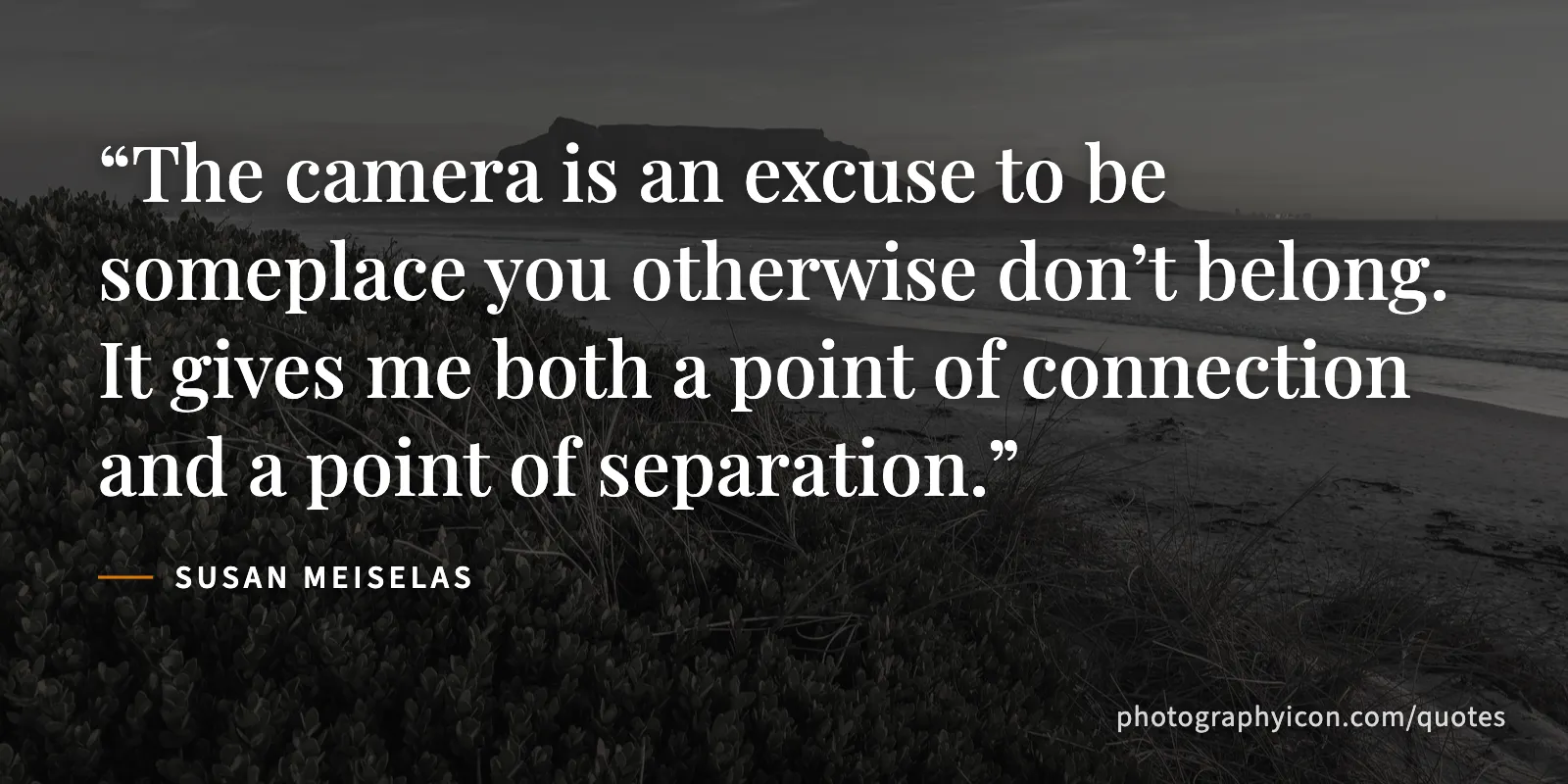
- The camera is an excuse to be someplace you otherwise don’t belong. It gives me both a point of connection and a point of separation.



Author Unknown
Making a photograph: craft, technique and rules
Several quotes here separate taking a picture from making one. Others argue about rules: Bill Brandt and Ansel Adams say there are none, while Garry Winogrand describes what the frame itself does to facts. They are not contradicting each other so much as describing different stages of the same work. The printing quotes belong to the darkroom tradition; see darkroom basics.
- The negative is the equivalent of the composer’s score and the print the performance.
- You don’t take a photograph, you make it.
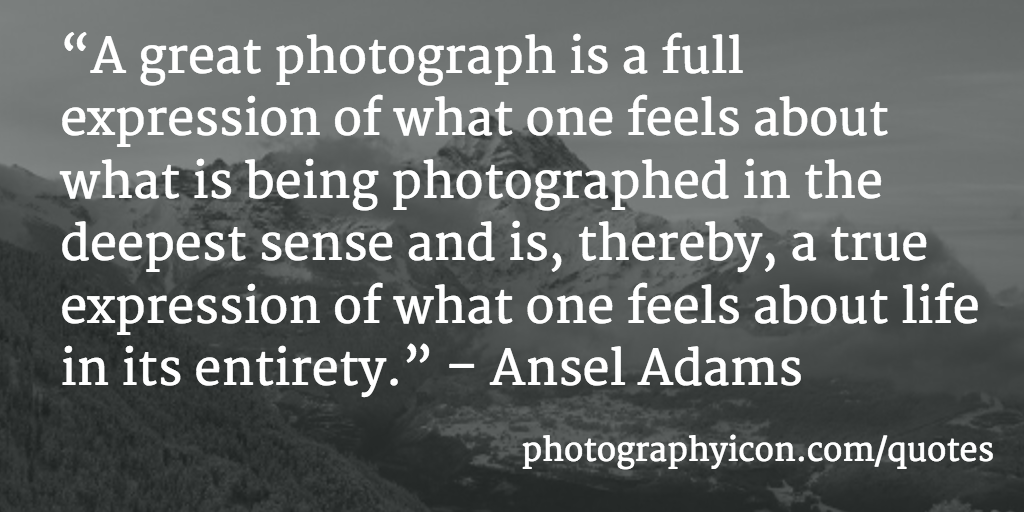
- A great photograph is a full expression of what one feels about what is being photographed in the deepest sense and is, thereby, a true expression of what one feels about life in its entirety.
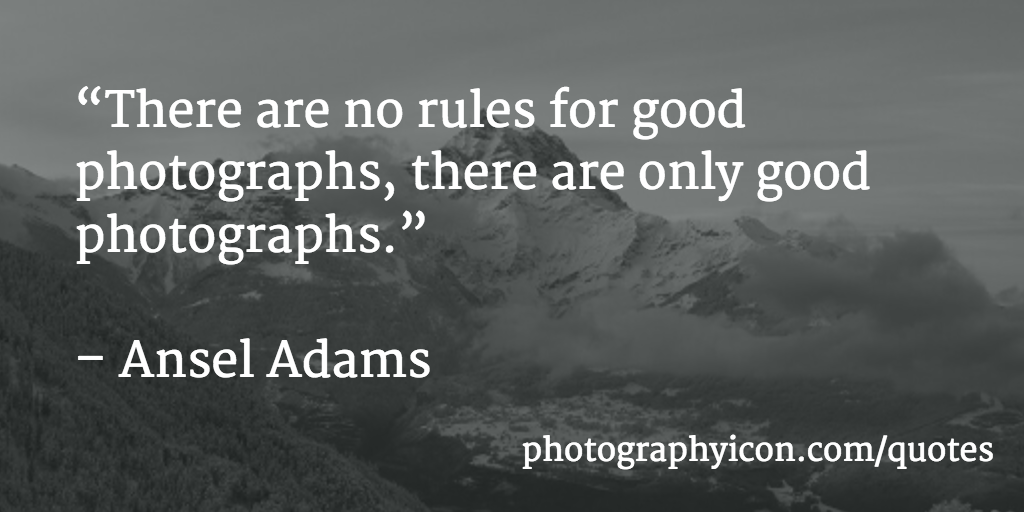
- There are no rules for good photographs, there are only good photographs.
- Photography has no rules, it is not a sport. It is the result which counts, no matter how it is achieved.
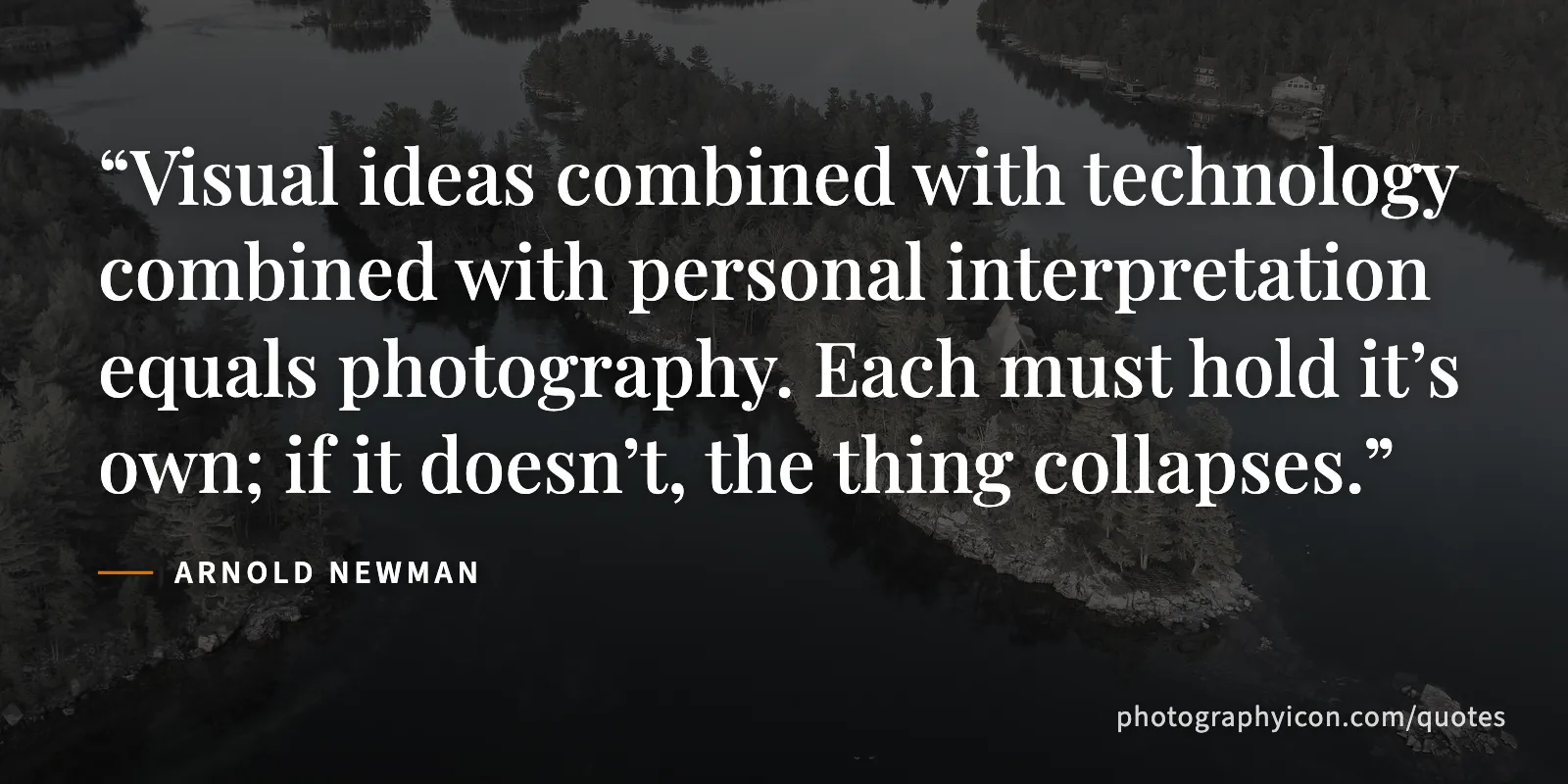
- Visual ideas combined with technology combined with personal interpretation equals photography. Each must hold it’s own; if it doesn’t, the thing collapses.
- Photography is about finding out what can happen in the frame. When you put four edges around some facts, you change those facts.
- I do not object to retouching, dodging or accentuation as long as they do not interfere with the natural qualities of photographic technique.
- There is a vast difference between taking a picture and making a photograph.
- As I have practiced it, photography produces pleasure by simplicity. I see something special and show it to the camera. A picture is produced. The moment is held until someone sees it. Then it is theirs.
- For me the printing process is part of the magic of photography. It’s that magic that can be exciting, disappointing, rewarding and frustrating all in the same few moments in the darkroom.
- Photography is a way of putting distance between myself and the work which sometimes helps me to see more clearly what it is that I have made.
- Does not the very word ‘creative’ mean to build, to initiate, to give out, to act – rather than to be acted upon, to be subjective? Living photography is positive in its approach, it sings a song of life – not death.
- In my photography, color and composition are inseparable. I see in color.



Cameras, gear and technology
Cameras come up less than you might expect. When they do, the point is usually that the equipment is not where the picture comes from. If you came here wondering whether better gear fixes your pictures, understanding camera specifications shows what the numbers on a camera actually change.
- Buying a Nikon doesn’t make you a photographer. It makes you a Nikon owner.
- The camera is much more than a recording apparatus, it is a medium via which messages reach us from another world.
- Kodak sells film, but they don’t advertise film; they advertise memories.
- Computer photography won’t be photography as we know it. I think photography will always be chemical.
- My main camera is a Nikon D3. I use a French camera from the 1800s for wet plate photography, I use a Hasselblad sometimes. But to me the camera really doesn’t matter that much. I don’t have a preference for film or digital.
- Of course I realize that photography is not the technical facility as much as it is the eye, and this decision that one makes for the moment at which you are going to snap, you know.
Author Unknown


Truth, story and what a photograph says
Is a photograph evidence, a story, a language, an opinion? These quotes take every side, from Jean-Luc Godard calling it truth to Nadav Kander calling it a way to make other people see the world your way. Edward Steichen frames the larger mission. For how stories are built from pictures, see visual storytelling in photography and documentary photography.
- The important thing is, you have to have something important to say about the world.
- Every artist I suppose has a sense of what they think has been the importance of their work. But to ask them to define it is not really a fair question. My real answer would be, the answer is on the wall.
- The camera should be used for a recording of life, for rendering the very substance and quintessence of the thing itself, whether it be polished steel or palpitating flesh.
- If I could tell the story in words, I wouldn’t need to lug around a camera.
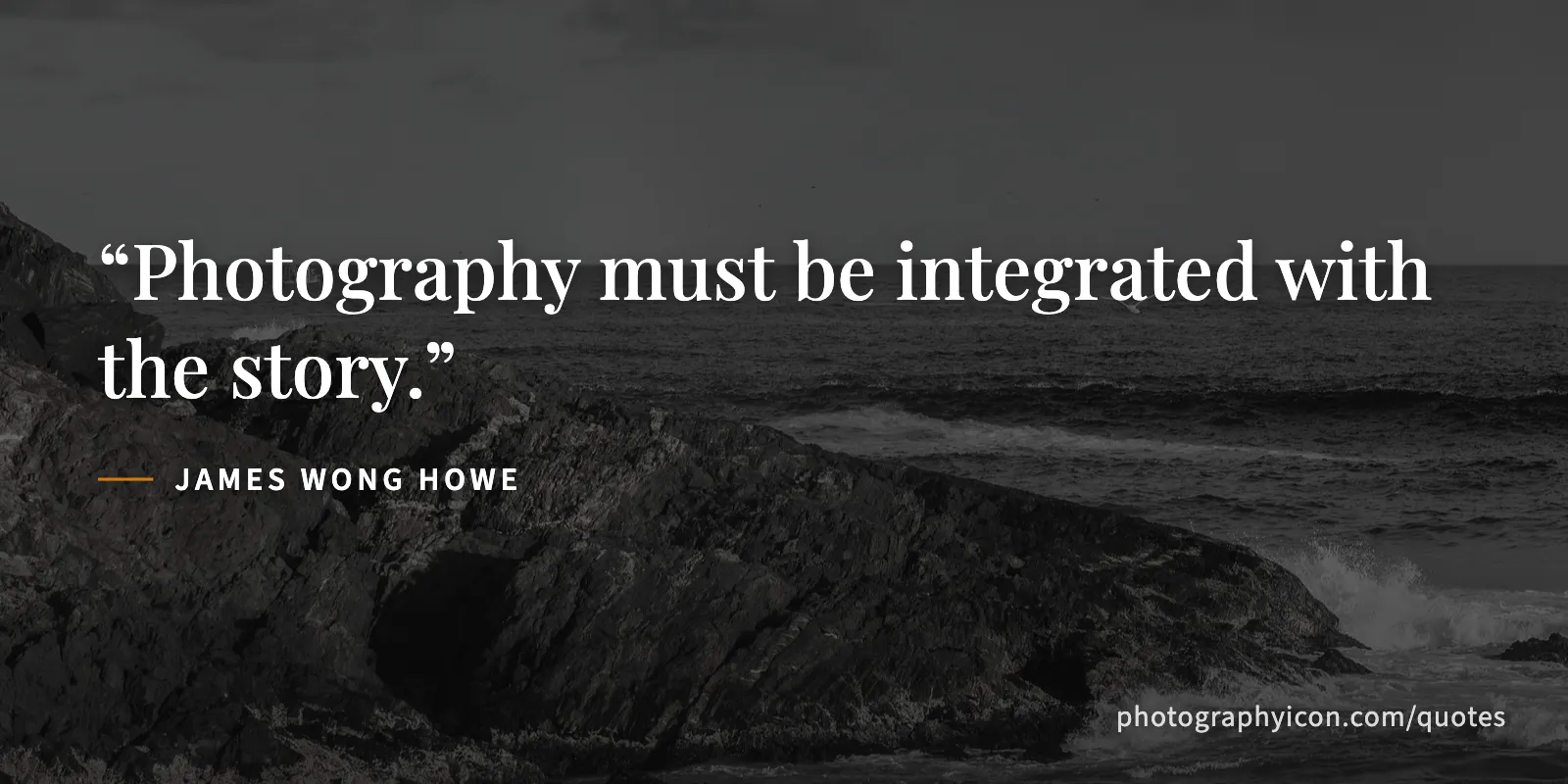
- Photography must be integrated with the story.
- Photography is truth.
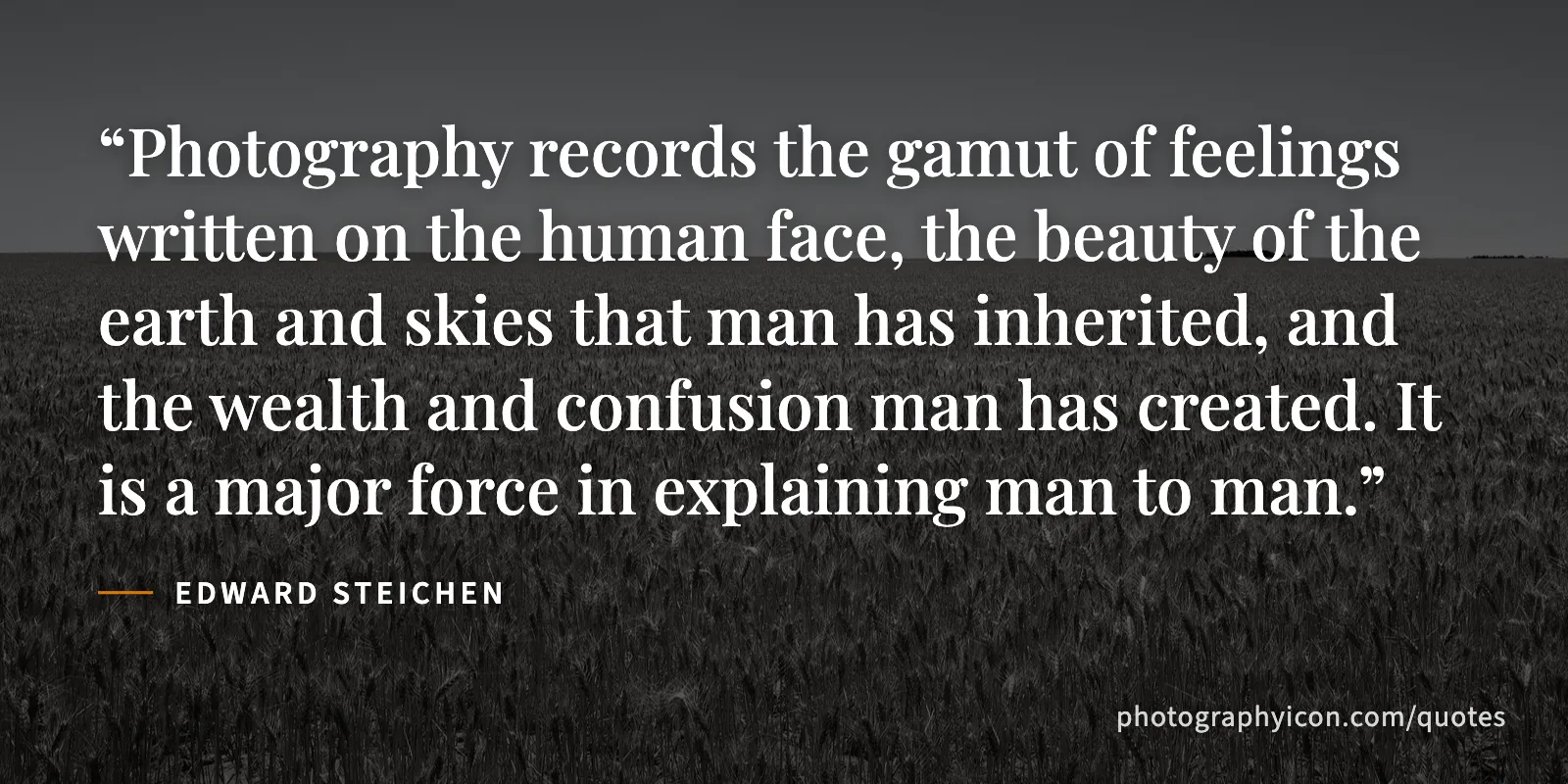
- Photography records the gamut of feelings written on the human face, the beauty of the earth and skies that man has inherited, and the wealth and confusion man has created. It is a major force in explaining man to man.
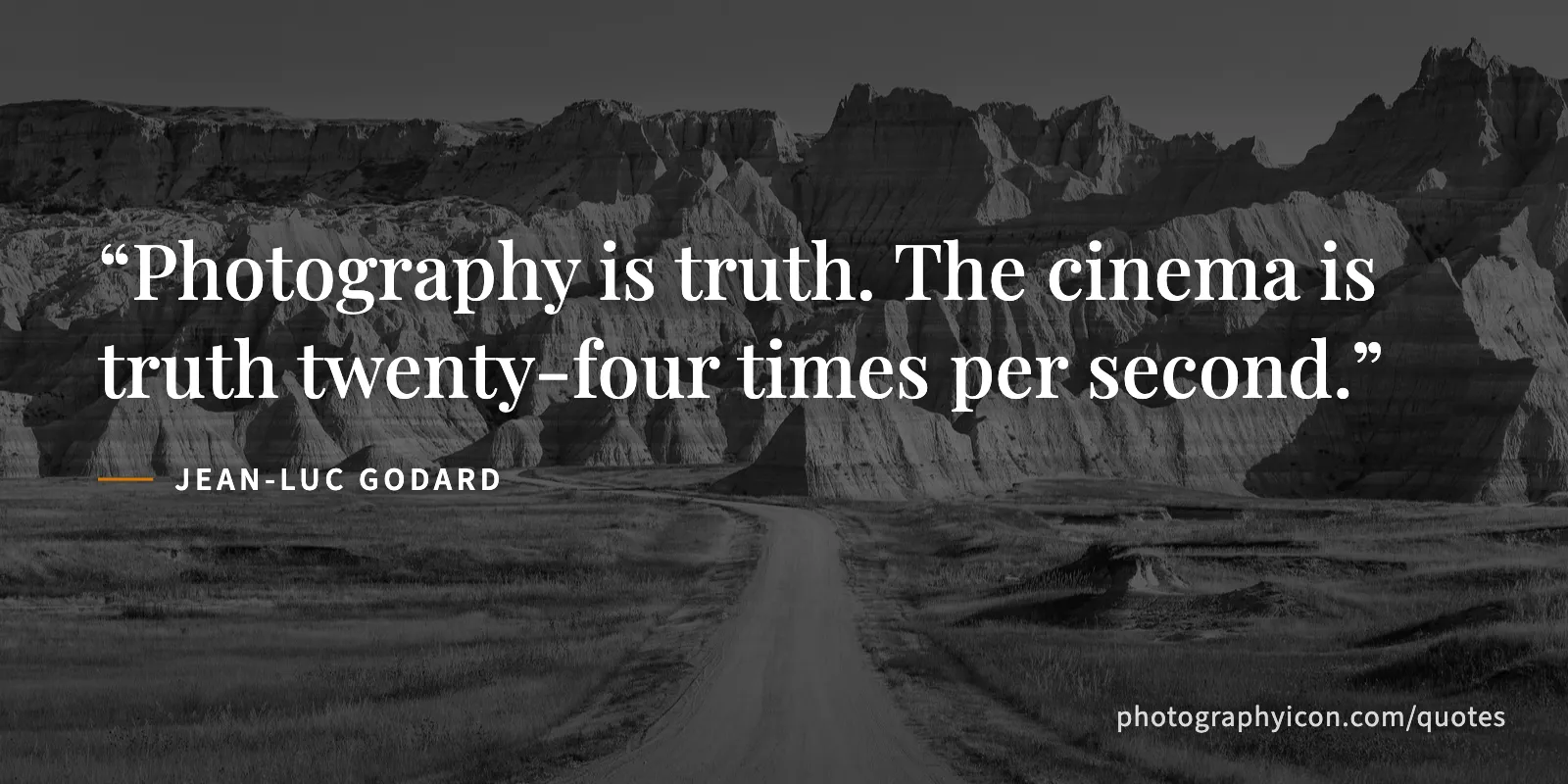
- Photography is truth. The cinema is truth twenty-four times per second.
- I treat the photograph as a work of great complexity in which you can find drama. Add to that a careful composition of landscapes, live photography, the right music and interviews with people, and it becomes a style.
- The mission of photography is to explain man to man and each to himself. And that is the most complicated thing on earth.
- Photography is a small voice, at best, but sometimes one photograph, or a group of them, can lure our sense of awareness.
- Photography is a major force in explaining man to man.
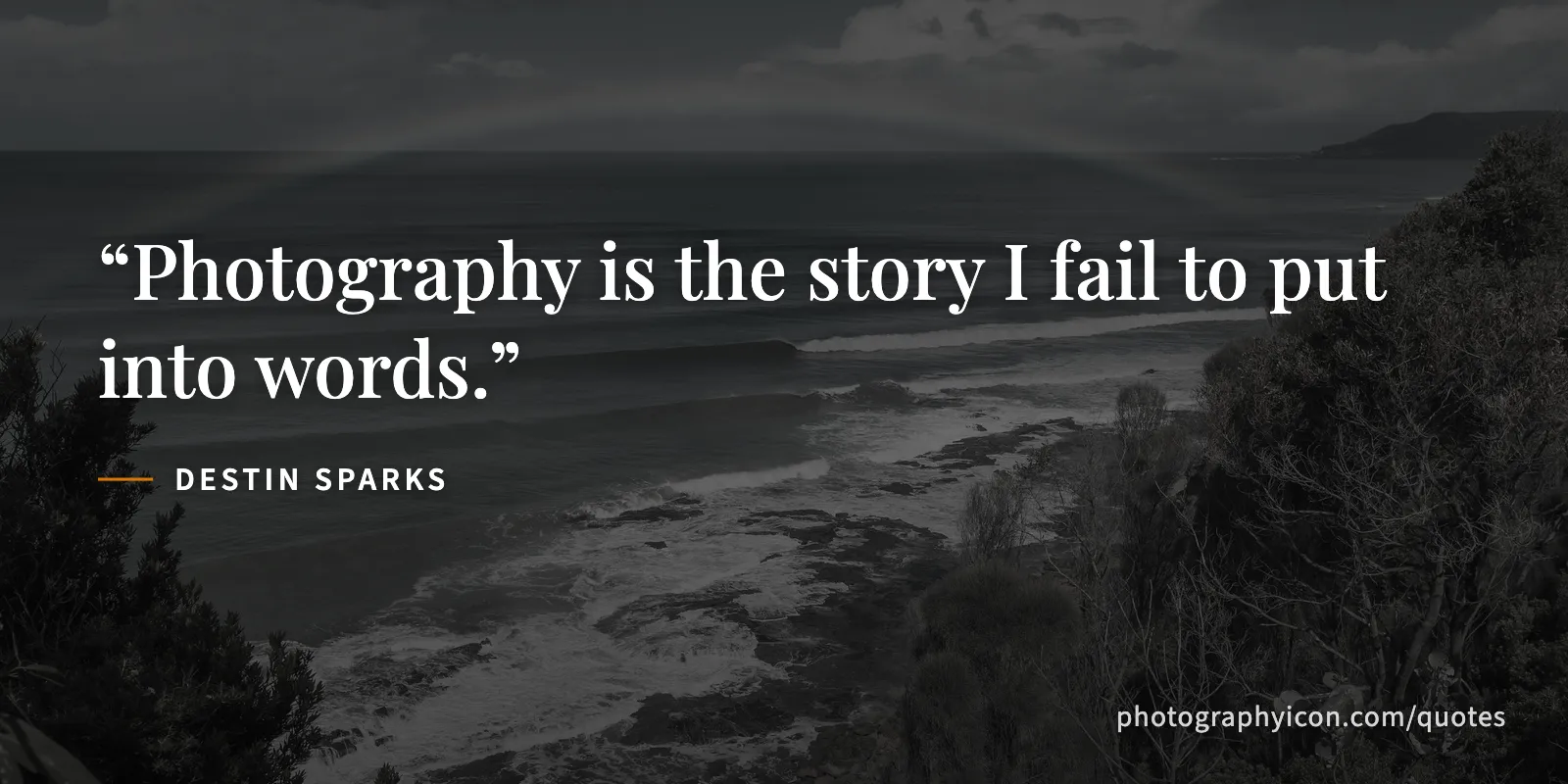
- Photography is the story I fail to put into words.
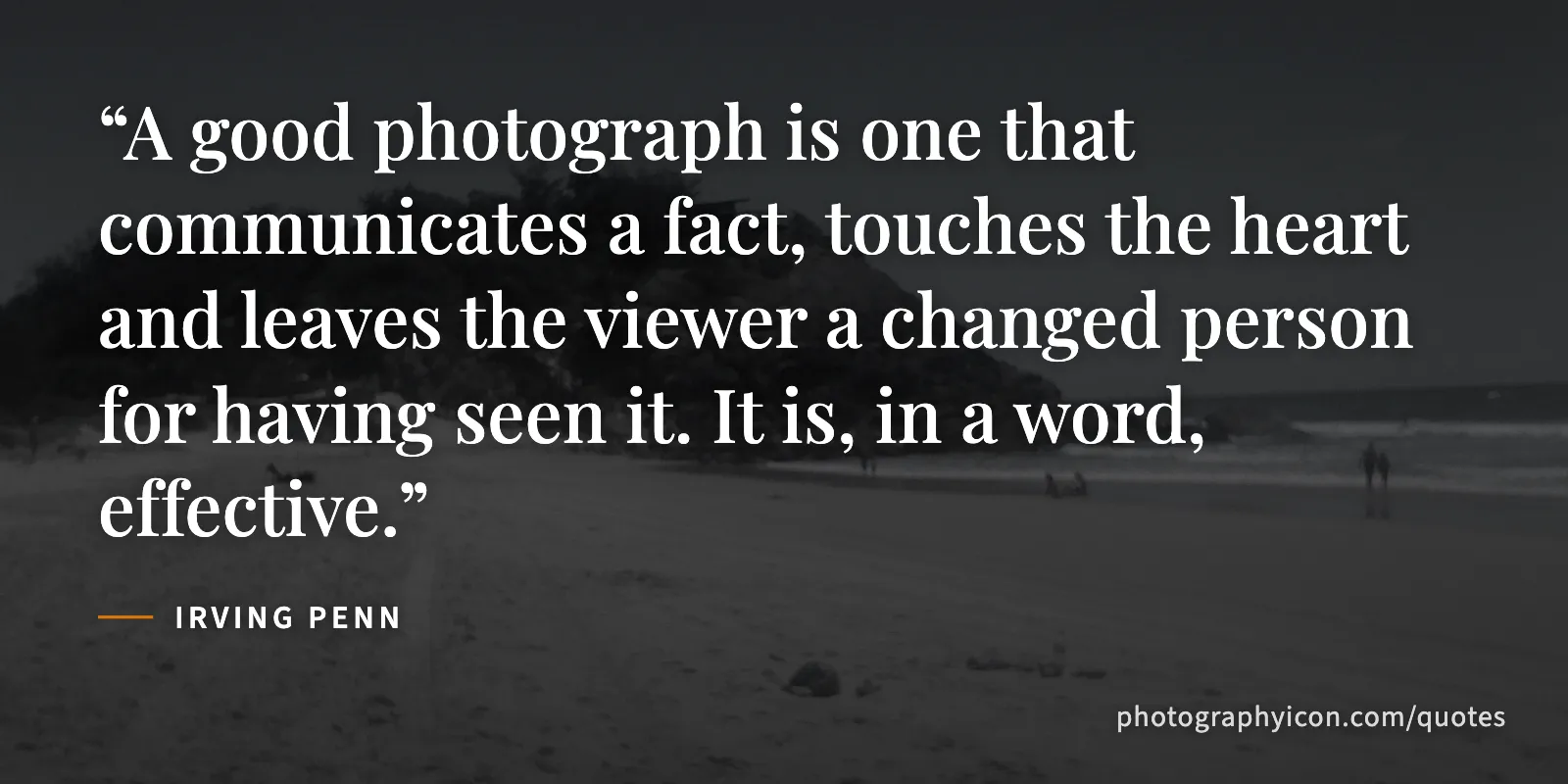
- A good photograph is one that communicates a fact, touches the heart and leaves the viewer a changed person for having seen it. It is, in a word, effective.
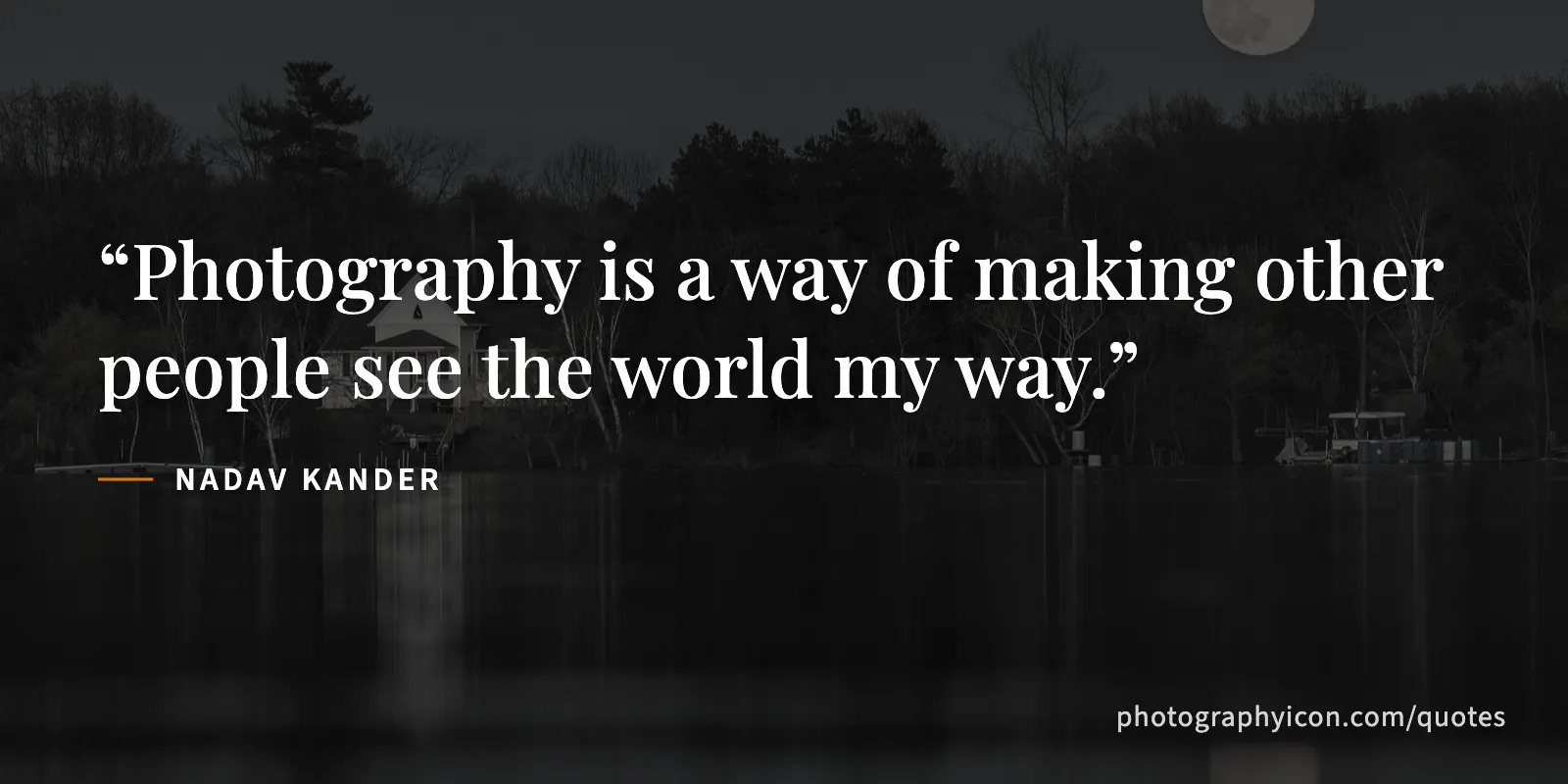
- Photography is a way of making other people see the world my way.
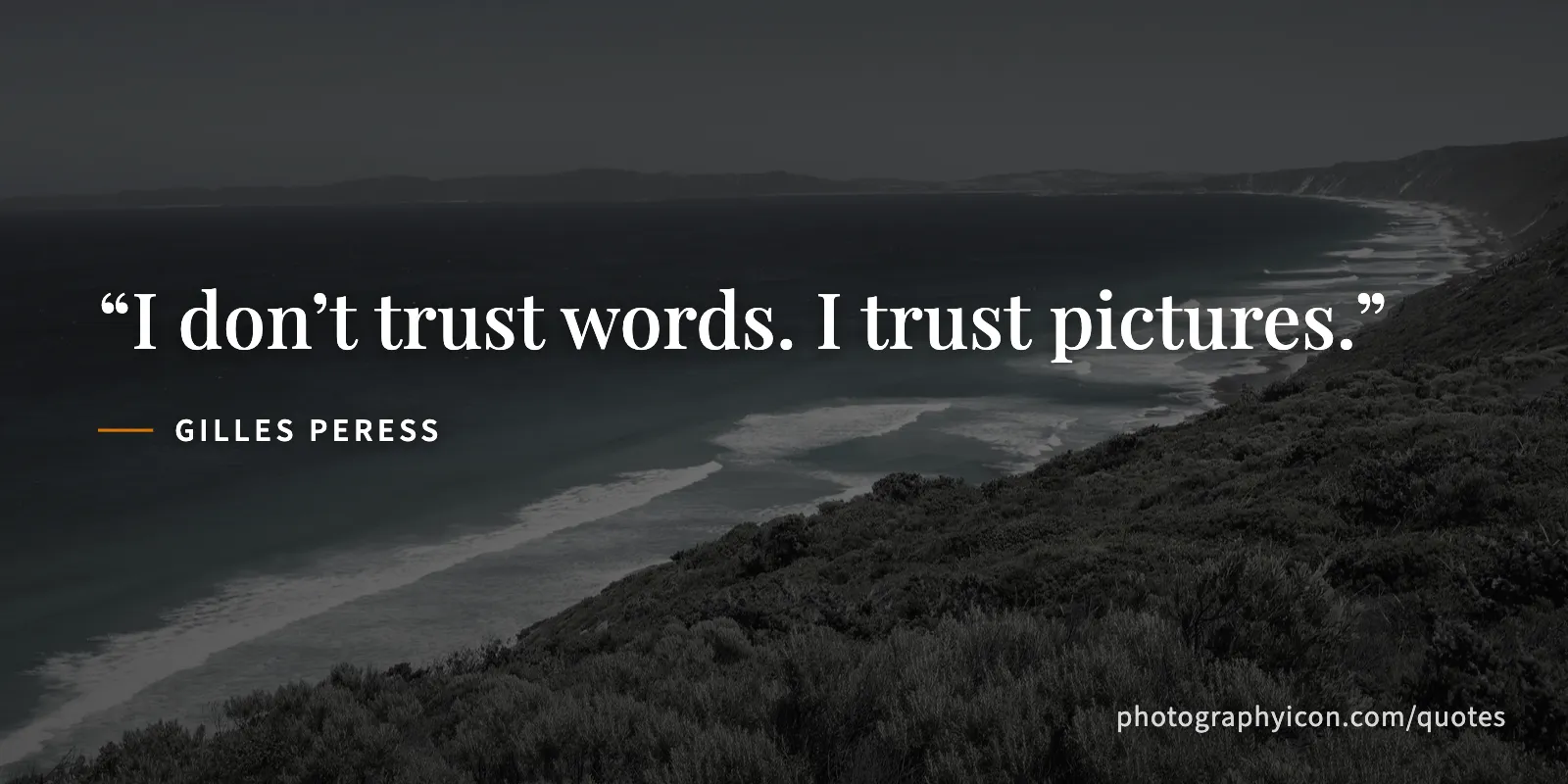
- I don’t trust words. I trust pictures.
- Photography is a language more universal than words.


Destin Sparks
Photography as an art and a medium
Photography was argued over as an art form for most of its first century, and many of these quotes come from inside that argument: Alfred Stieglitz insisting it needs its own possibilities of expression, Berenice Abbott that it must not imitate another medium, Ernst Haas that it is a new language.
- Photography is an austere and blazing poetry of the real.
- Photography is more than a medium for factual communication of ideas. It is a creative art.
- Photography, as a powerful medium of expression and communications, offers an infinite variety of perception, interpretation and execution.
- Actually, I’m not all that interested in the subject of photography. Once the picture is in the box, I’m not all that interested in what happens next. Hunters, after all, aren’t cooks.
- Photography is the dominant and fascinating and only folk art of the twentieth century.
- People don’t have time to wait for somebody to paint their portraits anymore. The money is in photography.
- Photography suits the temper of this age – of active bodies and minds. It is a perfect medium for one whose mind is teeming with ideas, imagery, for a prolific worker who would be slowed down by painting or sculpting, for one who sees quickly and acts decisively, accurately.
- When I first became interested in photography, I thought it was the whole cheese. My idea was to have it recognized as one of the fine arts. Today I don’t give a hoot in hell about that. The mission of photography is to explain man to man and each man to himself.
- It takes a lot of imagination to be a good photographer. You need less imagination to be a painter because you can invent things. But in photography everything is so ordinary; it takes a lot of looking before you learn to see the extraordinary.
- People think because it’s photography it’s not worth as much, and because it’s a woman artist, you’re still not getting as much – there’s still definitely that happening. I’m still really competitive when it comes to, I guess, the male painters and male artists. I still think that’s really unfair.
- The use of the term art medium is, to say the least, misleading, for it is the artist that creates a work of art not the medium. It is the artist in photography that gives form to content by a distillation of ideas, thought, experience, insight and understanding.
- Photography can never grow up if it imitates some other medium. It has to walk alone; it has to be itself.
- Photography is still a very new medium and everything must be tried and dare.
- The arts equally have distinct departments, and unless photography has its own possibilities of expression, separate from those of the other arts, it is merely a process, not an art.
- With photography a new language has been created. Now for the first time it is possible to express reality by reality. We can look at an impression as long as we wish, we can delve into it and, so to speak, renew past experiences at will.


Practice, persistence and learning
The most useful advice on the page is probably here, and it is unglamorous: photograph a lot, look at a lot of other pictures, and keep the beginner’s curiosity. Imogen Cunningham, Michael Kenna and Cartier-Bresson all say some version of it.
- Your first 10,000 photographs are your worst.
- The more you photograph, the more you realize what can and what can’t be photographed. You just have to keep doing it.
- Results are uncertain even among the more experienced photographers.
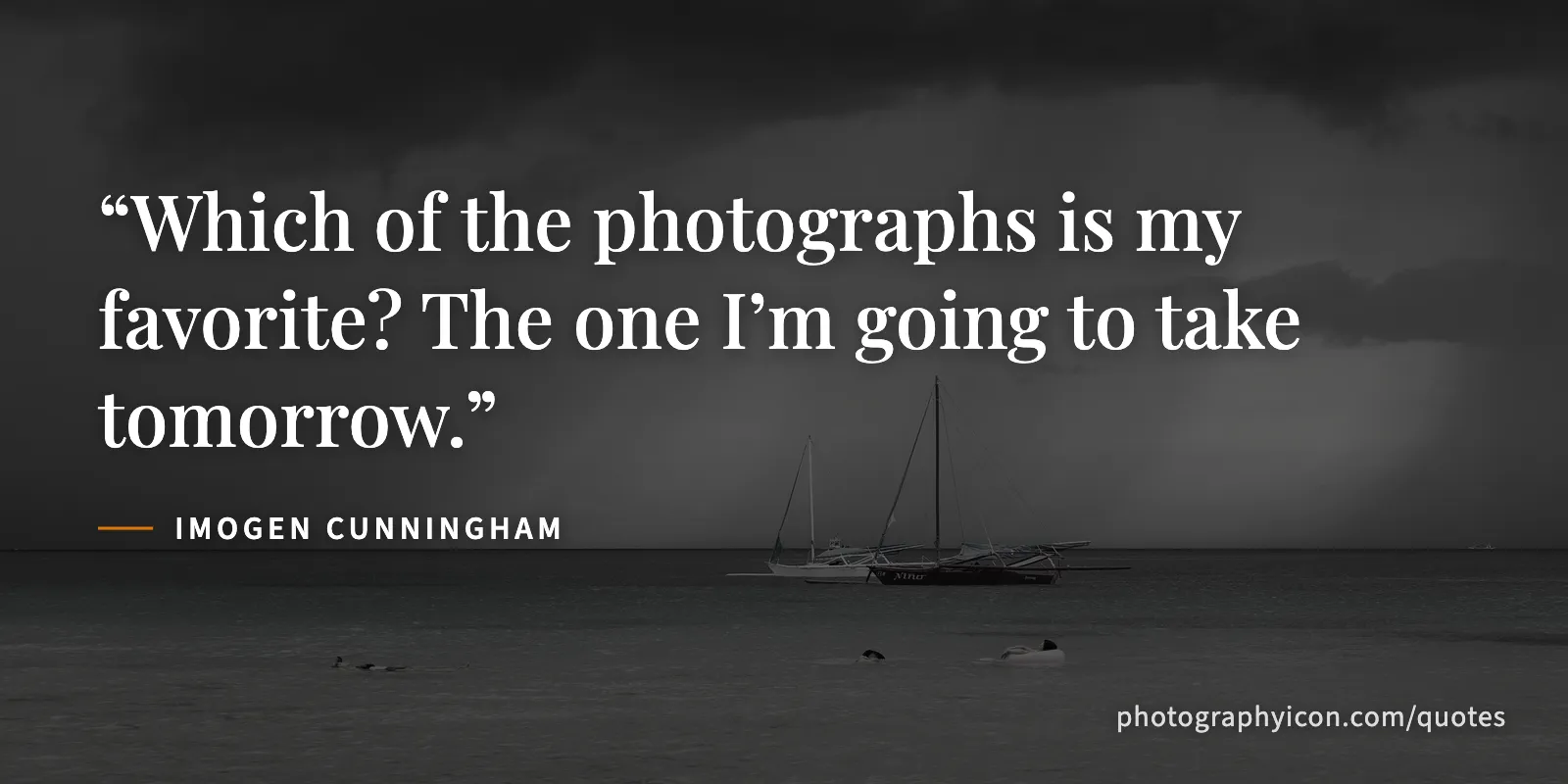
- Which of the photographs is my favorite? The one I’m going to take tomorrow.
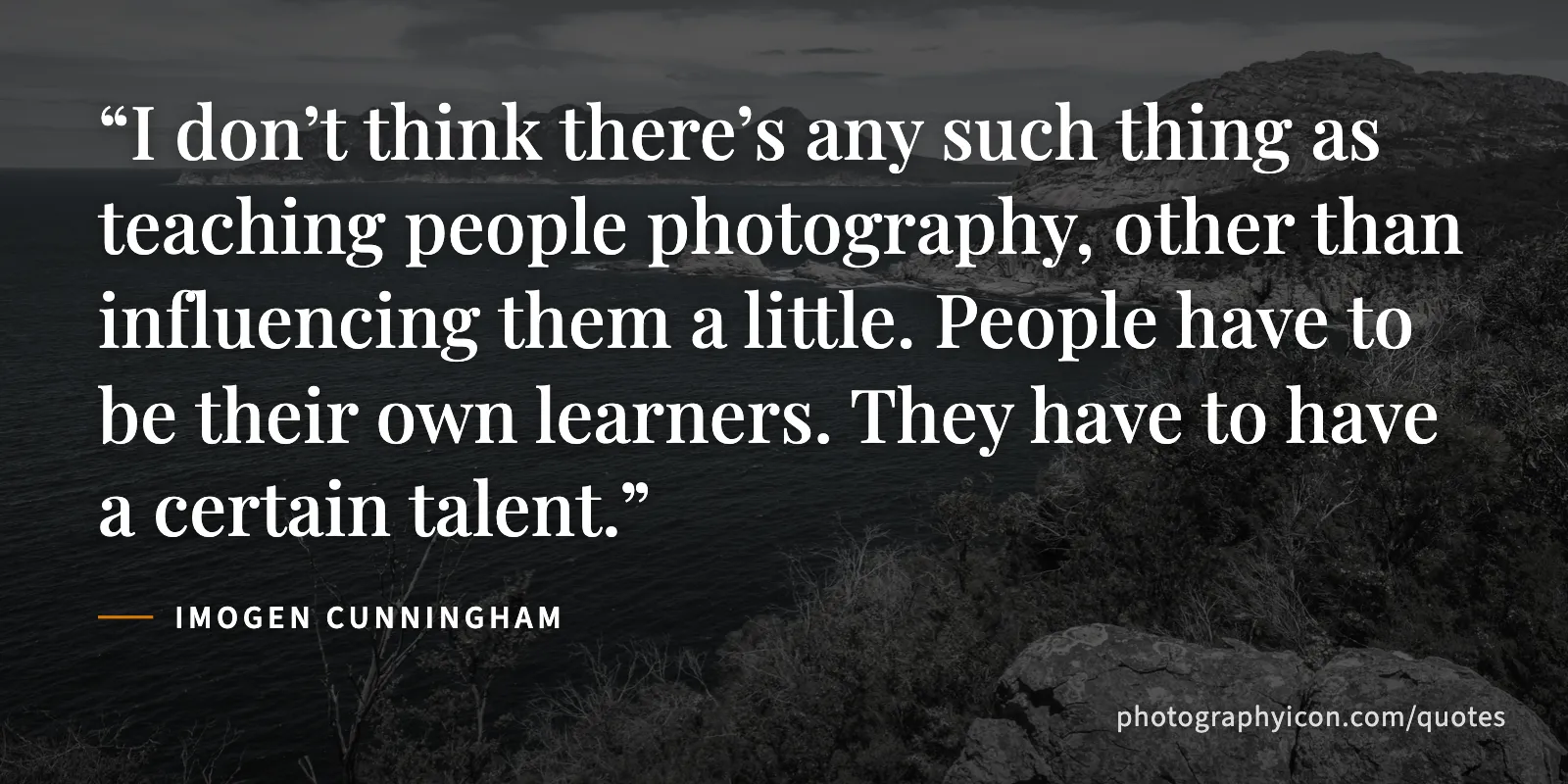
- I don’t think there’s any such thing as teaching people photography, other than influencing them a little. People have to be their own learners. They have to have a certain talent.
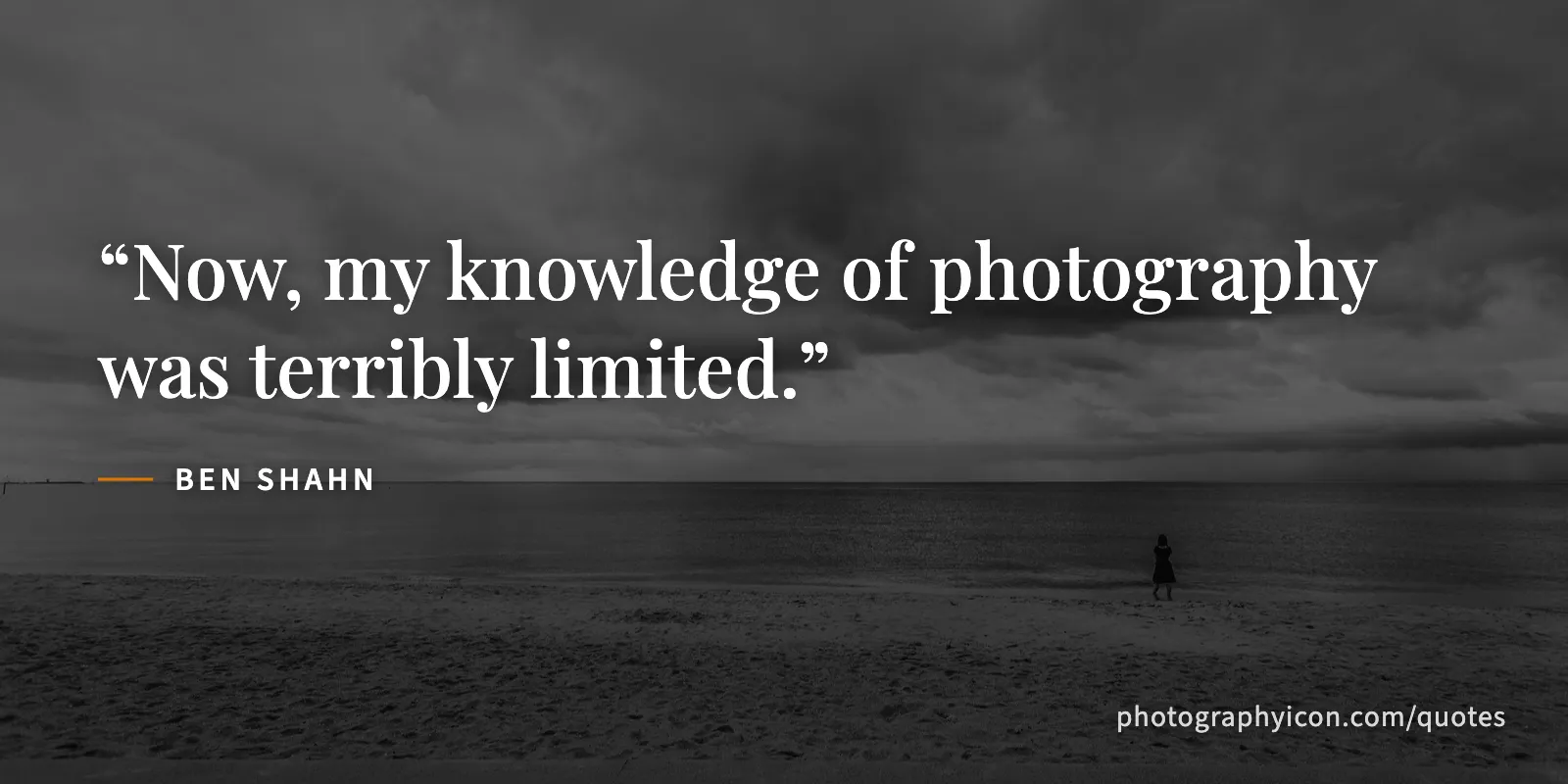
- Now, my knowledge of photography was terribly limited.
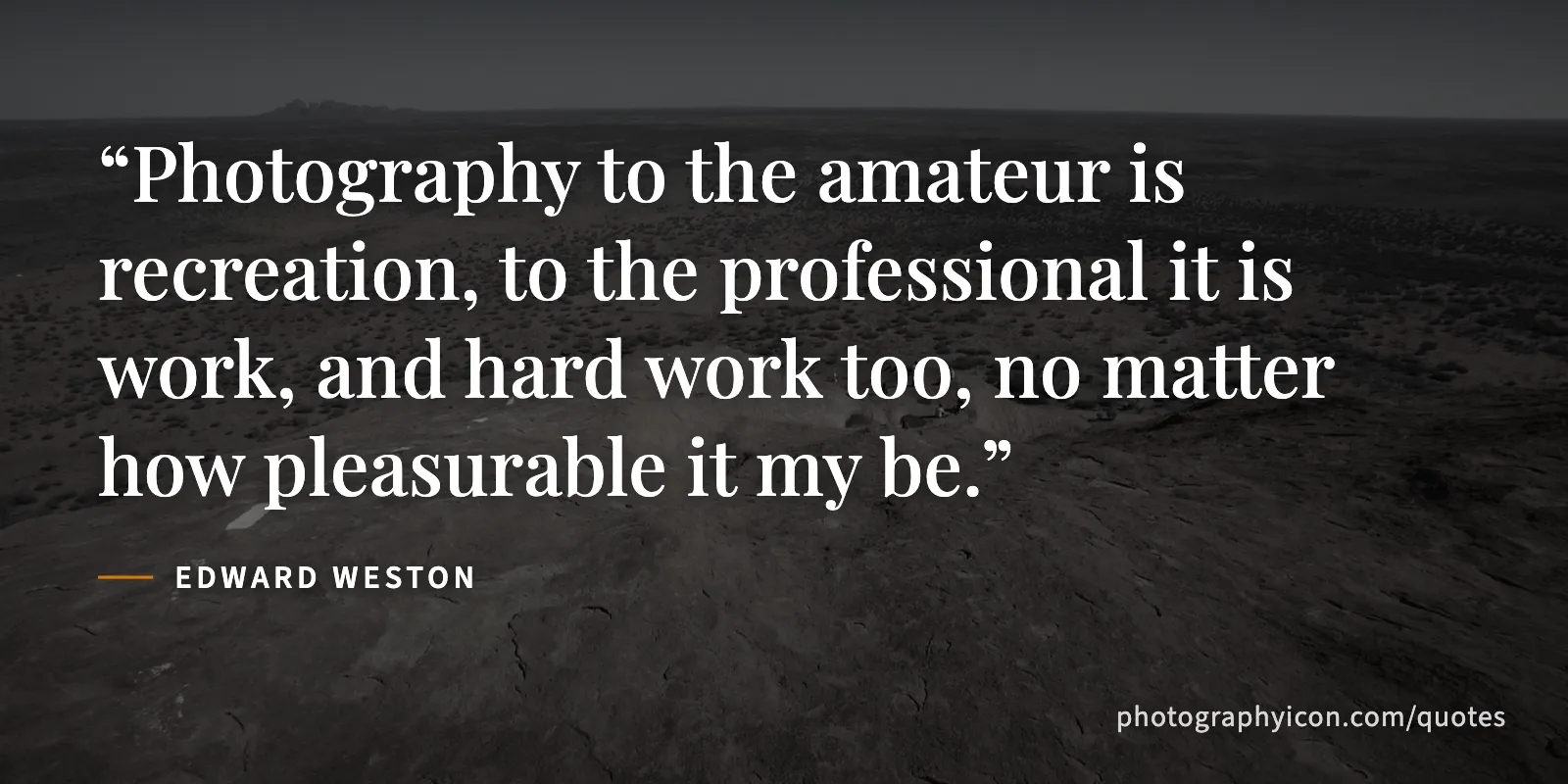
- Photography to the amateur is recreation, to the professional it is work, and hard work too, no matter how pleasurable it my be.
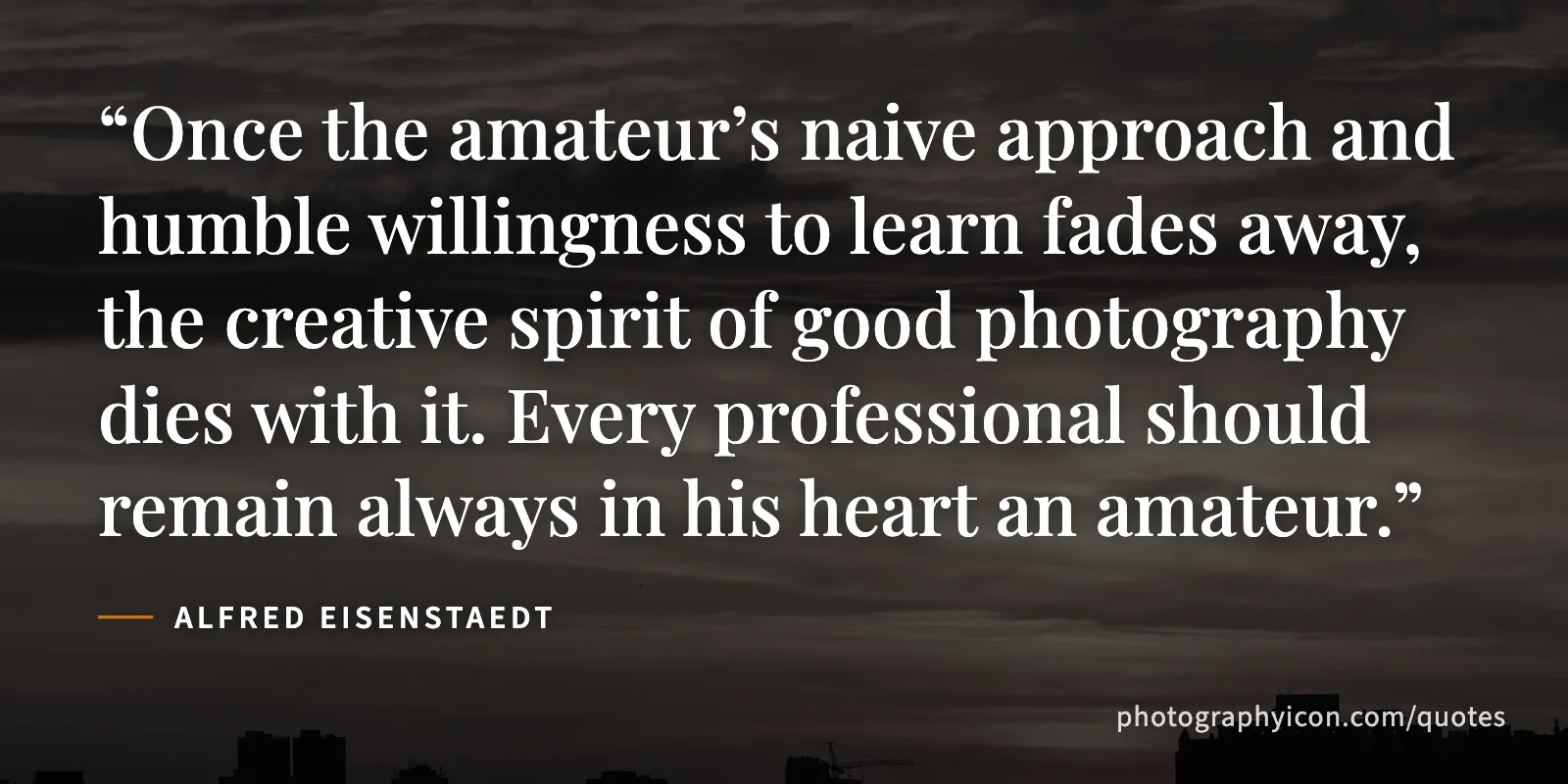
- Once the amateur’s naive approach and humble willingness to learn fades away, the creative spirit of good photography dies with it. Every professional should remain always in his heart an amateur.
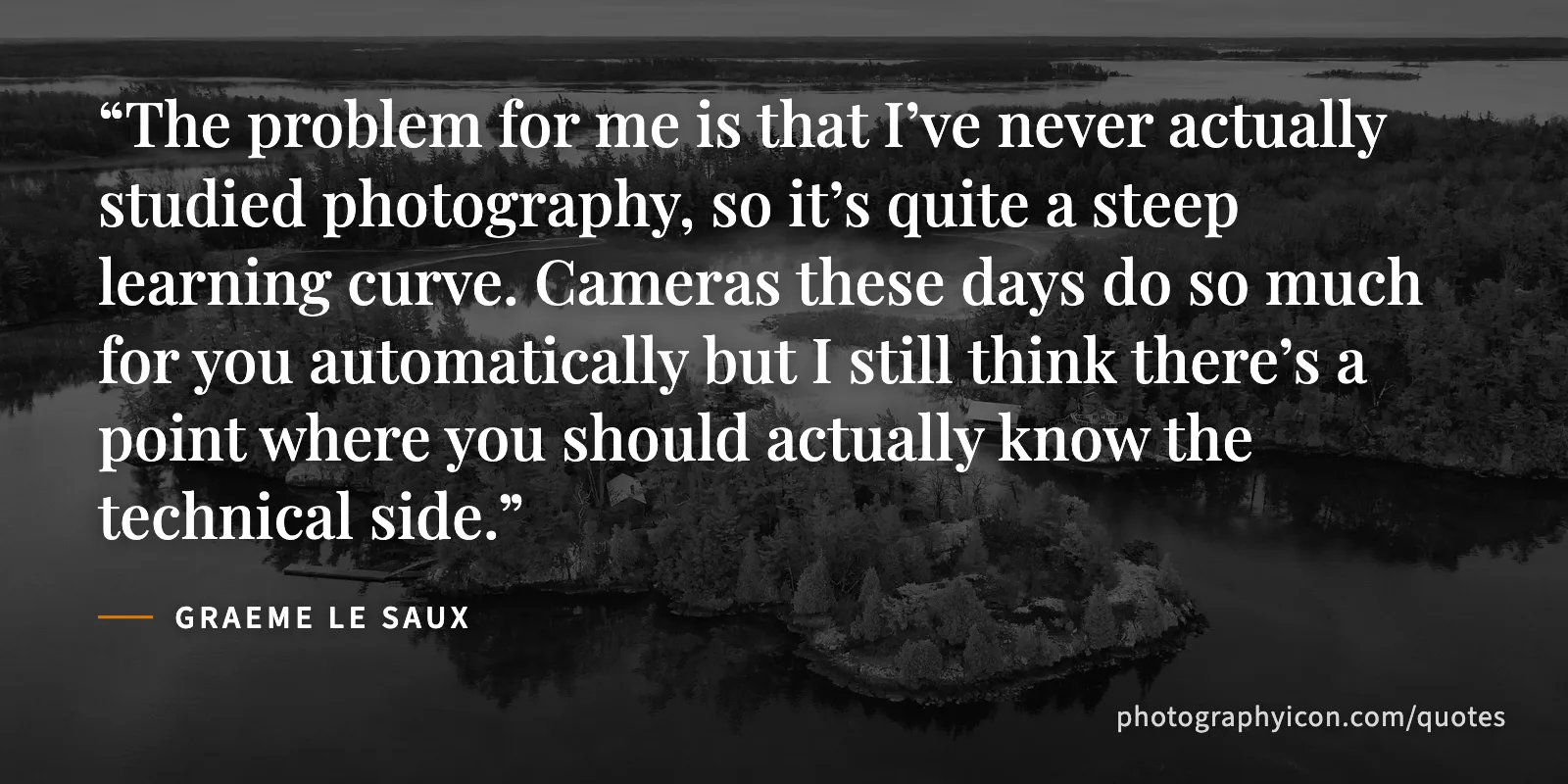
- The problem for me is that I’ve never actually studied photography, so it’s quite a steep learning curve. Cameras these days do so much for you automatically but I still think there’s a point where you should actually know the technical side.
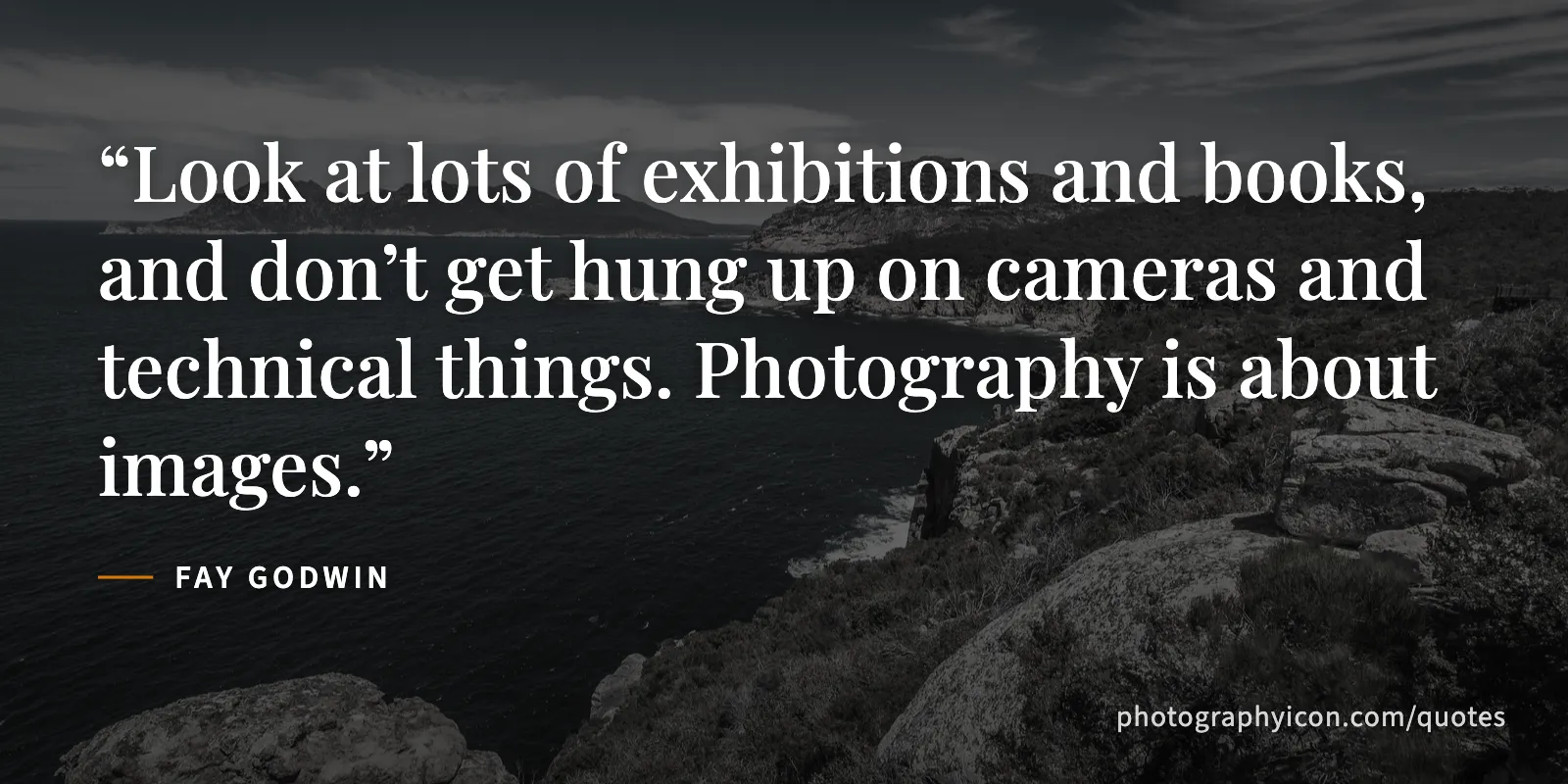
- Look at lots of exhibitions and books, and don’t get hung up on cameras and technical things. Photography is about images.
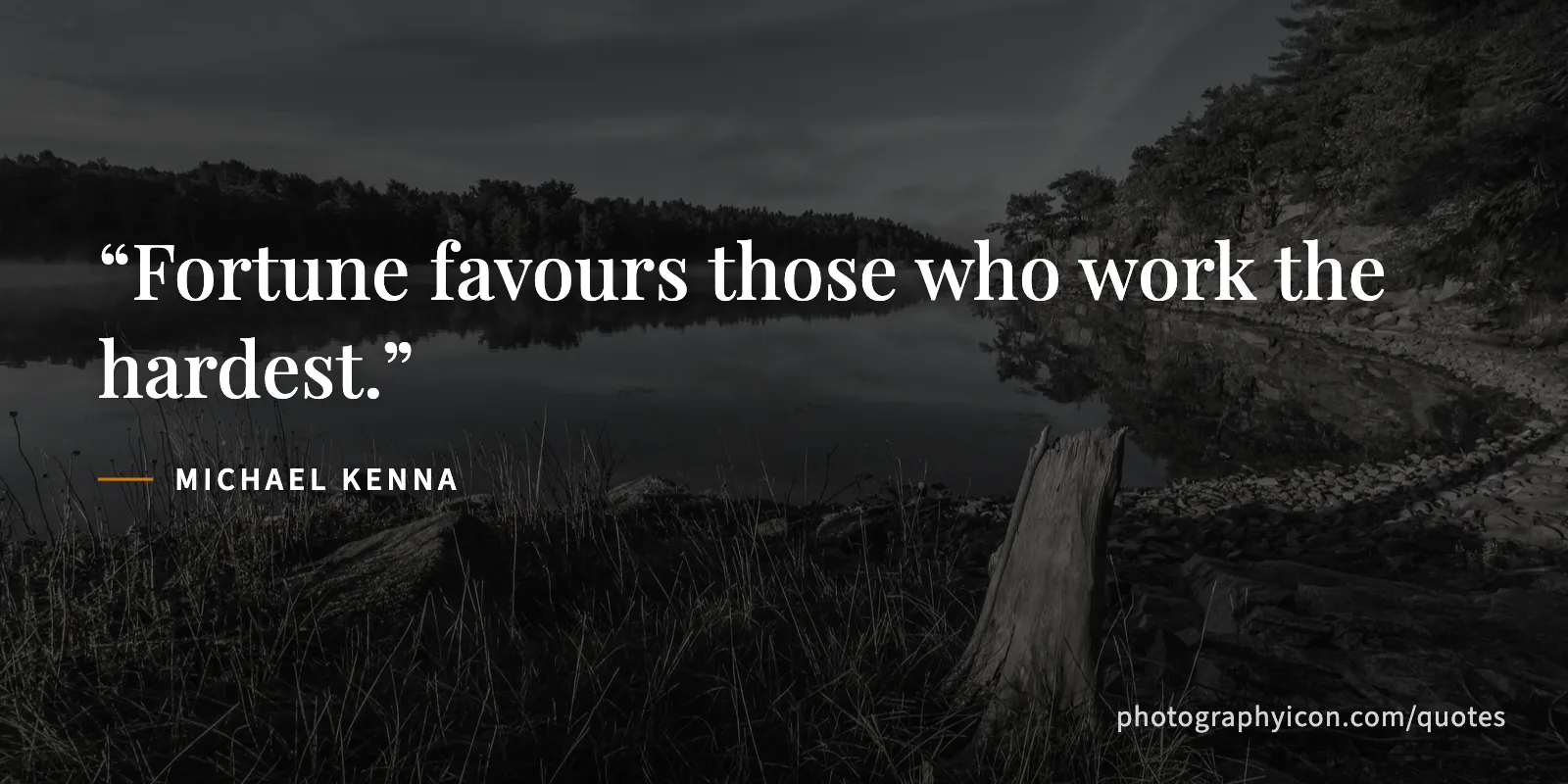
- Fortune favours those who work the hardest.


Why we photograph: passion, feeling and identity
Not every quote is about technique. These are about what the work is for, the pleasure and the cost, from W. Eugene Smith on emotional turmoil to Burk Uzzle on a love affair with life. If your question is how to put feeling into a picture, how to capture emotion in your photos goes at it directly.
- I think life is too short not to be doing something which you really believe in.
- I threw myself into this artform because photography had given me a new sense of mission and identity.
- Once photography enters your bloodstream, it is like a disease.
- In the world of photography, you get to share a captured moment with other people.
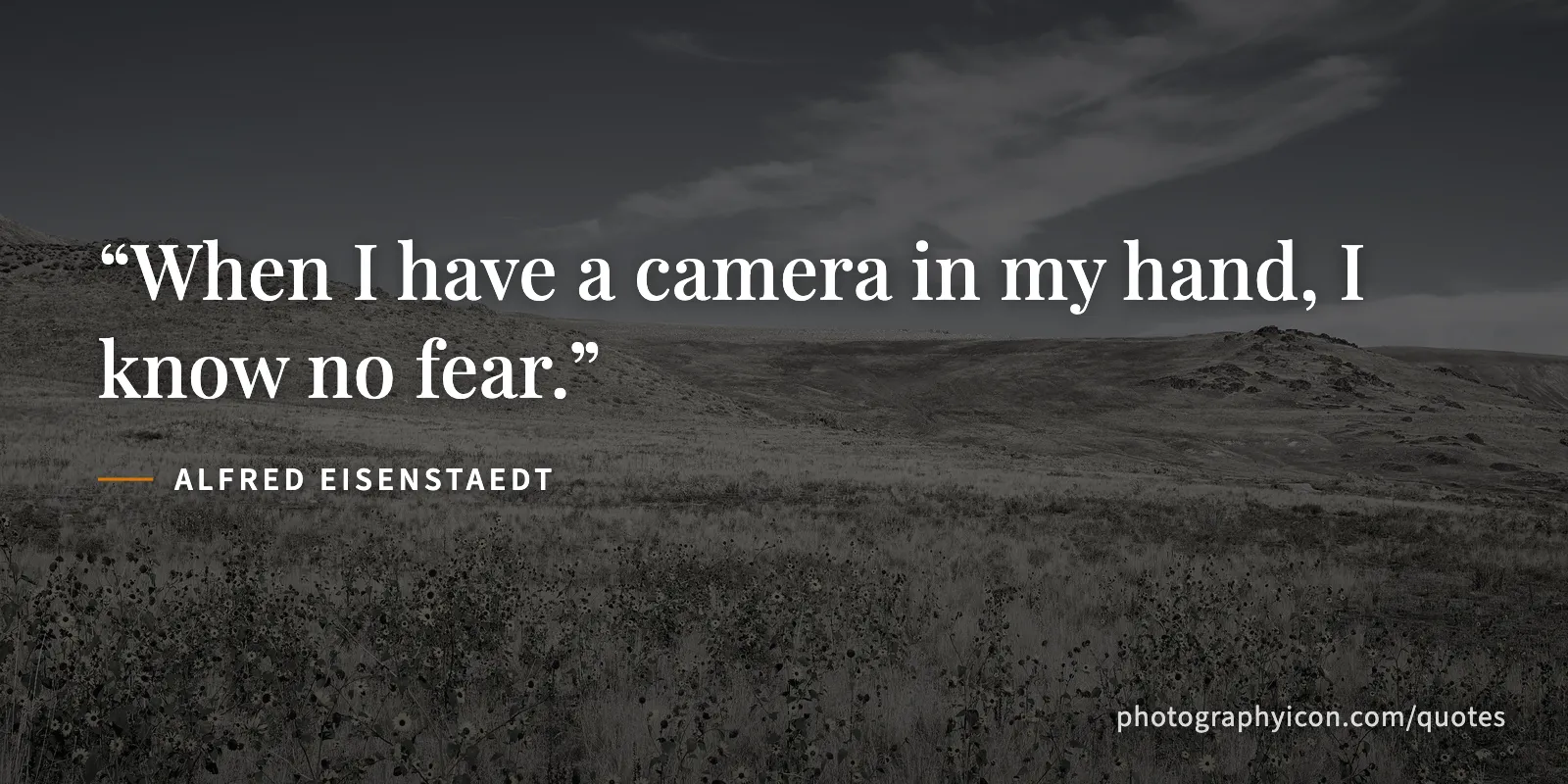
- When I have a camera in my hand, I know no fear.
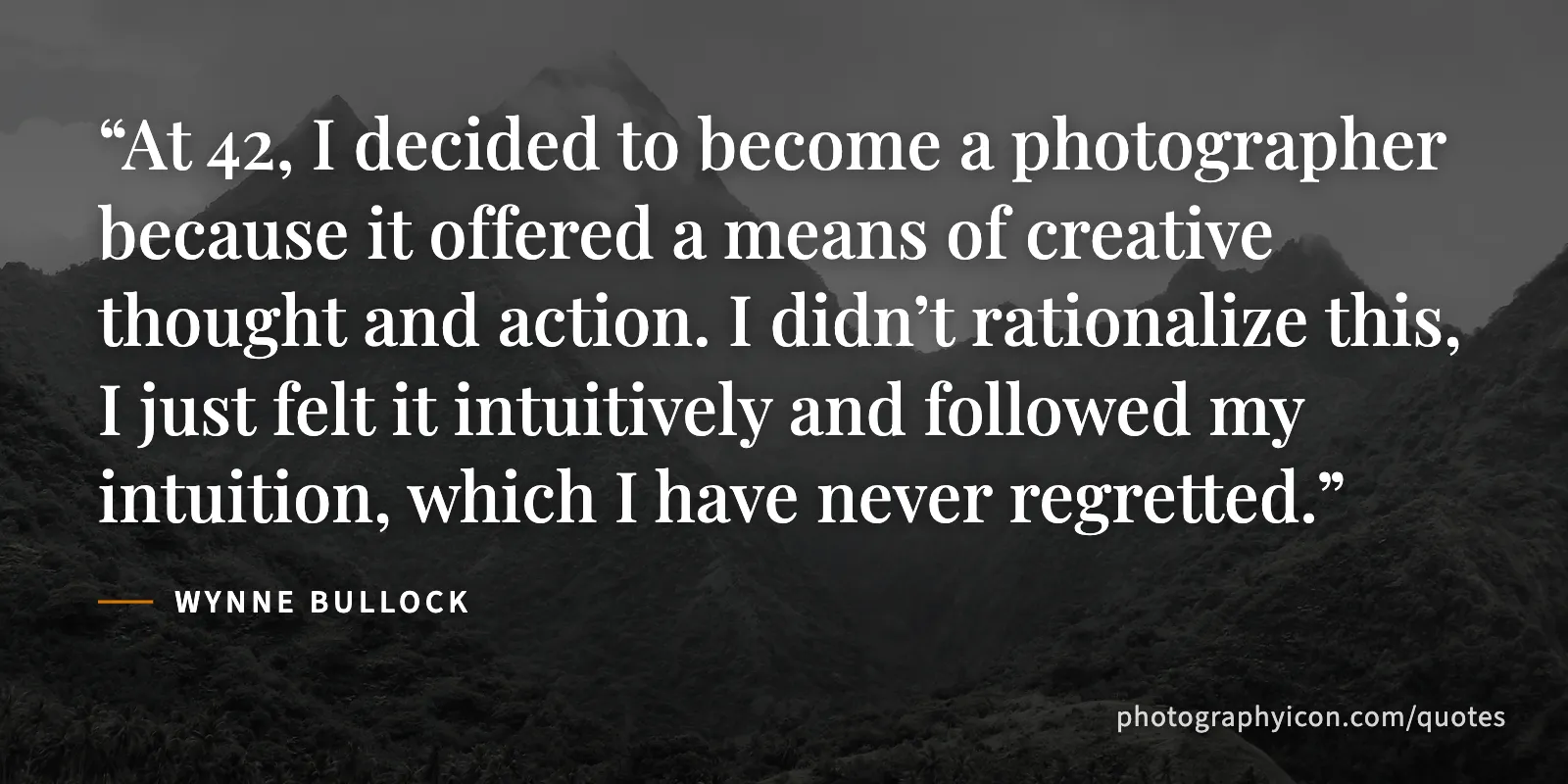
- At 42, I decided to become a photographer because it offered a means of creative thought and action. I didn’t rationalize this, I just felt it intuitively and followed my intuition, which I have never regretted.
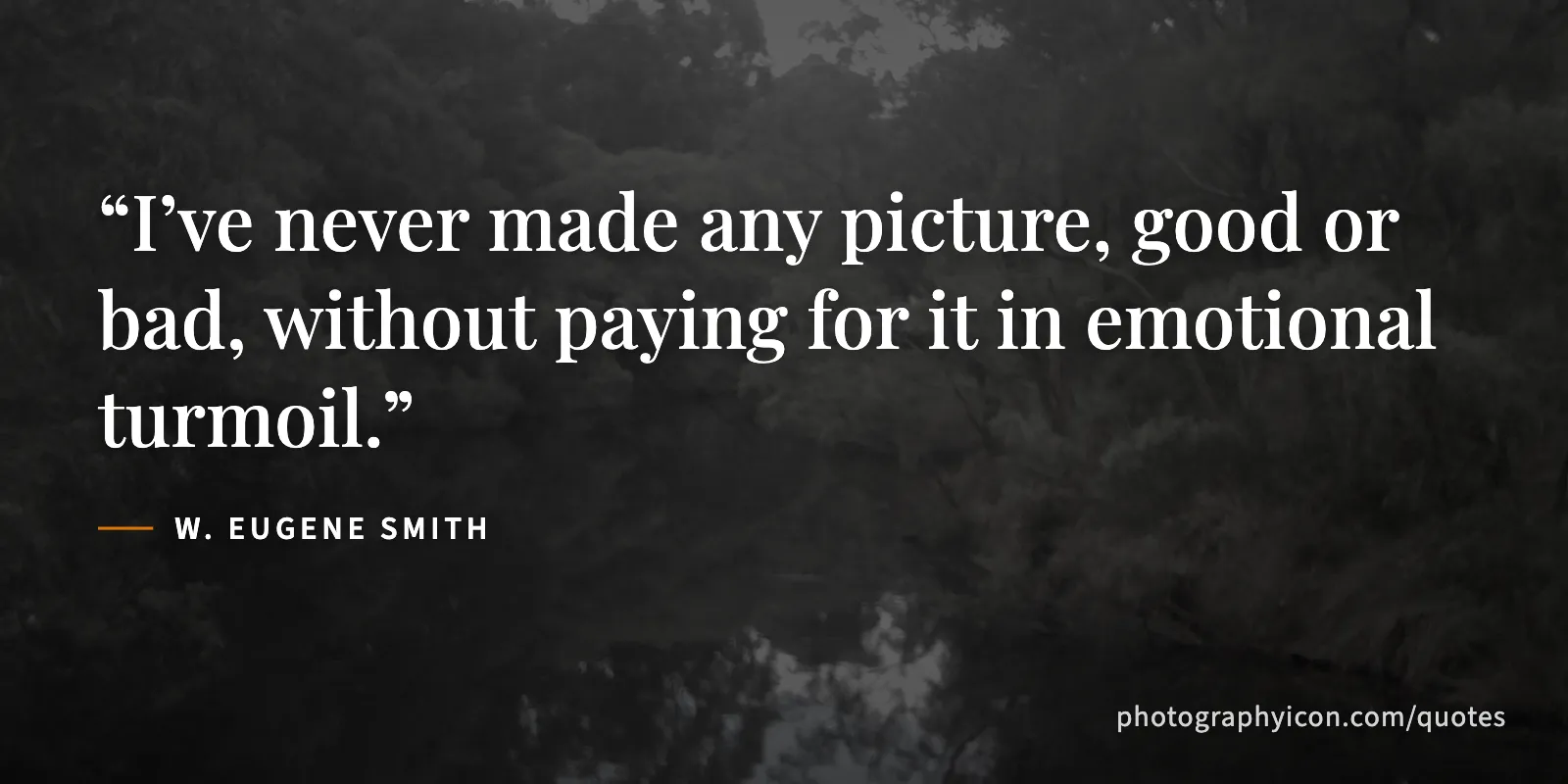
- I’ve never made any picture, good or bad, without paying for it in emotional turmoil.
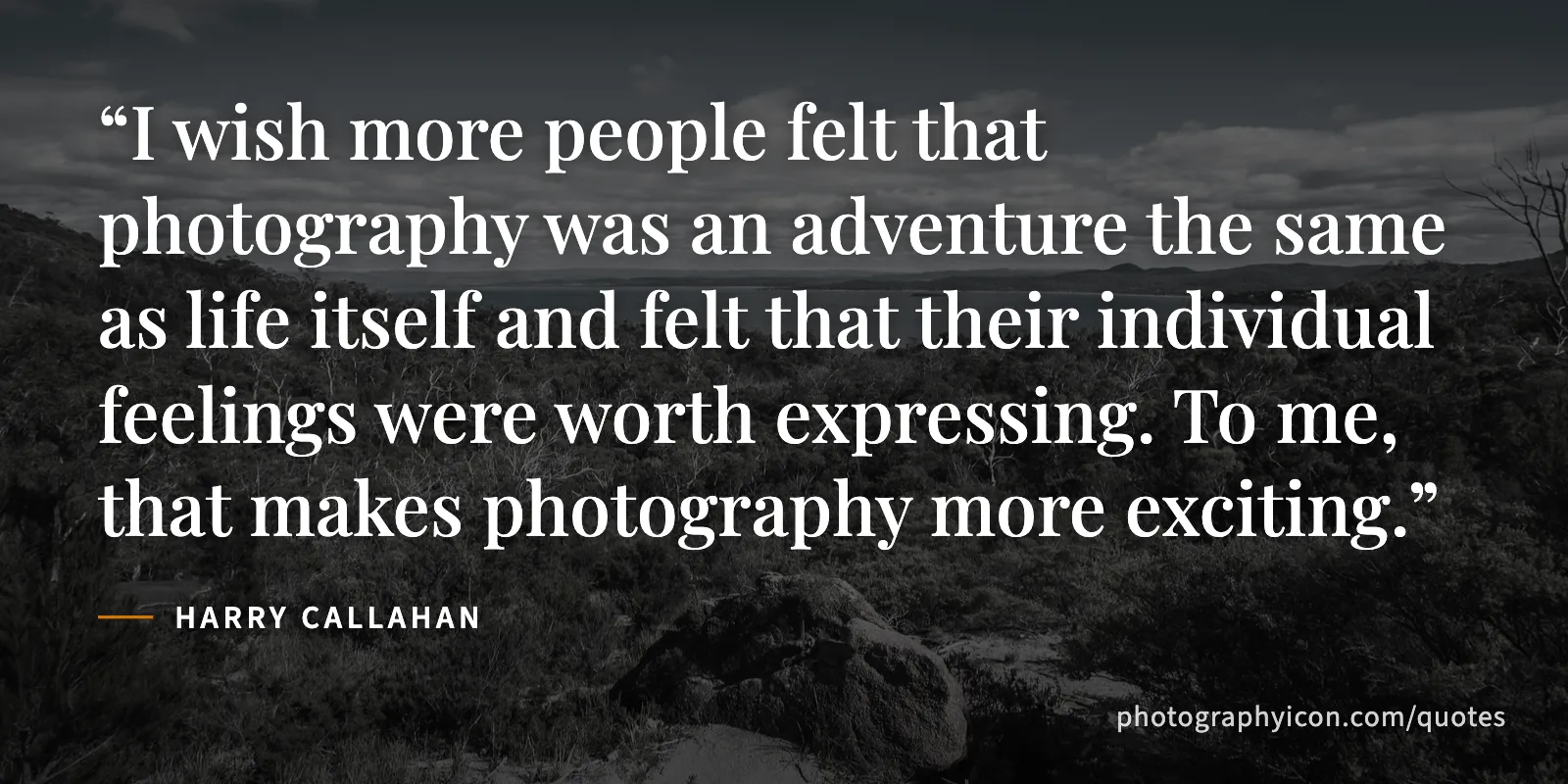
- I wish more people felt that photography was an adventure the same as life itself and felt that their individual feelings were worth expressing. To me, that makes photography more exciting.
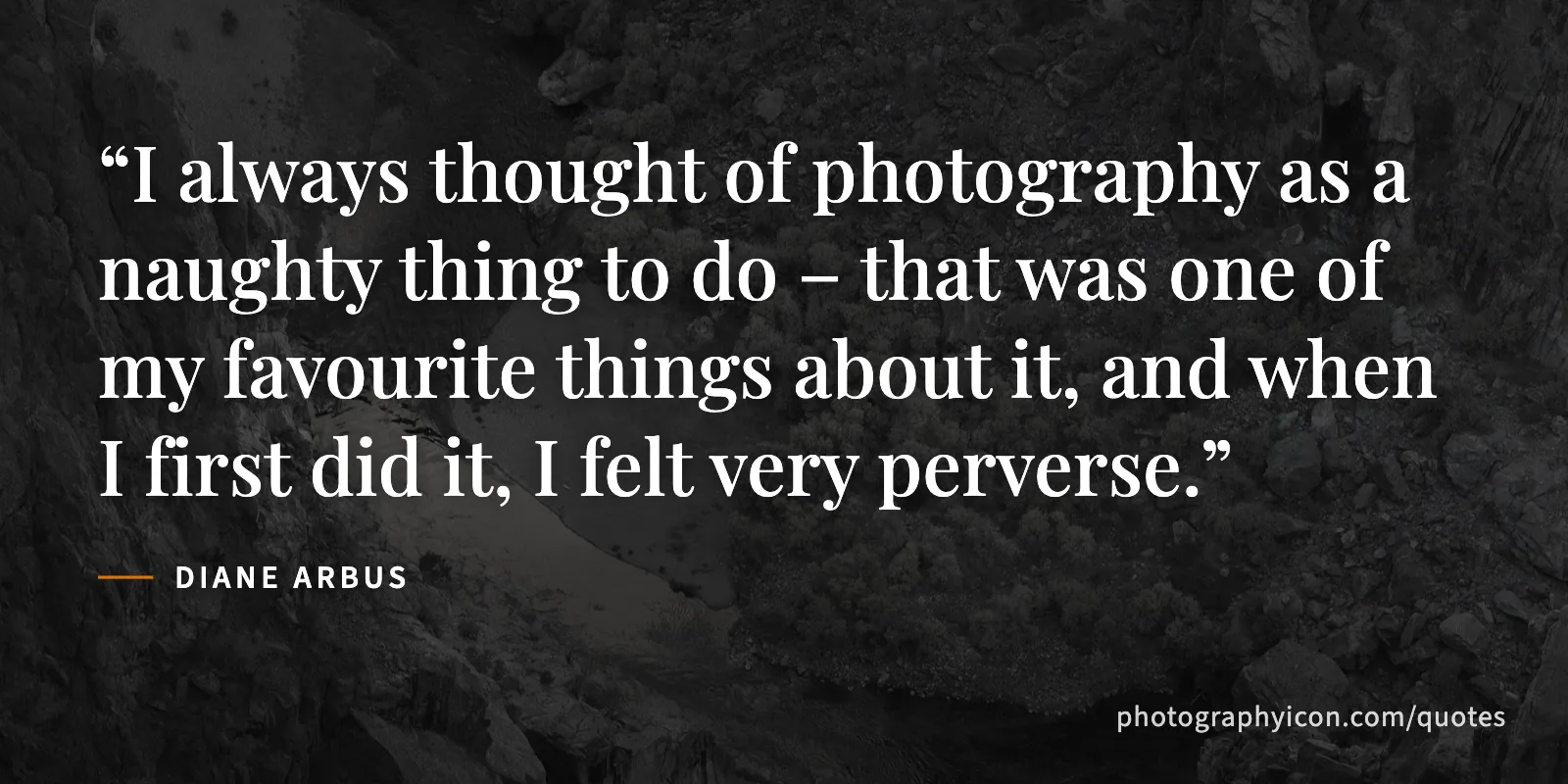
- I always thought of photography as a naughty thing to do – that was one of my favourite things about it, and when I first did it, I felt very perverse.
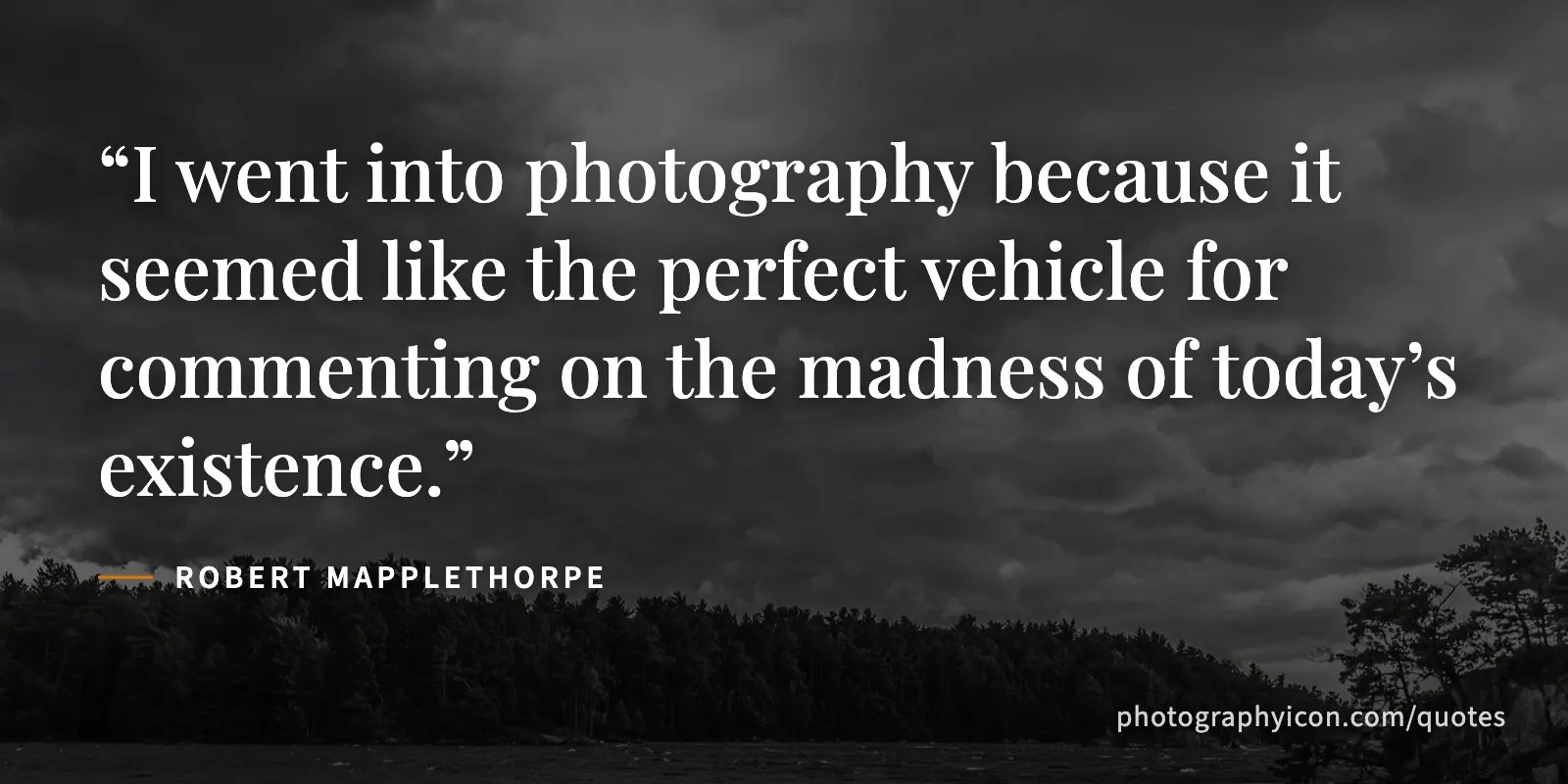
- I went into photography because it seemed like the perfect vehicle for commenting on the madness of today’s existence.
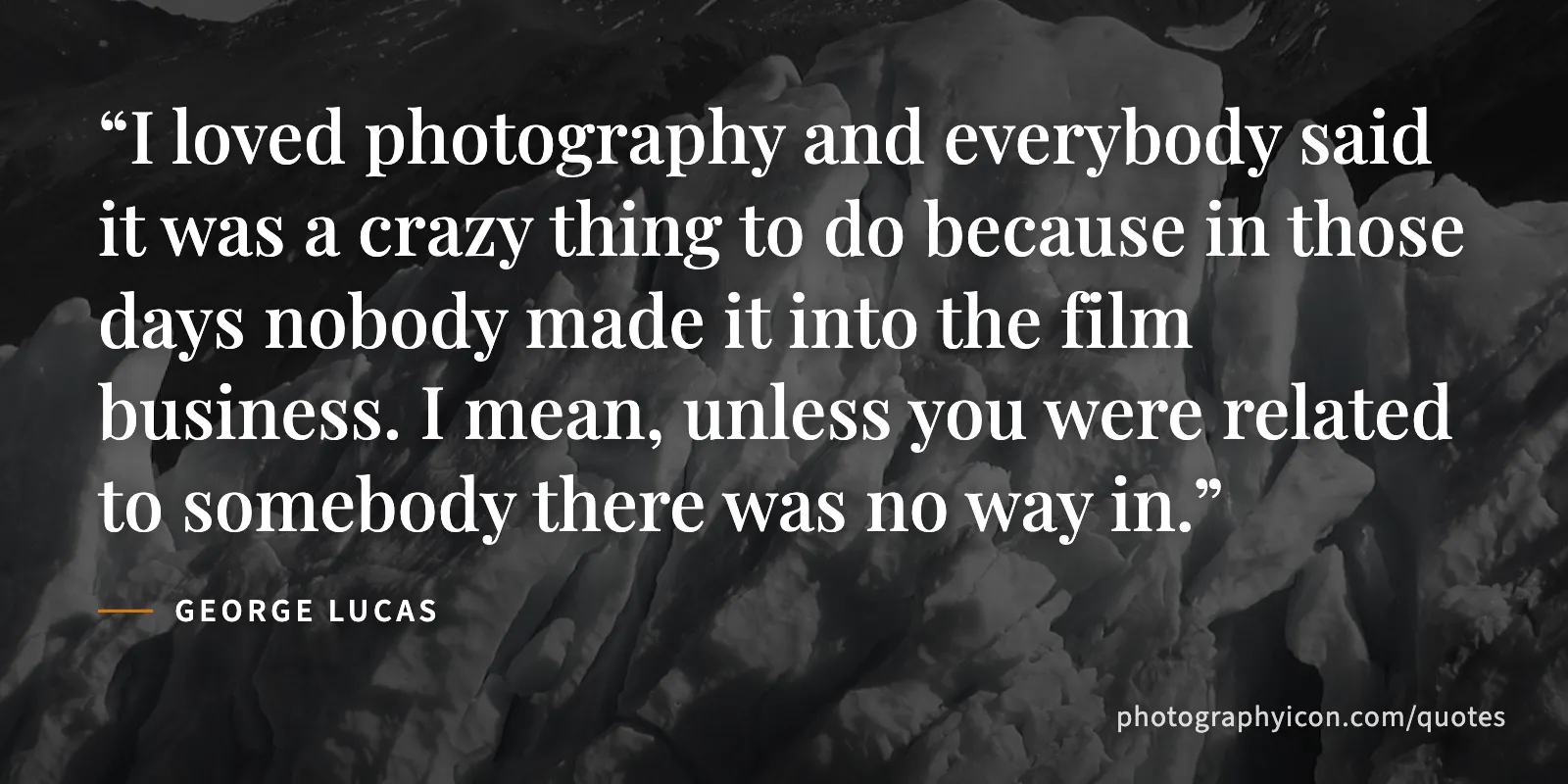
- I loved photography and everybody said it was a crazy thing to do because in those days nobody made it into the film business. I mean, unless you were related to somebody there was no way in.
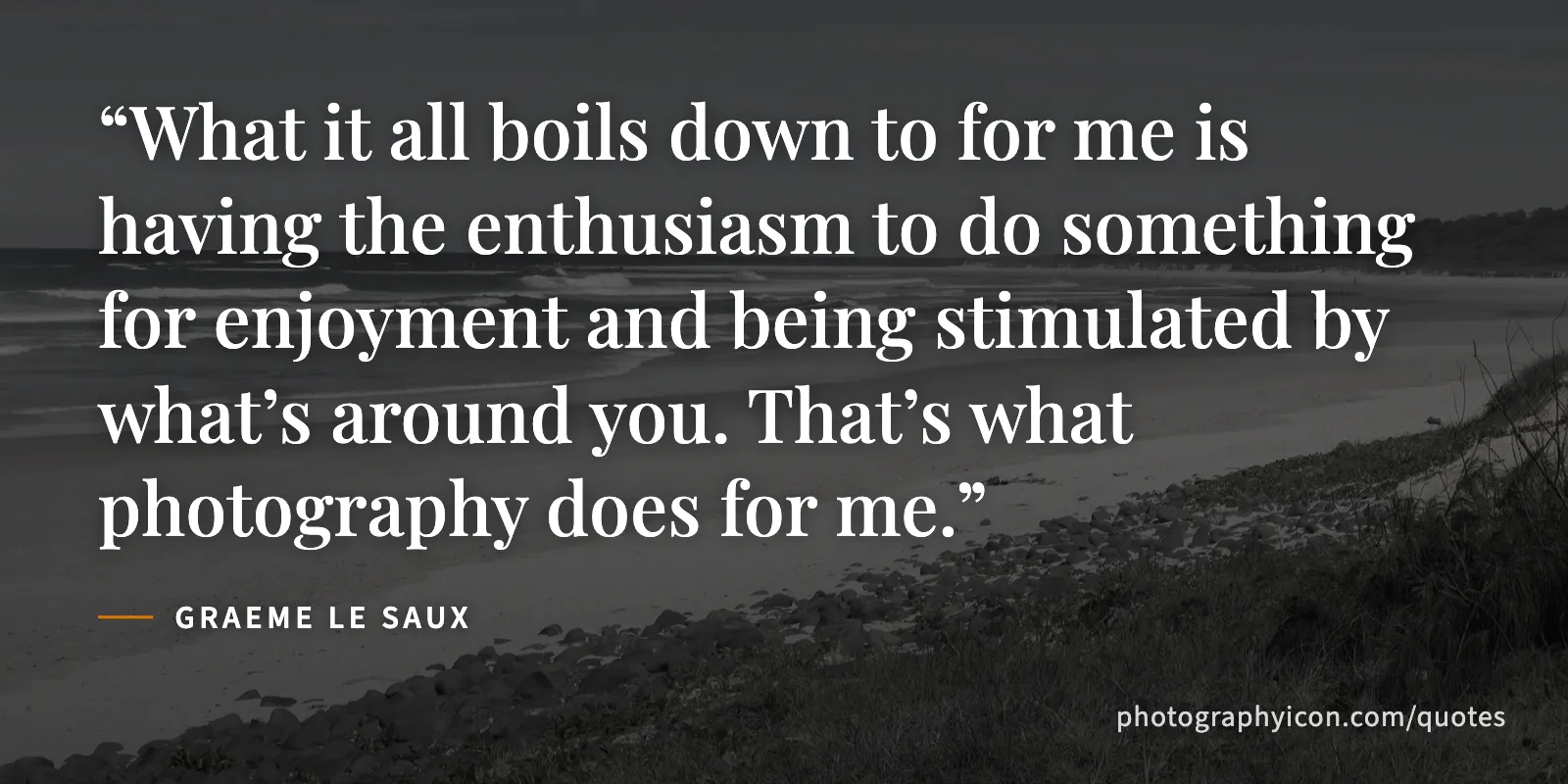
- What it all boils down to for me is having the enthusiasm to do something for enjoyment and being stimulated by what’s around you. That’s what photography does for me.
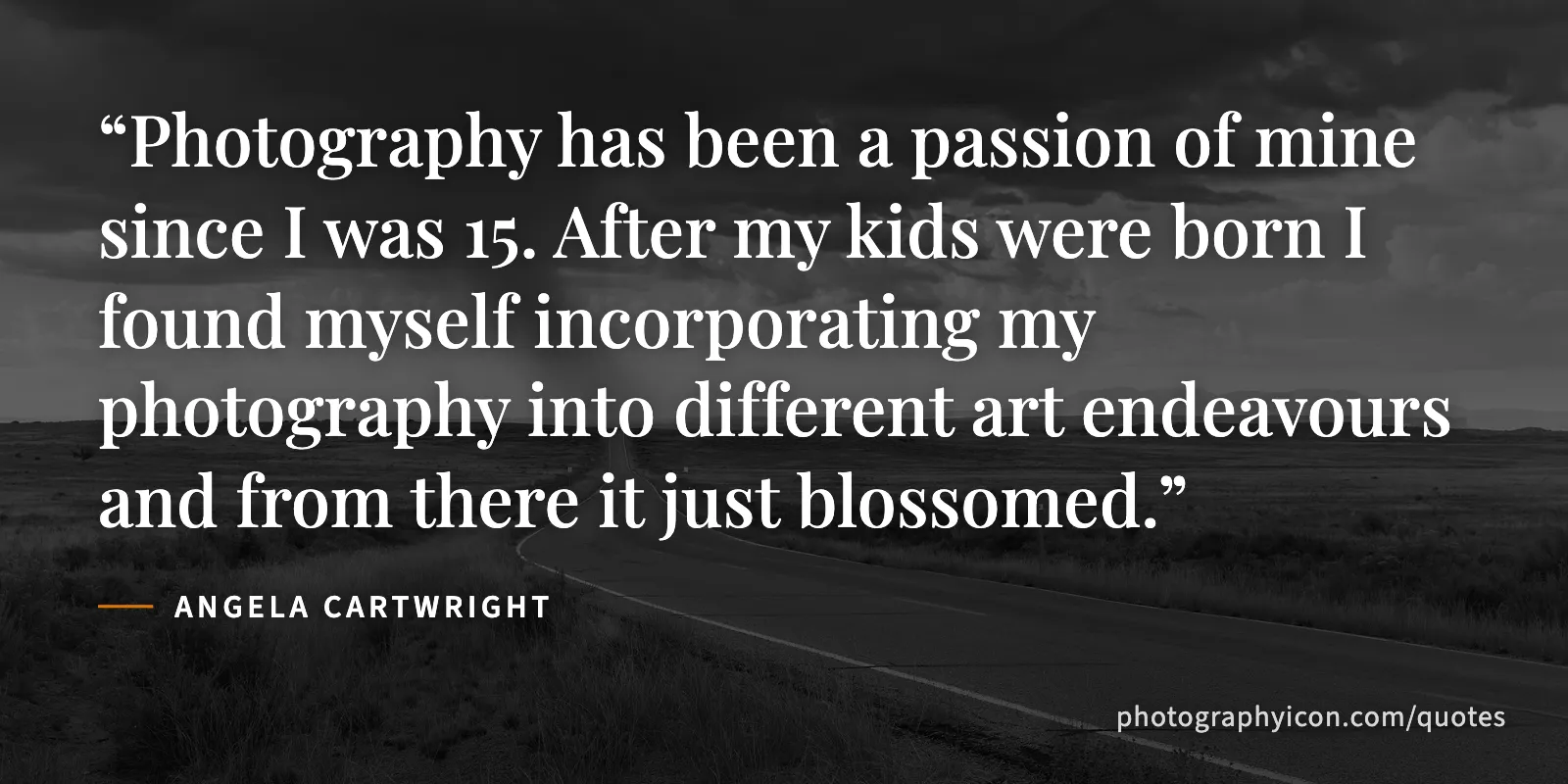
- Photography has been a passion of mine since I was 15. After my kids were born I found myself incorporating my photography into different art endeavours and from there it just blossomed.
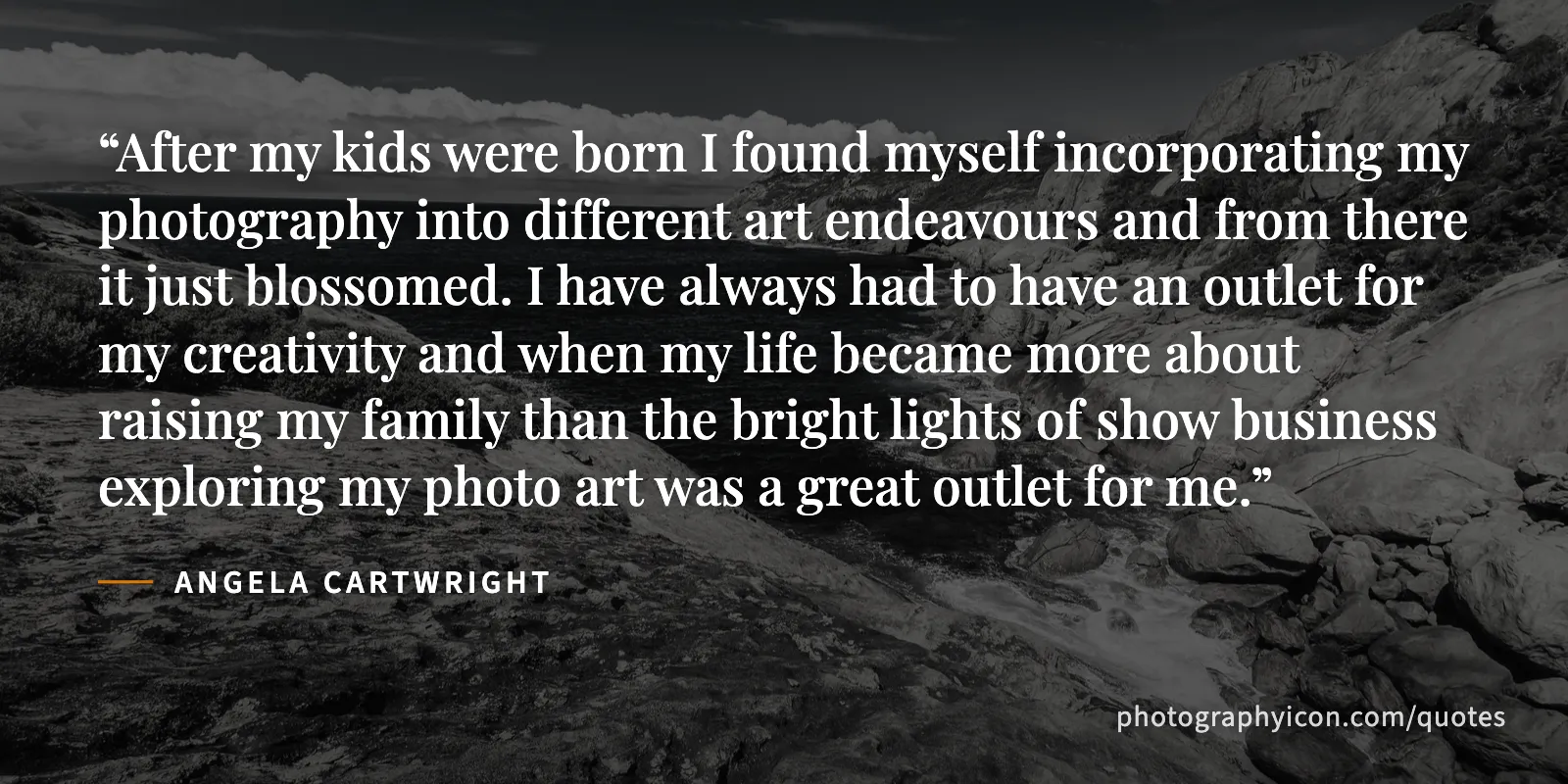
- After my kids were born I found myself incorporating my photography into different art endeavours and from there it just blossomed. I have always had to have an outlet for my creativity and when my life became more about raising my family than the bright lights of show business exploring my photo art was a great outlet for me.
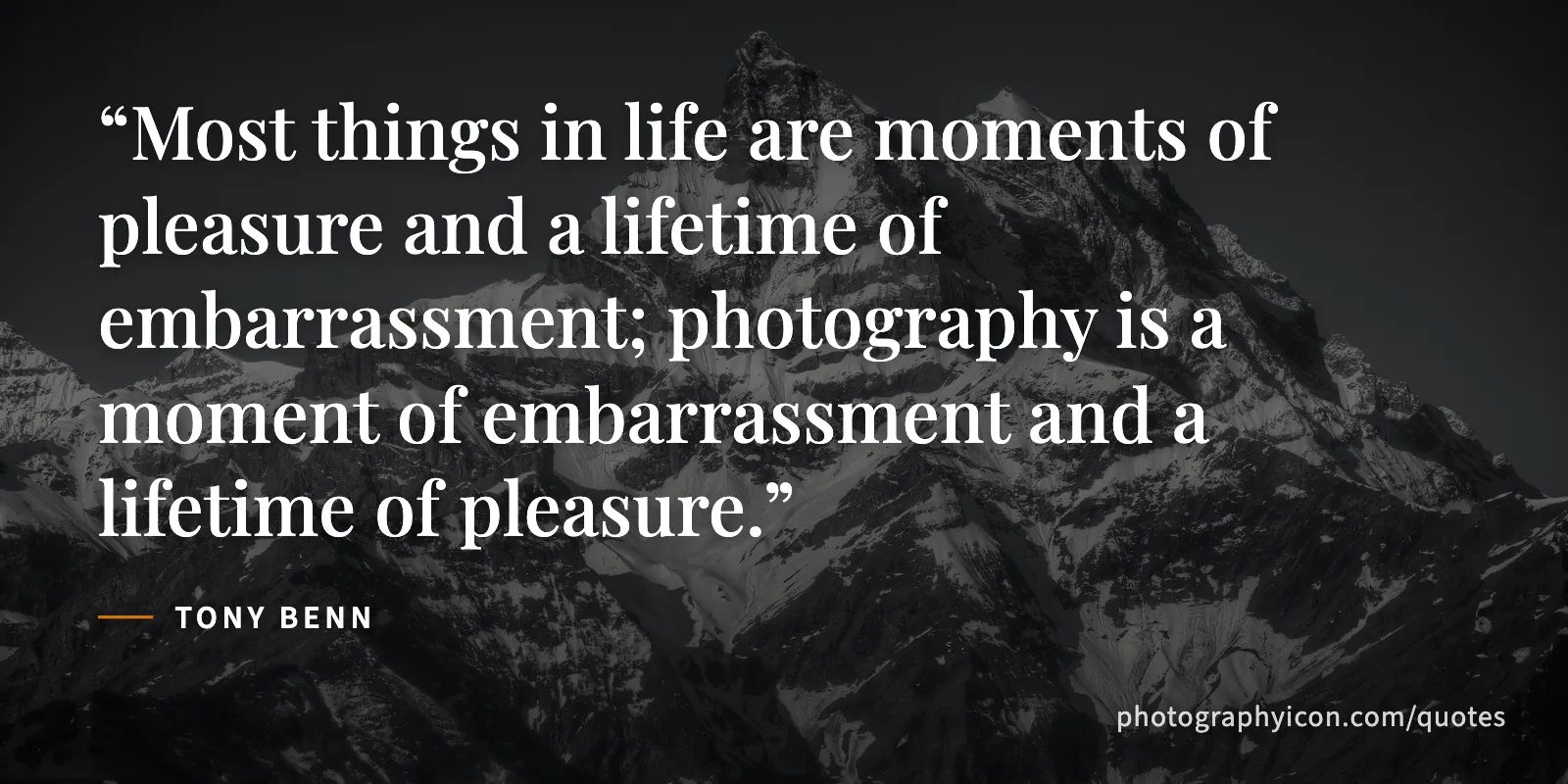
- Most things in life are moments of pleasure and a lifetime of embarrassment; photography is a moment of embarrassment and a lifetime of pleasure.
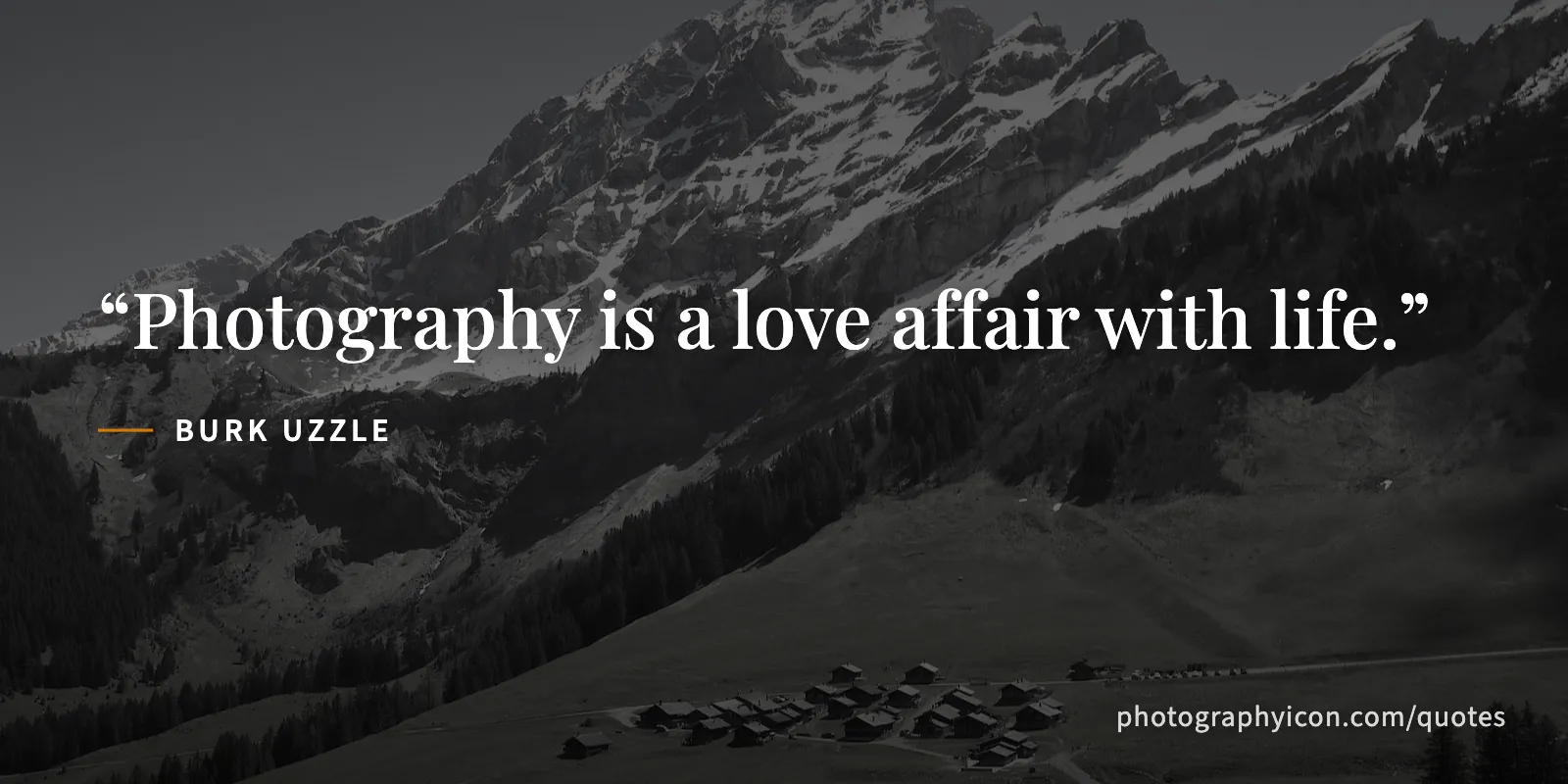
- Photography is a love affair with life.
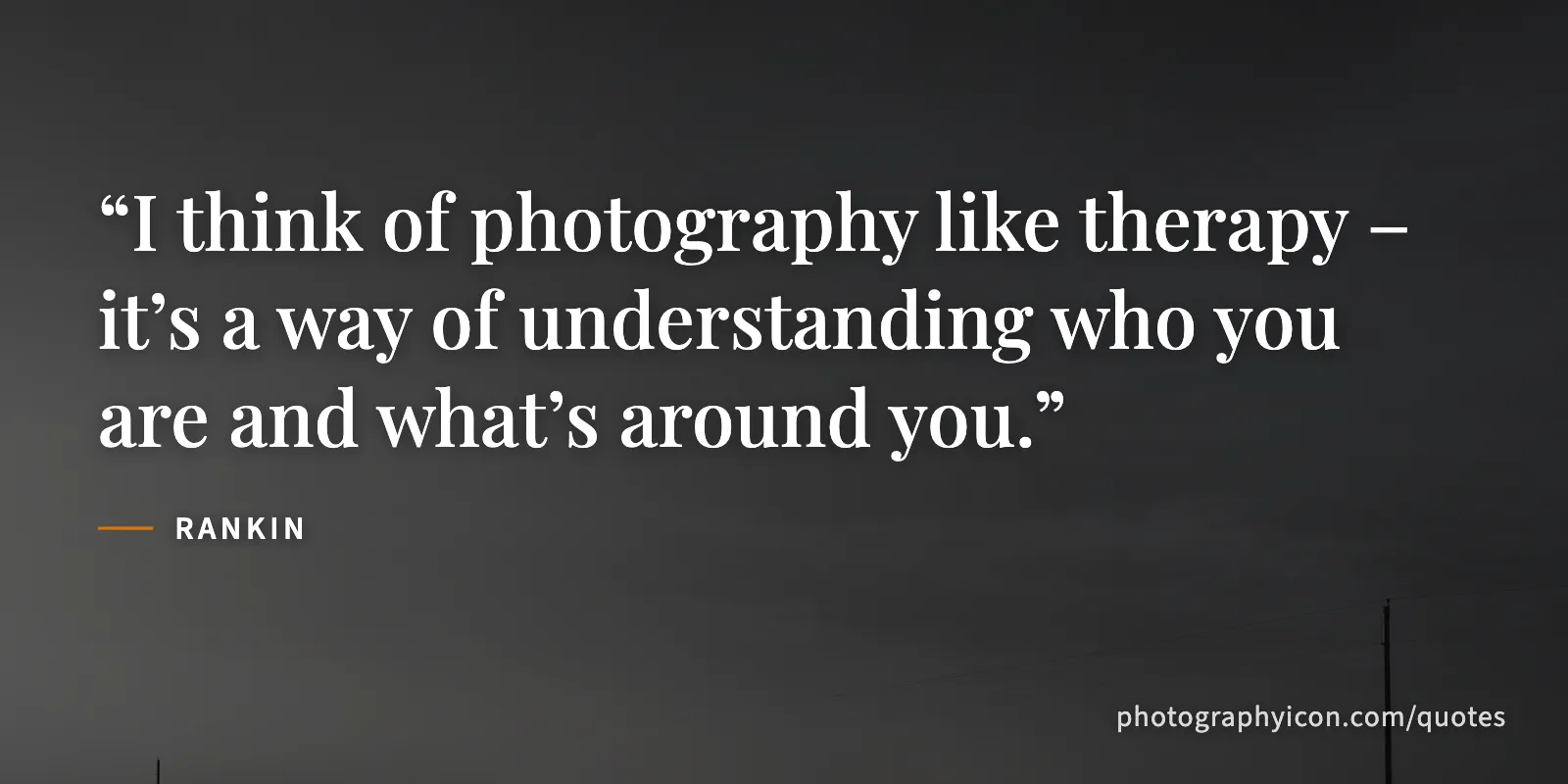
- I think of photography like therapy – it’s a way of understanding who you are and what’s around you.
Bob Anderson
Anonymous
James Wilson
Landscape, nature and wildlife
Nature photographers talk about patience, difficulty and responsibility. Ansel Adams calls landscape the supreme test, and Galen Rowell and Eliot Porter link the camera to the environmental movement. For technique, see landscape photography and wildlife photography.
- Landscape photography is the supreme test of the photographer – and often the supreme disappointment.
- It is my intention to present – through the medium of photography – intuitive observations of the natural world which may have meaning to the spectators.
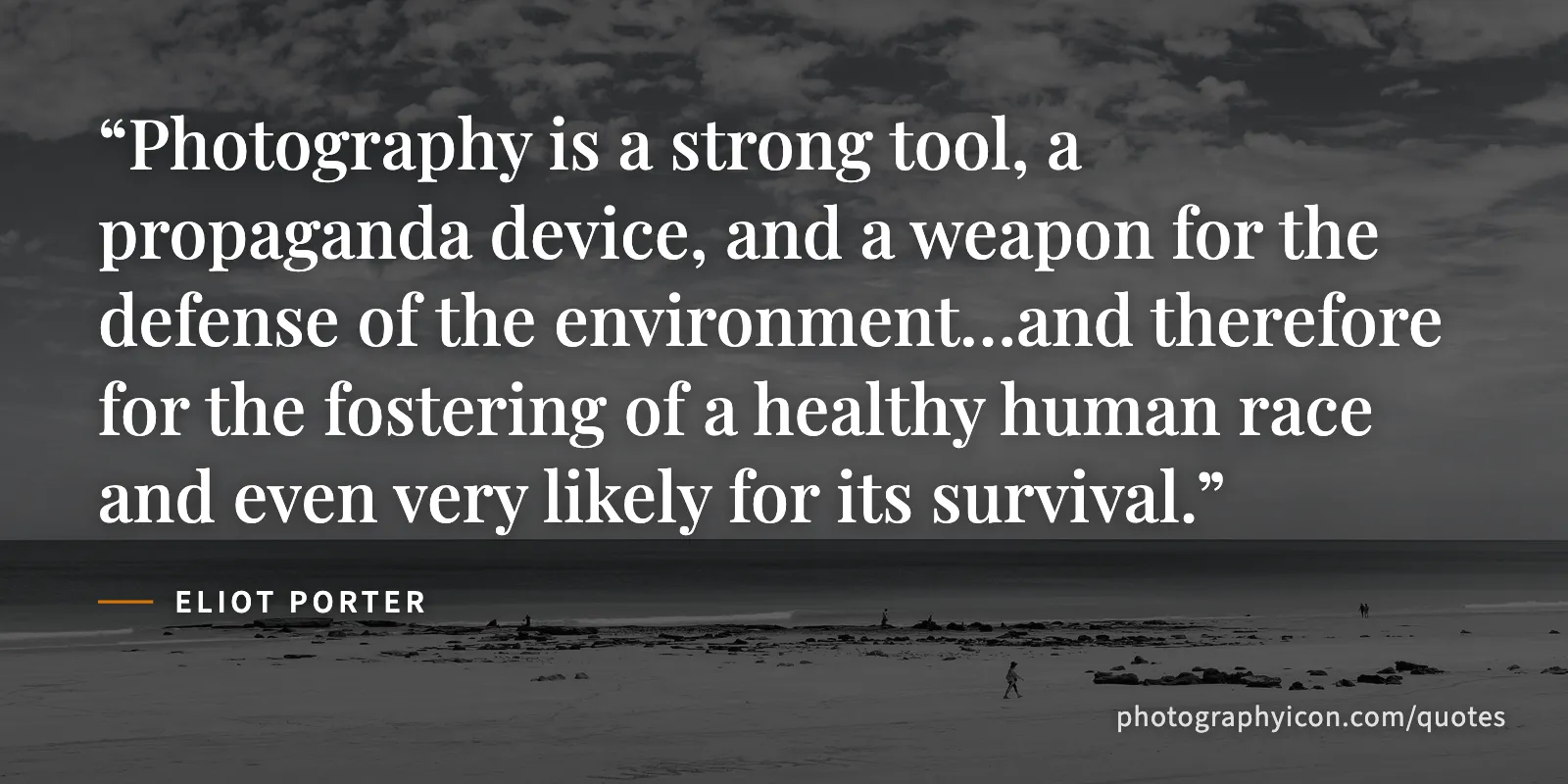
- Photography is a strong tool, a propaganda device, and a weapon for the defense of the environment…and therefore for the fostering of a healthy human race and even very likely for its survival.
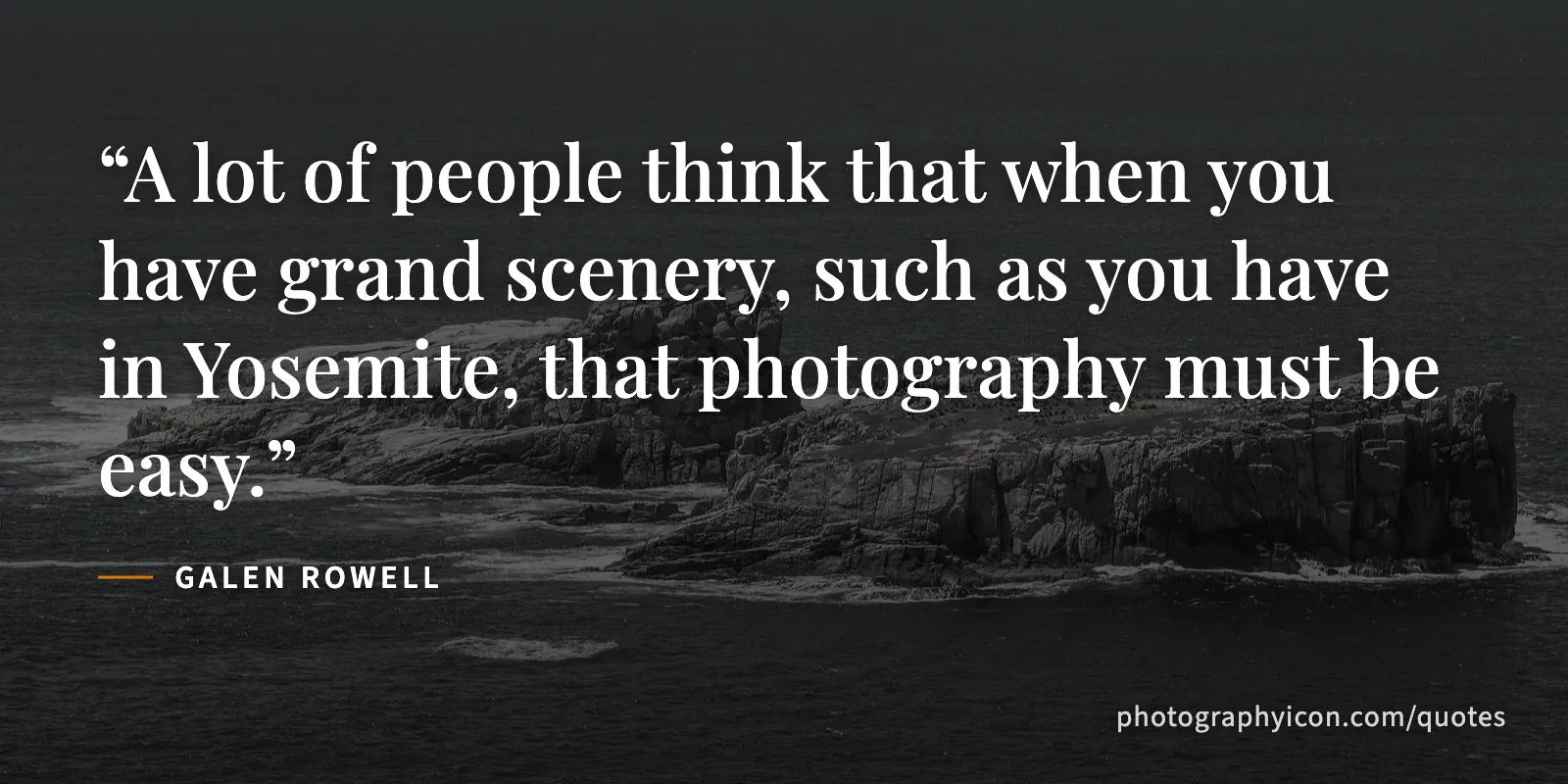
- A lot of people think that when you have grand scenery, such as you have in Yosemite, that photography must be easy.
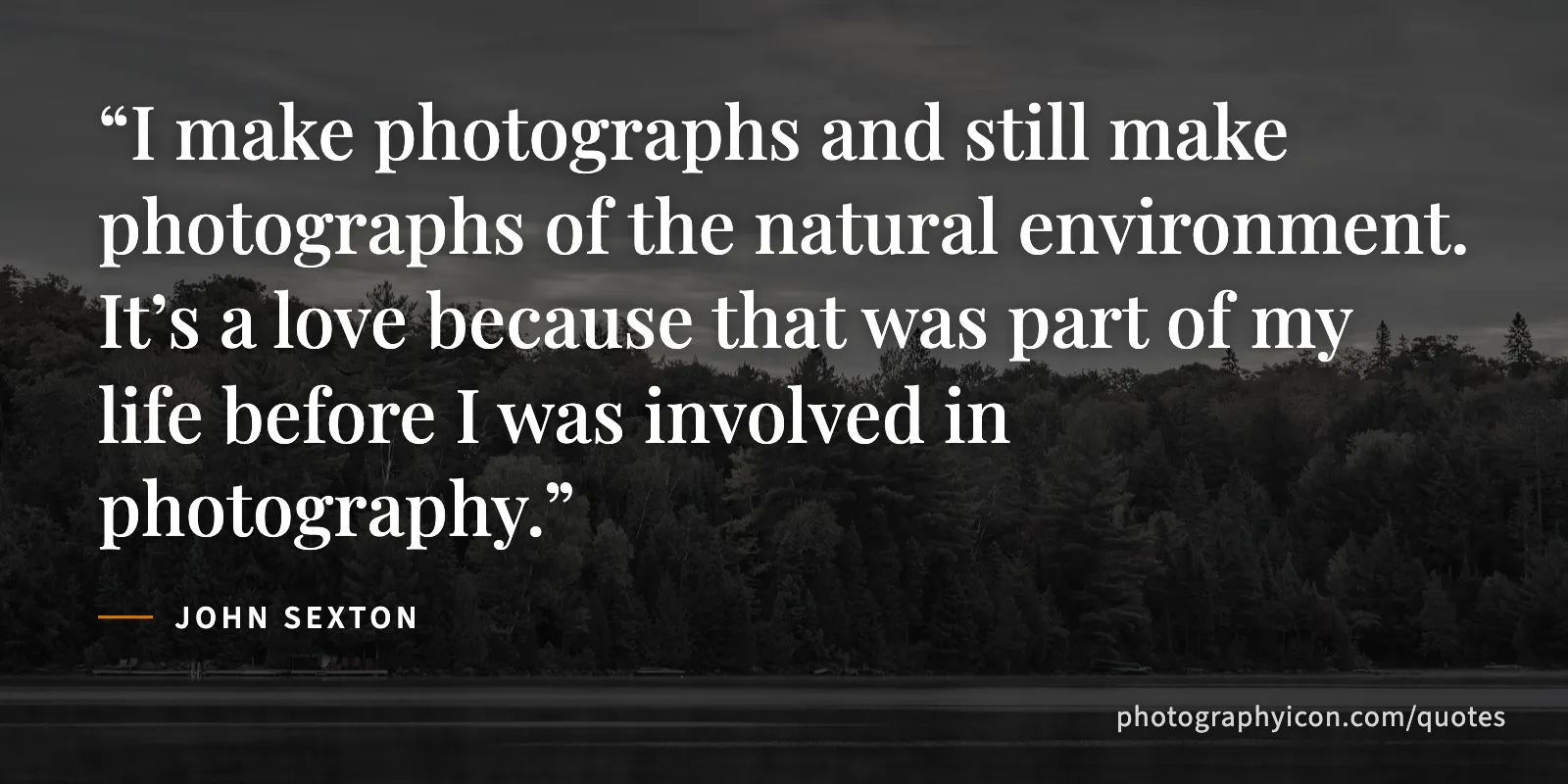
- I make photographs and still make photographs of the natural environment. It’s a love because that was part of my life before I was involved in photography.
- I think landscape photography in general is somewhat undervalued.
- There is no question that photography has played a major role in the environmental movement.
- Ever since the 1860s when photographers travelled the American West and brought photographs of scenic wonders back to the people on the East Coast of America we have had a North American tradition of landscape photography used for the environment.
- Photography started as a means of getting reference material for my paintings of nature subjects.
- Big game photography in Africa is mainly done from a vehicle, so then I feel I might as well take the lot.
- When you live by the sea, there are definite seasons when you can see the weather coming and going, which lends itself to photography.


Nigel Dennis
Nigel Dennis
Career stories in the photographers’ own words
Longer passages from interviews, mostly about how people ended up in photography: a workshop that changed one person’s approach, an invitation to work for a master, a government job in Washington, a school prize. John Sexton and Ben Shahn appear most. The graphics carry the full text.
- But slowly I began to use cameras and then think about what it was that was going on. It took me a long time, I mean I actually played with cameras and photography for about 20 years.
- I don’t need the money I generate from photography to support myself.
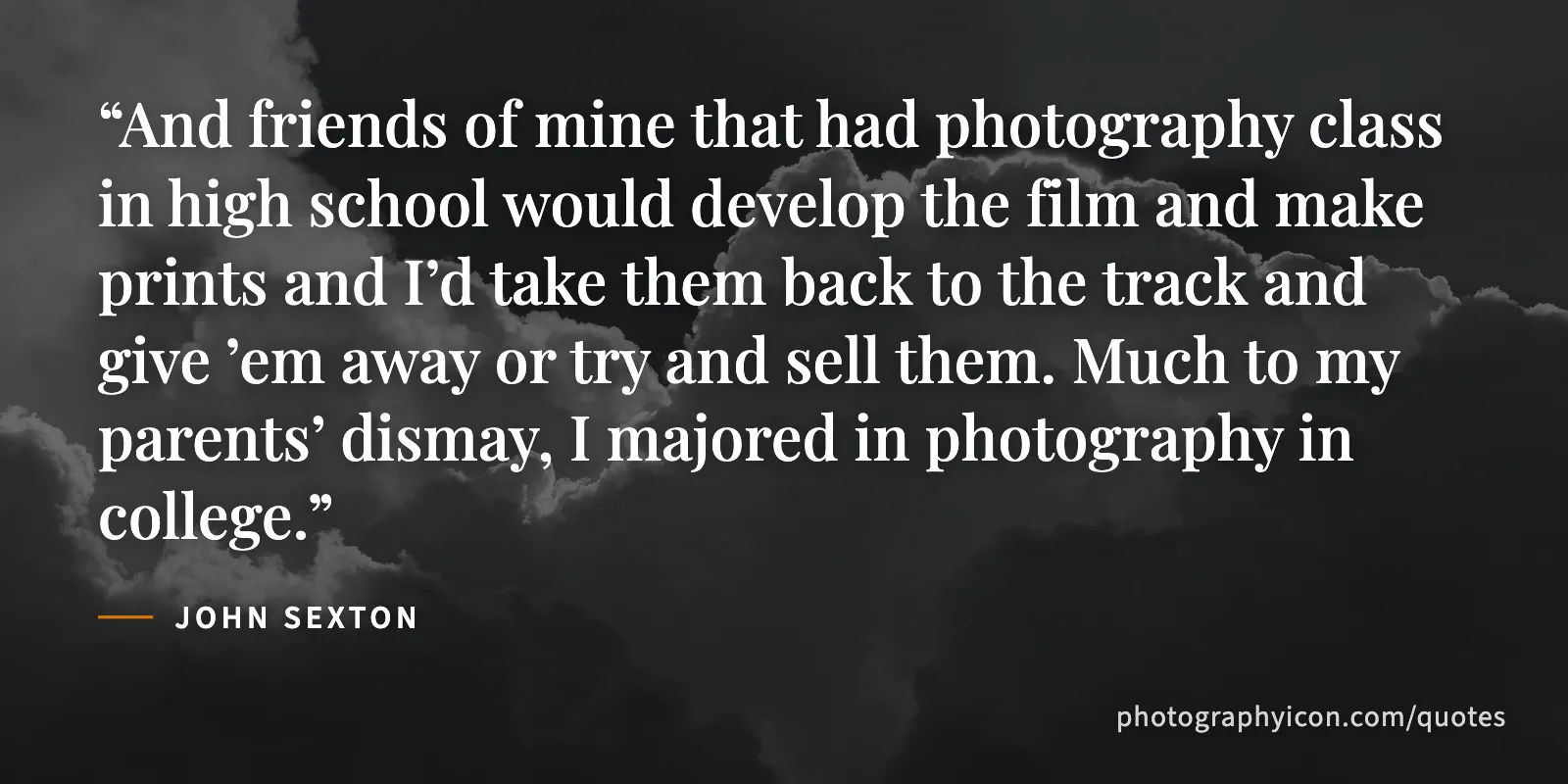
- And friends of mine that had photography class in high school would develop the film and make prints and I’d take them back to the track and give ’em away or try and sell them. Much to my parents’ dismay, I majored in photography in college.
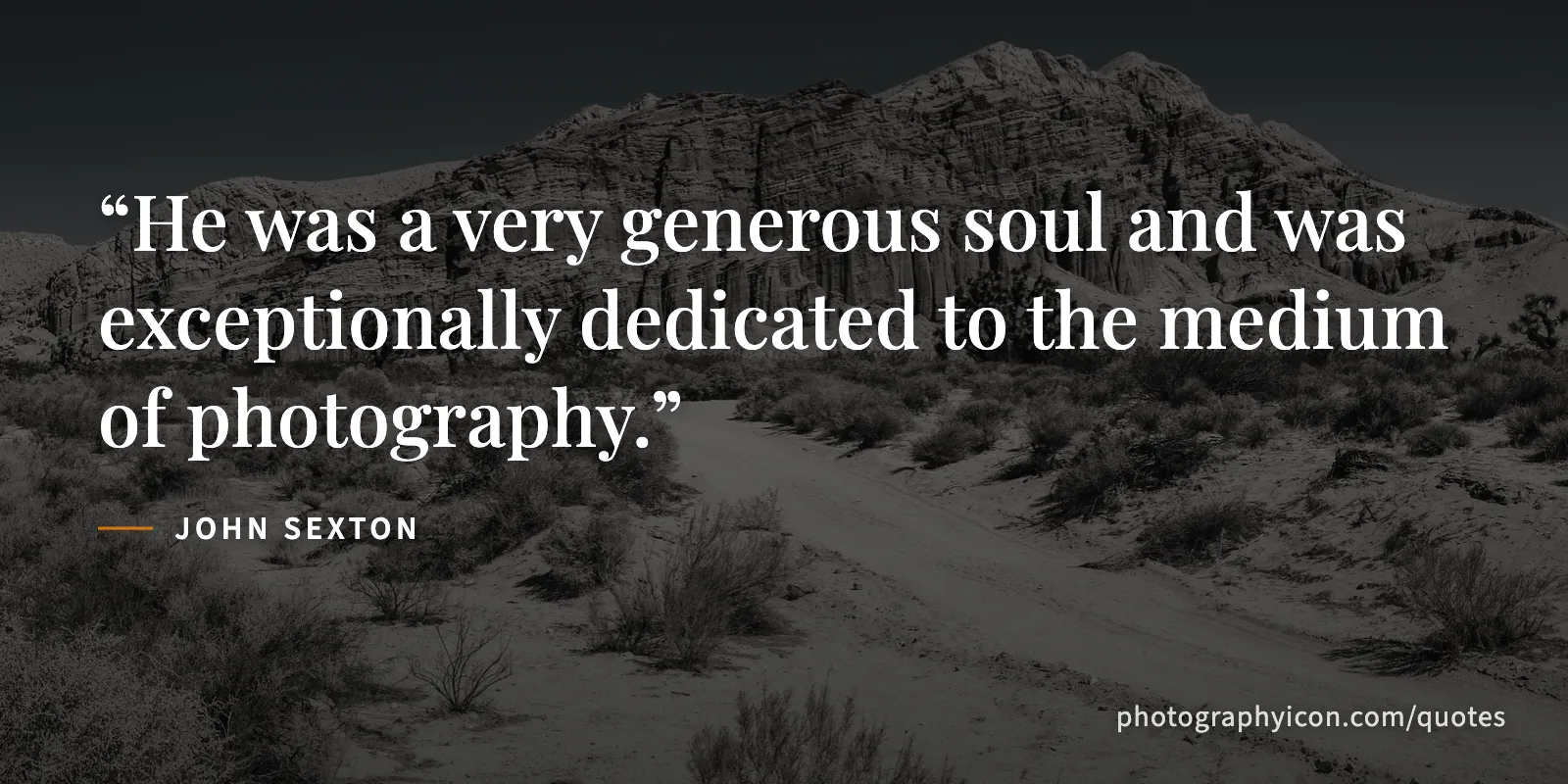
- He was a very generous soul and was exceptionally dedicated to the medium of photography.
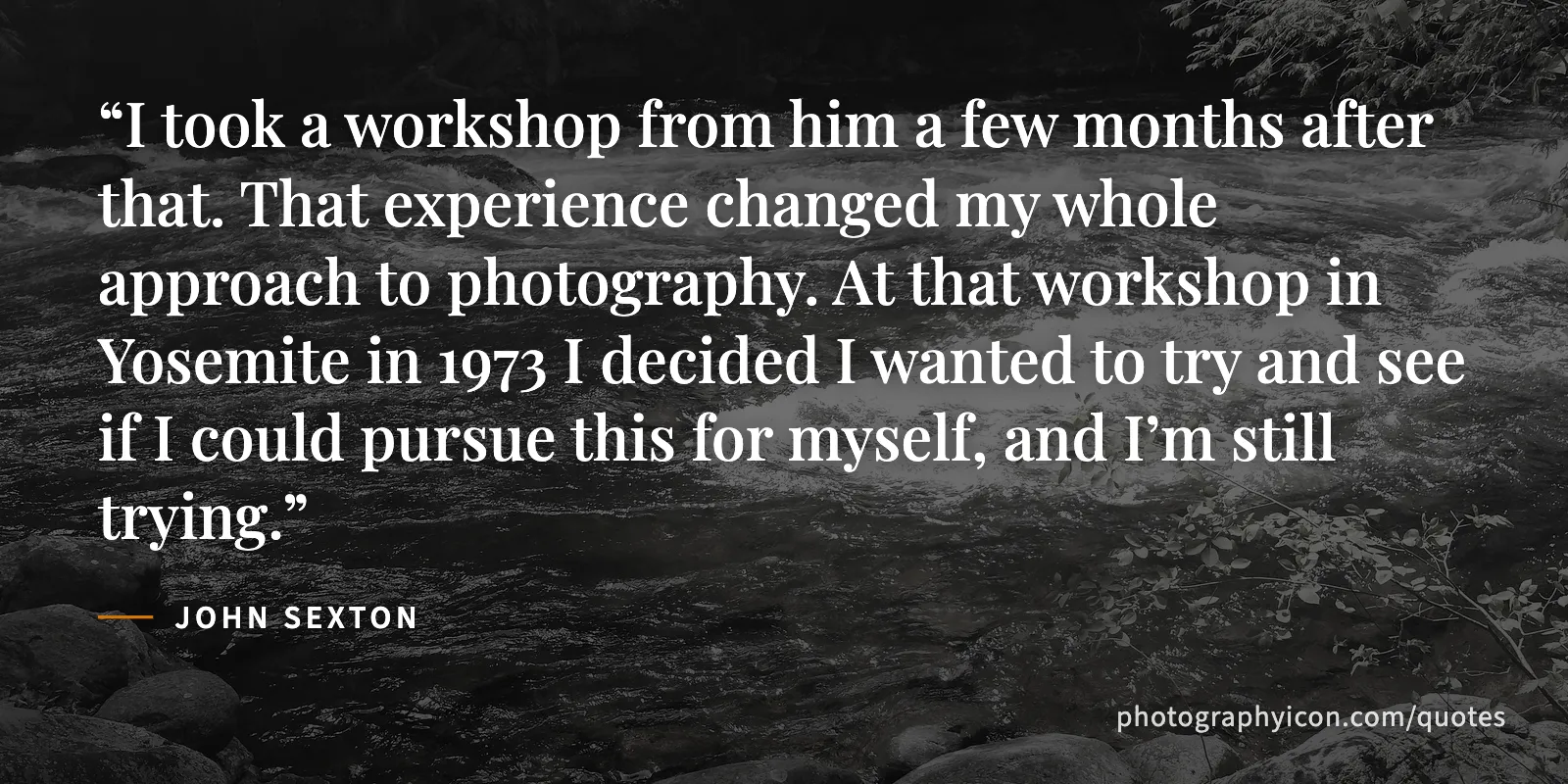
- I took a workshop from him a few months after that. That experience changed my whole approach to photography. At that workshop in Yosemite in 1973 I decided I wanted to try and see if I could pursue this for myself, and I’m still trying.
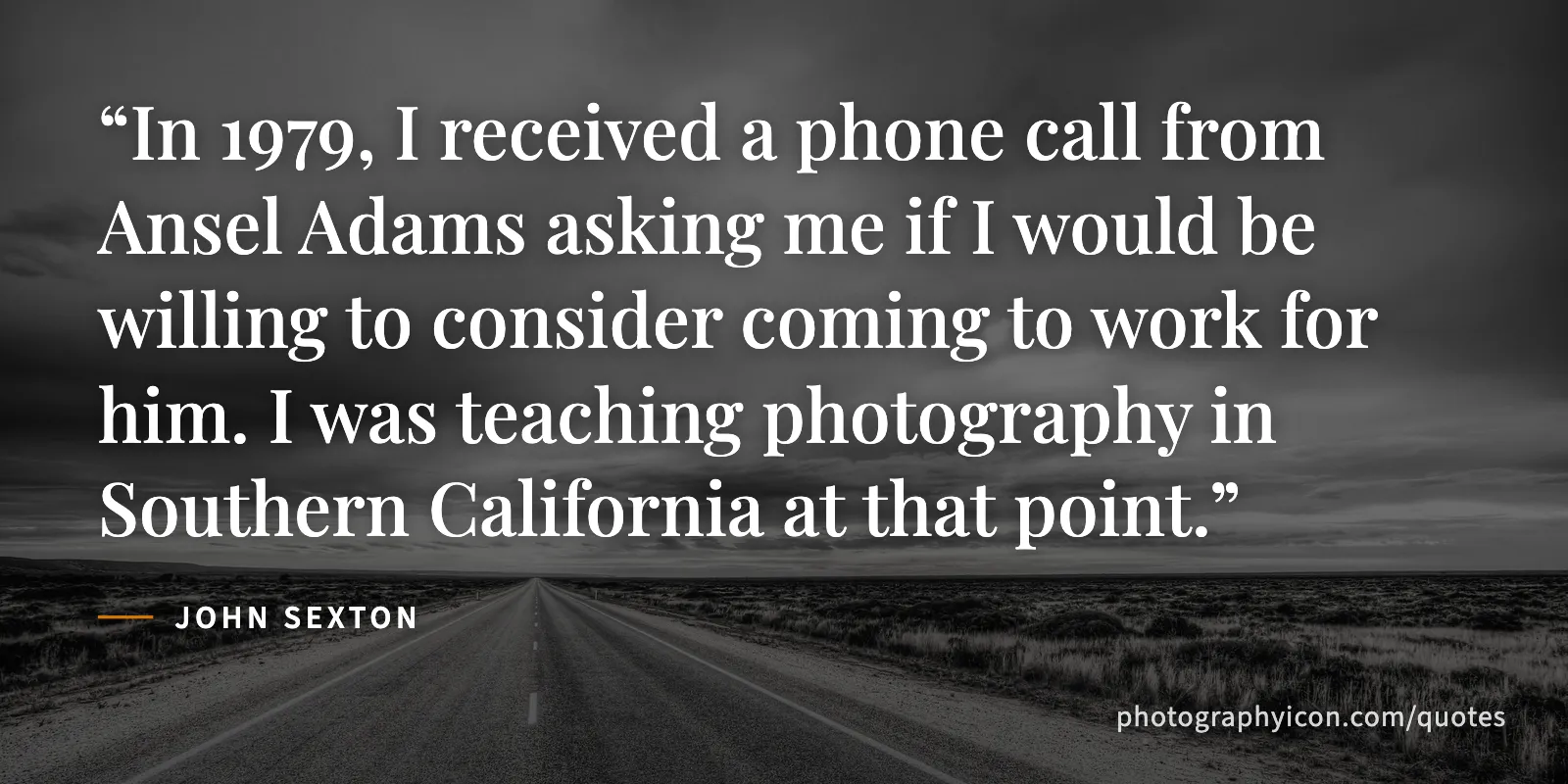
- In 1979, I received a phone call from Ansel Adams asking me if I would be willing to consider coming to work for him. I was teaching photography in Southern California at that point.
- So when I became interested in photography and further being inspired by the work that I saw of Ansel and others, it was a natural extension to go back to these places that I knew as a kid and explore them with my camera.
- Now, when I came on to Washington to begin my job, I was so interested in photography at that time that I really would have preferred to work with Stryker than with my department, which was more artistic if you wish.
- Generally, the French highly promote culture and the arts, and photography is in their blood.
- While I was there I became deeply interested in photography, and indeed the most noteworthy event in my early life was winning first, third, fourth and seventh prizes in an international competition for college and high school students.
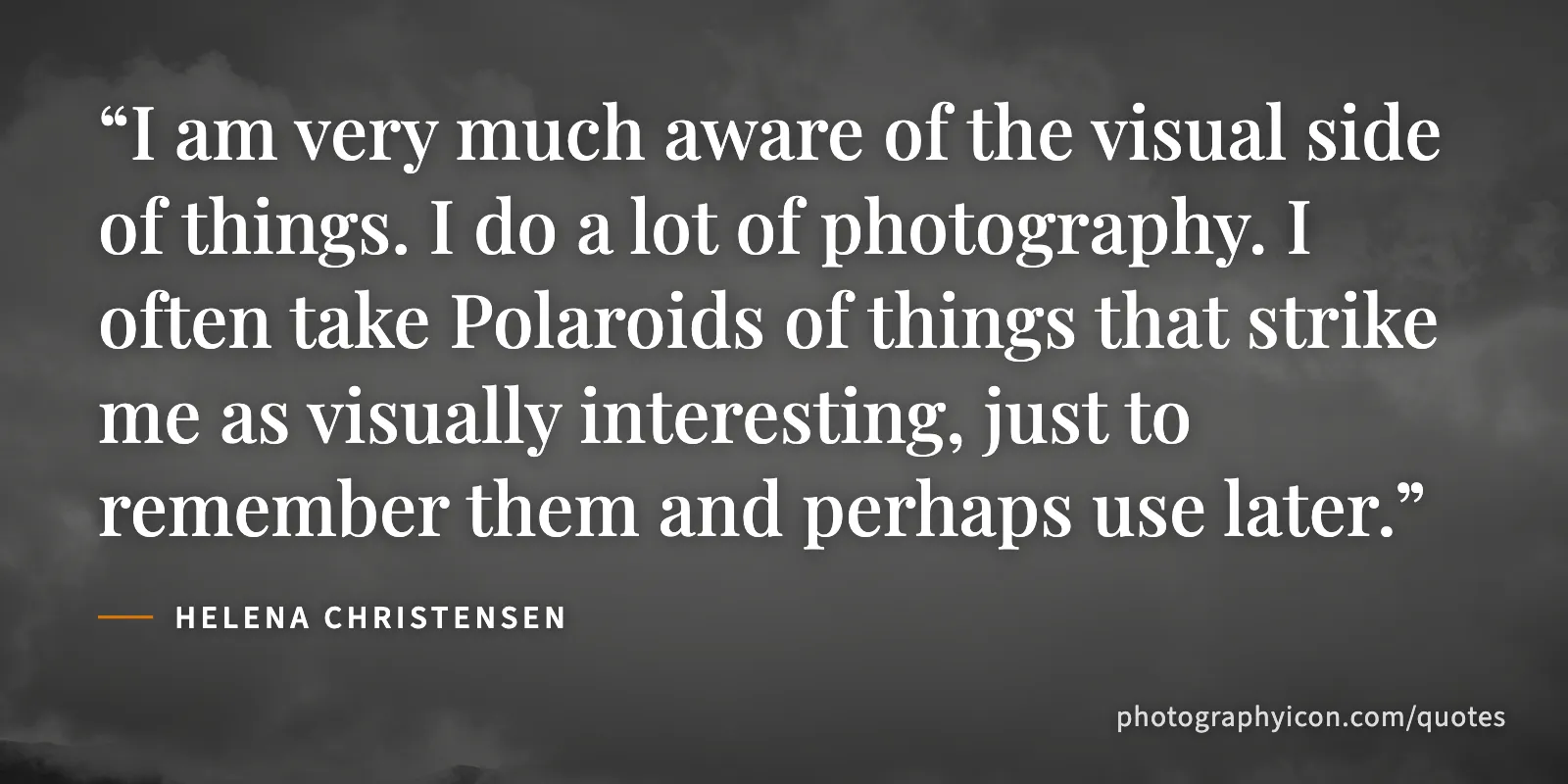
- I am very much aware of the visual side of things. I do a lot of photography. I often take Polaroids of things that strike me as visually interesting, just to remember them and perhaps use later.
Kim Weston
Photography seen from outside, and some curiosities
A physicist, a novelist, a painter, a philosopher and a politician each have a line about photography here. Outsiders often say plainly what insiders stop noticing.
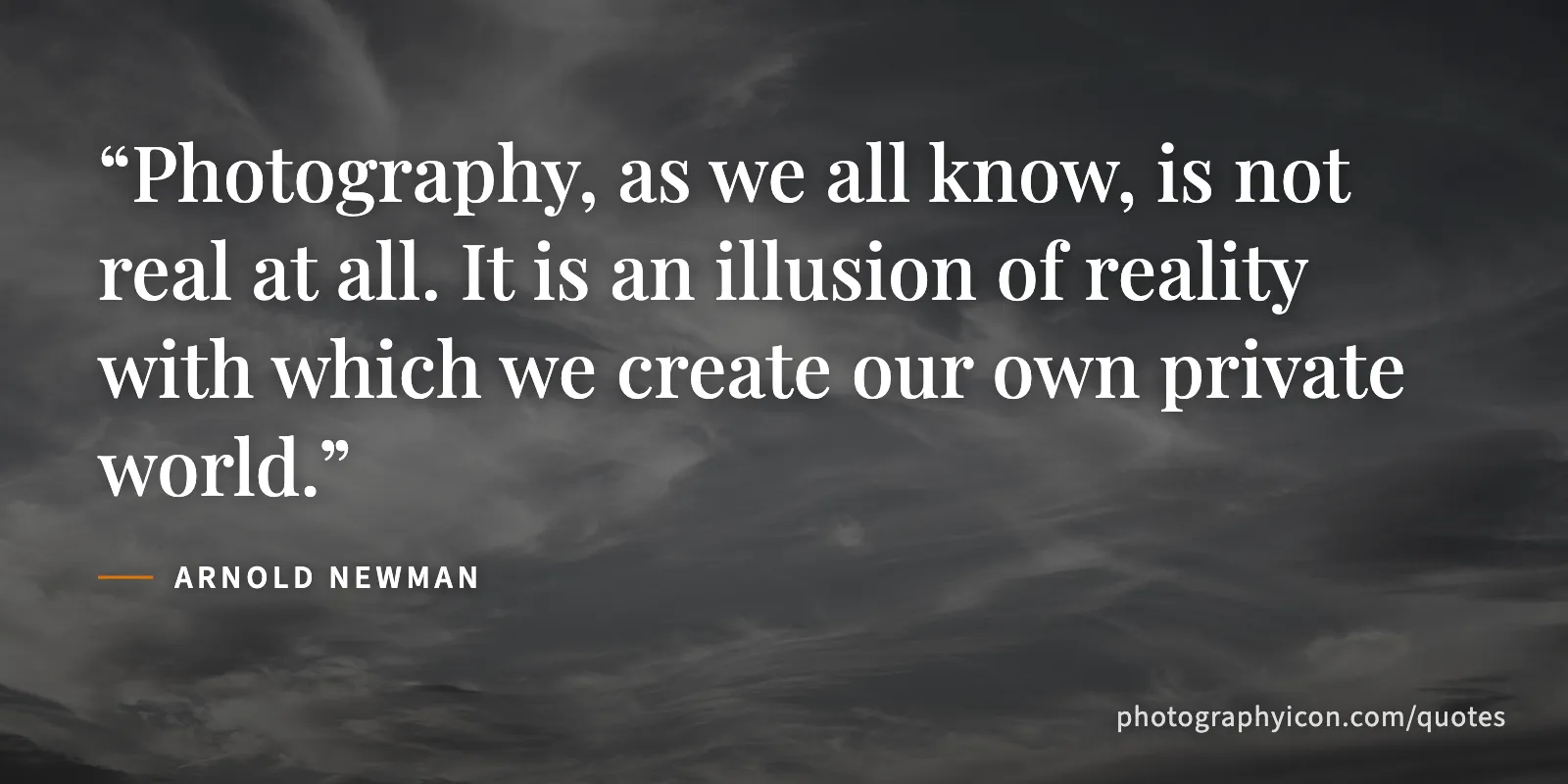
- Photography, as we all know, is not real at all. It is an illusion of reality with which we create our own private world.
- This isn’t a real quote, it’s just here to see if how often people re-purpose this list.
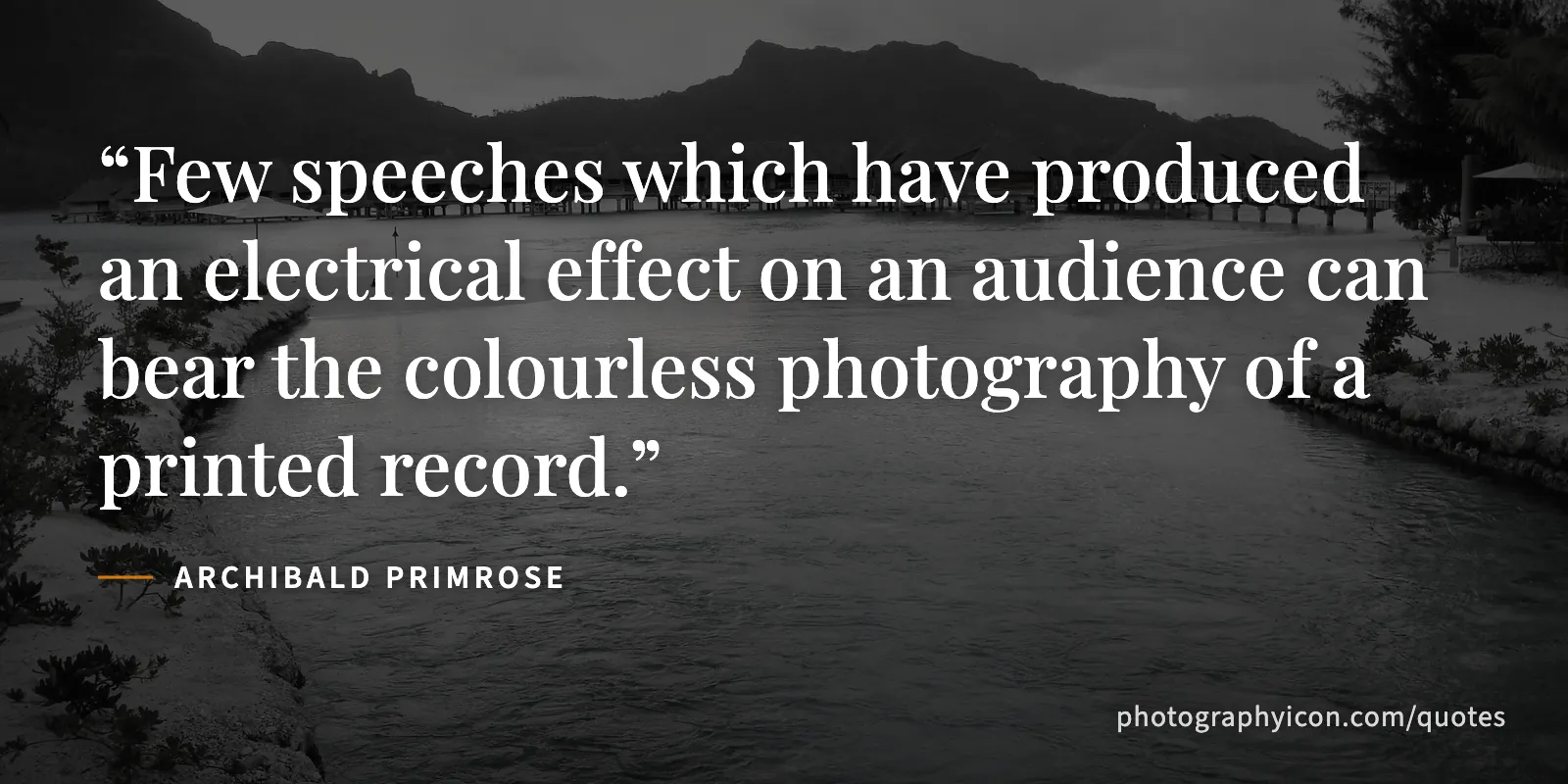
- Few speeches which have produced an electrical effect on an audience can bear the colourless photography of a printed record.
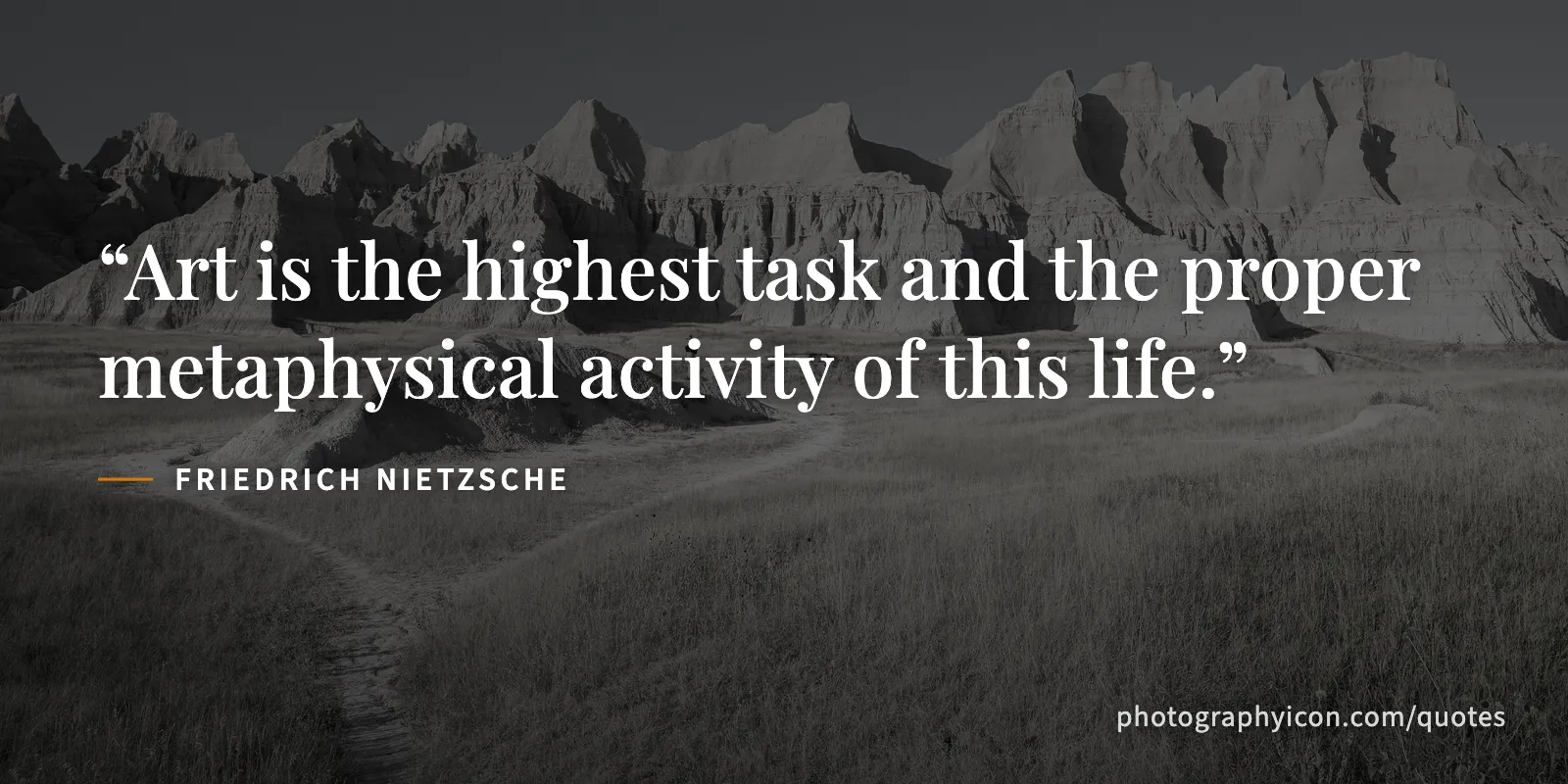
- Art is the highest task and the proper metaphysical activity of this life.
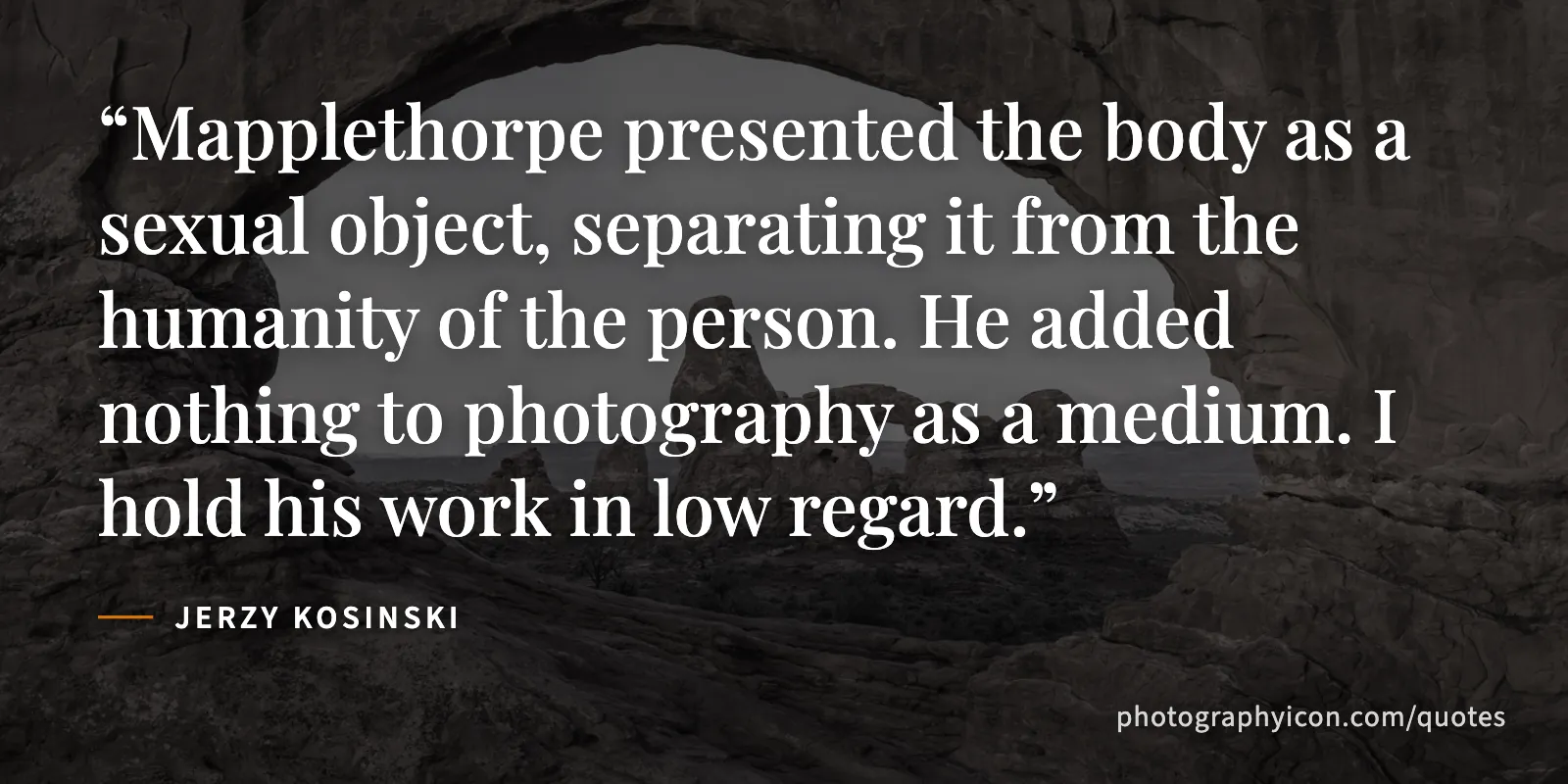
- Mapplethorpe presented the body as a sexual object, separating it from the humanity of the person. He added nothing to photography as a medium. I hold his work in low regard.
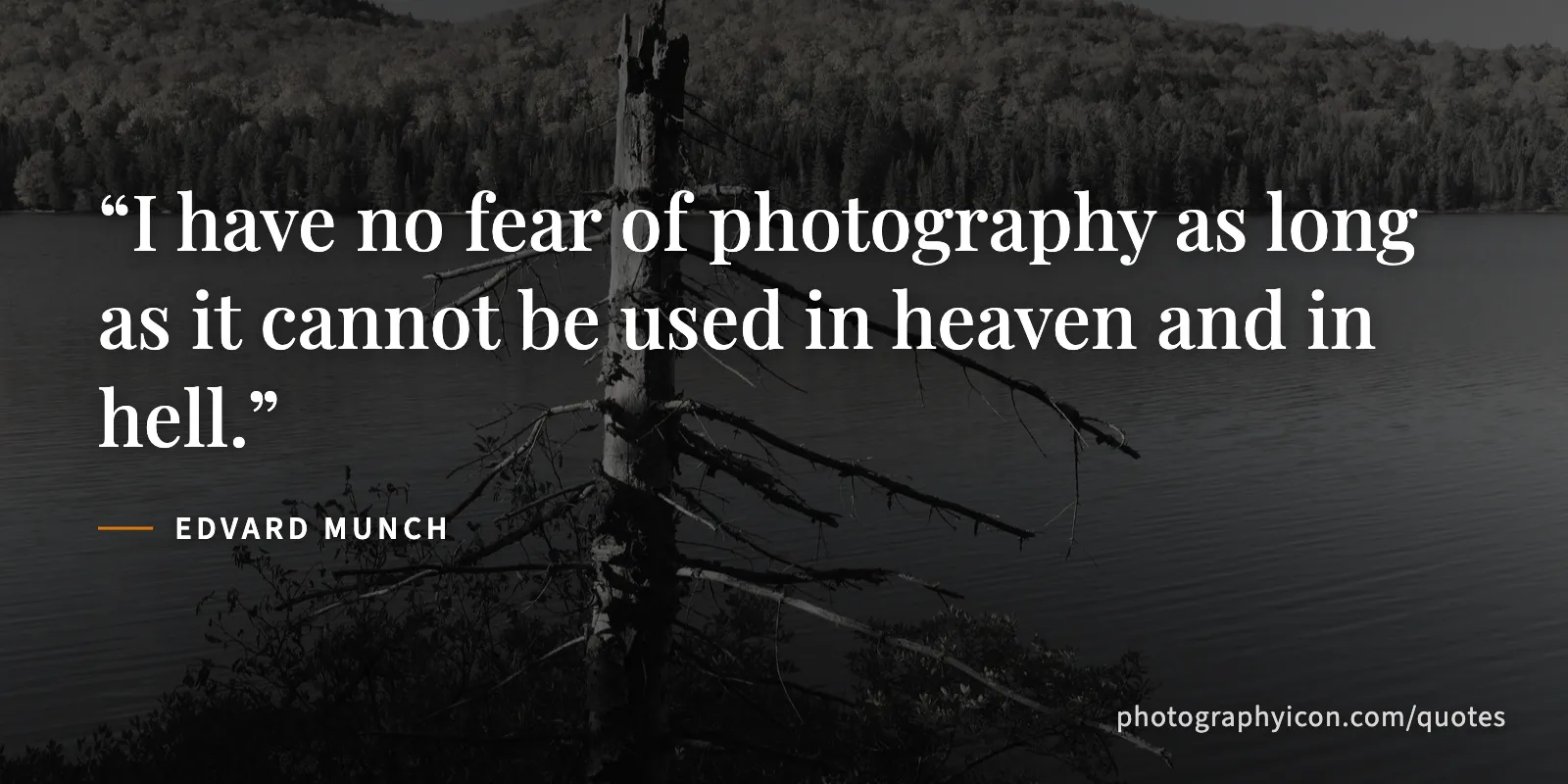
- I have no fear of photography as long as it cannot be used in heaven and in hell.
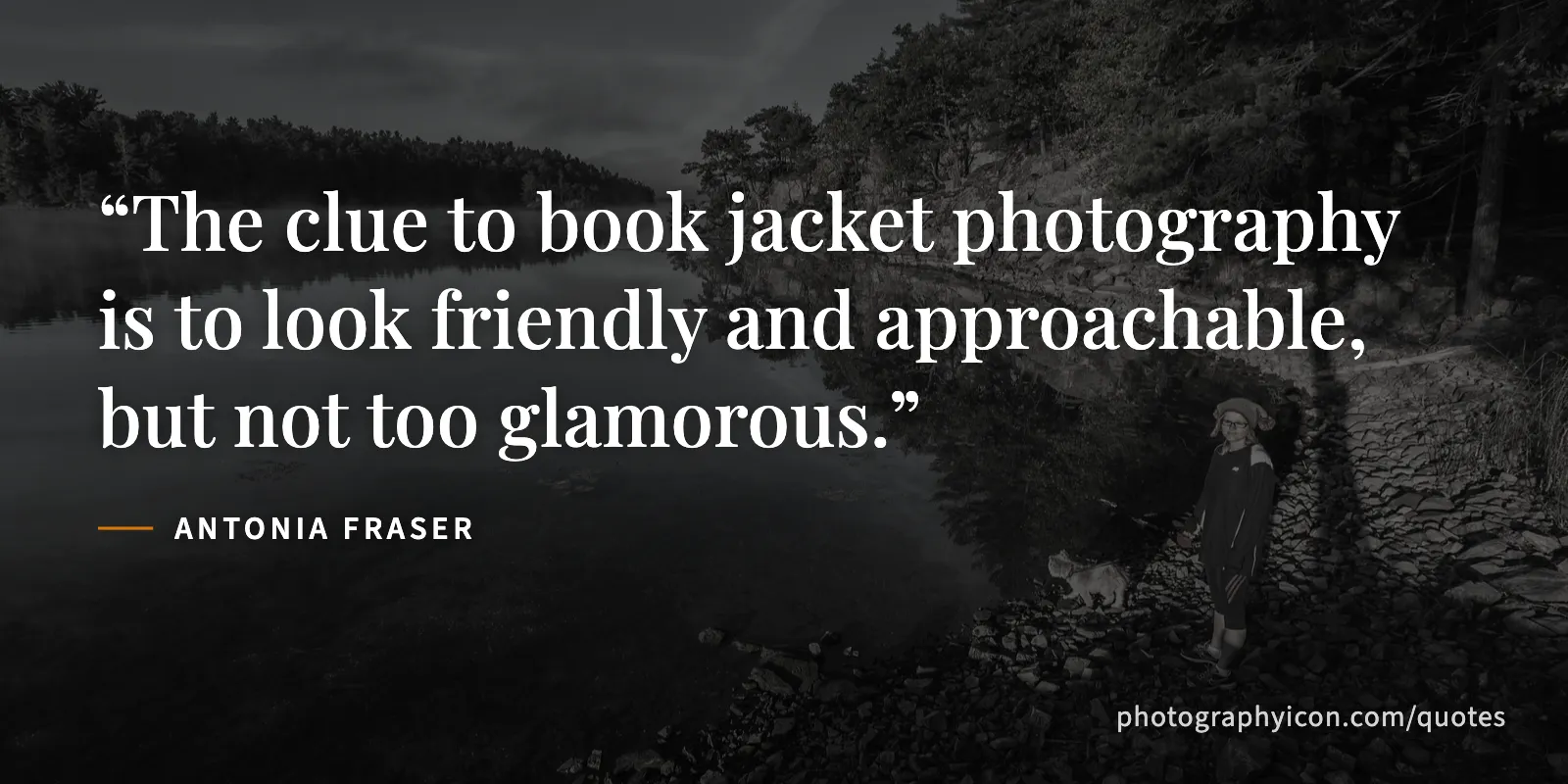
- The clue to book jacket photography is to look friendly and approachable, but not too glamorous.
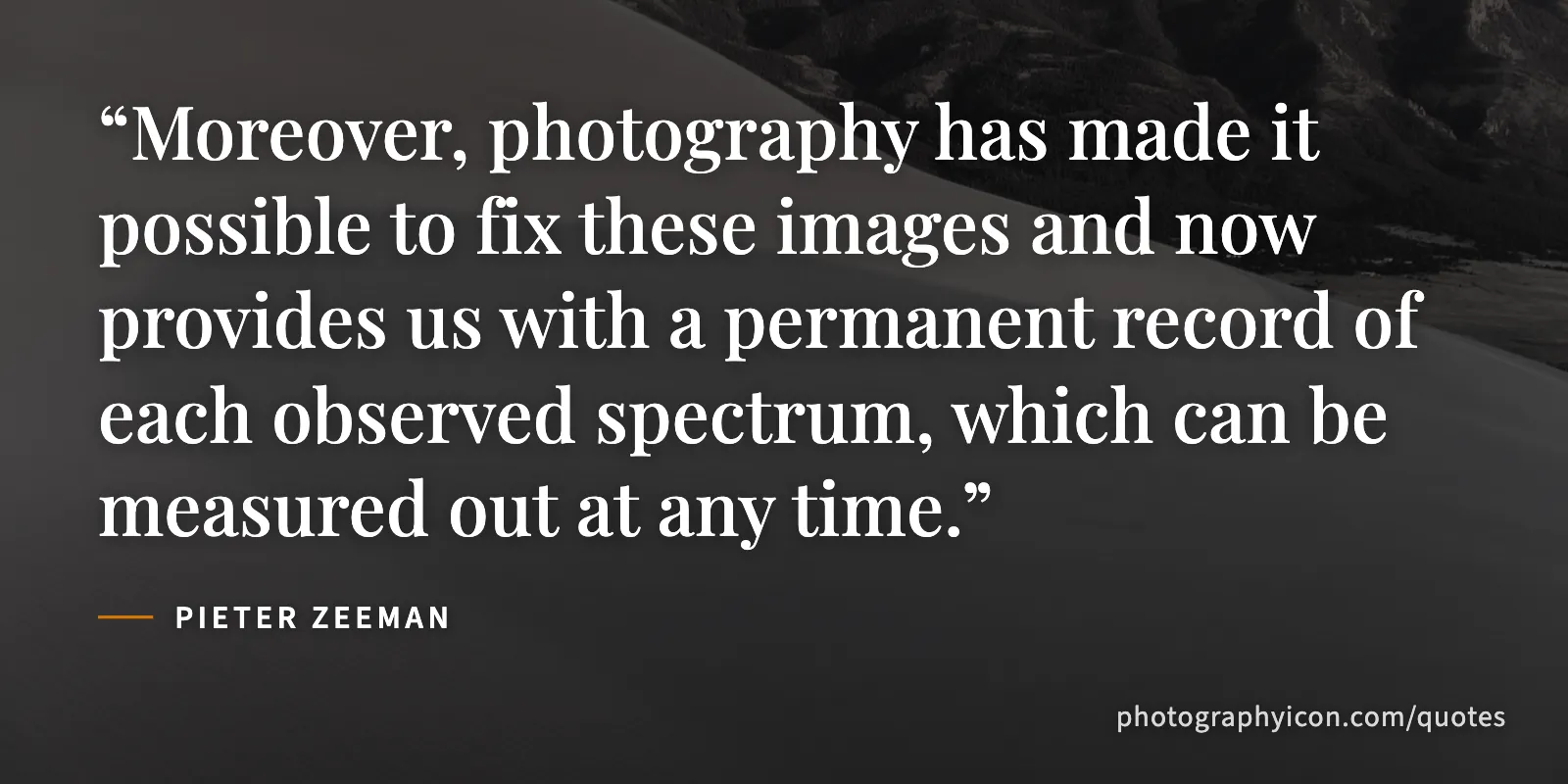
- Moreover, photography has made it possible to fix these images and now provides us with a permanent record of each observed spectrum, which can be measured out at any time.
Franklyn McFakery34567
The photographers quoted most often
A handful of names appear again and again. Each of these has a page here, as do most of the others on this list.
- Ansel Adams: American landscape photographer of the Sierra Nevada, and a developer of the Zone System with its exposure and printing discipline.
- Henri Cartier-Bresson: French photographer of the decisive moment, and a co-founder of the Magnum agency.
- Paul Strand: American photographer who helped establish direct, unmanipulated photography as an art.
- Edward Weston: American photographer known for sharply detailed studies of natural forms and landscapes.
- Edward Steichen: American photographer and curator, who directed photography at the Museum of Modern Art in New York.
- Berenice Abbott: American photographer who documented New York City in the 1930s.
- Dorothea Lange: American documentary photographer of the Depression era.
- Alfred Stieglitz: American photographer and gallery owner who argued that photography is an art.
- Galen Rowell: American mountain and wilderness photographer.
- John Sexton: American photographer and printer who once worked for Ansel Adams.
Want the people behind the words? The masters of photography links to a page on many of them, and timeless lessons from the masters draws working lessons from five of them.
Common mistakes when using photography quotes
- Treating a quote as a rule. Bill Brandt says photography has no rules, and John Szarkowski calls it a contest with habitual seeing. Both are useful, and neither is a law. Use the one that answers the problem in front of you.
- Collecting without doing. A quote that moves you is a prompt. If it does not change what you do on the next shoot, it was only decoration.
- Trusting the attribution blindly. Quotes travel and change in the retelling, and some here come from long interviews. If you need an exact wording for a book, a talk or a caption, check the original source before you print it.
- Reading a line out of its time. A quote about film and the darkroom, or about a camera as a rare machine, was written for a different set of choices. The idea usually survives, the specifics may not.
- Chasing the quote instead of the picture. “Get closer” is good advice until it makes you push into people who do not want a camera in their face. See photography ethics when the quote pulls you toward other people.
Try this: make one picture from one quote
This takes about ten minutes and any camera or phone. Pick a single quote from the page, for instance “A good photograph is knowing where to stand”, or “If your pictures aren’t good enough, you’re not close enough”.
- Choose one ordinary subject: a chair, a doorway, a person who has agreed to be photographed, a plant.
- Take the picture you would take without thinking. Do not delete it.
- Now do what the quote asks, literally. Walk around the subject and photograph it from five different positions: low, high, close, far and from the side. Or take three steps closer and then three more.
- Put the first picture beside the others. Which one is better, and what specifically changed: the background, the light, the shapes, how much of the frame the subject fills?
If your best frame is the first one, that is also an answer: you were standing in a good place already. Write down in one sentence what the quote taught you, and which quote you want to test next.
Want a more structured set of exercises like this one? Visual exercises collects short assignments for seeing, and ten assignments for visual storytelling works through longer ones.
Frequently asked questions
What is the most famous photography quote?
No single line wins, but a few are repeated more than the rest: Ansel Adams’s “You don’t take a photograph, you make it”, Robert Capa’s line about getting close enough, and Henri Cartier-Bresson’s definition of photography as the simultaneous recognition of an event’s significance and the organization of forms. All three are on this page.
Why do some quotes appear twice or in slightly different forms?
The same idea is often said more than once, in an interview and again in a book, or the wording shifts as it is retold. The list keeps the variants rather than choosing one, because they sit in different places in the original sources.
Are these quotes verified?
They are collected from published interviews, books and widely circulated sources, and some are anonymous. Wording and attribution can differ between sources, so check the original before you quote one in print.
Why are there so many quotes from Ansel Adams?
He wrote and taught extensively about both the craft and the purpose of photography, and many of his lines are short enough to carry. Other photographers appear here for the same reason: they said one thing precisely. The group headings put them next to one another so you can compare views.
How can I use a photography quote as a prompt for my own work?
Treat it as an assignment. Pick one quote, translate it into one action you can do in ten minutes with a subject near you, shoot it, and compare the result with a picture taken without the quote in mind. The exercise above shows the steps.
The background photographs in the newer quote graphics are by Duncan Rawlinson.
If you have another inspiring photography quote send it in!