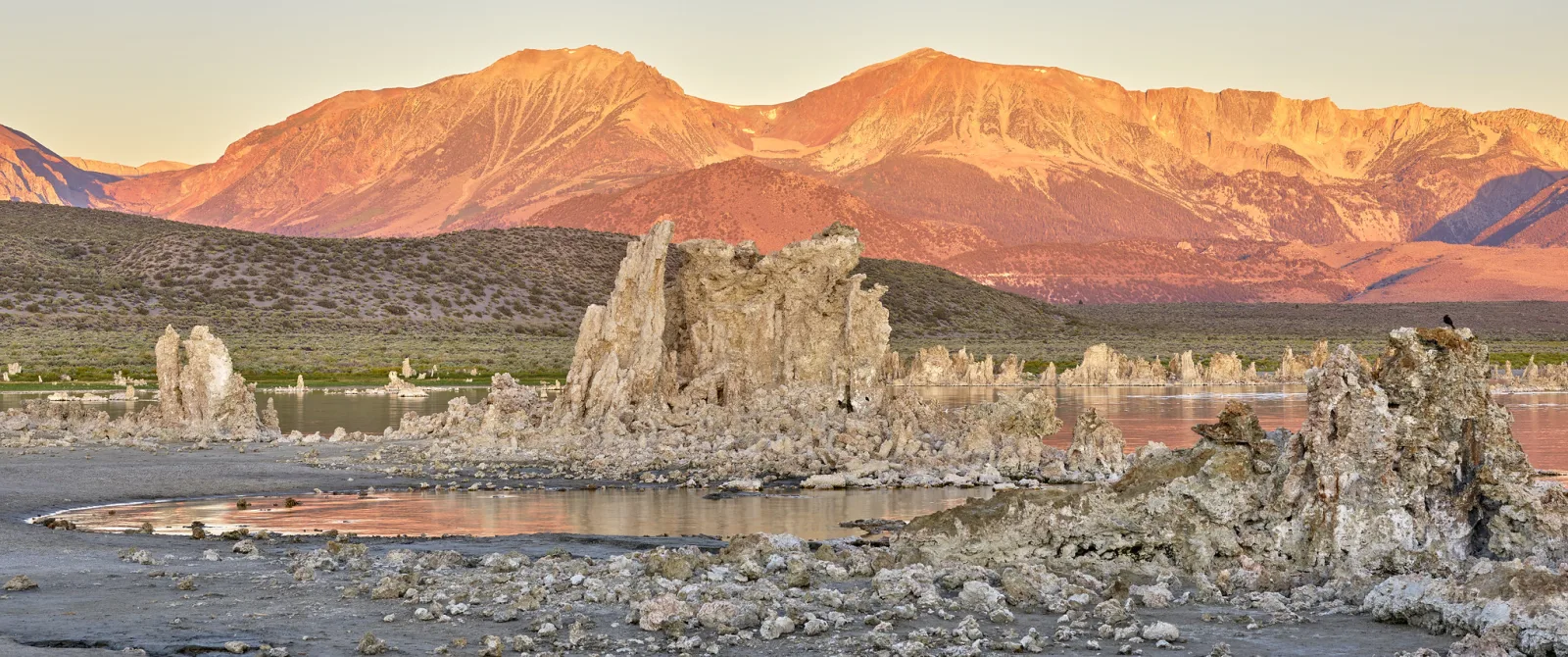
Medium format is any camera whose film or sensor is larger than the 36 x 24 mm frame of 35mm and smaller than large format sheet film. On film that means 120 roll film, in frame sizes from 6×4.5 to 6×9 centimeters. On digital it means sensors of about 44 x 33 mm or about 54 x 40 mm. The larger frame gives more detail and smoother tones, at the price of bigger, slower and costlier equipment.
The general rules that link frame size to angle of view, depth of field and noise are set out in camera sensor sizes explained, and the sheet film sizes above it are covered in large format photography. This guide applies those rules to medium format specifically: the film and sensor sizes with their numbers, equivalent focal lengths and apertures, what the format changes in a picture and what it does not, who benefits, and how to get close to the look with the camera you already own.
What medium format means on film and on digital
120 roll film and its frame sizes
Medium format film is 120 roll film: a strip a little over 6 cm wide, backed with paper and wound on an open spool, with no cassette. As you shoot, the film winds onto a second spool. There is no rewinding; at the end you seal the roll with its paper tab and take it out.
The usable image height on 120 film is about 56 mm. Different cameras use different lengths of film for each picture, and the formats are named for their rough size in centimeters:
| Format | Frame, approx. | Shape | Area against 35mm | Frames per 120 roll |
|---|---|---|---|---|
| 35mm (for comparison) | 36 x 24 mm | 3:2 | 1x | Not applicable |
| 6×4.5 | 56 x 42 mm | Close to 4:3 | About 2.7x | 15 or 16 |
| 6×6 | 56 x 56 mm | Square | About 3.6x | 12 |
| 6×7 | 56 x 68 mm | Close to 5:4 | About 4.4x | 10 |
| 6×9 | 56 x 84 mm | 3:2 | About 5.4x | 8 |
Exact frame sizes vary by a millimeter or two between cameras. The pattern is what matters: the same roll gives sixteen small frames or eight very large ones. A longer version of the film, 220, holds twice as many frames but is now uncommon.
Roll film cameras come in several body types: twin-lens reflexes with a viewing lens above the taking lens, single-lens reflexes (some of them modular, with interchangeable lenses, finders and film backs), rangefinders, and folding cameras that collapse flat. Many are viewed from above through a waist-level finder, which shows the scene reversed left to right. For how 120 sits beside other film sizes, see the formats section of film photography.
Thinking of buying a used film camera to try this? Choosing your first film camera covers film formats, camera types and what to check when buying used.
Digital medium format comes in more than one size
Digital medium format means a sensor larger than full frame, and there are two common sizes. The smaller is about 44 x 33 mm, with roughly 1.7 times the area of full frame. The larger is about 54 x 40 mm, with roughly 2.5 times the area. Both have a 4:3 shape.
Neither is as large as most film frames that carry the same name. The bigger digital sensor is close to a 6×4.5 film frame, and the smaller one is well short of it. A 6×7 negative has about two and a half times the area of a 44 x 33 mm sensor. This matters because much of what people say about medium format was learned on 6×6 and 6×7 film, and it applies with less force to the smaller digital sensors.
It also matters for lenses. A lens designed for the smaller sensor may not project an image circle large enough to cover the larger one, so check coverage before assuming a lens will move between systems.
Equivalent focal lengths and depth of field
A bigger frame sees more of the image a lens projects, so the same focal length gives a wider view. Medium format therefore has a crop factor below one. Multiply the focal length by the crop factor to get the full-frame lens with the same diagonal angle of view.
| Format | Crop factor | Normal lens | 80mm behaves like |
|---|---|---|---|
| 44 x 33 mm digital | 0.79 | About 55 to 65mm | 63mm |
| 54 x 40 mm digital | 0.65 | About 80mm | 52mm |
| 6×4.5 | 0.62 | 75 to 80mm | 50mm |
| 6×6 | 0.55 | 80mm | 44mm |
| 6×7 | 0.50 | 90 to 105mm | 40mm |
| 6×9 | 0.43 | About 100mm | 34mm |
So an 80mm lens, a short telephoto on 35mm, is the normal lens on 6×6 and a moderate wide angle on 6×9. Because the frame shapes differ, these equivalents are approximate: a square frame and a 3:2 frame with the same diagonal do not show quite the same scene.
The same multiplication works for aperture when you ask about depth of field. From the same position and with the same framing, multiply the f-number by the crop factor to find the full-frame aperture that gives the same depth of field:
- 80mm at f/2.8 on 44 x 33 mm matches about 63mm at f/2.2 on full frame.
- 80mm at f/2.8 on 6×6 matches about 44mm at f/1.5.
- 105mm at f/2.8 on 6×7 matches about 52mm at f/1.4.
Two things follow. First, the larger film formats do give a shallow focus plane at normal and moderately wide views, which helps subject separation without resorting to a long lens. Second, the advantage is smaller than its reputation, because medium format lenses are slower. Maximum apertures of f/2.8 to f/4 are typical. A full-frame camera with an f/1.4 lens produces shallower depth of field than a 44 x 33 mm camera with an f/2.8 lens, and roughly matches 6×7 at f/2.8.
For landscapes the relationship runs the other way. To hold the same depth of field you stop down further on the bigger format, so f/16 and f/22 are everyday apertures on 6×7 where f/8 or f/11 would do on full frame.
Tone, detail and grain: what the larger frame changes
The real gains come from area, and they show up differently on film and on digital.
On film, the gain is less enlargement. Grain is a property of the film, not of the camera, so the same emulsion has the same grain in any format. What changes is how much you magnify it. To make an 8 x 10 inch print, a 35mm negative is enlarged about 8.5 times and a 6×7 negative about 3.6 times. Grain, dust, scratches and lens flaws are all magnified less than half as much. Skies and skin look smooth because the grain is too small to see at that size, and fine detail holds because the film is not being asked for as much.
On digital, the gain is more light and usually more pixels. At the same shutter speed and f-number, a 44 x 33 mm sensor collects about 1.7 times the total light of a full-frame sensor, which is roughly three quarters of a stop, and a 54 x 40 mm sensor collects about 2.5 times, roughly one and a third stops. More total light means less visible noise in the finished picture, and less noise in the shadows means more usable dynamic range. Medium format sensors also tend to carry high pixel counts, so resolution for large prints is a strength.
Three cautions keep this in proportion:
- The gains are steps, not leaps. Three quarters of a stop is real but modest. The difference between 35mm film and 6×7 film is far larger than the difference between full frame and 44 x 33 mm digital.
- You only see them at size. On a phone screen or a small print, a well exposed full-frame file and a medium format file are hard to tell apart. The difference appears in large prints and heavy crops.
- Technique has to keep up. High resolution records small errors. Slight camera shake or a focus miss removes the advantage, and the mirrors in medium format reflex cameras are large enough to add vibration of their own.
Shooting 120 and wondering how to get it into a computer? Scanning film negatives covers the scanning methods, how much resolution you need, and flatbed and camera scanning step by step.
The medium format look, and what really causes it
People describe the look as smooth tonal transitions, a gentle roll from sharp to soft, a sense of depth, and high detail without harshness. Those qualities are real in many medium format pictures. The format itself accounts for only part of them.
| What people see | What causes it |
|---|---|
| Smooth skies and skin | Less enlargement on film; more total light on digital; low ISO and careful exposure |
| Shallow focus in a wide or normal view | A large frame with a normal lens near full aperture, at fairly close range |
| Soft, gradual blur | The rendering of particular lenses, and the quality of the bokeh |
| Calm, formal compositions | Square, 4:3 and 5:4 frames, and a slow way of working |
| Rich color and tone | Film stock and processing, or the editing applied to the file |
| Polished light | Studio lighting and planned sessions, where these cameras are mostly used |
Only the first two rows depend on frame size, and both follow the equivalence arithmetic above. A full-frame camera set to the equivalent focal length and aperture, from the same position, gives the same framing, the same perspective and the same depth of field. Perspective in particular comes from where the camera stands, not from the format.
The rest is lenses, frame shape, materials, light and habit. The aspect ratio alone does a great deal: a square or 4:3 frame organizes a portrait differently from a 3:2 frame, and many pictures read as medium format mainly because of their shape. The working method matters too. With twelve frames on a roll, or a camera that focuses slowly, people compose more carefully and wait for the picture. Careful pictures look better in any format.
Size, speed and cost: who it suits and when it does not help
A larger frame needs a larger image circle, so lenses and bodies grow with it. The costs are practical:
- Size and weight. Lenses are bigger and heavier for the same angle of view and aperture, and a 6×7 reflex camera is a substantial object to carry all day.
- Slower lenses. With f/2.8 to f/4 as typical maximums, you give back in shutter speed or ISO some of what the larger frame gained in low light.
- Slower handling. Film cameras are wound by hand and reloaded every eight to sixteen frames. Digital medium format generally focuses more slowly and shoots fewer frames per second than full-frame cameras, and the files are large.
- Metering by hand. Many older roll film cameras have no built-in meter, so you work with a handheld meter and a firm grasp of the exposure triangle.
- Cost. On film, each frame costs more because a roll holds fewer of them, and developing and scanning are usually charged per roll. Digital medium format bodies and lenses cost considerably more than full-frame equivalents. In both cases the lenses are the lasting investment, so choose a system by its lens range.
One feature runs the other way. Many medium format lenses have a leaf shutter inside the lens, which is quiet, adds little vibration, and synchronizes with flash at every speed it offers. That is useful for flash in daylight.
It suits work where the subject holds still and the result will be seen large: studio and location portraits, fashion, products, architecture, landscape, and reproduction of artwork. It also suits anyone who wants the discipline of a few frames per roll.
It does not help with sports, wildlife, fast street work or events in poor light, where autofocus speed, frame rate and fast lenses decide the result. It does not help pictures that will only be seen small. And it does not fix composition, light or timing. For the trade-offs between the two smaller formats most people actually choose between, see full frame vs crop sensor.
How to try the look with the camera you have
Most of the look can be approached with any camera, and one technique reproduces the large frame directly.
- Stitch a shallow-focus panorama. Use a fast short telephoto wide open, focus on the subject, lock focus and exposure, and shoot a grid of overlapping frames covering the subject and its surroundings. Stitched together, the frames act like one much larger sensor. A three by three grid with one third overlap covers about 2.3 frames in each direction, so an 85mm lens at f/1.8 behaves roughly like a 37mm lens at f/0.8: a wide view with very shallow focus, which no single lens offers. The subject must stay still.
- Use a normal lens close and wide open. A 50mm lens at f/1.4 on full frame frames and blurs much like a 100mm at f/2.8 on 6×7. Work at one and a half to two meters with a distant background.
- Change the frame shape. Set the camera to 1:1, 4:3 or 5:4, or crop to those shapes later, and compose for that shape from the beginning.
- Protect the tones. Use the lowest standard ISO, expose generously without clipping highlights, shoot raw, and use a support. Clean, low-noise files give the smooth gradients people credit to the format.
- Use soft light. A large window or open shade gives the gradual light-to-shadow transitions that read as tonal smoothness.
- Ration your frames. Allow yourself twelve exposures for a session and do not review them until the end.
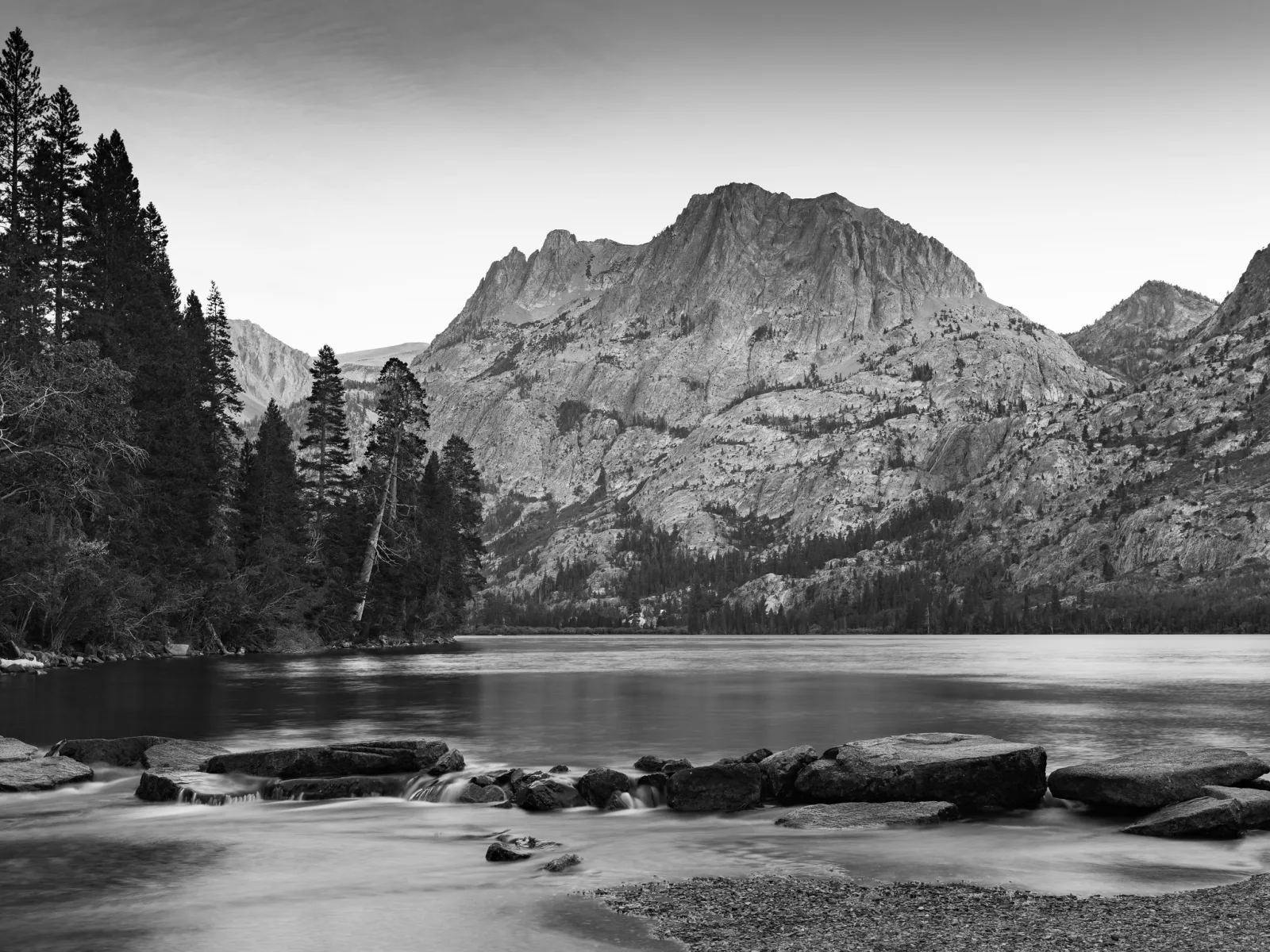
How do you shoot frames that stitch cleanly? Panorama photography covers camera settings, how much overlap you need, the nodal point and stitching software.
Common mistakes
- Reading focal lengths as if they were 35mm. An 80mm lens is a normal lens on 6×6, not a short telephoto. Fix: multiply by the crop factor for your format before choosing a lens.
- Expecting the film look from a small digital sensor. A 44 x 33 mm sensor is much closer to full frame than to 6×7. Fix: compare areas and equivalent apertures, not format names.
- Misjudging the thin focus plane. At f/2.8 on 6×7, depth of field at portrait distance is a few centimeters. Fix: focus precisely on the nearer eye, and stop down a stop when the subject moves.
- Handholding at slow shutter speeds. High resolution shows the smallest shake. Fix: use a tripod, or a shutter speed well above what you would accept on a smaller camera.
- Expecting fast autofocus. Many systems focus deliberately. Fix: choose still subjects, or prefocus on the spot where the subject will be.
- Guessing exposure on film. With ten frames to a roll, each mistake is a tenth of the roll. Fix: meter carefully, and for negative film give more exposure when in doubt.
- Buying the format to fix weak pictures. A bigger frame records a dull scene in more detail. Fix: rent or borrow first, and test it on work you already do well.
Try this
Make one stitched shallow-focus picture. Allow fifteen minutes to shoot. Pick a subject that will not move, such as a parked bicycle or a tree, about three meters away with open space behind. Fit your longest fast lens and open it fully. Set manual exposure and a fixed white balance, focus on the subject, then switch to manual focus so nothing changes. Shoot nine frames in a three by three grid, overlapping each by about a third. Then, from the same spot, take one ordinary frame of the same area with a wide lens. Stitch the nine in any panorama tool and put the result beside the single frame. The framing matches. Compare the background blur and the detail.
Frequently asked questions
Is medium format better than full frame?
It offers more resolution and smoother tones, and on the larger film sizes a shallower focus plane at the same framing. It is also larger, slower and more expensive. For still subjects and large prints it can be worth it; for general or fast shooting, full frame is more practical.
What is the medium format look?
A combination of smooth tonal transitions, shallow depth of field in a normal or wide view, and high detail. Part of it comes from the size of the frame. Much of it comes from the lenses, the frame shape, the light and a slower way of working.
How many photos do you get on a roll of 120 film?
It depends on the camera’s format: 15 or 16 frames at 6×4.5, 12 at 6×6, 10 at 6×7 and 8 at 6×9.
Is digital medium format the same size as medium format film?
No. The common digital sensors are about 44 x 33 mm and about 54 x 40 mm. The larger is close to a 6×4.5 film frame, and both are smaller than 6×6, 6×7 and 6×9.
Can I shoot medium format on a budget?
On film, yes. Used twin-lens reflex cameras and older roll film cameras are the affordable way in, and they teach the format’s slower discipline. Digital medium format remains a premium purchase.
Related guides
- Camera sensor sizes explained: the smaller formats, with dimensions, crop factors and the equivalence rule.
- Large format photography: sheet film, camera movements and the shooting sequence.
- Full frame vs crop sensor: the same trade-offs one and two steps down in size.
- Film photography: formats, film stocks, metering and developing.
- Choosing your first film camera: camera types and buying used.
- Depth of field: aperture, distance and focal length, and how they combine.
- Panorama photography: shooting and stitching, the basis of the large-frame technique above.