
A photography business plan is a short written document that answers six questions: what you sell, who buys it, how many such clients exist near you, what the business costs to run, how many bookings at what price cover those costs and your pay, and how clients will find you. One page is enough if every answer is a number or a named decision you can check in three months.
This guide covers the plan itself, section by section, with the sums written as methods you can fill in with your own figures. The wider setup steps are in how to start a photography business, and choosing a specialty is covered in photography niche and positioning. This page goes further on the arithmetic that ties them together: costs, break-even bookings, capacity, prices and a calendar. It gives no tax or legal advice. Where those questions come up, it says what to ask and whom.
What a one-page plan needs to answer
Long plans are written for lenders and investors. If you need one for a loan or grant application, ask that organisation for its required format. The plan described here is for you: one page you can read in two minutes and test against reality.
| Section | The question it answers | What counts as an answer |
|---|---|---|
| Services and client | What do you sell, and to whom? | One sentence naming the service, the client and the area |
| Market | Are there enough of those clients nearby? | A counted estimate and a list of competitors |
| Costs | What does a year of business cost? | A total of fixed costs, a cost per booking and your pay |
| Break-even | How many bookings cover that? | One number, checked against your available hours |
| Prices | What must an average booking bring in? | A floor price and a published price |
| Marketing | How will clients find you, and when? | A twelve-month calendar |
| Equipment and reserves | What must be replaced, and what if income stops? | A replacement schedule and a reserve target |
| Review | Is it working? | Four dates and the figures you will compare |
Write every answer as a figure or a decision. “Grow the business” cannot be checked. “Forty bookings by the end of the year from two named sources” can.
Defining services and the client you serve
Write one sentence in this form: “I photograph [what] for [whom] in [where], delivered as [what they receive].” For example: “I photograph families outdoors for parents of young children within an hour of my town, delivered as an online gallery with prints available.” If you cannot finish the sentence, the plan has nothing to stand on yet.
Then describe the client in enough detail to find them. Where do they already spend time and attention? What event or deadline makes them look for a photographer? Who do they ask for a recommendation? What would make them choose you over doing nothing, which is usually the real competitor?
List at most three services. For each, note what the client receives, how many hours it takes you from first message to final delivery, and what it costs you to deliver. Those two figures feed every later section. A service you cannot put hours against is not ready to be priced.
Still choosing a specialty? Photography niche and positioning covers what a niche is, market validation and competitive density.
Sizing your local market
You do not need a statistic for the whole industry. You need to know whether enough clients of your kind exist within the distance you will travel. Work it out from things you can count.
Decide the travel distance first, because it sets every count. Doubling the radius roughly quadruples the area you cover, but it also adds unpaid driving to every booking, and those hours belong in the capacity check further down.
- Count the occasions. Depending on your service, that might be weddings held at local venues in a year, schools, sports clubs, businesses with staff pages, or properties listed for sale. Venues, councils, school directories and listing sites publish much of this.
- Count the competitors. Search as a client would and list every photographer offering the same service in the same area, with their published prices and what each includes.
- Look for signs of demand. Are competitors booked weeks ahead? Do venues keep lists of recommended photographers? Do local groups ask for recommendations?
- Estimate your share cautiously. Write a low, a middle and a high guess for how many of those occasions you could win in a year, and plan on the low one.
The test comes in the following sections. If your break-even number of bookings is larger than your low estimate, something has to change before you spend money: widen the area, add a service, or choose a different client.
Working out costs and a break-even number of bookings
Split costs into kinds, because they behave differently.
- Fixed costs are paid whether or not anyone books: insurance, software, website and hosting, phone, equipment replacement, marketing, professional fees, training, and rent if you have a studio.
- Variable costs happen once per booking: travel, an assistant, prints and albums, gallery delivery, payment processing fees.
- Your own pay is the figure most plans leave out. Decide what the business must pay you in a year and treat it as a fixed cost.
Then work out two figures:
Contribution per booking = average price of a booking minus its variable costs
Break-even bookings = (fixed costs + your pay) ÷ contribution per booking
If the fixed costs and pay for a year equal sixty times the contribution of one booking, you need sixty bookings to break even. Every booking after that is surplus, and every booking short of it comes out of your pay. If you sell more than one service, work out the contribution of each and use an average weighted by the mix you expect.
Now test that number against your time. This is the check that catches most unworkable plans. Suppose you can give the business 20 hours a week for 46 weeks, which is 920 hours a year. If a third of those hours go to marketing, accounts and other work not tied to a booking, about 613 remain. If one booking takes 9 hours from first message to final delivery, your capacity is about 68 bookings a year. A break-even of 60 fits, with little room to spare. A break-even of 90 does not, however good the marketing.
When the number does not fit, there are only four levers: lower the fixed costs, raise the price, cut the hours each booking takes, or change the service to one with a higher contribution. Write down which one you are pulling.
Two questions here are not arithmetic. How much of the income must be set aside for tax, and whether you must charge sales tax or register the business, depend on where you live. Ask an accountant or your local tax office, and put the answers into the cost list.
Setting prices from the plan
The plan gives you a floor, not a price list. Turn the break-even sum around: pick the number of bookings you can realistically win and deliver in a year, using the low market estimate and the capacity check, and solve for the price.
Required average booking = (fixed costs + your pay) ÷ realistic bookings + variable costs per booking
Compare that figure with the published prices you collected from competitors. Three outcomes are possible.
- It sits inside the local range. The plan is workable. Decide where in the range your work and service belong.
- It sits below the range. You have room to price higher, or to plan on fewer bookings.
- It sits above the range. Clients of this kind, in this area, do not pay enough to support this cost structure at this volume. Return to the four levers before you publish anything.
A floor worked out this way is cost-plus pricing. It tells you the least you can charge, not what the work is worth to the client.
Which pricing model should sit on top of the floor? Photography pricing methods compares cost-plus, value-based and package pricing, and hybrid models.
Write a review rule into the plan too: the figures that would trigger a price change, such as being fully booked for a set number of weeks ahead.
When is it time to raise prices? How to raise your photography rates covers the signs that it is time and how to communicate the change to existing clients.
A twelve-month marketing calendar
Photography income is seasonal, and clients book ahead, so marketing has to run earlier than the work. Build the calendar in four passes.
- Mark the peak months for each service. Use your own past bookings if you have them, or ask established photographers and venues when their busy months fall.
- Count back the lead time. If clients book a service about two months before the date, promotion has to be visible about three months before the peak. Lead times differ widely: weddings are often booked many months ahead, a family session a few weeks.
- Give each month one main action. A portfolio update, an email to past clients, a visit to three venues, or a seasonal offer such as a mini session day. One action done fully beats five begun.
- Use the quiet months. Schedule portfolio shoots, website work, accounts and the yearly plan rewrite where bookings are thin.
| When | Action | Measure |
|---|---|---|
| Four months before peak | Refresh the portfolio and booking page for the service | Page live, prices checked |
| Three months before | Email past clients and referral partners | Inquiries received |
| Two months before | Open booking and post examples weekly | Bookings against target |
| Peak months | Deliver the work, and ask every client for a review and a referral | Reviews and referrals counted |
| Month after peak | Record hours, costs and source for every booking | Figures entered in the plan |
| Quiet months | Portfolio shoots, accounts, plan rewrite | Tasks completed |
The table shows the pattern for one service with one peak. Shift the timings to match your own lead time. Record where every inquiry came from: after a year you will know which actions produced bookings, and the calendar can drop the rest. Photography marketing covers the channels themselves: your website, search, social media, referrals and email.
Equipment and cash reserves
The plan needs two money buffers: one for replacing gear and one for months with no income.
For equipment, list every item the work depends on, including the computer and storage drives. Beside each, write its replacement cost and the number of years you expect it to last in paid use. Divide one by the other, add the results, and you have the yearly amount to set aside. That figure belongs in fixed costs. Note which items have no backup: a paid shoot that depends on one camera body, one lens or one copy of the files is a risk the plan should name.
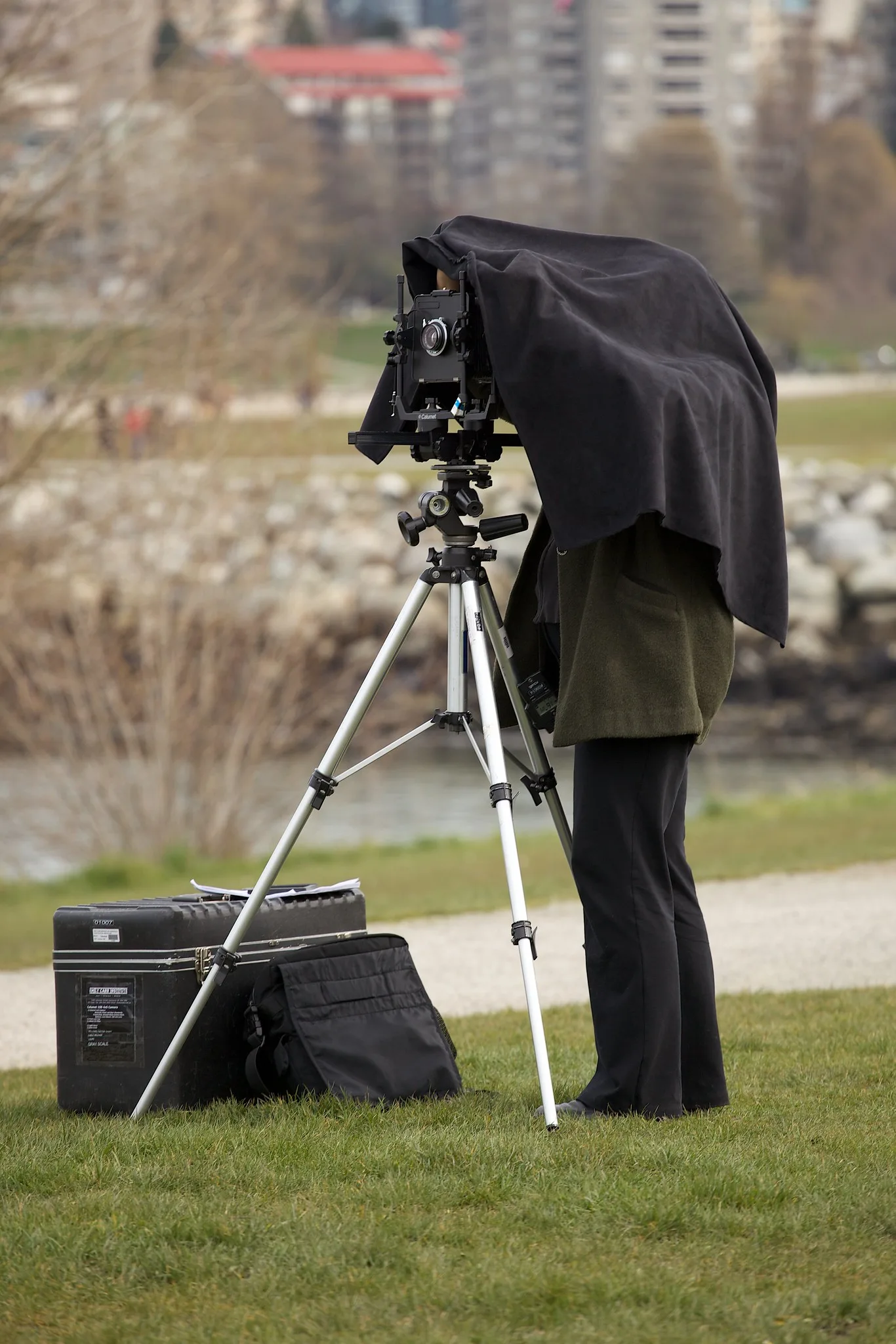
Before buying anything, ask whether a planned booking needs it. Gear used a few times a year is often better hired, with the hire fee charged to those jobs as a variable cost.
For the reserve, add up one month of fixed costs plus the pay you need, then decide how many such months you want in the bank before relying on the business. There is no correct number. It depends on your other income and how seasonal the work is. Because income arrives in peaks, the reserve also carries you through the quiet months, so plan to refill it during each busy season.
Insurance, borrowing and how the business is legally set up all affect this section, and all depend on local rules. List them as open questions with the name of the person you will ask: an insurer, an accountant, a lawyer.
What does insurance cover? Photography insurance explains the types of photography insurance and how much coverage you need.
Goals and a quarterly review
Turn the plan into a few goals you can count. Each should have a figure and a date, and each should come from a sum above.
- Bookings: the break-even number, split across the year by season.
- Average booking value: the required average from the pricing section.
- Hours per booking: the figure your capacity check used.
- Inquiries: bookings divided by the share of inquiries you convert. If one inquiry in four books, forty bookings need 160 inquiries.
- Reserve: the number of months in the bank.
Put four review dates in your calendar, one each quarter. At each, spend an hour comparing actual figures with the plan: inquiries by source, bookings, average value, hours per booking, costs and the reserve. Then change one thing. If inquiries are short, change the marketing calendar. If inquiries are fine but bookings are short, look at price, your portfolio and how you reply. If bookings are on target but the hours are not, the service or the workflow needs cutting down.
Rewrite the whole page once a year. A plan that has not changed in twelve months has not been used.
Losing people between inquiry and booking? Photography client onboarding covers the inquiry response, the consultation, the proposal and the contract.
Common mistakes
- Leaving out your own pay. The plan breaks even while you earn nothing. Fix: add the pay you need to fixed costs before working out break-even.
- Counting only shooting hours. Capacity looks far larger than it is. Fix: time one booking from first message to final delivery and use that figure.
- Planning on a full calendar. One slow season empties the bank. Fix: use the low market estimate and hold a reserve.
- Copying a competitor’s prices. Their costs and volume are not yours. Fix: work out your own floor, then compare.
- Marketing in the busy season. Promotion lands after clients have booked someone else. Fix: count back the lead time and promote before the peak.
- Writing the plan once. It describes a business that no longer exists. Fix: review quarterly and rewrite yearly.
- Treating tax and legal questions as details. They change the cost list. Fix: ask a local professional early and record the answers.
Try this
Give yourself 20 minutes and one sheet of paper. Write the one-sentence service statement. Under it, list your yearly fixed costs from memory in rough figures and add the pay you need. Estimate the price and the variable cost of one typical booking, subtract to get the contribution, and divide the first total by it. That is your break-even number of bookings. Now write the hours one booking takes and multiply. Does the result fit into the hours you actually have in a year? Circle whichever figure surprised you most. That is the one to research properly this week.
Frequently asked questions
What should a photography business plan include?
Services and target client, a market estimate, yearly costs including your pay, a break-even number of bookings, prices, a marketing calendar, an equipment and reserve plan, and review dates.
How long should a photography business plan be?
One page is enough for your own use, as long as each section holds a figure or a decision. Lenders and grant bodies may ask for a longer format of their own.
How many clients does a photography business need?
It depends on your costs and prices. Divide fixed costs plus your pay by the contribution of one booking, then check the answer against the hours you have.
Do I need a business plan for part-time photography?
Yes, and the capacity check matters even more. With few hours available, the number of bookings you can deliver is small, so the price each must bring in is higher.
Is there a template for a photography business plan?
The table near the top of this page works as one. Copy the eight section names onto a page and write one or two lines under each.
Related guides
- How to start a photography business: the wider setup steps, from portfolio to first clients.
- Photography niche and positioning: choosing a specialty and checking that it pays.
- Photography pricing methods: cost-plus, value-based and package pricing compared.
- Photography marketing: the channels that fill the calendar.
- Photography mini sessions: a worked example of pricing one event from hours and costs.
- Photography invoicing: billing, deposits and recordkeeping for your business records.
- Legal basics for photographers: a map of copyright, contracts, releases, permits and insurance.