Night photography opens up a world invisible to casual observers: cityscapes glowing with artificial light, star trails streaking across a dark sky, and creative effects that are only possible after sunset. The skills you build shooting in darkness will sharpen every other area of your photography, because low-light work demands a deep understanding of exposure, focus, and the relationship between your camera’s core settings.
This guide covers photographing after dark, from essential gear and camera settings to specific techniques for the most popular night photography subjects.
Why Night Photography Is Worth the Effort
Night photography rewards patience with images that feel magical. Colors that are invisible during the day emerge under artificial light. Long exposures transform moving traffic into ribbons of light. The sky reveals stars, planets, and the Milky Way. Familiar locations become unrecognizable, and even mundane urban scenes gain a cinematic quality.
Beyond the visual rewards, shooting at night forces you to master manual exposure settings, manual focus, and long exposure techniques. These skills transfer directly to every other type of photography. A photographer who can produce sharp, well-exposed images in near-total darkness will have no trouble in any daytime situation.
Essential Gear for Night Photography
Four things matter most: a solid tripod, a way to fire the shutter without touching the camera, a lens that gathers plenty of light, and a way to see what you are doing in the dark. Each is worth a closer look.
Tripod
A sturdy tripod is the single most important piece of equipment for night photography. Exposures measured in seconds or even minutes are common, and no amount of image stabilization can substitute for a solid, vibration-free platform. Choose a tripod that is heavy enough to resist wind and tall enough to shoot at eye level without extending the center column, which reduces stability. Carbon fiber tripods offer the best balance of rigidity and portability for photographers who hike to remote locations.
Want your tripod steadier? How to Use a Tripod Properly covers setting up in the right order, the centre column problem, levelling, and hanging weight.
Remote Shutter Release
A remote shutter release or your camera’s built-in timer prevents the vibration caused by pressing the shutter button. A simple two-second delay timer works well for most situations, but a cable or wireless remote is essential for bulb-mode exposures longer than 30 seconds. Some photographers use smartphone apps to control their cameras remotely, which also allows monitoring exposure and focus without touching the camera.
Lenses
A fast prime lens with a maximum aperture of f/1.4 to f/2.8 gathers significantly more light than a standard kit zoom, making it invaluable for astrophotography and dimly lit street scenes. A wide-angle lens in the 14mm to 24mm range is ideal for starscapes, cityscapes, and any scene where you want to capture a broad sweep of the sky. A standard zoom in the 24-70mm range at f/2.8 is a versatile option if you plan to shoot a variety of subjects in one session.
Accessories
A headlamp with a red-light mode lets you see your gear and adjust settings without ruining your night vision. Bring spare batteries, as cold temperatures and long exposures drain batteries faster than normal. A lens cloth is essential for clearing condensation that forms on cold glass, especially during humid nights. If you plan to do light painting, bring a variety of light sources: flashlights, LED wands, and colored gels.
Camera Settings for Night Photography
Night photography demands manual control. Automatic modes struggle with dark scenes because your camera’s meter wants to brighten everything to a midtone grey, leading to overexposed skies and blown highlights. Switch to manual mode and take control of every setting yourself.
ISO
Start with your ISO. Raising ISO does not make your sensor gather more light; it amplifies the signal the sensor already captured, brightening the image so you can use a faster shutter speed. For tripod-based work like cityscapes and architecture, keep your ISO low, between 100 and 400, since a long shutter speed can supply all the light you need without amplification. For handheld shots or astrophotography where you need a faster shutter speed, raise the ISO to 1600, 3200, or even 6400 and accept a moderate amount of noise that can be reduced later in post-processing. Modern camera sensors handle high ISO values remarkably well, so do not sacrifice proper exposure to keep your ISO artificially low: an image exposed correctly at a high ISO has less noise than the same shot underexposed and brightened afterward.
Aperture
Set your aperture based on the subject. For starscapes and the Milky Way, shoot wide open at f/1.4 to f/2.8 to gather as much light as possible. For city scenes where you want starburst effects from streetlights, stop down to f/8 to f/11. Shooting a landscape rather than a city? See how to photograph landscapes at night. For general sharpness across the frame, f/5.6 to f/8 is a reliable starting point.
Shutter Speed
Shutter speed is where night photography gets creative. Different exposure durations produce dramatically different results:
- 1 to 4 seconds – Captures smooth light trails from passing vehicles while keeping the surrounding scene sharp
- 10 to 20 seconds – Standard for star photos where you want stars to render as points rather than short streaks (see the star-trail exposure limits below)
- 30 seconds to several minutes – Required for star trails and extremely dark landscapes. Use bulb mode for exposures beyond 30 seconds.
- Multiple minutes stacked – For very long star trail circles, shoot many 30-second exposures and stack them in software rather than one extremely long single exposure
Seeing bright specks in long exposures? Hot, Stuck and Dead Pixels explains what goes wrong on the sensor, how to tell them apart, and why heat and long exposures bring them out.
Use your camera’s histogram to evaluate exposure rather than the preview image. The LCD is unreliable in the dark because your eyes adapt to the screen brightness, making images appear brighter than they actually are.
File Format
Always shoot in RAW format. Night images almost always need white balance adjustments in post-processing because artificial light sources create strong color casts, and RAW files give you complete flexibility to correct these without quality loss.
Wondering what you give up by shooting JPEG instead? RAW vs JPEG covers bit depth, dynamic range, white balance flexibility and file size.
Focusing in the Dark
Autofocus struggles in low light because it relies on contrast to find a lock, and in the dark there often is not enough contrast for it to find. When your camera hunts back and forth without locking, switch to manual focus. Use live view zoomed to 5x or 10x on a bright point of light, a distant streetlamp, the moon, or a bright star, and carefully turn the focus ring until that point is as sharp and small as possible.
Once you achieve accurate focus, turn off autofocus on your lens or body so it does not readjust accidentally when you press the shutter. If your camera has back button focus, this is another easy way to prevent the camera from refocusing between shots.
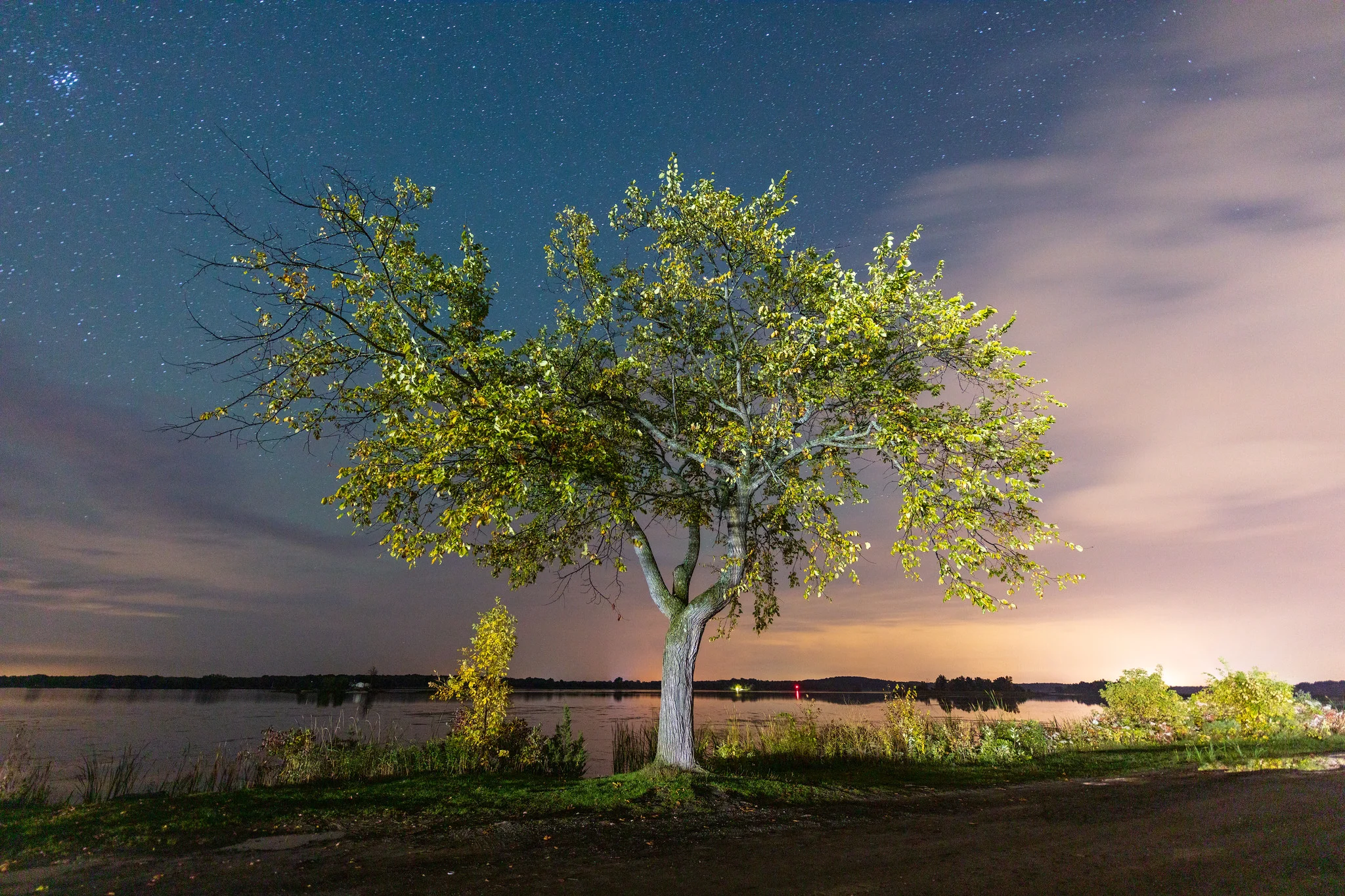
For scenes with both a close foreground and a distant sky, such as a landscape under the stars, you may need to consider hyperfocal distance focusing or even take two separate exposures, one focused on the foreground and one on the sky, to blend later in post-processing. Lighting the foreground briefly with a flashlight during a long exposure, sometimes called light painting the foreground, is another way to bring out detail close to the camera without a second exposure.
The Magic Hours: Blue Hour and Golden Hour
The most dramatic night photography often happens during the transition periods rather than in full darkness. Understanding and planning around these windows of time will dramatically improve your results.
Blue Hour
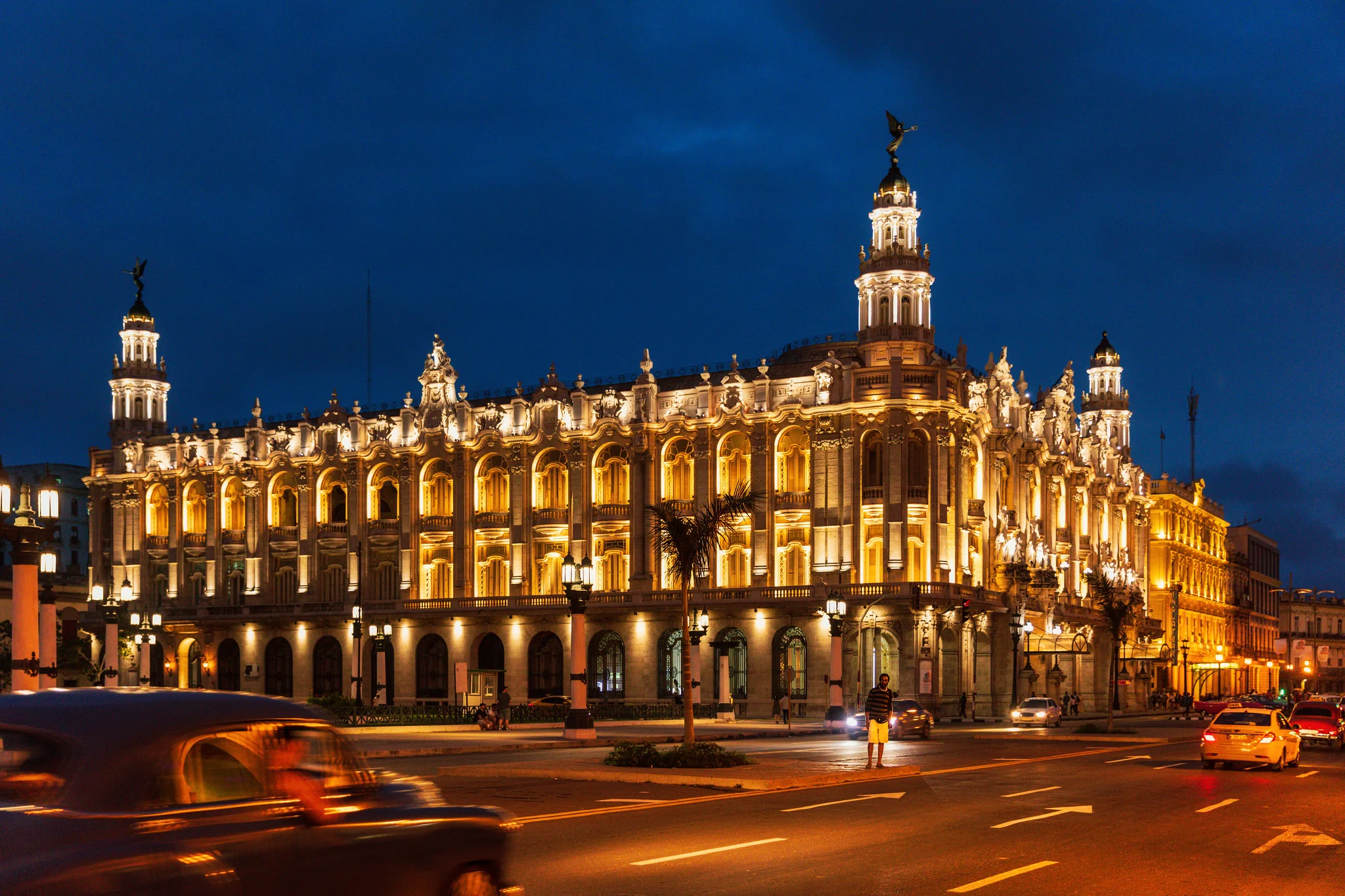
Blue hour, the 20 to 40 minutes after sunset (or before sunrise), bathes the world in a deep, saturated blue that makes a backdrop for city lights, which glow warmly against the cool sky. During blue hour there is still enough ambient light to see detail in buildings and landscapes, giving your photos depth and dimension that full darkness cannot provide.
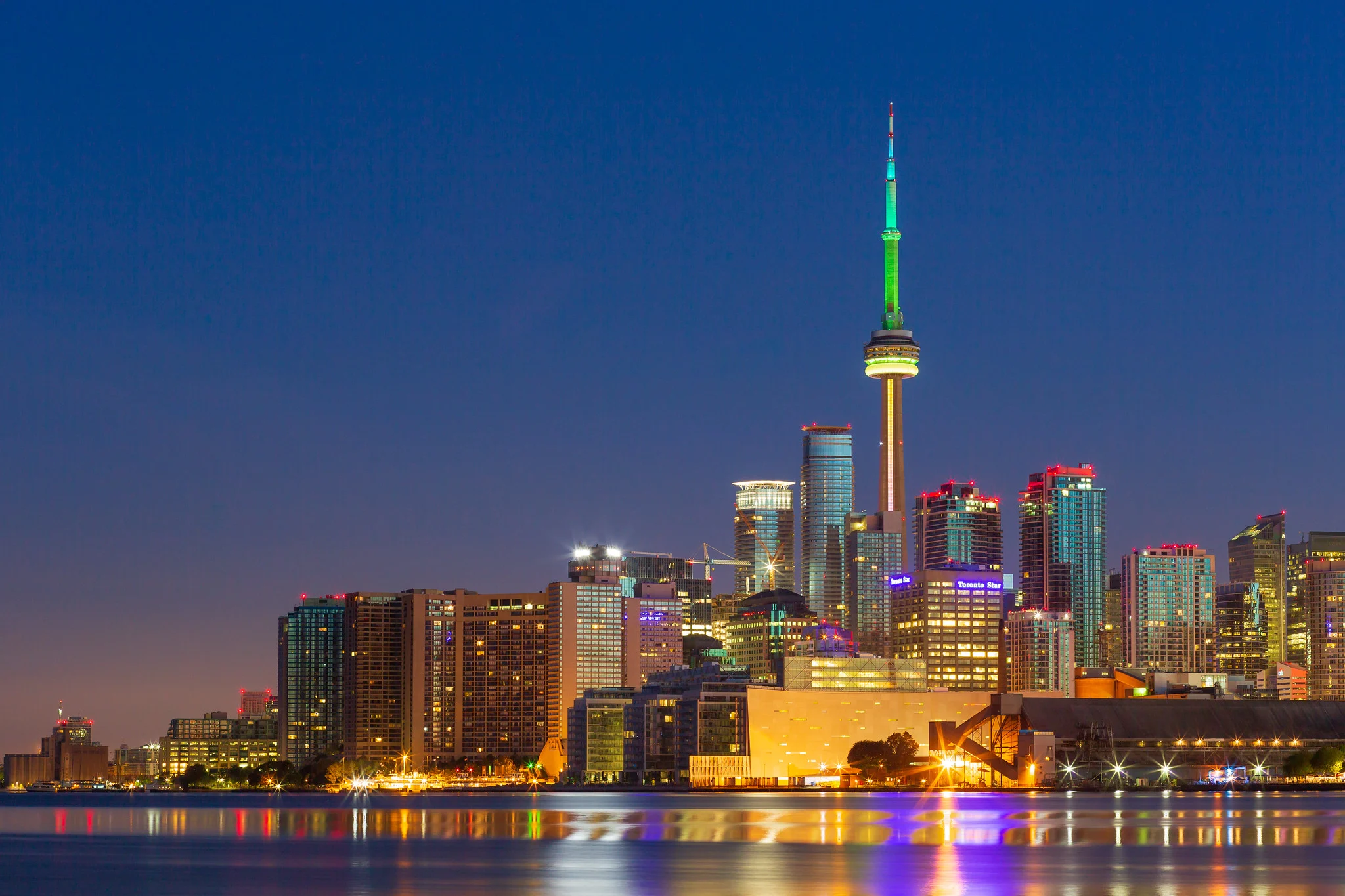
Blue hour is the ideal time for cityscape photography because the balance between sky brightness and artificial light is nearly perfect. You can capture detail in both the sky and the illuminated buildings in a single exposure, without needing HDR brackets.
Golden Hour
Golden hour comes before blue hour at sunset and provides warm, directional light that is ideal for capturing the transition between day and night. Many of the most iconic cityscape photographs, bridges illuminated at dusk, skylines catching the last golden rays, are taken during this narrow window rather than at midnight.
Planning Around the Light
Arrive at your location at least 30 minutes before sunset to scout compositions and set up your gear while you still have daylight. Then shoot continuously through golden hour and blue hour into full darkness, adjusting your settings as the light fades. The best image from a night shoot is often captured during those transitional minutes, not after full dark.
Want to know where the sun and moon will be when you arrive? Plan a photo around the sun, moon and tides covers azimuth and elevation, and lining up a rising moon.
Cityscape and Urban Night Photography
Cities come alive at night. Neon signs, streetlights, headlights, and illuminated buildings create a layered tapestry of light that transforms ordinary streets into compelling photographic subjects. The key to strong city night photography is composition: look for leading lines created by roads and bridges, reflections in wet pavement or rivers, and the way artificial light creates pockets of brightness against deep shadows.
Shoot from elevated positions when possible. Rooftops, bridges, and hillside viewpoints give you the broadest perspective on a city’s light patterns. For street-level work, wet surfaces after rain are your best friend because they reflect lights and add a cinematic sheen to the scene.
Want to work at street level after dark? Night Street Photography covers camera settings, working with artificial light sources, and safety and ethics after dark.
Long exposures of 10 to 30 seconds at f/8 to f/11 produce sharp architectural details with beautiful starburst effects from point light sources. Keep your ISO at 100 to 400 for the cleanest possible image. If you want to capture light trails from traffic, extend your exposure to 15 to 30 seconds and position yourself where vehicles move through your frame in an interesting pattern.
Astrophotography
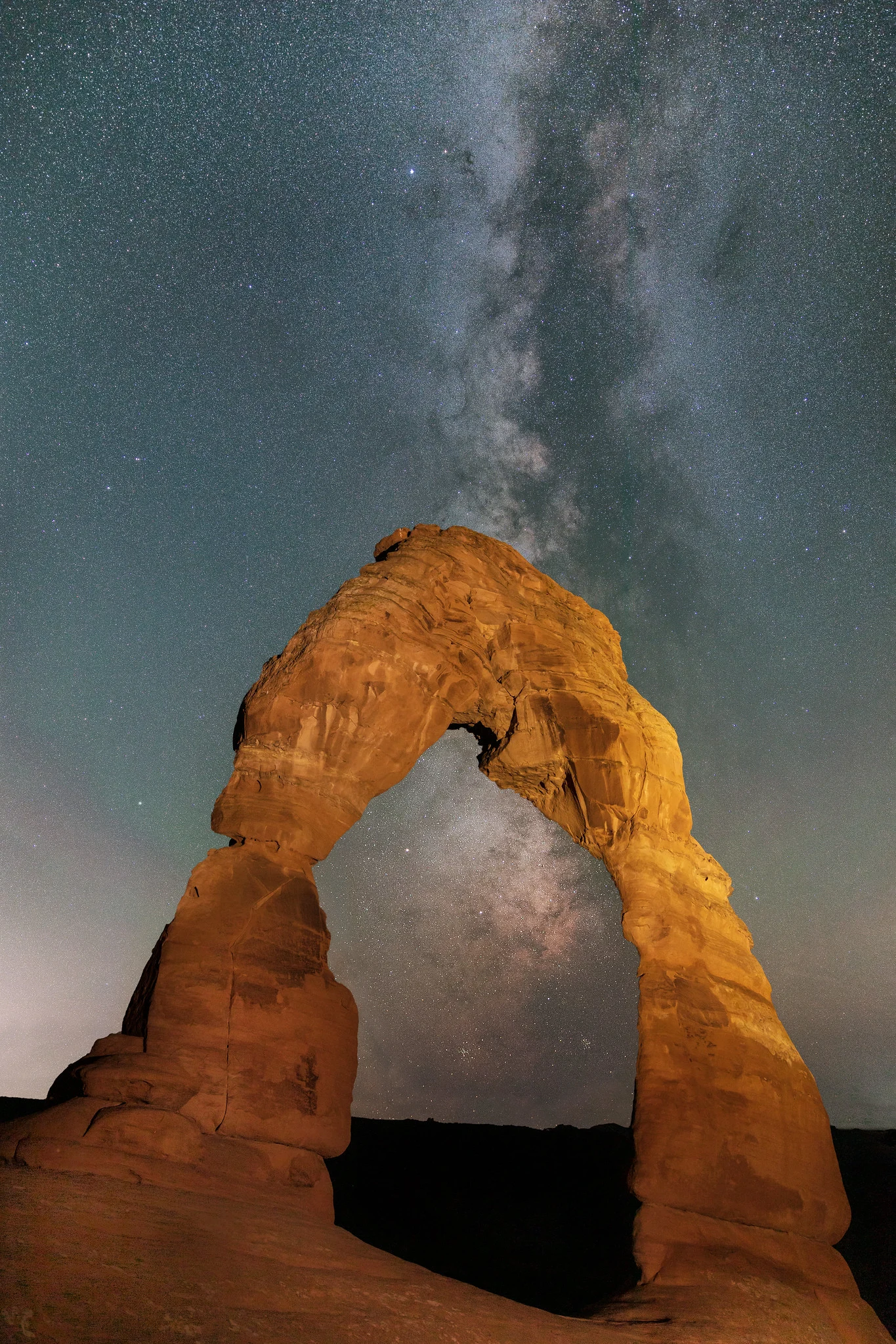
Astrophotography is one of the most rewarding branches of night photography. Capturing the Milky Way, meteor showers, or a field of stars requires patience and planning, but the results are spectacular. For basic Milky Way shots, use a wide, fast lens at f/2.8 or wider, ISO 3200 to 6400, and a shutter speed set with the star-trail exposure limits described below. A dark sky away from light pollution is essential.
Finding Dark Skies
Choose a location far from city light pollution. Dark sky reserves, rural areas, and elevated viewpoints are ideal. Light pollution maps and apps help you find the darkest accessible spots near you. Even a 30-minute drive from a major city can dramatically improve the number of stars visible to your camera.
How Long Can You Expose Before Stars Trail?
The Earth’s rotation means any exposure long enough will start turning stars into short streaks instead of points. Older guidance, known as the “500 rule,” says to divide 500 by your focal length to get your maximum exposure time in seconds. That rule was worked out for film and early digital cameras with far lower resolution than today’s sensors. On a modern high-resolution camera, viewed at 100% or printed large, the 500 rule already shows visible star trailing by the time you check pixel-level sharpness.
A more realistic starting point on today’s cameras is the 200 to 300 rule: divide 200 (high-resolution sensors, over roughly 24 megapixels) or 300 (lower-resolution sensors) by your focal length, adjusted for crop factor if you are not on full frame. A 24mm lens on a full-frame body that gave you 20 seconds under the 500 rule is really closer to 8 to 12 seconds before pixel-level trailing appears.
For a precise answer, use the NPF rule, which factors in your aperture (N), your sensor’s pixel pitch (P), and the declination of the part of the sky you are shooting (F), rather than focal length alone. Free NPF calculators and several astrophotography apps will compute the maximum exposure time for your exact camera and lens. Whichever rule you use, treat it as a starting point: zoom into a test exposure at 100% and adjust your shutter speed down if the stars are not rendering as tight points.
Want the other challenges? The full camera simulator has all 21, across eight scenes.
Light Painting and Creative Techniques
Light painting uses long exposures and handheld light sources, flashlights, LED wands, sparklers, or even your smartphone screen, to draw patterns, illuminate subjects, or create surreal effects. Set your camera to a 15 to 30 second exposure (or bulb mode for longer), and walk through the frame while moving a light source. Since the camera records all light that enters during the exposure, your light source leaves a trail while your body remains invisible as long as you keep moving.
Other creative night techniques include:
- Time-lapse photography – Compress hours of changing light into seconds of video, revealing patterns invisible in real time
- HDR bracketing – Capture extreme dynamic range between bright lights and dark shadows by merging multiple exposures
- Intentional camera movement – During long exposures, deliberately move or rotate the camera to create abstract streaks of color from city lights
- Steel wool spinning – Burning steel wool swung on a string creates spectacular sparks during a long exposure (practice fire safety and check local regulations)
Want a night sky time-lapse worked through from planning to final video? How To Make A Night Sky Timelapse covers moon phase, location and timing, camera settings, and assembling the video.
Photographing Specific Night Subjects
Different night subjects require different approaches. Explore these dedicated guides for step-by-step techniques:
- How to Photograph Fireworks – Timing, settings, and composition for explosive displays
- How to Photograph Stars and the Milky Way – Finding dark skies, focusing at infinity, and stacking star trails
- How to Photograph the Moon – Telephoto settings for sharp lunar detail
- How to Photograph Lightning – Capturing bolts safely with long exposures
- How to Photograph Northern Lights – Chasing and capturing the aurora borealis
- Concert Photography – Handling stage lighting, fast movement, and venue restrictions
Post-Processing Night Photos
Night images benefit enormously from post-processing. Here are the key adjustments:
- White balance – Usually the first adjustment. Color temperature settings that looked neutral on location often appear too warm or too cool when viewed on a calibrated monitor. RAW files give you complete freedom to adjust this without quality loss.
- Noise reduction – Critical for high-ISO shots. Modern software handles noise remarkably well, preserving detail while smoothing grain. Apply noise reduction selectively rather than globally when possible.
- Shadow recovery – Push shadow detail carefully to reveal information in the darkest areas of the frame. Avoid overdoing it, which introduces noise and a flat, unnatural look.
- Contrast and curves – Night images often benefit from a boost in contrast to separate the bright highlights from the dark shadows. An S-curve in the tone curve adds punch without losing detail.
- Image stacking – For astrophotography, combining multiple exposures of the same scene dramatically reduces noise and reveals faint star detail that no single exposure can capture.
For detailed editing tutorials, see our Lightroom tutorials, Photo Editing for Beginners guide, and Color Grading guide.
Safety and Practical Considerations
Shooting at night introduces practical challenges that do not apply to daytime photography. A little preparation makes your sessions safer and more productive.
- Tell someone where you are going. If you are heading to a remote location for astrophotography, let someone know your plans and expected return time.
- Dress for the conditions. Temperatures drop significantly after sunset, especially at elevation. Layered clothing, warm gloves (look for photographer-specific gloves with exposed fingertips), and waterproof footwear make the difference between an enjoyable shoot and a miserable one.
- Know the terrain in daylight. Scout your location during the day so you know where to set up, where the hazards are, and how to navigate safely in the dark.
- Protect your gear from moisture. Dew and condensation form on cold lens elements, especially in humid conditions. Keep a lens cloth handy and consider anti-fog solutions for your front element. When bringing cold gear into a warm car or building, keep it in a sealed bag until it warms up to prevent internal condensation.
- Manage your power. Cold drains batteries faster, and long exposures consume more power than normal shooting. Carry at least two spare batteries and keep them warm in an inside pocket. Switch to a fresh battery before an important shooting window rather than risking a dead battery mid-session.
Common Mistakes to Avoid
- Trusting your LCD screen. Your eyes adapt to darkness, making the screen look brighter than the actual image. Always check the histogram instead.
- Forgetting to disable image stabilization on a tripod. Some stabilization systems fight the camera’s own stillness and introduce vibration when mounted on a tripod. Turn it off for tripod shots.
- Leaving Long Exposure Noise Reduction on during time-lapses. LENR takes a second “dark frame” exposure of equal length after each shot, doubling your capture time and creating gaps in time-lapse sequences.
- Underexposing too much. While it is tempting to make a night photo look dark, underexposed shadows contain mostly noise. Expose to the right of the histogram and darken in post-processing for cleaner results.
- Using autofocus in the dark. If your lens hunts back and forth, switch to manual focus immediately rather than wasting time on repeated autofocus attempts.
- Not bringing enough batteries. Cold weather and long exposures drain batteries quickly. Always carry at least one fully charged spare, and keep it in an inside pocket close to your body to maintain its temperature.
- Shooting only in full darkness. The most dramatic light often occurs during blue hour, when ambient light and artificial light are balanced. Do not wait until it is completely dark to start shooting.
- Trusting the 500 rule at face value. On a high-resolution modern sensor it allows more star trailing than it used to. Start with the 200 to 300 rule or an NPF calculator instead, then verify at 100% zoom.
Test Your Knowledge
Related Guides
- Best Camera Settings for Night Photography
- How to Photograph Stars and the Milky Way
- How to Photograph the Moon
- How to Photograph Fireworks
- How to Photograph Northern Lights
- How to Photograph Lightning
- Long Exposure Photography
- Astrophotography
- Light Painting Photography
- Blue Hour Photography
- Star Trails Photography
- Concert Photography
- Landscape Photography
- Street Photography
- mastering low light photography