Wildlife photography is the pursuit of capturing animals in their natural habitat, unposed, unscripted, and undeniably alive. It demands patience, fieldcraft, and technical precision in equal measure. You might wait three hours in a freezing hide for a kingfisher to dive, or spend an entire safari watching a leopard sleep in a tree. But when the moment comes, wings spread, eyes locked, teeth bared, and you nail the shot, nothing else in photography comes close. This guide covers everything from the techniques you need to the ethical principles that should guide every session.
Go deeper: Bird Photography, Telephoto Photography, Macro Photography, and Focus Modes.
Introduction to Wildlife Photography
Wildlife photography sits at the crossroads of art, science, and conservation. It requires not just technical camera skills, but a deep understanding of animal behavior, ecosystems, and the patience to wait for hours or even days for a single opportunity. The best wildlife photographers are part naturalist, part athlete, and part artist.
What makes this genre uniquely rewarding is that every image is earned. You cannot direct a wild animal. You cannot ask it to hold still, turn its head, or repeat an action. You must study your subject, predict its behavior, position yourself in the right place at the right time, and execute flawlessly in the fraction of a second when the moment presents itself. There is no other genre in photography where preparation matters as much as the actual click of the shutter.
This guide covers the essential techniques for capturing compelling wildlife images, the camera settings for every scenario from birds in flight to slow-moving mammals, composition strategies, lighting considerations, common pitfalls, and practical exercises to sharpen your skills.
Many wildlife photographers end up working alongside field biologists. For how images support research and advocacy, see conservation photography and science.
Essential Wildlife Photography Techniques
1. Fieldcraft: The Most Important Skill
No amount of gear compensates for poor fieldcraft. Understanding animal behavior, reading the landscape, and moving through nature without disturbing it are the foundations of great wildlife photography.
- Study your subjects – Learn feeding patterns, mating seasons, migration routes, and daily routines. A photographer who knows that a particular owl hunts from the same fence post every evening has a massive advantage
- Move slowly and quietly – Quick movements trigger flight responses. Walk in a slight zigzag rather than directly toward the animal, and pause frequently
- Use natural cover – Approach from behind trees, rocks, and terrain features. Keep a low profile because many animals feel threatened by tall, upright figures
- Wind awareness – Stay downwind so your scent does not reach the animal before you do. Many mammals have a sense of smell thousands of times more sensitive than yours
- Patience – The single most repeated word in wildlife photography. Arrive early, stay late, and be willing to sit in one spot for hours. The animals will come to you
2. Back-Button Focus
Back-button focus is a critical technique for wildlife photography. By assigning autofocus activation to a rear button (AF-ON) instead of the shutter button, you gain independent control over focus and shooting.
- Hold AF-ON with your thumb to track a moving animal continuously
- Release AF-ON to lock focus for a recomposed shot of a stationary subject
- Press the shutter whenever you want to capture a frame without focus resetting
- Eliminates the lag of half-press focus acquisition when action erupts suddenly
Want to set this up on your own camera? Back button focus covers how to set it up, how it works in practice, the adjustment period and common mistakes.
3. Anticipating Behavior
The best wildlife images capture peak action: a raptor’s talons touching water, a deer mid-leap, a fox pouncing on prey. These moments are gone in milliseconds, and you cannot react to them. You must predict them.
- Watch for behavioral cues such as a bird crouching before takeoff, a cat tensing before a pounce, or a bear approaching a salmon run
- Pre-focus on the spot where the action will happen (a perch, a waterhole, a gap in the tree canopy)
- Start shooting before the peak moment and continue through it. The frame just before and just after the peak are often more dramatic than the peak itself
4. Working with Hides and Blinds
A hide (blind in North American English) allows you to photograph wildlife at close range without disturbing it. Many iconic wildlife images of owls, kingfishers, and foxes are only possible from a hide.
- Set up the hide days before you plan to shoot so animals acclimate to its presence
- Enter and exit the hide when the animal is away. Have a companion walk away from the hide so the animal thinks the human has left
- Keep lens movement slow because the glint of glass or sudden motion through the hide’s opening spooks wary subjects
5. Panning for Motion
Panning, or tracking a moving subject with a slow shutter speed, creates images where the animal is sharp against a streaked, blurred background that conveys speed and energy.
- Set shutter speed to 1/30s to 1/125s depending on the subject’s speed
- Track the animal smoothly, starting before you press the shutter and continuing after
- Use a monopod or gimbal for stability while panning
- Shoot many frames because the success rate for panning is low, but one keeper is worth fifty misses
Want a step-by-step method for panning? Panning photography covers camera settings, the technique step by step, and creative variations.
6. Ethical Wildlife Photography
The welfare of the animal always comes first. Period. No photograph is worth causing stress, injury, or habitat disturbance to a living creature.
- Never bait with live prey or interfere with natural behavior for a photograph
- Maintain distance – If the animal changes its behavior because of your presence, you are too close. Back up
- Stay on trails in sensitive habitats. Do not trample nesting areas, dens, or fragile vegetation
- Do not share locations of vulnerable species online. Geotagging a rare owl’s roost can attract crowds that displace it
- Report wildlife crimes – If you witness poaching, nest robbing, or habitat destruction, report it to local authorities
Wondering what a geotag gives away? Sharing photos online covers location data, geotags and places that cannot cope with visitors, and photography ethics has a section on wildlife and environmental ethics.
7. Local Wildlife as Your Classroom
You do not need to travel to exotic destinations to practice wildlife photography. Your local park, garden, pond, and nature reserve host more species than you might expect. Backyard birds, squirrels, insects, and amphibians provide excellent practice subjects that are accessible every day. Learning to photograph common species teaches you the fieldcraft, camera skills, and patience that transfer directly to any wildlife encounter anywhere in the world.
Camera Settings for Wildlife Photography
Birds in Flight
Photographing birds in flight is the ultimate test of your camera’s autofocus and your tracking skills. Speed, precision, and anticipation all need to come together in a fraction of a second.
- Shutter Speed: 1/2000s to 1/4000s minimum, fast enough to freeze wingbeats. For slow-flying birds like herons, 1/1000s may suffice
- Aperture: Wide open (f/4 to f/6.3) for maximum shutter speed and subject isolation from the background
- ISO: Auto ISO with ceiling at 6400-12800. Accept the noise; a sharp, noisy image beats a blurry, clean one
- Focus mode: Continuous AF (AF-C / Servo) with bird or animal tracking enabled
- Focus area: Wide or zone AF to let the camera’s tracking algorithms do the work across a large area of the frame
- Drive mode: High-speed continuous burst. Shoot through the action and select the best frame later
- Back-button focus: Decouple focus from the shutter button so you can track continuously with your thumb and fire the shutter independently
Stationary or Slow-Moving Animals
- Shutter Speed: 1/500s to 1/1000s, fast enough to freeze head turns and subtle movement
- Aperture: f/4 to f/8 depending on the depth of field needed. For a single animal, wide open isolates it from the background. For a group, stop down to keep all subjects sharp
- ISO: As low as the light allows, typically ISO 400-1600 in shade or ISO 100-400 in sunlight
- Focus: Single AF on the eye. If you cannot see the eye, the image rarely works. The eye is the anchor of every wildlife portrait
Does your camera have eye detection? Eye detection AF explains how it works, when to use it and the common challenges.
Safari and Vehicle-Based Settings
- Shutter Speed: 1/1000s or faster for moving vehicles and unpredictable animal behavior
- Aperture: f/5.6 to f/8
- ISO: Auto ISO capped at 6400
- Image stabilization: ON, set to “active” mode if available to compensate for vehicle vibration
- Bean bag on the vehicle door provides more stability than handholding and is faster to adjust than a tripod
- White Balance: Daylight or shade preset. Warm golden hour light is part of the atmosphere, so decide whether to preserve it or neutralize it
Composition Tips for Wildlife Photography
- Rule of Thirds – Place the animal’s eye at an intersection point. If the animal is moving, leave space in the direction of travel (lead room)
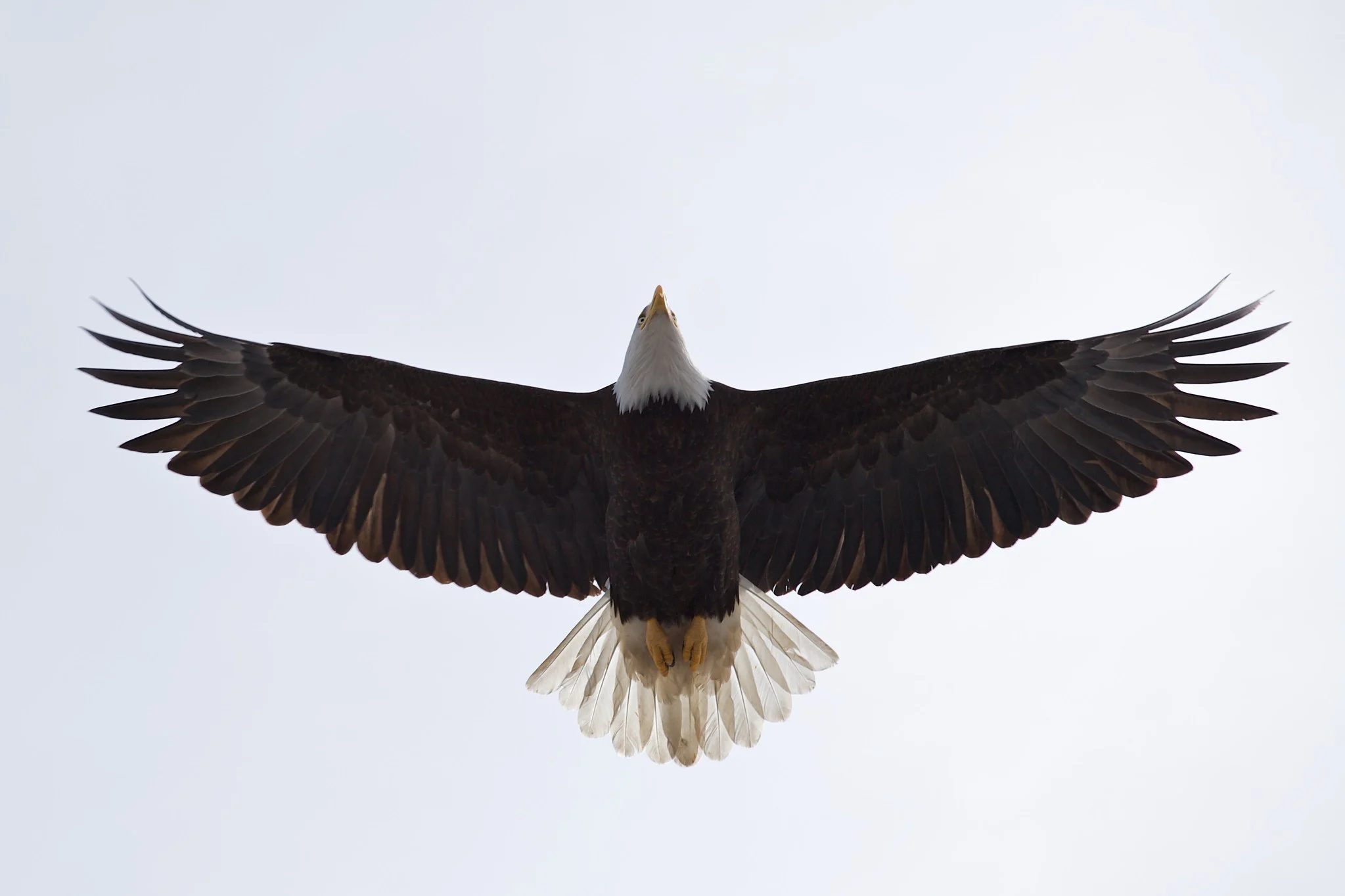
- Negative Space – An eagle soaring in a vast sky communicates freedom and scale more powerfully than a tight crop
- Eye level – Get down to the animal’s eye level. This creates an intimate, peer-to-peer connection that standing shots never achieve. Lie flat for ground-dwelling birds, wade into shallow water for waterfowl
- Leading Lines – Use branches, shorelines, and terrain features to guide the eye toward the subject
- Environmental context – Not every wildlife image should be a tight portrait. Wide shots that show the animal in its habitat tell a richer story
- Simplicity – A clean background separates the subject and eliminates distractions. Shoot at wide apertures and find angles where the background is distant and uniform
- Catchlight in the eye – A small reflection of light in the animal’s eye brings the portrait to life. Without a catchlight, the eye looks dead. Position yourself so the light source (the sun or sky) creates a visible reflection
Lighting for Wildlife Photography
Natural Light is Everything
In wildlife photography, you almost never control the light. You work with what nature gives you. Understanding how natural light changes throughout the day is essential.
- Golden Hour – Warm, directional light at dawn and dusk creates dramatic shadows, rim light, and golden catchlights in the animal’s eye. Most professional wildlife photographers shoot exclusively during the first and last two hours of daylight
- Overcast light – Soft, even illumination that is ideal for portraits and close-ups. No harsh shadows, no blown highlights. Excellent for forest and woodland species
- Backlight – Shooting into the light creates rim-lit fur and feathers that glow, separating the animal from the background. Expose for the animal’s face and let the background blow out
- Dappled forest light – The most challenging natural light. Bright spots and deep shadows create extreme contrast. Expose for the highlights and recover shadows in post, or wait for the animal to move into even light
Unsure how to expose when the light is behind the animal? Backlighting in photography covers exposing for the subject versus the background, and flare and autofocus when the light points at the lens.
Using Flash with Wildlife
- Fill flash – A gentle pop of flash (-1 to -2 EV compensation) fills shadows in the eye sockets and under the chin without overpowering natural light
- Fresnel lens attachment – Extends your flash range to 50+ feet, essential for distant subjects where bare flash would be too weak
- Never flash nocturnal animals – Owls, nightjars, and other nocturnal species can be disoriented by flash. Use high ISO and natural light instead
Common Mistakes in Wildlife Photography
- Shooting in poor light for the sake of shooting – Harsh midday light makes even extraordinary subjects look ordinary. Wait for better light or find open shade
- Not focusing on the eye – If the eye is not sharp, the image does not work. Make eye focus your obsession
- Too much cropping in post – If you have to crop more than 50%, you were too far away. Get closer (safely) or use a longer lens
- Ignoring the background – A distracting background with bright spots, branches growing out of the animal’s head, or litter kills the mood instantly. Shift your position by a few feet to clean up the background before shooting
- Only shooting portraits – Behavior shots (feeding, fighting, courting, parenting) tell stories that portraits cannot. Wait for action
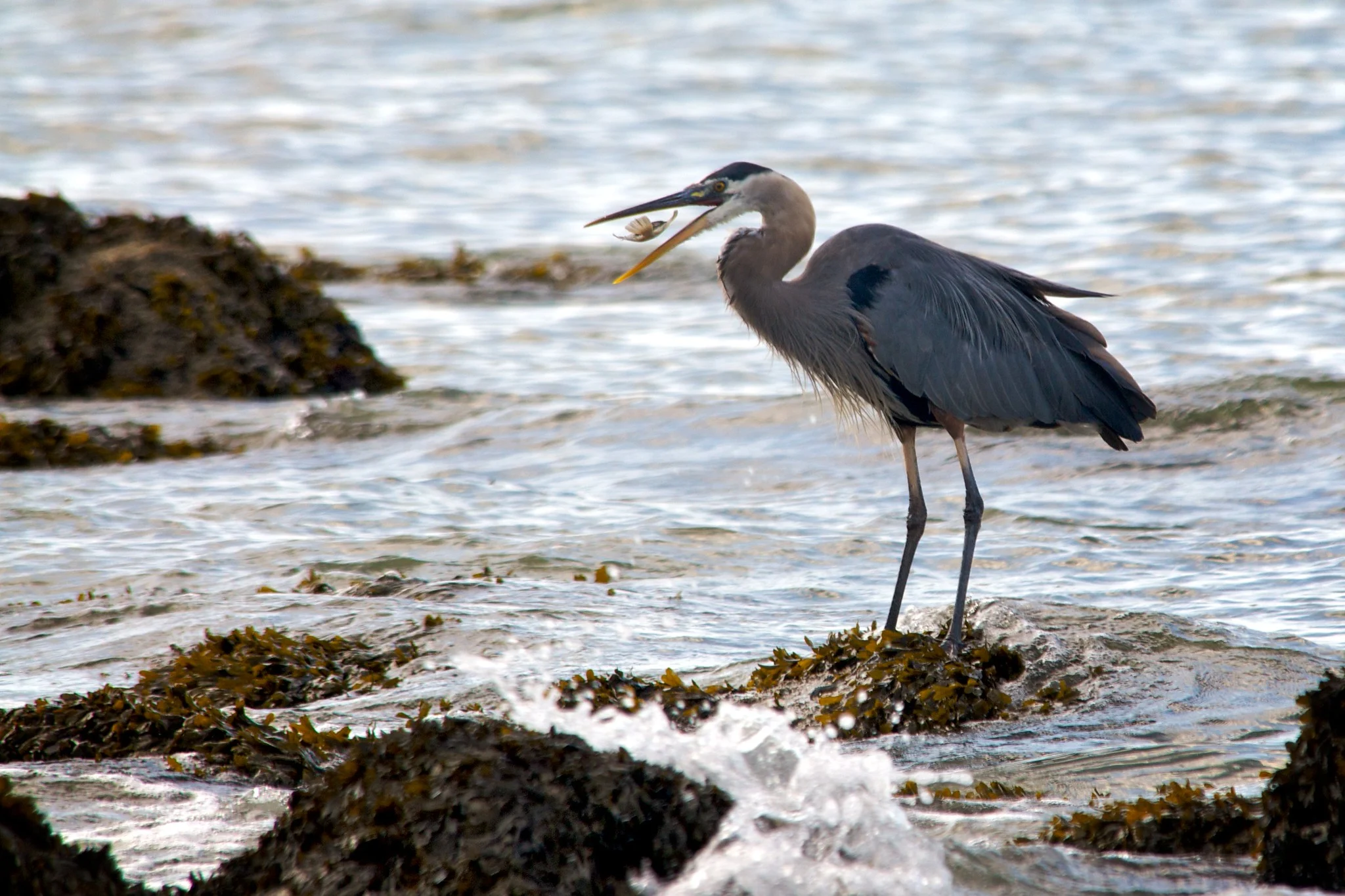
- Disturbing the subject – Chasing, flushing, or crowding wildlife for a photo is unethical and produces stressed-looking images. Let the animal be comfortable
- Not knowing your subject – Walking into a wetland hoping to see “something interesting” is not a strategy. Research what species are present, when they are active, and where they feed
Post-Processing Tips for Wildlife Images
- Noise reduction – Wildlife images are often shot at high ISO. Use luminance noise reduction carefully to smooth grain without destroying fine detail in feathers and fur
- Crop and straighten – Tighten the composition in post if you could not get close enough in the field. Straighten tilted horizons
- Dodge and burn the eyes – Subtly brighten the eye and darken the surrounding area to draw the viewer’s attention to the animal’s gaze. This is one of the most impactful edits in wildlife photography
- Sharpening for output – Apply capture sharpening in your RAW processor, then output sharpening specific to your print size or screen display
- Vibrance vs Saturation – Enhance the blues of a kingfisher or the reds of a cardinal without making the image look unnatural
- Background cleanup – Remove distracting bright spots, branches, or debris in the background that pull the eye away from the subject
Try It Yourself: Camera Simulator
Practice tracking and holding focus on a distant subject at full telephoto reach before you rely on it in the field:
Want the other challenges? The full camera simulator has all 21, across eight scenes.
Try This: Practical Exercises
Exercise 1: Backyard Bird Session
Set up a bird feeder within telephoto range of a comfortable sitting position in your garden or on a balcony. Spend one hour each morning for a week photographing the birds that visit. Practice tracking, anticipating takeoffs and landings, and capturing a sharp eye in every frame. Review your results each day to identify what is working and what needs improvement.
Exercise 2: Panning Practice at a Dog Park
Dogs running at a park provide excellent panning practice. Set your shutter speed to 1/60s and track running dogs to create motion blur in the background while keeping the subject sharp. This technique translates directly to panning on running wildlife.
Exercise 3: Eye-Level Challenge
Spend an entire photo session shooting only at eye level with your subjects. Whether photographing ducks, squirrels, or insects, get physically down to their plane. Compare these images with your standing-height shots and notice how dramatically the perspective shift affects the emotional impact and intimacy of the images.
Exercise 4: Golden Hour Wildlife Walk
Choose a local park or nature area and visit during the first hour after sunrise. Focus on capturing animals in warm, directional golden hour light. Practice backlighting (shooting toward the light for rim-lit fur and feathers) and side lighting. Pay attention to how the light transforms even common subjects like pigeons, sparrows, and squirrels into something beautiful.
Exercise 5: Behavior Over Beauty
Challenge yourself to spend an entire session focusing exclusively on behavior shots rather than portraits. Photograph animals feeding, preening, fighting, playing, or interacting with each other. These action-driven images are harder to capture but tell far richer stories than static portraits. This exercise trains you to watch for behavioral cues and react quickly when the moment arrives.
Related Resources
- Exposure – Master the exposure triangle for fast-changing outdoor light
- Shutter Speed – Learn to freeze action and create intentional motion blur
- Aperture – Control background blur and subject isolation
- ISO – Balance noise and exposure in challenging wildlife lighting
- Depth of Field – Understand how aperture and distance affect sharpness
- Focal Length – How lens choice determines reach and compression
- Focus Modes – Choose between single and continuous AF for different scenarios
- Metering Modes – Meter accurately for birds against bright skies or dark forests
- Composition – Apply the fundamentals to wildlife framing
- Macro Photography – For close-up details of insects, amphibians, and small creatures
- Photography Glossary – Quick reference for any term you encounter
Related Genre Hubs: Portrait Photography | Landscape Photography | Street Photography | Night Photography | Macro Photography