Street photography captures candid, unposed moments of everyday life in public spaces. It documents the human condition, urban landscapes, and the fleeting seconds that reveal something universal about how people move through the world. This genre demands keen observation, quick reflexes, and the courage to photograph strangers in their natural environment.
This guide covers the techniques, camera settings, composition approaches and ethical questions behind a strong street photography practice, plus how to get past the nerves of photographing strangers. None of it depends on a particular camera.
Go deeper: Photo Walk Guide, Photography Composition, Best Lenses for Street Photography, Black and White Photography, and Photography Copyright.
Street, Urban and Documentary Photography: The Differences
The three overlap, and many photographs belong to more than one.
- Street photography is candid photography of life in public places, usually made by chance rather than planned, with people or traces of people at its center. Its subject is the moment.
- Urban photography is photography of the city itself: buildings, streets, infrastructure, skylines and the textures of the built environment. People can appear, but the place is the subject, so a street scene with no one in it is often called urban photography.
- Documentary photography sets out to record a subject, community or issue truthfully, usually over time and as a body of work. Street documentary photography is the meeting point: candid street pictures made with a documentary intent, such as a long project on one neighborhood, market or way of life.
Street photography is as old as handheld cameras. Paul Strand‘s early studies of New York, such as his picture of pedestrians dwarfed by the dark, deep window recesses of a bank building on Wall Street, already used the tools the genre still relies on: strong geometry, hard raking light, and anonymous people placed against architecture at a precise moment.
What Makes Great Street Photography
Street photography at its best reveals something the casual observer would miss: a gesture, a juxtaposition, a play of light and shadow, or a moment of connection or isolation. The best street photographs combine strong composition, decisive timing, and emotional resonance.
Great street photography typically contains one or more of these elements:
- The decisive moment: A term popularized by Henri Cartier-Bresson describing that split second when all elements in a scene align perfectly. Anticipation and readiness matter more than equipment.
- Human presence: People do not always need to be the subject, but evidence of human activity, whether a shadow, a reflection, or an empty chair, grounds the image in lived experience.
- Light and atmosphere: Dramatic light, whether harsh midday sun creating sharp shadows or fog diffusing a city street, elevates ordinary scenes into compelling photographs.
- Story or emotion: The viewer should feel something or wonder something. A street photograph that provokes curiosity or empathy succeeds where a technically perfect but emotionally empty image fails.
Essential Techniques
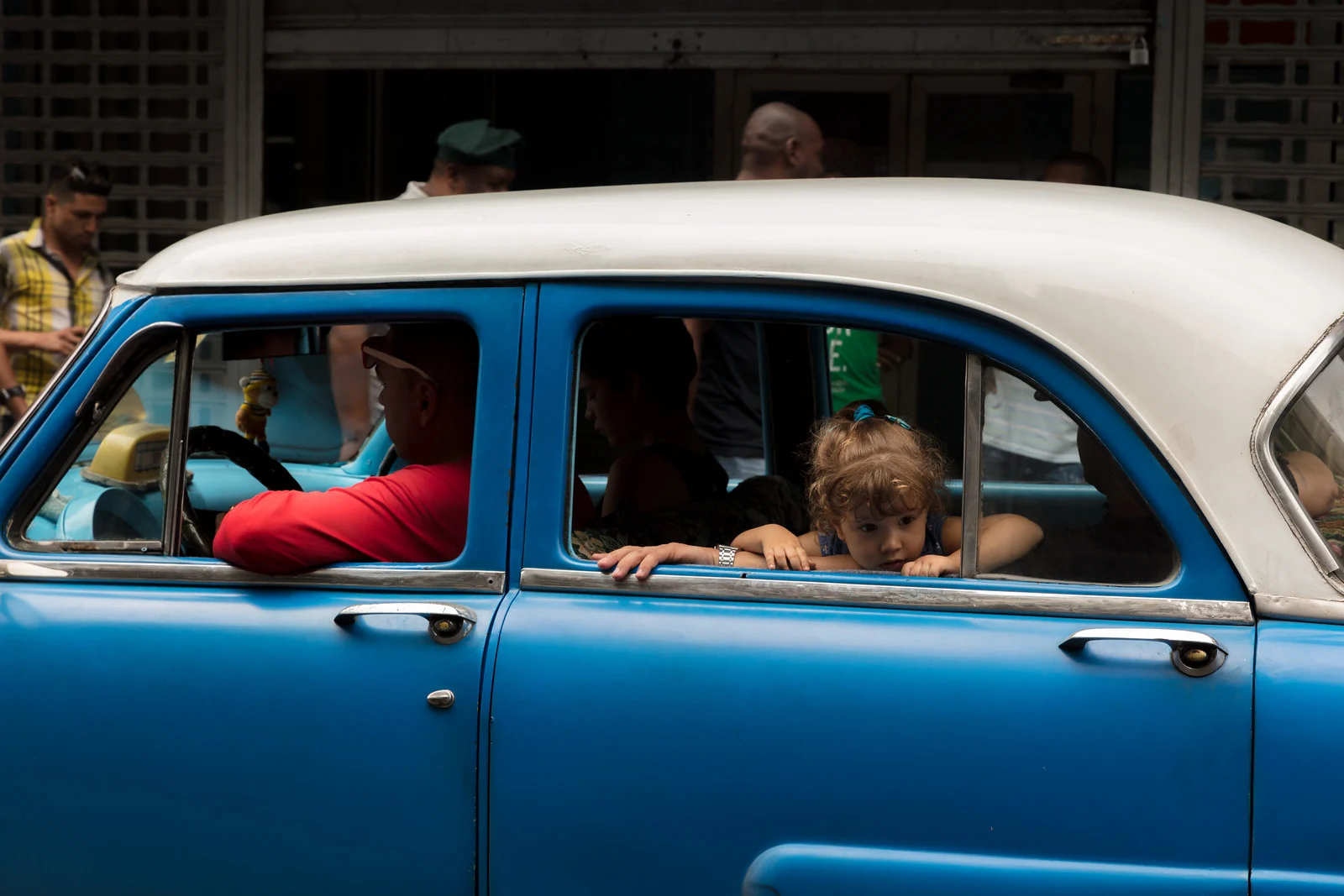
Essential street photography techniques include shooting from the hip for candid moments, pre-focusing to a set distance for faster capture, and using zone focusing to keep a range of distances sharp without relying on autofocus. Anticipating where action will happen and positioning yourself in advance is more reliable than chasing moments after they occur.
The Decisive Moment
The decisive moment is the foundation of street photography. It requires you to see a potential photograph before it happens and position yourself to capture it at the peak of action. This means constantly scanning your environment, anticipating movement, and having your camera ready. Pre-focus your lens, pre-set your exposure, and keep the camera at chest height so you can raise it to your eye and shoot in less than a second.
Developing this instinct takes time and practice. Shoot thousands of frames. Most will not work. The ones that do will teach you to recognize the patterns that precede great moments: the way pedestrians navigate intersections, how light moves through a street over the course of an hour, where people pause, gesture, or interact.
Zone Focusing
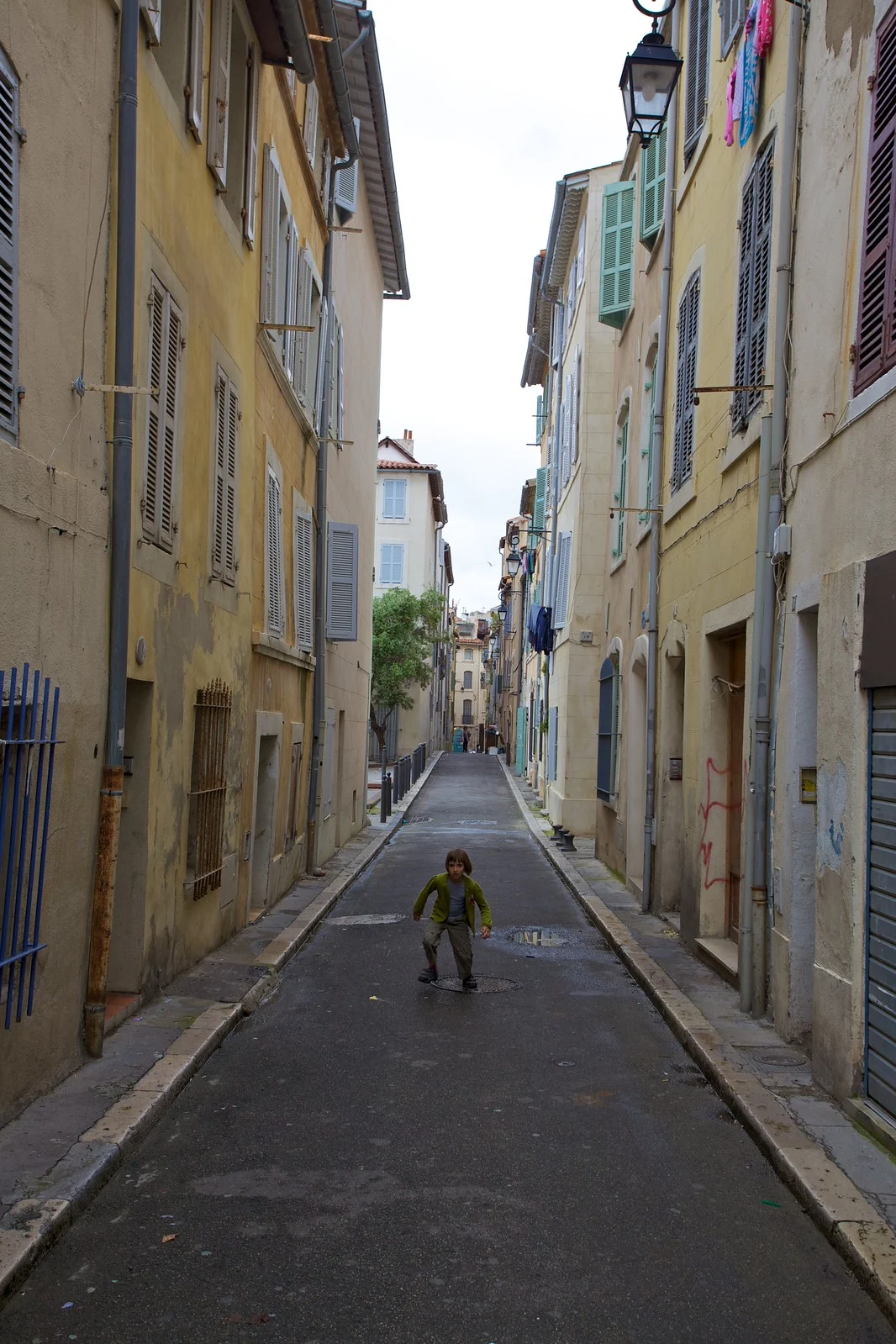
Zone focusing is a technique where you pre-set your focus distance and aperture to create a predictable zone of sharp focus. Set your lens to manual focus, choose a distance (typically 2-3 meters for close street work, 5 meters for wider scenes), and stop down to f/8 or f/11 for a generous depth of field. Everything within your focus zone will be sharp, and you never have to wait for autofocus to lock. This technique is particularly useful with wide-angle lenses, where the depth of field at f/8 covers a substantial range.
Working a Scene
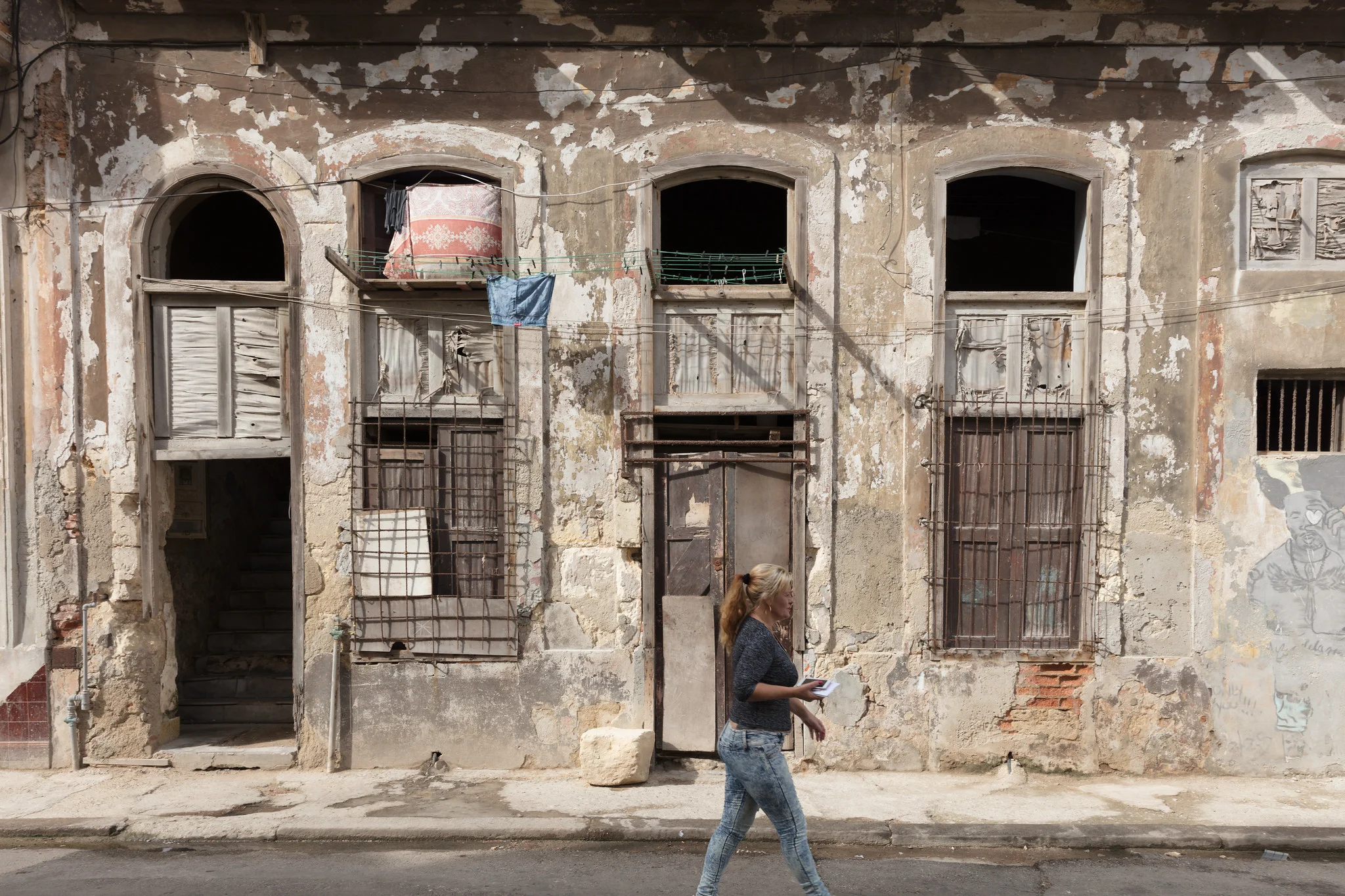
When you find interesting light, a compelling backdrop, or a busy intersection, stop and work the scene. Stay in one spot for 15-30 minutes and let the scene come to you. People walk through interesting light patches, interact in unexpected ways, and create compositions you could never have anticipated if you were constantly moving. Some of the best street photographs come from patient observation of a single location rather than restless wandering. The photo walk guide has more on planning a session around this kind of deliberate observation.
Shooting from the Hip
Holding your camera at waist or chest level and shooting without looking through the viewfinder produces a lower, more dynamic perspective and makes your photography less noticeable. This takes practice to frame consistently, but it creates images with a raw, spontaneous energy that eye-level shooting sometimes lacks. A tilting screen on your camera helps you compose from the hip more accurately.
Camera Settings for Street Photography
For street photography, set aperture priority at f/8 for a deep depth of field, Auto ISO with a maximum of 6400, and a minimum shutter speed of 1/250s to freeze movement. This combination handles changing light conditions quickly and keeps you ready to capture fleeting moments without adjusting settings between every shot.
Speed is everything in street photography. Your settings should allow you to react instantly without fumbling with controls.
Recommended Starting Settings
- Aperture priority mode: Set f/8 to f/11 for deep depth of field and reliable sharpness. Let the camera handle shutter speed.
- Auto ISO with limits: Set a maximum ISO ceiling (1600-6400, depending on your camera’s high-ISO performance) and a minimum shutter speed floor of 1/250s. This ensures fast enough shutter speeds to freeze motion while keeping noise manageable.
- Continuous autofocus or zone focus: Continuous AF tracks moving subjects; zone focusing removes AF lag entirely. Choose based on your shooting style and subject distance.
- Silent or electronic shutter: Many modern cameras offer a silent shooting mode that lets you photograph without the mechanical clack of a shutter. This is invaluable for discreet street work.
- Burst mode: A short burst of 3-5 frames during peak action increases your chances of capturing the perfect gesture or expression.
Adapting to Conditions
Bright sunlight: Drop to ISO 100-200, use f/8-f/11 for deep depth of field. The hard shadows created by direct sun are an asset in street photography, creating graphic compositions of light and dark.
Overcast or shade: Raise your ISO to 400-800. The even light simplifies exposure and reveals detail in both highlights and shadows, which is ideal for capturing facial expressions and subtle gestures.
Night and low light: Raise ISO to 1600-6400, open your aperture to f/2-f/2.8, and embrace the grain. Night street photography has a cinematic quality that suits the genre. Artificial light from neon signs, streetlamps, and shop windows creates pools of color and drama.
Choosing Gear for Street Photography
The best camera for street photography is one you are comfortable carrying everywhere. Size, weight, and discretion matter more than resolution or autofocus speed.
Camera Considerations
- Small mirrorless cameras: Compact, lightweight, and capable of silent shooting. Their size makes them less intimidating to subjects and easier to carry all day.
- Fixed-lens compact cameras: A sharp prime lens in a pocket-sized body is hard to beat on the street. No lens changes, no weight, always ready.
- Rangefinder-style cameras: The classic choice for street work. Quiet operation, manual focus with a rangefinder patch, and a shooting experience that encourages deliberate composition.
- Smartphones: Always with you, increasingly capable, and completely invisible as a “camera.” The best camera is the one you have with you.
Focal Length Choices
Your choice of focal length shapes your entire approach to street photography. The 50mm lens guide covers the most common street focal length in more depth.
- 28mm: Wide enough for environmental context, popular for photographers who like to get very close to their subjects. Exaggerates perspective and includes a lot of background context.
- 35mm: The classic street photography focal length. Natural perspective, wide enough for scenes but tight enough to isolate subjects. Most versatile single focal length for street work.
- 50mm: Close to human vision, excellent for candid portraits and details. Requires you to get closer to your subjects, which often produces more intimate images.
- 85-135mm: Telephoto street photography. Lets you isolate subjects from across the street; shooting from farther back stacks the background elements closer together behind your subject. Produces a different, more voyeuristic aesthetic.
For a deeper comparison, see Prime vs. Zoom Lenses and Best Lenses for Street Photography.
Film remains a classic choice on the street. For camera choice, zone focusing, and metering without drawing attention, see street photography on film.
Composition in Street Photography
Street photography composition follows many of the same principles as other genres, but the spontaneous nature of the work means you often have only a fraction of a second to compose. Internalizing these techniques through practice is essential.
Leading Lines and Urban Geometry
Cities are built on lines: sidewalks, roads, bridges, railings, building edges, crosswalks. Use these leading lines to guide the viewer’s eye toward your subject or through the scene. Look for converging lines that create depth, and position yourself so the geometry frames or directs attention to the human element.
Light and Shadow
Harsh, directional light is a street photographer’s best friend. Hard shadows create graphic compositions, frame subjects in spotlights of brightness, and add drama that soft light cannot match. Look for shafts of light between buildings, the interplay of shadow patterns on sidewalks, and subjects moving between pools of light and darkness.
Layering
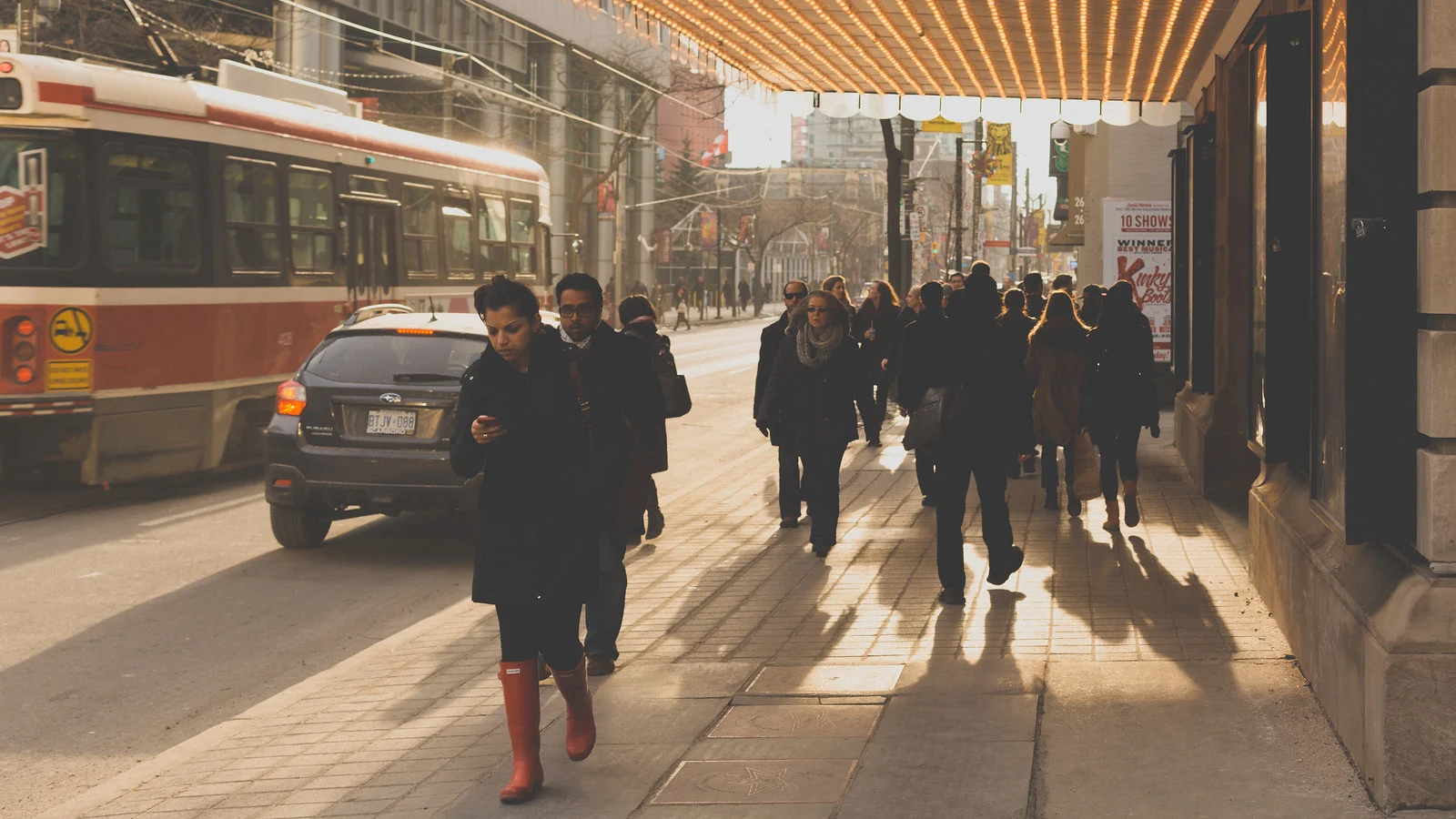
Create depth by including distinct foreground, middle ground, and background elements. A person in the foreground, a gesture in the middle ground, and an interesting sign or architectural element in the background give the image layers that reward repeated viewing.
Which layers should be sharp, and how do you stop them merging? Foreground, midground and background covers layering people in street scenes and choosing which layers are sharp.
Framing
Use doorways, windows, arches, and architectural elements to frame your subjects within the frame. This creates a sense of containment and draws the eye directly to the subject. Reflections in shop windows offer a second layer of framing and content.
Fighting glare when you shoot through a shop window? Photographing through windows covers managing reflections, exposure settings and composition for window shooting.
Patterns and Repetition
Rows of windows, tiled walls, stairs, umbrellas and lines of commuters all form patterns. A pattern on its own is decoration; it becomes a street photograph when something breaks it, such as one person in a red coat in a crowd of dark ones, or a single figure stepping out of a line. Find the pattern first, then wait for the break.
Juxtaposition
Place contrasting elements together to create visual tension and narrative: old and young, large and small, joy and solitude, advertisement and reality. Negative space around a lone figure emphasizes isolation. A person’s expression contrasting with a billboard behind them tells a story without words.
For more, see the Photography Composition guide.
Ethics and Legal Considerations
Street photography raises important questions about privacy, consent, and the right to photograph in public spaces, and legal rights and ethical responsibilities are not always the same thing. Every practitioner has to think both through carefully.
Legal Framework
Rules on photographing people in public spaces vary widely by country and even by city, and they change over time. Many jurisdictions give photographers broad latitude to document what they see in public, but some do not, and using a recognizable person’s image commercially (for advertising or products) typically requires a model release regardless of where the photo was taken. This is not legal advice: research the specific, current rules in your location before you shoot, and check again before you publish or sell. For more, see the Photography Copyright guide.
Ethical Guidelines
- Respect dignity. Avoid photographing people in embarrassing, vulnerable, or exploitative situations. The goal is to document human life with empathy, not to humiliate or objectify.
- Be honest and approachable. If someone asks what you are doing, explain your interest in street photography and show them the image. Most people are curious rather than hostile.
- Consider your subjects. Ask yourself whether you would be comfortable if someone took the same photograph of you. If the answer is no, reconsider taking the shot.
- Respect requests to delete. If someone genuinely objects to being photographed, consider deleting the image. Your right to take the photo does not obligate you to keep it.
- Avoid stereotypes. Do not exploit poverty, disability, or difference for dramatic effect. Authentic documentary photography shows people as full human beings, not as props.
Unsure how to handle consent or an unfamiliar culture? Photography etiquette and ethics covers photographing strangers and consent, and cultural sensitivity covers permission and avoiding stereotypes.
Developing Your Eye
Street photography is a skill that develops with practice and study. Here are approaches that accelerate growth:
- Carry your camera everywhere. The best moments happen unexpectedly. If your camera is at home, you will miss them.
- Shoot in all weather. Rain, snow, and fog create atmosphere and drama that clear days cannot match. Wet pavement reflects light. Umbrellas add graphic elements. People behave differently in challenging weather.
- Return to familiar locations. A location you know well reveals new stories in different seasons, weather, and light. Familiarity lets you anticipate rather than react.
- Develop projects. Theme-based bodies of work (a specific neighborhood, a type of gesture, a color, a time of day) are more impactful than random shots. Projects give your shooting focus and your portfolio coherence.
- Edit ruthlessly. Show only your best work. Ten strong images are more impressive than a hundred mediocre ones. Let photographs sit for weeks or months before deciding if they are worth keeping.
- Study the masters. Look at the work of photographers who shaped the genre: Henri Cartier-Bresson (the decisive moment), Vivian Maier (intimate observation), Garry Winogrand (energy and chaos), Joel Meyerowitz (color), Daido Moriyama (high-contrast black and white), Alex Webb (complex layering), and Robert Frank (emotional documentary). Study what makes their images work and absorb those lessons into your own practice.
Once you have a pile of frames, how do you edit and order them? Photo sequencing covers cutting before you sequence, pairing images and pacing a body of work.
Post-Processing Street Photography
Street photography editing should be minimal and purposeful. The goal is to enhance the image’s impact while maintaining its authenticity.
- Black and white conversion: Timeless and classic. Removing color focuses the viewer on form, light, gesture, and expression. Many street photographers shoot exclusively in black and white. See the Black and White Photography Guide.
- Contrast adjustments: Street photographs often benefit from increased contrast to add punch and separate subjects from backgrounds. Use curves or the contrast slider with restraint.
- Cropping: Refine your composition and remove distracting elements at the edges. Do not be afraid to crop aggressively if it strengthens the image.
- Straightening: Level horizons and straighten verticals, especially when buildings are prominent. Tilted images look accidental in street photography, not artistic.
- Color grading: Subtle color grading can create mood and visual consistency across a body of work. Keep it restrained to maintain a documentary feel.
For editing guidance, see the Lightroom tutorials and Photo Editing for Beginners guide.
Getting Past the Fear of Photographing Strangers
Almost everyone feels nervous at first. The nerves fade with repetition, and a few habits speed that up:
- Start where cameras are normal. Festivals, markets, tourist areas and busy squares are full of people taking pictures, so one more camera draws no attention.
- Look relaxed and act openly. Hiding the camera or sneaking shots looks suspicious. A calm photographer who smiles and nods after taking a picture rarely causes alarm.
- Blend in. A small camera, quiet shutter and plain clothes make you part of the scene. Stay in one spot long enough and people stop noticing you.
- Treat rejection as normal. Some people will not want to be photographed. Say thanks, respect it, and move on without arguing; it is not personal.
- Ask sometimes. Asking a stranger for a portrait is a different kind of picture from a candid one, but it builds the confidence to work close. Street portraits covers how to approach and ask.
Getting Started: Your First Street Photography Walk
If you are new to street photography, the hardest part is simply getting started. The idea of photographing strangers can feel intimidating. Here is a simple plan for your first dedicated street photography session:
- Choose a busy, public location. Markets, train stations, pedestrian streets, and public squares are ideal because people expect to be seen and the energy creates constant opportunities.
- Set your camera and forget it. Use aperture priority at f/8, auto ISO with a 1/250s minimum, and continuous or zone focus. Now stop thinking about settings and focus entirely on seeing.
- Give yourself a time limit. Commit to one hour. Walk slowly. Stop often. Observe before you shoot.
- Start with scenes, not people. If photographing strangers feels too bold at first, start with urban details: shadows, signage, reflections, empty benches, architecture. These train your eye for composition and light.
- Set a constraint. Shoot only in black and white. Shoot only with a 35mm focal length. Shoot only reflections. Constraints force creativity and prevent the overwhelm of unlimited options.
- Review at home, not on location. Resist chimping (checking every image on the LCD). Stay present in the moment and evaluate your work later on a proper screen.
Your first session will probably produce few keepers. That is completely normal. Street photography has a low hit rate even for experienced practitioners. What matters is that you went out, shot, and started training your eye.
Common Street Photography Mistakes
Common street photography mistakes include shooting from too far away, chimping (checking the screen after every shot instead of staying present), over-processing images to look gritty, and only photographing obvious subjects like street performers. Staying close, patient, and observant produces more authentic and compelling work than any technical setting.
- Shooting from too far away. If your subject is a small figure in a vast urban landscape, the image lacks intimacy and impact. Get closer. Robert Capa’s famous advice applies: “If your pictures aren’t good enough, you’re not close enough.”
- Relying on telephoto lenses as a crutch. While telephoto street photography has its place, using a long lens to avoid getting close to people produces a detached, voyeuristic look. Wide-angle and standard lenses force you into the scene.
- Shooting everything that moves. Selectivity matters more than volume. Wait for moments that have genuine interest, emotion, or visual strength. A thousand mediocre frames do not add up to one good photograph.
- Ignoring backgrounds. A strong moment against a cluttered, distracting background is a wasted opportunity. Train yourself to see the entire frame, not just the subject.
- Over-processing. Heavy filters, excessive HDR, and aggressive color grading undermine the documentary authenticity that gives street photography its power.
- Only shooting people. Street photography encompasses urban landscapes, architectural details, signage, shadows, and the traces of human activity. Expand your definition of what counts as a street photograph.
- Not editing your work. Taking photographs is only half the process. Reviewing, selecting, and curating your strongest images is how you develop your eye and build a cohesive body of work.
Do poles and stray edges creep into your frames? Tangents and mergers covers scanning the frame before the shutter and fixing it with your feet.

Test Your Knowledge
Each quiz takes 2-5 minutes and gives you instant results.