The lens you put on your camera matters more for portraits than almost any other genre of photography. A great portrait lens does not just focus on your subject, it separates them from the background, renders skin beautifully, and creates that creamy, three-dimensional look that makes a portrait feel alive. Whether you are shooting headshots, environmental portraits, or family sessions, the right lens transforms your work. This guide breaks down everything you need to know about choosing the best lens for portrait photography, from focal length and aperture to autofocus performance and budget considerations. Check out our 35mm vs 50mm vs 85mm for more details.
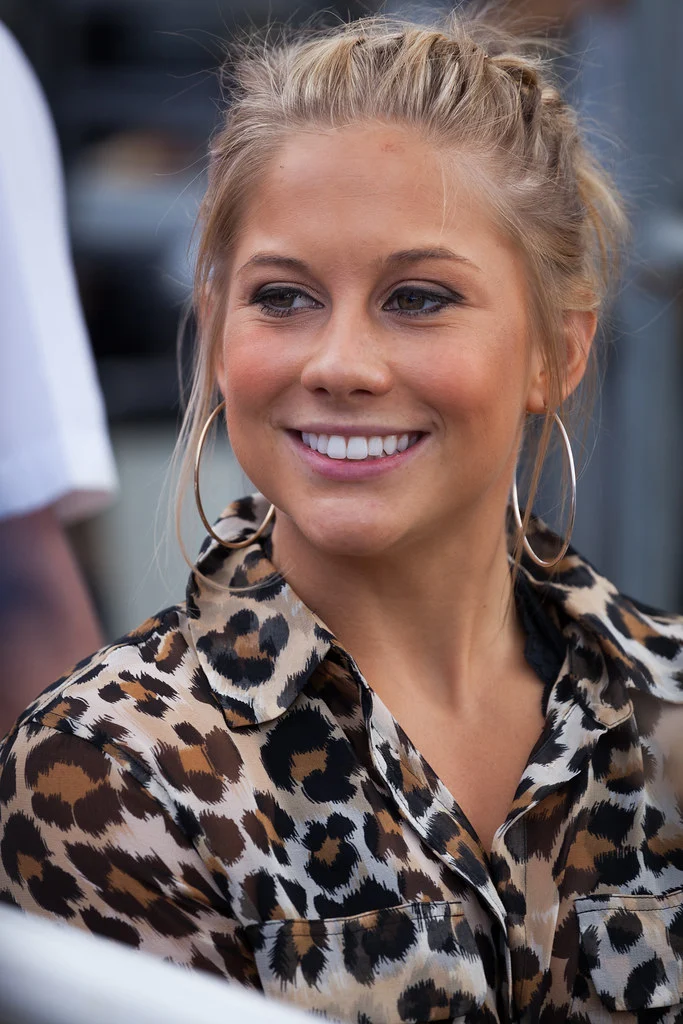
Why Your Lens Choice Matters for Portraits
Portrait photography is ultimately about your subject. The lens you choose determines how that subject looks in the final image, how their features are rendered, how the background falls away, and how much visual weight falls on their face and eyes. A wide-angle lens at close range distorts facial features, making noses appear larger and ears seem to recede. A moderate telephoto lens compresses perspective in a flattering way, keeping facial proportions natural while providing pleasing background separation.
Why do noses swell when you shoot close with a wide lens? Perspective distortion explains the cause, and how to make a great headshot covers lens choice and distance.
Beyond perspective, your lens controls depth of field and bokeh quality, two factors that can make or break a portrait. A lens with a wide maximum aperture like f/1.4 or f/1.8 lets you blur the background into a smooth wash of color, drawing the viewer’s eye directly to your subject. The optical design of the lens affects how that blur looks: some lenses produce buttery, circular bokeh while others create busier, more distracting backgrounds. This is why portrait photographers are so particular about their glass.
The Best Focal Lengths for Portraits
Focal length is the single most important factor when choosing a portrait lens. Each focal length produces a different look, and the best choice depends on the type of portraits you shoot most often.
50mm: The Versatile Starting Point
The 50mm lens is often called the “nifty fifty” for good reason. Check out our 50mm lens guide for more details. On a full-frame camera, it produces a field of view close to what the human eye sees, creating images that feel natural and intimate. A 50mm f/1.8 is typically the most affordable fast prime you can buy, making it an outstanding first portrait lens. At f/1.8 or wider, it produces beautiful background blur for head-and-shoulders portraits, and it works equally well for environmental portraits where you want to show context around your subject. The main limitation is that at close distances, a 50mm can produce very slight perspective distortion on tight headshots, though this is minor and many photographers prefer the look.
85mm: The Portrait Photographer’s Favorite
If there is a single focal length that portrait photographers universally love, it is 85mm. This moderate telephoto provides flattering perspective compression that makes faces look their best, noses appear proportional, cheekbones look defined, and the overall rendering is incredibly pleasing. An 85mm lens also creates stronger background separation than a 50mm at the same aperture, giving you more pronounced bokeh. Available in f/1.8 and f/1.4 versions from most manufacturers, the 85mm prime is the classic portrait lens for headshots, half-body portraits, and beauty work. The working distance is comfortable too, close enough to direct your subject without shouting, far enough to avoid making them self-conscious.
135mm: Maximum Compression and Bokeh
The 135mm focal length is a secret weapon among professional portrait photographers. It provides even more perspective compression than the 85mm, rendering facial features incredibly naturally while delivering some of the most beautiful bokeh you will find in any lens. A 135mm f/2 creates such shallow depth of field that backgrounds practically dissolve. The trade-off is working distance: you need to stand further from your subject, which can make communication and direction harder in tight spaces. This lens excels for outdoor portrait sessions, fashion work, and any situation where you have room to back up.
70-200mm: The Professional Workhorse
The 70-200mm f/2.8 zoom is a staple in the bags of wedding photographers, event shooters, and portrait professionals who need versatility. It covers the entire portrait-friendly focal range in one lens, letting you go from environmental shots at 70mm to tight headshots at 200mm without changing glass. The constant f/2.8 aperture provides solid background blur, though not as extreme as f/1.4 or f/1.8 primes. What you gain is flexibility: the ability to reframe without moving, which is invaluable during fast-paced shoots. The main downsides are size, weight, and cost, a professional 70-200mm f/2.8 is a substantial investment in every sense.
Aperture: Why It Matters So Much for Portraits
The maximum aperture of your lens controls two critical things in portrait photography: how much light the lens can gather and how shallow your depth of field can be. A wider aperture like f/1.4 or f/1.8 gives you significantly more background blur than f/2.8 or f/4, creating stronger subject separation.
However, shooting portraits wide open at f/1.4 is not always ideal. At such shallow depths of field, only a razor-thin slice of your subject is in focus, you might nail focus on one eye while the other eye is soft. Many portrait photographers find that f/2 to f/2.8 is the sweet spot: shallow enough for beautiful bokeh but deep enough to keep both eyes sharp. Having f/1.4 available gives you the option to go extremely shallow when the creative situation calls for it, and it also helps in low light situations like indoor sessions or late-afternoon golden hour shoots.
Want background separation without opening the aperture all the way? How to add punch to your portraits has a section on it, and subject separation covers distance and light.
The difference between f/1.4 and f/1.8 in terms of background blur is visible but not dramatic. In terms of price, however, the difference is often substantial, an f/1.4 lens can cost two to three times more than its f/1.8 counterpart. For many photographers, the f/1.8 version provides excellent value and results that are nearly indistinguishable in most shooting situations.
Prime vs Zoom Lenses for Portraits
The prime vs zoom debate in portrait photography comes down to a trade-off between image quality and convenience.
Prime lenses (fixed focal length) generally offer wider maximum apertures at lower prices and lighter weights. A 50mm f/1.8 or 85mm f/1.8 delivers stunning portrait results at a fraction of the cost of a 70-200mm f/2.8. Primes also tend to produce marginally sharper images, though the difference with modern zoom lenses is increasingly small. The discipline of using a fixed focal length can also improve your photography, you learn to move your feet and think more carefully about framing.
Zoom lenses offer versatility that is hard to beat in fast-moving situations. Wedding photographers who need to switch between wide context shots and tight portraits in seconds rely heavily on the 70-200mm. If you shoot events, family sessions with active children, or any situation where you cannot always control your distance to the subject, a zoom lens saves you from constantly swapping lenses and missing moments.
Many working portrait photographers carry both: a fast prime like an 85mm f/1.4 for their most controlled, creative work and a 70-200mm f/2.8 for situations that demand flexibility. If you are building your lens collection, start with a prime for its quality and value, then add a zoom when your shooting demands it.
Autofocus Performance for Portraits
Autofocus accuracy is critical for portrait photography, especially when shooting at wide apertures. At f/1.4 or f/1.8, your depth of field might be less than an inch on a close headshot. If the focus lands on the nose instead of the eye, the portrait fails. Modern mirrorless cameras with eye-detection autofocus have transformed portrait shooting, the camera automatically finds and tracks the nearest eye, even as your subject moves. But the lens has to keep up.
Curious how a camera finds and holds the eye? Eye detection AF explains how it works and when to use it, and how autofocus works covers tracking and the role of aperture.
Look for lenses with fast, quiet autofocus motors. Modern lens designs with linear or stepping motors provide nearly silent, rapid focusing that pairs well with eye-tracking systems. Older lens designs with traditional motors may hunt more in low light or fail to keep up with a moving subject. If you shoot portraits of children, candid moments, or anything where your subject is not perfectly still, autofocus speed matters as much as optical quality.
Crop Sensor Considerations
If you shoot on a crop sensor (APS-C) camera, remember that the effective focal length of your lens is multiplied, typically by 1.5x or 1.6x depending on the brand. This changes the ideal focal lengths for portraits:
- A 35mm lens on a crop sensor gives a field of view similar to 50mm on full frame, a good starting point for environmental portraits.
- A 50mm lens on a crop sensor acts like a 75mm, entering classic portrait territory with flattering perspective.
- A 56mm or 60mm lens on a crop sensor gives you an effective 85-90mm, the sweet spot for headshots.
- An 85mm lens on a crop sensor becomes roughly 128mm, excellent for tightly framed headshots and beauty work, but requires more working distance.
Want to check what your own lens gives on a smaller sensor? The crop factor calculator shows equivalent focal length and field of view, and full frame vs crop sensor covers the depth of field difference.
Several manufacturers make crop-sensor-specific portrait primes (such as 56mm f/1.4 lenses) that are designed specifically to deliver the classic portrait look on smaller-sensor cameras. These are often lighter and more affordable than their full-frame equivalents.
Budget Options vs Professional Glass
One of the best things about portrait photography is that excellent results are available at every budget level. Here is how the typical price tiers break down:
Entry level (most affordable): The 50mm f/1.8 is the single best value in portrait photography. Every major camera manufacturer makes one, and they all produce excellent results. This should be your first portrait lens purchase if you are on a budget. The build quality is typically plastic and lightweight, but the optical performance punches well above its price.
Mid-range: The 85mm f/1.8 from any major brand represents an outstanding balance of portrait performance and value. You get the classic portrait focal length with a fast aperture, reliable autofocus, and sharp optics. Third-party manufacturers also make excellent 85mm f/1.4 lenses that compete with first-party options at lower prices.
Professional: First-party 85mm f/1.2 and f/1.4 lenses, 70-200mm f/2.8 zooms, and 135mm f/1.8 primes represent the top tier. These lenses offer the best autofocus, build quality, weather sealing, and optical performance available. The improvements over mid-range lenses are real but incremental, better bokeh rendering, faster autofocus, more durable construction, and slightly sharper results at wide apertures. Whether that incremental improvement justifies the price depends on how much you shoot and whether portrait photography is your profession.
The honest truth is that a 50mm f/1.8 or 85mm f/1.8 in the hands of a skilled photographer will produce better portraits than a premium f/1.2 lens in the hands of a beginner. Invest in learning lighting, composition, and how to direct your subjects before investing in top-tier glass.
Wondering what a lighting pattern does to a face? Portrait lighting patterns shows Rembrandt, butterfly, loop and split lighting, and the portrait posing guide covers directing a subject.
Common Mistakes When Choosing a Portrait Lens
- Buying the widest aperture you cannot afford. An f/1.2 lens is tempting, but if it stretches your budget so far that you cannot invest in lighting, backdrops, or education, you are limiting your growth. An f/1.8 lens with good lighting will outperform an f/1.2 lens with bad lighting every time.
- Ignoring autofocus performance. A lens can have gorgeous bokeh and perfect sharpness, but if it misses focus regularly at wide apertures, your keeper rate will suffer. Read real-world reviews that specifically discuss autofocus reliability, especially in low light.
- Shooting every portrait wide open. Just because your lens opens to f/1.4 does not mean every portrait should be shot at f/1.4. Group portraits, environmental portraits, and many headshots benefit from stopping down to f/2.8 or f/4 for more depth of field. Use wide apertures intentionally, not by default.
- Choosing the wrong focal length for your space. If you primarily shoot in a small home studio, a 135mm lens will leave you pressed against the far wall. Consider your typical shooting environment when choosing a focal length. An 85mm works in most indoor spaces, while 135mm and 200mm are better suited to outdoor sessions or larger studios.
- Overlooking crop sensor equivalents. If you shoot on an APS-C camera and buy an 85mm lens expecting the classic portrait look, you will actually get a 128mm field of view. Check your camera’s crop factor and adjust your focal length choice accordingly.
- Chasing sharpness over character. Some of the most beloved portrait lenses are not the sharpest on technical charts. Portrait photography benefits from lenses with pleasing rendering, smooth bokeh, gentle contrast, and flattering skin tones. Clinical sharpness is less important here than in landscape or architecture photography.
Frequently Asked Questions
What is the best focal length for portrait photography?
For most portrait photographers, 85mm on a full-frame camera is the gold standard. It provides the most flattering perspective compression for faces while offering enough background separation to isolate your subject. That said, 50mm is excellent for environmental portraits and full-body shots, while 135mm produces stunning headshots with extreme bokeh. The best focal length depends on the type of portraits you shoot, many professionals use all three at different times.
Is f/1.4 worth the extra cost over f/1.8?
For most photographers, f/1.8 provides outstanding value and results that are very close to f/1.4. The extra two-thirds of a stop gives you slightly shallower depth of field and marginally better low-light performance, but the price premium is often 2-3x. If portrait photography is your profession and you regularly shoot in low light or need the absolute maximum background blur, the f/1.4 is worth considering. Otherwise, the f/1.8 version is the smarter investment, leaving budget for other gear or education.
Can I use a kit lens for portraits?
You can, but you will notice limitations. A typical 18-55mm or 24-70mm kit lens has a maximum aperture of f/3.5-5.6, which makes it much harder to achieve the smooth background blur that defines great portrait photography. Kit lenses also produce busier, less pleasing bokeh. They work for learning and casual portraits, but a 50mm f/1.8 prime, often the least expensive lens upgrade available, will dramatically improve your portrait results with noticeably better background separation and sharper subject rendering.
Do I need a full-frame camera for good portraits?
No. Crop sensor cameras produce excellent portraits, especially when paired with a fast prime lens. The main difference is that crop sensors have a slightly deeper depth of field at equivalent framing, so you may need a wider aperture to achieve the same background blur. A crop sensor camera with a 56mm f/1.4 lens produces beautiful portraits that rival full-frame results. Many professional portrait photographers started on crop sensor cameras and produced portfolio-worthy work long before upgrading.
Should I buy a portrait lens from my camera brand or a third party?
Third-party lens manufacturers now produce outstanding portrait lenses that compete directly with first-party options, often at significantly lower prices. Some third-party 85mm and 135mm primes have received widespread praise for optical quality that matches or exceeds the camera brand’s own offerings. The main advantages of first-party lenses are typically faster and more reliable autofocus (especially eye tracking), better weather sealing, and guaranteed compatibility with all camera features. If autofocus speed is your top priority, first-party lenses usually have an edge. For optical quality and value, third-party options are worth serious consideration.
Continue Learning
Now that you understand how to choose the right portrait lens, explore these related guides to improve your portrait photography:
- Portrait Photography: The Complete Guide
- Understanding Depth of Field
- What Is Bokeh and How to Create It
- Aperture Explained
- Focal Length Guide
- Photography Lighting Fundamentals
- Composition Techniques
- Best Cameras for Beginners