What Focal Length Actually Measures
Focal length is the distance, in millimeters, between the optical center of a lens and the camera's sensor when the lens is focused at infinity. It is a property of the lens, fixed for a prime and variable for a zoom, and it sets two things directly: how wide a slice of the world the lens captures (angle of view) and how large distant subjects appear in the frame (magnification). Everything photographers describe as a lens's "look," wide, normal, or telephoto, comes from those two facts.
Want the other challenges? The full camera simulator has all 21, across eight scenes.
Angle of View
A short focal length (14mm to 35mm on a full-frame sensor) bends light from a wide slice of the scene onto the sensor, so it captures a broad angle of view: buildings, landscapes, interiors, anything where you need to fit a lot into the frame from a normal shooting distance. A long focal length (85mm and up) narrows that slice dramatically, magnifying whatever sits in the center. A 50mm lens sits near the middle and is called "normal" because its angle of view roughly matches what a person perceives as normal magnification when looking at the resulting print or screen at a typical viewing distance.
None of this is about "zooming in" the way a phone's digital zoom crops and upscales an image after the fact. Focal length changes the actual optical path before light reaches the sensor. That distinction matters for the next section, because it is exactly where the most common myth about focal length comes from.
Perspective Comes From Where You Stand, Not From the Lens
Perspective, meaning the relative size and spacing of near and far objects in a photo, is set entirely by the camera's physical position relative to the subject. It has nothing to do with focal length. If you stand in one spot and zoom from 24mm to 200mm without moving, the relative sizes of everything in the scene stay exactly the same; you are just cropping progressively tighter into the same perspective. Move closer with a wide lens and near objects grow much larger relative to far ones. Move back with a telephoto lens and near and far objects flatten toward the same apparent size.
"Compression," the classic telephoto look where a distant mountain appears to loom directly behind a much closer subject, is a distance effect wearing a focal-length name. It happens because photographers who reach for a long lens are almost always standing farther from their subject to compensate for the narrower angle of view, and standing farther away is what compresses the relative sizes of foreground and background. Put a wide lens at the same distance a telephoto shooter would stand and crop the resulting image down to match the telephoto's framing, and the perspective is identical, because the camera position was identical. The lens only changed how much of that perspective made it into the frame.
See it for yourself: keep the person the same size and watch the mountains grow, then stand still and watch a longer lens do nothing but crop.
Crop Factor and Sensor Size
A lens's focal length does not change when you put it on a different camera, but the angle of view it produces does, because a smaller sensor only records the central portion of the image the lens projects. That narrowing is described by crop factor. An APS-C sensor (roughly 1.5x crop) records the same angle of view a 75mm lens would give on full frame when you mount a 50mm lens; a Micro Four Thirds sensor (2x crop) turns that same 50mm lens into a 100mm field of view. The lens itself is unchanged: its actual focal length, its actual aperture diameter, and its actual perspective-independent behavior are identical. Only the recorded slice of the image circle is smaller, which is why crop-factor talk is really a statement about sensors and framing, not about the lens doing something different.
Lens Distortion
Wide-angle lenses are also more prone to visible distortion, and there are two distinct kinds worth telling apart. Barrel distortion is optical: straight lines near the edges of the frame bow outward, most visible in architecture and easily corrected in software since it is consistent and predictable per lens. Perspective distortion is positional, not optical: it is what happens when a wide lens is used very close to a subject, which exaggerates the size difference between near and far parts of that subject, most obviously a nose that looks oversized on a face photographed at arm's length with a 24mm lens. That is the same distance effect from the perspective section above, just experienced at portrait range instead of landscape range. Stepping back and using a longer focal length to reframe removes it; the lens is not "distorting" so much as recording an extreme close viewpoint accurately.
Choosing a Focal Length
Genres lean on different ranges because the ranges solve different problems, not because of any rule: landscape photographers commonly work between 16mm and 35mm to fit in a wide scene from a reasonable standing distance; portrait photographers favor 85mm to 135mm because that combination of typical shooting distance and moderate telephoto compression is broadly flattering to facial proportions; street photographers often carry 28mm to 50mm for a natural angle of view that still allows shooting close enough to feel part of the scene; wildlife and sports photographers reach for 200mm to 600mm because their subjects will not let them get close. A practical starting kit covers the range without overlap: a wide zoom (16-35mm), a standard zoom (24-70mm), and a fast portrait prime (85mm).
See It Side by Side
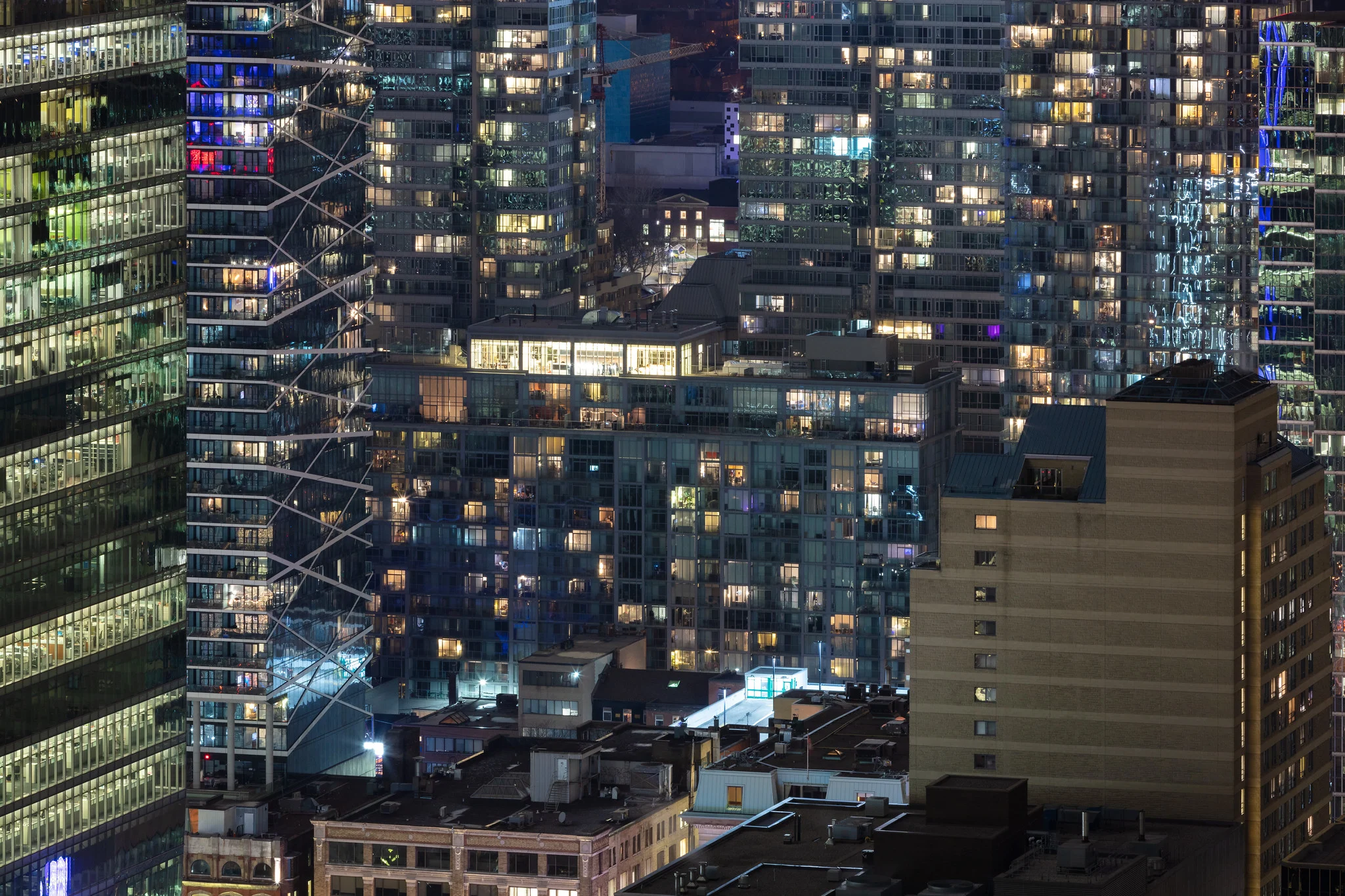
Photo A was shot at 10mm (28mm equivalent): a wide angle of view with everything from near to far kept small in the frame. Photo B was shot at 200mm: a narrow angle of view that magnifies a distant slice of the scene. Neither photo tells you anything about where the camera was standing, only how much of the view it kept.
Common Mistakes
- Saying a telephoto lens "compresses perspective" as if it were the lens doing it. It is distance doing it. The lens just lets you stand at that distance and still fill the frame.
- Blaming a wide lens for a distorted face without noticing how close the camera was. The same 24mm lens shooting a full-length portrait from six feet away shows almost none of the stretching seen in a close headshot at arm's length.
- Confusing crop factor with a change in the lens. A 50mm lens is always a 50mm lens. Crop factor describes what the sensor behind it records, not what the glass is doing.
- Treating "normal" (50mm) as objectively correct and everything else as a special effect. Every focal length is a legitimate creative choice; 50mm is just the one closest to a comfortable middle ground for typical viewing.
Try This
Find a subject with a clear foreground and background, a person standing in front of a distant building works well. Photograph them at 24mm from close enough to fill the frame the same way each time, then at 50mm from farther back, then at 135mm or longer from farther back still, keeping the subject the same size in the frame at every focal length. Compare the three: the subject stays the same size by design, but the background will grow steadily larger relative to the subject as the focal length increases and the camera moves back. That growth is the compression effect, and the exercise isolates it from every other variable.
Related
- Angle of View: the direct optical consequence of focal length.
- Crop Factor: how sensor size changes the effective angle of view of a given lens.
- Depth of Field: the other place focal length gets unfairly blamed for what distance actually does.
- Bokeh: how focal length and aperture together shape out-of-focus rendering.
- Fundamentals Lesson 3: Understanding and Choosing Lenses, with the in-browser camera simulator.