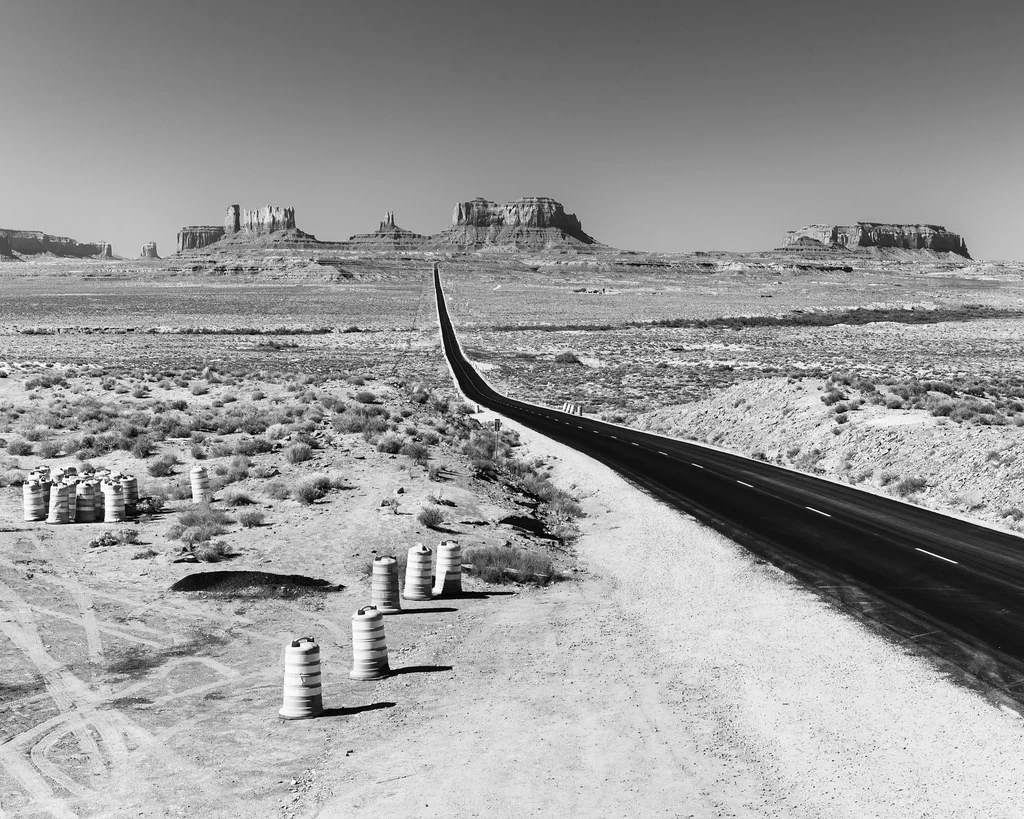
A photograph is a two-dimensional surface, but the best images create the illusion of depth and movement. One of the most powerful techniques for achieving this is the use of leading lines, compositional elements that direct the viewer’s gaze through the frame toward a point of interest. Leading lines transform a static image into a visual journey, guiding the eye deliberately from one area to another and creating a sense of depth, dimension, and narrative flow.
What Are Leading Lines?
Leading lines are any lines within a photograph that draw the viewer’s attention toward the main subject or deeper into the scene. These lines can be literal, like a road stretching toward the horizon, or implied, like a row of trees that creates a visual path. The human eye naturally follows lines, a perceptual tendency that photographers can exploit to control how viewers experience an image.
Effective leading lines accomplish several things simultaneously. They create a sense of depth by drawing the eye from the foreground toward the background. They establish visual hierarchy by pointing toward the most important element in the frame. They add structure and organization to a composition, preventing the eye from wandering aimlessly. And they can suggest movement, direction, or narrative progression, making the photograph feel dynamic rather than static.
Leading lines work in every genre of photography, from landscape and architecture to street photography and portraits. Once you train yourself to recognize them, you will see potential leading lines everywhere, and your compositions will improve dramatically.
Types of Leading Lines
Straight Lines
Straight lines are the most obvious and powerful type of leading line. Roads, railway tracks, fences, bridges, corridors, and building edges all provide strong straight lines that pull the viewer’s eye with unmistakable force. The visual impact of a straight leading line is direct and immediate. There is no ambiguity about where the eye should go.
Straight lines convey a sense of purpose and directness. A road vanishing to a point on the horizon creates a powerful pull into the distance. A pier extending into the ocean draws the eye toward the water. Long corridors in architecture create tunnel-like compositions that are almost impossible to look away from. The strength of straight lines lies in their simplicity and clarity.
Curved Lines
Curved leading lines guide the eye more gently than straight lines, creating a sense of flow, grace, and exploration. Winding rivers, meandering paths, curved shorelines, and S-curves in roads all serve as curved leading lines. The eye follows them more slowly, lingering along the curve rather than racing to the endpoint.
The S-curve is particularly prized in photography and fine art. An S-shaped leading line creates a serpentine path through the image, inviting the viewer to explore the full composition rather than jumping immediately to the subject. Rivers seen from above, winding mountain roads, and curving fences are classic sources of S-curve compositions. The S-curve adds elegance and visual rhythm to any image.
Diagonal Lines
Diagonal lines inject energy and tension into a composition. While horizontal lines feel calm and vertical lines feel stable, diagonal lines suggest movement, action, and instability. A staircase cutting diagonally across the frame, a leaning tree, or a sloping hillside all create diagonal leading lines that energize the image.
Diagonal leading lines are especially effective in action photography, sports, and street photography where you want to convey dynamism. They also work beautifully in architectural photography, where the angles of modern buildings provide abundant diagonal elements. When shooting with diagonal leading lines, consider which direction the diagonal moves. Lines that run from lower-left to upper-right generally feel like they are ascending or progressing, while lines running from upper-left to lower-right can feel like they are descending, though cultural reading direction influences this perception.
Converging Lines
Converging lines are multiple lines that meet at a single point within the image, usually creating a strong sense of depth through linear perspective. Railroad tracks converging at a vanishing point, rows of trees lining an avenue, or the edges of a long hallway all produce converging lines. This type of leading line creates some of the most dramatic depth in photography.
The vanishing point where converging lines meet becomes an extremely powerful focal point. If you place your subject at or near this convergence, the compositional pull toward that point becomes nearly irresistible. Converging lines are also effective for creating a sense of scale, as the narrowing of parallel lines communicates distance in an intuitive way that viewers immediately understand.
Finding Leading Lines in Any Environment
Leading lines exist in virtually every environment once you learn to see them. The key is shifting your perception from looking at objects to looking at the lines and shapes those objects create.
- Roads and paths: Any road, sidewalk, trail, or track provides an obvious leading line. Shoot from a low angle to emphasize the line extending into the distance.
- Fences and walls: Stone walls, wooden fences, hedgerows, and railings all create strong lines through a scene. They work especially well when they lead toward a subject like a barn, lighthouse, or mountain.
- Rivers and waterways: Water flowing through a landscape creates natural curved leading lines. Streams, creeks, irrigation channels, and even puddle reflections can serve this purpose.
- Architecture: Buildings are filled with leading lines. Rooflines, windowsills, staircases, corridors, columns, and structural beams all provide compositional direction. Urban environments are a treasure trove of leading lines.
- Shadows: Long shadows cast by trees, buildings, or poles create dramatic leading lines, especially during golden hour when shadows stretch across the landscape.
- Shorelines: The edge where water meets sand provides a natural leading line that curves through beach and coastal photographs.
- Tree lines and rows: Rows of trees in orchards, avenues, or forests create powerful converging lines that draw the eye deep into the scene.
- Bridges: The structural lines of bridges, from the cables of suspension bridges to the arches of stone bridges, offer some of the most compelling leading lines in photography.
Combining Leading Lines with Other Composition Principles
Leading lines become even more powerful when combined with other composition techniques. The most effective compositions typically employ multiple principles working together to create visual harmony.
Pair leading lines with the golden ratio by positioning the endpoint of your leading line at a golden point or having a curved leading line trace the path of the Fibonacci spiral. This combination creates compositions that feel both directed and naturally balanced.
Use leading lines to enhance depth by combining them with a strong foreground, middle ground, and background. A path that starts in the foreground and leads toward a mountain in the background creates three distinct planes of depth, making the two-dimensional image feel remarkably three-dimensional.
Frame your subject using leading lines in combination with natural framing. An archway that creates a frame around your subject while also providing leading lines along its edges delivers a doubly powerful composition. Tunnels, doorways, and tree canopies are excellent sources for this combination.
Where Leading Lines Should Point
The destination of your leading lines matters as much as the lines themselves. In most cases, leading lines should direct the viewer toward your primary subject. A road should lead to a distant farmhouse, a fence should point toward a lighthouse, a river should curve toward a mountain peak. When the leading line has a clear destination, the composition feels purposeful and satisfying.
Leading lines that point toward nothing or exit the frame without purpose can create a feeling of emptiness or confusion. The viewer’s eye follows the line, reaches the edge of the frame, and has nowhere to go. This can work intentionally if you want to convey infinity, loneliness, or vastness, but in most situations you want the line to deliver the eye to something meaningful.
Consider where the leading line originates as well. Lines that enter from the corners of the frame tend to feel more natural than lines that begin at the center of an edge. Lines that start near the viewer in the foreground and extend into the distance create the strongest sense of depth and immersion. Positioning yourself low and close to the starting point of a leading line amplifies its visual pull significantly.
Common Mistakes with Leading Lines
The most frequent mistake is including lines that lead the eye away from the subject rather than toward it. Before pressing the shutter, trace the lines in your composition with your eye and verify that they direct attention where you want it. Lines that lead out of the frame or toward an unimportant element weaken the composition.
Another common error is including too many leading lines that compete with each other. Multiple lines pointing in different directions create visual chaos rather than visual guidance. Choose one dominant leading line or a set of converging lines and let them do the heavy lifting. Secondary lines should support the primary direction, not fight against it.
Centering the subject at the exact convergence point of leading lines can sometimes feel too obvious or heavy-handed. Experiment with placing the subject slightly off the convergence point or having the leading lines point toward the subject from one side. This creates a slightly less predictable composition that can feel more sophisticated.
Ignoring lines that are already in the scene is another pitfall. Power lines, fence posts, branches, and other environmental lines influence how the eye moves through your image whether you intend them to or not. Either incorporate them deliberately into your composition or change your angle to eliminate lines that work against your intent.
Camera Angle and Leading Lines
Your shooting angle dramatically affects the impact of leading lines. A road photographed from standing height looks very different from the same road shot from ground level. Low angles exaggerate perspective and make leading lines more pronounced, stretching them from the immediate foreground deep into the distance. This is why many of the most dramatic leading line photographs are shot from a low vantage point.
High angles, conversely, compress perspective and can reveal leading lines that are invisible from ground level. Aerial views show river curves, road patterns, and field boundaries as clear compositional lines. Shooting from a bridge, hilltop, or building can transform ordinary landscape elements into powerful graphic compositions.
The choice of focal length also affects leading lines. Wide-angle lenses exaggerate the convergence of leading lines, making roads and corridors seem to stretch dramatically into the distance. This distortion creates a powerful sense of depth but can also make compositions feel extreme. Longer focal lengths compress the perspective, making parallel leading lines appear more parallel and reducing the sense of convergence. Choose your focal length based on how dramatic you want the leading line effect to be.
Exercises to Sharpen Your Leading Line Vision
Developing an eye for leading lines requires practice and intentional observation. These exercises will help you build this essential compositional skill.
- Take a walk with your camera and photograph only leading lines. Do not worry about subjects or stories; focus exclusively on finding and photographing lines that lead somewhere. This exercise trains you to see lines as compositional elements.
- Choose a single location and find five different leading lines within it. This forces you to look beyond the obvious and discover subtle lines created by shadows, patterns, edges, and implied connections between objects.
- Photograph the same leading line from three different angles: ground level, eye level, and from above. Compare how the angle changes the strength and feel of the leading line.
- Practice with curved leading lines specifically. Find S-curves in rivers, roads, or architecture and compose images that follow the curve from foreground to background.
- Combine a leading line with a human subject. Use the line to guide the viewer toward the person, experimenting with placing the person at different points along the line to see which position creates the strongest composition.
Leading Lines in Different Photography Genres
In landscape photography, leading lines create depth and guide the viewer through vast scenes. Rivers, paths, and ridgelines serve as natural guides through wilderness compositions. The most compelling landscape photographs often combine a strong foreground element with a leading line that carries the eye toward a dramatic background.
In street photography, leading lines add structure to chaotic urban environments. Sidewalks, curbs, building edges, and even lines of pedestrians can guide the eye toward a decisive moment or key figure in the scene. Street photographers often position themselves at the end of a strong leading line and wait for a subject to walk into the convergence point.
In portrait photography, leading lines can direct attention to the subject while adding environmental context. A fence leading to a person standing in a field, a staircase guiding the eye to a figure on a landing, or railroad tracks converging toward a lone figure all use leading lines to strengthen portrait compositions.
In architectural photography, leading lines are inherent in the subject matter. Hallways, staircases, arches, columns, and structural lines all provide abundant compositional direction. The challenge in architecture is not finding leading lines but choosing which ones to emphasize and which to subordinate.
Implied and Interrupted Leading Lines
Not all leading lines need to be continuous, solid lines. Implied leading lines are created by a series of elements that the eye connects into a visual path. A row of lampposts, a series of stepping stones, or a sequence of people walking in the same direction all create implied lines that the brain naturally completes. These subtle leading lines can be just as effective as solid ones, sometimes more so because they engage the viewer’s perception more actively.
Interrupted leading lines, where a line is broken by gaps, can create visual rhythm and interest. A fence with missing slats, a path that disappears behind a hill and reappears farther away, or a river that flows behind rocks before emerging again all provide interrupted leading lines. These breaks add visual texture and give the eye moments of pause as it follows the line through the composition.
Mastering leading lines is a foundational skill that transforms how you see and compose photographs. Once you internalize the principle, every environment becomes a web of potential compositions, and your images gain the purposeful visual flow that separates memorable photographs from mere snapshots.