Before you can develop your own photographic voice, it helps to understand how the great photographers before you saw the world. Studying the masters is not about copying their work. It is about understanding their creative decisions: why they chose certain subjects, how they used light, what compositional principles guided them, and how their personal vision shaped every frame they captured.
In this lesson, we highlight several masters whose approaches to photography remain relevant and instructive. As you study their work, ask yourself: What draws me to this image? What techniques did the photographer use? How does this inspire my own photography?
Why Study the Masters?
Every creative discipline has a tradition. Writers read widely before they write. Musicians study the compositions of those who came before them. Photographers benefit from the same practice. When you study master photographers, you absorb lessons about composition, lighting, timing, and storytelling that took those artists decades to develop.
Studying the masters also expands your visual vocabulary. You begin to recognize patterns and techniques, the way a single catchlight in the eye brings a portrait to life, the way a leading line pulls the viewer through a landscape, the way a moment of tension between two figures creates narrative. These recognitions become tools you can use in your own work.
The photographers featured below represent different eras, genres, and approaches. Each offers something unique to learn from.
Ansel Adams: The Zone System and Landscape Mastery
Ansel Adams (1902-1984) is best known for his black-and-white photographs of the American West, particularly the national parks. Adams was inspired by Paul Strand’s work and, in 1932, co-founded the group “f/64”, which focused on achieving maximum depth of field and razor-sharp detail reproduction.
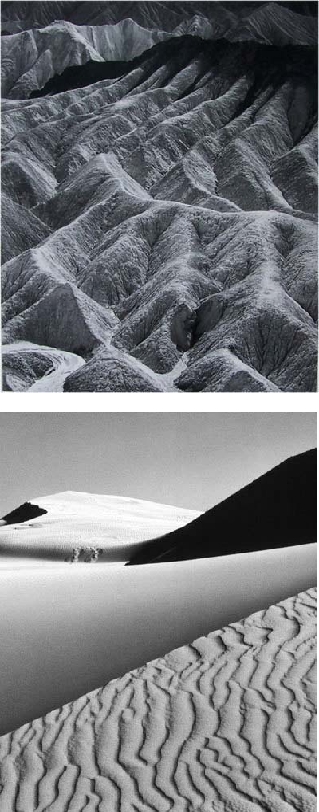
Adams developed the “zone system,” a method for precisely controlling exposure and development to achieve a specific tonal range in the final print. The zone system divides the tonal scale into 10 zones from pure black (Zone 0) to pure white (Zone IX), giving the photographer exact control over how light translates to tone. While digital photography has changed the technical process, Adams’ principle of pre-visualizing the final image before pressing the shutter remains fundamental.
What to learn from Adams:
- Pre-visualization – Adams conceived the final print before taking the photograph. He decided in advance how bright the sky would be, how dark the shadows would render, and how the tonal range would convey mood. This discipline of imagining the finished image before shooting is valuable for any photographer.
- Technical mastery in service of vision – Adams’ technical skill was extraordinary, but it always served his artistic vision. He did not pursue sharpness or tonal control for its own sake; he pursued it because his vision of the American wilderness demanded it.
- Patience and persistence – Adams returned to the same locations repeatedly, waiting for the right combination of light, clouds, and atmospheric conditions. His most famous images were often the result of years of revisiting a scene.
Below are some of Adams’ black-and-white masterpieces. Notice the precision with depth of field and his attention to texture and tonal range (from pure white to deep black).

Brassai: Capturing the Night
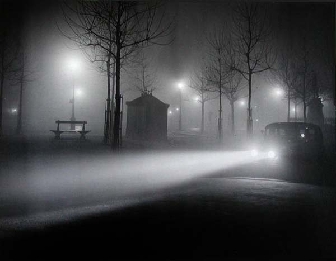
Gyula Halasz, better known as Brassai, was a self-taught photographer who moved to Paris in 1924. His night photography captured both the characters of Paris’ nightlife and its breathtaking architecture. His world-famous book, Paris de Nuit (Paris by Night), documents these stunning images.
What to learn from Brassai:
- Working within limitations – Brassai photographed at night with the technology of the 1930s: slow film, long exposures, and no autofocus. These limitations forced creative solutions that defined his distinctive style.
- Atmosphere over documentation – His photographs do not simply record Paris at night; they convey the feeling of being there. The fog, the reflections on wet cobblestones, the pools of gaslight all create mood beyond what a straightforward document would capture.
- Finding beauty in the overlooked – Brassai photographed subjects that polite society preferred to ignore: nightclub performers, graffiti, the demi-monde of late-night Paris. His work demonstrates that compelling photographs exist everywhere, not just in conventionally beautiful settings.
Below are some of Brassai’s works, celebrated for their surreal qualities and technical mastery.

Robert Capa: Courage and Immediacy
Robert Capa (born Andre Friedmann, 1913-1954) is renowned for his war photography. After studying political science, Capa began his career in photography, eventually documenting five major wars, including the Spanish Civil War, World War II, and the First Indochina War. His iconic photograph, “Death of a Spanish Loyalist,” garnered international acclaim.
Despite losing most of his D-Day photographs due to a darkroom error (a lab assistant dried the negatives too quickly, melting the emulsion), Capa’s remaining work from that day continues to be among the most famous war photographs in history. The surviving images are slightly blurred from the chaos of the landing, and that blur became part of their power.
What to learn from Capa:
- “If your pictures aren’t good enough, you’re not close enough” – Capa’s famous motto applies far beyond war photography. Getting physically closer to your subject creates intimacy, impact, and engagement that a distant shot cannot match.
- Imperfection as power – The blur in Capa’s D-Day images conveys the terror and chaos of the moment more effectively than a technically perfect photograph ever could. Technical perfection is not always the goal; sometimes the “flaws” in an image are what make it authentic and emotionally true.
- Presence and commitment – Capa’s willingness to be present in extreme situations, to put himself where the story was happening, is the foundation of photojournalism. While most of us will never photograph combat, the principle of being present and engaged (rather than standing safely at a distance) applies to every genre of photography.
Below are some of Capa’s most famous images:

Ed Van Der Elsken: Authentic Human Connection
Ed Van Der Elsken was a Dutch freelance photographer whose work focused on the realities of socio-political life and marginalized individuals. His series on Jazz between 1955-1961 captured natural light and atmosphere without the use of flash, preserving the mood of the scenes he shot. His work often expressed the struggles of everyday people, particularly through his black-and-white compositions.
What to learn from Elsken:
- Respect for natural light – By refusing to use flash in his Jazz series, Elsken preserved the authentic atmosphere of the venues. The natural light was often dim and challenging, but it was real, and that reality shows in every frame.
- Empathy for subjects – Elsken did not photograph people from a position of detachment or superiority. His images convey genuine connection with his subjects, which is visible in their willingness to be open and vulnerable in front of his camera.
- Documentary as art – His work demonstrates that documenting everyday life is not a lesser form of photography. When done with sensitivity and skill, documentary photography can be as powerful and moving as any other genre.
Below are some of Elsken’s most impactful photographs:


Floria Sigismondi: Dark Artistry and Vision
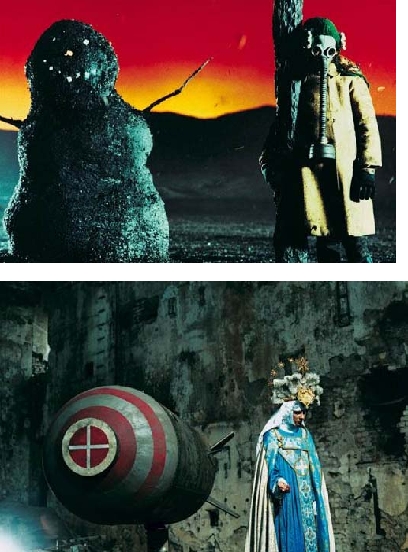
Floria Sigismondi is an internationally recognized photographer and director known for her work with musicians and her distinctive visual style. Her approach, which she describes as “entropic underworlds inhabited by tortured souls and omnipotent beings,” demonstrates how a strong personal vision can define a career.
What to learn from Sigismondi:
- Commitment to a personal aesthetic – Sigismondi’s work is instantly recognizable because she has developed and committed to a specific visual language. Every element in her photographs, from lighting to styling to post-processing, serves her artistic vision.
- Staging as creative expression – Her images are highly constructed and theatrical, proving that photography can be just as much about creating reality as capturing it.
- Cross-disciplinary influence – Sigismondi draws from painting, sculpture, film, and music, demonstrating that the best creative work often comes from looking outside your own medium for inspiration.
Take a look at Sigismondi’s unique style through these photos:

How to Study Photography Effectively
Looking at photographs is not the same as studying them. To genuinely learn from the masters, you need to engage actively with their work. Here is a method that will accelerate your visual education:
- Describe the image objectively. What is in the frame? Where is the light coming from? What is sharp and what is blurred? What is the tonal range? This trains you to see technical and compositional choices rather than just responding emotionally.
- Identify the techniques. What aperture do you think was used? What focal length? How was the light shaped? Is the composition based on the rule of thirds, symmetry, leading lines, or something else?
- Consider the context. When and where was the photograph taken? What was the photographer trying to communicate? How does the context change your understanding of the image?
- Evaluate the emotional impact. How does the image make you feel? What specific elements create that feeling? Could the same feeling be achieved with different technical choices?
- Apply the lesson. After studying a photographer’s work, go out and try to apply one specific thing you learned. If you studied Adams’ use of tonal range, try shooting black and white with attention to the full tonal scale. If you studied Capa’s closeness, try getting closer to your subjects than you normally would.
Try This: Master Study Exercise
Choose one of the photographers from this lesson (or another master you admire). Spend 30 minutes looking at their work online or in a book. Select one image that resonates with you and study it using the five-step method above. Then go out with your camera and create three photographs inspired by that master’s approach. You are not trying to copy their exact image; you are trying to apply their principles (their use of light, their compositional approach, their closeness to subjects, or their patience) to your own subjects and environment.
Try This: Expand Your Influences
Beyond the photographers in this lesson, explore others whose work has shaped the medium. Visit your local library for photography monographs, or search for these names online: Dorothea Lange (documentary and portrait), Henri Cartier-Bresson (the decisive moment and street photography), Irving Penn (fashion and still life), Sebastiao Salgado (social documentary), Vivian Maier (street photography), and Sally Mann (landscape and family). Each offers a distinctly different perspective on what photography can be.
Learn more from other masters of photography here.
Building Your Own Visual Library
As you study different photographers, you will begin to develop preferences and affinities. Keep a collection of photographs that inspire you, whether saved digitally or clipped from magazines and printed in a physical notebook. This collection becomes your visual library: a personal reference of images that resonate with you, organized not by photographer but by what draws you to them.
Over time, patterns will emerge. You may notice that you are consistently drawn to images with strong contrast, or to quiet, contemplative compositions, or to photographs that capture intense human emotion. These patterns reveal your own nascent artistic voice. The subjects and qualities that you repeatedly choose to save are the same subjects and qualities that will eventually define your own work.
Revisit your visual library periodically. As your skills develop and your eye matures, you will understand more about why certain images work. Photographs that initially attracted you for their surface beauty may reveal deeper compositional or lighting techniques on a second or third viewing. Your visual library becomes richer as your ability to read photographs grows.
Lesson Summary
The masters of photography were not born with extraordinary vision. They developed it through practice, experimentation, and deep engagement with the world around them. Each brought a unique perspective: Adams’ meticulous control, Brassai’s nocturnal poetry, Capa’s fearless proximity, Elsken’s empathetic documentary, and Sigismondi’s theatrical imagination.
What these photographers share is commitment to a personal vision and the technical skill to realize it. As you continue through this course, keep their examples in mind. When you are struggling with a photograph, ask yourself: how would Adams approach this scene? What would Capa do differently? How would Brassai handle this light? The answers will not tell you exactly what to do, but they will open up possibilities you might not have considered.