What Makes Great Street Photography
Street photography is the art of finding extraordinary moments in ordinary life. It is about observation, timing, and the ability to recognize when disparate elements, a gesture, a shadow, a juxtaposition of signs and people, come together for a fraction of a second into something meaningful. Unlike most other genres of photography, you cannot plan a great street photograph. You can only put yourself in a position where one might happen, and be ready when it does.
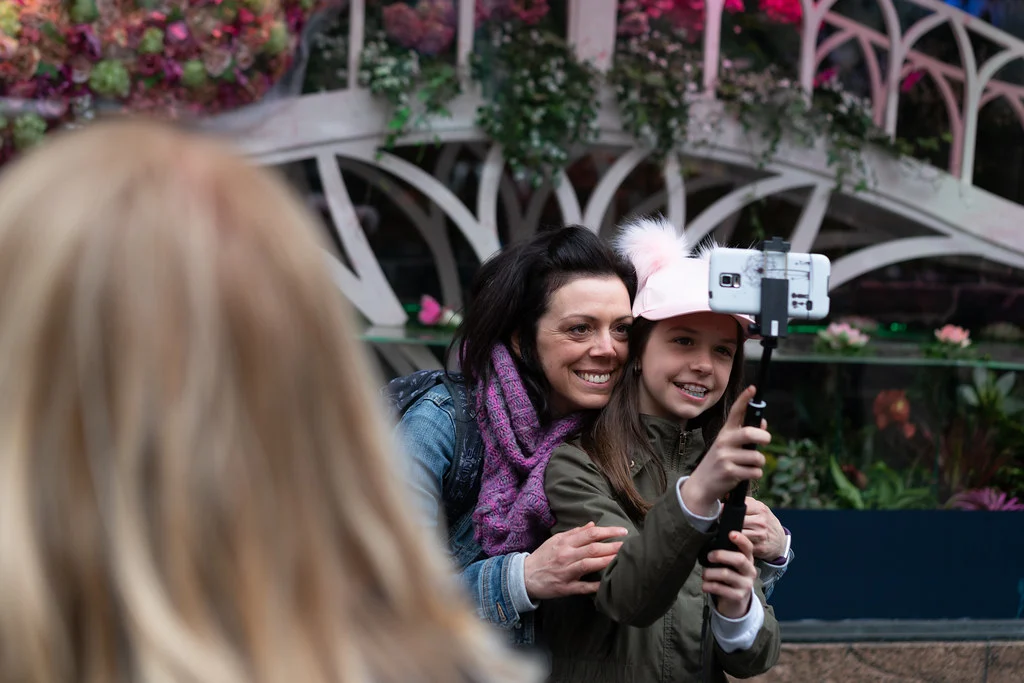
The concept of the “decisive moment,” the idea that there is one instant when all the visual elements of a scene align into a perfect composition, has defined street photography for generations. But the decisive moment is not about superhuman reflexes. It is about anticipation. When you watch a person walking toward a puddle of reflected light, you can see the photograph before it happens. When you notice a shadow falling across a doorway, you can wait for someone to step into it. The best street photographers are not the fastest. They are the most attentive.
Great street photography often relies on visual storytelling devices: humor, irony, contrast, and juxtaposition. A businessman in a suit walking past a poster of a beach. A child mimicking a statue. A dog staring down a pigeon while its owner is absorbed in a phone. These moments tell stories, sometimes funny, sometimes poignant, sometimes mysterious, in a single frame. The skill is in seeing them as they unfold and having the presence of mind to capture them.
Study the masters of street photography to develop your eye. Look at the gentle humor in the work of Elliott Erwitt, the nocturnal poetry of Brassai, and the geometric precision of Andre Kertesz. Notice how each photographer brings a distinct sensibility to the street, proof that this genre is as much about personal vision as it is about technical skill.
What separates a great street photograph from a snapshot is intention and awareness. A snapshot is reactive: something happened and you grabbed it. A great street photograph, even when it looks spontaneous, comes from a photographer who was actively reading the scene, anticipating possibilities, and positioning themselves to capture the moment with strong composition and good light. The spontaneity is real, but the preparation is deliberate.
Developing Your Approach
There is no single correct way to do street photography, but every successful street photographer develops a working method, a set of habits and instincts that puts them in the right place with the right mindset. Finding your approach takes time and experimentation, but there are several proven strategies to consider.
The flaneur approach, named after the French term for a person who walks the city with purpose and curiosity, is the most traditional method. You walk, you observe, you let the city reveal itself to you. The key is to walk without a fixed destination but with open, attentive eyes. Look for light, look for characters, look for situations that catch your interest. Do not rush. The flaneur moves at a pace that allows them to notice things that a hurried pedestrian would miss entirely.
An alternative approach is to work a scene, to find a visually interesting location and stay there, letting the action come to you. Perhaps you have found a shaft of light falling between two buildings, a colorful wall, a reflective puddle, or a staircase with beautiful geometry. Set up your composition and wait. People will walk through your frame, and eventually someone will complete the picture. This method requires patience, but it often produces more refined compositions than constant walking because you have time to perfect the framing before the human element arrives.
Some street photographers shoot from the hip, holding the camera at waist level and firing without looking through the viewfinder. This produces a more candid, unguarded quality and draws less attention to the act of photographing. The trade-off is less precise framing. Others prefer to shoot at eye level, composing carefully through the viewfinder, accepting that subjects may notice them. Neither method is superior. They simply produce different kinds of images. Try both and see which feels right to you.
Zone focusing is a technique that many street photographers rely on for speed. Instead of autofocusing on each subject, you pre-set your focus to a specific distance, say three meters, and use a moderate aperture (f/8 or f/11) that gives you a deep enough depth of field to cover subjects within a range around that distance. When someone enters your focus zone, you shoot immediately, without waiting for the autofocus to lock. This technique eliminates the slight delay of autofocus and lets you capture truly fleeting moments.
One of the most important things to develop is your ability to slow down and really look at a scene before photographing it. The temptation on the street is to react to everything, clicking constantly. But the photographers who produce consistently strong work are selective. They wait, they watch, and they shoot when something genuinely interesting happens. Quantity does not replace quality, though there is nothing wrong with shooting freely during a practice session to loosen up and build confidence.
Consider developing a personal project or theme for your street work. Rather than wandering with no focus, give yourself a constraint: photograph only people reading, or only reflections, or only shadows, or only pairs of people interacting. A self-imposed constraint narrows your attention and paradoxically opens your eyes. You start seeing your chosen theme everywhere, and the resulting body of work has a cohesion that random shooting rarely achieves.
Technical Settings for the Street
Street photography rewards simplicity in gear and settings. You want your camera to be ready at all times, with minimal fiddling required when a moment presents itself. Overthinking your settings on the street means missing photographs.
Aperture priority mode is the most popular choice among street photographers. Set your aperture to f/8 or f/11 for a wide depth of field that keeps most of the scene in focus, and let the camera handle the shutter speed. Keep an eye on the shutter speed: if it drops below 1/125 second, you risk motion blur on moving subjects. If the light is low, increase your ISO. Modern cameras handle high ISO remarkably well, and a slightly noisy sharp image is always better than a smooth blurry one.
Some photographers prefer manual mode with auto-ISO. You set both your aperture (for depth of field control) and your minimum shutter speed (to freeze motion), and the camera adjusts the ISO to maintain correct exposure. This gives you predictable results in changing light conditions without having to adjust settings as you move between sun and shade.
Choose a focal length and stick with it. The classic street photography focal lengths are 28mm, 35mm, and 50mm (on a full-frame camera or equivalent). Each produces a distinct perspective. A 28mm lens is wide enough to include the environment and context around your subject, but can feel too wide for tighter compositions. A 50mm is close to what the human eye sees and produces natural-looking perspectives, but requires you to be closer to your subject, which can feel intimidating. A 35mm splits the difference and is probably the most versatile choice. Whatever you choose, use it exclusively for a while. Learning to “see” in one focal length, knowing instinctively what will fit in the frame, is far more valuable than constantly switching lenses. For a detailed settings reference, visit the Street Photography hub.
Keep your gear minimal. A single camera body and a single lens is all you need for street work. A smaller, quieter camera is less intimidating to subjects and easier to carry for hours of walking. Leave the camera bag at home. Wear the camera around your neck or on a wrist strap so it is always accessible.
Consider shooting in black and white, or at least converting some of your street work to monochrome in post-processing. Black and white strips away the distraction of color and reduces the image to its essential elements: light, shadow, form, and gesture. Many of the greatest street photographs in history were made in black and white, and there is a reason for that. Without color, the viewer focuses on the story, the moment, and the composition. It is worth experimenting with to see how it changes the way you see the street.
Ethics, Etiquette, and Confidence
Street photography occupies a unique ethical space. You are photographing strangers in public, often without their explicit consent. This raises important questions about rights, respect, and responsibility that every street photographer must grapple with.
In most countries, you have a legal right to photograph people in public spaces. Public streets, parks, markets, and other open areas are generally considered places where people do not have a reasonable expectation of privacy. However, legal permission and ethical responsibility are not the same thing. Just because you can photograph someone does not always mean you should.
Consider your subjects as human beings, not props. Avoid photographing people in moments of vulnerability, distress, or embarrassment: a homeless person sleeping, someone crying, a person in an accident. Ask yourself: would I want this image taken of me? Does this photograph treat my subject with dignity? The best street photography celebrates the richness of human life. The worst exploits it.
Building confidence is one of the biggest hurdles for new street photographers. The fear of being noticed, confronted, or criticized for photographing strangers is completely natural. Here are some strategies that help. Start in busy, tourist-friendly areas where cameras are everywhere. Photograph street performers, market vendors, and people at public events, situations where photography is expected. As your confidence grows, gradually move into quieter, more intimate settings. Remember that most people either do not notice you are photographing them or do not care. The confrontation you are dreading almost never happens.
When someone does notice you and objects, respond with warmth and respect. Lower your camera, smile, and say something genuine, like “I was just struck by the beautiful light” or “You looked wonderful walking through that scene.” Never argue your legal rights. If someone asks you to delete a photo, consider doing so as a gesture of respect, even if you are not legally required to. Your reputation as a decent human being matters more than any single photograph.
Cultural sensitivity is essential when photographing in communities that are not your own. Different cultures have very different attitudes toward being photographed. In some places, photography is welcomed; in others, it is considered rude or even threatening. When traveling or working in unfamiliar neighborhoods, take the time to understand local norms. When in doubt, ask permission. A smile and a gesture toward your camera is often enough to communicate your intention, even across language barriers.
Light and Shadow on the Street
Light on the street is unpredictable, constantly changing, and wonderfully varied. Unlike a studio or a planned landscape shoot, you cannot control the light in street photography. You have to learn to work with whatever you find. This constraint is actually a creative advantage. It forces you to be responsive, adaptive, and aware of your surroundings in a way that controlled lighting never does.
Harsh midday sunlight, which landscape and portrait photographers often avoid, can be a street photographer’s best friend. Strong sun creates deep, dramatic shadows, and shadows are one of the most powerful compositional tools available to you on the street. Look for the geometric patterns that buildings cast on sidewalks and walls. Notice the shafts of light that fall between buildings, creating spotlights on the pavement. Position yourself so that people walk from shadow into light, or vice versa. These transitions create visual drama and naturally draw the viewer’s eye to your subject.
Silhouettes are a natural result of backlighting, and the street offers endless opportunities for them. Shoot into the light, toward a bright sky, a sunlit wall, or a window, and let your subjects become dark shapes against a bright background. Silhouettes strip away detail and reduce people to their outlines, postures, and gestures, which can be remarkably expressive.
Night transforms the street into an entirely different photographic environment. Neon signs, streetlights, car headlights, and illuminated storefronts create pools of color and contrast. Rain at night is a gift to street photographers. Wet surfaces reflect every light source, doubling the color and creating a mirror world on the pavement. Shoot at higher ISOs, use wider apertures, and embrace the grain and imperfection that come with low-light photography. Some of the most atmospheric street images are shot at night, precisely because the darkness forces simplicity and mood.
Overcast days flatten the light and reduce contrast, which can make street photography feel less dramatic. But soft light has its own advantages. It renders skin tones beautifully, eliminates harsh shadows under hats and hoods, and lets you focus on gesture and expression without worrying about where the shadows fall. Not every street photograph needs to be a study in light and shadow. Sometimes the story, the gesture, and the moment are enough.
Pay attention to reflected light as well. Windows, puddles, polished surfaces, and even light-colored walls can bounce and redirect sunlight in unexpected ways. A figure lit by reflected light from a building across the street has a quality that is different from direct sunlight, softer but still directional, and often very beautiful. Training yourself to notice reflected and bounced light opens up possibilities that other photographers miss entirely.
Field Notes: One Real Photograph
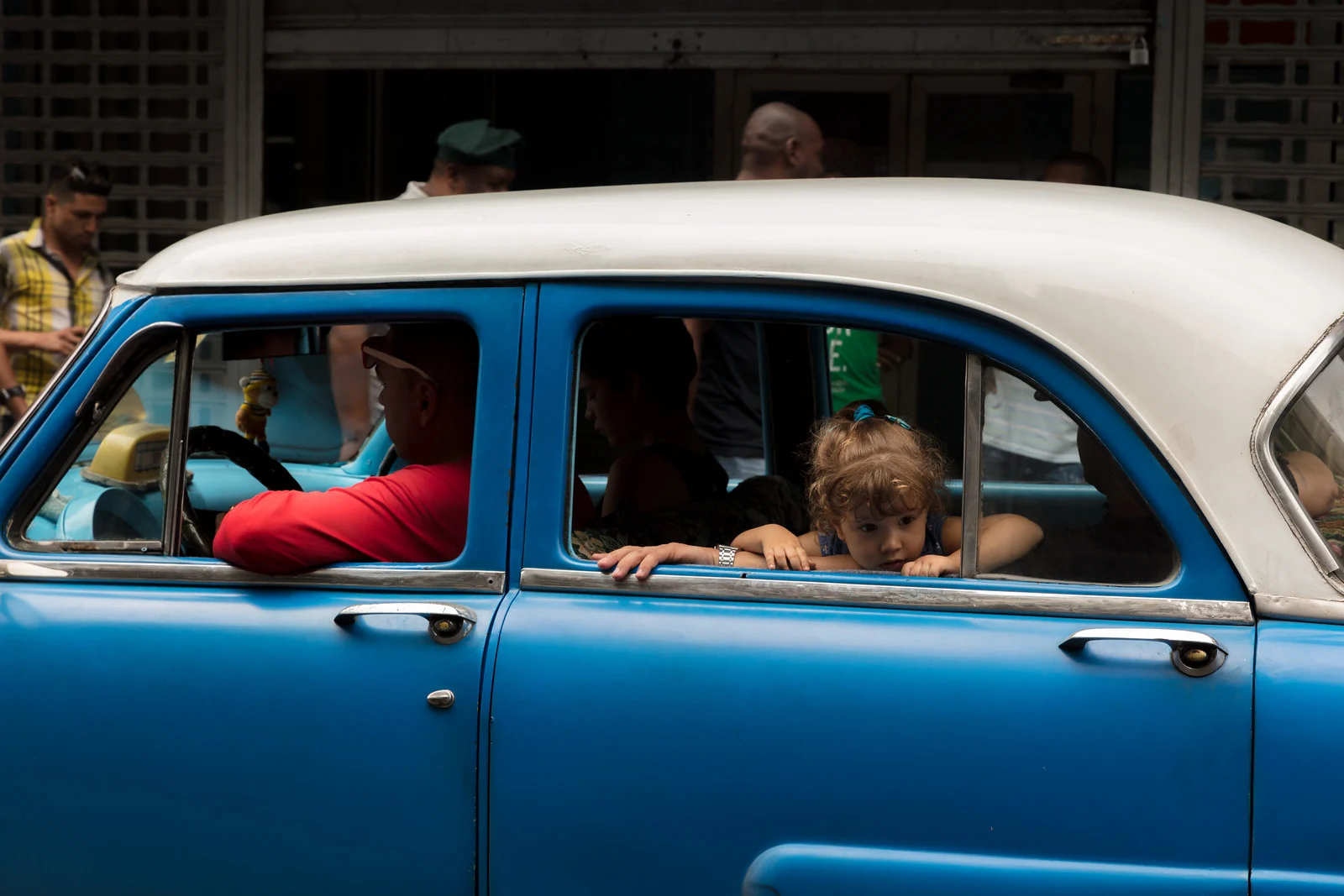
Field notes: street moments give you no time to change settings, so the camera was set for the street, not for the picture: f/8 for enough depth to forgive a slightly missed focus, ISO raised just enough to keep the shutter at a hand-holdable 1/60 in shade. A still subject framed by the window made 1/60 enough; a walking subject would have needed 1/250 or faster. Decide your working settings when you step outside, then spend your attention on the moment.
Try This: Street Photography Exercises
Street photography is learned by doing. These exercises are designed to build your observational skills, your patience, and your confidence in photographing the world around you.
The One-Hour Walk
Go to a busy area, a market, a shopping street, a park, a transit hub, with your camera. Walk for one full hour. Your only rule is to shoot at least 20 frames during that time. Do not review any images on the back of your camera while you are shooting. Just keep walking, keep looking, and keep responding to what catches your eye. When you get home, review the images and look for patterns in what you were drawn to. That is the beginning of your personal street photography style.
One Corner, 30 Minutes
Find a street corner that has interesting light, an appealing background, or steady foot traffic. Stand there for 30 minutes and photograph whatever passes through your frame. Do not chase subjects. Let them come to you. This exercise teaches patience and anticipation, two of the most important skills in street photography. You will be surprised how many interesting moments happen in a single, unremarkable location when you give them time to unfold.
Shadows and Light
On a bright, sunny day, find a location with strong shadows, the edge of a building, an arcade, a doorway, a row of columns. Use the shadow patterns as your primary compositional element. Wait for people to walk through the light and shadow, creating a visual interplay between figure and ground. Focus on the graphic quality of the image rather than the identity of the people. This exercise trains you to see the street as a canvas of light and shadow, with people as the moving elements that bring it to life.
The Theme Walk
Choose a single visual theme before you leave home: reflections, hands, pairs of people, the color red, or any other constraint that interests you. Spend an hour shooting only images that fit your theme. Ignore everything else, no matter how interesting it looks. This exercise trains selective vision, the ability to filter the chaos of the street through a focused creative intention. Review your results and notice how the constraint forced you to see things you would normally overlook. Street photography is a practice that deepens over years. Every time you go out with your camera, you get a little better at seeing, a little faster at reacting, a little more confident in your presence on the street. There is no endpoint, just an ever-expanding awareness of the extraordinary moments hidden in everyday life.