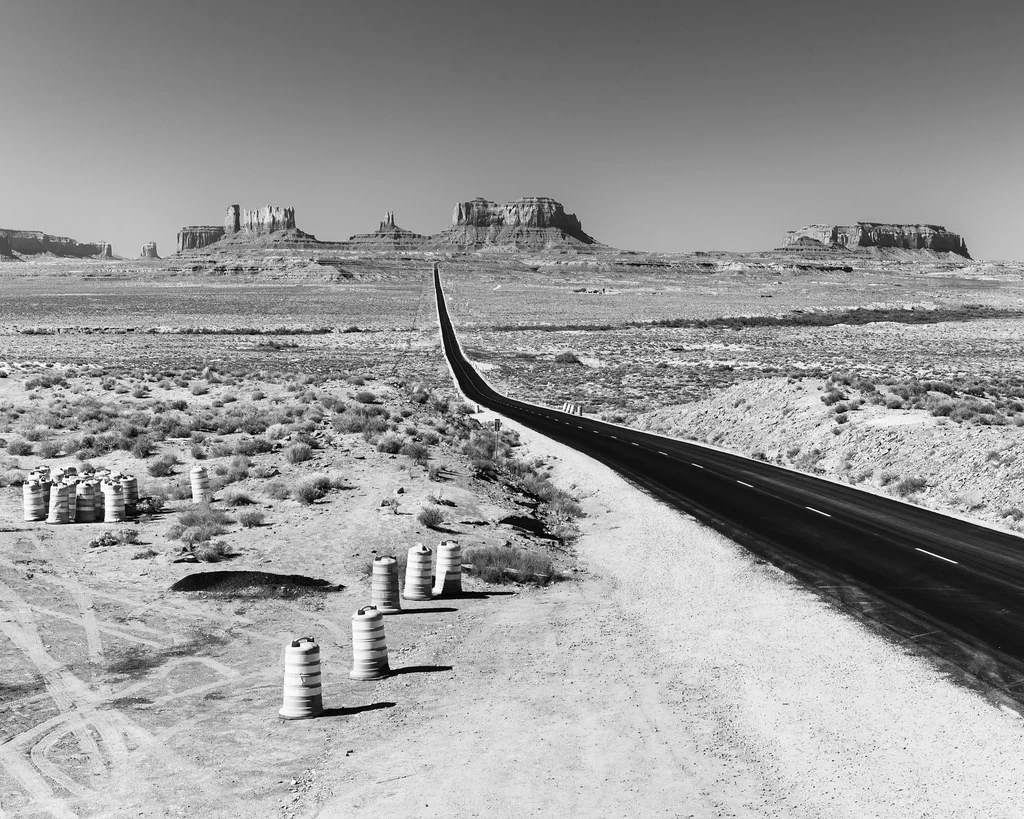
Leading lines are lines in a photograph that guide the viewer’s eye toward the main subject or deeper into the scene. They add depth, direction and structure, so the eye follows a path you chose instead of wandering around the frame.
What Makes a Line “Leading”
Not every line in a photograph is a leading line. A line becomes a leading line when it serves a compositional function: directing the viewer’s eye toward something. A road that runs into the distance, converging toward a vanishing point, leads the eye along its path. A fallen tree branch pointing toward a subject draws attention to that subject. A row of fence posts creates a visual pathway. The critical distinction is intent and function. A random line that crosses the frame without directing attention is simply a line. A line that guides the viewer’s gaze is a leading line.
Leading lines work because of how human vision processes images. Our eyes naturally follow lines, edges, and boundaries. This is a fundamental principle of visual perception that artists have exploited for centuries. When your eye encounters a line in an image, it tends to trace along it, and where that line terminates becomes a natural resting point for attention. By controlling where lines lead, you control how viewers experience your photograph.
See it side by side
Lines in the scene (roads, rivers, railings, shadows, architecture) guide the viewer's eye toward the subject. Without them, the eye has no path through the frame.
Types of Leading Lines
Straight Lines
Straight lines are the most direct and assertive type. A road stretching to the horizon, a railroad track disappearing into the distance, a row of columns in a building. Straight lines convey strength, order, and purpose. They move the eye quickly and efficiently from one point to another. Vertical straight lines suggest power and growth. Horizontal straight lines suggest stability and calm. Diagonal straight lines are the most dynamic because they imply movement and energy, cutting across the frame with visual momentum.
Curved Lines
Curves guide the eye more gently than straight lines. A winding river, a curved path through a garden, the sweep of a hillside. Curved lines feel organic, natural, and graceful. They slow the viewer’s eye, encouraging a more leisurely exploration of the image. S-curves are particularly prized in composition because they create a rhythmic back-and-forth movement that holds the viewer’s attention longer. The S-curve mimics natural forms like rivers, roads through mountains, and the human body, lending images an elegant, flowing quality.
Converging Lines in Photography
Converging lines are parallel lines that appear to meet at a single point as they recede from the camera. This is linear perspective at work, and it is one of the strongest depth cues available to photographers. A pair of railroad tracks, the edges of a long hallway, the sides of a road, or a row of trees along an avenue all converge as they extend away from you. The convergence point becomes a powerful focal point, and the lines create an unmistakable sense of three-dimensional depth on a flat surface.
Because the lines narrow with distance, converging lines also communicate scale. Viewers read the narrowing at once as distance, so a long corridor or road feels long without any caption. Buildings photographed from below converge too, this time upward, which is why tall walls seem to lean together overhead.
Placing the subject exactly at the convergence point gives the strongest pull, and it can also feel obvious and heavy. Try putting the subject slightly to one side of the point, or let the lines approach it from one side, for a less predictable frame. How strongly the lines converge depends on your lens and position, covered under camera position and depth below. For the other kinds of line you can use, see lines in photography.
Implied Lines
Not all leading lines are physical objects. Implied lines exist as visual connections between discrete elements. A row of stepping stones creates an implied line even though the stones are separate objects. A series of streetlights implies a line through their arrangement. A person’s gaze creates an implied line in the direction they are looking. These subtle lines can be just as effective as obvious physical lines, and they often create more sophisticated, layered compositions.
Interrupted Lines
A leading line does not have to be continuous. A fence with missing slats, a path that disappears behind a hill and reappears farther away, or a river that runs behind rocks and emerges again are all interrupted lines. The brain completes the path, and the gaps add rhythm and give the eye small pauses along the way.
Diagonal Lines
Diagonal lines carry inherent energy because they resist the horizontal and vertical stability of the frame edges. A diagonal line crossing the frame creates visual tension and movement. It draws the eye more aggressively than horizontal or vertical lines. In landscape photography, a diagonal ridgeline or shoreline adds dynamism. In street photography, the converging walls of a narrow alley create diagonal lines that pull the viewer deep into the scene. Diagonals are the workhorses of dynamic composition.
The direction a diagonal runs changes how it reads. A line running from lower left to upper right tends to feel like it is rising or moving forward, while one running from upper left to lower right can feel like it is falling, although the direction people read in affects this. A diagonal that runs between two rule of thirds intersections gives a frame that is both balanced and energetic.
Where to Find Leading Lines
Leading lines are everywhere once you train yourself to see them. Roads, paths, and trails are the most obvious examples. Rivers, streams, and shorelines provide natural leading lines in landscapes. Architectural elements like staircases, railings, corridors, window frames, and rooflines offer abundant geometric lines in urban environments. Fences, walls, hedgerows, and rows of trees create lines in rural settings.
Less obvious leading lines include shadows, light beams, cracks in pavement, patterns in sand or snow, the edges of clouds, and the outlines of mountains against the sky. Natural lines tend to be curved and organic, while man-made lines tend to be straight and geometric. Both types work well, and combining them can create dynamic tension in a composition.
Long shadows are especially good lines near sunrise and sunset, when they stretch across the ground. Indoors, look at window frames, doorways, long tables, corridor walls and bookshelves. In a portrait, the angle of an arm, the line of the shoulders or the direction of a gaze can all steer the eye toward the face. A shaft of light across a dark floor is a line made of illumination rather than an object. Along a shoreline or in a puddle, reflections can add a second line running in the opposite direction.
Placement and Entry Points
Where a leading line enters the frame matters. Lines that begin at or near the bottom edge of the frame, particularly from the corners, create the strongest sense of entry. A line entering from the lower left or lower right corner gives the eye an obvious way in and carries it up into the scene. A road beginning at the bottom center of the frame creates a symmetrical, formal composition that pulls the viewer straight into the image.
Lines entering from the sides of the frame direct the eye horizontally before leading it deeper into the scene. These lateral entry points can feel more dynamic and less predictable than bottom-entry lines. Lines that begin mid-frame, without touching any edge, are weaker as leading lines because they lack a clear starting point. The strongest leading lines have an obvious origin point at or near the frame edge and a clear destination within the scene.
Where Leading Lines Should Point
The destination matters as much as the line. A road should lead to a distant farmhouse, a fence toward a lighthouse, a river toward a peak. A line that points at nothing leaves the eye at the edge of the frame with nowhere to go. That can work on purpose, to suggest vastness or loneliness, but usually you want the line to deliver the eye to something worth seeing.
Leading Lines and Depth
One of the most valuable functions of leading lines is creating depth in a two-dimensional photograph. When a line recedes from the foreground into the background, it establishes spatial relationships between the near and far elements of the scene. The viewer’s eye travels along the line, experiencing the transition from close to distant, which creates a three-dimensional impression.
Wide-angle lenses enhance this effect by exaggerating the apparent distance between near and far objects. A road shot with a wide-angle lens from a low vantage point will appear to stretch dramatically from the immediate foreground to the far horizon, creating a powerful sense of depth. Telephoto lenses compress this effect, making leading lines appear flatter and less dramatic. Choosing the right focal length for your leading lines determines how strongly they create a sense of spatial depth.
A line that starts in the foreground and leads to something in the background also separates the scene into near, middle and far planes. A path that begins at your feet and runs toward a mountain gives three distinct layers, which makes a flat image feel much more three-dimensional. See foreground, midground and background for more on building those layers.
Leading Lines in Different Genres
Landscape Photography
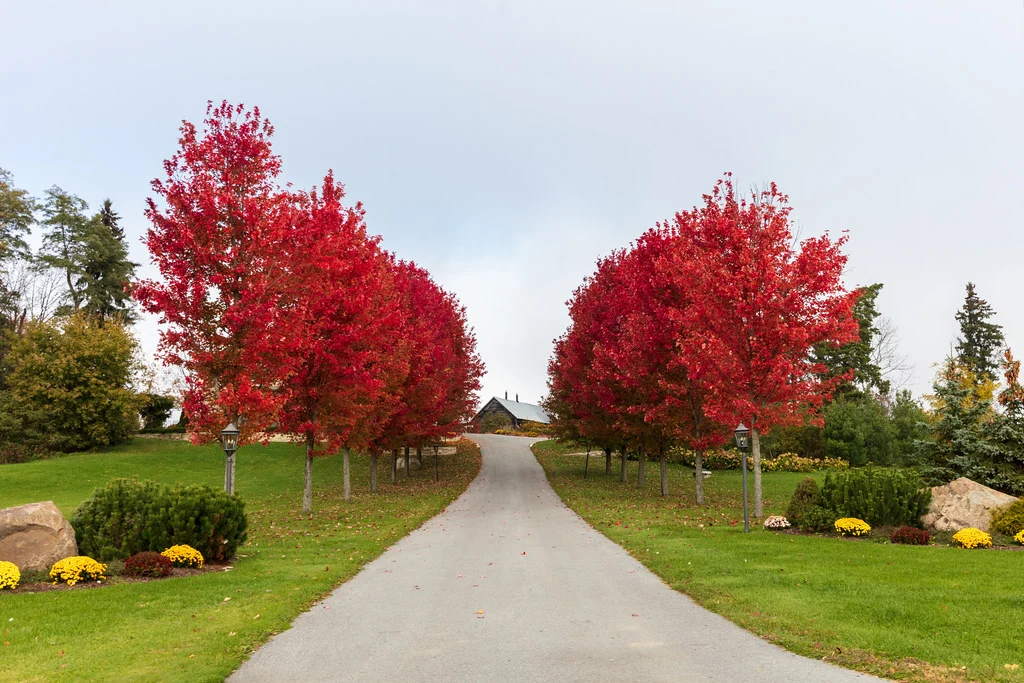
In landscapes, leading lines solve the fundamental challenge of guiding the viewer through a vast scene. A winding path through a meadow, a stream flowing toward distant mountains, or a fence line stretching across rolling hills gives the eye something to follow rather than wandering aimlessly. Strong foreground interest combined with leading lines that extend into the middle and far distance creates images that hold attention and reward prolonged viewing.
Street and Urban Photography
Cities are rich in geometric leading lines. Sidewalks, tram tracks, building edges, crosswalks, and tunnels all provide strong directional elements. Street photographers often position themselves at the end of a converging perspective, waiting for a subject to walk into the focal point of the converging lines. This creates images where the architecture itself frames and directs attention to the human element.
Portrait Photography
In portraits, leading lines can direct the viewer’s eye toward the subject. A railing, wall edge, or path leading to where the subject stands reinforces the subject as the focal point. Even in environmental portraits where the setting is important, leading lines establish a hierarchy of visual attention, ensuring the viewer sees the person first and the environment second.
Architectural Photography
Architecture often contains deliberate leading lines built into the design. Architects use lines to direct movement and attention, and photographers can leverage these same design elements. Long hallways, staircases, colonnades, and bridge spans all provide structural leading lines. Photographing along these lines rather than across them emphasizes the architect’s intention and creates images that capture the experience of moving through a space.
Common Mistakes with Leading Lines
The most common mistake is using a line that leads nowhere. A road that runs to the edge of the frame without reaching a subject or interesting destination wastes the viewer’s journey. Every leading line should have a payoff at the end, something worth looking at when the eye arrives at its destination.
Another mistake is competing lines that pull the eye in different directions. When multiple strong lines lead to different parts of the frame, the viewer’s eye bounces between them without settling on a clear focal point. Simplify your composition to establish one dominant leading line, or arrange multiple lines so they converge on the same point.
Lines that lead out of the frame, particularly toward the edges rather than into the scene, push the viewer’s eye away from the image. Be aware of lines near the frame edges that might inadvertently direct attention outward rather than inward.
Three more mistakes are worth checking for. A line can lead the eye to the right place but carry the wrong mood: a rigid straight line in a gentle, quiet scene, or a soft curve in an image meant to feel tense. And many photographers see a promising line but shoot from wherever they happen to be standing. A line only leads to the subject if you position yourself so it points there, so move your feet and change your height until line and subject align. Existing lines such as power lines, fence posts and branches also steer the eye whether you intend it or not, so either use them or change your angle to lose them.
Combining Leading Lines with Other Compositional Principles
Leading lines work beautifully with other compositional tools. A leading line that places the subject at a rule-of-thirds intersection combines two powerful principles. Leading lines that create frames around a subject add another layer of visual guidance. Lines that establish rhythm through repetition (like a row of columns) add pattern to the compositional mix. Pairing a leading line with negative space gives a minimal frame where the line and the subject are the only things competing for attention.
The strongest compositions often layer multiple principles. A winding path (leading line) that begins in the lower left (rule of thirds entry point) and leads to a lighthouse (focal point) framed by two trees (natural framing) uses four compositional techniques simultaneously. This layering creates images that feel intuitively “right” even to viewers who know nothing about composition theory.
Training Your Eye
Seeing leading lines becomes instinctive with practice. Start by looking at your favorite photographs and identifying the lines that guide your eye through the image. Then, when you are in the field with your camera, pause before shooting and scan the scene for potential lines. Move your position to align lines more effectively. Get low to emphasize ground-level lines, or climb higher to see how lines relate to each other from above.
Small changes in camera position can dramatically alter how leading lines work in your frame. A few steps to the left or right can shift a line from leading to the subject to leading past it. A lower angle can make a subtle line become a dominant compositional element. The relationship between your viewpoint and the lines in the scene is dynamic, and exploring different positions is essential to finding the strongest composition.
As a practice exercise, choose one type of leading line (curves, diagonals, or converging lines) and spend an entire shooting session looking for only that type. This focused approach trains your brain to recognize that specific pattern, and over time, you will begin seeing all types of leading lines automatically whenever you look through the viewfinder.
Other exercises build the same habit. Photograph a single line, such as a fence, road or river, from ten positions and compare how the frame changes. Photograph the same line from ground level, eye level and from above. Put a person on a line and try them at several points along it to see where the frame is strongest. Review your own photos and mark the lines already in your best ones. Before you raise the camera, sketch the scene in a few strokes to find the dominant lines and decide which to emphasize.
Leading Lines and Emotional Impact
Different types of lines evoke different emotional responses. Straight horizontal lines convey calm, stability, and rest, mirroring how we perceive horizons and flat surfaces. Vertical lines suggest strength, growth, and aspiration, echoing the way trees grow upward and buildings reach toward the sky. Diagonal lines inject energy, tension, and drama because they defy the stable horizontal and vertical axes of the frame. Curved lines feel graceful, natural, and fluid, echoing the organic forms found in nature.
Jagged or broken lines create feelings of chaos, unease, or danger. Lightning bolts, cracked earth, and shattered glass produce jagged lines that are viscerally unsettling. These are less commonly used as leading lines, but when they fit the mood of the image, they can be remarkably effective. A zigzagging mountain trail can convey the difficulty of a climb. A fractured road leading through a disaster scene reinforces the sense of disruption.
The speed at which a line moves the eye also affects emotional impact. Straight lines move the eye quickly, creating a sense of urgency or directness. Curved lines slow the eye down, encouraging contemplation. Very complex curved or winding lines can create a meditative quality, where the journey along the line itself becomes more important than the destination.
Camera Position and Leading Lines
Your physical position relative to the lines in a scene dramatically changes their compositional effect. Shooting from ground level makes lines on the ground plane dominate the composition. A railroad track shot from rail height stretches dramatically from the extreme foreground to the distant vanishing point. The same track shot from eye level appears much less dramatic because the line occupies a smaller portion of the frame.
Elevation changes your relationship with lines entirely. Shooting from above compresses the depth suggested by converging lines, making a winding road appear more like a pattern than a pathway. Shooting from below emphasizes vertical lines, making buildings and trees appear to tower and converge overhead. Each vantage point transforms the same lines into different compositional tools with different emotional effects.
Tilting the camera (also called a Dutch angle) transforms horizontal and vertical lines into diagonals. This can add energy and dynamism to an otherwise static scene, but it should be used deliberately and sparingly. An obvious tilt that does not serve the image’s intent looks like a mistake rather than a creative choice.
Working with Multiple Lines
Complex scenes often contain multiple potential leading lines. The challenge is organizing them so they work together rather than competing. The most effective approach is establishing a clear hierarchy: one dominant leading line supported by secondary lines that reinforce rather than contradict its direction. A road (primary line) flanked by rows of trees (secondary lines) creates a powerful composition because all lines converge on the same point.
Parallel lines that run in the same direction reinforce each other, creating a stronger directional pull than any single line could achieve. The rails of a track, the edges of a pier, or the walls of a corridor work together to direct attention more forcefully. Intersecting lines create focal points at their crossing, which can be compositionally useful if the intersection falls at an important location in the frame.
Be cautious of lines that lead out of the frame, especially near corners. These can pull the viewer’s attention away from the image entirely. If you notice exit lines in your composition, try repositioning to either eliminate them or redirect them back into the scene. Lines that enter from the edges and lead inward are far more effective than lines that start inside and lead outward.
Leading Lines in Post-Processing
Post-processing can enhance the effectiveness of leading lines. Cropping is the most direct tool. Sometimes the strongest leading line in your original frame is weakened by a distracting element near the edge. A careful crop can eliminate the distraction and strengthen the line. Adjusting the crop to change where the line enters the frame can transform a decent composition into a powerful one.
Dodging (brightening) along a leading line and burning (darkening) the surrounding areas makes the line more visually prominent. This draws the eye more strongly along the intended path. Increasing contrast along the line while decreasing it elsewhere has a similar effect. These subtle adjustments can amplify the compositional power of leading lines without changing the content of the image.
Vignetting, the darkening of frame edges, naturally pushes the viewer’s eye inward. When combined with leading lines that originate at the frame edges, a subtle vignette reinforces the inward movement. The darkened edges discourage the eye from lingering at the periphery, while the leading lines pull it toward the center or the main subject. Used together, these tools create images that powerfully guide the viewer’s visual journey from edge to subject.