Grade 11 photography notes are about making a set of pictures that holds together, and about being able to defend the choices behind it. By now you can expose a picture on purpose and build a short series. The new work is coherence: every frame should belong, the order should help the idea, and you should be able to say why a setting, a crop or a picture was kept. A phone is enough if you can control it. Manual settings help when you need the look to stay consistent.
These notes are for you, the student. Your teacher has a matching Grade 11 photography lesson plan with the launch lesson, the assignment and how it is marked. If the idea side still feels new, go back to the Grade 10 photography notes. If light and exposure still wobble, use the Grade 9 photography notes. This page is about the set, and about talking about it clearly.
How to use these notes
Read the section on coherence first, then look at the two pictures here as if they were possible frames in a longer set. Ask what a next picture would have to do, and what would not belong. Use the glossary when a word is slippery. Then do the short exercise, even if your main assignment is larger. The small version trains the same judgment.
What a coherent series actually is
A coherent series is not a pile of your best shots. It is a short sequence in which each picture has a job, and the jobs add up to one idea. If you can shuffle the order and nothing changes, you may have a folder, not a series. If you can remove a picture and the idea gets weaker, that picture is earning its place.
This is the practical side of visual storytelling and of a photo story or series. The photo essay guide and photo sequencing go further on order. In Grade 11 you should be able to use those ideas on a set you made, not only on someone else’s essay.
A simple way to test a set:
- Write the idea in one sentence.
- Give each picture a job: introduce the place, show a detail, show a change, show a result, or close the thought.
- If two pictures have the same job, keep the stronger one.
- Check the first and last pictures. The first should let a viewer in. The last should not feel like a leftover.
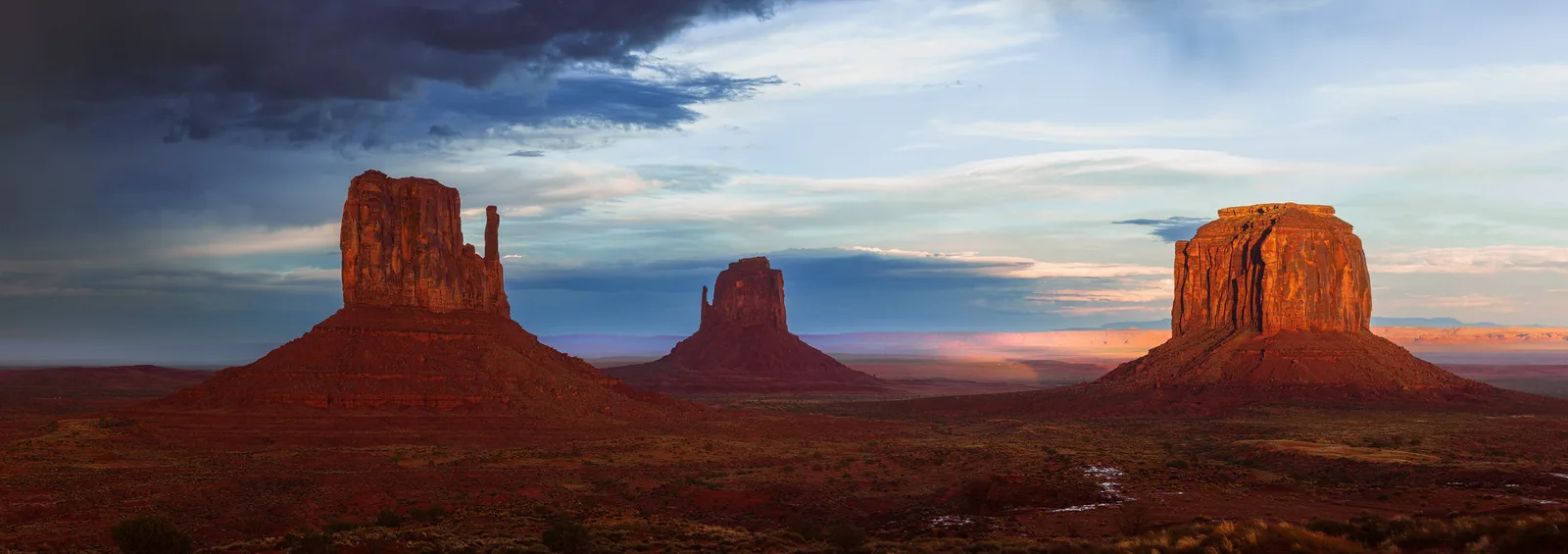
The butte picture at the top could introduce a set about land and weather, or about scale, or about a row of similar forms. By itself it is a finished landscape. In a series, it might be the establishing frame, and the next pictures would need to go closer, or change the light, or show a different relationship between the forms. If the next four frames were only the same three buttes from a slightly different step, the set would not be growing.
Settings as choices you can defend
In Grade 11, a setting is not a badge. It is a choice you should be able to explain. Why this shutter speed, this aperture, this ISO, this white balance, this viewpoint? If the honest answer is “the camera picked it,” that can still be a starting point. The next step is to notice what that choice did, and to take over when it does not serve the set.
Manual mode is useful when you want the look to stay consistent from frame to frame: the same brightness on a row of street fronts, the same depth of field in a set of details. It is not required for every picture. What is required is awareness. If one frame in a series is much darker, much warmer, or much softer than the others, that should be on purpose, not an accident you hope no one notices.
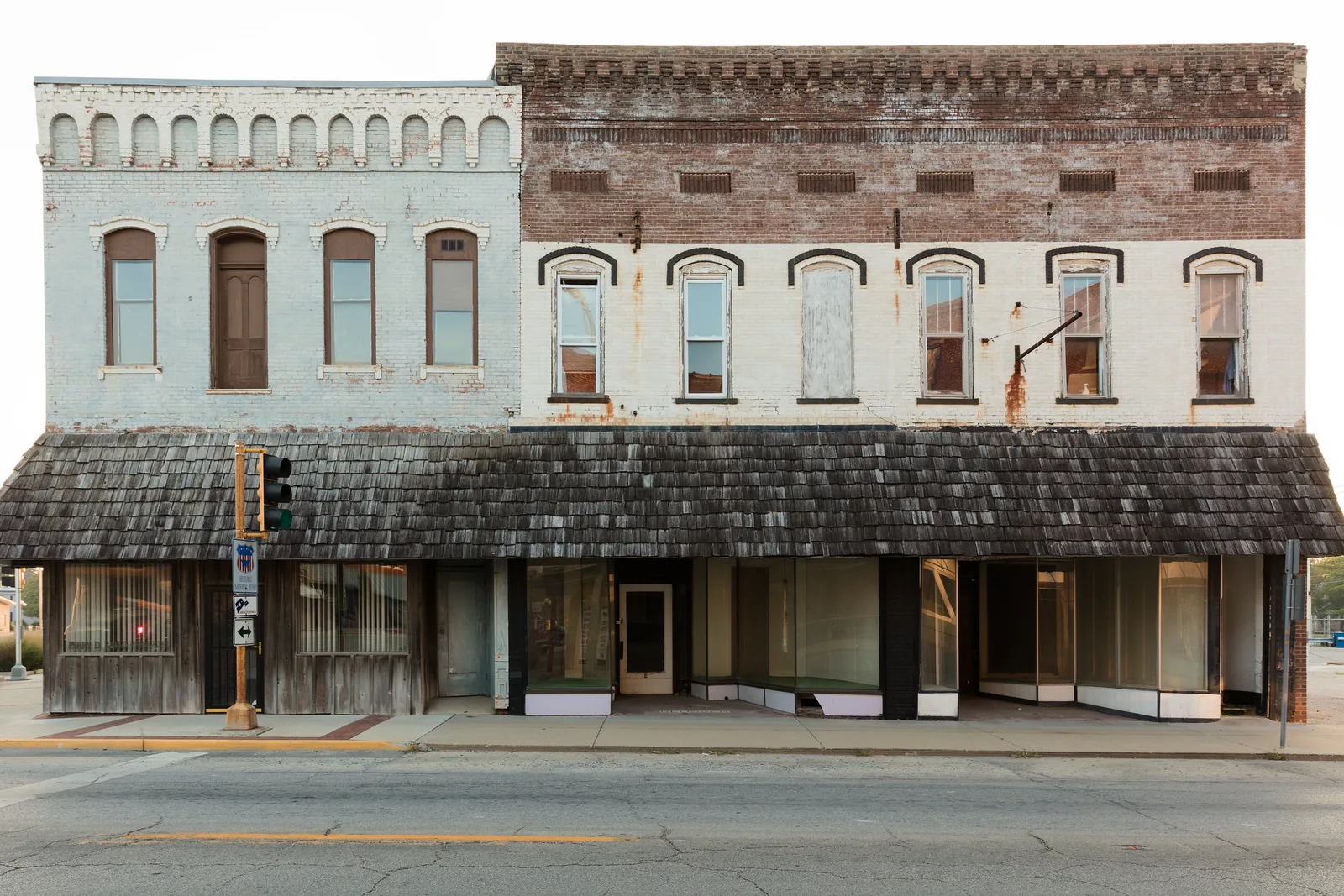
The storefront picture is a good example of a frame you would have to defend. The split facade, the dark awning, the yellow traffic light and the empty ground floor could belong in a series about a street, about work that has left, or about pairs and halves. You should be able to say why you stood square to the building, why you included the light, and whether a closer detail of the windows would help or repeat. If you cannot say those things, you are not yet ready to present the set.
Keep a brief record as you shoot: the idea, the place, and any setting you chose on purpose. You do not need a full diary. You need enough to talk about the work a week later without guessing.
Want the pictures in a set to stay consistent when the light is changing? Manual mode is the tool for holding a look still, once you know what that look should be.
Editing, order and a short defense
Most Grade 11 work is finished in the edit. Shoot more than you will show, then cut hard. A set of six to twelve pictures is often stronger than a set of thirty. The photo culling habit is useful here: decide what the set is about, then drop anything that does not help.
Order is part of the meaning. Try at least two sequences of the same shortlist. Read them as if you were a stranger. If the third picture surprises you in a useful way, keep that order. If the third picture repeats the first, move it or cut it. Sequencing is this work in more detail.
Then write a short defense, in your own words:
- The idea, in one sentence.
- How the order works, in two or three sentences.
- One technical or framing choice you made on purpose, and what it did.
- One picture you almost kept, and why it left.
This is not a performance. It is a way to show that the set is the result of decisions. The page on artist statements will help you keep the writing short. In class, how to critique photography is the other half: you should be able to talk about a classmate’s set with the same care.
Stuck on the order, even when the individual pictures feel strong? Photo sequencing is the practical guide to that last, important edit.
A worked example: one idea, two kinds of frame
Suppose the idea is “things built to last, and what time does to them.” The butte picture could open the set: a landform that has held a shape for a long time, under a sky that will change in an hour. The storefront could sit later in the set: a human version of the same thought, with paint, glass and a light that will also change. Already you can see a possible order: land first, street second. You can also see a risk. If the rest of the pictures are only more distant landscapes and more empty fronts, the idea will stall.
What would the set still need? A close picture of a surface (stone, rust, a worn step). A picture that shows use, or the lack of it, more clearly than the wide storefront. A closing picture that is quieter than the opener, or smaller. You would drop a second wide shot of the same three buttes, even if it was beautiful, because that job is already done. You would also drop a picture of a brand-new building, unless you were making a pointed contrast and the rest of the set supported that contrast.
A defense of that pair might sound like this: “The set is about duration. I opened with the buttes because they make time visible without a person in the frame. I later used the split facade because it shows wear in a place people built. I stood square to the building so the two halves would read as a comparison, and I kept the traffic light because it is a small, present-tense object in a faded street. I cut a closer crop of the buttes because it repeated the opener and lost the row of forms.” That is long enough, and it points at decisions.
Use this as a model, not as a script. Your idea should be yours, and your sentences should sound like you. The structure is what is worth copying: idea, job of the frame, one choice, one cut.
A short glossary
| Term | Plain meaning |
|---|---|
| Coherence | The sense that the pictures belong together and serve one idea. |
| Sequence | The order of the pictures, which can change what the set says. |
| Job of a frame | What that picture is doing in the set: introduce, detail, change, close, and so on. |
| Consistency | A stable look (light, color, distance) unless a change is on purpose. |
| Defense | A short, honest explanation of the idea and the choices, not a sales pitch. |
| Shortlist | The pictures still in play after the first hard cut, before the final order is set. |
Common mistakes
Calling any group of pictures a series. Fix: write the idea, give each frame a job, and cut the ones that repeat a job you already have.
Changing your mind in every frame, so the set feels like five different assignments. Fix: lock the idea, then allow variety in viewpoint and distance, not in the basic aim.
Leaving brightness, color and focus to chance from picture to picture. Fix: look at the set as a whole on one screen. If one frame jumps out for the wrong reason, fix it or drop it.
Defending the work with feelings only, or with borrowed language. Fix: point at the picture. “I kept this because the doorway is dark and the street is still lit” is a defense. “It has a vibe” is not.
Showing too many pictures because you like them all. Fix: set a number before you edit, such as eight, and make the set work at that number. Leftovers can start a second piece.
Skipping the almost-kept picture in your notes. Fix: name it. The reason you dropped it often explains the series better than praise for the pictures you kept.
Try this: eight pictures, one idea, one order
Give yourself one hour, or two shorter sittings. Choose one idea you can shoot close to home. Make more pictures than you need, then sit down with the files.
- Cut to eight pictures, no more.
- Write a job for each one on a slip of paper or in a note.
- Arrange the eight in an order you can explain.
- Remove the weakest picture. Rearrange the seven if the gap shows.
- Write the four-part defense above, including the picture you just removed and why.
If you cannot write the defense without repeating yourself, the set is probably still a pile. Shoot one more targeted picture for the missing job, rather than putting a leftover back in. This is a short version of the Grade 11 assignment, and it is enough to practice the habit.
When you show the set to a classmate, ask them to describe the idea before you explain it. If they describe a different idea, listen before you correct them. Sometimes the pictures are clearer than your sentence, and sometimes they are less clear than you hoped. Either way, you have learned something you could not have learned alone. Then trade roles, and use the same care on their work that you want on yours.
If you have time after the hour, print small copies or make a simple on-screen slideshow in the final order. Seeing the pictures one after another, rather than as a grid, is closer to how an audience will meet them in Grade 12. Notice where you get bored, and where you lean forward. Boredom in the middle of a short set is usually a repeated job, not a personal failing.
Frequently asked questions
How many pictures should a Grade 11 series have?
Enough to carry the idea, and no more. For class work, six to twelve is a common and useful range. A very tight idea may need fewer. If you need twenty pictures to explain the thought, the idea may still be too wide, or the order may not be doing its job.
Do I have to shoot in manual mode?
No, but you do have to be in control of the look. Manual mode is one way to keep exposure consistent. What matters is that differences between frames look intended. If you use an automatic mode, check the set together and correct the frames that break the tone.
What does it mean to defend a photograph?
It means you can say, in plain words, what the picture is doing in the set, and why a choice you made supports that job. You are not arguing that it is the best picture ever made. You are showing that it is there on purpose.
How is this different from Grade 10?
Grade 10 asks a picture, or a very small set, to stand for an idea. Grade 11 asks a longer set to stay coherent, and asks you to explain the choices in public. The idea still matters. The new pressure is structure and consistency. The photography in school hub lists every grade’s lesson plan and student notes in one place.
What should I do if my pictures are strong but do not fit together?
Split them. Make the tight set first. The leftovers may be the start of a second series. Do not glue two ideas together with a vague title. It is better to finish one clear set than to present a mixed folder.
What comes after Grade 11?
Grade 12 asks you to finish a body of work, present it to an audience, and talk about it honestly. The Grade 12 lesson plan is the teacher page for that step. Keep the habit of a short defense. You will need it.
Related guides
- The Grade 11 lesson plan is the teacher-facing companion to these notes.
- The Grade 10 photography notes cover the idea behind the pictures.
- Building a photo story or series, the photo essay guide and photo sequencing are the craft of the set.
- Manual mode and the exposure triangle help you keep a look consistent.
- Artist statements and critique will help you talk about the work.
- Photography project ideas can help if you need a starting point for a series you will actually finish.