Why Most Photographers Plateau
There comes a point in every photographer’s journey where improvement seems to stop. You are producing consistently decent images. You understand your camera. You know the rules of composition. Your editing is competent. And yet, your work from this month looks almost exactly like your work from six months ago. You have hit the plateau, and almost every photographer does.
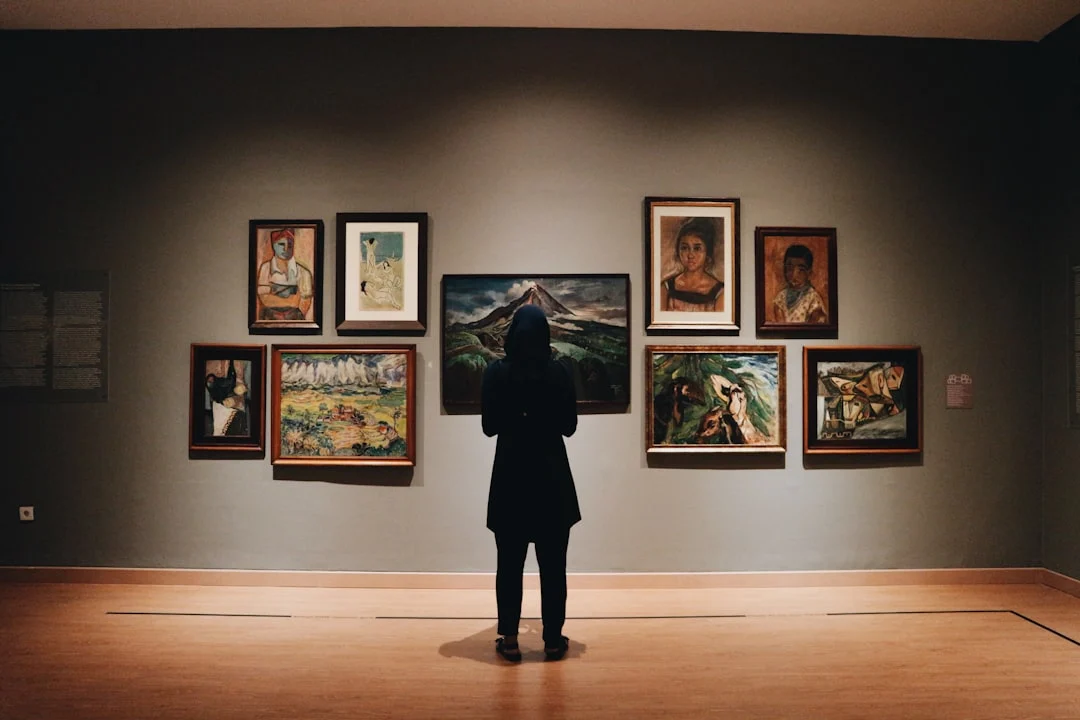
The comfort zone trap is the most common cause. Once you find approaches that work: a favorite focal length, a reliable composition, a go-to processing style: it is natural to repeat them. Why risk failure when you already know how to produce a good image? The problem is that “good” becomes a ceiling. You are not getting worse, but you are not getting better either. Growth requires discomfort. It requires trying things that might not work, photographing subjects that challenge you, and using techniques you have not mastered.
The “likes” problem compounds this. Social media provides instant feedback, but it is the wrong kind of feedback for growth. The images that get the most engagement are not necessarily your best: they are usually the most accessible, the most conventionally attractive, or the ones posted at the right time. Optimizing for likes trains you to repeat what is popular, not what is challenging. It creates an illusion of validation that can mask stagnation. Likes are not mentors. They do not tell you what to improve or what you are missing.
The equipment trap is another plateau enabler. It is easier to buy a new lens than to confront the fact that your composition is predictable or your timing is late. New gear provides a temporary boost: the excitement of a new perspective, a wider aperture, a sharper image. But within a few weeks, the same habits reassert themselves. The new lens captures the same compositions the old one did, just with slightly different rendering. Your camera is not the bottleneck. Your habits are.
Breaking through a plateau requires deliberate practice: the kind of focused, intentional work that targets specific weaknesses, embraces discomfort, and measures progress honestly. It is the opposite of casual shooting. It is showing up with a goal, working on something hard, evaluating the results, and doing it again. For practical frameworks on self-evaluation, see How to Critique Photography.
Learning to See Your Own Work Clearly
Honest self-assessment is the hardest skill in photography. It requires you to look at your own images the way a stranger would: without the emotional attachment of being there, without the memory of how beautiful the light was, without the satisfaction of nailing a difficult technical challenge. The image either works on its own terms, or it does not.
Start with the time gap. Never evaluate your photographs immediately after taking them. The adrenaline of the shoot, the memory of the experience, and the excitement of what you think you captured all cloud your judgment. Wait at least a day, ideally a week. When you return to the images with fresh eyes, your response will be more honest. Images you thought were brilliant may look ordinary. Images you nearly deleted may reveal unexpected strength.
When you do sit down to evaluate, try to look at your images as a stranger would. A stranger does not know what the scene looked like in real life. They do not know that the sunset was breathtaking or that you had to hike three hours to reach the viewpoint. They see only what is in the frame. Does the image communicate something on its own? Does it have a clear subject? Does the composition draw the eye? Is the light interesting? Does it evoke a feeling? These are the questions that matter, and they are the questions that emotional attachment makes hardest to answer.
One of the most common forms of self-deception is “it looked better in person.” If your photograph does not capture what you experienced, that is useful information. It means there is a gap between your vision and your execution. Maybe the composition did not isolate what your eye focused on. Maybe the lens could not capture the dynamic range your eye perceived. Maybe the timing was slightly off. Identifying these gaps is not failure: it is the raw material for improvement. Every “it looked better in person” is a specific skill to work on.
Practice the brutal edit. Go through a set of images and select only the ones that are genuinely strong: not the ones that are almost there, not the ones with sentimental value, not the ones where the light was good but the composition was weak. Be ruthless. If you shot 200 images, your true best might be 5 to 10. This exercise is painful because it forces you to confront how much of your shooting produces mediocre results. That is normal. Even the best photographers have a low hit rate. The difference is that they know it and accept it.
Compare your work to photographers you admire, but do it with honest assessment, not self-flagellation. The point is not to feel bad about the gap between your work and theirs. The point is to identify specific, actionable differences. Do they compose more tightly? Do they wait for better light? Do they process with more restraint? Do they choose more interesting subjects? Each specific observation becomes a target for your practice. Vague admiration: “they are just better”: is useless. Specific analysis: “they always have a clear foreground element, and I usually do not”: is the foundation of improvement.
Identifying Your Patterns
Every photographer develops patterns. Some are strengths to build on. Others are ruts to climb out of. The only way to tell the difference is to look at a large body of your own work and analyze it honestly.
Pull up your last 100 to 200 photographs and look for what repeats. Start with the technical patterns. What aperture do you use most often? Check your metadata. If 80% of your images are shot at f/2.8, you might be defaulting to shallow depth of field regardless of whether it serves the image. What focal length do you reach for? If you always shoot at 50mm, you are missing the perspectives that wider and longer lenses offer. What distance do you shoot from? If every image is taken from the same three to five meters, you are not exploring the visual possibilities of getting closer or farther from your subject.
Next, examine your compositional patterns. Do all your images place the subject in the same part of the frame? Do you always shoot horizontally? Do your landscapes always have the same horizon placement? Do you always shoot from eye level? Compositional patterns become invisible over time because they feel “natural”: but they are not natural, they are habitual. They are the compositions you default to because they are comfortable, not because they are best.
Look at your subject patterns too. What do you always photograph? Sunsets, flowers, pets, buildings? There is nothing wrong with being drawn to certain subjects. But if you always photograph the same things, you are not expanding your range. More importantly, notice what you avoid. Do you never photograph people? Do you avoid indoor spaces? Do you skip anything that requires conversation or permission? The subjects you avoid often point to skills you have not developed: and developing those skills will make all your work stronger, not just the new subjects.
The goal is not to abandon your strengths. If you naturally see composition well but struggle with timing, the answer is not to stop composing carefully. It is to add timing practice to your routine while continuing to build on what you already do well. Expand your range without losing your voice. The best photographers have recognizable styles, but their styles are deliberate, not default. They choose to work the way they do because they have explored the alternatives and know what serves their vision. You can only make that choice if you have honestly assessed what you do and tried what you do not.
Building a Practice Routine
There is a critical difference between shooting and practicing. Shooting is going out with your camera and taking photographs, which is enjoyable and can be productive. Practicing is going out with a specific goal, a targeted skill to work on, and a plan for how to evaluate the results. Shooting is playing a friendly game. Practicing is running drills. Both have value, but only practice produces rapid, targeted improvement.
Targeted exercises are the core of a practice routine. Identify one specific skill you want to improve, and design a session around it. If you want to improve your timing, go to a busy intersection and practice capturing pedestrians at the exact moment their stride creates the most dynamic gesture. If you want to improve your use of light, spend a session photographing a single subject, a cup on a table, for example, in every quality of light throughout the day, from harsh midday sun through diffused clouds to golden hour to lamplight. If you want to improve your composition, do the 10-compositions drill from the previous lesson. The key is that each session has a focus. You are working on one thing, not everything.
Setting constraints is one of the most effective practice strategies. Use one lens for a week. Shoot only in black and white for a month. Photograph only within one block of your home. Use only manual focus. These constraints remove the comfort of your defaults and force you to engage more actively with the remaining variables. A photographer limited to a 35mm lens learns to use their feet. A photographer shooting only in black and white learns to see in tones rather than colors. Constraints create growth precisely because they are uncomfortable.
Give yourself assignments. Not vague ones (“photograph something interesting”) but specific ones with clear deliverables. “Photograph 10 images of hands at work.” “Create a portrait using only window light and a reflector.” “Document the morning routine at a local coffee shop.” Specific assignments force specific decisions, and those decisions build specific skills.
How much practice is enough? Consistency matters more than volume. One focused hour of practice per week is more valuable than an occasional eight-hour marathon. The goal is to build a habit that sustains itself over months and years, not to burn out in a burst of ambition. Start small. Three targeted exercises per week, 30 minutes each. If that feels sustainable, gradually increase. The photographers who improve the most are not the ones who practice the hardest: they are the ones who practice the most consistently.
Giving and Receiving Feedback
Self-assessment has limits. You cannot see your own blind spots, by definition. Other people can. Learning to give and receive photographic feedback is a skill that accelerates your growth in ways that solitary practice cannot.
Finding the right critique partner or group makes an enormous difference. Look for people who take photography seriously, who can articulate their observations clearly, and who will be honest without being cruel. A good critique partner is not someone who says “nice photo” to everything, and not someone who tears your work apart to demonstrate their own knowledge. They are someone who looks at your image, sees what it is trying to do, and helps you understand how well it succeeds and where it falls short.
When you give feedback, be specific, actionable, and kind. “I like the light” is too vague to be useful. “The sidelight on the subject’s face creates a strong sense of dimension, and the way it falls off into shadow on the far cheek adds real depth” is specific and educational. “The background is distracting” is a start, but “the bright sign in the upper-left pulls my eye away from the subject: have you tried cropping it out?” is actionable. Start with what works, move to what could be stronger, and always frame suggestions as possibilities, not commands.
When you receive feedback, the most important skill is listening without defending. Your first instinct will be to explain: “but the light was actually like this” or “I was trying to do something different there.” Resist that instinct. The person giving feedback is telling you what they see in the image, and what they see is valid regardless of your intention. If your intention does not come through in the image, that is information. Listen. Take notes. Ask clarifying questions (“What specifically about the background is distracting?”). Thank the person. Then decide later, in private, which feedback to act on.
Online vs in-person critique each have advantages. Online critique gives you access to a wider range of perspectives and can be done on your own schedule. In-person critique is typically more nuanced and allows for real-time conversation about an image. In-person groups also build community and accountability. If possible, try both.
What about feedback you disagree with? It happens. Not all feedback is correct, and not all of it applies to your vision. If a critic says your image is too dark, but you intentionally created a low-key, moody aesthetic, you do not need to brighten it. But consider whether the feedback points to a genuine communication failure. If your intent is moody and atmospheric but the viewer sees “underexposed,” maybe the execution is not fully conveying the intent. Feedback you disagree with is often the most valuable: not because you should follow it, but because it reveals where your vision and your execution are not yet aligned.
Try This: Self-Critique Exercises
These exercises are designed to build your capacity for honest self-assessment and targeted practice. They may be uncomfortable. That is the point.
The Honest Edit. Open your photo library and go through your last 200 photographs. Select your absolute best 10. Not your favorites: your best. The images that are technically strong, compositionally sound, emotionally compelling, and would hold up if shown to a stranger with no context. Be ruthless. Then, for each of those 10 images, write one sentence explaining why it made the cut. “The light direction creates a natural spotlight on the subject.” “The timing captures a genuine expression mid-laugh.” “The foreground-to-background depth gives the landscape a sense of scale.” This exercise reveals two things: what you are actually good at, and how many of your images do not meet the standard you think they do.
Weakness Drill. Identify one area of photography where you know you are weak. Maybe it is portraits. Maybe it is working in low light. Maybe it is composing with wide-angle lenses. Maybe it is patience: waiting for the right moment instead of snapping too early. Whatever it is, dedicate an entire week to practicing that one thing. Give yourself specific, daily assignments focused on that weakness. At the end of the week, compare your Day 1 images with your Day 7 images. The improvement may not be dramatic, but the discomfort of working in an area of weakness will have expanded your comfort zone in ways that feel permanent. For ongoing project ideas that build sustained practice, see Photography Project Ideas.
Side-by-Side Comparison. Find 5 photographs by photographers you admire: images that represent the kind of work you aspire to create. For each one, find the most similar photograph in your own portfolio. Place them side by side. Now compare them honestly. What specific differences do you see? Is their light more interesting? Is their composition tighter? Is their timing more precise? Is their processing more restrained? Write down the differences, not as self-criticism but as a list of specific skills to develop. Each difference is a direction for future practice. This exercise transforms vague admiration into actionable goals. For guidance on developing the visual identity that these comparisons help you refine, see Develop Your Photography Style.
The path from plateau to progress is not comfortable. It requires looking at your work with unflinching honesty, admitting that your habits might be holding you back, and committing to the kind of focused practice that produces real change. But it works. Every photographer who has grown past a plateau has done it the same way: by evaluating honestly, practicing deliberately, and showing up consistently. You know how to use your camera. You understand the principles. Now the work is developing the judgment, the eye, and the discipline that turn knowledge into mastery. That work never finishes, and that is the best part. There is always more to see, more to learn, and more to create.