Visual weight is the perceived heaviness or importance of an element within a photograph. Some elements naturally draw the eye more than others, appearing to “weigh more” in the composition even though they occupy the same physical space. Understanding visual weight allows you to create balanced, intentional compositions where the viewer’s eye moves through the image exactly as you intend. Without this understanding, compositions can feel randomly assembled, with the viewer’s attention pulled in unintended directions by elements that carry more visual weight than you realized.
What Creates Visual Weight
Multiple factors contribute to the visual weight of an element. Size is the most obvious: larger elements carry more weight than smaller ones. But size is only one factor among many, and sometimes smaller elements outweigh larger ones because of other characteristics. Color, brightness, contrast, texture, isolation, sharpness, and human recognition all influence how heavy an element feels within the frame. A small red object against a vast green background may carry as much visual weight as the background itself because of the intensity of its color contrast.
Size and Scale
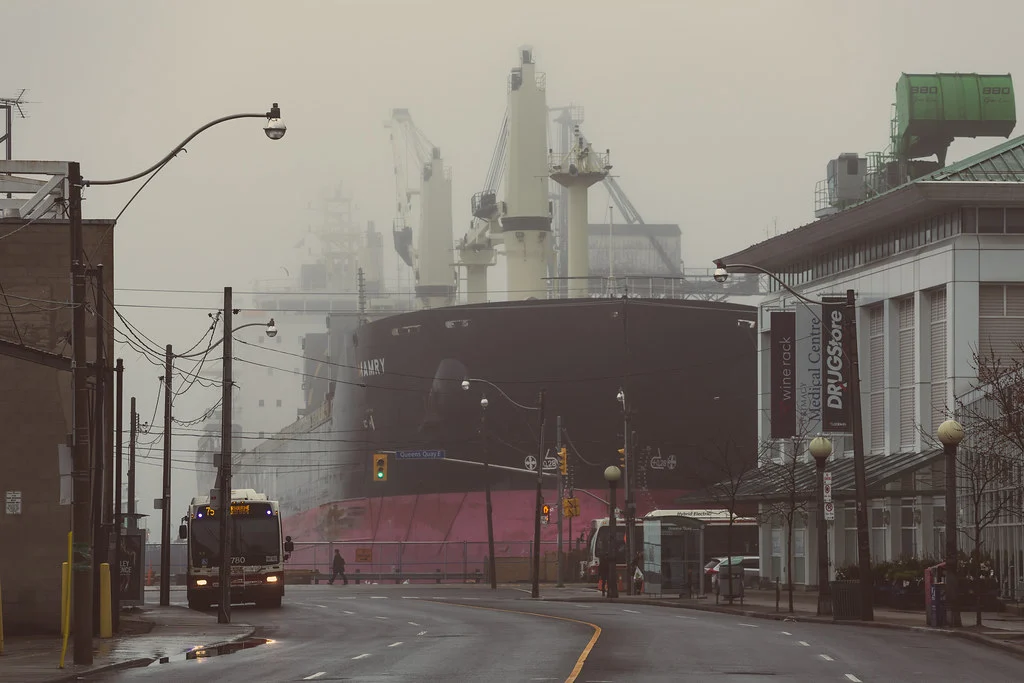
Larger elements dominate the frame and carry more visual weight. This is intuitive and straightforward. A mountain filling half the frame carries more weight than a small tree at its base. However, the relationship between size and weight is not purely proportional. A very large element can feel less weighty if it is uniform in tone and texture (like a clear sky) while a much smaller element with high contrast and detail (like a lone figure) commands disproportionate attention. Size establishes the basic hierarchy, but other factors modify it significantly.
Brightness and Contrast
Bright elements attract the eye more than dark elements in most contexts. A bright highlight against a dark background carries tremendous visual weight because the contrast makes it impossible to ignore. This is why a single lit window in a dark building facade becomes the focal point of the image. The human visual system is wired to notice the brightest point in the field of view first, which is an evolutionary adaptation for detecting changes in the environment. Conversely, in a predominantly bright scene, a single dark element becomes the visual anchor. The principle is contrast, not absolute brightness. Whatever differs most from its surroundings in terms of tonal value carries the most visual weight.
Color
Warm colors (red, orange, yellow) tend to advance visually and carry more weight than cool colors (blue, green, purple). A small red element can balance a much larger blue area because of the inherent visual aggressiveness of warm tones. Saturated colors carry more weight than desaturated or muted colors. A single vivid flower in a field of muted gray-green vegetation becomes the undeniable focal point regardless of its small size. The interplay between color temperature and saturation creates complex weight relationships that sophisticated photographers use to guide the viewer’s eye through carefully constructed color palettes.
Texture and Detail
Areas with more texture, detail, or pattern carry more visual weight than smooth, featureless areas. A rough, weathered surface holds the eye longer than a smooth one because there is more visual information to process. This is why detailed foreground subjects in landscape photography feel weighty and grounded while smooth, soft backgrounds recede. The difference in texture between sharp in-focus areas and blurred out-of-focus areas is itself a weight relationship: sharp areas demand attention while blur signals “less important” to the viewer’s brain.
Position in the Frame
An element’s position within the frame affects its perceived weight. Elements near the edges of the frame feel heavier than elements near the center because they create tension with the frame boundary. Elements in the upper portion of the frame can feel heavier than those at the bottom because we perceive them as resisting gravity. Elements at the intersection points defined by the rule of thirds carry more weight than elements positioned randomly elsewhere. Even empty space has weight: a large area of negative space on one side of the frame creates a void that balances a smaller, heavier element on the other side.
Isolation
A lone element surrounded by empty space carries more visual weight than the same element within a crowd of similar objects. Isolation creates emphasis. A single tree on a hilltop commands more attention than one tree among hundreds in a forest. This principle is why minimalist compositions are so effective: by isolating the subject and removing competing elements, the subject’s visual weight becomes overwhelming, creating images of remarkable clarity and impact.
Human Recognition
The human brain assigns extraordinary weight to faces, eyes, and human figures. Even a tiny person in a vast landscape becomes a focal point because our visual system is hardwired to detect and prioritize human presence. Eye contact carries the most weight of all. A subject looking directly at the camera creates an almost irresistible pull on the viewer’s attention. This biological bias means that including even a small human element in a composition instantly shifts the weight distribution of the entire image. Photographers use this deliberately, placing small figures in large landscapes to create both a sense of scale and a focal point.
Visual Weight and Balance
Balance in composition is achieved when the visual weights of all elements in the frame feel distributed in an intentional, satisfying way. There are two fundamental approaches to balance: symmetrical and asymmetrical. Symmetrical balance distributes weight equally on both sides of a central axis. Asymmetrical balance uses elements of different visual weights positioned at different distances from the center to create equilibrium, much like a seesaw where a heavy person sits close to the fulcrum and a lighter person sits farther away.
Asymmetrical balance is more common and more dynamic in photography. A large, muted building on one side of the frame can be balanced by a small, brightly colored figure on the other side. The building has weight from its size; the figure has weight from its color, contrast, and human recognition value. The composition feels balanced even though the elements are completely different in nature and size. This kind of intuitive balancing is what separates sophisticated compositions from snapshots that feel randomly framed.
Intentional imbalance is also a valid compositional strategy. A composition heavily weighted to one side creates tension and unease that can be appropriate for certain subjects and moods. A figure at the very edge of the frame with vast empty space beside them suggests isolation, vulnerability, or impending departure. The “wrong” balance creates emotional resonance that perfect balance cannot achieve. Understanding visual weight means knowing how to create balance and knowing when to break it for effect.
Visual Weight in Practice
Landscape Photography
In landscapes, visual weight helps you balance foreground and background elements. A detailed, textured rock in the foreground can balance a distant mountain that occupies much more of the frame. The rock’s proximity, texture, and contrast give it enough visual weight to anchor the composition without being larger than the mountain. Landscape photographers often seek out strong foreground elements precisely because they provide the visual weight needed to balance the grandeur of the distant scene.
Portrait Photography
In portraits, the subject’s face and especially their eyes carry the most visual weight. Compositional decisions about placement, background, and lighting should support this natural weight hierarchy. A cluttered, detailed background competes for visual weight with the subject’s face. A simple, blurred background surrenders all its weight to the subject, which is why shallow depth of field is so popular for portraits. The direction of the subject’s gaze also creates visual weight in the direction they are looking, which influences how you position the subject within the frame. Leaving space in the direction of the gaze feels natural, as the gaze pulls visual weight into that space.
Street Photography
Street photography presents complex visual weight challenges because urban scenes contain many competing elements: signs, vehicles, buildings, people, reflections, and shadows. The skilled street photographer learns to identify the element with the most visual weight and compose around it, using framing, timing, and perspective to simplify the weight distribution. Waiting for a brightly dressed person to walk into a specific position within a geometrically interesting setting, for example, allows you to create a composition where the human figure’s visual weight is supported and amplified by the environment rather than competing with it.
Controlling Visual Weight
You can increase or decrease the visual weight of an element through several photographic techniques. Using shallow depth of field reduces the weight of background elements by removing their texture and detail. Exposing to make an area brighter increases its weight, while letting it fall into shadow decreases it. Dodging and burning in post-processing give you fine control over brightness-based weight adjustments. Cropping can change the relative size and position of elements, fundamentally altering the weight distribution of the composition.
Color adjustments in post-processing also modify visual weight. Desaturating a distracting background element reduces its weight without changing its brightness. Increasing the saturation of your main subject increases its weight. Converting to black and white eliminates color-based weight entirely, leaving only tonal, textural, and size-based weight relationships. This is one reason black and white photography feels fundamentally different from color: the weight hierarchy is determined by completely different factors.
Training Your Eye for Visual Weight
Start by looking at photographs you admire and asking: where does my eye go first? What element draws my attention? Then ask why. Is it the brightest element? The most colorful? The most detailed? The only human figure? The sharpest area? Understanding why your eye goes where it does reveals the visual weight relationships at work in the image. Do this analysis regularly with a wide range of photographs and you will develop an instinctive awareness of visual weight that informs your own composition in real time.
When composing your own images, pause before pressing the shutter and scan the entire frame. Identify the heaviest element. Is it your intended subject? If not, can you change your position, aperture, or framing to shift weight toward the subject? Are there distracting elements that carry unintended weight? Can you eliminate them by moving, zooming, or waiting? This brief moment of analysis before shooting prevents many compositional mistakes and gradually builds the habit of seeing visual weight instinctively as you look through the viewfinder.
Visual weight is not a rigid system with mathematical rules. It is a perceptual phenomenon that varies somewhat between viewers and cultures. But the general principles of brightness, color, size, texture, isolation, and human recognition apply universally. Internalizing these principles gives you a vocabulary for understanding why some compositions work and others do not, and a toolkit for creating compositions that guide the viewer’s eye with precision and intention.
Visual Weight and Movement
Movement within the frame, whether actual or implied, carries visual weight. A blurred figure in motion draws attention because it differs from the static elements around it. A subject looking or moving in a specific direction creates visual weight in that direction, pulling the viewer’s eye forward. This directional weight is why photographers leave “lead room” in front of moving subjects, the space into which the subject is moving absorbs the directional weight and prevents the composition from feeling cramped. An athlete running toward the right edge of the frame with no space ahead feels like they are about to exit the image, creating uncomfortable tension that pulls the viewer’s attention out of the frame rather than keeping it within. The same athlete with space ahead feels dynamic and purposeful because the composition accommodates the direction of movement and the visual weight it carries. Even in still photographs of stationary subjects, implied movement through body language, gesture, or gaze direction creates directional visual weight that influences how the composition is perceived. A dancer frozen mid-leap, a horse rearing up, or a person leaning forward all carry implied movement that adds directional weight to one side of the frame.
Visual Weight in Black and White Photography
Converting to black and white fundamentally changes the visual weight distribution in an image. Without color, all weight must be communicated through tonal contrast, texture, size, position, and human recognition. A vivid red element that dominated the color version may become a medium gray that carries far less weight in monochrome. Conversely, a subtle tonal contrast between light and dark areas may become the dominant weight relationship when color is removed. This is why black and white conversion can dramatically change which element dominates a composition. Photographers who work regularly in monochrome develop a separate visual weight awareness that accounts for tonal relationships rather than color relationships, learning to see the world as a pattern of light and dark values where weight is determined entirely by contrast, form, and luminance rather than hue and saturation. This tonal thinking is a valuable skill that improves composition in color photography as well, because it forces you to consider the structural foundations of your image beneath the surface layer of color.
Negative Space and Visual Weight
Negative space, the empty or featureless areas of an image, plays a crucial role in visual weight. Large areas of negative space carry relatively little weight themselves but serve to amplify the weight of the positive elements they surround. A small bird against a vast empty sky carries enormous visual weight precisely because of the contrast between the detailed subject and the featureless space around it. The negative space acts as a stage that focuses all attention on the subject. However, negative space is not weightless. Its position relative to the subject creates directional pull. Heavy negative space on one side of the frame can create a sense of imbalance or tension that has its own compositional significance. A subject pressed against one edge with vast empty space opposite it feels very different from a subject centered in the frame with equal negative space on all sides. The former creates dramatic tension while the latter creates stability. Manipulating the relationship between subject weight and negative space placement is one of the most powerful compositional tools available, enabling you to control not just where the viewer looks but how they feel about what they see.
Depth and Layered Visual Weight
In photographs with multiple depth layers, foreground, middle ground, and background, visual weight creates a hierarchy that establishes spatial relationships and guides the viewer through the scene. Typically, foreground elements carry the most weight due to their size and proximity, but this can be altered through focus, brightness, and color. A sharp, brightly lit background element can outweigh a large but dark, blurred foreground element. Landscape photographers frequently create compositions where visual weight is distributed across multiple layers: a textured foreground rock leading to a midground stream leading to a background mountain. Each layer carries enough weight to hold attention briefly before the eye moves to the next, creating a visual journey from near to far that builds a sense of depth and immersion. The relative weight of each layer determines the pacing of this journey. A heavy foreground anchors the eye before releasing it to explore the middle and background. A heavy background pulls the eye quickly to the distance, making the journey faster and more directed. Balancing weight across layers creates compositions that feel dimensional and explorable, rewarding prolonged viewing with discoveries at each depth level.
Cultural and Contextual Weight
Some elements carry visual weight because of their cultural or emotional significance rather than their physical characteristics. A national flag, a religious symbol, a familiar brand logo, or a recognizable face all carry weight that transcends their visual properties. A small flag in the corner of a frame can pull attention away from much larger, more visually prominent elements because of its cultural significance to the viewer. This contextual weight varies between audiences. A symbol that is instantly recognizable in one culture may carry no special weight in another. Photographers working for specific audiences can leverage these cultural associations to create compositions where meaning and visual weight reinforce each other. Understanding that visual weight is not purely a formal, visual phenomenon but also includes layers of cultural and emotional meaning adds depth to your compositional decision-making and helps you create images that communicate effectively with your intended audience.