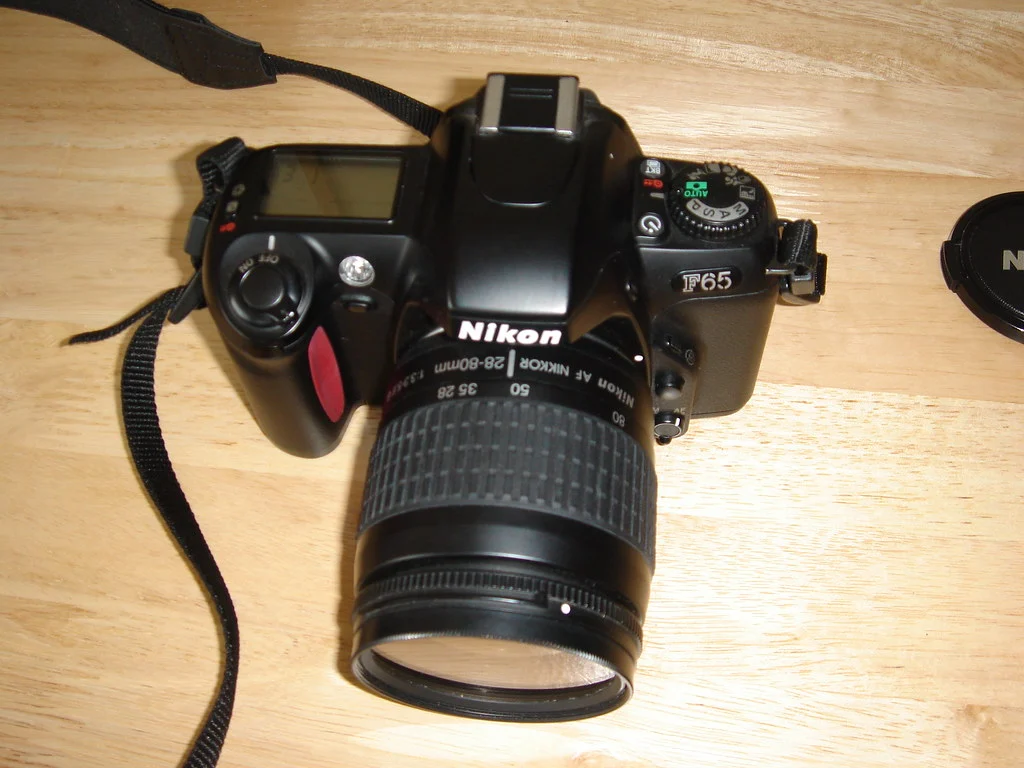
To find the full-frame equivalent of a lens, multiply its focal length by the crop factor of the camera: 1.5 or 1.6 for APS-C, 2 for Micro Four Thirds, 2.7 for a 1-inch sensor. A 50mm lens on a 1.5x APS-C camera frames the scene the way a 75mm lens does on full frame. Enter a focal length and a sensor below for the equivalent, the angle of view, and the lens you would need to match a full-frame view.
Crop Factor Calculator
Results
Sensor Size Comparison (to scale)
Wondering what else changes between formats besides the field of view? Full frame vs crop sensor covers depth of field, noise and how lens equivalents shift.
Want to see what a longer equivalent lens does to a scene? Lens compression shows why distance, not the lens, does the work.
Equivalent focal length chart: crop sensor to full frame
Each cell is the focal length in the left column multiplied by the crop factor, rounded to the nearest millimeter. It is the full-frame lens that gives the same framing from the same spot.
| Lens | APS-C 1.5x | APS-C 1.6x | Micro Four Thirds 2x | 1-inch 2.7x |
|---|---|---|---|---|
| 10mm | 15mm | 16mm | 20mm | 27mm |
| 12mm | 18mm | 19mm | 24mm | 32mm |
| 16mm | 24mm | 26mm | 32mm | 43mm |
| 18mm | 27mm | 29mm | 36mm | 49mm |
| 24mm | 36mm | 38mm | 48mm | 65mm |
| 35mm | 53mm | 56mm | 70mm | 95mm |
| 50mm | 75mm | 80mm | 100mm | 135mm |
| 85mm | 128mm | 136mm | 170mm | 230mm |
| 100mm | 150mm | 160mm | 200mm | 270mm |
| 200mm | 300mm | 320mm | 400mm | 540mm |
| 300mm | 450mm | 480mm | 600mm | 810mm |
| 400mm | 600mm | 640mm | 800mm | 1080mm |
Full frame to crop sensor: which lens gives the same view
Going the other way, divide by the crop factor. This is the sum to do when a guide written for full frame names a focal length and your camera has a smaller sensor. Lenses are not made at every focal length, so pick the nearest one on sale.
| Full-frame view | APS-C 1.5x | APS-C 1.6x | Micro Four Thirds 2x | 1-inch 2.7x |
|---|---|---|---|---|
| 16mm | 11mm | 10mm | 8mm | 6mm |
| 24mm | 16mm | 15mm | 12mm | 9mm |
| 35mm | 23mm | 22mm | 18mm | 13mm |
| 50mm | 33mm | 31mm | 25mm | 19mm |
| 85mm | 57mm | 53mm | 43mm | 31mm |
| 135mm | 90mm | 84mm | 68mm | 50mm |
| 200mm | 133mm | 125mm | 100mm | 74mm |
| 400mm | 267mm | 250mm | 200mm | 148mm |
Crop factors by sensor format
| Format | Sensor size | Diagonal | Crop factor |
|---|---|---|---|
| Medium format (digital) | 43.8 x 32.9mm | 54.8mm | 0.79 |
| Full frame | 36 x 24mm | 43.3mm | 1.00 |
| APS-C | 23.5 x 15.6mm | 28.2mm | 1.53 |
| APS-C (smaller version) | 22.2 x 14.8mm | 26.7mm | 1.62 |
| Micro Four Thirds | 17.3 x 13mm | 21.6mm | 2.00 |
| 1-inch | 13.2 x 8.8mm | 15.9mm | 2.73 |
APS-C comes in two sizes because one maker's sensors are slightly smaller than everyone else's. Your camera's manual or specification page gives the sensor size in millimeters. Phones and compact cameras usually state the equivalent focal length directly, so a phone lens described as 24mm is already converted.
Working out a crop factor yourself
Crop factor is the diagonal of a full-frame sensor, 43.3mm, divided by the diagonal of yours. For a sensor 23.5mm wide and 15.6mm high the diagonal is the square root of 23.5 squared plus 15.6 squared, which is 28.2mm, and 43.3 divided by 28.2 is 1.53, rounded to 1.5 in everyday use.
The diagonal is a compromise when the shapes differ. Micro Four Thirds sensors are 4:3 and full frame is 3:2, so the 2x figure is exact on the diagonal, a little more than 2 across the width and a little less across the height.
What crop factor changes and what it does not
The focal length printed on a lens is a physical property of the glass, and it is the same number whichever camera the lens is on. A smaller sensor records only the middle of the image the lens projects, so the view is narrower, as if you had cropped a full-frame picture. Nothing is magnified.
- Changes: the field of view, and so the framing from a given spot.
- Does not change: the focal length, the f-number, the exposure, the closest focusing distance or the lens's distortion. An f/1.8 lens gives the same shutter speed at the same ISO on any sensor.
- Changes indirectly: depth of field and noise, covered next.
Lenses built only for crop sensor cameras are still labelled with their real focal length, so they need converting too. An 18 to 55mm lens made for APS-C frames like 27 to 83mm on full frame.
Depth of field and equivalent aperture
To frame a subject the same way on a smaller sensor you use a shorter lens or stand farther back, and either one gives more depth of field at the same f-number. The size of the difference is the crop factor again: multiply the f-number by it to get the full-frame aperture with the same depth of field.
So a 56mm lens at f/1.2 on a 1.5x camera frames and blurs like an 85mm lens at f/1.8 on full frame, and a 25mm lens at f/1.4 on Micro Four Thirds frames and blurs like a 50mm lens at f/2.8. The exposure is not converted. Only the look of the background is.
Noise follows the same pattern. A smaller sensor collects less light in total at the same exposure, so at the same ISO its pictures are noisier by roughly the square of the crop factor, about one stop for APS-C and two stops for Micro Four Thirds.
Want to see it in numbers? The depth of field calculator gives the sharp zone for any focal length, aperture and distance.
Want to watch it happen to a photo? The camera simulator has a Camera setting that switches the same scene between full frame, APS-C, Micro Four Thirds and a phone sensor.
Reach: where a smaller sensor helps
For wildlife, birds and field sports the narrower view is a gain. A 300mm lens frames like 450mm on APS-C and 600mm on Micro Four Thirds, in a lens that is far smaller and lighter than a full-frame lens with that view. The price is the extra noise described above, which matters most in poor light.
Need more reach than your longest lens? Teleconverters explains what a 1.4x or 2x costs you in light and sharpness.
Wide angles: where it costs
The same arithmetic works against you at the wide end. A 16mm lens on a 1.5x camera frames like 24mm, which is wide but not dramatic. To get the view of a 16mm full-frame lens you need about 11mm on APS-C or 8mm on Micro Four Thirds, and lenses that short are specialized.
Just bought a wide lens? How to use a wide-angle lens covers getting close, keeping lines straight and filling the foreground.
Common mistakes
- Converting twice. A phone or compact that lists a "24mm equivalent" lens has already been converted. Multiply only real focal lengths.
- Converting the exposure. The equivalent aperture describes depth of field. Set the exposure from the f-number on the lens.
- Expecting a crop lens to be exempt. A lens designed for APS-C still carries its real focal length and still needs multiplying.
- Thinking the lens got longer. A 200mm lens on a crop sensor shows the view of a 300mm lens, with the perspective and background blur of a 200mm lens cropped.
- Comparing formats on focal length alone. Two cameras match only when the framing, the depth of field and the noise are all converted.
Try this
Ten minutes with any zoom lens. Find a photograph you like whose focal length is given in full-frame terms, such as a portrait made at 85mm. Divide by your camera's crop factor, set the zoom to that number, and frame a similar subject from a similar distance. Then set the zoom to the original number without moving and compare how much tighter the frame is. That difference is the crop factor, seen once and remembered.
Frequently asked questions
What is a 50mm lens on a crop sensor?
It frames like a 75mm lens on a 1.5x APS-C camera, 80mm on a 1.6x APS-C camera and 100mm on Micro Four Thirds. On APS-C that makes a 50mm lens a short portrait lens, not the general purpose lens it is on full frame.
What is the crop factor of APS-C?
1.5 for most APS-C cameras, whose sensors are about 23.5 by 15.6mm, and 1.6 for the slightly smaller 22.2 by 14.8mm version. If you do not know which you have, look up the sensor size in the camera's specifications.
What lens on APS-C equals 50mm on full frame?
About 33mm on a 1.5x camera and 31mm on a 1.6x camera, so a 35mm lens is the usual choice. On Micro Four Thirds it is 25mm.
Does crop factor change the aperture?
Not for exposure. An f/2.8 lens is f/2.8 on every sensor when you are working out shutter speed and ISO. For depth of field, multiply the f-number by the crop factor to find the full-frame aperture that would blur the background the same amount.
What is the crop factor of medium format and of small sensors?
Digital medium format at 44 by 33mm is 0.79, so lenses frame wider than their focal length suggests. Film formats are larger still: 645 is about 0.62 and 6x6 about 0.55. At the other end, the 1/2.3-inch sensors in many compact cameras are about 5.6.
Still deciding on a format? Camera sensor sizes explained lays out what each size gains and gives up, and 35mm vs 50mm vs 85mm compares how the classic primes frame a scene.