Telephoto lenses let you reach across distances that your feet cannot cover. Whether you are photographing a bird perched in a distant tree, an athlete sprinting down a field, or a mountain range compressed into dramatic layers, telephoto photography opens up an entirely different way of seeing the world.
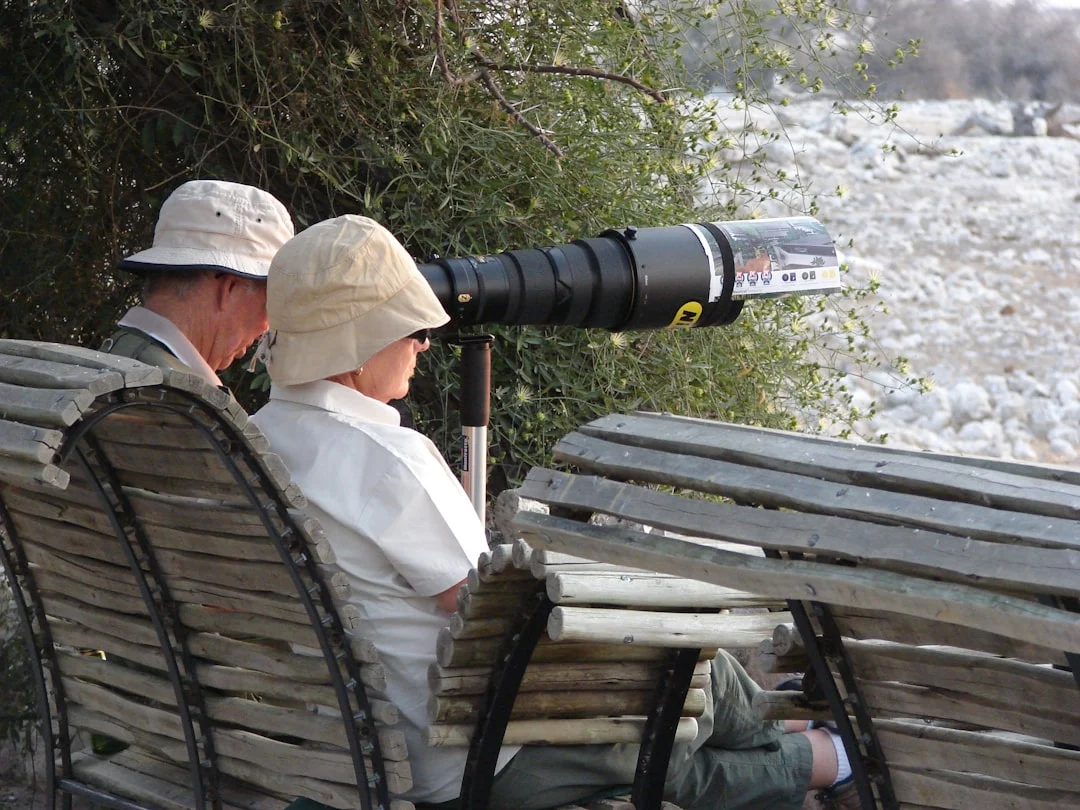
But telephoto lenses also introduce unique challenges. They amplify camera shake, narrow your field of view, and demand different techniques than the standard or wide-angle lenses most photographers learn on. The photographers who get the most out of their telephoto glass are the ones who understand both its creative potential and its technical demands.
This guide covers everything from the physics of telephoto compression to the practical techniques that produce sharp, compelling images at long focal lengths. Whether you own a 70-200mm or dream of shooting with a 600mm, these principles apply across the entire telephoto range.
What Counts as a Telephoto Lens?
In photography, any lens with a Focal Length longer than approximately 70mm (on a full-frame camera) is generally considered telephoto. The category breaks down into three rough groups:
- Short telephoto (70-135mm): Ideal for portraits, events, and moderate reach. The classic 70-200mm zoom covers this range along with the medium telephoto range.
- Medium telephoto (135-300mm): Useful for sports from closer positions, wildlife in accessible areas, and compressed landscapes.
- Super telephoto (300mm+): Required for birds, distant wildlife, and most professional sports photography. These lenses are large, heavy, and expensive.
On a Crop Factor sensor camera, multiply the focal length by your crop factor (typically 1.5x for APS-C) to get the equivalent field of view. A 200mm lens on an APS-C body delivers the field of view of a 300mm on full frame, which is one reason crop sensor cameras are popular with wildlife and sports photographers.
The Compression Effect
Telephoto compression is perhaps the most powerful creative tool these lenses offer. When you photograph a scene from far away with a long lens, the relative distances between objects appear compressed. Mountains that are miles apart look stacked directly behind one another. Cars on a distant road appear bumper-to-bumper even if they are well-spaced. People walking on a faraway sidewalk look packed together.
This compression is not actually caused by the lens. It is caused by your distance from the subject. If you stood in the same spot and cropped a wide-angle image to match the telephoto framing, you would see the same compression. But because telephoto lenses make it practical to shoot from a distance, they are the tool that unlocks this perspective.
Landscape photographers use telephoto compression to stack layers of hills, pull a distant sunset closer to a foreground element, or isolate a single peak from a mountain range. Portrait photographers use short telephotos to flatten facial features flatteringly. Street photographers can compress a busy sidewalk into a dense wall of humanity. Understanding this effect is essential for getting the most from your telephoto. For more on perspective in composition, see our guide to Photography Composition.
Shallow Depth of Field at Long Focal Lengths
Telephoto lenses produce significantly shallower Depth Of Field than shorter lenses at the same aperture and framing. A 200mm lens at f/2.8 focused on a subject ten feet away produces razor-thin focus, with the background dissolving into a completely abstract wash of color and light.
This makes telephotos excellent tools for subject isolation. In busy environments, a long lens can separate your subject from a cluttered background far more effectively than a standard lens. Wildlife photographers rely on this to make an animal stand out from dense foliage. Portrait photographers use it to eliminate distracting backgrounds in outdoor settings. Learn more about controlling background blur in our guide to Bokeh.
The trade-off is that achieving deep focus across an entire scene requires stopping down to smaller apertures (f/8, f/11, or beyond), which demands more light or slower shutter speeds. At extremely long focal lengths, even f/11 may not provide front-to-back sharpness across a landscape. This is part of the creative character of telephoto photography.
Telephoto Applications by Genre
Wildlife Photography
Wildlife Photography is where super telephoto lenses truly earn their keep. Most wild animals maintain a flight distance that keeps them far from human approach. A 400mm or 600mm lens bridges that gap, letting you fill the frame with a bird, deer, or predator while maintaining a respectful and safe distance. On a crop sensor body, a 400mm lens delivers the equivalent reach of 600mm, making crop sensor cameras popular in this genre.
Sports Photography
Professional sports photographers typically work with 70-200mm f/2.8 and 400mm f/2.8 lenses. The fast apertures (f/2.8) enable high shutter speeds in stadium lighting, while the focal lengths reach across courts, fields, and tracks. For amateur sports photography, a 70-300mm or 100-400mm zoom provides more reach at a more accessible price point. Fast, accurate Autofocus and continuous shooting modes are essential for tracking moving athletes.
Landscape Photography
While Landscape Photography is commonly associated with wide-angle lenses, telephotos reveal a different kind of landscape beauty. They isolate individual peaks, compress layers of hills into graphic patterns, and pull distant elements like the moon or sun into dramatic proximity with foreground features. A 70-200mm lens is perhaps the most underrated landscape tool, and many professional landscape photographers list it as their most-used lens.
Portrait Photography
Short telephoto lenses (85-135mm) are considered the ideal Portrait Photography range for good reason. The compression flattens facial features in a flattering way, and the working distance (six to twelve feet) is comfortable for both photographer and subject. The shallow depth of field at these focal lengths separates the subject from the background beautifully.
Handholding Technique for Telephoto Lenses
Camera shake is magnified at longer focal lengths. A tiny vibration that is invisible at 35mm becomes a visible blur at 200mm. The traditional rule of thumb for minimum handheld Shutter Speed is 1/(effective focal length). For a 200mm lens on a full-frame camera, that means at least 1/200s. On a crop sensor body, a 200mm lens has an effective focal length of 300mm, so you need 1/300s or faster.
Modern Image Stabilization systems (called VR, IS, OIS, or OS depending on the manufacturer) can compensate for several stops of camera shake. A lens with 4-stop stabilization on a 200mm lens might let you handhold at 1/15s in ideal conditions. But for moving subjects, you still need fast shutter speeds to freeze motion regardless of stabilization. Stabilization helps with camera shake, not subject motion.
Proper handholding technique is critical. Tuck your elbows into your body. Support the lens from below with your left hand rather than gripping it from the side. Brace yourself against a wall, tree, or railing when possible. Exhale gently and press the shutter during a natural pause in your breathing. At very long focal lengths (300mm+), even your heartbeat can cause vibration.
Still seeing soft frames at long focal lengths? Camera shake explains how to tell shake from missed focus and subject motion, and how grip, stance and breathing change your handheld limit.
Tripods, Monopods, and Support
For serious telephoto work, a tripod or monopod is often essential. A tripod provides maximum stability for landscape, astro, and controlled portrait work. Use a gimbal head for large telephoto lenses, as it allows smooth panning while supporting the heavy weight. Ball heads can work with lighter telephotos (up to 70-200mm) but struggle with the leverage of longer, heavier glass.
A monopod is the preferred support for sports and wildlife photographers who need to move quickly. It eliminates vertical shake while still allowing rapid repositioning. Many professionals use a monopod with a foot on the lens to create a two-point support system. This is particularly effective at shutter speeds between 1/30s and 1/250s where the monopod provides just enough stability.
Mounting a heavy lens on a tripod? Using a tripod with a big zoom lens covers mounting at the lens collar, choosing and setting up a head, and cutting vibration.
Common Mistakes
- Using too slow a shutter speed. This is the number one telephoto mistake. Remember the 1/focal length rule and account for crop factor. When in doubt, use a faster shutter speed than you think you need.
- Ignoring atmospheric interference. At very long distances, heat shimmer, haze, and air turbulence degrade image quality. Shooting earlier in the morning before the ground heats up produces sharper results. There is nothing your lens or technique can do about atmospheric distortion.
- Fighting the shallow depth of field. Instead of stopping down to f/16 and battling Diffraction, embrace the shallow depth of field. Use it creatively to separate your subject from the environment.
- Handholding when a support would help. Pride should not prevent you from using a monopod or tripod. Even experienced photographers produce sharper images with support at focal lengths above 200mm.
- Neglecting autofocus settings. Telephoto shooting, especially for sports and wildlife, demands continuous autofocus with tracking. Single-shot AF will fail when subjects are moving. Read our guide to Autofocus for proper configuration.
- Forgetting about minimum focus distance. Long telephoto lenses often cannot focus closer than several feet. If you need close-up work, switch to a shorter lens or use extension tubes.
Want to get closer than your lens allows? Macro without a macro lens covers extension tubes, close-up filters and reversing a lens, and what each one costs you.
Try This
- Compression landscape. Find a scene with multiple layers of depth (hills, buildings, trees at varying distances). Photograph it with the longest focal length you have, composing to stack the layers. Notice how the telephoto eliminates the sense of space between them.
- Shutter speed ladder. With a telephoto lens (100mm+), photograph a static subject at progressively slower shutter speeds: 1/500, 1/250, 1/125, 1/60, 1/30, 1/15. Review at 100% magnification to find your personal handholding limit.
- Background isolation portraits. Photograph a person with a telephoto at its widest aperture. Vary the background distance: first with the subject near a wall, then with the background 20 feet behind, then 50 feet. Study how background distance affects the quality of the blur.
- Moon and foreground. Use a telephoto (200mm+) to photograph the full moon alongside a landmark like a building, tree, or mountain. The telephoto will make the moon appear much larger relative to the foreground object, creating a dramatic, compressed scene.
Want the moon to look big beside a landmark? How to photograph the moon covers settings for close-up shots and for moon-in-landscape scenes, including how to make the moon look larger.
Understanding Heat Shimmer and Atmospheric Conditions
One of the least discussed challenges of telephoto photography is atmospheric interference. When you photograph through long distances of air, heat rising from the ground creates visible distortion called heat shimmer or heat haze. This causes wavy, unsharp images regardless of how perfect your focus and technique are. The effect is strongest on hot, sunny days when the ground radiates heat into the air above it.
To minimize atmospheric distortion, shoot earlier in the morning before the ground has absorbed significant solar energy. Overcast days produce less shimmer than sunny ones. Shooting over water or shade produces less shimmer than shooting over asphalt or sand. At very long distances (hundreds of yards or more), even ideal conditions may produce some visible atmospheric softening. This is a fundamental physical limitation that no lens quality or camera setting can overcome.
Telephoto Lenses for Creative Effect
Beyond simply reaching distant subjects, telephoto lenses offer creative possibilities that shorter lenses cannot replicate. The compression effect turns overlapping city buildings into graphic, layered compositions. A row of trees shot from far away with a long lens transforms into a rhythmic pattern of trunks. Distant mountains compress into layered silhouettes. Traffic on a highway appears impossibly dense.
Many photographers overlook the telephoto lens for creative work, thinking of it only as a tool for wildlife and sports. But some of the most distinctive landscape, architectural, and street photography uses long focal lengths to see the world in a way the human eye never could. Experiment with your telephoto in unexpected genres. Use it for Landscape Photography to isolate mountain peaks, for abstract patterns in urban environments, or for compressed perspectives of Leading Lines receding into the distance.
Choosing Between Zoom and Prime Telephotos
Telephoto lenses come in both zoom and prime varieties, and the choice involves significant trade-offs. A zoom like a 70-200mm or 100-400mm offers enormous versatility. You can frame precisely without moving, which is essential when you are pinned in position at a sports event or cannot get closer to a wild animal. The trade-off is that zoom telephotos are larger, heavier, and often have slower maximum apertures than prime telephotos.
Why does a zoom lose light as you zoom in? Variable aperture lenses explains what a range like f/3.5-5.6 means and what happens to exposure as you zoom.
A prime telephoto (like a 200mm f/2 or 300mm f/2.8) delivers superior optical quality, faster aperture for low light and bokeh, and often faster autofocus. The trade-off is zero flexibility in framing. You compose entirely with your feet and by cropping in post. For most photographers, a telephoto zoom is the more practical starting point. Primes become relevant when you need the absolute best performance in a specific focal length. For more on this decision, see our Prime Vs Zoom Lens guide.
Frequently Asked Questions
Do I need image stabilization in a telephoto lens?
Image Stabilization is extremely valuable in telephoto lenses and close to essential for handheld shooting at 200mm and beyond. If your camera body has in-body stabilization (IBIS), it helps, but lens-based stabilization is typically more effective at longer focal lengths. Lenses with both body and lens stabilization working together provide the best results.
What is the best telephoto focal length to start with?
A 70-200mm zoom is the most versatile starting point. It covers short telephoto (portraits, events) through medium telephoto (sports, landscapes). If wildlife is your primary interest, consider a 100-400mm or 150-600mm zoom instead. For a first lens buying decision framework, see our guide on what lens to buy first.
Why are my telephoto shots not sharp?
The most common causes are camera shake (shutter speed too slow), missed focus (wrong AF mode), and atmospheric haze (shooting through long distances of warm air). Start troubleshooting by increasing your shutter speed. If that does not help, check your autofocus mode and confirm you are using continuous AF for moving subjects. Also check that your lens is focused on the intended subject and not the background.
Is a teleconverter worth using?
Teleconverters (1.4x or 2x) increase your focal length at the cost of light and sharpness. A 1.4x converter on a 200mm f/2.8 gives you 280mm f/4. A 2x gives you 400mm f/5.6. Quality 1.4x converters maintain excellent sharpness with high-end lenses. 2x converters show more visible quality loss. Autofocus may slow or stop working at small effective apertures (f/8 or narrower).
How do I photograph birds with a telephoto?
Bird photography demands the longest focal length you can manage (400mm minimum on full frame, 300mm on crop sensor), fast continuous autofocus, high burst rates, and patience. Use continuous AF with tracking, keep your shutter speed at 1/1000s or faster for birds in flight, and shoot from eye level with the bird whenever possible. Overcast days provide even light that shows feather detail better than harsh sun.
Can I use a telephoto for street photography?
Yes, though it produces a very different aesthetic than the traditional 35mm or 50mm street look. Telephoto Street Photography compresses crowds, isolates individuals from chaotic backgrounds, and captures candid moments from a distance. Some photographers find this approach less authentic than close-range engagement, but it is a legitimate and widely practiced style.
Continue Learning
Build on your telephoto knowledge with these related guides:
- Focal Length: Understand how focal length affects every aspect of your images
- Image Stabilization: Learn how stabilization systems work and when to use them
- Autofocus: Master the autofocus settings critical for telephoto shooting
- Wildlife Photography: Apply telephoto techniques to wildlife
- Depth Of Field: Understand how focal length affects depth of field
- Crop Factor: Use crop factor to your advantage with telephoto lenses
- Understanding Lens Specifications: Decode the numbers on your telephoto lens
- 50mm Lens Guide: Explore a different end of the focal length spectrum