From Rules to Instinct
You know the rule of thirds. You know about leading lines, symmetry, and the golden ratio. You probably learned these rules in a fundamentals course, a book, or a tutorial, and they gave you a useful starting framework for organizing your images. Here is the problem: knowing the rules and applying them in the field are two very different things.
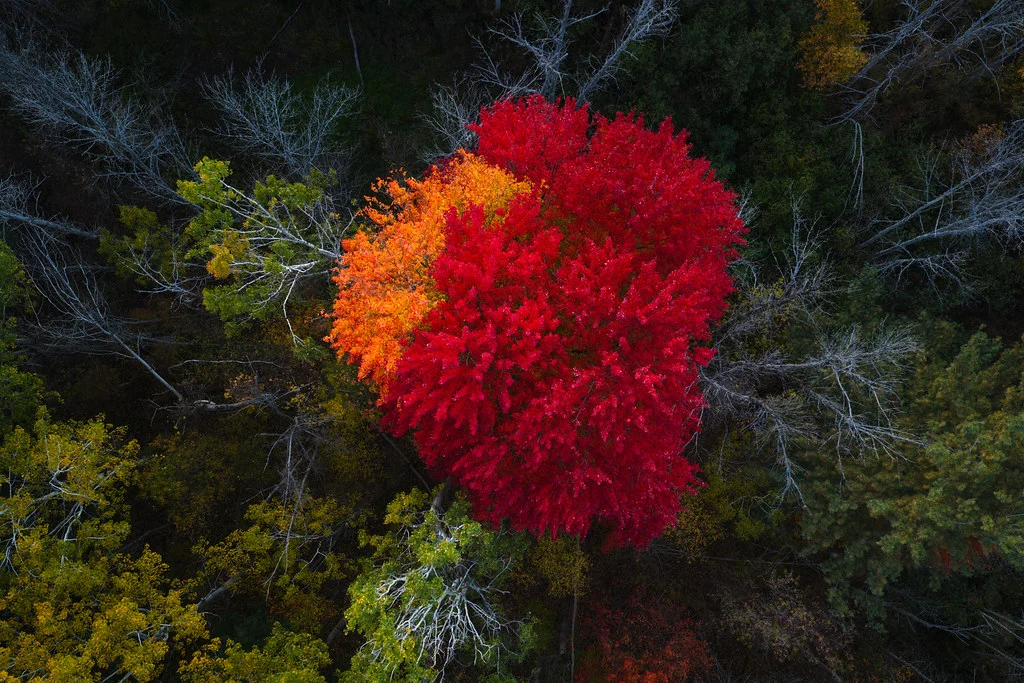
In a classroom or tutorial, composition is a calm, analytical exercise. You study an image, draw lines on it, and identify the compositional principles at work. In the field, you have seconds. The light is changing, your subject is moving, and a dozen elements are competing for your attention. You do not have time to think, “Let me place this subject on the upper-right intersection of the rule-of-thirds grid.” If you have to think about composition, you are too slow.
The goal of this lesson is to close the gap between knowing and doing. Experienced photographers do not compose by consciously applying rules. They compose by feel, an intuitive sense, built through thousands of images, of what looks right. The rules are still at work, but they have been internalized so deeply that they operate below conscious thought. A jazz musician does not think about scales while improvising. They practiced scales for so long that the knowledge became instinct. Composition works the same way. For a comprehensive overview of compositional principles, see Photography Composition.
Building that instinct requires volume. You need to compose hundreds, then thousands of images, reviewing each one honestly, noticing what works and what does not. There is no shortcut. Study helps. Analyzing great photographs helps. But the deep, physical skill of seeing and framing a composition in real time only comes from doing it, repeatedly, in real conditions. This lesson gives you the tools and exercises to accelerate that process.
There is a paradox at the heart of compositional growth. You have to learn the rules well enough to follow them without thinking, and then you have to know them well enough to break them on purpose. Beginners need the rules as scaffolding. Advanced photographers use them as one option among many. The intermediate stage, where you are now, is about building the bridge between those two states. You are moving from conscious competence (you know what to do and you do it deliberately) to unconscious competence (you do it automatically because it has become part of how you see).
Pre-Visualizing Your Frame
The best photographs are not found through the viewfinder. They are seen before the camera is raised. Pre-visualization, the habit of seeing the finished image in your mind before you compose it through the lens, is one of the most important skills a photographer can develop.
When you arrive at a scene, resist the urge to start shooting immediately. Take a moment to look. What catches your eye? What is the first thing you notice? That is usually the subject, and everything else in the frame should support it. Now ask yourself: what would this look like as a photograph? What would I include? What would I leave out? Where does the light fall? Where are the lines, shapes, and patterns?
Composition is fundamentally an act of subtraction. The world is overwhelmingly detailed and complex. A photograph is a rectangle. Your job is to decide what belongs inside the rectangle and, more importantly, what does not. Every element in your frame should be there for a reason. If something does not contribute to the image, find a way to exclude it, by changing your position, your angle, your focal length, or your timing.
One powerful technique is the “frame within the frame” approach. Look for natural frames in your environment: doorways, arches, windows, branches, tunnels, gaps between buildings. Placing your subject within a natural frame adds depth and layers to the image, draws the viewer’s eye inward, and gives the composition a sense of structure. Natural frames also help simplify busy scenes by constraining the viewer’s attention. For related ideas on using empty areas to strengthen composition, see Negative Space.
Train yourself to scan the edges of your frame before pressing the shutter. The center of the frame gets most of your attention naturally, but the edges are where distracting elements sneak in: a bright spot, a partial figure, a trash can, a sign that pulls the eye away from the subject. A few seconds of edge-checking saves you from compositions that almost work but are undermined by something at the border.
Another pre-visualization skill worth developing is thinking about the visual weight of elements in your scene. Bright areas have more visual weight than dark ones. Large objects pull the eye more than small ones. Warm colors (red, orange, yellow) advance toward the viewer, while cool colors (blue, green) recede. A human face or figure will always draw attention, even if it is small in the frame. Understanding these dynamics lets you predict how the viewer’s eye will move through your image before you even raise the camera, and adjust your composition to guide that movement deliberately.
Working a Scene
One of the most common habits that separates beginners from intermediate photographers is how long they spend with a subject. A beginner arrives at a scene, raises the camera, takes one or two shots, and moves on. An experienced photographer works the scene, exploring it from multiple angles, distances, heights, and focal lengths before deciding which composition is strongest.
The first shot you take of a subject is almost never the best one. It is your first impression, the most obvious composition. That is exactly why you should not stop there. After your first frame, move. Literally move your feet. Walk around the subject. Get closer. Back up. Crouch down and shoot from a low angle. Find something to stand on and shoot from above. Try both horizontal and vertical orientations. Switch to a wider or longer focal length.
This is what photographers call “working a scene,” and it is one of the most reliable ways to produce stronger images. Each change in position or perspective reveals something new. The subject that looked ordinary from eye level might be dramatic from below. The scene that felt cluttered at 50mm might simplify beautifully at 135mm. The composition that was obvious from the front might be more interesting from the side or the back.
Make a habit of trying both vertical and horizontal orientations for every subject. Most photographers default to horizontal because that is how cameras are designed to be held, which means most photographs are horizontal. Switching to vertical often transforms a scene. A narrow street becomes a towering corridor. A single flower becomes a tall, elegant portrait. A waterfall gains a sense of height. At minimum, try both before deciding.
Here is one of the most valuable compositional habits you can develop: look behind you. When you find something interesting, the natural tendency is to focus forward, toward the subject. But the best light, the best background, or even a better subject may be in the opposite direction. Before you commit to a composition, turn around. You will be surprised how often the photograph behind you is the one worth taking.
Distance is a compositional variable that many photographers overlook. The difference between standing five feet from a subject and standing fifteen feet away is not just about how much fits in the frame. It changes the relationship between the subject and the background, the degree of depth of field separation, the sense of intimacy or isolation, and the perspective distortion in the image. Try shooting the same subject from several different distances, using your zoom or your feet to maintain a similar framing, and compare how the feeling of each image changes.
Breaking the Rules with Intention
Composition rules exist because they describe patterns that tend to produce pleasing images. They are observations about what works, distilled from centuries of visual art. But they are not laws. The best photographers know when to follow them and, more importantly, when to break them deliberately.
Center compositions are the simplest example. The rule of thirds tells you to avoid placing your subject in the center. And for many images, that is good advice: off-center placement creates visual dynamism and a sense of movement. But some subjects demand center placement. A face staring directly at the camera. A perfectly symmetrical building. A lone tree in an empty field. A road stretching straight to the horizon. Center placement creates a sense of power, stillness, and directness that off-center composition cannot match. Use it when that is the feeling you want.
Cutting off subjects at the frame edge, cropping part of a face, a hand, a body, or an object, is often taught as a mistake. And when it happens accidentally, it usually is. But deliberate cropping at the edge creates a sense of intimacy and immediacy. A portrait that includes only part of a face can be more compelling than one showing the whole head. A photograph that crops a figure at the knees or elbows can suggest movement and energy. The key word is deliberate. You are choosing to crop, not failing to include.
Tilted horizons are another frequently “broken” rule. A straight horizon is usually correct for landscapes and architectural images. But a deliberate tilt, sometimes called a Dutch angle, can add energy, disorientation, or drama to the right image. Action shots, street photography, and images meant to convey chaos or excitement can benefit from a tilted frame. The critical distinction is between a subtle, accidental tilt (which just looks careless) and a bold, intentional one (which is clearly a creative choice). If you tilt, tilt decisively.
Dead space and tension are advanced compositional tools. Placing a subject at the very edge of the frame with vast empty space on the other side creates unease. The viewer expects the subject to be “looking into” the frame, and when it is not, the image feels tense and dynamic. Similarly, placing important elements very close to the edges of the frame, or leaving large areas of “nothing” in the image, creates visual tension that can be powerful when it serves the subject. These are uncomfortable compositions by design.
The difference between a broken rule and a mistake is intent. If you can articulate why you made the choice you did, “I centered the subject because the symmetry reinforces the stillness of the moment” or “I tilted the frame because the scene felt chaotic and I wanted the viewer to feel that too,” then you are making a creative decision. If you cannot explain why, it is probably a mistake worth correcting.
Training Your Eye
Compositional skill is not something you can acquire solely by reading about it. It develops through practice, observation, and honest self-assessment. Here are some habits that accelerate the process.
Develop a daily seeing habit. Even when you do not have your camera, practice seeing compositions in the world around you. Frame scenes in your mind. Notice how light falls across a room. See the leading lines in a hallway, the negative space between buildings, the patterns in a tile floor. The more you practice seeing, the faster you will recognize strong compositions when your camera is in your hand.
Study other photographers’ work, but study it actively, not passively. When you see an image that moves you, do not just admire it. Analyze it. Where is the subject placed? What is included in the frame and what is excluded? Where does your eye go first, and where does it travel next? What are the dominant lines, shapes, and tones? What would change if the photographer had been two steps to the left, or had used a wider lens, or had shot from lower? This kind of active analysis builds your compositional vocabulary in ways that passive viewing never will.
Practice cropping exercises. Take photographs you have already shot and crop them in new ways. Find alternative compositions within the original frame. You will often discover that a stronger image is hiding inside a good one, a tighter crop that eliminates a distracting element, or a different aspect ratio that changes the rhythm of the composition. This teaches you to see beyond your initial framing and reveals patterns in your compositional habits.
One of the most effective training exercises is the “10 compositions” drill. Stand in a single location and create 10 distinctly different photographs without moving more than two steps in any direction. This forces you to exhaust the obvious compositions quickly and then look harder, think differently, and see what you missed. By composition six or seven, you will be finding angles and framings you never would have considered if you had stopped after two. This drill builds the habit of looking deeper, and it demonstrates that every location has more photographs in it than you initially think.
Keep a visual journal, even if it is just a folder on your phone or computer. When you see a composition that excites you, whether in a photograph, a painting, a film still, or real life, save a reference. Over time, you will notice patterns in the compositions you are drawn to. These patterns reveal your emerging personal style and show you the compositional structures that resonate most strongly with your way of seeing.
Try This: Composition Field Exercises
These exercises are designed to push your compositional skills beyond theory and into practice. They work best when you commit to them fully and review your results honestly.
10 Compositions Challenge
Go to a single location, a park bench, a street corner, a room in your home, and create 10 distinctly different compositions without moving more than two steps from your starting point. Change your angle, your height, your focal length, your orientation, and your subject within the scene. The first three or four will come easily. The next three will make you work. The final three will make you truly see. Review all 10 afterward and notice which ones surprise you. Often, the compositions you found hardest to make turn out to be the most interesting.
Study and Shoot
Find a photograph you admire, from a book, a gallery, or an online portfolio. Study its composition carefully. Identify the key elements: the subject placement, the use of lines, the balance of light and dark, the inclusion and exclusion of elements. Then go out and create your own photograph that uses the same compositional principles. Not the same subject, the same structure. If the image you admire uses a strong diagonal line and a subject in the lower third, find your own diagonal and your own subject. This exercise trains you to see compositional structure independent of subject matter, which is one of the most valuable skills a photographer can have.
Crop Audit
Select 20 of your most recent photographs. For each one, create at least two alternative crops. Try tighter framings. Try different aspect ratios (square, 16:9, vertical). Try shifting the center of attention within the existing frame. After creating all the alternative crops, compare them to your originals. How many of the alternatives are stronger? The answer will probably surprise you. This exercise reveals how much compositional potential exists within images you thought were already finished.
Composition is the foundation of every photograph you will ever take. No amount of technical excellence, beautiful light, or compelling subject matter can overcome a weak composition. Conversely, a strong composition can elevate even a simple subject and ordinary light into something memorable. The rules you learned in fundamentals gave you a starting vocabulary. The practice you do from this point forward builds that vocabulary into fluency. Keep composing. Keep looking. Keep pushing past the obvious first frame to find the compositions that only reveal themselves when you slow down, move, and truly see what is in front of you.