Fill flash is a small dose of flash added to a photograph that the existing light already exposes correctly. The camera sets the exposure for the scene, and the flash lifts the shadows on a nearby subject without becoming the main light. Start with flash exposure compensation at minus 1 to minus 2 stops, keep the shutter at or below the sync speed (often 1/200 or 1/250 second) unless high-speed sync is on, and stay within a few metres.
This guide covers how fill changes contrast, starting values for each situation, the sync-speed problem in bright sun, the choice between a pop-up flash, a speedlight and a reflector, colour, and reach. The two-exposure model behind it is explained in balancing flash and ambient light, and the basics of flash modes are in flash photography for beginners. This page goes further on the daylight case, with the numbers.
What fill flash changes, and what it leaves alone
A face in sunlight has two brightness levels: the side the sun reaches, and the shadows it does not (eye sockets, under the nose and chin, the far cheek). Sky and ground bounce some light into those shadows, but they can easily sit three stops below the sunlit skin. Eyes see into that range comfortably. A camera records dark hollows.
Anything that raises the shadows left by the main light is fill light, and fill flash uses a flash for that job. The important point is that light adds. A flash near the camera lands on shadows and sunlit skin alike, but the same added amount is a large change to a dark shadow and a small change to a bright highlight. That is why a weak flash can transform the shadows while the sunlit parts look untouched.
Take a face where the sunlit side is three stops brighter than the shadows, a ratio of 8 to 1. Call the sunlit side 1 unit of light and the shadow 1/8 unit. Now add flash:
| Flash level compared with the sunlit side | Sunlit side becomes | Shadow becomes | Contrast left on the face |
|---|---|---|---|
| No flash | 1 | 0.125 | 3 stops |
| 2 stops under (1/4 unit) | 1.25 (a third of a stop brighter) | 0.375 | About 1.7 stops |
| 1 stop under (1/2 unit) | 1.5 (a little over half a stop brighter) | 0.625 | About 1.3 stops |
| Equal (1 unit) | 2 (a full stop brighter) | 1.125 | Under 1 stop |
Fill at 2 stops under already removes more than a stop of contrast, which is why it is the usual “invisible” setting. Fill at 1 stop under is clearly stronger and pushes the highlights up by more than half a stop, so bright skin and white clothing can clip unless you pull the ambient exposure down slightly. Flash equal to the sun is no longer fill: the face goes flat and the picture looks flashed.
What fill flash leaves alone is everything it cannot reach. The sky and anything more than a few metres behind the subject are exposed by the ambient light only.
Fill should come from close to the lens. A flash on or near the camera fills every shadow the lens can see without casting visible shadows of its own. Well off to one side, it behaves like a second main light.
Three situations that call for fill
Backlit people
With the sun behind the subject, the face is in its own shadow, lit only by open sky and whatever bounces up from the ground. Expose for the bright background and the face falls two or three stops under. Expose for the face and the background burns out. Here the flash supplies most of the light on the face, so it needs more output than fill in frontal sun. The page on backlighting covers the look without flash.
Harsh midday shadows
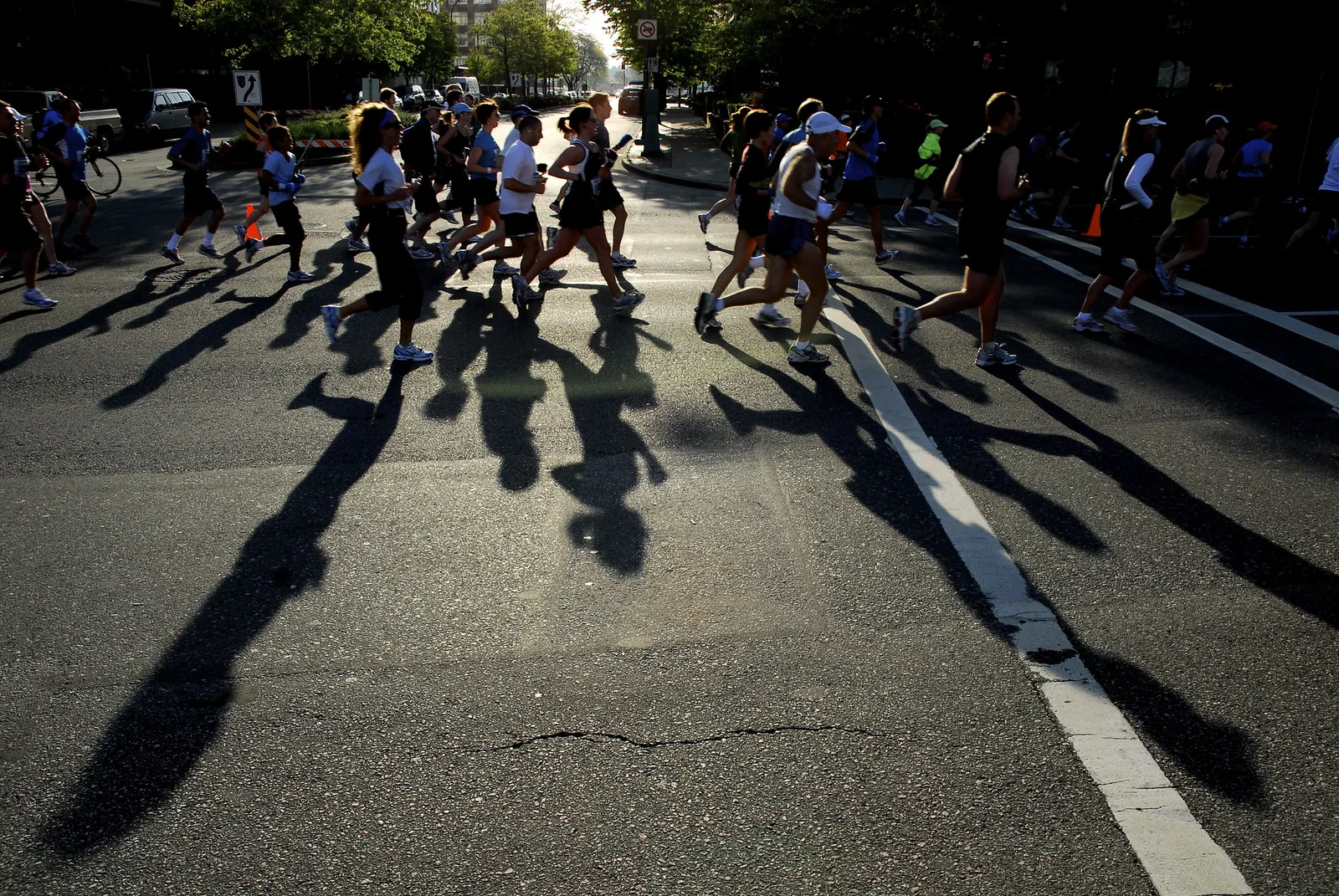
High sun lights the forehead, nose and cheekbones and leaves the eye sockets dark. Hats make it worse: the brim puts the top half of the face in deep shade while the chin stays in full sun. Fill from the camera position reaches under the brow and the brim. For ways to manage the same light without flash, see shooting in harsh daylight.
Dull eyes under overcast or in open shade
Soft light from a grey sky has no hard shadows to fill, but it comes mostly from above, so eyes can look dark. A very weak flash, two to three stops under, barely changes the exposure and puts a small bright reflection, a catchlight, in each eye. The same touch helps in open shade.
Skip the flash when glass or a mirror faces you (it bounces straight back as a hot spot) and when the shadow is the point of the picture.
How the camera balances flash against daylight
With automatic flash metering (TTL), the camera makes two separate measurements. It meters the scene as usual and sets aperture, shutter speed and ISO for the ambient light. Then, just before the exposure, the flash fires a weak pre-flash, the camera measures how much comes back from the subject, and it sets the power of the real burst. In bright light many cameras deliberately aim the flash lower than a full exposure.
That gives you two independent controls:
- Exposure compensation moves the ambient exposure: the background, the sky and the sunlit parts of the subject.
- Flash exposure compensation moves only the flash: the depth of the shadows on the subject.
On some cameras ordinary exposure compensation shifts the flash as well, so a change of minus 1 darkens both. Check the flash section of your manual.
The exposure mode matters more than most people expect:
- Program mode normally refuses to go above the sync speed with the flash on, so in sun it stops the lens down to f/11 or smaller. It is the safest mode for fill, at the cost of control over depth of field.
- Aperture priority keeps your chosen aperture. In bright sun at a wide aperture the camera needs a faster shutter than the sync speed, cannot use it, and overexposes the whole frame. Stop down or enable high-speed sync.
- Manual mode with TTL flash is the most predictable. The ambient exposure does not drift from frame to frame, and the flash is still measured automatically.
A reliable routine in manual mode:
- Flash off. Set the lowest ISO and the sync speed, then choose the aperture that exposes the background the way you want it. Take a test frame and check the histogram for clipped highlights.
- Flash on, TTL, flash exposure compensation at minus 1 2/3.
- Shoot and look only at the shadows on the face. Too dark: raise the flash by two-thirds of a stop. Obviously flashed (flat face, bright forehead, a hard shadow on something behind): lower it.
- If skin highlights are now too bright, darken the ambient by a third to two-thirds of a stop with the aperture, and leave the flash alone.
Flash exposure compensation: starting values by situation
These are starting points for TTL flash. Cameras differ in how much they reduce fill by themselves, so make a test frame and adjust.
| Situation | Start at | Why |
|---|---|---|
| Sun from the side or above, hard shadows on the face | Minus 1 1/3 to minus 2 | The sun still shapes the face. The flash only opens the shadows. |
| Hat brim or deep eye sockets at midday | Minus 1 to minus 1 1/3 | The shaded area is large and dark, so it needs a little more. |
| Backlit, face in its own shade, bright background | Minus 1/3 to minus 1 | The flash supplies most of the light on the face. Slightly under keeps it believable. |
| Overcast, catchlight only | Minus 2 to minus 3 | Nothing to fill. The aim is a sparkle in the eyes. |
| Sunset or dusk sky behind the subject | Minus 1/3 to minus 1, with a warming gel | The sky sets the exposure and the flash lights the person. |
With a manual flash there is no compensation dial, so work from distance. The guide number of a flash is the distance times the f-number at which it gives a full exposure at ISO 100. A flash with a guide number of 36 (in metres) gives a full exposure at f/11 from about 3.3 metres. For fill two stops under that, set 1/4 power at the same distance. For one stop under, set 1/2 power. Manual fill stays consistent as long as the subject stays at the same distance, and changes by a stop every time the distance changes by a factor of 1.4.
Bright sun and the sync-speed wall
The flash sync speed is the fastest shutter speed at which a normal flash burst lights the whole frame, usually between 1/160 and 1/250 second. Fill flash runs into it constantly, because daylight is bright. By the sunny 16 rule, direct sun at ISO 100 needs about f/16 at 1/100 second, which is the same exposure as f/11 at 1/200. So at base ISO and the sync speed, full sun forces an aperture around f/11.
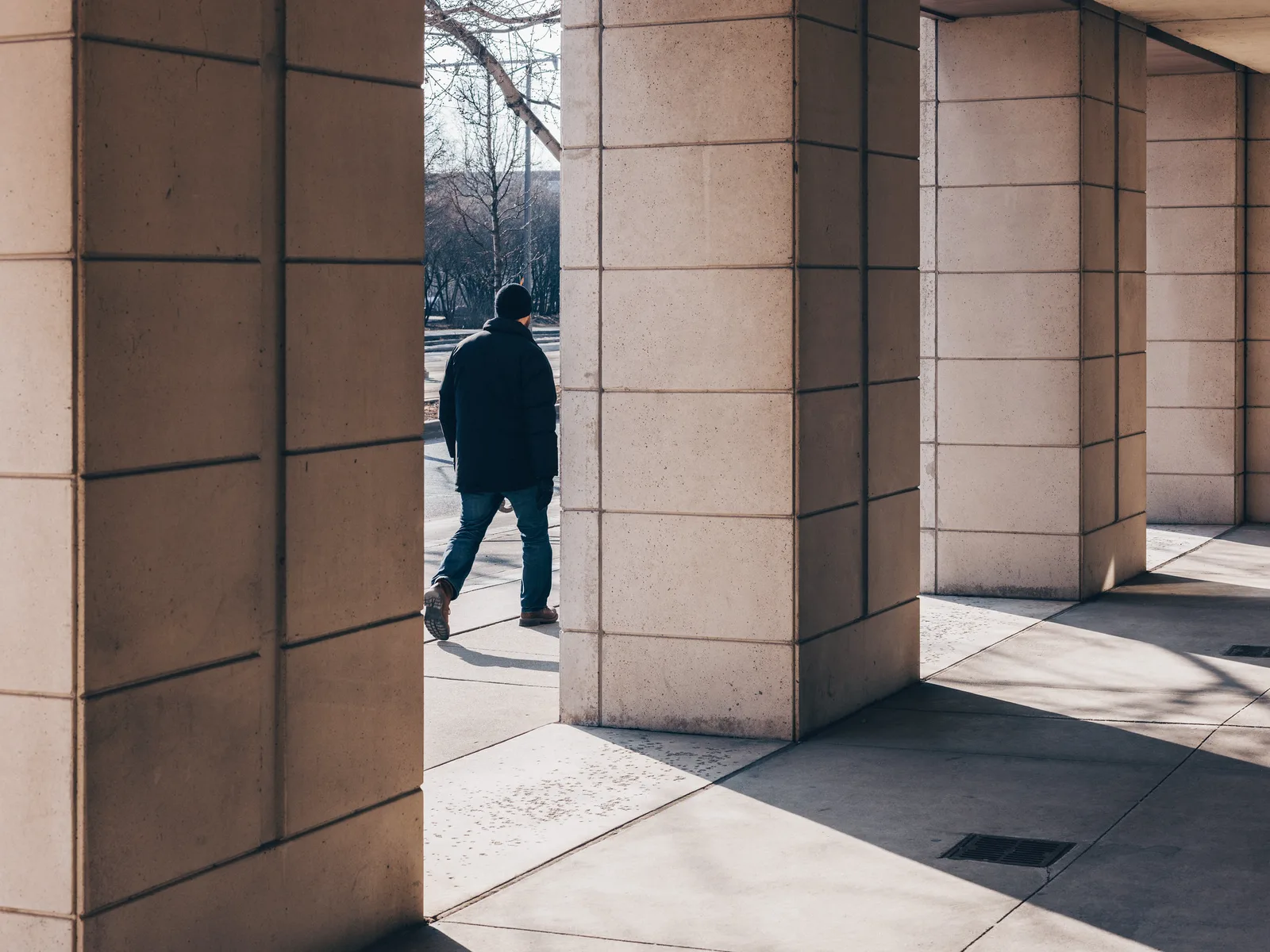
If f/11 suits the picture, there is no problem. If you want f/2.8 for a soft background, you need a shutter speed four stops faster, around 1/3200 second, and a normal flash cannot fire correctly at that speed. There are three ways round it.
| Method | What you set | Cost to the flash | Other trade-offs |
|---|---|---|---|
| Smaller aperture | f/11 at the sync speed, ISO 100 | None. Full reach. | Deep depth of field. Dust on the sensor shows at small apertures. |
| Neutral density filter | A 4-stop filter, then f/2.8 at the sync speed | None compared with f/11 unfiltered. The filter takes four stops from the flash and the wider aperture gives four back. | A darker optical viewfinder, and slower autofocus with strong filters. |
| High-speed sync | f/2.8 at about 1/3200 second | Roughly two stops or more, so about half the reach or less. | Needs a flash and camera that support it. Heavier on batteries and slower to recycle. |
High-speed sync is the most convenient, and at one to three metres a hot-shoe flash usually has enough output for fill even after the loss. When the subject is farther away, an ND filter at the sync speed keeps the flash at full strength. You can also turn the subject so the sun is behind them, or move them into open shade: the ambient light on the face drops by two stops or more, and the flash has far less to compete with.
In a given light, changing ISO and aperture together does not change how far your fill reaches, because both settings affect flash and daylight equally. What does change it is the shutter speed: the fastest speed that still syncs normally lets in the least daylight for the same flash burst. For fill in sun without high-speed sync, shoot at the sync speed itself, not slower.
Pop-up flash, speedlight or reflector
| Tool | Strengths | Limits |
|---|---|---|
| Built-in pop-up flash | Always with you. Sits close to the lens, the right place for fill. | Low power, with guide numbers of roughly 10 to 13 metres. Usually no high-speed sync. A large lens or hood can cast a shadow at the bottom of the frame at close range. |
| Hot-shoe flash (speedlight) | Typically two to three stops more output than a pop-up. High-speed sync on most units. A zoom head that concentrates the beam, and room for a gel. | Extra weight and batteries. Recycle time grows at high power, so rapid bursts may leave some frames unfilled. |
| Reflector | You see the effect before you shoot. No sync limit and no batteries. The fill matches the colour of the daylight automatically. | Needs a helper or a stand, and catches the wind. Only works within a metre or two of the subject. Silver surfaces in full sun make people squint. |
Point the flash straight at the subject. A clip-on diffuser outdoors mostly wastes output: with no walls to scatter light back, the source stays almost as small as before. At fill levels the hardness of direct flash is hidden anyway, because the flash is not making the visible shadows. A reflector suits a posed portrait with a helper, especially a backlit one, where it throws the sun straight back into the face. A flash suits working alone or on the move.
Matching the colour of the fill to the daylight
A bare flash gives light close to midday daylight, around 5500 to 6000 kelvin. In the middle of a clear day that matches the sun. At other times it does not:
- Near sunrise and sunset the sun is far warmer, roughly 3000 to 4000 kelvin. Ungelled fill puts cool, bluish-white light into the shadows of a face that is otherwise glowing orange, and it looks pasted on. Put a quarter or half strength orange correction gel on the flash so the fill is warm too.
- In open shade the light comes from blue sky and is cooler than the flash. If you set white balance for shade, the flash-lit areas come out slightly warm, which is usually pleasant on skin.
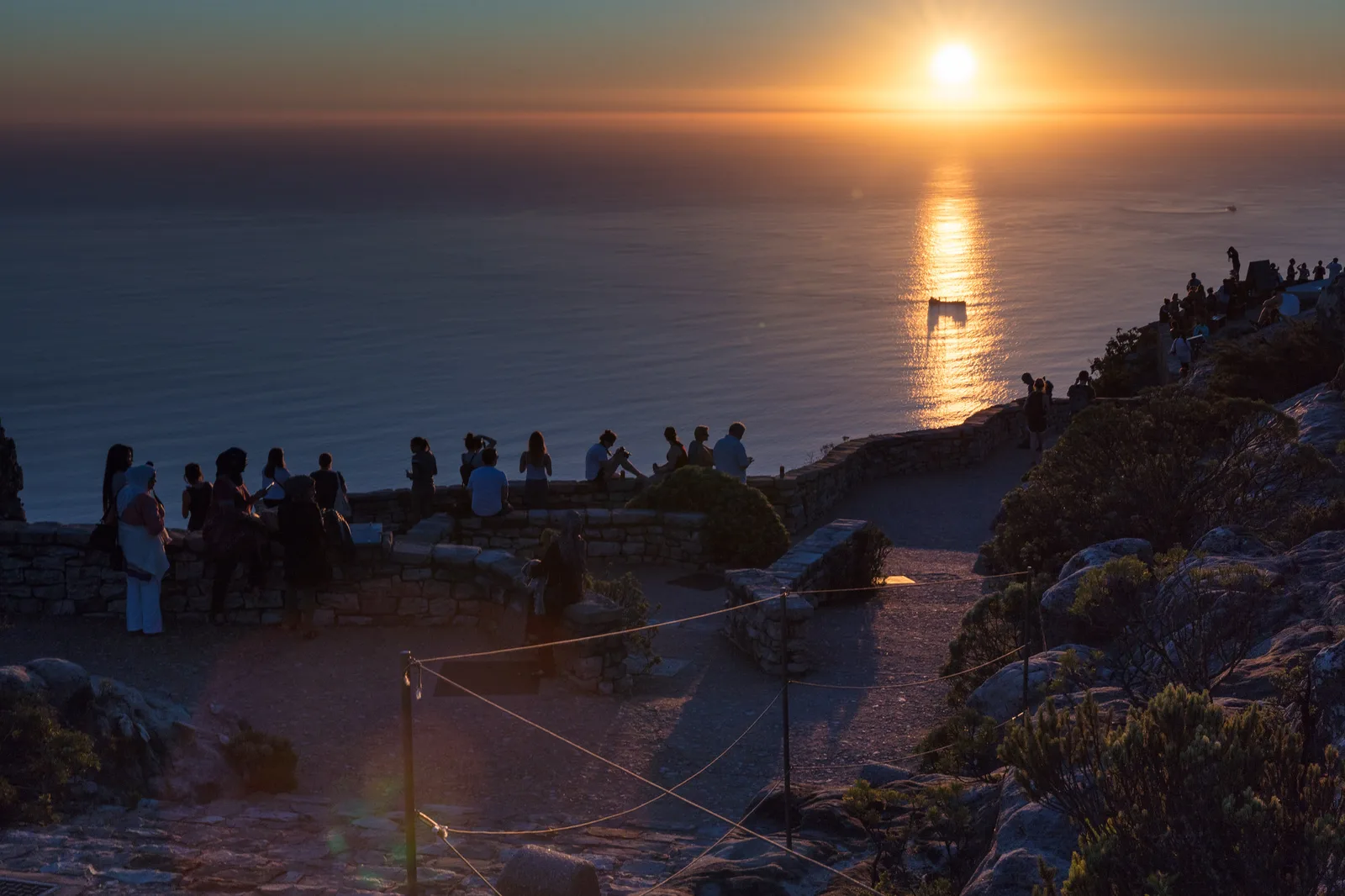
A gel absorbs some light, from about a third of a stop for a quarter strength orange up to a stop for a full one. TTL metering compensates by itself.
How far fill flash reaches
Light from a small source spreads out, so its strength falls with the square of the distance: twice as far means a quarter of the light, a loss of two stops. The inverse square law page explains why. In full sun the limit is closer than most people assume.
The table shows the farthest distance for each level of fill in direct sun at ISO 100, f/11 and 1/200 second, worked out from the guide number.
| Flash at full power | Equal to the sun | Fill 1 stop under | Fill 2 stops under |
|---|---|---|---|
| Pop-up flash, guide number 12 | 1.1 m | 1.5 m | 2.2 m |
| Speedlight, guide number 36 | 3.3 m | 4.6 m | 6.5 m |
| The same speedlight in high-speed sync (about 2 stops lost) | 1.6 m | 2.3 m | 3.3 m |
Treat these as best cases. Guide numbers are usually quoted with the flash head zoomed to its narrowest beam, and at a wider zoom setting the same flash is weaker. A comfortable rule: a pop-up flash fills one person at arm’s length to two metres, and a speedlight fills a small group out to four or five metres.
- Depth in a group. With the front row at 2 metres and the back row at 4 metres, the back row gets a quarter of the fill. Step back and zoom in, which makes the difference between the rows smaller in proportion.
- Too close. Every flash has a minimum output. Under a metre away at a wide aperture, even the weakest burst can be too much. Step back or stop down.
Common mistakes
- Leaving flash exposure compensation at zero in sun. The face goes flat and shiny and the picture looks flashed. Fix: start at minus 1 2/3 and come up only as far as the shadows need.
- Wide aperture in aperture priority with no high-speed sync. The camera is held at the sync speed and the whole frame overexposes. Fix: stop down, add an ND filter or switch on high-speed sync.
- Ungelled fill at sunset. Cool shadows on a warm face. Fix: add a quarter or half strength orange gel.
- Adding fill on top of a full ambient exposure of light skin or white clothes. Highlights clip because the flash adds to the sun. Fix: darken the ambient by a third to two-thirds of a stop.
- A lens hood shadow from the pop-up flash. A dark half-circle at the bottom of the frame. Fix: remove the hood or step back.
Try this
You need one person and about fifteen minutes of direct sun.
- Stand the person two metres away with the sun high and to one side, so there are clear shadows on the face.
- Set manual mode: ISO 100, your sync speed, and the aperture that gives a good exposure with the flash off (about f/11). Take one frame without flash.
- Turn on TTL flash and shoot five frames at flash exposure compensation 0, minus 2/3, minus 1 1/3, minus 2 and minus 3.
- Turn the person so the sun is directly behind them and repeat the six frames without touching the camera settings.
- Compare the two sets on a large screen. Find the frame in each where the shadows are open but you would not guess a flash was used. Those two values are your personal starting points for side light and for backlight.
Frequently asked questions
What flash exposure compensation should I use for fill flash?
Start between minus 1 and minus 2 stops for ordinary shadows in sunlight, with minus 1 2/3 a good first guess. Use less reduction, around minus 1/3 to minus 1, when the subject is backlit, and more, around minus 2 to minus 3, when all you want is a catchlight on a grey day.
Does fill flash work with the built-in flash?
Yes, for one or two people within about two metres. A pop-up flash sits close to the lens, which suits fill, but its low power and usual lack of high-speed sync mean it works best at small apertures and close range.
Why is my whole picture overexposed when I turn the flash on outdoors?
The camera has almost certainly been held at its sync speed while the aperture and ISO you chose need a faster shutter. The daylight overexposes the frame, not the flash. Use a smaller aperture, a lower ISO, an ND filter or high-speed sync.
Is a reflector better than fill flash?
A reflector gives softer fill that matches the colour of the daylight, and you can see the result before shooting. It needs someone or something to hold it and only works close to the subject. Flash wins when you are alone, on the move or in wind.
Related guides
- Balancing Flash and Ambient Light: the full two-exposure method, including night scenes and flash as the main light.
- High-Speed Sync: how flash works above the sync speed and what it costs.
- Flash Sync Speed: the shutter limit behind the f/11 problem in sun.
- Reflector: fill without a flash, and how to aim one.
- Outdoor Portrait Photography: placing people in daylight so they need less fill to begin with.
- Bounce Flash: the indoor counterpart, where the flash becomes a large soft source.
- Overcast Day Photography: working with soft grey light, where fill shrinks to a sparkle.