Taking your flash off the camera and placing it where you actually want the light to come from is the single biggest leap you can make in flash photography. On-camera flash produces flat, unflattering, direct illumination because the light comes from the same direction as the lens. The moment you move that flash to the side, above, behind, or anywhere other than the hot shoe, you gain the ability to sculpt your subject with directional light, create depth and drama, and produce images that look professionally lit rather than casually snapped. This guide covers everything you need to know about off-camera flash, from the equipment and triggering systems to proven lighting patterns and techniques for mixing flash with ambient light.
Why Off-Camera Flash Changes Everything
Light looks best when it comes from an angle. Think about the most beautiful natural light, golden hour sunlight streaming from the side, window light falling softly across a face, the glow of a setting sun behind a subject. None of these come from the camera’s position. When you fire a flash from on top of the camera, the light hits the subject head-on, eliminating the shadows that create depth and dimension. The result is flat, featureless illumination with harsh shadows directly behind the subject.
Off-camera flash lets you position light the way a painter would, choosing the angle, distance, and quality that best serves the image. You can create a classic Rembrandt portrait with a single speedlight to the side. You can mimic the look of an expensive studio from a park bench. You can overpower the midday sun to create dramatic outdoor portraits. The possibilities expand enormously once the flash leaves the camera.
The equipment needed is minimal and affordable. A single speedlight, a wireless trigger, a light stand, and a basic modifier like an umbrella or softbox is the complete setup. Many photographers achieve their best work with exactly this gear, no studio required.
Triggering Systems: How to Fire Your Flash Remotely
To use off-camera flash, you need a way to tell your flash to fire when you press the shutter. There are several triggering methods, ranging from simple and cheap to advanced and feature-rich.
Wireless radio triggers are the most popular and reliable option. A transmitter mounts on your camera’s hot shoe, and a receiver attaches to each off-camera flash. When you press the shutter, the transmitter sends a radio signal to the receivers, which fire the flashes simultaneously. Radio triggers work at distances up to 100 feet or more, through walls, and in bright sunlight, unlike optical triggers, they do not require line-of-sight. Entry-level manual triggers are very affordable. TTL-capable triggers cost more but pass automatic exposure information between camera and flash.
Built-in wireless flash systems are offered by most camera brands. These use either optical pulses (the camera’s built-in flash or a commander unit fires a pre-flash that the remote flash reads) or radio signals (built into higher-end cameras and flashes). Optical systems are free if your camera supports them but can be unreliable outdoors in bright light because the remote flash needs to “see” the command signal. Radio-based built-in systems are more reliable but require compatible flash units.
Sync cables are the simplest option: a physical cable connects the camera to the flash. This method is reliable and introduces no latency but limits your flash placement to the cable length and creates a tripping hazard. Sync cables are mostly used in controlled studio environments where the flash does not need to move.
For most photographers starting with off-camera flash, a basic wireless radio trigger set is the best investment. It is reliable, versatile, and works with any flash unit from any brand.
TTL vs Manual for Off-Camera Flash
When working with off-camera flash, you have the same choice between TTL and manual modes as with on-camera flash, but the dynamics are slightly different.
Manual mode is the preferred choice for most off-camera flash work. Once you position your flash and dial in the right power for the desired look, every shot is consistent. You are in complete control. Since your flash is typically on a stand in a fixed position, the flash-to-subject distance does not change between shots, making manual the most efficient approach. You set it once and shoot.
TTL mode is useful when conditions change rapidly: if your subject moves toward and away from the flash, if you are shooting a moving event with off-camera flash, or if you want the convenience of automatic exposure as you work quickly. TTL requires compatible triggers that pass the metering information between camera and flash, which adds cost. TTL can also produce inconsistent results from shot to shot as the metering system reacts to changing backgrounds.
The recommendation for learning off-camera flash is to start with manual. Set your flash to 1/4 or 1/8 power, take a test shot, and adjust up or down from there. With practice, you will develop an intuition for flash power at different distances and apertures. Manual flash is simple, consistent, and teaches you the fundamentals of light control faster than relying on automation.
One-Light Off-Camera Setups
A single off-camera flash is all you need for stunning portraits. The position of that single light relative to your subject creates different lighting patterns, each with a distinct look and mood.
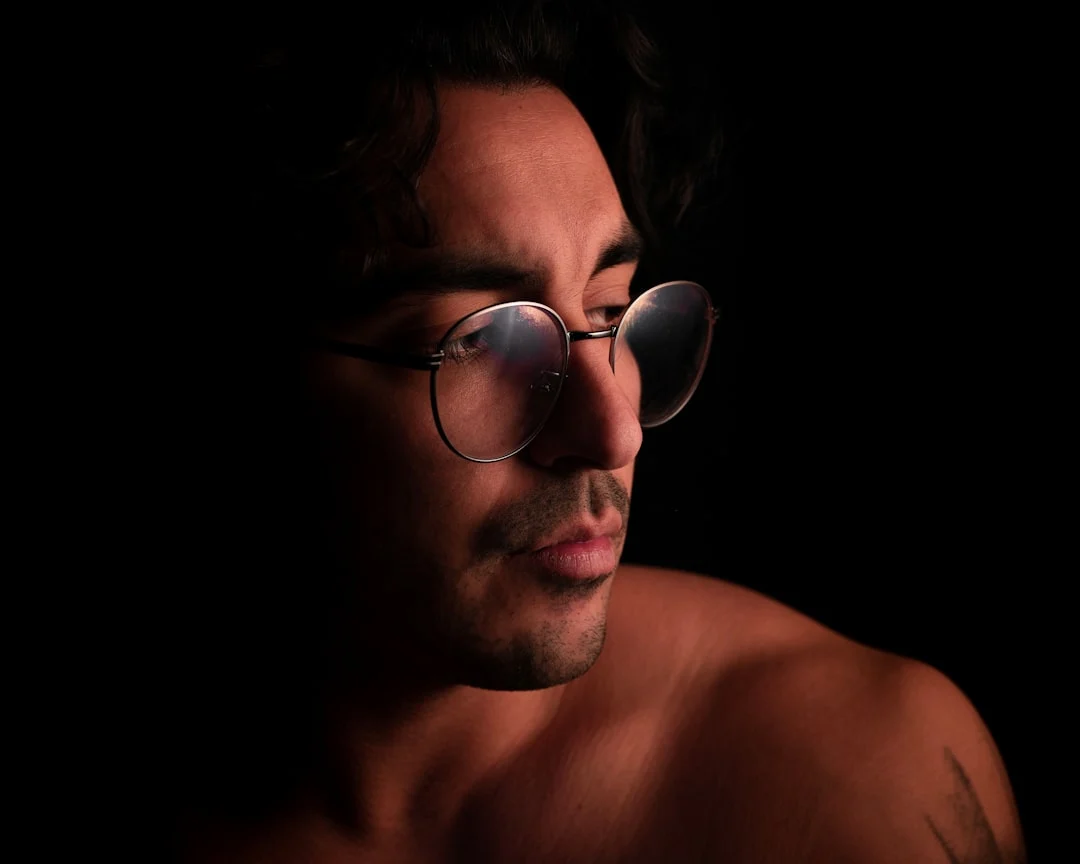
Rembrandt lighting is one of the most dramatic and recognizable patterns. Place your flash at about 45 degrees to the side and slightly above the subject’s eye level. The key identifier is a small triangle of light on the shadow side of the face, under the eye. Rembrandt lighting adds strong dimension and is a go-to for character portraits, editorial work, and images where you want drama and depth. A softbox or umbrella softens the light while maintaining the directional quality.
Loop lighting is similar to Rembrandt but less dramatic. The flash is positioned at 30-45 degrees to the side and slightly above, creating a small shadow of the nose that “loops” down toward the corner of the mouth without connecting to the cheek shadow. Loop lighting is flattering for most face shapes and is the most common portrait pattern used by professionals. It adds dimension without being overly dramatic.
Butterfly lighting (paramount lighting) places the flash directly in front of and above the subject, pointing down. It creates a symmetrical shadow directly under the nose that resembles a butterfly. This pattern is popular in beauty and fashion photography because it sculpts the cheekbones and jawline evenly. A reflector below the subject’s chin fills the under-chin shadow for a polished look. Butterfly lighting works best on subjects with defined bone structure.
Split lighting positions the flash at 90 degrees to the side, illuminating exactly half the face while the other half is in complete shadow. This creates the most dramatic single-light look and works well for bold, artistic portraits. It emphasizes texture and can feel moody and confrontational.
Add a reflector on the shadow side of any of these patterns to fill in the shadows and reduce contrast. A white reflector provides subtle fill; a silver reflector gives more pronounced fill with a bit of edge.
Two-Light Off-Camera Setups
A second flash opens up significantly more creative options. The most common two-light setups add either fill or rim/backlight to the key light.
Key + fill: Place your main light at 30-45 degrees as your key. Add a second flash on the opposite side, slightly further away and at lower power (1-2 stops less than the key), with a larger modifier or bounced off a surface. This fills the shadows while preserving the directional quality of the key light. Adjust the fill power to control the shadow depth, more fill for a bright, commercial look; less fill for drama.
Key + rim light: Keep your key light in position and place the second flash behind the subject, aimed back toward the camera. This creates a bright edge (rim light) on the subject’s hair, shoulders, and profile that separates them from the background. Use a grid or snoot on the rim light to keep it focused and prevent flare in your lens. This setup is particularly effective outdoors where the rim light mimics the look of backlit sunlight.
Key + background light: Aim the second flash at the background to control its brightness or add color with a gel. This is useful when you want a white background (light it brightly) or a colored background (add a colored gel). Separating background light from subject light gives you independent control over both elements.
Cross lighting: Place two lights at equal power on opposite sides of the subject, both at roughly 45-90 degrees. This creates dramatic lighting from both sides with a shadow down the center of the face. Cross lighting is bold and graphic, popular for fitness photography, musician portraits, and commercial work with an edgy aesthetic.
Mixing Ambient Light with Off-Camera Flash
One of the most powerful off-camera flash techniques is blending your flash with the existing ambient light. This creates images that look naturally lit but with the addition of intentional flash-created highlights and dimension.
The key concept is that shutter speed controls the ambient exposure while aperture (and flash power) controls the flash exposure. By adjusting your shutter speed, you choose how much of the background ambient light appears in the image, from fully exposed (background looks natural) to underexposed (background goes dark and moody while the flash-lit subject stays properly exposed).
Dragging the shutter means using a slower shutter speed to let more ambient light into the frame while the flash freezes the subject. This is a staple of event photography, a shutter speed of 1/30th to 1/60th lets colorful ambient lights, candles, and venue illumination show in the background while the flash keeps the subject sharp.
Overpowering the sun is the opposite approach. By using a fast shutter speed (at or near your sync speed), a small aperture, and a powerful flash close to the subject, you underexpose the ambient sky while properly exposing the flash-lit subject. This creates the dramatic look of a perfectly lit subject against a dark, saturated sky, a technique used extensively in editorial, fashion, and advertising photography.
The practical workflow is: set your camera to expose for the ambient at the level you want (bright, natural, or dark and dramatic), then add flash power until the subject is properly exposed. If the background is too bright, use a faster shutter speed or smaller aperture. If the background is too dark, use a slower shutter speed. Adjust flash power as needed to maintain proper subject exposure.
Off-Camera Flash for Outdoor Portraits
Off-camera flash transforms outdoor portrait photography. Instead of being limited to finding flattering natural light, you bring your own, and place it exactly where it serves the image best.
Golden hour rim light: Position your subject with the setting sun behind them as a natural backlight, then place an off-camera flash to the side as your key light. The sun provides a warm rim while the flash provides directional illumination on the face. This combination produces the most professional-looking outdoor portraits.
Shade with flash key: Place your subject in open shade (soft, even ambient light on their face) and add an off-camera flash from the side or slightly above to create directional light and shadows. This gives you the control of studio lighting with the natural feel of an outdoor environment.
Blue hour drama: Shoot during the 20-30 minutes after sunset when the sky turns deep blue. The ambient light is dim enough to underexpose slightly for a moody sky, while your off-camera flash illuminates the subject with warm, directional light. The contrast between the cool blue sky and warm flash creates a striking color palette. A warming gel (CTO) on the flash enhances this contrast.
For any outdoor off-camera flash setup, watch the wind, light stands with modifiers act as sails. Use sandbags or weight the stands, and have an assistant hold the stand in gusty conditions. Losing a light to wind is a safety hazard and an expensive mistake.
Essential Off-Camera Flash Gear
- Flash unit: Any speedlight works. A manual-only speedlight is the most affordable entry point. A TTL-capable speedlight from your camera brand or a reputable third party offers more versatility.
- Wireless trigger: A transmitter for your camera hot shoe and a receiver for each flash. Start with a basic manual trigger set; upgrade to TTL triggers if you need automatic exposure control.
- Light stand: A lightweight, portable stand to hold the flash. Compact stands fold small for transport. Air-cushioned stands prevent the head from crashing down if a clamp loosens.
- Modifier: A 43-inch shoot-through umbrella is the cheapest and easiest modifier. A 24-inch portable softbox with a speedlight bracket offers better control. Both fold flat for travel.
- Bracket or adapter: A cold shoe adapter or speedlight bracket to mount the flash on the light stand and attach the modifier.
- Gels: Small colored filters that slide over the flash head. A CTO (color temperature orange) gel warms the flash to match tungsten or golden hour light. Creative gels add color for effect.
This entire kit, flash, trigger, stand, umbrella, and bracket, can cost less than a single mid-range camera lens. It is one of the highest-value investments you can make in photography gear.
Common Off-Camera Flash Mistakes
- Placing the flash too far from the subject. Light intensity follows the inverse square law, doubling the distance reduces the brightness by three-quarters. Keep your flash close to the subject (3-6 feet for a single speedlight with modifier) for soft light at reasonable power levels. Pulling it back wastes power and makes the light harder.
- Forgetting to adjust for the ambient. Off-camera flash images look unnatural when the background is completely black because the shutter speed was too fast. Slow your shutter speed to let ambient light register in the background for a balanced, natural look.
- Using too much power. Over-flashed subjects look artificial and disconnected from their environment. Start at low power (1/8 or 1/16) and increase gradually. Often, subtle flash that is barely noticeable as flash produces the best results.
- Ignoring the flash-to-ambient color balance. If the ambient light is warm (tungsten, sunset) and your flash is daylight-balanced, the subject will look cool/blue while the background looks warm. Use a CTO gel on the flash to match the ambient white balance.
- Not securing the light stand. Light stands with modifiers are top-heavy and catch wind easily. Always use sandbags, weight hooks, or have an assistant hold the stand outdoors. A falling light stand can injure people and destroy equipment.
Frequently Asked Questions
What is the best off-camera flash for beginners?
A manual speedlight from a reputable third-party brand is the best value for learning off-camera flash. You do not need TTL for off-camera work since manual mode gives you more control and consistency. As your skills grow, you can add TTL capability if needed. If you already own a speedlight that came with your camera system, start with that, any flash can be used off-camera with a wireless trigger. The quality of the light comes from how you position and modify it, not from the flash unit itself.
Do I need expensive triggers for off-camera flash?
No. For manual flash, basic radio triggers that simply fire the flash are affordable and reliable. You only need expensive TTL-compatible triggers if you want automatic flash exposure control from off-camera, or if you need features like high-speed sync or remote power adjustment. Many experienced off-camera flash photographers use manual triggers exclusively because they prefer the consistency and control of manual flash power. Start with an entry-level trigger set and upgrade only if you outgrow it.
Can I use off-camera flash outdoors in bright sunlight?
Yes, and it is one of the most powerful applications. To overpower the sun with a single speedlight, get the flash close to your subject (3-5 feet), use a small aperture (f/8 to f/11), and shoot at your maximum sync speed. For even more control, use high-speed sync to shoot at faster shutter speeds with wider apertures. In bright sun, the flash needs to be close to the subject for sufficient output, a speedlight will not overpower the sun at 15 feet, but it works beautifully at 4-5 feet.
How do I learn off-camera flash lighting patterns?
Start with one flash, one modifier, and a willing subject (or a mannequin head). Place the flash at 45 degrees and eye level, take a shot. Then raise it six inches. Take a shot. Move it to 90 degrees. Take a shot. Move it behind the subject. Take a shot. This systematic approach teaches you what each position looks like in about 30 minutes. Then add a reflector and repeat the exercise. Seeing the patterns emerge in your own images is far more effective than memorizing diagrams. Practice this exercise once, and you will understand lighting placement intuitively.
Is one off-camera flash enough for professional-quality portraits?
Absolutely. Many professional portrait photographers, including editorial, wedding, and commercial photographers, regularly produce their best work with a single off-camera flash and a modifier. One light with a softbox at 45 degrees, paired with a reflector for fill, creates stunning Rembrandt or loop lighting that looks fully professional. Adding a second light is useful but not essential. Master one light first, and you will find that a single flash covers the vast majority of portrait situations you encounter.
Continue Learning
Off-camera flash opens up a world of creative lighting control. Continue building your skills with these related guides: