The built-in flash or a hot shoe mounted speedlight fires light from directly above the lens, producing the flat, unflattering illumination that gives flash photography a bad reputation. Moving your flash off the camera is the single most transformative step you can take in artificial lighting. Off-camera flash, often abbreviated as OCF, gives you control over the direction, quality, and character of light, letting you sculpt your subjects with the same precision that studio photographers have enjoyed for decades, but with the portability and flexibility to work anywhere.
Why Move the Flash Off Camera?
On-camera flash creates light that travels along the same axis as the lens. This produces several problems: flat, dimensionless lighting with no shadows to define form, harsh specular highlights on skin, red eye caused by light reflecting off the retina, and ugly shadows cast directly behind the subject on walls and backgrounds. These issues exist because the light source is too close to the lens axis and too small relative to the subject.
Moving the flash to the side, above, or behind the subject immediately introduces directional light that creates shadows. Those shadows are not problems; they are essential. Shadows define shape, create depth, reveal texture, and add dimension to what would otherwise be a flat rendering. The interplay between light and shadow is what transforms a snapshot into a photograph with visual depth and character.
Off-camera flash also lets you control the size of the light source by adding modifiers like softboxes, umbrellas, and diffusers. A small bare flash produces hard, defined shadows. The same flash through a large softbox produces soft, gradual shadows. This control over light quality is fundamental to creating professional-looking images across every genre, from flash photography portraits to dramatic editorial work.
Wireless Triggering Systems
To fire a flash that is not physically connected to your camera, you need a triggering system. There are several options, each with distinct advantages.
Radio Triggers
Radio triggers are the most reliable and versatile option. A transmitter mounts on your camera’s hot shoe and sends a radio signal to a receiver attached to the flash. Radio signals work through walls, around corners, at long distances, and in bright sunlight, making them dependable in virtually any shooting scenario. Many modern speedlights and strobes now have built-in radio receivers, eliminating the need for separate receiver units.
Radio triggers that support TTL (through-the-lens metering) and HSS (high-speed sync) let you maintain automatic flash exposure and the ability to sync at shutter speeds above the normal flash sync speed. These features add convenience and flexibility, particularly for run-and-gun shooting where you do not have time to manually adjust flash power between shots.
Optical Triggers
Optical triggering uses the light from one flash to trigger another. Many speedlights have a built-in optical slave mode that fires when they detect a flash burst. Many camera systems also have a built-in optical wireless mode, in which the pop-up flash or a commander unit on the hot shoe sends coded light pulses that fire the remote flashes and can pass TTL information to them. If your camera supports it, it costs nothing extra to try.
The limitation of optical triggers is that they require line of sight between the transmitting and receiving units, and they can be unreliable in bright sunlight because ambient light can interfere with the optical signal. They work well in studios and indoor environments but become problematic outdoors during the day. Most photographers who are serious about off-camera flash eventually invest in radio triggers for their reliability.
Sync Cables
A simple PC sync cable or hot shoe sync cable physically connects the camera to the flash. This is the most basic and foolproof triggering method, with zero radio interference concerns and no batteries to maintain. The obvious drawback is the physical tether, which limits flash placement and creates a tripping hazard. Sync cables are most practical for static studio setups where the flash does not need to move.
Whichever method you use, the light itself comes from where you put the flash and what you put in front of it, not from the trigger or the flash model. Any flash that has a manual power setting can be fired off camera with a basic radio trigger, including one you already own.
TTL or Manual Flash Off Camera
Off camera you have the same choice as on the hot shoe: let TTL set the flash power from a metered pre-flash, or set the power yourself in manual. The difference is that an off-camera flash usually sits on a stand at a fixed distance from the subject, and that favors manual.
Manual gives the same output on every frame. Once the flash is placed and the power is right, nothing changes until you move the light or the subject, so you can shoot freely without the exposure wandering. A good first setting is 1/4 or 1/8 power: take a test shot, then go up or down a stop at a time.
TTL earns its place when the flash-to-subject distance keeps changing, such as a subject walking toward a light or an event where you move a flash around the room. It needs a trigger that passes TTL information, and because the meter reacts to whatever is in the frame, a change in background or clothing can shift the flash output from one shot to the next.
Learning in manual teaches you how power, distance and aperture relate faster than letting the camera decide, and that understanding makes TTL easier to correct when you do use it.
Flash Positioning: The Key Angles
Where you position your off-camera flash relative to the subject determines the character of the light. Understanding the classic lighting positions gives you a vocabulary for creating any mood.
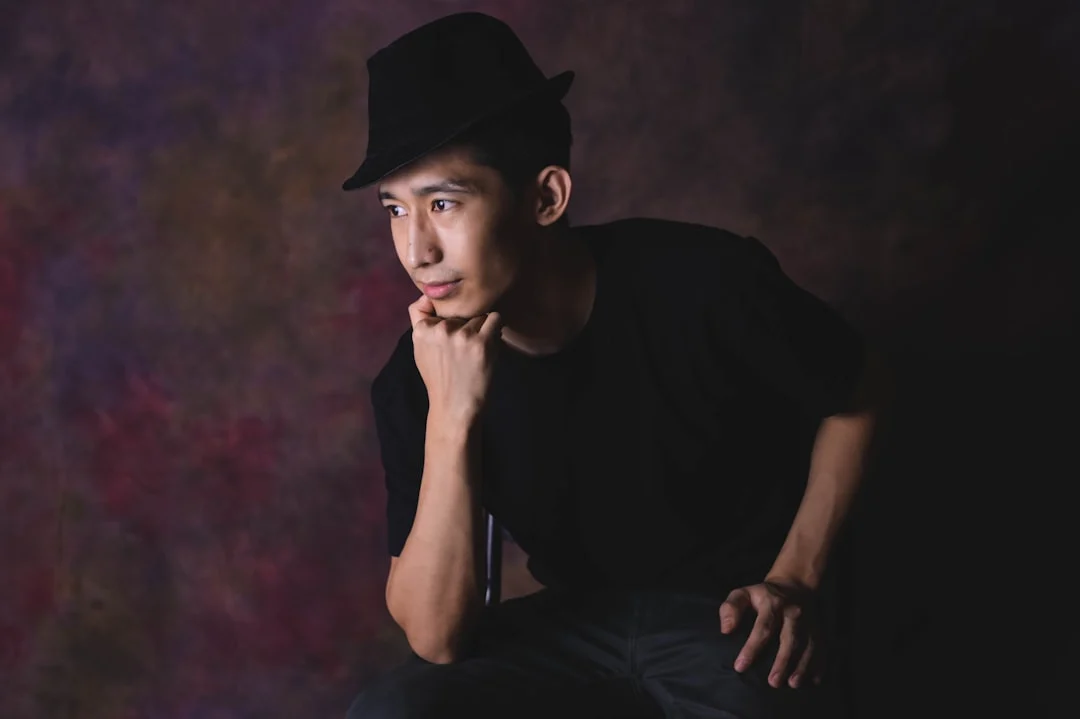
45 degrees to the side and 45 degrees above (Rembrandt lighting): This is the most popular starting position for portrait photography. The flash creates a small triangle of light on the shadow side of the face, beneath the eye. It produces natural-looking directional light with enough shadow to create depth while keeping the majority of the face well lit. If you learn only one flash position, this should be it.
Slightly closer to the camera axis (loop lighting): Bring the flash in to about 30 to 45 degrees from the camera, a little above eye level, and the nose shadow becomes a small loop that points down toward the corner of the mouth without joining the cheek shadow. It is gentler than Rembrandt, suits most faces, and is the pattern many portrait photographers use by default.
Directly to the side (split lighting): Positioning the flash at 90 degrees to the subject illuminates exactly half the face while leaving the other half in shadow. This dramatic lighting creates strong visual impact and is used when you want a moody, editorial, or intense feel. It works well for character portraits and dramatic storytelling.
Slightly above and in front (butterfly or paramount lighting): Placing the flash directly in front of the subject but elevated creates a small shadow beneath the nose and beneath the chin. Named for the butterfly-shaped nose shadow, this lighting is flattering for most faces and is a classic beauty lighting position. It can be created with a single light on a boom stand or by bouncing a flash off a ceiling.
Behind and to the side (rim or edge lighting): Moving the flash behind the subject so that it skims across the edges creates a rim of light that separates the subject from the background. This is rarely used as the sole light source but is extremely effective as an accent light in multi-light setups.
Below the subject (horror or villain lighting): Light from below looks unnatural because it is rarely seen in everyday life. It produces an unsettling, dramatic effect that is useful for creative and editorial work but should be avoided for flattering portraiture.
Whichever position you choose, a reflector on the shadow side lifts the shadows and lowers the contrast. White gives soft, subtle fill; silver gives stronger fill with a crisper edge.
Want to tell these patterns apart on a face? Portrait lighting patterns shows where the light goes for Rembrandt, loop, butterfly and split, and what each shadow looks like.
Light Modifiers for Off-Camera Flash
A bare flash produces hard light with sharp-edged shadows. Light modifiers change the quality of that light, primarily by increasing the apparent size of the light source relative to the subject. For more on placing modifiers and stands indoors, see studio lighting setup.
- Shoot-through umbrella: The simplest and most affordable modifier. The flash fires through translucent white material, spreading and softening the light. Produces broad, even illumination. Difficult to control spill. An easy first modifier to learn with.
- Reflective umbrella: The flash fires into the umbrella and bounces back toward the subject. Produces slightly more directional light than a shoot-through umbrella. Available in white, silver, and gold surfaces, each affecting the color and contrast of the light.
- Softbox: An enclosed box with a translucent front panel. Produces controlled, soft light with more directionality than umbrellas. Available in many shapes including rectangular, square, octagonal, and strip. The larger the softbox relative to the subject, the softer the light.
- Beauty dish: A shallow, parabolic reflector that produces light with a mix of hard and soft qualities. The center is slightly more specular while the edges are softer. Favored for fashion and beauty photography because it wraps light around facial features while maintaining contrast and definition.
- Grid or snoot: These restrict the spread of light, creating a narrow beam that illuminates only a specific area. Grids attach to softboxes or reflectors and come in different degrees that control how tightly the light is focused. Snoots create an even more concentrated beam. Both are useful for accent lighting, hair lights, and background lighting where you want precise control.
- Gel filters: Colored transparent sheets placed over the flash to change the color of the light. Used both for creative color effects and for color-correcting flash to match ambient lighting. CTO (color temperature orange) gels warm the flash to match tungsten lights. CTB (color temperature blue) gels cool it to match shade or overcast conditions.
One-Light Setups
A single off-camera flash is remarkably versatile. Before adding more lights, it is worth knowing what one light can already do.
Key light with reflector fill: Position your flash in the Rembrandt position (45 degrees to one side and above) and place a white reflector on the opposite side to bounce some light back into the shadows. This creates a natural look with a defined light direction but soft shadows. A simple white foam board from a craft store makes an excellent reflector and costs almost nothing.
Dramatic side light: Position the flash at 90 degrees to the subject with no fill. The deep shadows on the unlit side create a dramatic, moody look perfect for editorial work, character portraits, and artistic projects. Use a grid or snoot if you want to keep the light from spilling onto the background.
Backlit portrait: Place the flash behind the subject, angled slightly toward the camera. The flash creates a rim of light around the subject’s hair and shoulders while leaving the face in shadow. Expose for the shadow side or use a reflector to bounce some of the rim light back toward the face. This creates an ethereal, luminous look.
Overhead butterfly: Position the flash directly above and slightly in front of the subject on a boom stand or held by an assistant. Add a softbox or beauty dish for the most flattering quality. Place a reflector below the subject’s chin to fill in under-eye shadows. This is a classic beauty setup that requires only one light.
Two-Light Setups
Adding a second light opens up significantly more creative options. The most common two-light configurations are these.
Key plus rim: Your main light illuminates the subject from 45 degrees while the second light, positioned behind and to the opposite side, creates a rim light that separates the subject from the background. This is one of the most popular portrait setups because it creates professional-quality light with clear subject separation.
Key plus background: One light illuminates the subject while the second lights the background. This lets you control the background brightness and color independently of the subject lighting. Add a colored gel to the background light for creative color effects. Light the background brightly for a clean white backdrop.
Key plus fill: Instead of a reflector, use the second flash as fill on the opposite side of the key, a little farther away and one to two stops lower in power, through a large modifier or bounced off a wall. More fill gives a bright, open look; less fill keeps more shadow and drama.
Cross lighting: Two lights at equal power on opposite sides of the subject, each roughly 45 to 90 degrees from the camera, light both sides of the face and leave a shadow down the middle. It is bold and graphic, and suits athletic and musician portraits more than soft, flattering work.
Clamshell lighting: Position one light above and slightly in front of the subject and the second light below at a lower power. This creates virtually shadowless, even illumination that is extremely flattering for beauty and headshot photography. The lower light fills in any shadows created by the upper light, producing smooth, even skin illumination.
Balancing Flash with Ambient Light
One of the most important skills in off-camera flash photography is balancing your flash output with the existing ambient light. This is what separates natural-looking flash photography from the harsh, obviously flashed look that many people dislike. Understanding this concept is fundamental to photography lighting in general.
Your camera has two independent exposure controls: the shutter speed primarily controls ambient light exposure, while the aperture controls both ambient and flash exposure. By adjusting the ratio between shutter speed and aperture, you can control how much ambient light appears in the final image relative to the flash.
For natural-looking flash, set your camera to properly expose the ambient light, then add just enough flash to lift the shadows or add a catch light to the eyes. The flash should supplement the existing light, not overpower it. In practice, this often means using your flash at relatively low power settings and relying on the ambient light for the overall exposure.
For a dramatic look where the flash dominates, use a faster shutter speed to underexpose the ambient light by one to three stops, then set your flash power to properly expose the subject. This darkens the background while keeping the subject well lit, creating a striking separation between subject and environment.
Dragging the shutter goes the other way. A slow shutter speed, often around 1/30 to 1/60 second indoors, lets candles, room lights and colored venue lighting register in the background while the brief flash still freezes the subject. It is a staple of event work, where a fast shutter would leave everything beyond the subject black.
How slow can you go before the ambient light blurs the subject? Dragging the shutter goes further into slow shutter speeds with flash.
Overpowering the sun takes a dark, saturated sky behind a fully lit subject. Shoot at or near your flash sync speed, use your base ISO and stop down to around f/11 to f/16 to pull the bright sky down, and bring the flash close to the subject, roughly a meter or a meter and a half (3 to 5 feet). A single speedlight that easily overpowers the sun at that distance will fall well short from several meters away. High-speed sync lets you use a wider aperture instead, at the cost of flash power.
A simple order of work for any of these looks: set the shutter speed and aperture for the ambient exposure you want, bright, natural or dark, then add flash power until the subject looks right. If the background is too bright, use a faster shutter speed or a smaller aperture; if it is too dark, slow the shutter. Then recheck the flash power.
The flash sync speed, typically between 1/160 and 1/250 second, limits how fast your shutter speed can be while still syncing with the flash. High-speed sync (HSS) allows faster shutter speeds but reduces the effective power of the flash. Understanding this relationship is essential for outdoor flash work where you may need fast shutter speeds to manage bright ambient light.
Power Settings and Exposure Control
Flash power is measured in fractions of full output. Full power is 1/1, and each halving of power is one stop less light: 1/2, 1/4, 1/8, 1/16, 1/32, 1/64, and 1/128. Most speedlights offer power adjustment in full stops or third-stop increments.
Lower power settings have several practical advantages beyond just less light output. They recycle faster, allowing you to shoot at higher frame rates without waiting for the flash to recharge. They generate less heat, which extends the life of the flash tube and prevents overheating during long sessions. And they produce a shorter flash duration, which is better at freezing motion.
Start at medium power, around 1/8 or 1/16, and adjust from there based on your test shots. If you are in manual flash mode, check your histogram and adjust the power up or down until the exposure looks right. If you are using TTL mode, the camera and flash communicate to set power automatically, but you can use flash exposure compensation to adjust the TTL output up or down in stops.
The distance between the flash and the subject also affects exposure. The inverse square law dictates that light intensity falls off rapidly with distance. Doubling the flash-to-subject distance reduces the light by two stops. This means that small changes in flash position can significantly affect exposure, and you may need to readjust power when moving the flash even short distances.
If subjects keep coming out too bright, work through this short checklist on using flash without overexposing.
Off-Camera Flash for Outdoor Portraits
Outdoors, an off-camera flash means you are no longer limited to whatever light the location happens to have. Three combinations work in most places.
Sun as rim, flash as key: Put the subject’s back to a low sun so it rims their hair and shoulders, then light the face from the side with the flash. The sun gives the warm edge and the flash gives the face direction and shape.
Open shade with a flash key: Open shade lights a face softly and evenly but with little direction. A flash from one side or slightly above adds the shadows that give the face form, while the background keeps its natural look.
Blue hour with a warm flash: In the short spell after sunset when the sky turns deep blue, underexpose the ambient a little to keep the sky rich and light the subject with flash. A CTO gel on the flash warms the subject and sharpens the contrast with the cool sky. See blue hour photography for how the light changes through that window.
Light stands with modifiers are top-heavy and catch the wind like sails. Weight them with sandbags or have someone hold the stand. A falling stand can hurt someone as well as the gear.
Essential OCF Gear for Getting Started
You do not need to invest heavily to get started with off-camera flash. A minimal but effective kit includes the following.
- One speedlight or battery-powered strobe with manual power control
- A radio trigger set with a transmitter and one receiver, or a flash with built-in radio
- A light stand, even an inexpensive aluminum stand works well for starting out; an air-cushioned stand lowers the flash gently instead of dropping it if a height clamp slips
- A shoot-through umbrella, the most affordable and versatile first modifier
- An umbrella bracket to mount the flash on the light stand and hold the umbrella
- A white foam board reflector for fill light
- A CTO gel to warm the flash to match tungsten light or a low sun
This basic kit lets you create professional quality portraits and is sufficient for learning all the fundamental principles of off-camera flash. As you develop your skills and understand your needs, you can expand to multiple lights, larger modifiers, and more specialized equipment. But do not let gear acquisition delay your learning. One flash, one modifier, and a reflector go a long way once you understand light placement.
A Practice Plan With One Light
Start by setting up your single flash in the Rembrandt position with a shoot-through umbrella and photograph a patient subject or even a mannequin head. Move the flash to each of the classic positions described above and photograph the same subject from the same camera position. Comparing the results will teach you more about light direction in one session than weeks of reading. Then add a reflector on the shadow side and go round the positions again.
Next, practice balancing flash with ambient light. Find a room with window light and add your off-camera flash as a supplement. Start with the flash at low power and gradually increase it, observing how the balance between window light and flash changes the feel of the image. This exercise builds the foundational skill of integrating flash into existing light rather than overpowering it.
Finally, take your single light outdoors during golden hour and practice using flash to add dimension to backlit portraits. Position your subject with the sun behind them and use your off-camera flash to illuminate the face. Adjust the flash power to maintain a natural look that balances the warm backlight with the cooler flash illumination. This real-world exercise demonstrates the power of off-camera flash to create images that would be impossible with ambient light alone.
Common Off-Camera Flash Mistakes
- Placing the flash too far away. Double the distance and only a quarter of the light arrives, and the modifier becomes smaller relative to the subject, so the light gets harder too. Keep a single speedlight with a modifier close, roughly 1 to 2 meters (3 to 6 feet).
- Letting the background go black by accident. A fast shutter speed with flash can kill the ambient completely. Unless that is the look you want, slow the shutter until the background registers.
- Too much flash power. An over-flashed subject looks pasted onto the scene. Start low, around 1/8 or 1/16, and raise it until the subject just sits right.
- Mismatched color. Daylight-balanced flash against warm tungsten or sunset light makes the subject look cold next to a warm background. A CTO gel on the flash brings it in line with the ambient white balance.
- An unsecured light stand. Weight every stand that carries a modifier, especially outdoors.
Off-Camera Flash Questions
What kind of flash do I need for off-camera flash?
Any flash with a manual power setting will do, including the one you already have. Manual is all you need off camera, since the flash usually stays at a fixed distance. The quality of the light comes from where you put the flash and how you modify it, not from the flash itself.
Do I need TTL triggers for off-camera flash?
No. Basic manual radio triggers that only fire the flash are enough for most off-camera work. TTL triggers add automatic exposure, remote power control and often high-speed sync, which help when distances change quickly, but plenty of photographers never use them.
Can I use off-camera flash in bright sunlight?
Yes. Bring the flash close, roughly 1 to 1.5 meters (3 to 5 feet), use your base ISO, stop down to around f/11 to f/16 and shoot at your sync speed. For a wider aperture, use high-speed sync and accept the loss of flash power.
Is one off-camera flash enough for portraits?
Yes. One flash through a softbox or umbrella at about 45 degrees, with a reflector for fill, gives Rembrandt or loop lighting that covers most portrait situations. A second light adds options such as a rim or a lit background, but it is not a requirement.
Need to know how far a flash reaches, or what aperture it needs at a given distance? The flash guide number calculator works it out from the guide number, ISO, distance and aperture.