When flash is the main light on a subject, it is the length of the flash burst, not the shutter speed, that freezes motion. A shutter open for 1/200 second cannot stop a splash, but a burst lasting 1/10,000 second can, as long as the ambient light is too dim to record much on its own. With most small flashes, turning the power down makes the burst shorter, which is why the sharpest splash and dance photos are often made at low flash power.
Why the burst, not the shutter, freezes the subject
Think of the exposure as a window of time during which light is allowed to reach the sensor. Normally the shutter speed defines that window. But the window only matters if there is light to record during it. In a dark room, the shutter can stay open for 1/200 second, yet almost all the light that reaches the sensor arrives during the tiny fraction of that time when the flash is actually glowing. The rest of the time the sensor sees near darkness, and darkness records nothing, including blur.
So the effective exposure time for a flash-lit subject is the flash duration, and that can be many times shorter than any shutter speed usable with normal flash. A camera’s flash sync speed is usually somewhere around 1/160 to 1/250 second, which is far too slow to stop a splash or a dancer’s hands. The flash burst, often measured in thousandths or tens of thousandths of a second, is what does the work.
This only holds when the flash is the dominant light on the subject. If the room is bright, the ambient light records its own image for the whole shutter time, and that image carries whatever blur the shutter speed allows. The balancing flash and ambient light guide explains how the two exposures stack; for freezing motion, the goal is to make the ambient part as close to zero as possible.
How much motion a given duration stops
Blur is simple arithmetic: distance moved equals speed multiplied by time. What changes from one shot to the next is how large that distance looks in the final picture.
| Subject and approximate speed | Moves in 1/250 s | Moves in 1/1,000 s | Moves in 1/10,000 s |
|---|---|---|---|
| Person walking, 1.5 m/s | 6 mm | 1.5 mm | 0.15 mm |
| Water drop after falling 50 cm, about 3 m/s | 12 mm | 3 mm | 0.3 mm |
| Fast hand movement in dance, around 5 m/s | 20 mm | 5 mm | 0.5 mm |
The numbers only become blur when you consider magnification. A walking person moving 6 mm during a full-length portrait is invisible, because 6 mm is a tiny fraction of the frame. A water drop moving 3 mm in a close-up where the whole frame is 10 cm wide smears across 3 percent of the picture, which is plainly visible. The closer and larger your subject is in the frame, the shorter the burst you need.
A useful rule: work out roughly how wide the scene is in the frame, then aim for the subject to move less than about one thousandth of that width during the flash. For a 10 cm macro splash, that is 0.1 mm, which needs something in the region of 1/20,000 second or shorter for a fast drop. For a dancer filling a 2 metre frame, it is 2 mm, which a burst of around 1/2,500 second handles for most movements.
Lower power, shorter burst
Most small hot-shoe flashes (speedlights) and many battery-powered portable strobes control their output by cutting the burst short. The flash tube starts to discharge, and a fast electronic switch stops the discharge once enough light has been emitted. At full power the switch never cuts in, so the burst runs its full natural length. At low power it cuts in very early, and the burst is very short.
The practical result for a typical speedlight looks roughly like this. At full power the burst is relatively long, often in the region of 1/1,000 second or slower. Each halving of power shortens it, and at the lowest settings, around 1/64 or 1/128 power, bursts of 1/20,000 second or shorter are common. The exact numbers vary widely between models, so treat these as a sense of scale, not a specification.
This creates the central trade-off of high-speed flash work: the power setting that freezes motion best gives you the least light. You make up the difference in four ways:
- Move the flash closer. Halving the distance gives four times the light on the subject, two stops, at no cost to duration. The inverse square law is your friend here.
- Raise the ISO. Going from ISO 100 to 400 lets you drop the flash two power steps and shorten the burst accordingly.
- Open the aperture, within the limits of the depth of field you need, which is often very thin in close-up work.
- Use several flashes at low power instead of one at high power. Two flashes at 1/64 each give the light of one at 1/32 but keep the shorter 1/64 duration.
Reading duration specs: t.5 and t.1
A flash burst does not switch on and off like a light bulb. It rises almost instantly to a peak and then fades away along a tail. Because there is no clean end point, manufacturers measure duration in two ways:
- t.5 is the time the light stays above half of its peak brightness.
- t.1 is the time it stays above one tenth of its peak brightness, which includes most of the fading tail.
For a flash whose burst is allowed to fade naturally, t.1 is typically around three times longer than t.5. A unit quoted at 1/2,000 second t.5 may have a t.1 closer to 1/700 second. The t.5 figure is the one that looks impressive, which is why it is the one most often printed, but the tail still carries light, and on a fast subject that tail records as a faint smear trailing behind a sharp core.
When a switch cuts the burst short at low power, the tail is chopped off too, so t.1 and t.5 move closer together. That is one reason a low-power speedlight freezes a splash more crisply than the headline numbers alone suggest. When comparing flashes for motion work, compare t.1 figures if you can find them, since they describe what the sensor actually sees.
Two ways flashes control power, and why it matters
Not every flash behaves the same way when you turn it down. Broadly, there are two designs.
Switch-controlled flashes (often described as using insulated gate bipolar transistor, or IGBT, control) fully charge their capacitor and then cut the discharge short to set the power. Lower power means a shorter burst. Almost all hot-shoe speedlights work this way, as do many portable strobes and some studio units designed specifically for short durations.
Voltage-controlled flashes, a common design in traditional mains-powered studio heads, set power by charging the capacitor to a lower voltage and letting it discharge completely. Lowering the power does not shorten the burst much, and in many units it actually makes the burst longer. A studio head at its lowest setting can have a slower duration than at full power, the opposite of a speedlight.
If your flash manual lists duration at each power setting, the pattern tells you which design you have: durations that get shorter as power drops mean switch control; durations that stay flat or grow mean voltage control. For motion work with a voltage-controlled unit, the fastest burst may come from a lower-powered head at full output rather than a big head turned down. Some studio strobes offer a dedicated fast-duration mode for exactly this reason.
Keeping the ambient light out: ghosting
Everything above assumes the flash is the only light that matters. When it is not, you get ghosting: a sharp, flash-lit image of the subject overlaid with a blurred, ambient-lit copy recorded during the rest of the shutter time.
The fix is to push the ambient exposure several stops below the flash exposure. A rough working target is at least four or five stops. Here is how the numbers work out in an ordinary room lit by lamps. At ISO 100 and f/8, a correct ambient exposure in such a room might need around 1/4 second. At 1/250 second, the ambient is about six stops underexposed, which is effectively black. The flash then makes the entire visible image, and its burst length alone decides the sharpness.
Outdoors in daylight the picture is very different. Direct sun at ISO 100 and f/8 needs roughly 1/400 second, so at the sync speed the ambient is already at or above a full exposure and the flash only adds fill. In that situation the shutter speed decides sharpness, not the flash. This is also why high-speed sync does not give you short-duration freezing: in that mode the flash pulses continuously while the shutter slit crosses the sensor, so the effective exposure time is set by the shutter speed, just as with ambient light.
When some ghosting is unavoidable, choose where it falls. With front-curtain sync the flash fires at the start of the exposure, so the ghost streaks ahead of the subject in the direction of travel. With rear-curtain sync the flash fires at the end, so the ghost trails behind, which reads as natural motion.
Setting up for splashes and dancers
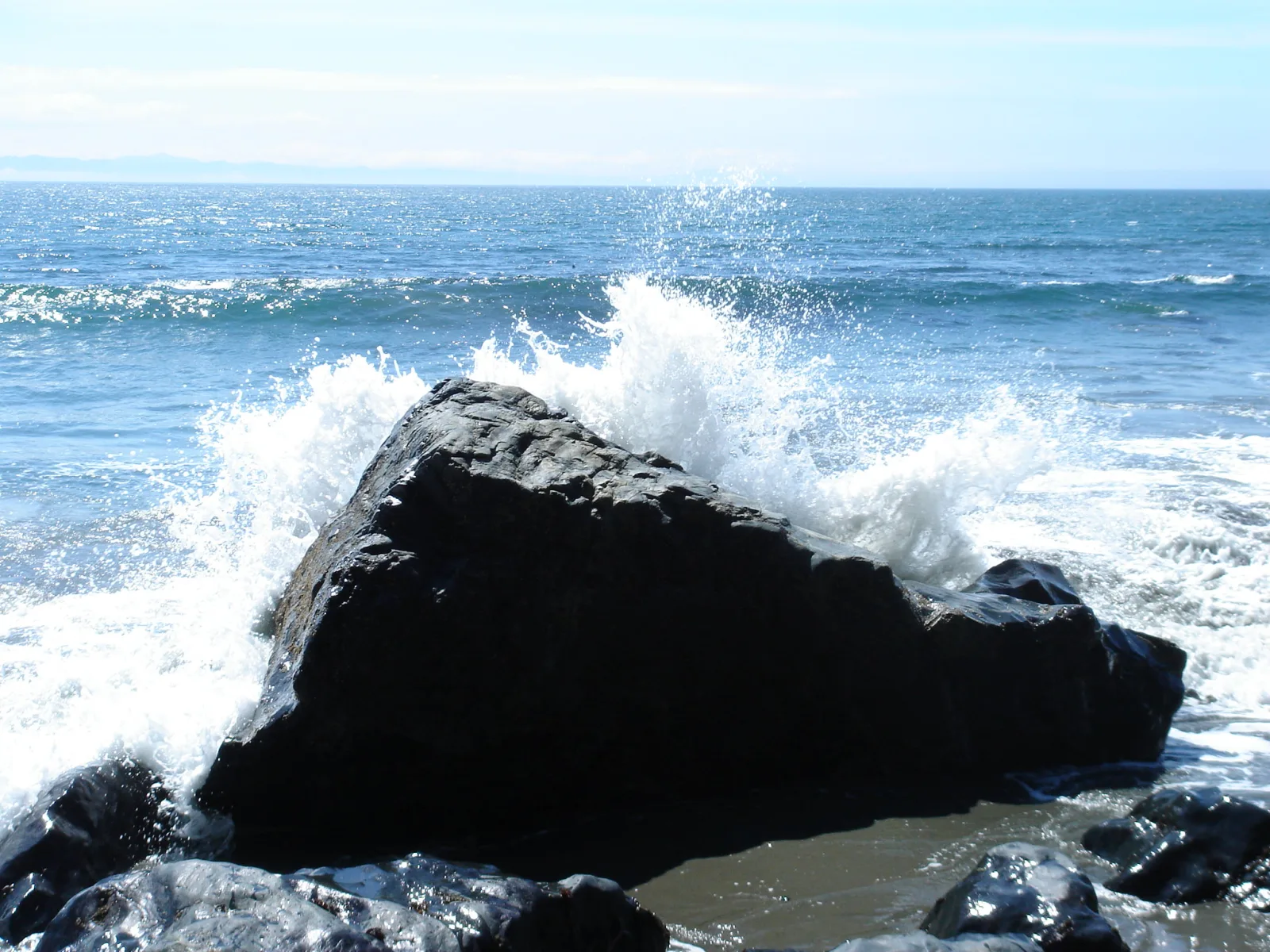
Freezing liquid is the classic flash-duration exercise, and it follows a repeatable recipe. The splash photography page covers props and ideas; this is the lighting logic behind it.
- Darken the room. Turn off lights or draw curtains so the ambient falls far below the flash.
- Set the camera in manual mode at or just below the sync speed, f/8 to f/11 for some depth of field, and ISO 200 to 400.
- Put the flash close, often 30 to 60 cm from the splash, aimed at the subject or at a background behind a clear glass so the liquid glows.
- Start at 1/32 power and take a test. If the drops show soft tails, drop to 1/64 or 1/128 and recover the light with distance or ISO.
- Prefocus manually on a pencil held where the splash will happen, because autofocus cannot track a drop.
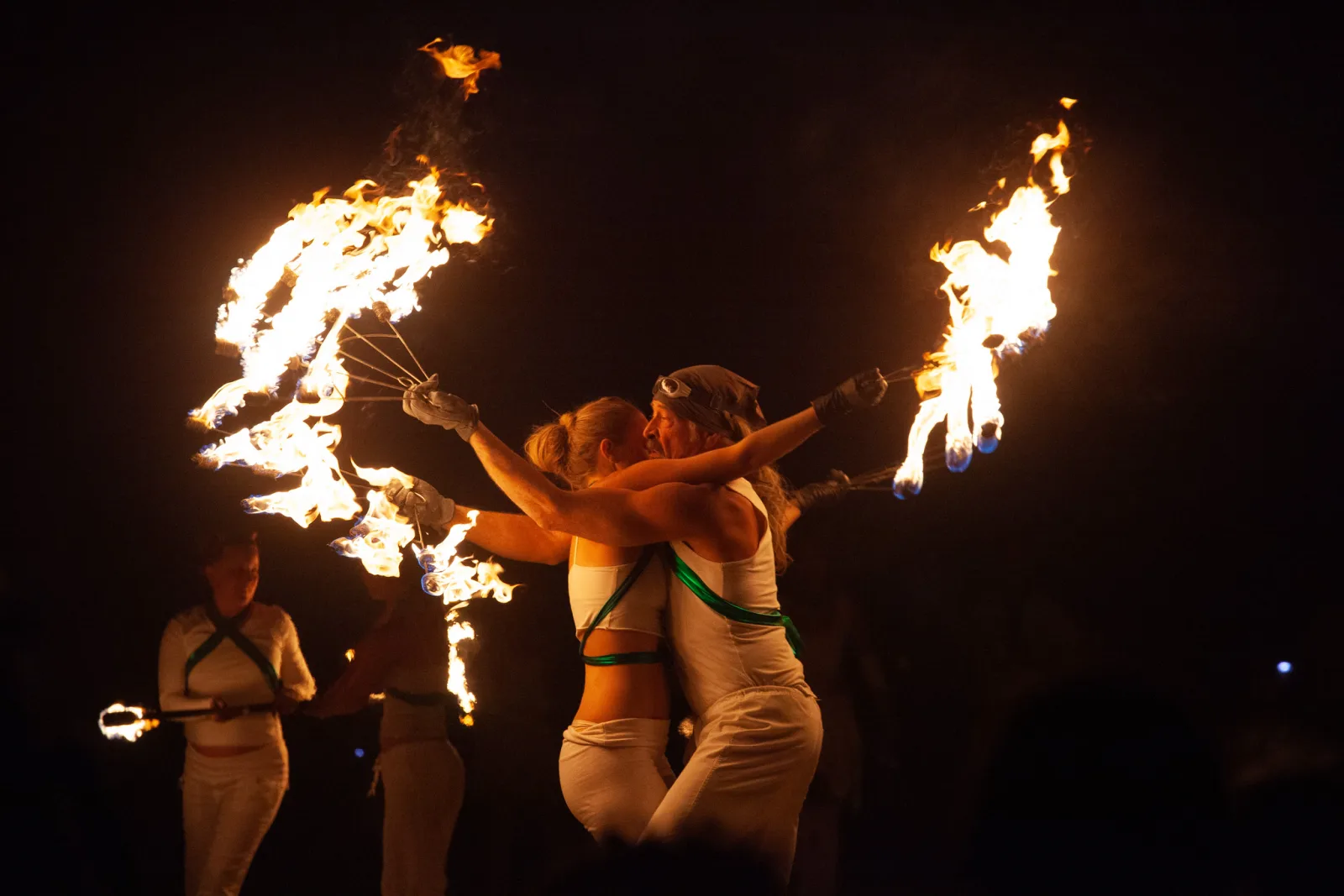
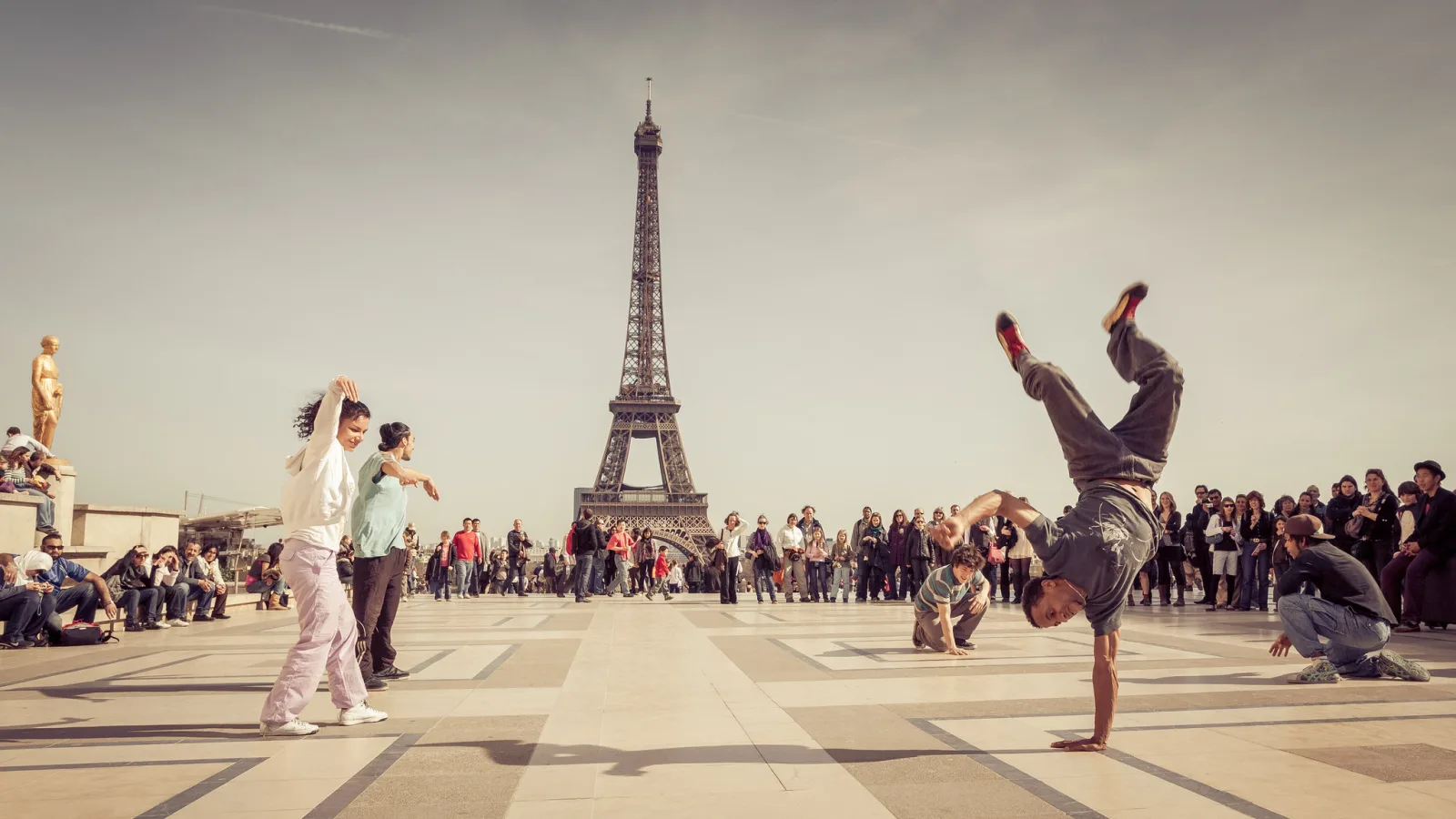
Dancers need the same thinking at a larger scale. In a studio, a dark backdrop and flash as the only light will freeze leaps and flying hair. Because the subject is farther away and the frame is bigger, you need more power than for a splash, so the burst will be longer; two or three flashes at moderate power usually freeze a jump more crisply than one flash turned up high. On a lit stage you often cannot kill the ambient, so the shutter speed and ISO will have to share the load. The dance photography page covers working in performance conditions.
Common mistakes
- Turning the flash up to full power for action. On most speedlights this gives the longest, blurriest burst. Use the lowest power that exposes correctly and gain light from distance or ISO.
- Raising the shutter speed to fix flash blur. Above the sync speed you get a dark band, and below it the shutter barely matters once the ambient is dark. Shorten the burst instead.
- Leaving room lights on. Ambient light creates ghosts around a sharp core. Kill it, or at least push it four or five stops below the flash.
- Trusting the t.5 figure alone. The tail after t.5 still records on fast subjects. Test on a real subject before a shoot.
- Assuming high-speed sync freezes like normal flash. In that mode the shutter speed sets the exposure time. For true freezing, stay at or below sync speed with the ambient dark.
- Turning a studio head down and expecting a faster burst. Many voltage-controlled units get slower as power drops. Check the duration table for your unit.
Try this
Measure your own flash. In a dark room, set a desk fan running at a steady speed and put a small piece of white tape near the tip of one blade. With the camera on a tripod in manual mode at 1/200 second, f/8 and ISO 400, fire the flash from about a metre at full power, then 1/4, 1/16, 1/64 and 1/128, changing nothing else. The frames will get darker as the power drops; that is fine, because you are judging sharpness, not exposure. Zoom into the tape in each frame. At full power it will be a smear; at the lowest powers it should be a sharp rectangle. If you know how fast the fan spins, measure the distance from the hub to the tape to work out the tape’s speed; the length of the smear divided by the tape’s speed gives you an estimate of the burst length at each setting.
Frequently asked questions
What flash duration do I need to freeze water drops?
For close-ups of falling drops, something around 1/10,000 to 1/20,000 second or shorter gives crisp results. For larger splashes seen from farther away, 1/2,000 to 1/5,000 second is often enough.
Does a faster shutter speed make flash freeze motion better?
Only by reducing the ambient ghost. Once the ambient is dark, any shutter speed up to the sync speed gives the same frozen subject, because the burst sets the exposure time.
Why is my splash sharp in the middle but streaky at the edges?
Usually the tail of the burst or some ambient light is recording after the peak. Lower the flash power to shorten the tail, and darken the room further.
Is flash duration the same as flash sync speed?
No. Sync speed is the fastest shutter speed at which the whole sensor is uncovered for the burst. Duration is how long the burst itself lasts. They are separate numbers set by the camera and the flash respectively.
Related guides
- Balancing Flash and Ambient Light: the two-exposure model that explains ghosting.
- How to Freeze Motion: shutter-based and flash-based ways to stop action.
- High-Speed Sync: why pulsed flash does not freeze like a single burst.
- Flash Sync Speed: the shutter limit that makes short bursts necessary.
- Splash Photography: ideas and props for liquid in motion.
- Guide Number: how to work out how much light each power setting delivers.
- Motion Blur: when you want the opposite result.