The Wildlife Photographer’s Toolkit
Wildlife photography demands more specialized preparation than almost any other genre. Your subjects are unpredictable, often wary, and rarely willing to pose. The distance between you and your subject is usually measured in tens or hundreds of meters. Success depends on having the right equipment, knowing how to use it instinctively, and being prepared for the long stretches of waiting that come between the brief bursts of action.
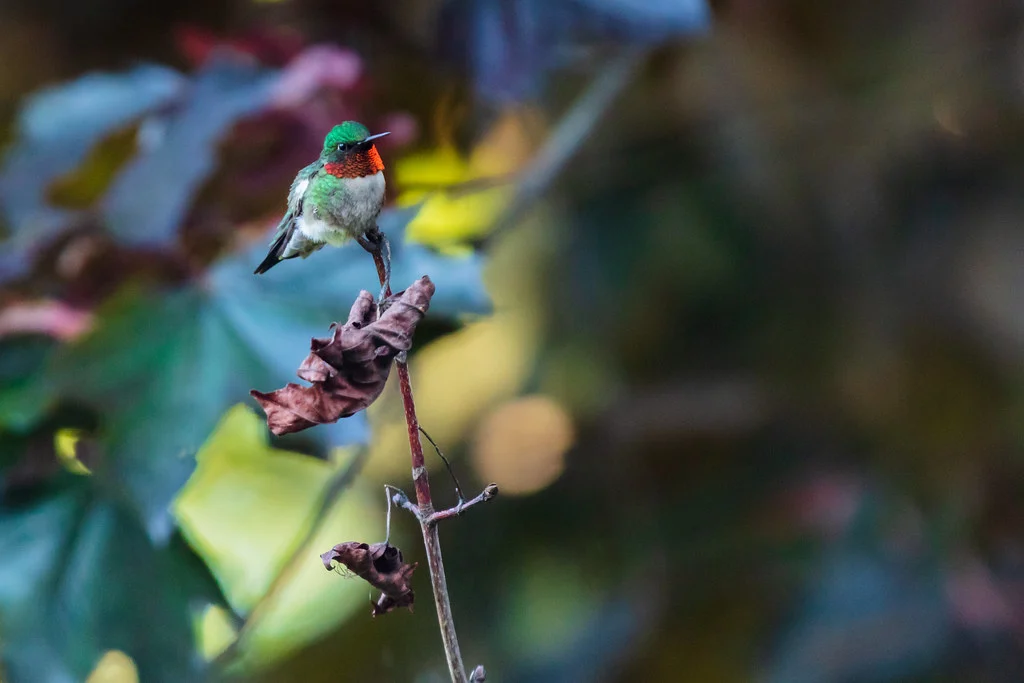
Long telephoto lenses are the defining tools of wildlife photography. A focal length of 300mm is the minimum for most bird and mammal work, and many wildlife photographers use 500mm or 600mm lenses to reach truly distant subjects. These lenses are heavy, often requiring a tripod, monopod, or bean bag for support, and they require precise technique: even small vibrations are magnified along with the image. If you are just starting out, a 70-300mm or 100-400mm zoom lens offers good reach at a more accessible weight and price. Whatever lens you use, practice handling it until focusing, zooming, and stabilizing become second nature. For more on photographing birds specifically, explore the Bird Photography guide.
Camera settings for wildlife are driven by the need for speed. Set your camera to continuous autofocus (often labeled AI Servo or AF-C) so it tracks moving subjects rather than locking once and stopping. Use burst mode, continuous shooting at the highest frame rate your camera offers, to capture sequences of action where the peak moment might last only a fraction of a second. Start with shutter priority mode, setting a minimum shutter speed of 1/500 second for stationary animals and 1/1000 or faster for animals in motion. Let the camera adjust the aperture and ISO to maintain that speed.
Supporting gear makes a significant practical difference. A sturdy tripod with a gimbal head allows you to support a heavy telephoto lens while still panning smoothly to track movement. A monopod offers stability with more mobility. A bean bag, simply a cloth bag filled with rice or dried beans, is surprisingly effective when draped over a car window, a fence post, or the ground. It conforms to irregular surfaces and absorbs vibration. Even a folded jacket can serve as an improvised support in the field.
Practical considerations matter too. Dress in muted, natural colors that do not stand out in the environment. Avoid fabrics that rustle loudly. Bring insect repellent, sunscreen, water, and more patience than you think you will need. Wildlife photography is as much a physical pursuit as a creative one: expect to be cold, wet, muddy, and stiff from sitting still. Prepare accordingly.
Field Craft and Animal Behavior
The best wildlife photographs are made by photographers who understand their subjects: not just as photographic targets but as living creatures with patterns, habits, and behaviors that can be studied and anticipated. Field craft, the art of getting close to wildlife without disturbing it, is a skill that separates excellent wildlife photographers from the rest.
Before you head into the field, research your subject. What does it eat? Where does it sleep? When is it most active? What time of year does it breed, nest, or migrate? This knowledge tells you where to be and when. A photographer who knows that a particular bird species feeds on berries that ripen in autumn, or that a certain mammal is most active at dawn, has an enormous advantage over one who simply shows up and hopes for the best.
Learning to read animal behavior in real time is equally important. Most animals give clear signals when they are comfortable and when they are stressed. A bird that continues feeding as you approach is relaxed. One that stops feeding, raises its head, and stares at you is alert and considering whether to flee. If you see those alert signals, stop. Do not move closer. Wait until the animal relaxes and resumes its normal behavior before you take another step. Pushing an animal past its comfort zone not only stresses the animal: it usually results in a photograph of a retreating rear end.
Concealment is a powerful tool. A simple hide or blind, even a piece of camouflage fabric draped over a chair, can make you nearly invisible to wildlife. If you set up a hide near a known feeding or watering spot and wait, animals will often approach much more closely than they would if you were standing in the open. The key is patience. Set up early, get comfortable, and be prepared to wait. Wildlife photography often involves hours of sitting still for seconds of action.
Perspective transforms wildlife images. Most casual wildlife photos are taken from standing height, looking down at the animal. This produces a flat, detached feeling. Get low. Lie on the ground. Shoot from the animal’s eye level. When you are at eye level with your subject, the image becomes intimate and engaging: the viewer feels like they are in the animal’s world rather than looking down at it from a human vantage point. This single change will improve your wildlife photography more than any equipment upgrade.
The best times for wildlife photography are typically the first two hours after sunrise and the last two hours before sunset. Animals are most active during these periods, and the light is at its most beautiful: warm, directional, and flattering. Midday heat sends many animals into cover, and the overhead light creates harsh shadows that are unflattering for any subject. Plan your sessions around these windows of activity and light.
Composition in the Wild
Composition in wildlife photography is a constant negotiation between what you want and what the animal gives you. You cannot ask a fox to move three feet to the left for a better background, or a bird to fly through a shaft of light. What you can do is position yourself thoughtfully, understand the compositional principles that make wildlife images compelling, and be ready to capture the moments when everything comes together.
One of the most important compositional guidelines in wildlife photography is to leave space in the direction the animal is facing or moving. If a bird is looking to the right, place it on the left side of the frame so it has room to “look into” the image. If an animal is running to the left, position it on the right side with space ahead of it. This creates a sense of movement and purpose. An animal crammed against the edge of the frame with no space to move into feels trapped and uncomfortable to look at. The same principle from Lesson 8: Advanced Composition applies here: give your subject room to breathe.
Resist the temptation to photograph only portrait-style shots of animals staring at the camera. While a direct gaze can be powerful, behavior photographs, animals feeding, fighting, playing, grooming, flying, hunting, or interacting with each other, are far more interesting and tell much richer stories. An image of two birds in a courtship display, a fox pouncing on prey hidden in snow, or a mother cleaning her cub communicates something about the animal’s life that a static portrait cannot. Train yourself to keep shooting through the action, even when you think the “good moment” has passed: often the best frame comes a second or two after you expect it.
Environmental wildlife photography shows the animal within its habitat, giving the viewer a sense of where and how it lives. Instead of filling the frame with the animal, pull back and include the landscape: a heron standing in a misty lake, a deer silhouetted against a ridge at dawn, an eagle circling above a valley. These wider compositions sacrifice detail for context and often produce images with a stronger sense of place and atmosphere than tight close-ups.
Backgrounds are critical in wildlife photography and maddeningly difficult to control. A beautiful bird against a cluttered tangle of branches is a wasted opportunity. Whenever possible, position yourself so that the background behind your subject is clean: a distant tree line, an expanse of sky, a stretch of water, or out-of-focus foliage in a uniform color. A wide aperture (f/4, f/5.6) combined with the long focal lengths typical of wildlife work will throw backgrounds into a soft blur, but even a blurred background can be distracting if it contains bright spots, strong color contrasts, or obvious shapes. Pay as much attention to what is behind your subject as to the subject itself.
Nature Photography Beyond Animals
While wildlife, birds, mammals, reptiles, insects, often gets the most attention, the broader field of nature photography encompasses the entire natural world. Plants, water, weather, geological formations, and seasonal transformations are all rich subjects that reward careful observation and patient technique.
Botanical photography in the field is a rewarding discipline that bridges landscape and macro work. Photographing wildflowers in a meadow, a single bloom against a dark background, or the pattern of autumn leaves on a forest floor requires an eye for detail and an awareness of light. Overcast days are ideal for botanical work: the soft, diffused light eliminates harsh shadows and reveals subtle color variations that direct sunlight washes out. Early morning, when dew is still on the petals, adds a jewel-like quality to flower photography. Get low, shoot at your subject’s level, and use a wide aperture to isolate a single flower from a busy background.
Water is one of nature’s most versatile photographic subjects. A rushing stream, a calm lake, crashing ocean waves, morning dew, rain, frost, and ice all offer different creative possibilities. Long exposures transform moving water into silky, ethereal flows: a technique covered more thoroughly in the Landscape Photography lesson. Short exposures freeze splashes and spray, revealing shapes and textures invisible to the naked eye. Reflections in still water create natural symmetry and can double the visual impact of a scene.
Weather and atmospheric conditions are subjects in their own right, not just obstacles to work around. Fog rolling through a valley, a shaft of sunlight breaking through storm clouds, frost patterns on a window, the golden glow of dust in late afternoon light: these atmospheric phenomena create images with powerful mood and emotion. Photograph the weather itself, not just the landscape underneath it. For more on incorporating the natural elements into your photography, explore How to Photograph the 4 Elements.
Seasonal changes offer an ever-renewing source of photographic material. The same woodland path looks completely different in each season: green and lush in summer, golden in autumn, stark and skeletal in winter, delicate with new growth in spring. Documenting these changes over the course of a year is a deeply satisfying project that sharpens your eye for subtle shifts in light, color, and atmosphere. The macro world underfoot, insects, fungi, lichen, moss, tiny flowers, offers yet another dimension of nature photography that we will explore more thoroughly in the Macro and Close-Up Photography lesson later in this course.
Ethics in Nature Photography
As nature photographers, we have a responsibility to the subjects and environments we photograph. A compelling image is never worth harming an animal, damaging a habitat, or misrepresenting the natural world. Ethical practice is not an optional add-on to nature photography: it is fundamental to it.
The “leave no trace” principle should guide every nature photography outing. Stay on established paths and trails wherever possible. Do not trample vegetation to reach a shooting position. Do not move or rearrange natural objects, nests, rocks, plants, for a better composition. When you leave a location, it should look exactly as it did when you arrived. The natural world is the source of your art. Damaging it to create a photograph is self-defeating.
Never bait, call, or deliberately stress wildlife for a photograph. Using recordings of bird calls to lure subjects closer can disrupt feeding, nesting, and territorial behavior. Approaching too closely to a nest or den can cause parents to abandon their young. Baiting predators with food can alter their natural behavior and make them dependent on human handouts. These practices might produce a dramatic image in the short term, but they come at a real cost to the animals involved. The goal is to observe and document wildlife as it lives naturally, not to manipulate it for your benefit.
Honesty in representation is an ethical consideration that extends into post-processing. Nature photography competitions and publications increasingly scrutinize images for manipulation. Removing or adding elements, compositing animals from one scene into another, or dramatically altering colors to misrepresent conditions are all practices that undermine the integrity of nature photography. Minor adjustments to exposure, contrast, and color balance are universally accepted. But if your edit changes what was actually there, you have crossed a line from photography into digital art: which is a valid pursuit, but should not be presented as straight nature photography.
Respect protected areas, seasonal closures, and local regulations. If an area is closed during nesting season, stay out of it: no matter how good the photographic opportunity might be. If a national park requires you to stay a certain distance from wildlife, honor that distance. These rules exist to protect the very subjects you want to photograph. Following them is not just legally required: it is a reflection of the respect you have for the natural world that inspires your work.
Field Notes: One Real Photograph
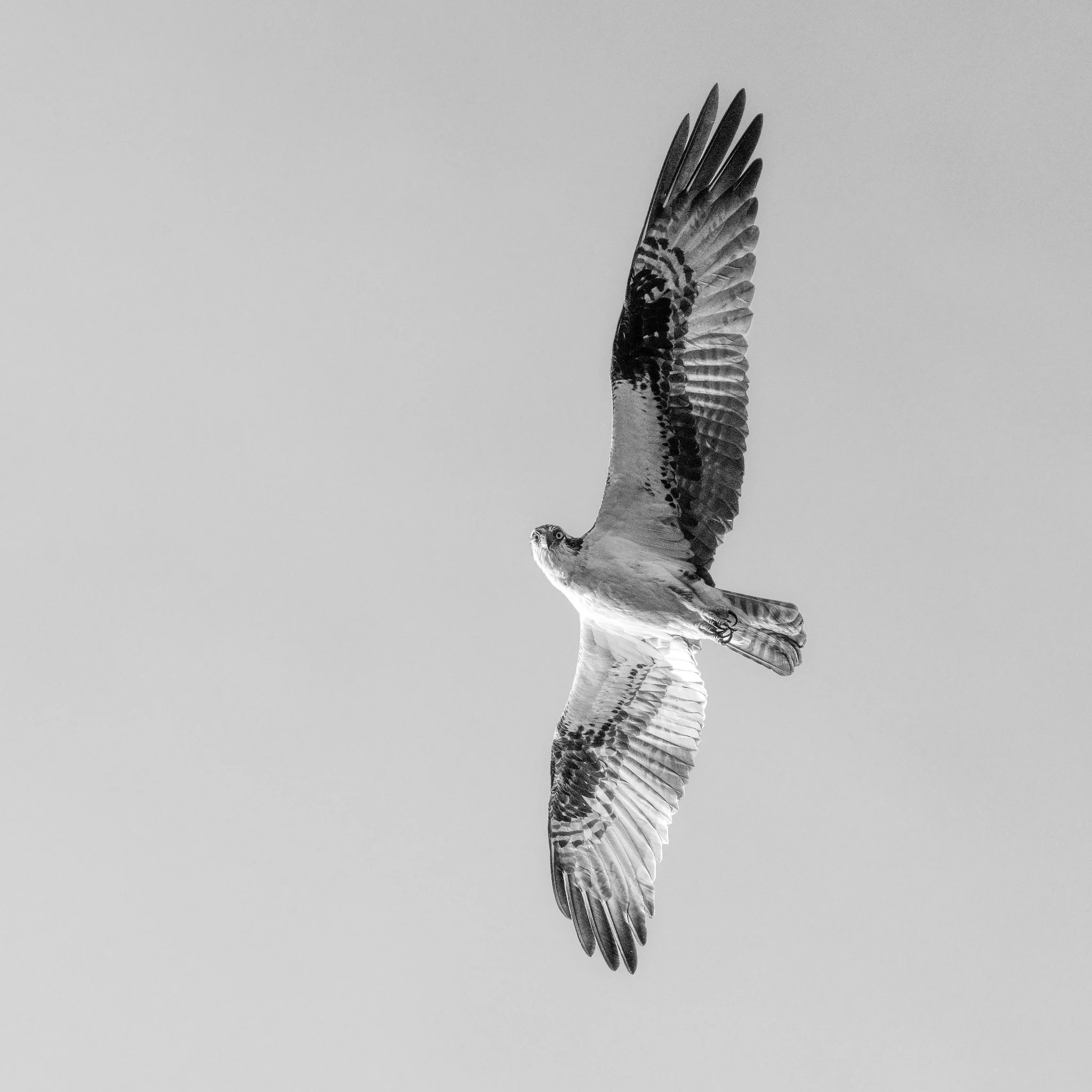
Field notes: a bird against bright sky is the classic case where the meter fights you, because the sky dominates the frame and the bird goes dark. Wide open at f/2.8 let the shutter reach 1/6400, far faster than the 1/500 to 1/1000 a flying osprey needs, and that surplus is what makes wing-tip sharpness reliable rather than lucky. With that much margin the right trade would have been to stop down one stop for sharper edges while staying above 1/2000.
Try This: Nature and Wildlife Exercises
These exercises are designed to develop your patience, your field craft, and your ability to see the natural world as a rich source of photographic stories: from the creatures that inhabit it to the weather, seasons, and textures that define it.
Backyard Safari. You do not need to travel to a national park or a nature reserve to practice wildlife photography. Spend one hour in your garden, your nearest park, or any green space. Photograph every living creature you can find: birds, insects, squirrels, spiders, even the family pet. The key challenge is to get to eye level with each subject. For a bird on a branch, that might mean standing at full height. For an insect on a leaf, it means getting flat on the ground. Notice how the change in perspective transforms the image from a casual snapshot into an intimate portrait.
The Waiting Game. Find a spot where birds or other animals regularly visit: a bird feeder, a pond, a hedgerow with berries, a patch of flowers that attracts butterflies. Set yourself up with a clear view and a comfortable position. Wait for at least 30 minutes. Do not move around. Do not chase subjects. Let them come to you. Photograph whatever appears, focusing on behavior rather than just identification shots. This exercise teaches you the foundational wildlife photography skill: patience. You will likely find that the longer you sit still, the more comfortable the wildlife becomes with your presence, and the closer they will approach.
Weather as Subject. Choose a day when the weather is dramatic, fog, frost, approaching storm, heavy rain, fresh snow, and go out specifically to photograph the natural world in those conditions. Do not fight the weather. Embrace it. Photograph the way fog simplifies a forest into layers of gray. Capture the crystalline beauty of frost on leaves. Show the movement of wind through grass with a slightly slower shutter speed. Let rain on your lens create softness and atmosphere (protect your camera, but do not be so cautious that you miss the shot). This exercise breaks the habit of only photographing in pleasant conditions and opens your eyes to the extraordinary beauty of nature in all its moods.
Nature and wildlife photography is a practice of patience, respect, and deep attention to the living world. Every hour you spend in the field sharpens your awareness: of light, of behavior, of the small details that most people walk past without seeing. The natural world is endlessly generous with its subjects. Your job is to show up, pay attention, and be ready when the moment arrives. For related reading, explore the Landscape Photography hub and Lesson 7: Lighting for techniques that apply directly to nature work.