The mirrorless vs DSLR debate has defined the camera industry for the past decade, and today the answer is clearer than it has ever been. Both camera types produce stunning images, the sensor technology inside them is often identical. For more, see our camera types explained guide. The real differences come down to how each camera is built, how it focuses, how it handles video, and where the industry is heading. If you are buying your first interchangeable-lens camera or considering a switch from one system to another, this guide breaks down every meaningful difference so you can make a confident decision. Check out our camera buying guide for more details.
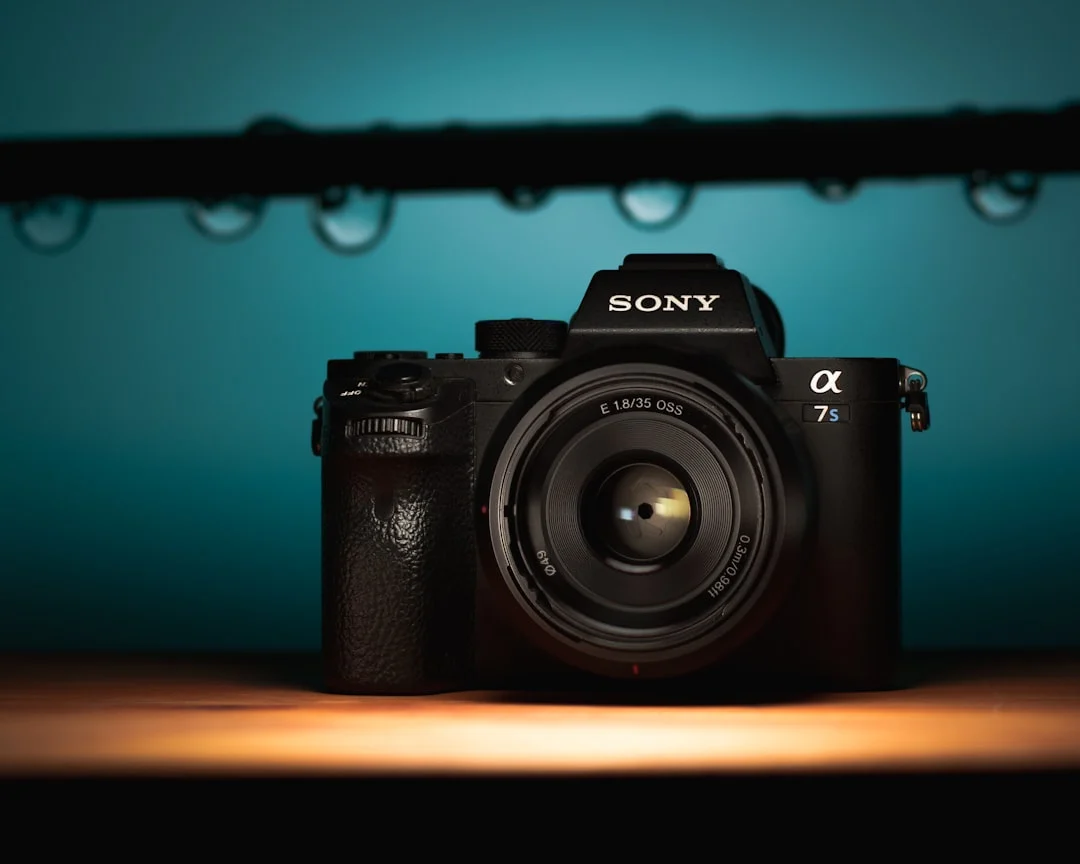
Quick Comparison: Mirrorless vs DSLR at a Glance
Before diving into the details, here is a summary of the key differences between mirrorless and DSLR cameras:
- Viewfinder: DSLRs use an optical viewfinder (OVF) that shows the scene through the lens via a mirror. Mirrorless cameras use an electronic viewfinder (EVF) that displays a digital preview of the image.
- Size and weight: Mirrorless cameras are generally smaller and lighter because they eliminate the mirror box and pentaprism. The difference narrows with larger lenses.
- Autofocus: Modern mirrorless cameras use on-sensor phase detection with AI-powered subject tracking that outperforms most DSLRs. DSLRs use a separate dedicated AF module that is fast but covers less of the frame.
- Battery life: DSLRs typically last longer per charge because the optical viewfinder consumes no power. Mirrorless cameras drain batteries faster powering the EVF and rear screen.
- Video: Mirrorless cameras are significantly better for video, with features like in-body stabilization, unlimited recording times, and advanced video autofocus.
- Lens selection: Both systems have extensive lens options. DSLR mounts have decades of legacy glass. Mirrorless mounts have rapidly expanding native lineups, and adapters allow use of DSLR lenses.
- Future: Every major manufacturer has shifted development to mirrorless. New DSLR development has effectively ended.
How Each Camera Type Works
Understanding the fundamental mechanical difference between mirrorless and DSLR cameras helps everything else make sense.
A DSLR (Digital Single-Lens Reflex) uses a mirror positioned at a 45-degree angle inside the camera body. When you look through the viewfinder, light passes through the lens, bounces off this mirror, travels through a pentaprism or pentamirror, and reaches your eye. You are seeing the actual scene in real time, with no electronic processing. When you press the shutter button, the mirror flips up, the shutter opens, and light hits the sensor to capture the image. This mirror mechanism is the defining feature of the DSLR, and also its biggest physical constraint.
A mirrorless camera removes the mirror entirely. Light passes through the lens and hits the sensor directly at all times. The sensor feeds a live digital image to the electronic viewfinder and rear screen. When you press the shutter button, the camera simply reads the data from the sensor (or uses a mechanical shutter that briefly covers and uncovers the sensor). Removing the mirror eliminates the mirror box, pentaprism, and the dedicated autofocus module that DSLRs use, all of which frees up space and reduces weight.
Electronic Viewfinder vs Optical Viewfinder
The viewfinder is one of the most noticeable differences between these two camera types, and photographers have strong opinions about both.
An optical viewfinder (OVF) shows you the world exactly as it looks. There is no lag, no pixelation, and no battery drain. It works in any lighting condition without washing out. Many photographers, particularly those who have shot DSLRs for years, love the clarity and immediacy of an optical viewfinder. It feels like looking through a window rather than at a screen.
An electronic viewfinder (EVF) shows you a processed digital image. This has several major advantages. First, you see your exposure in real time, if the image will be too dark or too bright, you know before you press the shutter. Second, you can preview white balance, picture profiles, and even black-and-white rendering live. Third, the EVF can overlay information like a histogram, focus peaking highlights, and a level indicator directly onto the image. In low light, the EVF can amplify the scene so you can compose and focus in near-darkness where an optical viewfinder shows only a dim, noisy view.
The downsides of EVFs are real but have shrunk dramatically. Early mirrorless cameras had laggy, low-resolution EVFs that looked like watching a bad television. Modern EVFs refresh at 120 frames per second or higher with resolutions exceeding 5 million dots. The lag is imperceptible for most photography. Some photographers still notice a subtle difference when panning quickly or tracking fast action, but for the vast majority of shooting situations, today’s EVFs are excellent. Battery consumption remains the one persistent disadvantage, the EVF must be powered constantly while you are shooting.
Size, Weight, and Ergonomics
One of the original selling points of mirrorless cameras was their smaller, lighter bodies. Without the mirror box and pentaprism, mirrorless bodies can be significantly more compact. This is genuinely true for entry-level and mid-range cameras, a mirrorless body is often 20-30% lighter than a comparable DSLR. For travel photography, street photography, and anyone who values portability, this weight savings adds up over a full day of shooting.
However, the size advantage has nuances. Professional mirrorless bodies like the Canon R5 Mark II, Nikon Z8, and Sony a1 are actually close in size to professional DSLRs because they need large grips, robust weather sealing, and space for big batteries. The lens is often the heaviest part of the system, and mirrorless lenses are not always smaller, some high-performance mirrorless lenses are actually larger than their DSLR equivalents because manufacturers optimize for optical quality over compactness.
Ergonomics are subjective. Many photographers with larger hands find that some mirrorless cameras feel too small, with cramped grips and buttons placed too close together. Others appreciate the lighter weight and smaller footprint. If possible, handle both types in a camera store before buying, comfort during extended shooting sessions matters more than specifications on paper. Check out our camera specifications explained for more details.
Autofocus: Where Mirrorless Pulls Ahead
Autofocus performance is the area where mirrorless cameras have established a decisive lead over DSLRs, and it is arguably the single biggest reason to choose mirrorless today.
DSLRs use a dedicated phase-detection autofocus module located below the mirror. This system is fast and reliable, but it has limitations. The AF points are clustered toward the center of the frame, typically covering 60-70% of the image area at best. If your subject is near the edge of the frame, you must focus and recompose, which introduces error at wide apertures. DSLR AF systems also require precise calibration. If the AF module and the sensor are not perfectly aligned, you get front-focus or back-focus issues that require micro-adjustment.
Mirrorless cameras use on-sensor phase detection, meaning the autofocus points are embedded directly on the imaging sensor. This allows AF coverage across nearly 100% of the frame, you can place your focus point anywhere in the image without focus-and-recompose. Because the AF system reads directly from the imaging sensor, there is no calibration mismatch to worry about.
The real game-changer is AI-powered subject detection. Modern mirrorless cameras can automatically detect and track human eyes, faces, animals, birds, vehicles, aircraft, and more. The camera identifies your subject and locks focus on the eye or relevant feature, tracking it across the frame as it moves. For portrait photography, wildlife photography, and sports, this is transformative. You spend less time managing focus and more time composing and timing your shots.
DSLR autofocus still works well for many situations, and professional DSLRs with advanced AF modules remain capable tools. But for the latest autofocus technology, particularly subject tracking and eye detection, mirrorless is in a different league.
Battery Life
Battery life is one of the few areas where DSLRs maintain a clear advantage. A mid-range DSLR can shoot 800 to 1200 images per charge using the optical viewfinder. Some professional DSLRs exceed 3000 shots per battery. The optical viewfinder consumes no power, and the camera only activates the sensor and processing system when you actually take a photo.
Mirrorless cameras must power the sensor and EVF continuously while you are shooting, which drains the battery faster. A typical mirrorless camera delivers 300 to 500 shots per charge under standard testing conditions. Real-world results vary, if you use the rear screen instead of the EVF, shoot bursts, or use power-hungry features like in-body stabilization (IBIS), battery life decreases further.
In practice, this is a manageable issue rather than a dealbreaker. Carrying one or two spare batteries solves the problem for a full day of shooting. Many mirrorless cameras also support USB-C charging and even USB power delivery, allowing you to charge from a power bank in the field. Professional mirrorless bodies have also improved their battery efficiency significantly, flagship models now regularly exceed 700 shots per charge.
Video Capabilities
If video matters to you at all, mirrorless wins decisively. This is not even a close contest.
Mirrorless cameras were designed from the ground up with live sensor readout, which is exactly what video recording requires. Modern mirrorless cameras offer 4K recording at 60 or even 120 frames per second, 10-bit color depth, log and HLG profiles for maximum dynamic range, and advanced video autofocus with smooth, reliable eye tracking. Many models include in-body image stabilization that produces remarkably smooth handheld footage. Some mirrorless cameras now record 8K video or internal ProRes, capabilities that were once exclusive to dedicated cinema cameras.
DSLRs can record video, but the experience is compromised. The mirror must flip up permanently during video recording, which means the optical viewfinder goes dark and you must use the rear LCD. DSLR video autofocus using live view is typically slower and less reliable than mirrorless AF. Video features, recording formats, and frame rates are generally a generation or more behind mirrorless equivalents.
If you are a hybrid shooter who needs both photo and video capabilities, and this describes an increasing number of working photographers, mirrorless is the only sensible choice.
Lens Selection and Compatibility
Lens selection was once a major advantage for DSLRs, which had decades of compatible glass from first-party and third-party manufacturers. Canon EF, Nikon F, and other DSLR mounts accumulated enormous lens ecosystems over 30+ years. If you wanted an obscure focal length or a specialty lens, the DSLR mount almost certainly had it.
That advantage has largely evaporated. Canon RF, Nikon Z, Sony E, and Fujifilm X mounts now have comprehensive lens lineups covering everything from ultra-wide to super-telephoto, with fast primes, professional zooms, and affordable options at every price point. Third-party manufacturers have also committed fully to mirrorless mounts.
Crucially, every mirrorless system supports adapting DSLR lenses. Canon’s EF-to-RF adapter, Nikon’s FTZ adapter, and Sony’s LA-EA adapters allow full use of legacy DSLR glass on mirrorless bodies with minimal or no compromise in autofocus performance. This means switching to mirrorless does not require abandoning your existing DSLR lens collection, you can use your current lenses via an adapter while gradually adding native mirrorless glass.
The shorter flange distance of mirrorless mounts (the distance from the lens mount to the sensor) also enables optical designs that were not possible with DSLR mounts. Several mirrorless lenses, particularly wide-angle and fast primes, achieve optical performance that exceeds anything available in DSLR form.
Mechanical Shutter vs Electronic Shutter
Mirrorless cameras offer both mechanical and electronic shutter options, while DSLRs rely on a mechanical shutter. The electronic shutter in a mirrorless camera enables completely silent shooting, invaluable for weddings, theater, wildlife, and any situation where shutter noise is unwelcome. Electronic shutters can also achieve extreme shutter speeds (up to 1/32000 second or faster), allowing you to shoot with wide apertures in bright light without needing a neutral density filter.
Electronic shutters have a potential downside: rolling shutter distortion. Because the sensor reads line by line rather than all at once, fast-moving subjects or rapid camera panning can produce a subtle skewing effect. Modern cameras with stacked sensors have nearly eliminated this issue, but it remains visible on some older or more affordable mirrorless bodies. The mechanical shutter avoids this entirely, which is why most mirrorless cameras include both options.
Burst Mode and Shooting Speed
Mirrorless cameras have a major advantage in continuous shooting speed. Without a mirror that needs to flip up and down for every frame, mirrorless cameras can achieve much higher burst rates. Consumer mirrorless cameras commonly shoot at 10-15 frames per second, while flagship models reach 30, 40, or even 120 frames per second using the electronic shutter. Pre-capture features (the camera starts recording frames before you fully press the shutter button) are also exclusive to mirrorless.
Professional DSLRs top out around 10-14 frames per second with a mechanical shutter, limited by the physical speed of the mirror mechanism. While this is sufficient for most sports and action photography, the headroom that mirrorless provides is substantial.
Equally important, mirrorless cameras maintain full autofocus and auto-exposure performance between every frame during bursts, because the sensor is reading continuously. DSLRs experience brief blackout periods during each mirror flip, which can cause the AF system to lose track of rapidly moving subjects between frames.
Resale Value and the Used Market
DSLR resale values have declined as the market shifts to mirrorless. This cuts both ways. If you own DSLRs, the trade-in value of your gear has dropped, making the cost of switching higher. If you are buying your first camera on a budget, however, the used DSLR market is full of exceptional deals. A used full-frame DSLR with a good lens can cost less than a new entry-level mirrorless camera, and the image quality remains excellent.
Mirrorless cameras and lenses hold their resale value better currently, reflecting the ongoing demand and market trajectory. As lens and body options continue to expand and prices normalize, this premium may moderate over time.
The Future of the Camera Market
This is the most important factor for anyone making a purchase decision today. Every major camera manufacturer, Canon, Nikon, Sony, Fujifilm, Panasonic, and OM System, has shifted its research, development, and product roadmaps to mirrorless. Canon and Nikon have not released a new DSLR model in years. New lenses, firmware updates, and autofocus improvements are all targeted at mirrorless systems.
This does not mean DSLRs will stop working. They remain capable cameras that produce excellent images. But it does mean that investing in a DSLR system today is investing in a platform with a limited future. You will not see new DSLR bodies, and the rate of new DSLR-mount lenses from third-party manufacturers is slowing. If you want access to the latest technology and the longest product lifecycle, mirrorless is the clear path forward.
Who Should Buy a Mirrorless Camera?
- New photographers starting their first interchangeable-lens system, mirrorless is the future-proof choice with the best autofocus technology.
- Video shooters and hybrid creators who need excellent video alongside stills, mirrorless is dramatically better for video.
- Wildlife, sports, and action photographers who depend on advanced subject tracking and high burst rates.
- Travel and street photographers who value smaller, lighter gear.
- Professional photographers who want access to the latest lens designs, firmware improvements, and camera bodies for years to come.
Who Might Still Choose a DSLR?
- Budget-conscious buyers who can get significantly more camera for their money on the used DSLR market.
- Photographers with large DSLR lens collections who are happy with their current system and see no need to upgrade.
- Anyone who strongly prefers an optical viewfinder and finds the EVF experience unsatisfying despite modern improvements.
- Photographers who prioritize battery endurance in situations where carrying spare batteries is impractical.
These are valid reasons to buy or continue using a DSLR. The cameras themselves are not inferior for producing images, only for accessing the newest features and longest future support.
Frequently Asked Questions
Is mirrorless better than DSLR for beginners?
For most beginners buying a camera today, mirrorless is the better choice. You get real-time exposure preview in the viewfinder (so you see exactly what the photo will look like before you press the shutter), superior autofocus with eye detection that practically guarantees sharp subjects, and a system that will continue receiving new lenses and updates for years. The learning curve is the same, both types use identical exposure triangle principles of aperture, shutter speed, and ISO.
Do mirrorless cameras take better photos than DSLRs?
No. Image quality depends on the sensor and lens, not on whether there is a mirror inside the camera body. A modern mirrorless camera and a modern DSLR with the same sensor size and a comparable lens will produce virtually identical image quality. Where mirrorless excels is in features that help you get the shot, better autofocus tracking, real-time exposure preview, higher burst rates, and silent shooting. These tools help you capture more keepers, but the fundamental image quality is equivalent.
Can I use my DSLR lenses on a mirrorless camera?
Yes, with a mount adapter. Canon, Nikon, and Sony all make first-party adapters that allow DSLR lenses to work on their mirrorless bodies with full autofocus and stabilization support. Third-party adapters are also available for cross-system use with varying degrees of compatibility. Adapting DSLR lenses to mirrorless is one of the best migration strategies, it lets you switch bodies without replacing your entire lens collection at once.
Are DSLRs being discontinued?
No major manufacturer has officially announced the end of DSLR sales, but new DSLR development has effectively stopped. Canon, Nikon, and others have not released a new DSLR body in several years, and all new lens development targets mirrorless mounts. DSLRs remain in production and available for purchase, and manufacturers continue to provide service and support, but no significant new DSLR models are expected.
Is it worth switching from DSLR to mirrorless?
It depends on what you need. If you are happy with your DSLR results and do not need features like eye-tracking autofocus, high burst rates, advanced video, or silent shooting, there is no urgent reason to switch. Your DSLR will continue to take excellent photos. If you are hitting limitations, struggling with autofocus accuracy at wide apertures, wanting better video, or needing faster burst shooting, a mirrorless upgrade will address those issues. The most cost-effective approach is to buy a mirrorless body and adapt your existing DSLR lenses, adding native mirrorless lenses over time as your budget allows.
Continue Learning
Now that you understand the key differences between mirrorless and DSLR cameras, explore these related guides to help you choose and use your camera: