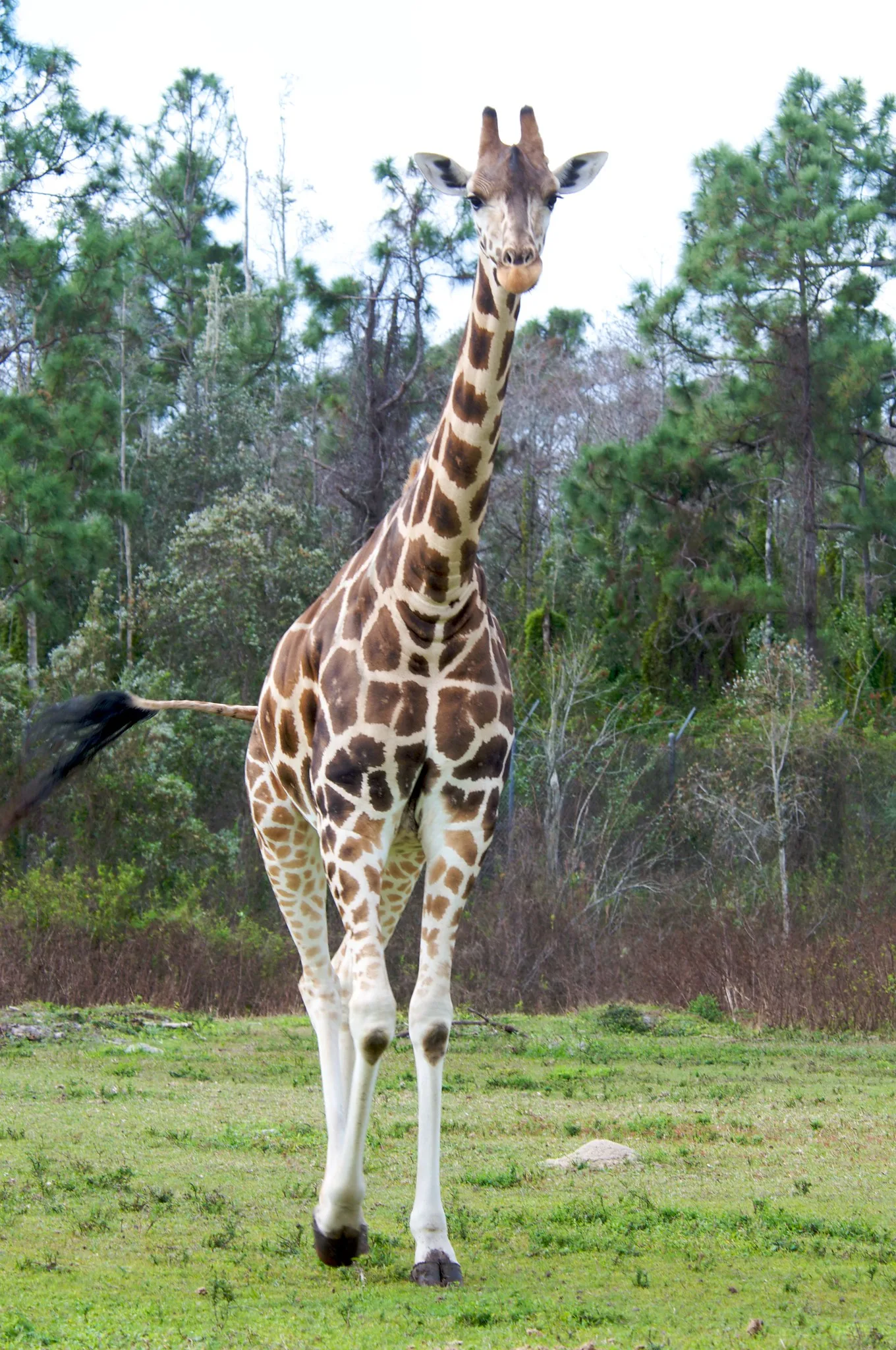
Giraffes are wonderfully photogenic. The tallest animals on Earth move with slow, swaying grace, their patterned coats glowing in warm light and their long necks reaching into treetops. Gentle faces with long eyelashes, curious expressions and surprisingly long purple tongues make close portraits charming, while a giraffe silhouetted against a sunset sky is one of the most iconic images in wildlife photography.
This beginner guide covers why giraffes make rewarding subjects, where to photograph them, framing tall animals, eye level portraits, patterns and texture, giraffes in the landscape, groups and behavior, feeding platforms, light and silhouettes, settings, phones, editing, ethics, common mistakes and a short practice exercise. It builds on the guides to wildlife photography and safari photography.
Why giraffes make rewarding subjects
- Shape. Long necks and legs make instantly recognizable outlines.
- Pattern. Each giraffe’s coat pattern is unique, like a fingerprint.
- Expression. Big dark eyes, long lashes and twitching ears give character.
- Calm. Giraffes move slowly and often tolerate vehicles, giving time to compose.
- Setting. Acacia trees, savanna and wide skies create classic scenes.
Because giraffes are so tall, they challenge you to think about framing in fresh ways, which makes them excellent subjects for learning composition.
Thinking about the picture
Before shooting, decide what you want to show. Height suggests a vertical frame and a low angle. Grace suggests a giraffe walking with long, swinging strides. Gentleness suggests a close portrait of the face. Place suggests a small giraffe in a wide landscape with trees and sky. Choosing one idea at a time helps you move beyond simple record shots toward pictures with a clear feeling.
Kinds of giraffes
There are several kinds of giraffes, and their coat patterns differ in lovely ways. Reticulated giraffes have neat, polygon shaped patches separated by thin white lines, like a net. Masai giraffes have jagged, leaf shaped patches that look almost like oak leaves. Others have softer, blotchy patterns with wider pale lines between them. Noticing these differences adds interest to your pictures and helps you write informative captions. Zoo signs and guides can tell you which kind you are photographing.
Where to photograph giraffes
- Safaris. Wild giraffes roam savannas and open woodland in parts of Africa.
- Drive through parks. Wildlife parks let giraffes walk among vehicles.
- Zoos. Many zoos have large giraffe yards and raised viewing platforms. See the guide to zoo and aquarium photography.
- Sanctuaries. Conservation centers sometimes offer close viewing.
Choose places that care for animal welfare and follow guidance from keepers and guides.
Making the most of a zoo or park visit
Giraffes in zoos and parks follow daily routines. Ask keepers when the animals are let out in the morning, when they are fed and when platform feeding sessions run. Arrive early, when light is soft and crowds are thin, and spend time at one yard rather than rushing between animals. Look for spots where the giraffes stand against trees or sky rather than buildings and fences. In drive through parks, giraffes often approach vehicles slowly, so keep windows clear and the camera ready, and always follow park rules about windows and stopping.
Framing tall animals
- Vertical orientation. Portrait framing fits the whole giraffe naturally.
- Leave room. Keep space above the horns and below the hooves.
- Avoid awkward crops. Do not cut through knees or the middle of the neck.
- Head and neck. A tight vertical crop of the neck and head is elegant.
- Horizontal for groups. Landscape framing suits several giraffes side by side.
The guide to vertical and horizontal photos explains how orientation changes a picture.
Working with height and perspective
Height is the defining feature of a giraffe, and perspective controls how tall it looks. Standing close and looking up with a wide lens exaggerates height dramatically, making the neck seem to stretch into the sky. A long lens from farther away flattens perspective and shows true proportions. A low viewpoint with grass in the foreground makes the giraffe tower above the viewer. Including a familiar object for comparison, such as a tree, vehicle or person, makes the scale clear. Experiment with all of these at the same visit and compare the results.
Eye level portraits
- Raised platforms. Zoo platforms put you level with the giraffe’s face.
- From a vehicle. Safari vehicles raise you closer to eye level.
- Focus on the eye. Sharp eyes make the portrait.
- Catch the lashes. Side light shows long eyelashes beautifully.
- Expressions. Chewing, ear flicks and tongue moments add character.
From ground level, looking up at a giraffe emphasizes height and power, while eye level views feel intimate and gentle.
Expressions and humor
Giraffes can be surprisingly funny. Their long tongues curl around leaves and fingers, their jaws chew sideways, and they often peer at visitors with an air of mild curiosity. Ears flick at flies, and heads tilt as they study something nearby. Young giraffes are playful and clumsy. Keep shooting through these moments with burst mode, since the funniest expression often lasts only a second. Light hearted pictures are among the most shared and enjoyed images of giraffes.
Patterns and texture
- Coat patterns. Fill the frame with patches for abstract pictures.
- Ossicones. The horn like knobs on the head make interesting details.
- Manes. Short, stiff manes along the neck catch backlight.
- Legs and hooves. Long legs in a row create rhythm.
The guide to patterns and repetition has more ideas for abstract details.
Composition tips
- Space to look. Leave room in the direction the giraffe faces.
- Necks as lines. Use the long neck as a strong diagonal or vertical line.
- Frames. Branches and leaves can frame a face.
- Overlap. Avoid necks merging confusingly in groups.
- Simple backgrounds. Plain sky makes the outline clear.
The guide to tangents and mergers explains how to avoid awkward overlaps.
Giraffes in the landscape
- Acacia trees. Giraffes browsing flat topped trees make classic scenes.
- Small in the frame. A giraffe tiny on the horizon shows the vastness of the savanna.
- Layers. Grass, giraffe, trees and sky create depth.
- Compression. A long lens stacks giraffes against distant hills.
The guide to scale explains how size relationships tell a story.
Giraffes on safari
Seeing wild giraffes on safari is unforgettable. They often appear suddenly above the bush, heads turning to watch the vehicle. Ask your guide to position the vehicle so the light is behind you and the background is clean, and to switch off the engine to reduce vibration. Support a long lens on a bean bag on the window frame. Giraffes often stand still and stare, giving you time for several compositions: a full body view, a head and neck portrait and a wide view with trees. When a group moves off across open ground, follow them with a slightly slower shutter for a sense of movement, or freeze their stride at a faster speed.
Giraffes and other animals
Giraffes often share the landscape with zebras, antelope and birds. Oxpeckers riding on a giraffe’s neck, picking at insects, make wonderful detail pictures. A giraffe towering over a herd of zebras shows the variety of the savanna in one frame. In wildlife parks, giraffes may share yards with ostriches or rhinos. These combinations add story and scale. The guide to telephoto photography helps with picking out small details from a distance.
Groups and behavior
- Towers. A group of giraffes is called a tower, and several necks together make striking compositions.
- Necking. Males swing their necks in contests, a dramatic behavior.
- Drinking. Giraffes splay their legs awkwardly to drink, a memorable sight.
- Mothers and calves. Calves beside towering mothers show scale and tenderness.
- Walking. Their pacing gait swings both legs on one side together.
Watch for a few minutes before shooting to learn the rhythm of the group.
Calves and family moments
Giraffe calves are already taller than most adults at birth, yet they look small and wobbly beside their mothers. Pictures of a calf nursing, standing under its mother’s neck or exploring with clumsy steps are full of tenderness. Give mothers and calves space, since mothers can be protective. A long lens lets you capture these moments without disturbing them. Zoos often announce births, and visiting in the weeks afterward can give you delightful family scenes.
Feeding platforms
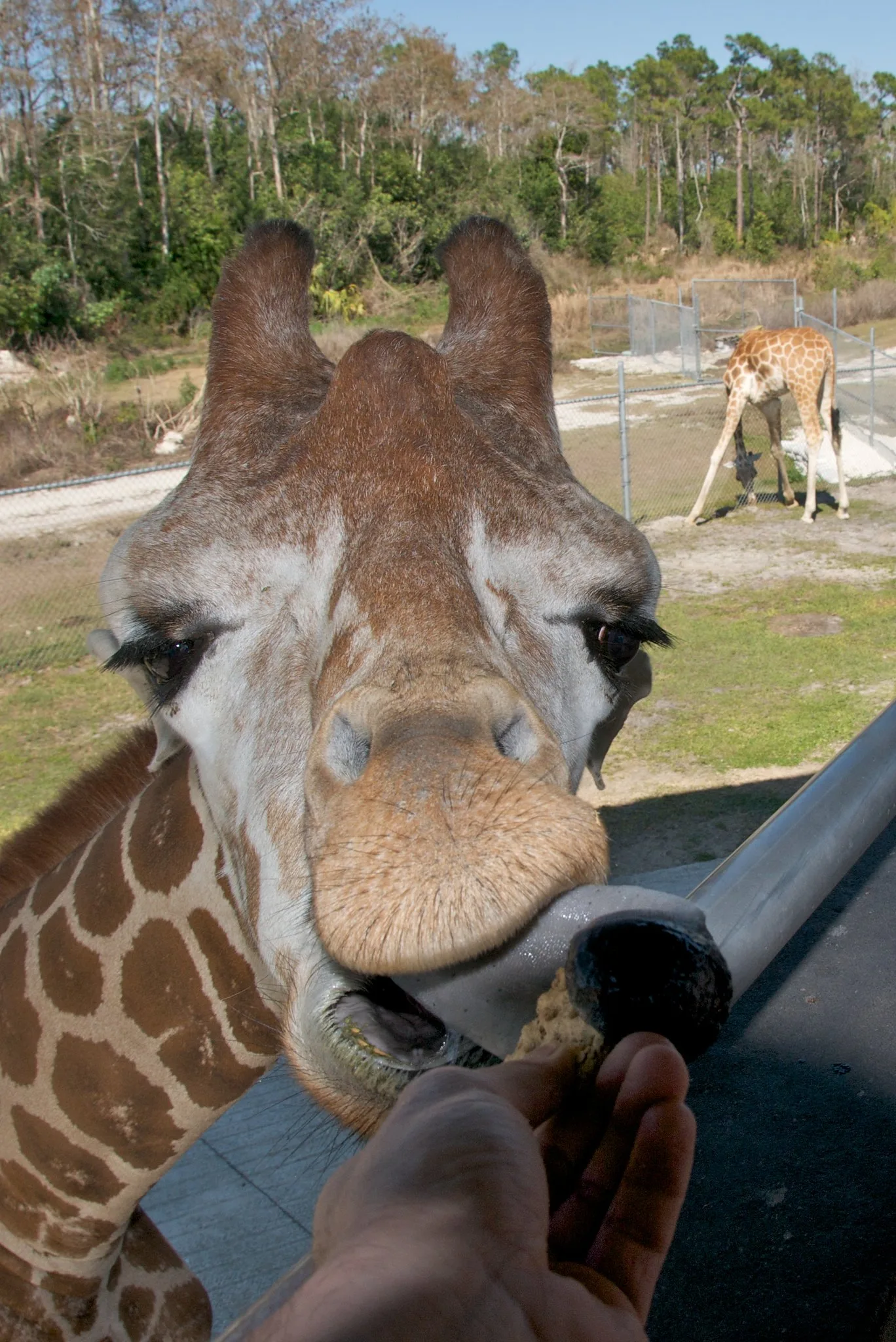
- Close encounters. Feeding platforms bring giraffe faces within arm’s length.
- Wide or standard lens. Telephoto lenses may be too long up close.
- Tongues. Fast shutter speeds catch long tongues wrapping food.
- Hands for scale. A hand offering food shows the size of the head.
- Follow rules. Feed only approved food when staff allow it.
Fascinated by big animals at the park? The guide to big cat photography covers lions, tigers and leopards.
Giraffes and conservation
Giraffes face serious challenges in the wild, including habitat loss and declining numbers in some regions. Thoughtful photography can help people appreciate these remarkable animals. Many zoos and parks take part in breeding and conservation programs, and some sanctuaries work to protect wild populations. Learning about these efforts gives your pictures greater meaning.
- Captions. Name the kind of giraffe and where you saw it.
- Honesty. Say when a picture was made in a zoo or park.
- Support. Share the work of conservation groups alongside your images.
- Locations. Avoid sharing exact locations of vulnerable wild herds.
The guide to conservation photography explains how pictures can support wildlife.
Telling a giraffe story
A set of giraffe pictures can tell a story about a day, a place or a single animal. Start with the landscape at dawn, add giraffes appearing above the trees, follow with portraits, details and behavior, and finish with a silhouette at sunset. In a zoo, a story might follow a feeding session from the keeper’s arrival to the last leaf. Variety in distance, angle and light keeps viewers interested and shows the full character of these gentle giants.
Light and silhouettes
- Golden hour. Warm light makes coats glow.
- Silhouettes. Giraffes against a sunset sky are iconic. See the guide to silhouette photography.
- Backlight. Rim light outlines manes and ears.
- Midday. Harsh light causes shadows under the head, so look for shade.
- Dust. Backlit dust around walking giraffes glows gold.
Weather and seasons
In the wild, giraffes look different through the seasons. The green season brings lush grass and dramatic storm clouds, while the dry season brings golden grass, dust and clear skies. In zoos, cold days may keep giraffes indoors, so check before visiting in winter. Rain can make coats look darker and richer, and puddles may offer reflections of long legs and necks. Storm light breaking through clouds onto a giraffe is dramatic and worth waiting for.
Settings, phones and editing
- Lens. A 100 to 400mm zoom for wild giraffes, wider lenses at feeding platforms.
- Shutter speed. 1/500 second for walking giraffes.
- Aperture. f/5.6 to f/8 for sharp heads and bodies.
- Focus. Single point or eye detection on the eye.
Using a phone
Phones work well at feeding platforms and in drive through parks. Turn the phone vertical for full giraffes, tap on the eye and use portrait mode for close faces.
Editing giraffe photos
Lift shadows under the head, lower highlights on bright skies and add gentle clarity to coat patterns. Warm tones suit savanna scenes. Crop carefully to keep the whole animal or a clean head and neck.
Black and white giraffes
Giraffes look striking in black and white. Their bold coat patterns become graphic designs, and their silhouettes against bright skies become pure shape. Choose pictures with strong contrast between the giraffe and its background. In editing, adjust the color channels to darken skies and brighten coats, then add contrast carefully. Close portraits of eyes and lashes in black and white can look like fine art studies.
Exposure for patterned coats
Giraffe coats combine pale lines with dark patches, and bright skies often fill the background. This high contrast can trick the camera. When a giraffe stands against bright sky, the camera may darken the animal, so add a little exposure compensation or meter from the coat itself. In harsh sun, check that pale lines keep detail. Shooting in RAW gives room to balance the sky and the animal later. Overcast days reduce contrast and show coat colors evenly, which suits close portraits and detail pictures.
Ethics and common mistakes
- Respect distance. Follow guide instructions in the wild.
- No unapproved feeding. Only feed where staff permit it.
- Cut off heads or hooves. Leave room in the frame.
- Always horizontal. Try vertical framing.
- Busy backgrounds. Move to place the giraffe against sky or trees.
- Soft eyes. Focus on the eye.
Practicing before a trip
If you are planning a safari, a local zoo or wildlife park is the perfect place to practice. Rehearse vertical framing, eye focus and exposure for bright skies. Practice switching quickly between a wide view and a tight portrait. By the time you meet wild giraffes, these skills will feel natural, and you can concentrate on the experience and the light.
Try this: a 10-minute giraffe study
At a zoo, wildlife park or on safari, make five pictures in ten minutes.
- A vertical picture of the whole giraffe.
- An eye level portrait with sharp eyes.
- A close detail of coat pattern.
- A wider view with trees or landscape.
- A behavior moment: browsing, walking or a tongue.
Frequently asked questions
Should I photograph giraffes vertically?
Usually, yes. Vertical framing fits their height naturally.
What lens is best for giraffes?
A telephoto zoom for wild giraffes and a wider lens at feeding platforms.
How do I photograph a giraffe at eye level?
Use a raised zoo platform or a safari vehicle.
When is the best light for giraffes?
Golden hour for warm coats and sunset for silhouettes.
Can I photograph giraffes with a phone?
Yes, especially at feeding platforms and in drive through parks where giraffes come close.
Planning to see giraffes in the wild? The guide to safari photography covers game drives and long lenses.
For terms such as compression, silhouette and eye detection, see the photography glossary.