Why Flash Has a Bad Reputation (and Why It Shouldn’t)
Flash is probably the most misunderstood tool in photography. Many photographers avoid it entirely, associating it with the harsh, flat, unflattering look of a camera’s built-in pop-up flash. That association is understandable. A small flash mounted directly above the lens fires light straight at the subject, creating hard shadows directly behind them, washing out skin tones, and producing red-eye. It looks terrible, and it is responsible for billions of awful photographs taken at family gatherings and parties.
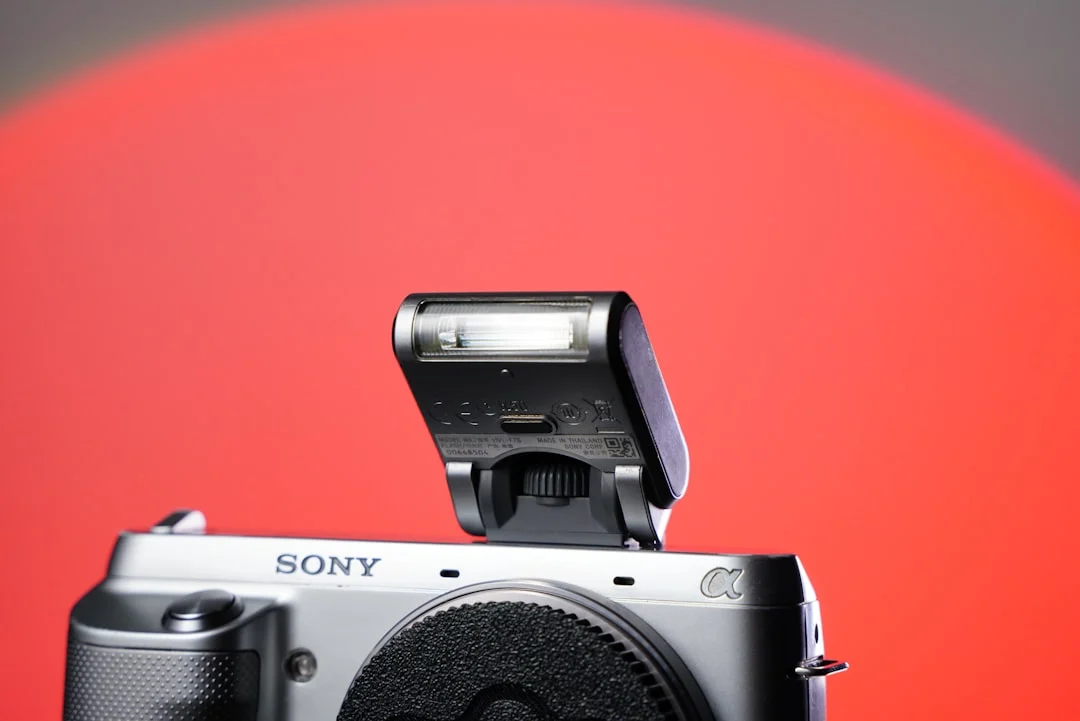
But here is the thing: the built-in flash looks bad not because flash itself is bad. It looks bad because the light is coming from a tiny source positioned right next to the lens. Any light source of that size, at that angle, would produce the same unflattering result. The solution is not to avoid flash. It is to learn how to control the direction and quality of the flash, just as you would with any other light source. For a comprehensive overview, see the Flash Photography guide.
When you learn to control flash, it becomes one of the most versatile tools in your camera bag. You can create light where there is none. You can fill in shadows on a bright day. You can match the quality and direction of natural window light. You can freeze motion in dark conditions. You can balance indoor and outdoor light in the same frame. The possibilities are enormous, and none of them require expensive or complicated equipment.
There are two fundamentally different approaches to using flash. The first is flash as your main light source, where the flash provides the primary illumination and the ambient light plays a supporting role (or none at all). This is common in studio work, indoor events, and dark environments. The second is flash as a supplement to existing light, where the ambient light sets the mood and the flash adds a touch of illumination where it is needed. This is fill flash, and it is arguably the most useful flash technique for everyday photography. Both approaches are valuable, and this lesson will introduce the techniques that make each one work.
The overarching goal with flash, in almost every situation, is to produce results that look like natural light. When flash is used well, the viewer should not be able to tell that flash was used at all. The light should look organic, directional, and appropriate for the scene. This is the standard to aim for: flash that enhances without announcing itself.
Bounce Flash: Your First Real Flash Technique
Bounce flash is the single most important flash technique you can learn, and it is the one that will immediately and dramatically improve the quality of your flash photographs. The concept is simple: instead of pointing your flash directly at your subject, you aim it at a ceiling, wall, or other large surface. The light bounces off that surface and falls on your subject from a broader, softer angle. The ceiling or wall effectively becomes a large light source, producing the kind of soft, flattering light that you would normally associate with a large window or a professional softbox.
The improvement is dramatic. Direct flash produces hard shadows, flat lighting, and an obvious “flash look.” Bounce flash produces soft shadows, dimensional lighting, and a look that is much closer to natural light. The subject no longer has a harsh shadow directly behind them on the wall. Instead, the light falls gently from above or to one side, creating the kind of subtle, directional illumination that makes portraits look professional.
To use bounce flash, you need an external flash (also called a speedlight or strobe) with a head that tilts and swivels. Most cameras’ built-in flashes cannot bounce because the head is fixed in position. An external flash with a tilting head is one of the best investments a photographer can make, and it does not need to be expensive. Even entry-level external flashes are vastly superior to built-in flashes for exactly this reason.
When bouncing off a ceiling, tilt the flash head straight up or slightly forward. The light travels upward, spreads across the ceiling, and returns as soft, overhead illumination. The higher the ceiling, the softer and more spread-out the light becomes, but also the weaker, because the light has farther to travel. Very high ceilings (above about 3-4 meters) may be too far for the flash to bounce effectively.
The color of the bounce surface matters significantly. A white ceiling produces clean, neutral bounce light. A cream-colored ceiling adds a slight warmth, which can actually be flattering for portraits. A wood-paneled or dark-colored ceiling absorbs most of the light and produces a warm or muddy color cast, making it a poor choice for bounce. If the ceiling is too dark or too high, try bouncing off a nearby white wall instead.
Bounce flash does consume more power than direct flash, because a significant amount of light is absorbed by the bounce surface. Your flash will recycle more slowly and your batteries will drain faster. This is a worthwhile trade-off for the vastly improved light quality, but keep spare batteries handy.
Fill Flash
Fill flash is probably the most practical and broadly useful flash technique in photography. The concept is straightforward: you use flash not as your main light source but as a supplement to lift the shadows in a scene that is already lit by ambient light.
The classic fill flash scenario is an outdoor portrait on a sunny day. Your subject is facing you with the sun behind or to the side of them. Without flash, their face falls into shadow while the background is brightly lit. The camera exposes for the bright background, and the face is underexposed. Or the camera exposes for the face, and the background blows out. Fill flash solves this by adding just enough light to the face to bring it into balance with the sunlit background. The result: a well-exposed face against a properly exposed background, with no blown highlights and no dark shadows.
The key to good fill flash is subtlety. You do not want the flash to overpower the ambient light and create an obviously “flashed” look. The flash should fill the shadows, not dominate the scene. This is where flash exposure compensation becomes essential. Just as you use exposure compensation to override your camera’s automatic exposure, flash exposure compensation lets you tell the flash to fire at less (or more) power than the camera’s TTL system thinks is correct.
For natural-looking fill flash, start by dialing the flash down by about -1 to -1.5 stops of flash exposure compensation. This tells the flash to fire at about half to one-third power relative to the automatic setting. The result is fill light that lifts the shadows without overpowering the natural light. If the flash is still too obvious, dial it down further. If the shadows are still too deep, bring it up a little. The exact setting depends on the ratio between the ambient light and the flash, and it varies from scene to scene. But -1 to -1.5 is a reliable starting point.
Fill flash is not just for portraits. It works whenever you have a foreground subject in shadow against a brighter background. A flower in the shade of a tree with a sunlit meadow behind it. A monument in the shadow of a building with a bright sky behind it. In all these cases, a touch of fill flash balances the exposure and reveals detail in both the subject and the background.
One often-overlooked benefit of fill flash outdoors: it adds a small catchlight to the eyes. Even a subtle pop of flash puts a tiny specular highlight in the subject’s eyes, making them look more alive and engaged. This is one of those details that most viewers cannot consciously identify, but they can feel the difference.
TTL vs Manual Flash
Your external flash can operate in two fundamentally different modes: TTL (Through The Lens) automatic mode and manual mode. Understanding when to use each one will save you frustration and help you get consistent results.
In TTL mode, the flash fires a brief pre-flash (so quick you usually do not notice it) just before the actual exposure. The camera measures the light from this pre-flash through the lens, calculates how much flash power is needed to properly expose the scene, and sets the flash power automatically. This all happens in a fraction of a second. TTL is convenient, fast, and generally accurate. It adapts automatically as the distance between you and your subject changes, and it adjusts for different reflectivity of subjects and backgrounds.
TTL works well in fast-moving situations where you do not have time to adjust flash power manually: events, receptions, photojournalism, and any scenario where the subject-to-flash distance is constantly changing. The trade-off is that TTL is not always consistent. Because it re-evaluates the exposure for every shot, the flash output can vary from frame to frame if the scene changes even slightly. A slightly different composition or a subject in a different-colored shirt can cause the TTL system to produce a noticeably different exposure.
In manual mode, you set the flash power yourself (full, half, quarter, eighth, sixteenth, and so on down to very low levels). The flash fires at exactly the same power every time, regardless of the scene. This gives you complete consistency: once you find the right power for your setup, every frame will have identical flash exposure. Manual flash is preferred for studio work, controlled situations where the distance between flash and subject is constant, and any time you want repeatable results.
Manual flash requires a bit more setup time. You take a test shot, evaluate the result, adjust the power up or down, and try again until you like what you see. But once dialed in, it stays dialed in. There is no variation between frames, no surprises from the TTL system, and no need for flash exposure compensation because you are setting the power directly.
For many photographers, the practical approach is to use TTL as the default and switch to manual when consistency is more important than convenience. If you are bouncing flash at a reception where you are moving around the room and the ceiling height keeps changing, TTL adapts for you. If you have set up a specific bounce position and you are photographing subject after subject in the same spot, manual gives you consistent results without TTL’s frame-to-frame variation.
Whichever mode you choose, flash exposure compensation (in TTL) or power level adjustment (in manual) is the most important control you have. Learning to evaluate your flash exposure and adjust it quickly is the skill that separates competent flash photographers from frustrated ones.
Practical Flash Scenarios
Theory is important, but flash photography is best learned through practice in real situations. Here are some common scenarios and practical approaches for each one.
Indoor events (restaurants, reception halls, parties). Bounce flash is your best friend here. Point your flash at the ceiling and shoot in TTL mode. The light will be soft, flattering, and natural-looking. If the ceiling is too high or too dark, look for nearby white walls to bounce off. Keep your ISO moderate (800-1600) so the ambient light contributes to the exposure and the background does not go completely dark. This blend of flash and ambient is the key to natural-looking event photos.
Outdoor fill on a sunny day. Set your camera to expose correctly for the ambient light (the sunlit background). Then add flash with -1 to -1.5 stops of flash exposure compensation. The camera exposes the background properly with the ambient settings, and the flash lifts the shadows on your subject. Check your results and adjust the flash compensation until the balance looks natural. The flash should illuminate the face without making it look “flashy.”
Dim interiors with atmosphere. In places like restaurants, churches, or candlelit rooms, you want to preserve the existing mood while adding enough light to see your subject clearly. The technique is to slow your shutter speed so the ambient light registers strongly (use a shutter speed of 1/30 to 1/15 if you can hold the camera steady), then add a touch of bounce flash to illuminate the foreground. The slower shutter lets the warm ambient light set the mood, while the flash freezes the subject and adds clarity. The result is an image that feels like the actual environment, not like a flash photograph.
Freezing motion in dark conditions. Flash has an extremely short duration, especially at lower power settings. At 1/16 power, a typical external flash might fire for only 1/10,000th of a second. This is fast enough to freeze virtually any motion. In a dark environment, the brief flash of light is the only illumination that registers during the exposure, so the effective shutter speed is the flash duration, not the camera’s shutter speed. This is how photographers capture sharp images of dancers, athletes, and other fast-moving subjects in dim venues.
Dragging the shutter. This creative technique combines flash with a slow shutter speed to get both a sharp subject (frozen by the flash) and ambient motion blur in the background. At a concert or on a dance floor, you might use a shutter speed of 1/8 or even 1/2 second with bounce flash. The flash fires and freezes the subject, but the slow shutter also records the movement of lights and colors in the background, creating a sense of energy and motion. The result is a photograph that feels alive and dynamic rather than frozen in time. For more techniques beyond on-camera flash, see the Off-Camera Flash guide.
Try This: Flash Exercises
These exercises will transform your relationship with flash from fear or avoidance to comfort and confidence. Each one teaches a fundamental flash concept through hands-on practice.
Bounce Flash Room Test. In a room with a white ceiling, photograph a person twice. First, point the flash directly at them (the way a pop-up flash works). Second, tilt the flash head upward and bounce the light off the ceiling. Compare the two images. Look at the shadows. Look at the skin tones. Look at the overall quality of the light. The difference will be striking. The direct flash produces hard shadows and flat, washed-out skin. The bounce flash produces soft shadows and dimensional, natural-looking skin. This exercise demonstrates, in a single comparison, why bounce flash is the most important flash technique you can learn.
Fill Flash Portrait. On a sunny day, find a willing subject and position them with the sun behind them. Take a photograph without flash. The face will be in shadow, likely dark and underexposed compared to the bright background. Now add flash and dial in about -1 stop of flash exposure compensation. Take another photograph. The face should now be properly exposed while the sunlit background remains bright and natural. If the flash is too obvious, dial it down further. If the face is still too dark, increase the flash power. Keep adjusting until the fill looks effortless, as though the light just happened to be perfect. This exercise teaches the single most practical flash skill: balancing flash with ambient light outdoors.
Flash and Ambient Balance. Set up in a dimly lit room with interesting ambient light, such as candles, table lamps, or colored lights. Photograph a person using flash at full TTL power. The flash will overpower the ambient light, and the background will go dark. Now progressively reduce the flash power while slowing your shutter speed to let more ambient light in. Try flash at -1, then -2, then -3 stops of compensation, adjusting the shutter speed slower each time. Watch how the balance shifts from a flash-dominated image to an ambient-dominated image. Find the sweet spot where the flash illuminates the subject while the ambient light sets the mood and keeps the background alive. This exercise teaches the most important concept in flash photography: the balance between flash and ambient light is entirely under your control.
Flash photography is a skill that rewards practice and experimentation. The photographers who use flash well are not working with better equipment. They have simply spent time learning how flash interacts with ambient light and how to control that interaction. Start with bounce flash and fill flash. Master those two techniques, and you will be comfortable using flash in the vast majority of situations. From there, the path leads to off-camera flash and eventually to studio lighting, where the creative possibilities expand even further. But it all begins with bouncing your flash off a ceiling and seeing the difference for yourself.