The Action Photography Mindset
Great action photography is not about reflexes. That surprises most beginners, who assume that capturing a split-second moment is all about reaction speed. In reality, the best action photographers rely on anticipation: reading the flow of action and predicting what will happen next so they are ready before the moment arrives, not scrambling to catch it after it has already passed.
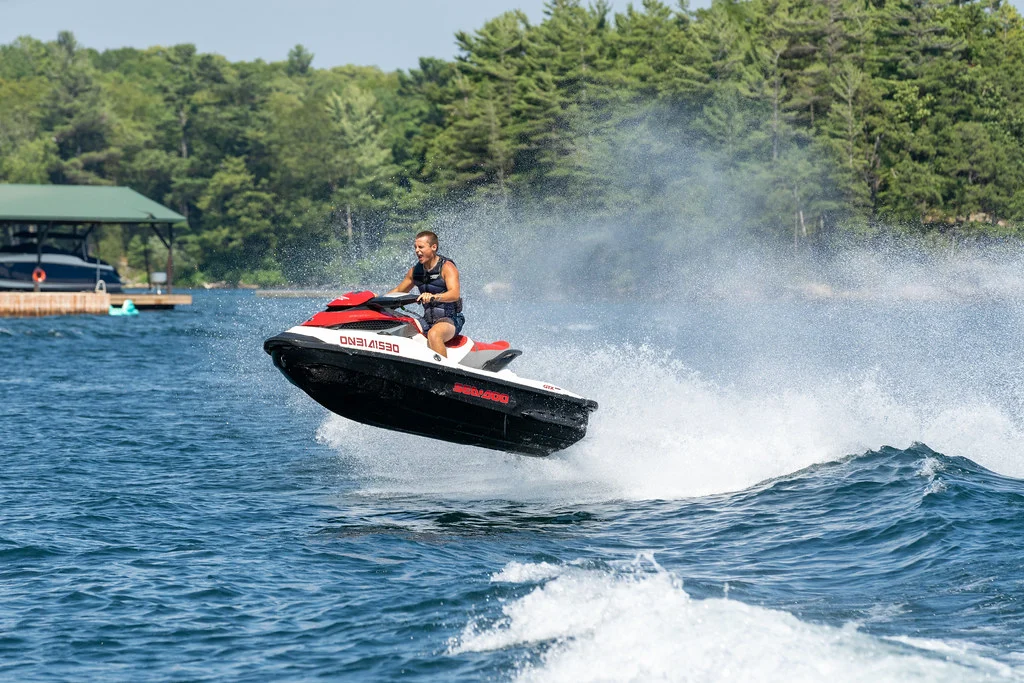
Anticipation comes from understanding your subject. A photographer who understands the sport they are shooting knows that a basketball player gathers themselves before a jump shot, that a goalkeeper shifts their weight before a dive, that a sprinter’s muscles tense visibly in the blocks before the starting gun. This knowledge lets you pre-focus, pre-compose, and time your shutter press to capture the peak of the action, the apex of a jump, the moment of impact, the full extension of a reach, rather than the instant before or after it.
Positioning is equally important. Where you stand determines what you can capture. Study the action before you start shooting. Where does the peak moment happen? Where does the best light fall? Which angle tells the most compelling story? A sideline position shows speed and lateral movement. A head-on position emphasizes power and confrontation. A low angle makes your subject look dominant and heroic. Moving to the right position before the action happens is as important as any camera setting.
The concept of “peak action” is central to action photography. Every movement has a moment of maximum visual impact: the highest point of a jump, the instant a bat connects with a ball, the frozen spray of water as a swimmer turns. At these peak moments, the action appears to pause for a fraction of a second, which is why they produce the sharpest, most dramatic frozen-motion images. Train yourself to identify these moments for whatever you are photographing, and time your shooting to coincide with them. For an experienced sports photographer’s perspective on developing this instinct, see the Interview With Sports Photographer Stephen McCarthy.
Camera Settings for Action
Getting your camera settings right is the technical foundation of action photography. Unlike landscape or portrait work, where you often have time to meter carefully and adjust, action photography demands that your settings be dialed in before the moment happens. There is no second chance when a goalkeeper makes a diving save or a child catches a ball mid-leap.
Shutter speed is your primary creative control. To freeze fast action, you need shutter speeds in the range of 1/500 to 1/2000 of a second or faster, depending on how quickly your subject is moving and how close you are. A runner might be frozen sharp at 1/500, while a bird in flight or a racing vehicle may need 1/2000 or faster. Shutter priority mode is a practical choice for action work: you set the shutter speed you need, and the camera adjusts the aperture and ISO to maintain a correct exposure. Manual mode with auto-ISO is another popular approach among action photographers, giving you control over both shutter speed and aperture while letting the camera handle exposure compensation through ISO.
Continuous autofocus, often labeled AF-C or AI Servo depending on your camera system, is essential for tracking moving subjects. In this mode, the camera continuously adjusts focus as long as you hold the shutter button (or back button, if you use back-button focus). Most modern cameras offer sophisticated focus tracking that can follow a subject moving erratically across the frame, and some can even identify and lock onto specific subjects like faces, eyes, or animals. Spend time getting familiar with your camera’s focus tracking settings before you are in the middle of the action. Understanding which focus modes and area selections work best for different situations will save you from missed shots.
Burst mode, also called continuous shooting or high-speed drive, lets you capture a rapid sequence of frames with a single press of the shutter button. This is invaluable for action photography because it increases your chances of capturing the precise peak moment within a fast sequence of events. However, burst mode is a tool, not a substitute for timing. A photographer who sprays 50 frames at every moment and hopes one is good will be outperformed by a photographer who times three well-anticipated bursts of five frames each. Use burst mode to bracket the moment you have anticipated, not to replace the skill of anticipation itself. For a full review of how shutter speed, aperture, and ISO work together, revisit Lesson 3: Using Your Camera’s Settings.
Panning: The Art of Controlled Blur
Not all action photography is about freezing motion. Panning, tracking a moving subject with your camera during a slow exposure, produces images where the subject is relatively sharp against a blurred, streaked background. The effect communicates speed and dynamism in a way that a perfectly frozen frame cannot. A panned photograph of a cyclist shows the rush and energy of movement; a frozen photograph of the same cyclist might look oddly static, as if suspended in mid-air.
The technique begins with choosing a shutter speed slow enough to blur the background but fast enough to keep your subject recognizable. This varies with the speed of your subject and the degree of blur you want. For a car on a city street, 1/30 of a second might give you a dramatic streak. For a runner, 1/60 might be the sweet spot. For a cyclist, 1/125 could be enough. There is no single correct answer: experimentation is essential, and part of the creative process is finding the shutter speed that gives you the balance of sharpness and blur that tells the story you want.
The physical technique of panning involves your whole body, not just your arms. Stand with your feet shoulder-width apart, facing the point where you want to capture the subject. Twist your upper body to pick up the subject as it approaches, track it smoothly as it passes through your frame, press the shutter at the moment of best composition, and follow through: continuing the pan after the shutter has fired, just as a golfer follows through on a swing. The smoothness of your tracking determines the sharpness of your subject. Jerky or uneven movement introduces blur into the subject as well as the background.
Practice is the only way to develop consistent panning technique. Start with predictable, repeating subjects, cars on a road, runners on a track, cyclists on a path, where you can shoot the same action repeatedly and refine your timing and tracking. Review your results critically between attempts. Are you smooth enough? Is the subject in the right part of the frame? Is the background sufficiently blurred? With practice, panning becomes instinctive, and you will start producing keepers more often than misses.
There are moments when a blurred image tells a more honest story than a frozen one. A sharp, frozen image of a sprinter can look strangely peaceful. A panned image of the same sprinter, with streaked background and slight blur in the pumping arms, conveys the effort, the speed, and the physical intensity of the moment. Knowing when to freeze and when to blur is a creative judgment, not a technical one.
Composition and Storytelling in Action
The best action photographs are not just technically sharp: they tell a story. They capture not only the physical moment but the emotion, the context, and the human narrative within it. A perfectly sharp image of an athlete mid-stride is impressive, but an image that also shows the strain on their face, the crowd behind them, and the finish line ahead is something far more powerful.
One of the most important compositional principles in action photography is leaving space for your subject to move into. If a runner is moving left to right across your frame, place them on the right side with open space on the left, and the image feels cramped and claustrophobic. Place them on the left with space ahead of them on the right, and the image breathes: it implies direction, momentum, and the continuation of movement beyond the frame. This principle applies to any moving subject and is one of the quickest ways to improve your action compositions.
Emotion is what elevates action photography from documentation to art. Train yourself to look for the human moments within the action: the grimace of effort, the explosion of celebration, the dejection of defeat, the focus of concentration before the event begins. These emotional peaks are just as important as the physical peaks, and sometimes more so. Some of the most iconic action photographs ever made capture the immediate aftermath of the action rather than the action itself: the celebration, the collapse, the embrace.
Context and environment add layers of meaning to action images. A tightly cropped action shot of an athlete is dramatic, but a wider frame that shows the stadium, the crowd, the conditions, and the competitors tells a richer story. Vary your framing throughout a shoot: capture tight details and wide establishing shots, not just medium-distance action frames. The wide shots often provide the narrative context that gives meaning to the tight action images when the two are seen together. For more on compositional strategies that apply to action work, revisit Lesson 8: Advanced Composition.
Sequences are particularly powerful in action photography. A series of three to five images showing the build-up, peak, and aftermath of a moment tells a story that no single frame can. Think of a high jumper: the approach, the take-off, the bar clearance, and the landing are each distinct visual moments, and together they create a complete narrative arc. Shooting in burst mode gives you the raw material for these sequences.
Action Photography Without the Stadium
You do not need a press pass or a stadium to practice and master action photography. Motion is everywhere in daily life, and some of the most charming and expressive action photographs have nothing to do with organized sports. Once you understand the principles of anticipation, shutter speed control, and panning, you can apply them to any moving subject.
Children at play are among the best subjects for developing your action photography skills. They move unpredictably, change direction constantly, and their faces are full of unguarded emotion: joy, concentration, surprise, determination. Visit a playground, a beach, or a park and photograph children running, jumping, climbing, splashing, and tumbling. The unpredictable nature of their movement forces you to sharpen your anticipation skills in a way that organized, predictable sports sometimes do not.
Pets in motion offer similar challenges with the added difficulty that they are even less likely to follow a predictable path. A dog chasing a ball, a cat leaping onto a shelf, birds taking flight from a feeder: these subjects demand fast reflexes, continuous autofocus, and the ability to track an erratic moving target. If you can consistently photograph a dog running full speed toward you and keep the eyes in sharp focus, you have mastered the technical side of action photography.
Street performers, dancers, and musicians provide wonderful opportunities for action photography in public spaces. Dancers offer dramatic, peak-action moments, jumps, spins, extensions, often performed repeatedly, giving you multiple chances to refine your timing and composition. Buskers and street performers are accustomed to being photographed and often welcome the attention, making them accessible and cooperative subjects.
Weather events bring their own drama and motion. Waves crashing on a shore, wind whipping through trees, rain hammering a puddle, lightning splitting the sky: these are all action subjects that respond to the same principles of shutter speed control, timing, and anticipation. A fast shutter speed freezes a single droplet or the curl of a wave crest. A slow shutter speed blurs the wave into a silky, ethereal form. The choice between these is a creative decision that shapes the mood and story of your image.
Everyday urban motion is another rich vein to mine. Cyclists weaving through traffic, skateboarders in a park, commuters rushing through a train station, pigeons scattering: all of these are opportunities to practice panning, freezing motion, and capturing the peak moment. The beauty of everyday action subjects is that they are repeating and accessible. You can return to the same location again and again, refining your technique with each visit.
Field Notes: One Real Photograph
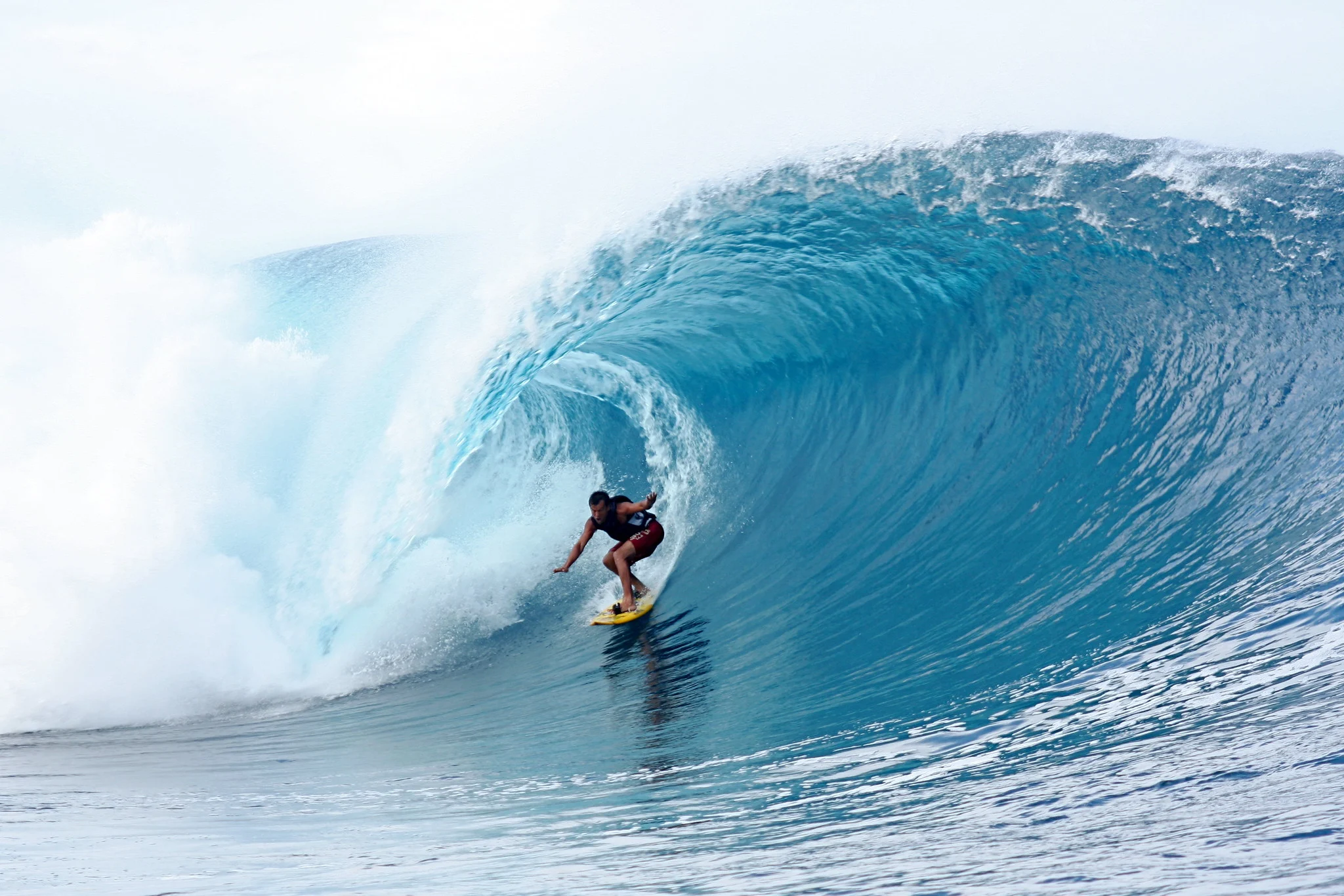
Field notes: 1/250 is slow for surfing, and it works only because the surfer is far away and moving mostly across a long lens’s field of view at a steady speed, so the motion in the frame is small. The same subject at half the distance would need four times the shutter speed. Judge motion by how far the subject travels across the frame during the exposure, not by how fast it moves in the world.
Try This: Action Photography Exercises
Panning Practice: Find a straight stretch of road with regular vehicle or bicycle traffic. Set your camera to shutter priority mode and start at 1/125 of a second. Practice panning with passing vehicles, tracking each one smoothly and firing the shutter as it passes directly in front of you. Review your results after every few attempts. Gradually slow your shutter speed, 1/60, then 1/30,and notice how the background blur increases while your subject becomes harder to keep sharp. Your goal is to produce at least three images with a clearly sharp subject against a smoothly blurred background. Pay attention to your body technique: are you twisting from the waist? Are you following through after the shutter fires? This exercise builds the physical muscle memory that makes panning instinctive.
Park Action: Visit a playground, skate park, basketball court, or any location where people are in motion. Photograph the action for at least 30 minutes, focusing on two goals: freezing peak action moments and capturing facial expressions. For the peak action shots, use shutter speeds of 1/500 or faster and try to capture the apex of each movement: the top of a jump, the full stretch of a reach, the moment of contact. For the emotional shots, watch for the moments between the action: the focused stare before a shot, the smile after a successful trick, the shared glance between teammates. At the end of the session, compare your best peak-action image with your best emotional image and consider which tells a more compelling story.
Pet in Motion: Photograph a dog running, a cat jumping, or any animal in active movement. Set your camera to continuous autofocus with the widest possible focus area, and use burst mode. Start with the animal moving across your field of view (easier to track) before attempting the most challenging scenario: the animal running directly toward you. With a subject approaching head-on, the focus distance changes rapidly, testing your camera’s tracking ability to its limits. Review your images critically: are the eyes sharp? Is the moment of peak action captured? Did the autofocus keep up? If your first attempts are soft, experiment with different focus area sizes and tracking sensitivity settings until you find the combination that works best for your camera and your subject.