Seeing in the Dark
When the sun goes down, most photographers put their cameras away. That is a mistake. Darkness is not the absence of photographic opportunity: it is a completely different canvas, one filled with light sources, long shadows, vivid colors, and creative possibilities that simply do not exist during the day. Night photography rewards the patient and the curious, revealing a world that your eyes struggle to perceive but your camera can capture with breathtaking clarity.
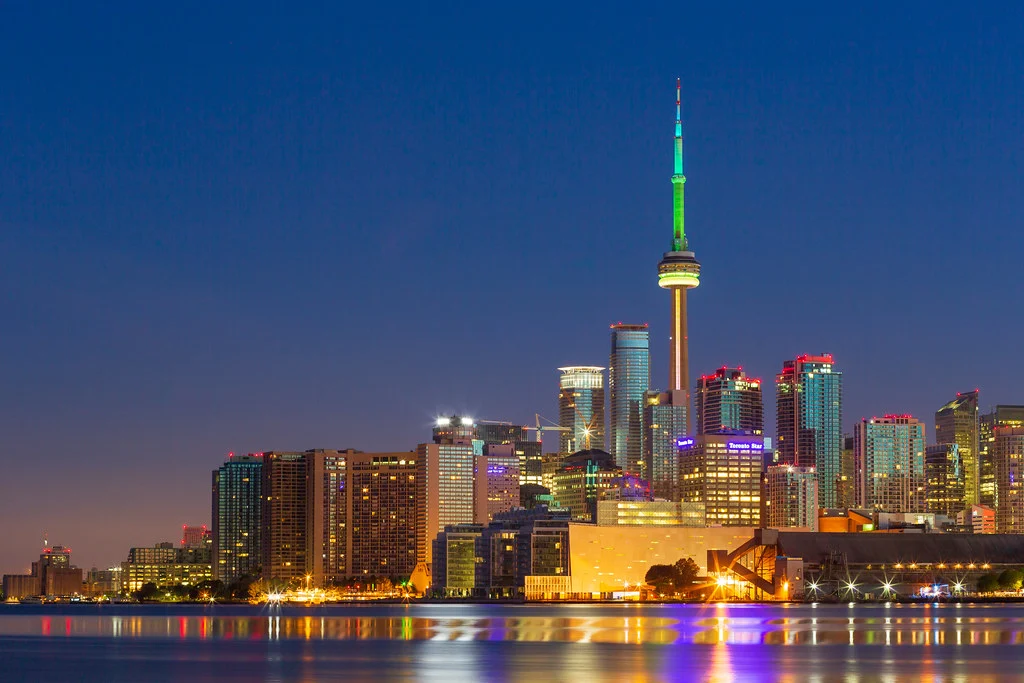
The fundamental difference between seeing at night with your eyes and seeing with your camera is time. Your eyes process light in real time. Your camera can gather light over seconds, minutes, or even hours, accumulating photons to build an image far brighter and more detailed than anything your retina can perceive. A 30-second exposure of a moonlit landscape reveals color, detail, and depth that looked like darkness to you in the moment. A multi-minute exposure of a night sky captures thousands of stars invisible to the unaided eye. This ability to see beyond human perception is one of the most magical aspects of photography, and it is available to anyone with a camera and a tripod.
The creative possibilities unique to darkness are vast. Light trails from passing vehicles turn ordinary roads into rivers of red and white. Star trails paint circular arcs across the sky, revealing the rotation of the earth itself. Silhouettes of figures against glowing windows or neon signs create instant drama. And the blue hour: that brief, luminous period after sunset when the sky holds a deep, saturated blue and the first artificial lights flicker on: offers some of the richest, most cinematic light you will ever photograph.
The blue hour deserves special attention because it is the sweet spot for night photography beginners and professionals alike. During this window of roughly 20 to 40 minutes, there is enough ambient light in the sky to retain detail and color, while artificial lights, streetlamps, building interiors, neon signage, have already switched on. The balance between these two light sources creates an image with depth, richness, and atmosphere that full darkness cannot match. Many of the most stunning urban night photographs you have seen were shot during the blue hour, not at midnight. For a refresher on how ISO, shutter speed, and aperture interact in low-light scenarios, revisit Lesson 3: Using Your Camera’s Settings.
Essential Night Photography Technique
A tripod is not optional for night photography: it is the foundation that everything else rests on. Handheld shooting in low light means pushing your ISO to extreme levels, which degrades image quality with noise, or accepting shutter speeds too slow for sharp handheld images. A tripod lets you shoot at low ISO settings and long shutter speeds, producing clean, detailed images with the rich tonal quality that makes night photography so visually striking.
Long exposure technique is the core skill of night photography. At its simplest, a long exposure means leaving your shutter open for longer than you could hold the camera still: anything from half a second to several minutes or more. During that time, anything that moves is recorded as a blur or streak, while anything stationary remains sharp. This interaction between stillness and motion is the essence of night photography’s visual language.
Focusing in the dark can be surprisingly difficult. Your camera’s autofocus system relies on contrast and detail to lock onto subjects, and in near-darkness, it may hunt back and forth without finding focus. Several techniques solve this problem. Switch to manual focus and use your camera’s live view mode, zoomed in on a bright point, a distant streetlight, a star, or the edge of a lit building, to achieve precise focus. Many lenses have an infinity mark on the focus ring that gives you a good starting point for distant subjects, though these marks are not always perfectly accurate, so verify with live view. Once you have focused, switch your lens to manual focus mode so it does not re-focus when you press the shutter.
Camera shake is the enemy of sharpness in long exposures. Even the vibration of pressing the shutter button can introduce blur. Use a remote trigger, a cable release, or your camera’s built-in self-timer (a two-second delay is usually sufficient) to fire the shutter without touching the camera. If your camera has a mirror lock-up function or an electronic first-curtain shutter, use it: the mechanical motion of the mirror flipping up can cause micro-vibrations that soften your image, especially in the one-to-two-second exposure range where vibrations have the greatest effect.
Noise management is an ongoing consideration in night photography. Higher ISO settings introduce digital noise: a grainy, speckled pattern most visible in shadow areas and smooth tones like sky. Using a tripod allows you to keep your ISO low, which is the best noise-reduction strategy. Some cameras offer a long-exposure noise-reduction feature that takes a second “dark frame” after each exposure and subtracts the noise pattern. This is effective but doubles the time of each shot, so weigh that tradeoff based on your situation. Modern noise-reduction software has become remarkably capable, so a modest amount of noise in your raw files can often be cleaned up effectively in post-processing.
Urban Night Photography
Cities are transformed by night. The cluttered, chaotic daytime streetscape is simplified into pools of light and shadow, glowing windows, neon reflections, and the trails of moving traffic. Urban night photography is accessible and endlessly varied: you do not need a remote wilderness location or exotic destination. Your own city, seen after dark, becomes a different place entirely.
Timing is everything for urban night photography. Arriving at your chosen vantage point well before sunset lets you scout your composition in good light, set up your tripod, and fine-tune your framing. As the light fades, the scene evolves minute by minute. The blue hour transition is particularly dynamic: the sky deepens, the lights come on, and the balance between natural and artificial light shifts constantly. Shoot continuously through this period, because the optimal balance lasts only a few minutes and varies with the weather and season.
Light trails from vehicle traffic are one of the signature elements of urban night photography. The technique is straightforward: mount your camera on a tripod, choose a composition that includes a road or highway, and use a long exposure, typically 10 to 30 seconds, to record the headlights and taillights of passing vehicles as continuous streaks of light. Red taillights flow in one direction, white headlights in the other, and the resulting ribbons of color bring energy and movement to your image. Experiment with different shutter speeds: shorter exposures produce individual dashes of light, while longer exposures create smoother, more continuous trails.
Neon signs, illuminated storefronts, and artificial lighting are powerful compositional elements at night. They provide concentrated bursts of color that can anchor your image or create a mood. The warm glow of a restaurant window, the cold blue of a phone screen illuminating a face, the vivid red and green of traffic signals reflected in wet pavement: these color contrasts are unique to the night and give urban night photography its distinctive visual energy.
Rain is the night photographer’s secret weapon. Wet streets and pavements become mirrors, reflecting every light source and doubling the visual interest of the scene. Puddles create perfect reflections of neon signs, streetlights, and passing figures. The sheen of water on a road turns mundane asphalt into a surface of shimmering color. If it starts raining while you are out shooting at night, do not pack up: work through it. Protect your equipment with a rain cover or plastic bag, but keep shooting. Some of the most atmospheric night photographs ever made were shot in the rain.
Astrophotography Fundamentals
Pointing your camera at the night sky and capturing what is up there is one of the most awe-inspiring experiences in photography. The stars, the Milky Way, meteor showers, and the slow rotation of the celestial sphere are all within reach of a standard camera and lens. You do not need a telescope or specialized astronomical equipment to get started: just a camera with manual controls, a wide-angle lens, a sturdy tripod, and a dark sky.
The fundamental challenge of astrophotography is that the earth is rotating. Stars that appear stationary to your eye are actually moving across the sky, and if your exposure is too long, they will appear as short streaks rather than sharp points. The commonly used guideline is the 500 rule: divide 500 by your focal length to get the maximum exposure time in seconds before star trails become noticeable. So with a 24mm lens, you can expose for roughly 20 seconds before the stars begin to streak. With a 50mm lens, that drops to about 10 seconds. This rule provides a starting point: your results may vary depending on your sensor size and how critically you examine the images.
Milky Way photography has become enormously popular, and for good reason: few natural subjects are as visually dramatic. To photograph the Milky Way, you need three things: a dark location with minimal light pollution, the right timing (the galactic core is visible only during certain months and at certain times of night depending on your hemisphere), and a moonless or near-moonless night, since moonlight washes out the fainter stars. Use your widest, fastest lens, open the aperture as wide as it goes, set your ISO high (typically between 1600 and 6400 depending on your camera), and expose for the maximum time the 500 rule allows. A foreground element, a mountain, a tree, a building silhouette, gives context and scale to the vast sky above.
Star trail photography takes the opposite approach: instead of freezing the stars as points, you deliberately use very long exposures to record their movement as circular arcs across the sky. By pointing your camera toward the celestial pole (Polaris in the northern hemisphere, the Southern Cross region in the southern hemisphere), the stars trace concentric circles around the pole. These images can be made with a single ultra-long exposure of 30 minutes or more, or by stacking many shorter exposures (typically 30 seconds each, shot continuously) in post-processing. The stacking method is generally preferred because it reduces noise and gives you more control over the final result.
Light pollution is the biggest obstacle for astrophotography. Even moderate city glow can wash out all but the brightest stars. Getting to a genuinely dark location: typically at least an hour’s drive from a major city: makes an enormous difference. Light-pollution maps, available online, can help you find dark sky areas near you. For a comprehensive guide to shooting the night sky, see How to Photograph Stars and Milky Way, and for a detailed look at star trail technique, see How To Plan And Shoot Star Trail Photos.
Light Painting and Creative Techniques
Light painting is one of the most playful and inventive techniques in photography. The principle is simple: during a long exposure in darkness, you use a handheld light source, a flashlight, an LED panel, a phone screen, a sparkler, to “paint” light onto your subject or into the scene. Because the camera records everything that happens during the exposure, you can build up illumination selectively, adding light exactly where you want it and leaving the rest in shadow.
The basic technique starts with setting your camera on a tripod, composing your shot, and choosing a long exposure time: 15 to 30 seconds is a good starting point, though exposures of several minutes are common for more complex paintings. Open your shutter and then move through the scene, directing your light source at the areas you want to illuminate. Move the light smoothly and evenly, spending more time on areas you want brighter and less time on areas you want subtler. Stay behind the light source when possible so that you do not appear in the frame as a ghostly figure (unless that is your intention).
“Painting” your subject with light is a technique that landscape and architectural photographers use to illuminate scenes that have no existing light. Imagine a beautiful old barn in a field on a moonless night. With a powerful flashlight and a long exposure, you can walk around the scene and paint the barn, the foreground grass, and even nearby trees with light, building up a luminous image that seems to glow from within. The effect is unlike any natural lighting because you control the direction, intensity, and color of every light source.
Creative light painting opens even wilder possibilities. By moving a light source through the air during a long exposure, you can write words, draw shapes, or create abstract patterns of light suspended in space. LED wands, fiber optic brushes, and programmable LED tools designed specifically for light painting offer an enormous range of colors and patterns. Steel wool spinning: loading a whisk with fine steel wool, igniting it, and spinning it on a string during a long exposure: creates a dramatic shower of sparks that has become a popular (if somewhat overused) night photography technique.
Combining ambient light with painted light produces some of the most sophisticated night images. Shoot during the blue hour when some natural light remains, and supplement it with painted light on your foreground subject. Or use the glow of a city skyline as your background and light-paint a figure or object in the foreground. The interplay between the light you add and the light that already exists creates a layered, atmospheric quality that makes these images feel almost cinematic.
A note on safety: some light painting techniques, particularly steel wool and any technique involving fire or sparks, carry real risks. Spinning steel wool sends burning fragments in all directions, which can start fires in dry conditions and cause burns. Only practice these techniques on non-flammable surfaces (concrete, wet sand, rock), far from dry vegetation, buildings, and other people. Bring fire safety equipment and never work alone. The photograph is not worth a fire or an injury.
Field Notes: One Real Photograph
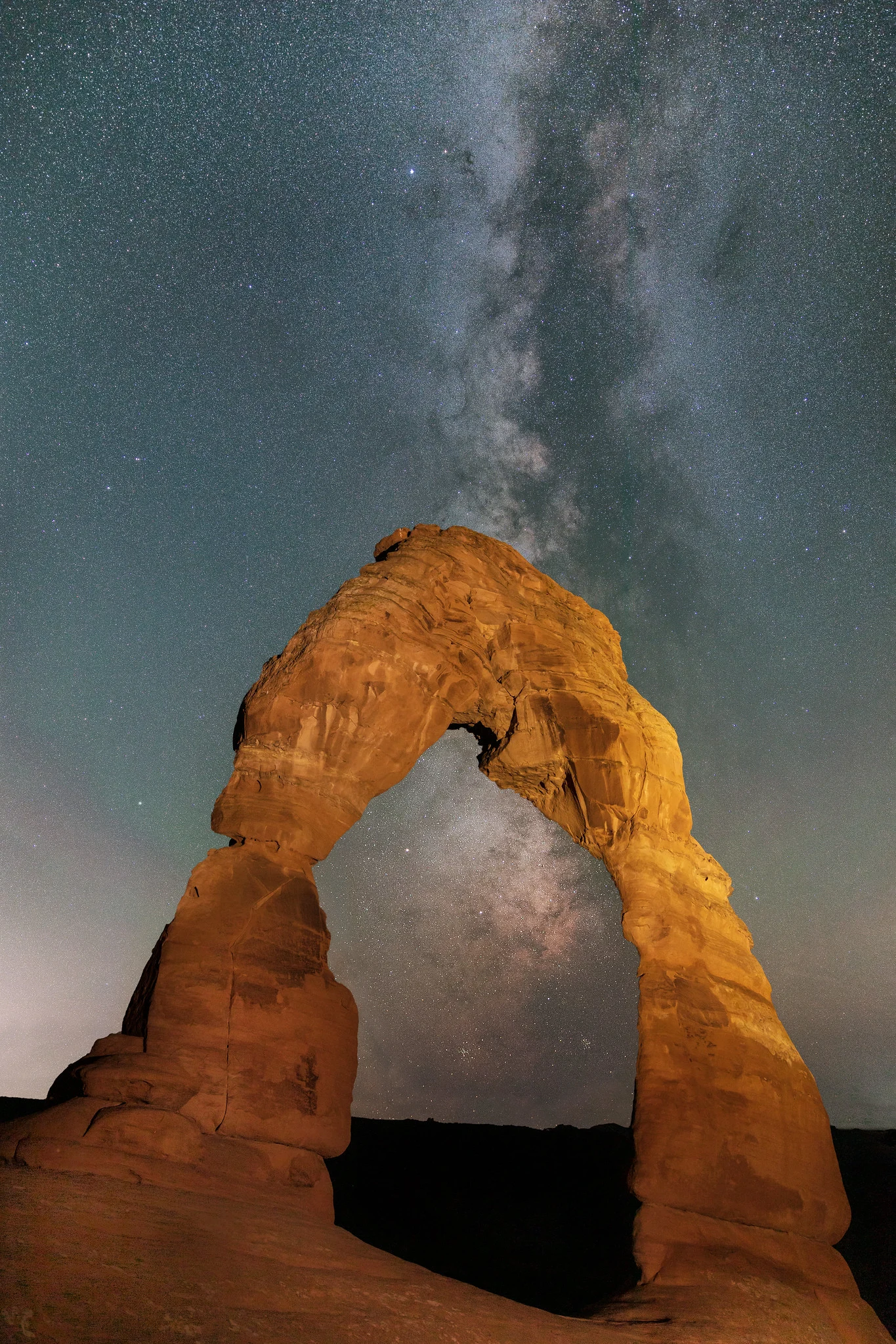
Field notes: night-sky exposures are a budget with three limits. The shutter is capped by star trailing (at 24mm on a high-resolution sensor, roughly 10 to 15 seconds keeps stars as points), the aperture is capped by the lens (f/2.8 here), and ISO fills whatever is left. Every stop the lens cannot give has to come from ISO, which is why fast wide lenses are the first astro upgrade, not a new body.
Try This: Night Photography Exercises
Blue Hour City: Find a viewpoint overlooking your city or town: a bridge, a hilltop, a rooftop, or a high building. Arrive at least 20 minutes before sunset with your tripod and camera. Set up your composition and begin shooting as the sun goes down. Continue shooting through the entire blue hour transition until full darkness. Take a photograph every two to three minutes, noting the time. When you review your images, pay attention to how the balance between natural skylight and artificial city light shifts throughout the sequence. Identify which frame captures the most pleasing balance: this is your optimal blue hour moment, and it will help you time future shoots.
Light Trail Composition: Find a busy road, intersection, or highway overpass after dark. Set up your tripod and compose an image where the road forms a strong compositional element: an S-curve, a leading line, or a diagonal through the frame. Using exposures between 10 and 30 seconds, capture vehicle light trails. Experiment with different exposure times and notice how longer exposures produce smoother, more continuous trails. Try to create at least one image where the light trails serve as leading lines that draw the viewer’s eye into the frame. Vary your composition between wide views and tighter crops to see how the trails work at different scales.
Light Painting Portrait: In a dark room or outdoors on a dark night, set your camera on a tripod and compose a frame with a still subject: a person sitting motionless, a tree, a bicycle, a chair, a building detail. Set a long exposure of 15 to 30 seconds and use a flashlight or phone light to “paint” your subject with illumination while the shutter is open. Experiment with painting from different angles, from the side, from above, from behind, and notice how the direction of your light changes the mood and dimensionality of the image. Try combining warm and cool light sources for color contrast. Review each attempt and refine your technique, varying the speed and direction of your light movement.