To travel with film, carry every roll in your hand luggage in a clear bag and ask politely for a hand inspection at security. Conventional carry-on X-ray machines give a small dose that adds up with each pass, while the CT scanners used for checked bags, and increasingly for carry-on, can fog film of any speed in one pass. Never put film in checked luggage, keep it cool and dry, and develop it soon.
The FAQ answers in film photography and the storage notes in film stocks compared cover this in a paragraph each. This guide is the full version: what radiation and heat do to film, how to tell scanner types apart, how to ask for a hand check, how to pack, how to store film at home and on the road, and how to shoot rolls that are past their date.
What X-rays, heat and time do to undeveloped film
Film records light because its silver halide crystals change when energy hits them. Light is one form of that energy. X-rays, heat and background radiation are others. None of them forms a picture. They add a low, even exposure across the whole roll, called fog, on top of whatever you photographed.
Fog does its damage at the bottom of the tonal scale. Shadows are the thinnest part of a negative, so a layer of extra density there swamps faint detail first. The results are familiar from any badly stored roll:
- Grey, milky blacks and lower contrast.
- Coarser grain, most visible in dark areas.
- Colour shifts, because the colour layers do not fog equally.
- With scanner damage in particular, sometimes soft bands or a wavy pattern running along the film where the beam crossed the roll.
Three rules follow from how fog works. First, it is cumulative: every scan, hot afternoon and month in a drawer adds to the total, and nothing subtracts. Second, faster film is more vulnerable, because a film that needs less light to record a picture also needs less stray energy to fog. An ISO 800 roll is at more risk than an ISO 100 roll in the same bag, and film you plan to push in development is at more risk still, since pushing amplifies fog along with the image. Third, exposed film is not safer than fresh film. Until it is developed, a shot roll is still sensitive, and it now holds pictures you cannot retake.
Once film has been developed, it is no longer sensitive to light or X-rays. Processed negatives and slides can go through any scanner.
Carry-on X-ray, CT scanners and checked baggage
Airports use two broad kinds of machine, and the difference matters more than anything else on this page.
| Where the film goes | Typical machine | Risk to film | What to do |
|---|---|---|---|
| Checked (hold) luggage | High-dose CT and X-ray systems | High. One pass can visibly fog film of any speed | Never check film, including film loaded in a camera |
| Carry-on, conventional X-ray | Low-dose conveyor X-ray producing a flat image | Low per pass, but cumulative. Greater for ISO 800 and above and for pushed film | Ask for a hand check. If refused, one or two passes of slow or medium speed film are usually tolerated |
| Carry-on, CT scanner | Computed tomography producing a 3D image | High. Film makers advise against even a single pass | Ask for a hand check every time |
Conventional carry-on X-ray
The older style of cabin baggage scanner takes a single low-dose view. Film manufacturers have long advised that slow and medium speed film tolerates a small number of passes through these machines without visible harm, and that fast film, pushed film and film that will go through many checkpoints should be inspected by hand. The catch is that the dose adds up. A trip with two connections each way can mean six or more scans, and a roll left in the bag from the last trip carries that dose too.
CT scanners
CT (computed tomography) scanners take many views around the bag to build a three-dimensional image, and the dose to the contents is far higher. They have been standard for checked luggage for a long time, which is why film must never go in the hold. Many airports use CT for cabin baggage as well. Film manufacturers warn that these machines can fog unprocessed film of any speed in a single pass, including slow film that would shrug off a conventional scan.
Telling them apart
You often cannot tell for certain, and you should not rely on guessing. Some clues: CT cabin scanners tend to be larger, enclosed, rounded units, and lanes that use them often let passengers leave laptops and liquids inside the bag. If in doubt, treat the machine as CT and ask for a hand inspection.
Lead-lined film bags
Lead-lined pouches reduce the dose from a conventional scanner, but they show up as an opaque block on the operator’s screen. That usually leads to the bag being pulled for a manual search or scanned again, and a pouch is not dependable protection against CT. A clear bag and a polite request are more reliable.

How to ask for a hand inspection
A hand inspection (often called a hand check) means a security officer examines the film without putting it through the scanner, usually by looking at it and swabbing the rolls or the bag for trace detection. Policies and willingness differ from country to country, from airport to airport and sometimes from lane to lane. Some airports do it routinely, some do it reluctantly and some decline. Before you travel, look at the security pages of each airport on your route, including connections where you will be screened again, and allow extra time.
- Have the film out before you reach the belt. Hold the clear bag in your hand so it never goes into a tray by accident.
- Ask the first officer you meet, before anything is on the belt. One calm sentence works: “I have photographic film here. Could it be inspected by hand, please?”
- Give the reason if asked. “It is undeveloped film and the scanner can damage it.” If any of it is ISO 800 or faster, say so.
- Expect a swab and a short wait. The officer may open boxes or canisters. That is harmless for 35mm cassettes and wrapped 120 rolls.
- Stay polite if the answer is no. The decision belongs to the officer. Ask once whether a supervisor can look at it, then accept the outcome.
If a hand check is refused and the machine is a conventional X-ray, slow and medium speed film will usually survive a pass or two. If it is a CT scanner, you have a real choice to make: send the film through and accept possible fog, or leave the secure area and make other arrangements. Knowing this in advance is the reason to check the airport’s guidance and to consider the alternatives at the end of this page.
A few things cannot be opened for inspection without ruining them: sheet film boxes, bulk rolls, some instant film packs and a camera with a roll half shot. Say clearly that the item must not be opened in the light, and offer to let it be swabbed. Finishing and rewinding the roll in your camera before you reach the airport removes one complication.
Packing and labelling rolls for the journey
Good packing makes the inspection fast, and a fast inspection is one that officers are more willing to do.
- Use one clear, resealable bag. Everything visible at a glance. Two bags if you want to keep shot and unshot rolls apart.
- Take 35mm out of the cardboard boxes. Keep cassettes in translucent canisters if you have them, because opaque canisters tend to be opened one by one. Leave 120 rolls in their foil wrappers.
- Carry it on your person or in the bag that stays with you. If you are asked to gate-check a cabin bag, take the film out first.
- Mark exposed rolls. Wind the 35mm leader fully into the cassette, or write on the canister. For 120, the paper band does it for you. Add the date and any push or pull instruction with a marker.
- Bring a little more than you expect to shoot, not twice as much. Every roll you carry out and back unshot has been through the whole trip’s heat and screening for nothing.
The rest of your kit travels like any other camera gear. Travel photography covers choosing a kit for the road.
Heat, humidity and parked cars
Heat speeds up the slow chemical changes that age film. The effect is gradual at room temperature and rapid in real heat. Colour film suffers most, because its layers age at different rates and the colour balance drifts. Humidity adds its own problems: the gelatin emulsion absorbs moisture, can turn tacky, and in the worst cases sticks to the next layer of the roll or grows mould.
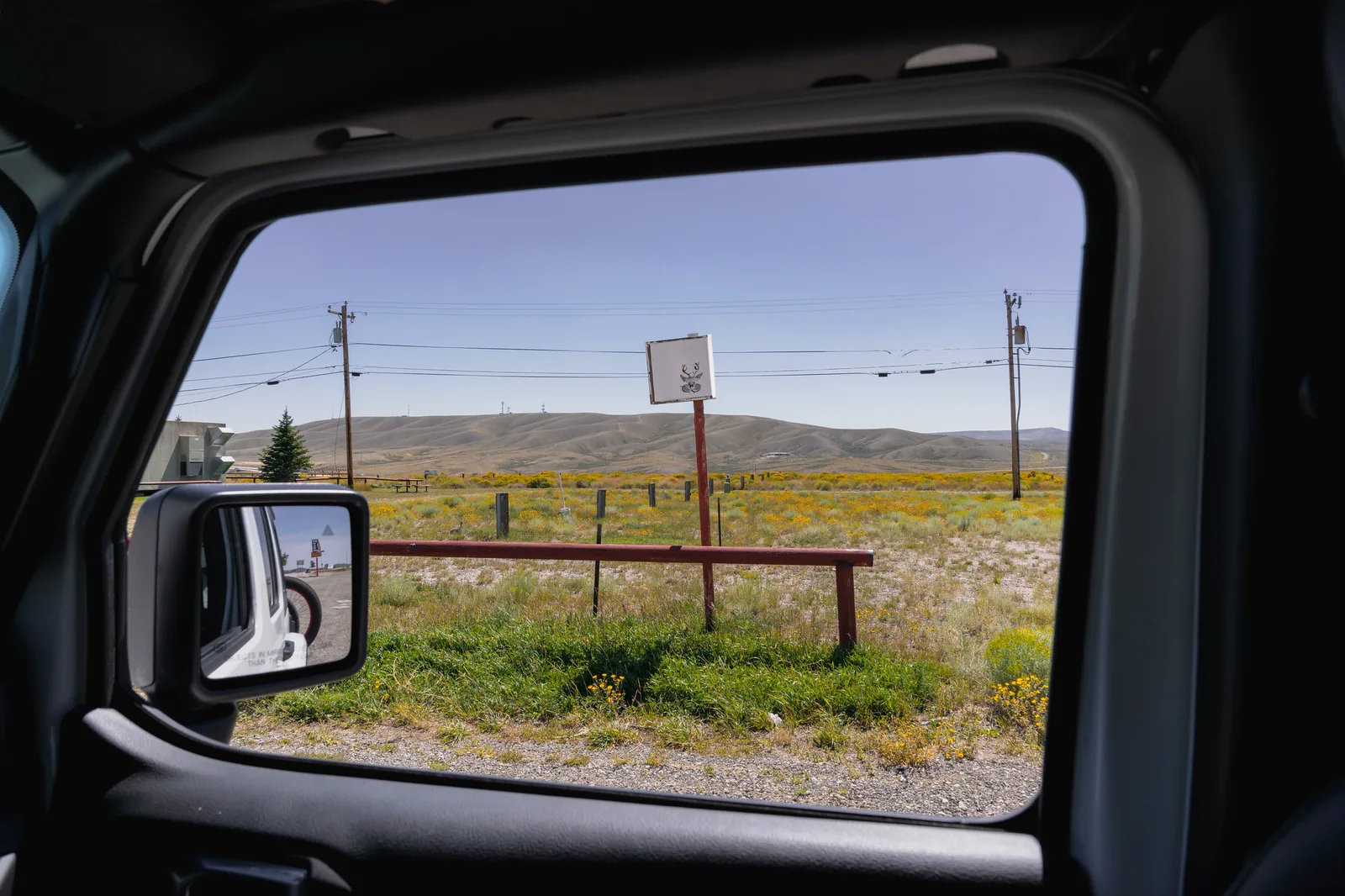
The usual way to cook a roll is to leave it in a vehicle. A closed car in direct sun can climb well past 50°C (122°F) inside, and the glovebox, dashboard and boot are the hottest places in it. Practical habits:
- Take the film with you when you leave the car, even for lunch.
- On a driving trip, keep film in a small insulated lunch bag on the floor behind a front seat, out of the sun. A cool pack helps as long as the film is in a sealed bag so condensation cannot reach it.
- Do not leave a loaded camera on a beach towel, a dashboard or a hot rock. The roll inside is the part at risk.
- In cold places the film itself is fine, but it becomes brittle and builds static. Wind and rewind slowly. Winter photography has more on cold-weather handling.

In humid climates, leave each roll in its sealed canister or foil until the moment you load it. After shooting, put rolls back in their canisters and keep them in a resealable bag with a sachet or two of silica gel.
Storing film in the fridge and freezer at home
Cold slows ageing. The colder the storage, the longer film keeps its speed, contrast and colour balance.
| Where | Good for | Before you shoot |
|---|---|---|
| Cool, dry cupboard away from outside walls | Film you will use within a few months | Nothing: load and shoot |
| Refrigerator | Film you will use within a year or two | Leave sealed at room temperature for an hour or more |
| Freezer | Long-term stock, especially colour and fast film | Leave sealed at room temperature for several hours, or overnight |
The warm-up time is the part people skip. Cold film taken out of its wrapper in a warm room collects condensation on the emulsion, which causes spots and can make the film stick. Keep the canister or foil sealed until the roll has reached room temperature.
Two more points. Once factory packaging has been opened, the film is no longer protected from moisture in the fridge, so put it in an airtight bag or box, squeeze out the air and add silica gel. And freezing does not stop everything: natural background radiation passes through any household freezer and slowly fogs film over the years. The effect is small for slow film and noticeable on very fast film, so freeze ISO 100 with confidence and use ISO 1600 and above within its date where you can.
Shooting expired film
The date on the box is the maker’s estimate of how long the film meets its specification at room temperature. It is not a cliff. What happens after it depends on storage far more than on the date.
- Stored cold since purchase: often close to normal for years past the date. Shoot at box speed or a third of a stop over.
- Stored at room temperature: a common starting point for colour negative film is one stop of extra exposure for each decade past the date. A roll of ISO 400 that expired ten years ago is rated at 200, and twenty years ago at 100.
- Unknown storage (attic, car, market stall): expect low contrast, heavy grain and colour shifts. Treat it as an experiment, never as the film for pictures that matter.
The decade rule is a rough guide, and film types behave differently. Slow black-and-white film ages most gracefully and often needs little or no adjustment. Fast film of any kind ages worst. Slide film has very little latitude, so extra exposure quickly washes out highlights: shoot old slide film close to box speed, bracket important frames and expect colour casts. With any old stock, shoot one roll from the batch and develop it before committing the rest to a trip. Do not ask the lab to push expired film, since that raises the fog along with the picture. Film photo problems shows how to tell age fog from underexposure on the negative.
Developing on the road, buying locally or carrying it home
The surest way to protect film from airport scanners is for less undeveloped film to pass through them. You have three options, and they combine well.
Buy film at the destination
Film bought after you land has skipped the outbound screening. Find a shop that stocks what you shoot before you leave, check its opening hours, and carry two or three rolls anyway so the first day is covered.
Develop before you fly home
Developed film cannot be fogged, so a lab at your destination removes the return journey from the equation. This works best on trips with a few days in one city at the end. Ask for turnaround times first, ask for develop only (no scans) if time is short, and have the negatives returned uncut in a roll or sleeved, flat in a rigid envelope. You can scan the negatives yourself at home. Travellers who develop their own black-and-white film sometimes pack a small tank and a changing bag, but liquid chemistry in luggage brings its own airline restrictions, so check them first.
Carry it home and develop promptly
If you carry exposed film back, it follows the same rules as on the way out: cabin bag, clear bag, hand check requested. Posting film home is not automatically safer, because parcels and international mail can also be X-rayed, and you have no chance to ask for an exception. When you are home, develop within a week or two. The latent image on exposed film fades and shifts slowly, faster in heat, and colour film is less stable than black and white. If a delay is unavoidable, seal the rolls in a bag and refrigerate them.
Common mistakes
- Packing film in a checked suitcase to keep the cabin bag light. Fix: film always goes in hand luggage. Checked baggage scanners are the most damaging machines in the airport.
- Forgetting the roll inside the camera. Fix: finish and rewind before the airport, or carry the loaded camera with the film and ask for both to be hand checked.
- Assuming a rule from one airport applies at the next. Fix: check each airport on the route, including transfer points, and allow extra time at all of them.
- Trusting a lead bag to solve everything. Fix: use a clear bag and a hand check as the main plan. A lead pouch is a fallback for conventional X-ray only.
- Leaving film in the car at the trailhead. Fix: carry it, or keep it insulated, shaded and low in the vehicle.
- Letting shot rolls sit for months after the trip. Fix: book the lab or mix the chemistry in the first week home.
Try this
Do a 15-minute dry run before your next trip. Gather every roll you plan to take and put it in one clear resealable bag: 35mm out of its boxes, 120 in its foil. Write the film speed on any canister where it is not visible. Check your camera’s frame counter and decide whether to finish the roll before you leave. Then look up the security page for each airport on your route and note what it says about photographic film and hand inspection. Finish by writing down, for the outbound and return legs, what you will do if a hand check is refused: accept the scan, buy film on arrival, or develop before flying home.
Frequently asked questions
Can film go through airport security?
Yes, in your carry-on, but ask for it to be inspected by hand instead of scanned. Conventional cabin X-ray machines give a low dose that slow and medium speed film usually tolerates for a pass or two. CT scanners can fog any film in one pass, and you cannot always tell which machine is in use.
Does airport X-ray damage film that has already been exposed?
Yes. Exposed but undeveloped film is just as sensitive as fresh film, and the pictures on it cannot be reshot. Only developed negatives, slides and prints are safe from scanners.
Will a hand check always be granted?
No. Practice varies by country, airport and officer. Check the airport’s published guidance before you fly, arrive early, have the film in a clear bag and ask before anything goes on the belt. Have a fallback plan in case the request is declined.
Does film expire?
Film ages gradually and has no hard cut-off. Past its date it slowly loses sensitivity and contrast and gains fog and grain, quickly in heat and very slowly in a freezer. Cold-stored film can be usable for many years. Film of unknown history is a gamble.
Is instant film affected by airport scanners?
Yes. Instant film is unprocessed until it leaves the camera, so the same risks apply, and a pack cannot be opened for inspection without exposing it. Carry it on, ask for a hand check and explain that the pack must stay closed.
Related guides
- Film photography: formats, loading, metering and the full workflow from camera to scan.
- Film stocks compared: which films suit travel light, and how speed affects grain and latitude.
- Film photo problems: how to recognise fog, light leaks and underexposure on a developed roll.
- Travel photography: planning, gear and storytelling for any trip.
- Instant film photography: handling and storing instant packs and prints.
- How to store old prints, negatives and slides: keeping developed film safe for decades after the trip.