The camera accessories almost every photographer uses are a spare battery, a second memory card, a tripod, a circular polarizing filter, a lens hood, a remote shutter release and a basic cleaning kit. Beyond those, the right add-ons depend on what you photograph: neutral density filters for long exposures, a reflector or external flash for portraits, a monopod for sports. Buy each one when it solves a problem you have actually run into, not before.
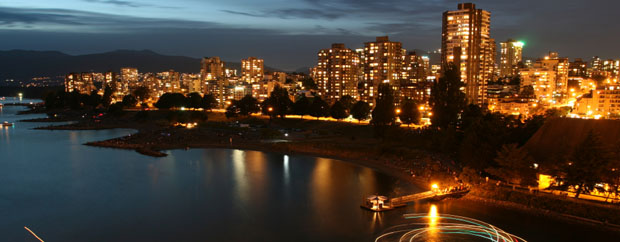
The night scene above is a good example of what a single accessory makes possible. Without a tripod, the light trails on the water and the clean, low-noise sky would not be possible.
Which camera accessories to get first
| Accessory | What it solves | Who needs it first |
|---|---|---|
| Spare battery | Running out of power mid-shoot | Everyone |
| Extra memory card | A full or failed card | Everyone |
| Lens hood | Flare, haze and knocks to the front glass | Everyone (often included with the lens) |
| Cleaning kit | Dust, smudges and spots on photos | Everyone |
| Tripod | Blur in low light, long exposures, precise framing | Landscape, night, architecture, product |
| Circular polarizer | Glare on water and glass, hazy skies | Landscape, travel, outdoor |
| Remote release | Shake from pressing the button | Anyone using a tripod |
| Reflector | Dark shadows on faces | Portrait |
| External flash | Too little light, harsh built-in flash | Events, portraits, indoors |
| Neutral density filter | Too much light for a slow shutter speed | Long exposure, video |
Power and storage
Spare batteries
Battery life varies a lot between cameras, and it drops quickly in cold weather, with heavy use of the rear screen or electronic viewfinder, and when you shoot video. Carry at least one charged spare. In the cold, keep the spare in an inside pocket where your body warms it. For long sessions on a tripod, many cameras can also run from a battery grip or external power.
Memory cards
Buy the card type your camera takes, fast enough for the way you shoot. Write speed matters for long bursts and video: a slow card makes the camera pause while its buffer empties. Carry more cards than you expect to need, and consider several medium cards instead of one huge one, so a single failure does not take the whole shoot with it. Buy from reputable sellers, because fake cards that report the wrong capacity are common.
Not sure which card to get? Choosing the right memory card explains speed ratings, capacity and what makes a card reliable.
Backup
The card is not a backup. Copy your photos to at least two separate drives as soon as you can, and keep one copy somewhere other than your home. See the photo backup guide for a simple system.
Camera support
Tripod
A tripod lets you use slow shutter speeds without blur, which opens up night scenes, smooth water, light trails, star photography, time-lapse and low ISO in dim light. It also slows you down in a useful way: you frame more carefully. Choose one that is stable and tall enough to use without stooping, and light enough that you will actually carry it. Carbon fiber legs are lighter for the same stiffness; aluminum is heavier and cheaper. A ball head is the most versatile; a geared or pan-and-tilt head gives finer control for architecture and products.
Got a tripod and still getting blur? How to use a tripod properly covers setup order, the center column problem and leveling the legs versus the head.
Monopod
A monopod is a single leg. It does not hold the camera still on its own, but it takes the weight of a long lens and steadies it enough for somewhat slower shutter speeds than handheld. It suits sports sidelines, wildlife hides and crowded places where a tripod would be in the way.
Remote shutter release and intervalometer
Pressing the shutter button shakes the camera slightly, which shows up in long exposures and close-ups. A wired or wireless remote fires the shutter without touching the camera; the self-timer or a phone app does the same job for free. An intervalometer, built into many cameras and remotes, fires at set intervals for time-lapse and star trails.
Filters
Most filters can be imitated in editing. Two cannot, because they change the light before it reaches the sensor.
Circular polarizer
A polarizing filter cuts reflections from water, glass and wet leaves, darkens blue skies and cuts haze, so colors look richer. You rotate it to set the strength, and it works most strongly on skies at about 90 degrees to the sun. It also costs one to two stops of light. If you buy only one filter, make it this one.
Neutral density filters
An ND filter is dark glass that reduces light without changing color, so you can use a slow shutter speed or wide aperture in bright light. Strength is measured in stops. A 3-stop filter allows gentle motion blur, a 6-stop filter turns 1/60 second into about 1 second, and a 10-stop filter turns 1/60 second into about 17 seconds, enough to smooth water and streak clouds. Graduated ND filters, dark at the top and clear at the bottom, darken a bright sky while leaving the land alone.
UV and protective filters
A UV filter mattered for film, which picked up ultraviolet haze. Digital sensors already block most ultraviolet, so today it is used only as a clear cover to protect the front of the lens. Whether that is worth it is a personal choice: it guards against scratches and salt spray, but any extra glass can add flare. A lens hood protects the lens too, without the glass.
Want to know which filters do what? The guide to photography filters covers every common type, which ones you need and which editing can replace.
Light: reflectors and flash
Reflector
A collapsible reflector is the cheapest way to improve outdoor portraits. White or silver surfaces bounce light into shadows on a face, gold warms it, black subtracts light for deeper shadows, and the translucent center works as a diffuser between the sun and your subject.
External flash
An external flash is far more powerful and flexible than a built-in one. Its head tilts and turns, so you can bounce the light off a ceiling or wall and turn harsh direct flash into soft, even light. Taken off the camera with a trigger, a single flash lights from the side and shows shape and depth. See off-camera flash to get started.
Protection and care
Lens hood
A lens hood blocks light from outside the frame that causes flare and lowers contrast, and it protects the front glass from knocks, rain and fingers. Many lenses come with one. Use it unless you want flare on purpose.
Cleaning kit
A basic kit is a rubber blower, a soft lens brush, microfiber cloths and lens cleaning fluid. Blow and brush dust off first, then wipe; wiping grit around scratches coatings. Sensor swabs are useful once you are comfortable cleaning a sensor yourself.
Seeing the same dark spots on every photo? How to clean your camera’s sensor covers the in-camera cleaning, a blower, brushes, and when a wet clean is worth it.
Camera bag
A bag protects your gear and decides how quickly you can reach it. Backpacks carry weight comfortably on long walks, shoulder and sling bags give fast access for street and events, and rolling cases suit heavy studio kits. Padded, movable dividers stop gear from knocking together. The best bag is one comfortable enough that you take it. See choosing a camera bag.
Strap
The strap that comes with the camera works, but a strap suited to how you shoot is a small change that makes a big difference over a long day: a padded strap for heavy lenses, a sling or wrist strap for quick access, a quick-release system if you move between strap and tripod often, or a harness for two cameras at events.
Lenses and lens add-ons
A new lens changes your pictures more than any other add-on. A wide angle lens fits more of the scene in and exaggerates depth; a fast prime lets in more light and blurs backgrounds; a telephoto brings distant subjects closer. Cameras with fixed lenses can sometimes take screw-on converter lenses that widen or lengthen the view, though they usually cost some sharpness. For close-ups, extension tubes or close-up filters let an existing lens focus closer for macro photography.
Thinking about a second lens? What lens to buy first explains which focal lengths and apertures add the most to a kit lens.
On the computer
- Editing software that handles raw files. Paid and free photo editors can both do this well; learning one thoroughly matters more than which one it is.
- A monitor calibrator, if you print or deliver photos to clients. It measures your screen and corrects its colors and brightness, so your edits look right elsewhere. See monitor calibration.
- A gray card for setting white balance and checking exposure when color accuracy matters.
Accessories by type of photography
- Landscape: tripod, polarizer, ND and graduated ND filters, remote release.
- Portrait: reflector, external flash with a softbox or umbrella, a light stand.
- Events and weddings: spare batteries, plenty of cards, external flash, a comfortable strap or harness.
- Sports and wildlife: monopod or tripod for long lenses, extra batteries, rain cover.
- Street and travel: small bag, spare battery, polarizer, comfortable shoes.
- Macro: extension tubes or close-up filters, a tripod that goes low, a small LED light.
- Night and astro: sturdy tripod, remote with intervalometer, headlamp with a red light.
Common mistakes
- Buying before needing. Accessories bought just in case usually stay in a drawer. Wait for the problem, then buy the fix.
- Buying the flimsiest tripod. A tripod that shakes in the wind does not solve blur. One solid tripod beats several weak ones.
- Cheap filters on good lenses. Poor glass adds flare, color casts and softness to every picture taken through it.
- Carrying everything everywhere. A heavy bag slows you down. Pack for the shoot you are doing.
- Skipping the free ones. The lens hood, the self-timer and the camera’s own interval timer cost nothing and solve real problems.
Try this
Go through your last hundred photos and note every one that failed for a reason gear could fix: blurred in low light, glare on water, a dead battery, a dark face against a bright sky. Count which problem comes up most. That problem tells you which accessory to get next, and it is often not the one you were planning to buy.
Frequently asked questions
What camera accessories do I need as a beginner?
A spare battery, an extra memory card, a lens hood and a cleaning cloth and blower. Add a tripod and a circular polarizer when you start shooting landscapes, night scenes or anything that needs slow shutter speeds.
What is the most useful filter for photography?
A circular polarizer, because its effect on reflections and skies cannot be fully recreated in editing. Neutral density filters come next if you want long exposures in daylight.
Do I need a UV filter on a digital camera?
Not for image quality, since digital sensors already block most ultraviolet light. Some photographers use one as a protective cover for the lens; a lens hood also protects it without adding glass.
Is a tripod worth it?
Yes, if you shoot in low light, at night, landscapes or anything that needs a slow shutter speed or careful framing. For fast, handheld work such as street or events, a spare battery or a flash will help more.