Farm animals are some of the friendliest and most patient subjects a photographer can find. Cows stare back with calm curiosity, sheep move in soft flowing groups, goats climb everything in sight and chickens strut around the yard with endless character. Best of all, most people can find farm animals a short drive from home, and they offer lovely practice in light, composition and animal behavior.
This guide covers where to find farm animals, how to ask permission and stay safe, eye level and expression, light, pastures and herds, tips for each common animal, farm details and stories, settings and editing. For general animal skills, see the guide to wildlife photography, and for the wider countryside, see the guide to rural photography.
Why farm animals make great subjects
Farm animals sit somewhere between pets and wildlife. They are used to people, so you can often get closer than with wild animals, yet they still have their own lives and habits to observe.
- They are easy to find. Pastures, petting farms, fairs and country roads give access to many kinds of animals in one outing.
- They are patient. Grazing cows and sheep stay in one area for a long time, which leaves room to try different angles and settings.
- They are full of character. Curious cows, mischievous goats and proud roosters all have personalities that show in pictures.
- They live in beautiful settings. Green hills, old barns, fences and fields make lovely backgrounds and wide scenes.
Farm animals also connect pictures to ideas of home, food, work and the seasons, which makes them good subjects for small photo stories as well as single frames.
Where to find farm animals
Country roads are the easiest place to start. Many pastures run right along public roads, and a longer lens lets you photograph cows, sheep and horses through or over a fence without stepping onto private land. Pull fully off the road where it is safe and legal, and keep an eye on traffic.
Other good places include petting farms, heritage farms and farm museums, agricultural fairs and livestock shows, farmers who welcome visitors, farm stays, community gardens with chickens and city farms. Fairs and shows are especially good for close portraits, since animals are washed, groomed and used to crowds. If you know a farmer or someone with a few backyard hens, ask whether you can visit with a camera.
Seasons on the farm
Each season changes the farm. Spring brings lambs, calves, kids and chicks, which are irresistible subjects but need extra care around protective mothers. Summer gives long evenings and green pastures. Autumn adds golden fields, hay bales and harvest activity. Winter brings frosty breath, steaming backs and animals gathered near barns. Visiting the same farm across the year shows how much changes.
Permission, safety and respect
Farms are working places and homes. A little courtesy goes a long way.
- Ask before entering. Never climb fences, open gates or walk into fields without permission. If you do get permission, leave every gate exactly as you found it.
- Do not feed animals. Many animals have strict diets, and human food can make them sick.
- Respect large animals. Cows and bulls are heavy and can push, step on feet or charge, especially mothers with young. Keep a fence between you and large animals you do not know.
- Keep biosecurity in mind. Some farms ask visitors to clean boots or avoid certain areas to protect animal health. Follow their rules.
- Keep quiet and slow. Sudden movement, flash and loud voices can startle animals and disturb their routine.
If you photograph farmers or farm workers, ask before taking close pictures, and offer to send copies. Many are proud of their animals and happy to help.
Eye level and expression
As with any animal, getting down to eye level makes a huge difference. A picture of a sheep taken from standing height looks down on a woolly back, while one taken from a crouch shows its face, eyes and expression. For chickens and ducks, sit or kneel on the ground. For cows, crouch slightly or stand at a gate where they come to look at you.
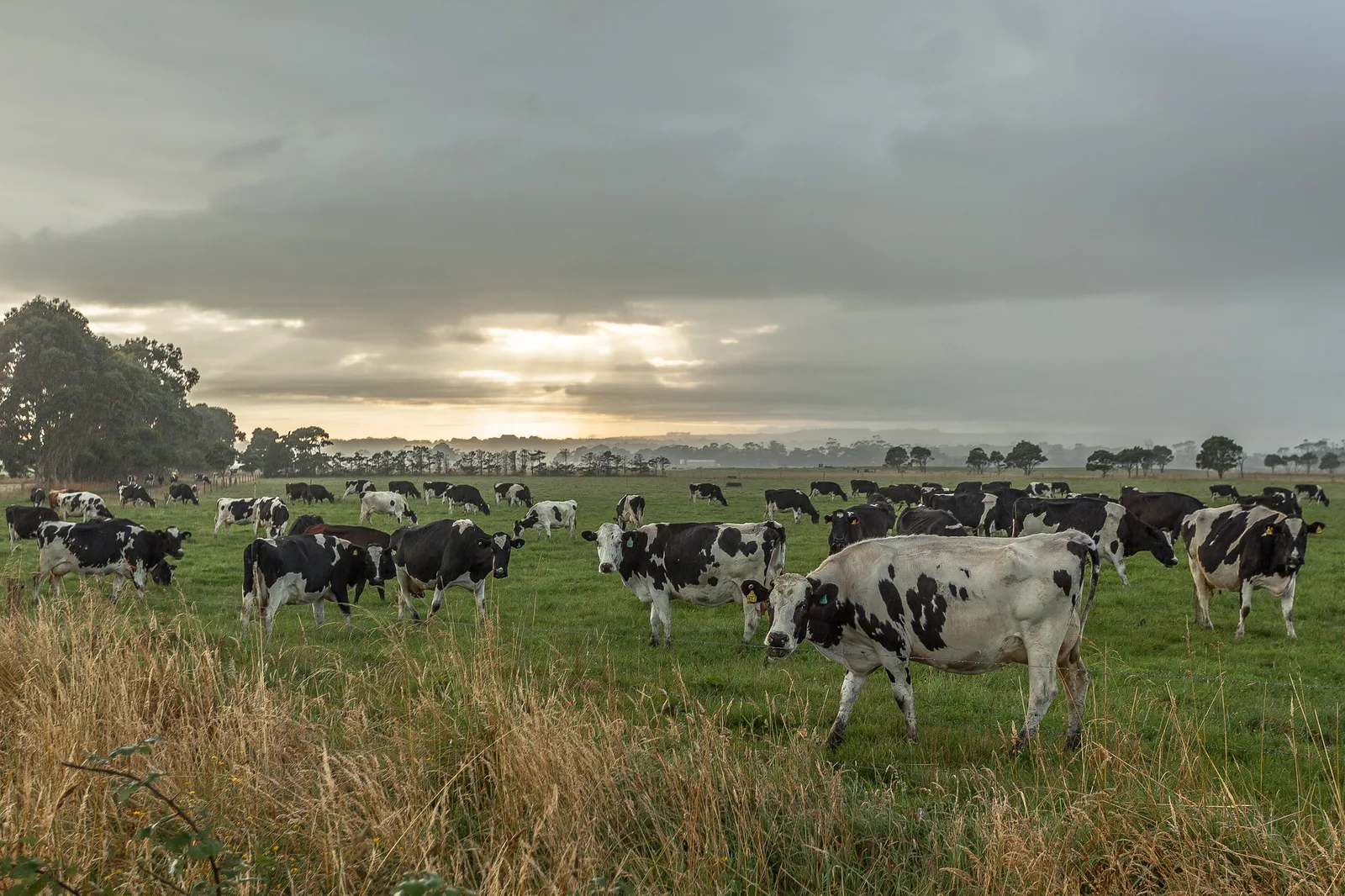
Focus on the nearest eye. Farm animals often have pale or dark eyes that can be hard to see, so wait for a moment when the head turns toward the light and a catchlight appears. Curious animals approaching the fence give wonderful close portraits, especially cows, which often come over to investigate a quiet visitor.
Expression changes with the angle, too. A cow photographed straight on, with both eyes visible and the nose close to the lens, looks curious and a little comic. A side view shows the shape of the body and the markings on the coat. A three-quarter view sits between the two and often flatters the animal most. Try all three with the same animal and compare them later.
Catching a curious look
Stand still at the fence and wait. Curious cows, goats and sheep often wander over within a few minutes. A gentle sound, such as a soft click of the tongue, can make an animal lift its head and look straight at you. Take the picture right away, because the look lasts only a moment.
Light on the farm
Early morning and the last hour before sunset, often called golden hour, give warm, low light that brings out texture in wool, fur and feathers. Morning mist over a pasture with cows grazing in soft light is one of the classic country pictures. Overcast light is excellent for close portraits, especially of animals with white or black coats, since it holds detail in both.
Backlight makes wool and whiskers glow, while side light shows shape and texture. Midday sun is harsh but can still work in shade, inside barns or for bold wide scenes under a deep blue sky. Inside a barn, look for light falling through a doorway or window; animals standing in that light against a dark interior make simple, painterly portraits.
Hoping to catch farm animals in misty morning light? The guide to fog photography explains how to expose soft, hazy scenes.
Pastures, herds and patterns
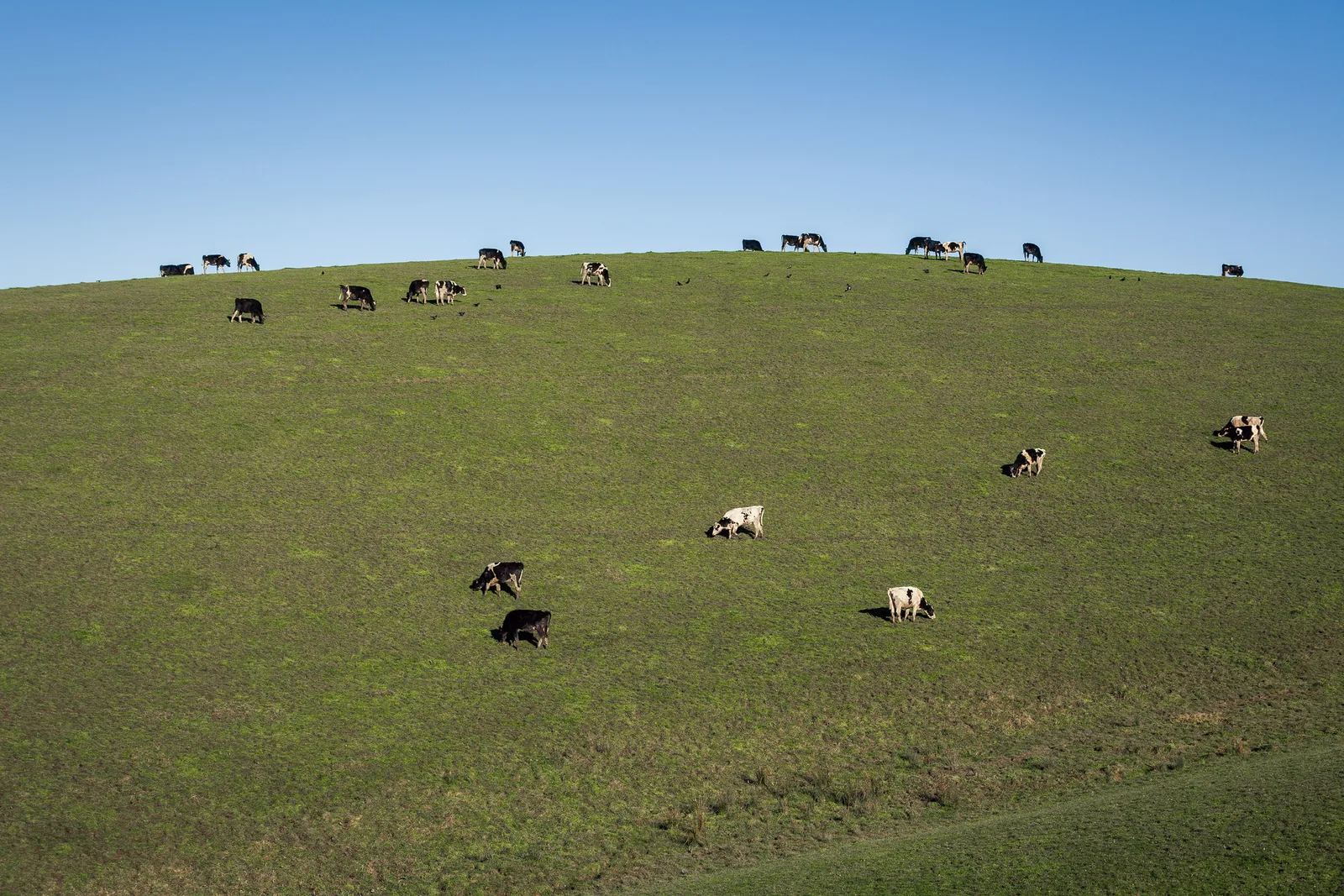
Herds of cows or flocks of sheep spread across a field make lovely patterns. Look for a higher viewpoint, such as a hill or gateway, so the animals separate against the grass. Odd numbers in small groups often feel balanced, and gaps between animals keep the shapes clear. A flock moving through a gate or along a lane creates natural lines.
Also try pictures where the animals are small in the landscape: cows on a rounded hill against the sky, sheep scattered across a valley, a lone animal beside a tree. These scenes say as much about the land as the animals. The guides to the rule of odds and negative space help with these compositions.
Fences, walls and hedges can frame a pasture or lead the eye toward the animals. A line of fence posts running into the distance, with sheep grazing beside it, gives depth and a sense of place in one simple frame.
Tips for common farm animals
Cows
Cows are curious and often walk toward a quiet person at the fence. Their large eyes, wet noses and long lashes make great close portraits. Watch for flies and ear tags, and wait for a moment when the cow is looking toward you with ears forward.
For horses on the farm, see the guide to horse photography.
Sheep
Sheep are shy and tend to move away together. Stay still and let them settle. White wool can lose detail in bright sun, so check the highlights and use soft light where possible. Lambs playing and jumping need a fast shutter speed.
Goats
Goats are bold, quick and always climbing. Their odd eyes and expressive faces make fun portraits, but they also nibble cameras and straps, so keep gear close. A fast shutter speed helps with playful kids.
Pigs
Pigs are intelligent and expressive. Get low, focus on the eye and look for snouts in mud or straw. Piglets sleeping in a pile make charming pictures.
Chickens and other poultry
Chickens move in quick, jerky bursts, so use continuous autofocus, a fast shutter speed and burst mode. The guide to photographing small animals has more tips for quick, low subjects. Lie low to the ground for a bird’s eye view of the yard. Roosters crowing and hens dust bathing are lively moments.
Young animals in spring
Lambs bouncing across a field, calves pressed against their mothers and chicks crowding under a heat lamp are some of the sweetest pictures a farm offers. Young animals move suddenly and unpredictably, so use a fast shutter speed, continuous autofocus and short bursts. Lambs in particular often play together in the late afternoon, racing and leaping in small groups, so it pays to stay until the light softens.
Give mothers extra space. A ewe, cow or sow with young can become protective, and stress is bad for newborns. Photograph from the fence with a longer lens, never pick up young animals without the farmer’s permission and leave if an animal seems worried. The quietest approach usually gives the most natural pictures anyway, with young animals nursing, sleeping or exploring rather than staring at a stranger.
Looking for more ideas for the season of new life? The guide to spring photography covers blossoms, fresh greens and young animals.
Fairs and livestock shows
Agricultural fairs and livestock shows bring many kinds of animals together, often freshly washed, brushed and calm around people. They are a wonderful place to practice close portraits of breeds you might never see otherwise, from shaggy cattle to fancy poultry with extravagant feathers.
Arrive early, when owners are grooming and feeding animals and the barns are quieter. Look for window and doorway light inside the barns, and watch the show ring for moments of pride, such as a young handler leading a calf or a judge running a hand along a sheep’s back. Ask before photographing people closely, and never use flash in the barns or the ring. Keep your lens a little longer so you can work without crowding the animals or their handlers.
Farm details and stories
A farm is more than its animals. Details such as a muddy boot, a feed bucket, a weathered gate, hay bales, a water trough or a handwritten sign add context and texture to a set of pictures. Combining animal portraits, wide pasture scenes and details tells a fuller story of farm life.
Try a small set of six pictures from one visit: one wide scene, one herd, two portraits, one detail and one picture of the farm at work. The guide to building a photo essay explains how to sequence pictures like this.
Settings for farm animals
- Portraits: aperture priority at f/2.8 to f/5.6 for a soft background, with focus on the nearest eye.
- Grazing animals: 1/250 to 1/500 second is usually enough.
- Playing young animals and chickens: 1/1000 second or faster with continuous autofocus and burst mode.
- Wide pastures: f/8 to f/11 so both animals and landscape are sharp.
- ISO: auto ISO with a sensible upper limit, especially inside barns.
- Lens: a 70mm to 200mm zoom for portraits through a fence, and a wider lens for landscapes.
Shoot in raw if you can, since white wool, black coats and bright skies often appear in the same frame.
Editing farm animal photos
Keep edits natural and gentle. Recover highlights in white wool and feathers, lift shadows on dark coats and keep grass a believable green rather than neon. Crop to give the animal room to look into, and level the horizon. Removing a small distraction such as a stray piece of string is fine, but avoid changing the scene in ways that make it misleading.
Need a simple editing routine? The guide to photo editing for beginners walks through the basic steps in order.
Common mistakes
- Shooting from standing height. Get down to the animal’s eye level for more connection.
- Entering fields without permission. Stay on public ground unless the farmer says otherwise.
- Blown white wool and feathers. Check the highlights and use softer light.
- Cluttered backgrounds. Machinery, wires and buildings can distract. Move until the background is clean.
- Fence wire in focus. Put the lens close to the gap in the fence so the wire blurs away.
- Only close portraits. Step back for herds and landscapes, too.
- Using flash. It startles animals. Use natural light instead.
Try this: a 10-minute farm fence session
Find a pasture along a quiet public road and give yourself ten minutes:
- Minutes one to three: stand still at the fence and let the animals notice you. Do not shoot yet.
- Minutes four to seven: as curious animals approach, crouch to eye level and make close portraits, focusing on the nearest eye.
- Minutes eight to ten: step back and make one wide picture showing the animals in the pasture with the sky and land around them.
Compare the close and wide pictures at home and notice how each tells a different story.
Frequently asked questions
Can I photograph farm animals from the road?
Yes, from public ground, as long as you do not enter the field, feed the animals or block traffic. Ask the farmer if you want to get closer.
What lens is best for farm animals?
A 70mm to 200mm zoom works well for portraits through a fence, while a wider lens is useful for pastures and barns.
How do I photograph through a wire fence?
Put the lens close to a gap in the fence and use a wide aperture. The wire blurs into the foreground or disappears completely.
How do I keep white sheep from looking overexposed?
Use soft light, check the highlight warning and dial in a little negative exposure compensation when needed.
Are cows dangerous to photograph?
Cows are usually calm but very heavy, and mothers with calves can be protective. Keep a fence between you and large animals you do not know.
How do I photograph animals inside a barn?
Raise the ISO, open the aperture and look for animals standing in light from a doorway or window. The dark interior behind them makes a simple, moody background.
For terms such as aperture, exposure compensation, burst mode and depth of field, see the photography glossary.