The countryside is full of quiet, timeless pictures: a red barn at the edge of a field, rows of crops running to the horizon, an old truck slowly rusting into the grass, hay bales casting long shadows at sunset. Rural photography is about the land and the people who work it, and it rewards a slow pace, an eye for light and a respect for the places you visit.
This guide covers the main subjects of rural photography, from barns and fields to machinery, animals and people, how to use light and the seasons, how to explore back roads safely and how to respect private land. It pairs well with the guide to landscape photography, which covers wide views in more depth, and with small town photography for the communities that farms surround.
Why the countryside makes good pictures
Rural places have a character that is very different from cities and wild landscapes. They are shaped by people but still open and natural.
- Space. Wide fields and big skies give room to simplify a picture down to a few strong elements. A single building or tree in open land is often enough.
- Pattern. Plowed furrows, rows of crops, fence lines and hay bales create rhythm and lines across the land. The guide to patterns and repetition shows how to use them.
- History. Old barns, farmhouses, windmills and machinery show how people have lived and worked on the land for generations.
- Seasons. Farmland changes dramatically through the year, from bare soil to green shoots, golden crops, harvest and snow.
- Quiet. Rural places invite a slower way of working, which often leads to more thoughtful pictures.
Rural photography is also accessible. Most people live within a short drive of farmland, and many of its best subjects can be seen from public roads.
A good way to start is to drive or cycle slowly along a few quiet country roads, stopping whenever something catches your eye. Make notes of places to return to in better light. Many of the best rural pictures come from second or third visits, once you know where the sun rises and sets over a particular field.
Barns and farm buildings
Barns are the classic symbol of the countryside. Each one reflects its region, its age and the work it was built for.
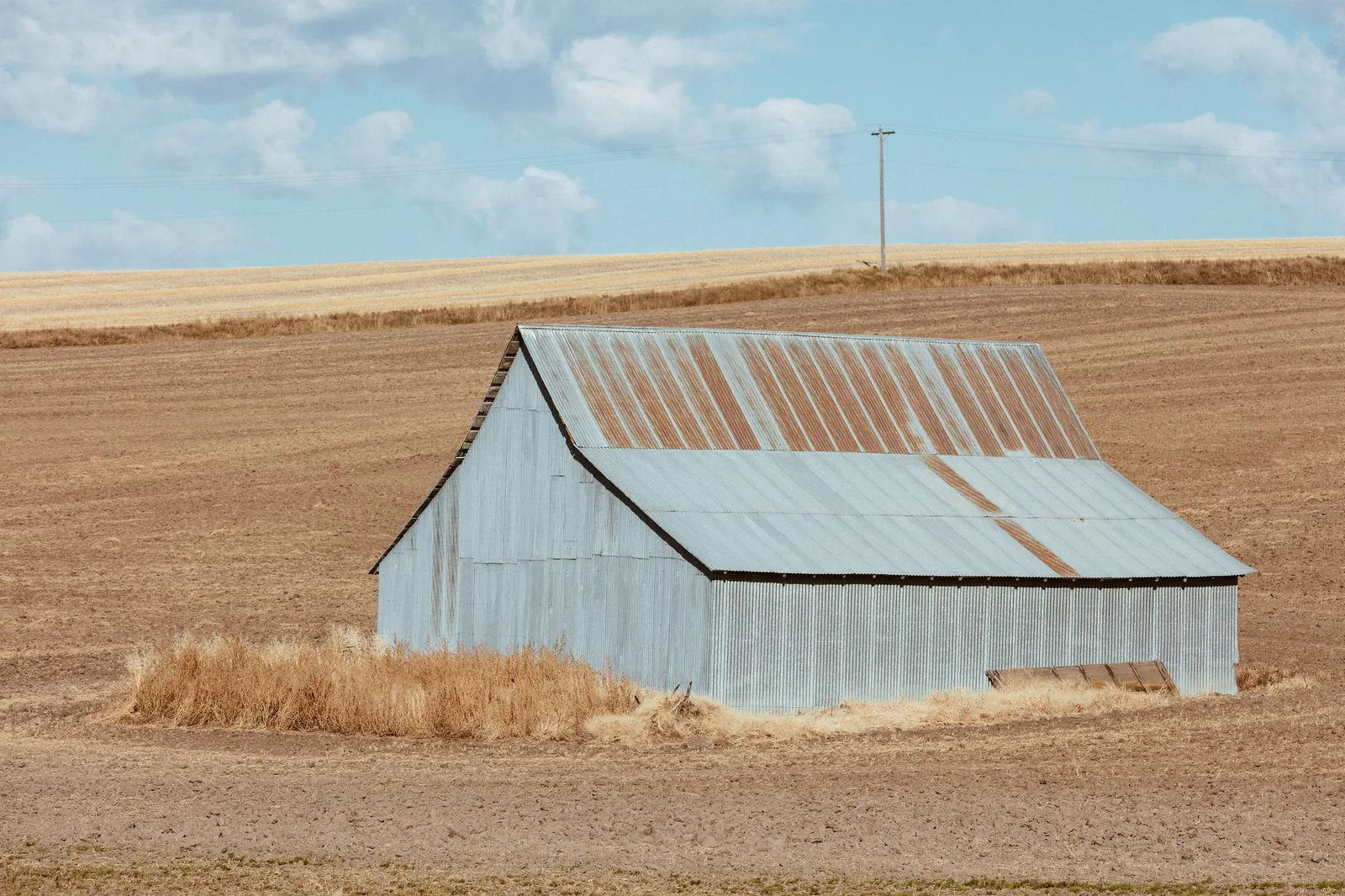
- Show the building in its land. A barn or shed alone in open fields, like the one at the top of this page, says a great deal about the scale of farming. Step back and include plenty of field and sky.
- Look for color. A red barn against green fields, golden crops or white snow is a timeless picture.
- Photograph details. Weathered boards, rusted hinges, hand-painted signs and patterned roofs all make strong close-ups. Side light brings out their texture.
- Keep lines straight. Barns have strong verticals and rooflines. Keep the camera level so walls do not lean.
- Look for groups. Farmhouses, silos, sheds and barns together tell the story of a working farm.
- Use a longer lens from the road to frame a distant barn without walking onto private land.
Old buildings change and disappear as farms modernize. A picture of an old barn may one day become the only record of a building that has gone, which makes rural photography quietly and lastingly valuable.
Fields, crops and patterns
Fields are the heart of farm country, and their shapes and colors change through the year.
- Use lines. Rows of crops, plowed furrows and tractor tracks make leading lines that pull the eye into the distance. Stand at the end of a row for the strongest effect.
- Find a high point. From a hill, a quiet road on a rise or a public viewpoint, fields become a patchwork of colors and shapes.
- Isolate a single element. A lone tree, a single hay bale or a tractor in a big field gives the eye somewhere to rest. The guide to minimalist photography explains why less is often more.
- Get low. Crouching among crops puts stalks, flowers or grain heads in the foreground, with the field stretching behind.
- Watch the wind. Wind moving across grain fields makes waves of light. A slower shutter speed can turn them into soft motion.
Respect crops. Walking through a field can damage a farmer’s livelihood, so stay on roads, verges and public paths unless you have permission.
Want to capture the wide patterns of farmland from above? The aerial photography guide covers views from planes, balloons and high viewpoints.
Crops also make wonderful close-ups. Heads of wheat backlit by low sun, a single sunflower among thousands or the texture of a cut hay field can carry a picture on their own. Use a wider aperture to soften the background so the detail stands out.
Old machinery and vehicles
Farm country is full of old tractors, trucks and tools, some still working, others left to rest in the grass for decades.
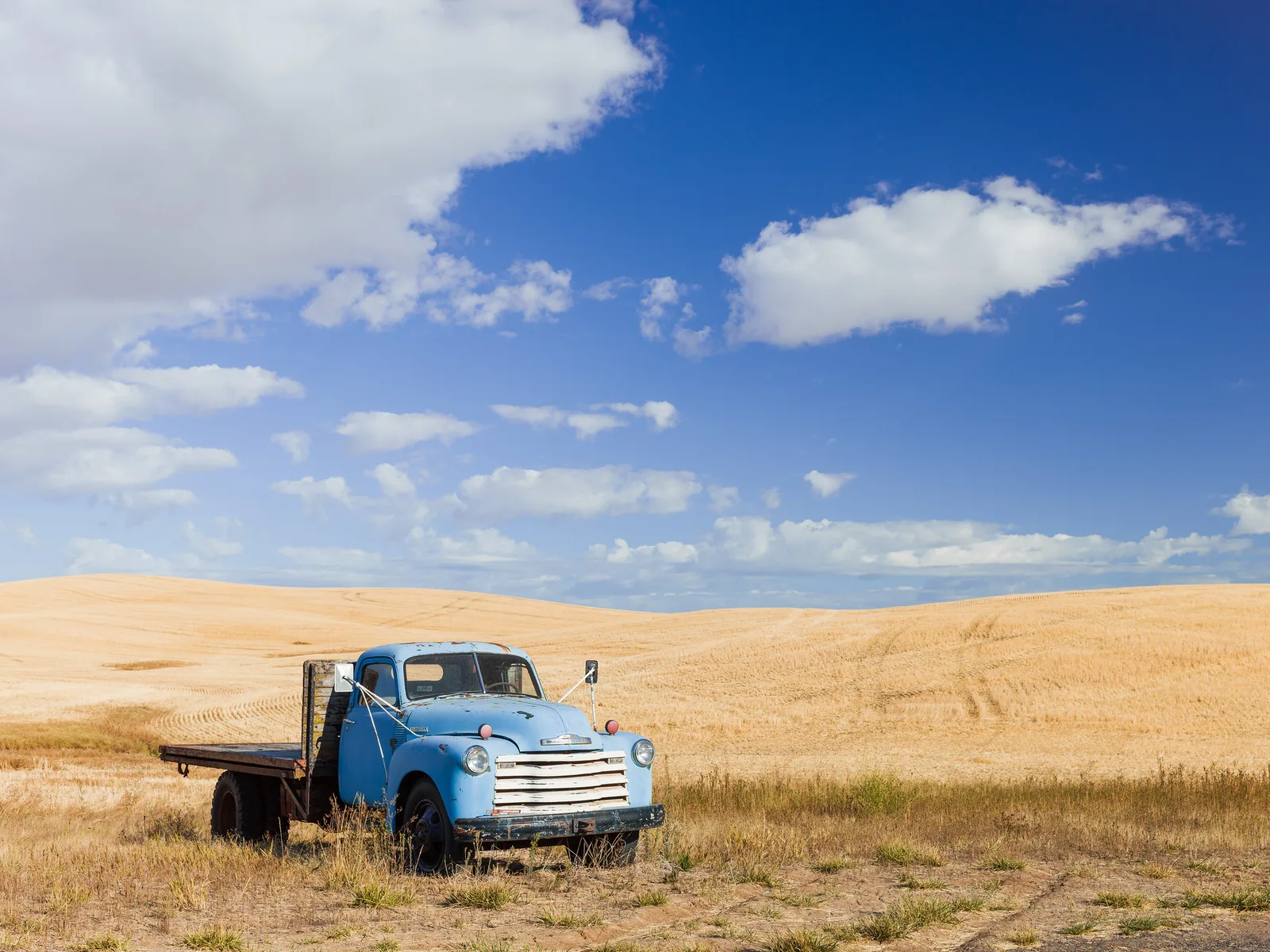
- Show them in their setting. An old truck in a golden field, like the one shown on this page, tells a story of long years of work.
- Look for character. Faded paint, rust, cracked windows and plants growing through wheels all add age and texture.
- Use low angles. Crouching makes old machinery look heroic against the sky.
- Photograph working machines. Tractors plowing, combines harvesting and trucks loading grain show the farm in action. Stay well back and never approach working machinery.
- Try black and white. Old metal and weathered wood often look timeless in monochrome. See the guide to black and white photography.
If you find a farm with old machinery you love, ask the owner about it. Many have stories about when a tractor was bought or who drove a truck for decades, and those stories can become captions that bring your pictures to life.
Back roads, fences and gates
Rural roads are a subject in themselves, and they are the way you find everything else.
- Gravel and dirt roads winding through fields make strong leading lines, especially in low light.
- Fences and gates divide fields and create pattern and texture. A gate opening onto a view is a natural frame.
- Mailboxes and signs at the end of a farm lane tell small stories about the people who live there.
- Power poles and wires stretching across open land can be graphic, or distracting. Decide whether to use them or avoid them.
- Stop safely. Pull fully off narrow roads, watch for farm vehicles and do not block gates or lanes.
Exploring slowly by car or bicycle, with time to stop, is the best way to discover rural pictures. The guide to road trip photography has more on photographing from the road.
Animals on the farm
Cows, horses, sheep, goats and chickens bring life to rural pictures, and they are usually easy to photograph from a fence line.
- Stay outside the fence. Farm animals can be large, protective and unpredictable. A longer lens lets you fill the frame from a safe distance.
- Get to their eye level. Crouching makes animal portraits more personal.
- Use the light. Backlit animals in a misty field at dawn, or a herd in warm evening light, make beautiful scenes.
- Show the herd in the land. A group of cows or sheep scattered across a hillside shows the scale of the pasture.
- Be calm and patient. Animals often come to the fence out of curiosity if you wait quietly.
Never feed or touch animals without permission, and never enter a field with livestock unless invited.
Animals are most active and most photogenic early and late in the day, when they graze and move between fields. Midday heat often sends them to shade under trees, which can make a peaceful picture in itself.
Rural people and life
Farms are workplaces and homes. Photographing the people who work the land, with permission, adds depth and warmth.
- Start with a conversation. Farmers are often busy, but many are happy to chat and to share the story of their land.
- Photograph work. Feeding animals, mending fences, harvesting and selling at a roadside stand all tell the story of rural life.
- Visit markets and fairs. Farmers markets, county fairs and harvest festivals are great places to meet and photograph rural communities.
- Look for hands and tools. Weathered hands holding a tool or a handful of grain can be as powerful as a face.
The guide to environmental portraits explains how to photograph people in their working setting.
Light and weather in the countryside
Open land shows light more clearly than almost anywhere else. Small changes in the sky change the whole scene.
- Golden hour. Low sun rakes across fields, lights up crops and gives buildings warm color and long shadows. The guide to golden hour photography covers this.
- Fog. Misty mornings in valleys and low fields make soft, layered scenes with barns and trees fading into white.
- Storms. Dark clouds over bright fields make dramatic pictures. Watch the weather and stay safe. See storm photography.
- Overcast. Soft light suits details, animals and people.
- Night. Rural areas are often dark, with excellent skies for stars over barns and fields.
The farming year
| Season | What to look for |
|---|---|
| Spring | Plowing, planting, fresh green shoots, blossom in orchards, young animals |
| Summer | Tall crops, wildflowers along verges, hay making, long golden evenings |
| Autumn | Harvest, combines at work, golden stubble, pumpkins and fall color |
| Winter | Snow on fields, frost on fences, bare trees and strong graphic shapes |
Returning to the same farm or field through the year is a rewarding project. Choose one spot, photograph it from the same place in each season and the set will show the rhythm of the land. Pair it with the guides to spring photography and fall photography for more seasonal ideas.
Respecting private land
Almost all farmland is private property and someone’s livelihood. Good rural photographers are welcome because they are respectful.
- Photograph from public roads and paths unless you have permission.
- Ask before entering. Knock on the farmhouse door or ask someone working nearby. Many farmers say yes when asked politely.
- Leave gates as you find them. An open gate can let animals escape.
- Do not climb fences or walls, which can damage them.
- Avoid crops and young animals, and keep dogs on a lead.
- Offer to share your pictures. A print of their barn is a lovely thank you.
Interested in documenting a farm or a rural community over time? The guide to documentary photography explains how long projects come together.
Editing rural photos
Rural scenes look best when editing stays honest and gentle. The aim is to show the land as it felt, not to make it look like a postcard.
- Straighten the horizon. Flat farmland makes a tilted horizon very obvious. Level it first.
- Recover the sky. Big rural skies are often much brighter than the land. Lower highlights or use a graduated adjustment to bring back clouds. The page on global and local adjustments explains how.
- Keep greens natural. Fields and grass can quickly turn neon when saturation is raised. Adjust greens and yellows on their own if they look too strong.
- Warm golden hour gently. A small shift in white balance can bring back the glow of evening light without turning everything orange.
- Bring out texture carefully. A touch of clarity suits weathered wood and rust, but too much makes skies gritty and adds halos.
- Try black and white for old buildings, machinery and stormy skies, where shape and texture matter more than color.
New to editing? The guide to photo editing for beginners walks through the basic adjustments in a sensible order.
Common mistakes
- Trespassing. Walking onto private land without permission. Fix: shoot from public places or ask first.
- Flat midday pictures. Fix: come back at golden hour or on a misty morning.
- Too much in the frame. Fields, buildings and wires all compete. Fix: simplify to one subject and plenty of space.
- Leaning buildings. Fix: keep the camera level and step back.
- Stopping unsafely. Fix: pull fully off the road and watch for farm vehicles.
- Only landscapes. Fix: add details, animals and people.
Try this: a 10-minute country stop
- Minutes 1 to 2: Pull safely off a quiet road and make one wide picture of the land.
- Minutes 3 to 4: Find a line, such as a fence, row of crops or road, and use it to lead into the frame.
- Minutes 5 to 6: Use a longer lens to isolate one building, tree or animal.
- Minutes 7 to 8: Photograph two details: a gate latch, a mailbox, a weathered board.
- Minutes 9 to 10: Crouch low and make a picture with grass or crops in the foreground.
Frequently asked questions
Can I photograph a barn from the road?
Generally yes, from public land for personal use. Do not walk onto the property without permission.
What lens is best for rural photography?
A standard zoom covers most scenes. A longer lens is very useful for framing distant buildings and animals from the road.
When is the best time to photograph farmland?
Early morning and evening for warm light and long shadows, and misty mornings for mood. Harvest time adds activity and golden color.
How do I ask a farmer for permission?
Be friendly and honest, explain what you would like to photograph and offer to share the pictures. Respect a no.
Can I photograph the countryside with a phone?
Yes. Use the grid to keep horizons straight, tap to expose for bright skies and use the zoom to frame distant subjects.
How do I find good rural locations?
Look at maps for quiet roads through farmland, river valleys and hills with viewpoints. Drive or cycle slowly, note promising spots and return when the light is good.
How do I photograph hay bales or crops at sunset?
Get low so the bales or crops sit against the sky, expose for the bright sky and let foreground shapes go dark, or use a gentle shadow lift in editing.
For terms such as leading lines, texture, golden hour and minimalism, see the photography glossary.