One of the most common problems in landscape photography is flat, lifeless images that fail to capture the grandeur you saw with your own eyes. You stand in front of a breathtaking vista, press the shutter, then look at the result and wonder why it feels so disappointing. The answer, more often than not, comes down to foreground interest.
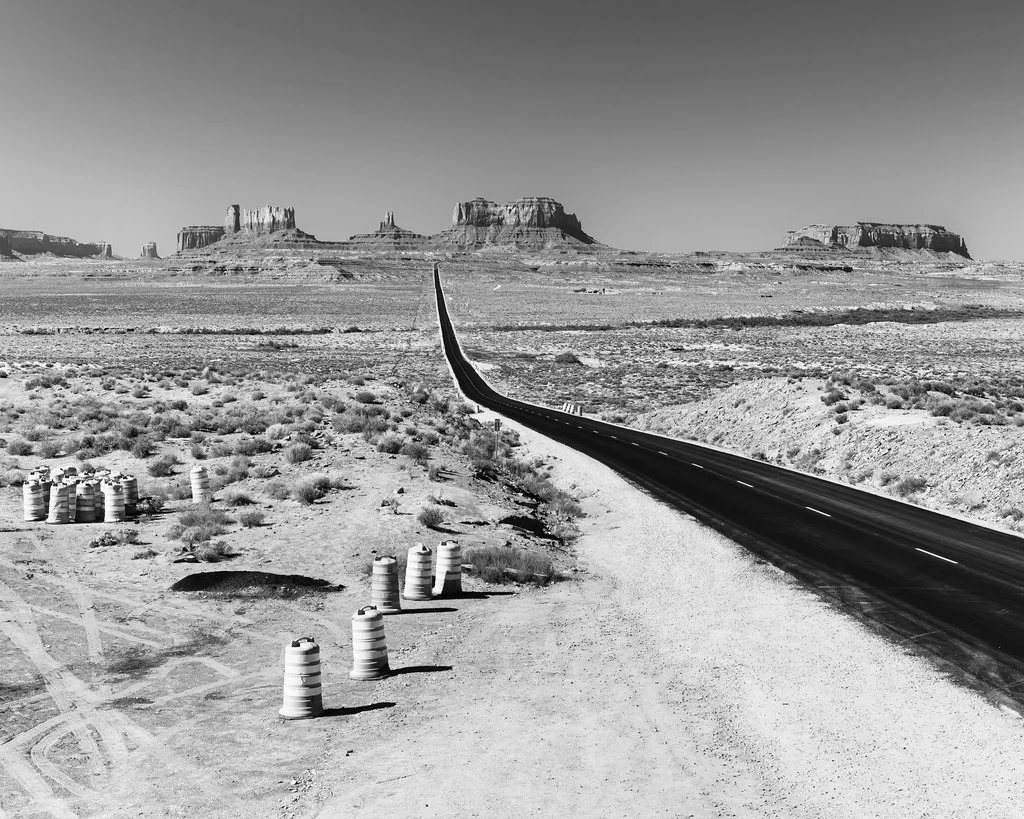
Foreground interest is the practice of placing compelling elements in the bottom third of your frame to create a visual entry point, add depth, and pull the viewer into the scene. It transforms a flat two-dimensional photograph into something that feels three-dimensional. It gives the eye somewhere to land before it travels deeper into the image. And once you understand how to use it, your landscape photography will improve dramatically.
Why Foreground Interest Matters So Much
When you look at a real landscape with your own eyes, you experience depth. Your brain processes distance cues, parallax, and atmospheric perspective automatically. But a photograph strips away all of that. It collapses a three-dimensional scene into a flat rectangle. Without intentional composition choices, the result often feels disappointingly empty.
Foreground interest solves this problem by re-creating the sense of depth your eyes naturally perceive. When you place an interesting rock, flower, puddle, or textured surface in the foreground of your frame, you establish a clear near-to-far relationship. The viewer’s eye starts at the foreground element, moves through the middle ground, and arrives at the background. This visual journey is what separates compelling landscape images from snapshots.
Think of it this way: the foreground is like the opening line of a good story. It hooks the viewer and gives them a reason to keep looking. Without it, you are asking someone to appreciate a distant horizon with nothing to anchor their attention.
Types of Foreground Elements That Work
Not all foreground elements are created equal. The best ones share a few qualities: they are visually interesting on their own, they complement rather than compete with the main subject, and they lead the eye naturally into the scene. Here are some reliable options to look for.
Rocks and boulders. Textured rocks are a landscape photographer’s best friend. They provide strong visual weight, interesting shapes, and they work in almost any environment, from beaches to mountain streams to desert landscapes.
Wildflowers and plants. A patch of colorful wildflowers in the foreground adds both color and organic beauty. This works especially well in alpine meadows, coastal scenes, and prairie landscapes. Getting low to the ground makes these elements feel more prominent and immersive.
Water and reflections. Tide pools, streams, rain puddles, and wet sand all make excellent foreground subjects. Reflections in standing water can mirror the sky or background, creating visual symmetry that draws the viewer in.
Leading lines. Natural leading lines like footpaths, fences, rivers, or shorelines that start in the foreground and recede into the distance create a powerful sense of depth. These do double duty as both foreground interest and compositional guides.
Textures and patterns. Cracked mud, rippled sand, fallen leaves, or lichen-covered surfaces provide visual richness even when they are not traditional “subjects.” These work particularly well in wide-angle compositions where you want every part of the frame to feel alive.
Man-made objects. Old fences, boats, docks, and weathered structures can serve as compelling foreground elements. They add a human dimension to natural scenes and often tell a story about the location.
Camera Settings and Techniques for Strong Foregrounds
Getting effective foreground interest involves more than just finding the right element. Your camera settings and shooting technique play a crucial role.
Use a wide-angle lens. Wide-angle lenses (14mm to 35mm on full frame) are ideal for foreground-heavy compositions. They exaggerate the size relationship between near and far objects, making your foreground element appear large and prominent while still capturing the expansive background. A shorter focal length naturally emphasizes this near-far perspective.
Get low and get close. This is perhaps the most important technique. By lowering your camera to just inches above the ground and getting physically close to your foreground element, you dramatically increase its visual impact. Many photographers shoot from eye level out of habit. Breaking that habit and crouching, kneeling, or even lying on the ground will transform your landscapes.
Use a small aperture for maximum depth of field. When your foreground is just a foot or two from the lens and your background is at infinity, you need significant depth of field to keep everything sharp. Shooting at f/11 to f/16 is typical for these compositions. Be aware that going beyond f/16 can introduce diffraction, which slightly softens the overall image.
Focus carefully. With such a large depth of field requirement, focusing at the right point is critical. Focusing about one-third into the scene, or using your hyperfocal distance, will maximize the zone of acceptable sharpness from front to back. If your foreground is very close, you may need to use focus stacking to get everything razor sharp.
Use a tripod. Small apertures mean slower shutter speeds, especially during golden hour when landscape light is at its best. A sturdy tripod lets you shoot at f/14 without worrying about camera shake. Many tripods can spread their legs flat or have a reversible center column, making it easy to get the camera very close to the ground.
Composing with Foreground, Middle Ground, and Background
The strongest landscape compositions have three distinct layers: foreground, middle ground, and background. Think of these as the three acts of a visual story.
The foreground is your hook. It grabs attention, provides texture and detail, and establishes the sense of “being there.” The middle ground is the connective tissue. It bridges the gap between the immediate foreground and the distant background, often containing the main subject or a point of interest. The background provides context, atmosphere, and scale. Mountains, clouds, or a dramatic sky serve this role beautifully.
When all three layers work together, the photograph feels complete and immersive. The viewer’s eye flows naturally from front to back, lingering at each layer before moving on. This is the hallmark of professional landscape work.
The rule of thirds applies here too. Try placing your foreground element in the lower third, your middle ground subject near the center, and letting the sky or distant mountains occupy the upper third. This classic arrangement works because it mirrors how we naturally perceive depth in the real world.
When Foreground Interest Can Go Wrong
Like any composition technique, foreground interest can be overdone or poorly executed. Here are pitfalls to watch for.
The foreground competes with the background. If your foreground element is so bold, colorful, or visually heavy that it draws all attention away from the main subject, it is doing more harm than good. The foreground should complement and support the overall scene, not dominate it.
The foreground is boring or generic. A random patch of dirt or an unremarkable piece of gravel is not foreground interest. It is just empty space at the bottom of your frame. Be selective. If you cannot find a compelling foreground element, it is better to compose without one than to force something that adds nothing.
The foreground is out of focus. A blurry foreground in an otherwise sharp landscape looks like a mistake. Take the time to nail your focus distance and aperture settings. Check your images on the camera LCD by zooming in to verify front-to-back sharpness.
Too much foreground, not enough scene. If your foreground takes up 80% of the frame with just a sliver of sky and mountains at the top, the balance is off. Aim for a proportion that gives each layer enough room to breathe while maintaining the depth effect.
Common Mistakes
Beyond the composition pitfalls above, there are several technical and creative mistakes that landscape photographers frequently make with foreground interest.
- Shooting from standing height. This is the number one mistake. When you stand and point your camera slightly downward, the foreground feels disconnected and small. Get low. Really low. Your knees and elbows will thank you later for the better images.
- Ignoring the light on the foreground. Beautiful light on the mountains means nothing if your foreground is in deep shadow. Pay attention to how light falls across all three layers of your scene. Side light and warm low-angle light often work best because they create texture and dimension across the entire frame.
- Using the wrong focal length. A telephoto lens compresses perspective, which minimizes the foreground-to-background depth effect. For strong foreground compositions, reach for a wide-angle lens. The wider the lens, the more dramatic the near-far relationship becomes.
- Forcing foreground interest into every shot. Not every landscape needs foreground interest. Minimalist compositions, telephoto compressions, and aerial perspectives all work beautifully without it. Use foreground interest as a tool, not a rule.
- Forgetting about the histogram. Scenes with bright skies and dark foregrounds often have extreme dynamic range. Check your histogram and consider using graduated filters or exposure blending to balance the exposure across the frame.
Try This: Practical Exercises
Theory only gets you so far. Here are three exercises to build your foreground interest skills through practice.
Exercise 1: The Same Scene, Three Foregrounds. Find a landscape location and photograph the same background scene three times, each time with a different foreground element. Maybe a rock formation for one, a cluster of flowers for another, and a winding path for the third. Compare the three images side by side. Notice how each foreground changes the mood, story, and visual flow of the photograph. This exercise trains you to actively search for foreground options rather than settling for the first thing you see.
Exercise 2: Eye Level vs. Ground Level. Photograph a landscape from your normal standing height, then get as low as possible and photograph the same scene with a strong foreground element filling the lower portion of the frame. Compare the two images. The difference is often striking and will permanently change how you approach composition in the field.
Exercise 3: The Foreground-Only Photo. Challenge yourself to create a compelling image where the foreground IS the subject. Fill most of the frame with a textured surface, pattern, or ground-level detail, with just a small strip of sky or background at the top. This pushes you to find foreground elements that are genuinely interesting on their own, which makes you better at using them in traditional landscapes too.
Foreground interest is one of those techniques that separates casual snapshots from photographs that make people stop and look. Once you train yourself to look for it, you will find compelling foreground elements everywhere. The key is getting down low, getting close, and making sure every layer of your image contributes to the story you want to tell. Your landscape photography will never be the same.