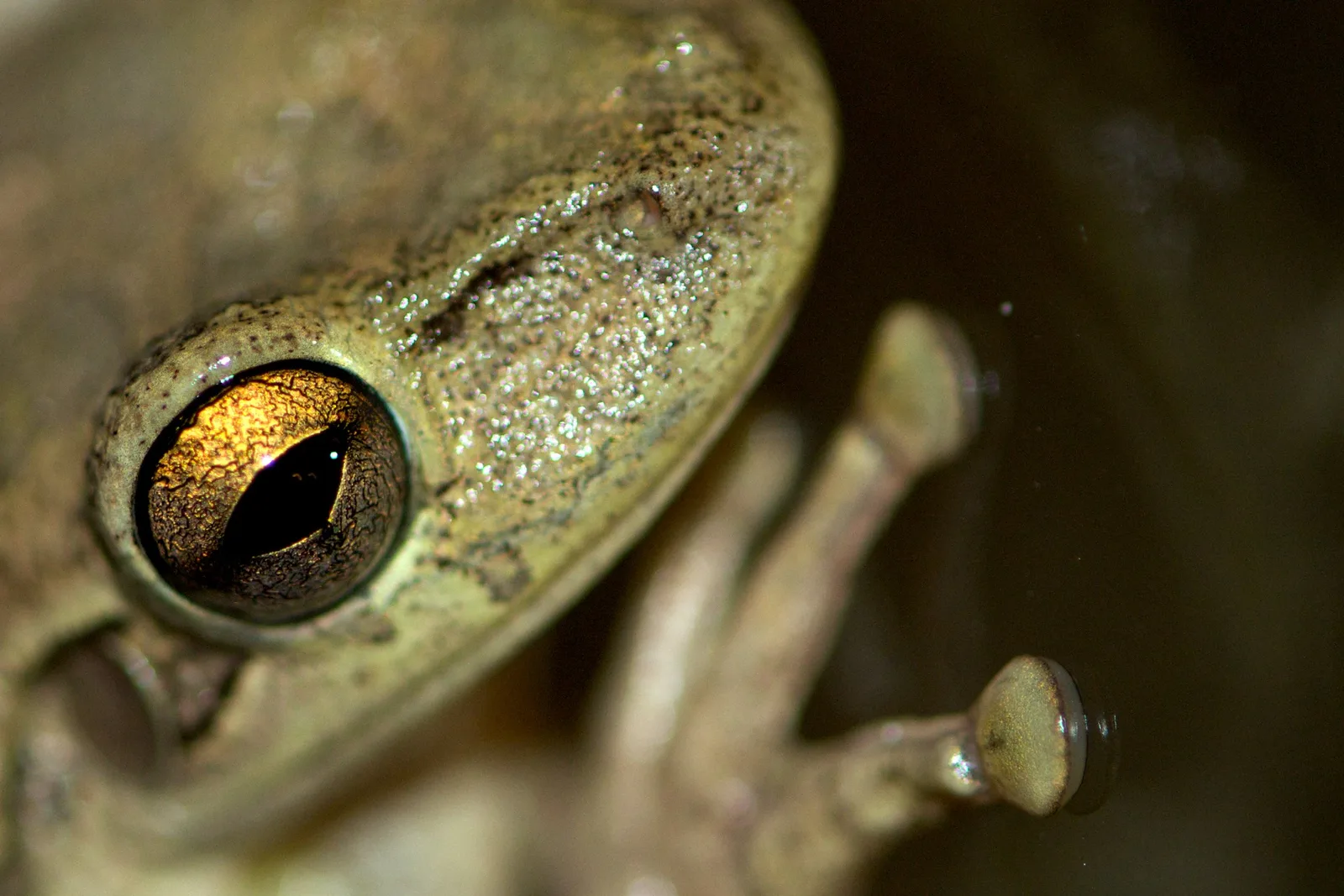
Frogs and toads are some of the most charming small animals a photographer can find. Golden eyes, glossy skin, sticky toe pads, bright colors and comical expressions make them irresistible subjects, and many species live close to home in ponds, gardens, wetlands and woods. Photographing them well means slowing down, getting low and treating these delicate animals with great care. The reward is an intimate portrait of a creature most people walk right past.
This beginner guide covers where to find frogs, gentle fieldcraft, the importance of eye level, composition, macro close ups, frogs in their habitat, night shooting, flash, rain, settings, phones, editing, common mistakes and a short practice routine. For more tiny subjects, see the guide to photographing small animals.
Why frogs make wonderful subjects
Frogs combine character and detail in a small package, which makes them perfect for close photography.
- Expressive eyes. Large, glossy eyes with patterned irises make a natural focal point.
- Texture. Smooth, bumpy, speckled or warty skin rewards close study.
- Color. Greens, browns, golds and occasional bright reds, blues and yellows stand out beautifully.
- Personality. Wide mouths, puffed throats and patient poses give frogs a comic charm.
- Stillness. Many frogs sit motionless for long periods, giving you time to compose.
Frogs are also important to healthy ecosystems, and photographs of them help people notice and care about wetlands and the small lives they hold.
Where and when to find frogs
Frogs need moisture, so water is usually the first place to look.
- Ponds and wetlands. Edges with reeds, lily pads and floating plants are frog favorites.
- Streams and ditches. Slow water and muddy banks often hide frogs and toads.
- Gardens. Damp beds, compost heaps and garden ponds attract toads and small frogs.
- Woods. Leaf litter on damp forest floors hides tiny frogs and toads.
- Warm climates. Tree frogs cling to walls, windows, leaves and porch lights at night.
Spring and early summer are peak seasons in many places, as the guide to spring photography notes, when frogs gather to breed and call. Warm, humid evenings and nights after rain bring the most activity. Follow the calls, then move slowly toward the sound and pause whenever the calling stops.
Frogs and toads
Frogs and toads are close relatives, and both make fine subjects. Frogs usually have smooth, moist skin and long legs for jumping, and they live close to water. Toads often have dry, bumpy skin and shorter legs, and they wander farther from water into gardens and woods. Toads tend to sit still and walk rather than leap, which makes them easier for beginners. Tree frogs, with their sticky toe pads, can perch on leaves, stems and walls in delightful poses.
Gentle fieldcraft and care
Frogs are delicate, and their skin absorbs whatever it touches. Their welfare always comes first.
- Avoid handling. Photograph frogs where you find them whenever possible.
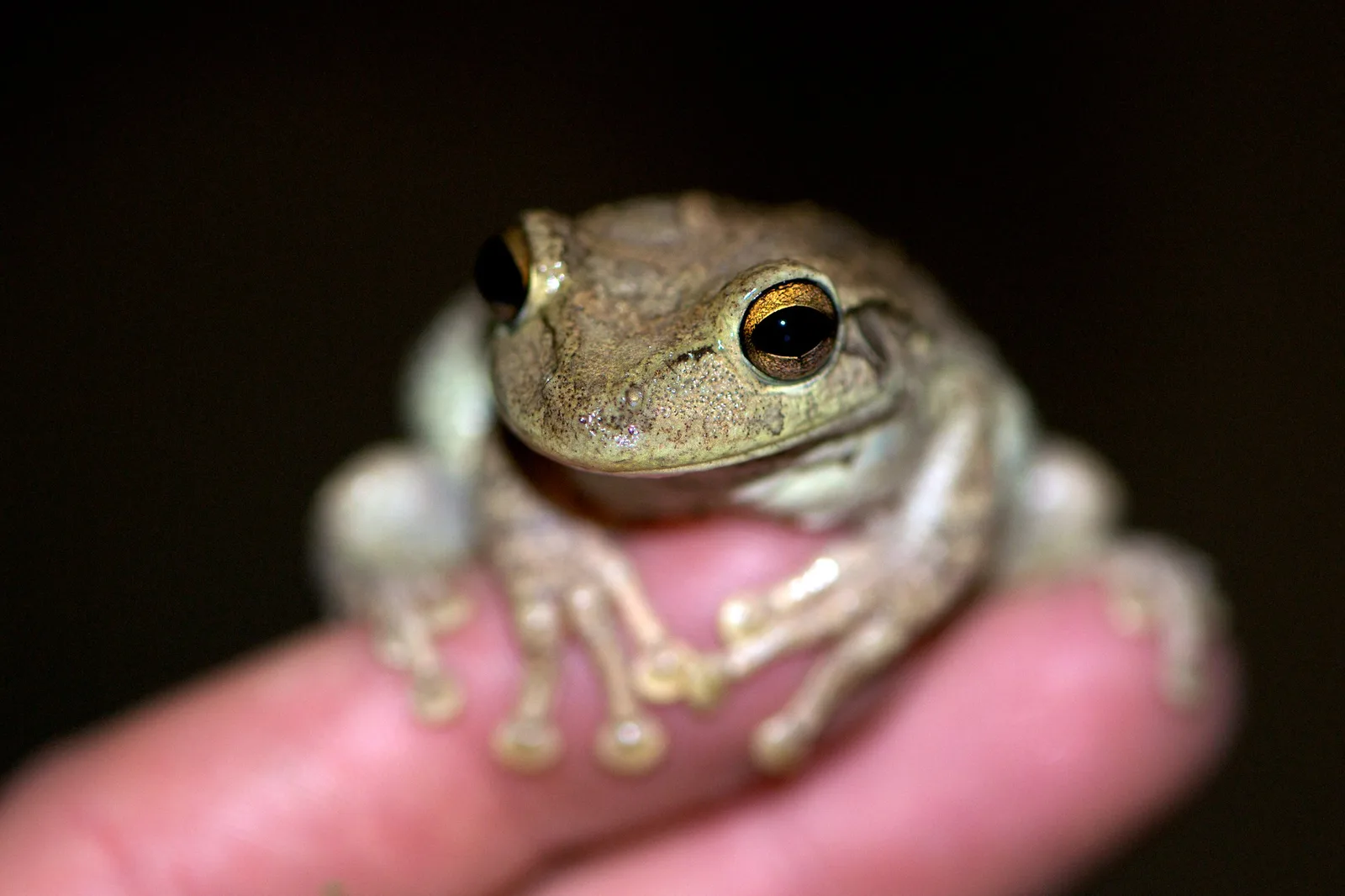
- If a frog climbs on you. Keep your hand low and wet, avoid lotion or sunscreen and set it back where it came from quickly.
- Move slowly. Approach in small steps, crouch early and pause often.
- Watch your feet. Small frogs hide in grass and on paths, so step carefully.
- Do not move habitat. Leave logs, rocks and plants as you found them.
- Follow local rules. Some species and wetlands are protected, so respect closures and signs.
A calm frog stays put, and a startled frog leaps away. Patience produces both better pictures and a happier animal.
Captive frogs at zoos, aquariums and nature centers are another gentle way to practice. Glass tanks bring you close in controlled light, and you can learn focusing and composition before trying wild frogs. Press the lens close to the glass to cut reflections, and turn off any flash so it does not bounce back. The guide to zoo and aquarium photography explains how to work through glass.
Behavior and expression
Frogs may seem still, but they have plenty of small behaviors that make pictures come alive. Learning to watch for them turns a simple record into a portrait with character.
- Calling. Male frogs puff out their throats into round balloons as they call, a wonderful moment to capture.
- Blinking. Frogs pull their eyes down into their heads when they blink and swallow, which looks comical in a burst of frames.
- Climbing. Tree frogs stretch, reach and grip with their toe pads as they move between leaves.
- Floating. Pond frogs often rest with only their eyes and nose above the water, a classic view.
- Hunting. A frog’s tongue flicks out far faster than the eye can follow, so catching it takes patience and luck.
Spend time simply watching one frog before you photograph. You will soon notice its rhythm, and you can be ready with the camera when the interesting moment arrives.
Camouflage and color
Many frogs and toads are masters of disguise, blending into mud, bark and leaves. Rather than fighting the camouflage, consider making it the subject. A brown toad half hidden in leaf litter or a green frog among duckweed tells a story about survival. Brightly colored frogs, on the other hand, stand out boldly, and a simple dark or green background shows their color best. Either way, adjust your position until the frog’s outline is clear against what lies behind it.
Get down to eye level
The single biggest improvement in frog photography is getting low. A frog photographed from above looks small and flat. A frog photographed at its own eye level looks like a character with a personality.
- Lie down. Bring a mat, a waterproof sheet or old clothes, and get the camera to the ground.
- Use a tilting screen. A flip out screen lets you compose without lying in the mud.
- Shoot across the water. At pond level, the water surface becomes a smooth band of color.
- Try a beanbag. A small beanbag on the ground steadies the camera at frog height.
Eye level also creates a soft foreground and background, since everything in front of and behind the frog falls out of focus.
Composition
- Focus on the eye. The nearest eye must be sharp. Everything else can soften.
- Head on portraits. Facing the frog straight on shows both eyes and its wide mouth, a classic and comical view.
- Side profiles. A side view shows body shape, legs and toe pads.
- Clean backgrounds. Shift your angle so the background is a smooth wash of green or dark shadow.
- Leave space. Give room in the direction the frog faces.
- Look for perches. Lily pads, leaves, stems and mossy rocks make natural stages.
Fill the frame for detail, or step back to show the frog small on a big leaf. The guide to filling the frame explains how to decide.
What to bring
A few simple items make frog outings far more comfortable. Waterproof boots or waders let you stand at the edge of a pond. A foam mat or plastic sheet keeps you dry while lying on wet ground. A small towel wipes droplets from the lens. A headlamp with a red setting helps at night, and insect repellent keeps biting bugs away, though it should never touch a frog. A small beanbag steadies the camera at ground level, and a spare battery is wise on long, cool evenings.
Macro close ups
Very close views of frogs reveal a hidden world of detail.
- Eyes. Iris patterns in gold, bronze and red are stunning at macro distances.
- Skin. Bumps, speckles, ridges and droplets make abstract textures.
- Toe pads. Tree frog toes pressed against glass or leaves look like tiny suction cups.
- Throats. Calling frogs inflate throat sacs into bubbles of skin.
At macro distances, depth of field is very thin, so use f/8 to f/16 and focus carefully on the eye. Move slowly, since even a small shift of your body changes the point of focus. The guide to macro photography covers close up gear and technique.
Fascinated by tiny details up close? The guide to insect photography applies the same patient macro skills to bugs and butterflies.
Frogs in their habitat
A tight portrait shows the frog, but a wider view shows where it lives.
- Lily pads and reeds. A frog on a pad surrounded by water tells a classic pond story.
- Leaf litter. A camouflaged toad among fallen leaves shows how it hides.
- Wet walls and windows. Tree frogs on a lit window at night make surprising scenes.
- Reflections. A frog at the water’s edge can be doubled in still water. See the guide to reflection photography.
Use a wider lens close to the frog to include the setting, while keeping the frog large and sharp in the foreground. These environmental portraits often feel more personal than close ups alone.
Frogs at night
Many frogs are most active after dark, which brings special challenges and rewards.
- Use a headlamp. A soft, dim light helps you find frogs by their eyeshine without dazzling them.
- Red light. A red light setting is gentler on frogs and on your night vision.
- Keep visits short. Bright light for long periods can stress frogs, so photograph quickly and move on.
- Black backgrounds. A lit frog against a dark night makes a dramatic, simple frame.
- Stay safe. Bring a friend, wear boots and know your way around wet ground.
Scout the pond in daylight first, so you know where the paths, deep spots and best frog perches are. At night, move your light slowly across the water and banks, and watch for small pairs of glowing eyes reflecting back at you.
Flash and light
Soft light is best for frogs, whose wet skin shines easily.
- Overcast days. Cloudy light shows color and texture without harsh glare.
- Open shade. Move to the shaded side of the frog for even light.
- Diffused flash. A small flash with a diffuser softens shine and freezes movement.
- Off camera light. Light from slightly above and to the side gives shape and depth.
- Catchlights. A small, soft catchlight in the eye brings the frog to life.
Avoid bare, harsh flash right at the frog’s face. Glossy skin turns into bright hot spots, and the light can be uncomfortable for the animal. Keep flash power low and soft. The guide to off camera flash explains soft lighting setups.
Rain and droplets
Rainy days are frog days. Droplets on skin and leaves sparkle in soft light, and frogs are often out and calling during and after showers. Protect your camera with a simple rain cover or a plastic bag, and look for frogs on paths, lawns and pond edges as the rain eases. Raindrops on a lily pad beside a frog make a lovely detail.
Telling a frog’s story
Over a season, a single pond can give you a complete story: frogspawn in early spring, tadpoles swimming in warm shallows, tiny froglets climbing out of the water and adult frogs calling on summer nights. Photographing each stage makes a beautiful series, much like the long projects described in the guide to wildlife photography, and teaches you a great deal about the life cycle of these animals. Keep your visits gentle and brief, and the pond will reward you year after year.
Settings and lenses
- Macro lens. Ideal for close portraits from a respectful distance.
- Telephoto lens. Useful for shy pond frogs, with a soft background.
- Aperture. f/5.6 to f/8 for portraits, f/8 to f/16 for macro detail.
- Shutter speed. At least 1/250 second hand held, faster if the frog is calling or moving.
- Focus. Single point focus on the nearest eye, or manual focus by gently rocking forward and back.
- ISO. Raise it in shade and at dusk to keep shutter speed safe.
Using a phone
Phones are surprisingly good for frogs, especially in good light. Get low, tap to focus on the eye and use the main lens rather than heavy digital zoom. Many phones have a macro mode for very close views. Keep the phone steady by resting it on the ground or a rock.
Editing frog photos
Crop to strengthen the composition, keeping space in front of the frog. Lower highlights to tame shine on wet skin, and lift shadows gently. Add a touch of texture or clarity to show skin detail, and brighten the eye slightly. Keep greens and browns natural, since bright green frogs are easy to oversaturate. Clone away a distracting speck of debris if needed.
Common mistakes
- Shooting from above. Get down to eye level.
- Soft eyes. Focus on the nearest eye every time.
- Harsh glare. Use soft light or diffused flash to tame shine.
- Handling frogs. Photograph them where they are, and keep any contact brief and gentle.
- Rushing. Quick movements send frogs leaping away.
- Busy backgrounds. Shift your angle for a clean backdrop.
Try this: a 10-minute frog portrait
Visit a pond or damp garden on a warm evening or after rain.
- Spend two minutes listening and looking for a frog or toad.
- Approach slowly and crouch early, pausing whenever it shifts.
- Get the camera down to eye level and focus on the nearest eye.
- Make a head on portrait, then a side profile.
- Step back for one wider frame that shows its habitat.
Leave the frog exactly as you found it, and compare your low views to any you took from standing height.
Frequently asked questions
What is the best time to photograph frogs?
Warm, humid evenings in spring and summer, especially after rain, bring the most frogs out.
Should I pick up a frog to photograph it?
No. Their skin is sensitive. Photograph them where they are, and keep any contact brief and gentle.
What lens is best for frog photography?
A macro lens is ideal, and a telephoto helps with shy pond frogs.
Can I use flash on frogs?
Yes, but keep it soft, low powered and diffused, and keep sessions short.
How do I stop frogs from jumping away?
Move slowly, crouch early, avoid casting a shadow over them and pause whenever they shift.
Curious about other cold blooded creatures? The guide to reptile photography covers lizards, turtles and snakes.
Want to master the shallow focus of close work? The guide to depth of field explains how aperture and distance shape sharpness.
For terms such as macro, catchlight and depth of field, see the photography glossary.