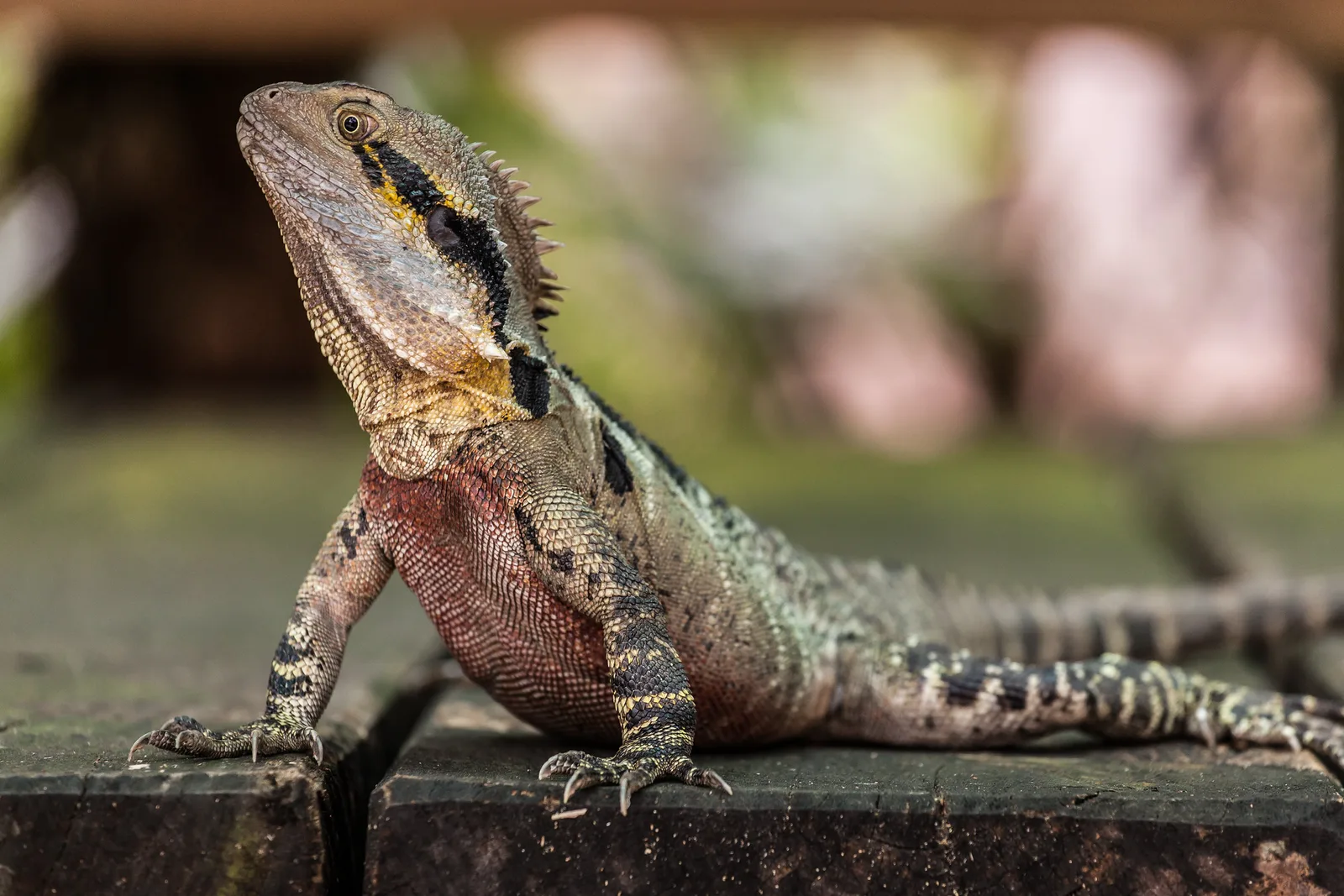
Reptiles are some of the most fascinating and photogenic animals on earth. A lizard basking on a sunny rock, a snake coiled in perfect patterns, a turtle stretching its neck toward the light and a crocodile watching from the water with only its eyes above the surface all make striking pictures. Reptiles are full of texture, color and ancient character, and many of them hold still long enough to give beginners a real chance at close, detailed portraits.
This guide covers why reptiles make great subjects, safety and ethics, where to find reptiles, lizards, snakes, turtles and tortoises, crocodiles and alligators, photographing at zoos and reptile houses, focusing on the eyes, scales and details, light, behavior, settings, phones and editing. For other small creatures, see the guide to photographing small animals, and for animals in the wild more broadly, see the guide to wildlife photography.
Why reptiles make great subjects
Reptiles reward patience with some of the most detailed pictures in nature.
- Incredible texture. Scales, plates, spines and ridges make rich, tactile surfaces.
- Color and pattern. Bands, spots, stripes and bright crests make bold designs.
- Stillness. Many reptiles bask motionless for long periods, giving time to compose.
- Character. Their eyes, poses and expressions often feel ancient, wise or comical.
- Variety. From tiny geckos to huge crocodiles, reptiles come in every size and shape.
Reptiles are also a wonderful way to practice close photography. A basking lizard lets you work on focus, depth of field and light without the rush that comes with birds or mammals. The skills you learn carry over to every kind of animal photography. Reptiles also teach patience, since the best moments often come after many quiet minutes of waiting.
Safety and ethics
Many reptiles are harmless, but some are dangerous, and all deserve respect.
- Keep your distance. Never approach venomous snakes, large lizards or crocodiles. Use a long lens instead.
- Never handle wild reptiles. Handling stresses them and risks bites for you.
- Do not chase or corner. A reptile that feels trapped may defend itself or flee into danger.
- Do not move them. Never pick up, move or pose a wild reptile for a picture.
- Respect habitats. Do not turn over rocks and logs without putting them back exactly, and stay on trails.
- Know local species. Learn which reptiles in your area are dangerous before you go.
Near water in places where crocodiles or alligators live, stay well back from the edge and follow all signs. The welfare of the animal always comes before the picture.
Where to find reptiles
Reptiles are found on every continent except Antarctica, in many different habitats.
- Deserts and dry country. Lizards bask on rocks, and snakes shelter in shade.
- Forests and tropics. Geckos, chameleons and tree lizards hide among leaves and bark.
- Rivers, lakes and swamps. Turtles bask on logs, and crocodiles and alligators rest at the water’s edge.
- Coasts and islands. Sea turtles, marine iguanas and coastal lizards.
- Gardens and towns. Small lizards and geckos often live on walls and in yards in warm places.
Reptiles depend on outside warmth, so they are most active in warm weather. Early morning, when they come out to bask, is often the best time to find them sitting still in the sun. The guide to desert photography covers how to work in hot, dry places.
Lizards
Lizards are the easiest reptiles for most beginners to photograph. Many bask in the open and return to the same rock or log every day.
- Approach slowly. Move gently, pause often and avoid casting your shadow over them.
- Get to eye level. Lower yourself so the camera is level with the lizard’s head.
- Use a longer lens. A telephoto or macro lens lets you fill the frame from a comfortable distance.
- Watch for displays. Some lizards bob their heads, raise crests or puff out throats.
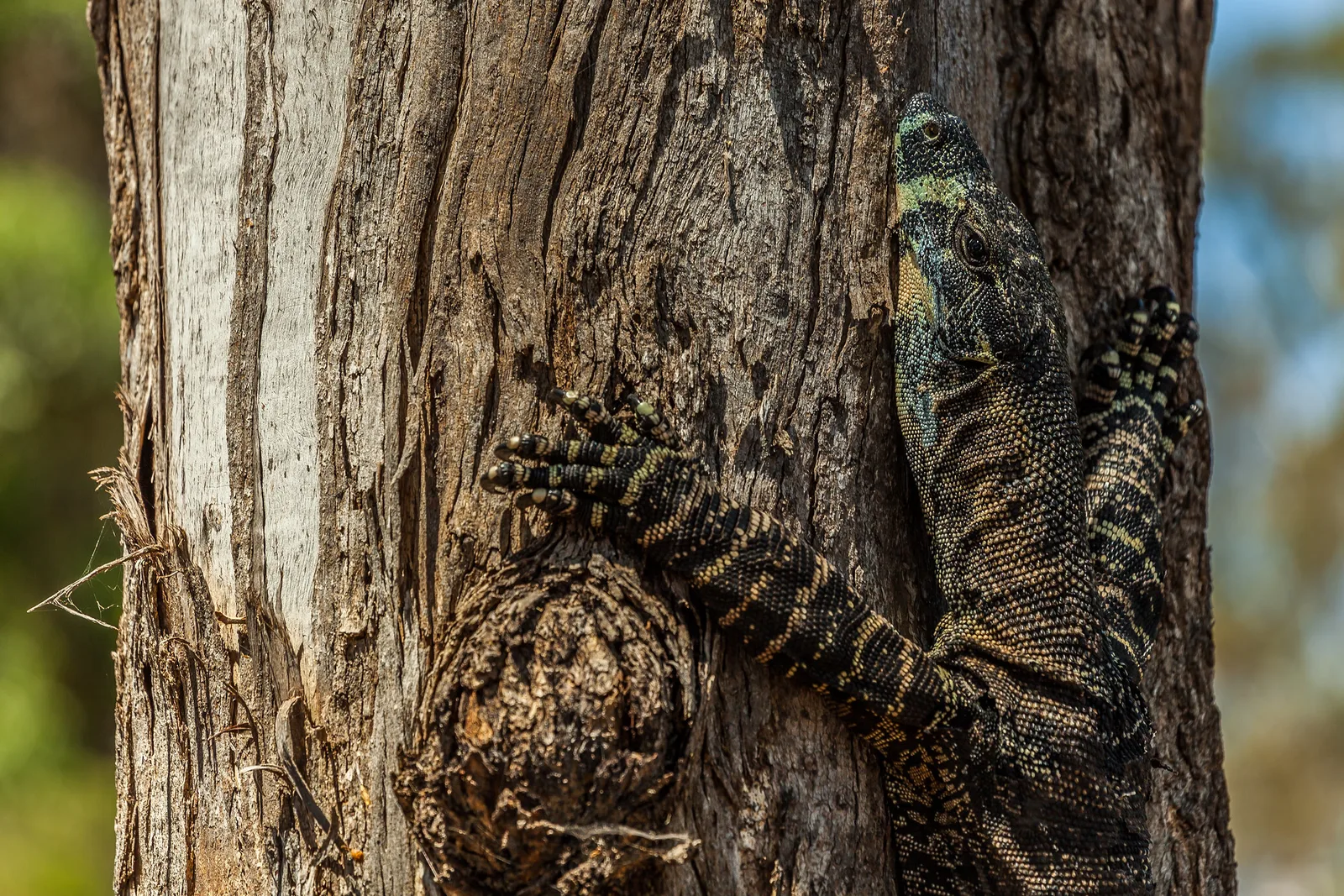
Small lizards like geckos and anoles make wonderful close subjects, while larger lizards like monitors and iguanas make powerful portraits. Look for lizards climbing trees, basking on walls or peering out from cracks. A lizard framed by the edges of a rock crevice makes an especially charming picture, with the dark gap drawing the eye to its face.
Chameleons and geckos
Chameleons are slow, colorful and full of personality, with swiveling eyes and curling tails. Geckos often have big eyes and delicate toes, and many are active at night. Both make lovely macro subjects. At night, geckos can be photographed near lights where they hunt insects, using a gentle flashlight rather than a harsh flash. The guide to insect photography has more on working with tiny creatures.
Snakes
Snakes are graceful, mysterious and beautifully patterned. Their coils, scales and flicking tongues make striking pictures.
- Use a long lens. Stay well back, especially if you are unsure whether a snake is venomous.
- Focus on the eye. A sharp eye brings a snake portrait to life.
- Show the coils. Coiled snakes make lovely spiral and S curve shapes.
- Catch the tongue. Use burst mode to catch the moment the tongue flicks out.
Never try to move, provoke or handle a wild snake. Many snakes are shy and will move away if given space, so be patient and quiet. Snakes at zoos and reptile houses are often the safest way to practice close portraits.
Turtles and tortoises
Turtles and tortoises are gentle, slow and full of character.
- Basking turtles. Turtles lined up on a log in the sun make charming, often funny pictures.
- Get low. A low angle at the turtle’s eye level shows its face and personality.
- Shell patterns. Close views of shells show beautiful geometric plates.
- Sea turtles. Underwater or on beaches, sea turtles make graceful subjects. Follow all local rules, keep your distance and never use flash on nesting turtles.
Basking turtles slip into the water at the first sign of disturbance, so approach very slowly and use a longer lens. Calm water around the log often gives a reflection that doubles the scene.
Crocodiles and alligators
Crocodiles and alligators are powerful, ancient and dramatic subjects, but they are dangerous and must be photographed only from a safe distance.
- Stay far back. Use a long telephoto lens, and stay behind barriers at parks and zoos.
- Eyes above water. A crocodile with only its eyes and nostrils above the surface makes a tense, classic picture.
- Basking on banks. Crocodiles resting with mouths open show teeth and texture.
- Reflections. Still water mirrors their shape.
Never approach the water’s edge in crocodile country. Guided tours and viewing platforms give safe views.
Reptiles on safari and travel
Travel opens up a world of reptiles: monitor lizards on tropical riverbanks, giant tortoises on islands, crocodiles on safari rivers, marine iguanas on volcanic shores and chameleons in rainforests. Local guides know where reptiles bask and how close it is safe to go, and they can point out animals you would never spot on your own. Bring a long lens, follow park rules and resist any offer to hold or touch wild animals for a picture. The guide to safari photography covers working with guides and vehicles.
Want to photograph more animals in their habitats? The guide to wildlife photography covers fieldcraft, lenses and ethics for every kind of animal.
Zoos and reptile houses
Zoos and reptile houses are great places to photograph species you might never see in the wild.
- Shoot through glass. Put the lens close to the glass at a slight angle to avoid reflections.
- Use a lens hood. A rubber hood pressed to the glass blocks reflections.
- Raise the ISO. Reptile houses are often dim, so use a wide aperture and a higher ISO.
- No flash. Flash reflects off glass and can disturb the animals.
- Hide the enclosure. Frame tightly to exclude glass edges, signs and artificial backgrounds.
Outdoor enclosures with natural light often give the most natural looking pictures, since real sun brings out true color and adds a catchlight to the eye. Visit at quieter times, and be patient, since reptiles may be hidden or resting.
Visiting a zoo or aquarium? The guide to zoo and aquarium photography covers glass, light and natural looking pictures.
Focus on the eyes
As with all animal photography, the eyes matter most. A sharp eye gives a reptile picture life and connection.
- Use a single focus point. Place it right on the nearest eye.
- Use eye detection. Many cameras can detect animal eyes, though reptile eyes can be tricky.
- Catch the light. A small highlight in the eye adds sparkle.
- Watch depth of field. Close up, the eye can be sharp while the snout is soft. Use a smaller aperture if needed. The guide to depth of field explains why.
Reptile eyes are often extraordinary, with slit pupils, golden irises and patterned rims. Wait for the animal to turn its head slightly toward you, which shows both the eye and the shape of the face. A close portrait of the eye alone can be a striking picture.
Scales and details
Reptile skin is one of the richest textures in nature. Close pictures of scales, claws, crests and shells can be as striking as full portraits.
- Use a macro lens. Fill the frame with scales for an abstract pattern.
- Side light. Light raking across the skin brings out every ridge.
- Details. Feet, claws, spines and tails make lovely close pictures.
- Color patterns. Bands and spots make bold graphic designs.
Close work requires patience, since even small movements throw off focus. For a still subject such as a shed skin or a sleeping tortoise, focus stacking can combine several frames into one picture that is sharp from front to back. The guide to texture has more ideas for photographing surfaces.
Want to get even closer to scales and eyes? The guide to macro photography covers lenses, light and focus for tiny details.
Light and behavior
- Morning basking. Early sun brings reptiles out, and soft light flatters their colors.
- Midday shade. In harsh sun, reptiles often hide, and harsh light flattens scales.
- Overcast days. Soft light shows color and detail evenly.
- Behavior. Watch for basking, hunting, shedding skin, swimming and climbing.
Some of the most memorable moments come from behavior. A lizard shedding its skin in papery flakes, a turtle stretching its neck in the sun, a snake tasting the air or a crocodile sliding silently into the water tell stories beyond a simple portrait. Spend time watching before you photograph. Learning a reptile’s habits helps you predict where it will move and when it will hold still.
Reptiles in the garden
In warm places, reptiles may be living right outside your door. Small lizards bask on garden walls, geckos hunt moths around porch lights and turtles visit ponds. These everyday neighbors are perfect for practice, since you can return day after day and learn their habits. Sit quietly near a favorite basking spot with a longer lens, and let the lizard grow used to you. Over time, many will tolerate a slow, careful approach.
Settings for reptile photography
- Portraits. Use f/5.6 to f/8 to keep the head sharp, with a soft background.
- Macro. Use f/8 to f/11 for more depth, and steady the camera.
- Shutter speed. Use 1/250 or faster for still reptiles, faster for moving ones.
- Lens. A telephoto lens for safety and shy species, and a macro lens for small ones. See the guide to telephoto photography.
- Focus. Use single point focus on the eye.
Using a phone
Phones work well for small, calm reptiles at zoos or in gardens. Use the telephoto lens to keep distance, tap to focus on the eye and get low for an eye level view. Never approach dangerous reptiles to get close with a phone.
Editing reptile photos
Add a little clarity and contrast to bring out scales, and lower highlights on shiny skin. Keep color natural, since reptile colors are often subtle and easily oversaturated. Crop to strengthen composition, and remove distracting glass reflections or enclosure edges. A slight vignette can draw attention to the eye.
Common mistakes
- Getting too close. Never approach dangerous reptiles. Use a long lens.
- Soft eyes. Focus carefully on the nearest eye.
- Shooting from above. Get to eye level for more engaging pictures.
- Glass reflections. Press the lens close to the glass at an angle.
- Disturbing the animal. Never chase, handle or move reptiles.
- Harsh light. Midday sun flattens texture. Shoot in the morning or in soft light.
Try this: a 10-minute reptile study
At a zoo, reptile house or a safe spot where lizards bask, choose one calm reptile.
- Take a full body picture at eye level.
- Take a close portrait with a sharp eye.
- Take a detail of scales, feet or shell.
- Take a wider picture showing its habitat or enclosure.
Compare them, and notice how each one shows a different side of the animal. Return to the same reptile on another day, and see if you can catch a behavior such as basking, climbing or stretching.
Frequently asked questions
What lens is best for reptile photography?
A macro lens for small reptiles and details, and a telephoto lens for shy or dangerous species.
How do I avoid reflections at a reptile house?
Put the lens close to the glass at a slight angle, use a rubber lens hood and turn off the flash.
Is it safe to photograph snakes?
From a safe distance with a long lens. Never approach or handle wild snakes.
When are reptiles easiest to find?
On warm, sunny mornings, when they come out to bask.
How do I get a lizard to stay still?
Approach slowly in the morning when it is basking, avoid casting a shadow and pause often. Never touch or restrain it.
Should I use flash for reptiles?
Usually not. Flash reflects off glass and can stress animals. Use natural light, a higher ISO or a gentle continuous light.
For terms such as macro, depth of field, telephoto and eye detection, see the photography glossary.