Why Break the Rules?
You have spent the previous lessons learning how to expose correctly, compose deliberately, focus precisely, and work with light intelligently. Now it is time to consider what happens when you deliberately do none of those things. Creative and experimental photography is not about ignorance of technique: it is about having enough mastery to know which rules to break, when to break them, and why the result is more interesting than a “correct” image would have been.
There is a meaningful difference between a blurry photograph taken by someone who does not know how to hold a camera steady and a blurry photograph taken by someone who chose a slow shutter speed and moved the camera with intention during the exposure. The first is a mistake. The second is a creative decision. The viewer can usually tell the difference, even if they cannot articulate how. Intention shows in the result.
Experimentation is also how personal style develops. When you follow every rule perfectly, your images look technically excellent: and remarkably similar to every other technically excellent photograph of the same subject. It is in the deviations, the experiments, the “what if I try this?” moments that you discover your own visual voice. Some of the most distinctive photographers working today are known precisely for the ways they break convention: unusual color palettes, deliberate motion blur, unconventional framing, or processing techniques that other photographers might consider “wrong.”
As explored in the lesson on photographic styles, developing a recognizable approach requires not just technical skill but creative courage. This lesson gives you permission, and practical techniques, to push beyond the comfortable and the correct into territory that is genuinely your own.
Intentional Camera Movement
Intentional Camera Movement, often abbreviated as ICM, is one of the most accessible experimental techniques and one of the most rewarding. The principle is simple: during a relatively long exposure, you deliberately move the camera. The result is an image where the subject is rendered as streaks of color and light rather than sharp detail: an impressionistic interpretation rather than a literal record.
The most common ICM technique is the vertical sweep, which works beautifully with trees and forests. You set a shutter speed between roughly a quarter of a second and two seconds, frame a scene with vertical elements (tree trunks, tall grass, bamboo), and smoothly sweep the camera upward or downward during the exposure. The result transforms the forest into ethereal columns of blended color: greens, browns, and golds bleeding into one another like a watercolor painting. The technique works because the vertical elements align with your camera’s motion, retaining just enough structure to remain recognizable.
Horizontal pans work similarly with seascapes and horizons. Sweep the camera along the horizon during a slow exposure, and the sea, sky, and shore blend into soft horizontal bands of color. The result is meditative and abstract, stripping the landscape down to its essential tones and layers. Other movements: diagonal sweeps, circular rotations, and the dramatic zoom burst (zooming your lens during the exposure to create a tunnel-like blur radiating from the center): each produce distinct effects worth exploring.
The technical requirements for ICM are straightforward. You need a shutter speed slow enough to allow visible movement: typically between 1/4 second and 2 seconds, though there are no hard rules. In bright daylight, achieving these speeds may require a narrow aperture, a low ISO, or a neutral density filter. A polarizing filter can also help by reducing the light entering the lens by one to two stops. Your movement should be smooth and controlled; jerky or hesitant motion produces chaotic results. Practice the movement without pressing the shutter first, then execute it in one fluid gesture.
Expect a low hit rate with ICM, especially at first. Shoot many frames with slight variations in speed, direction, and timing. Out of twenty attempts, you might get three or four images worth keeping. This is normal. The unpredictability is part of the appeal: you cannot fully control the outcome, and that forced surrender of precision is exactly the point.
Multiple Exposures and Layering
Multiple exposure is a technique with roots stretching back to the earliest days of photography, when it was often an accident: an unexposed frame receiving two images instead of one. Today, most digital cameras offer a dedicated multiple exposure mode that combines two or more frames into a single image in-camera. The creative possibilities are vast.
The most popular approach is combining a sharp frame with a soft or textured frame. For example, photograph a portrait in sharp focus, then without advancing to a new frame, photograph a tree canopy or a textured wall slightly out of focus. The camera blends the two exposures, and the result is a portrait overlaid with organic texture: branches running through the subject’s face, or the grain of stone becoming part of their skin. The effect is dreamlike and evocative, suggesting that the subject is part of the landscape or that memory and place are intertwined.
Planning your layers is important. Most in-camera multiple exposure modes use an additive blending method, which means bright areas of one frame will dominate dark areas of the other. If your first frame has a subject against a dark background and your second frame is a bright, high-key texture, the texture will show primarily in the dark areas surrounding the subject. Understanding this light-on-dark relationship gives you much more control over the final result. Many photographers shoot their sharp, primary subject first, review it on the screen, and then compose the second layer knowing where the light and dark areas fall.
If your camera does not have an in-camera multiple exposure mode, you can achieve the same effect in post-processing by layering two images and adjusting the blending mode. The “Screen” blending mode mimics the additive behavior of in-camera multiple exposures. “Multiply” creates a darker, moodier combination. Experimenting with different blending modes on the same pair of images can produce wildly different results, each with its own character.
You can also create multiple exposures using more than two frames. Some cameras allow you to stack three, five, or even nine exposures. Photographing the same subject from slightly different positions and combining the frames creates a Cubist-like image where multiple perspectives coexist in a single frame: the subject simultaneously seen from the left and the right, close and far, sharp and soft.
Abstract Photography
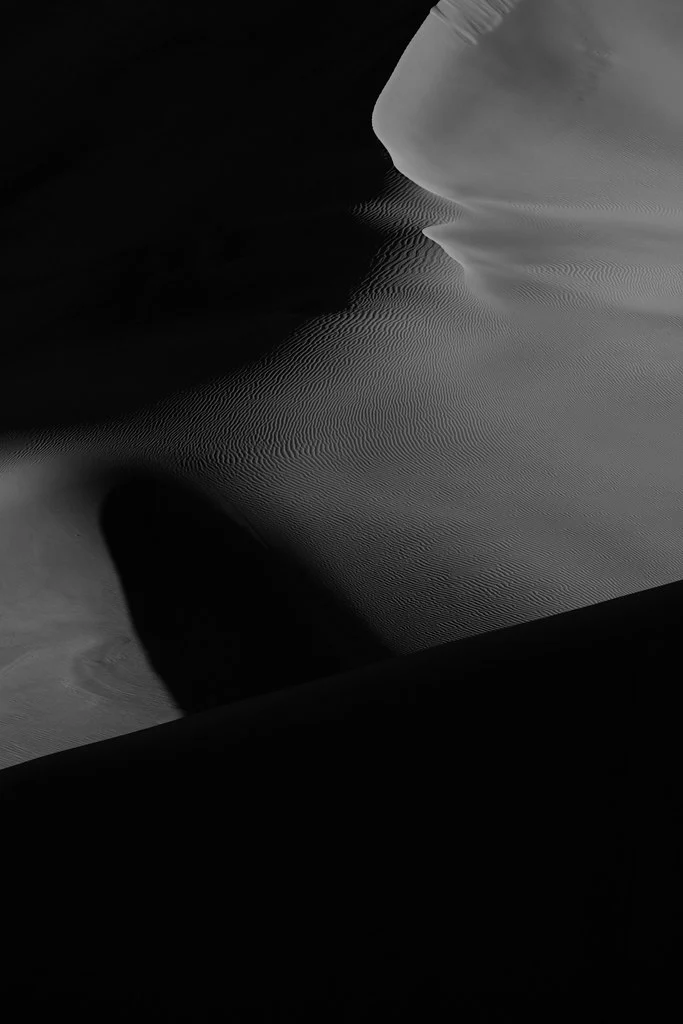
Abstract photography strips the world down to its fundamental visual elements: color, shape, line, texture, and tone. The goal is to create images where these elements carry the weight of the composition, rather than relying on a recognizable subject to hold the viewer’s attention. It is photography that asks the viewer to respond to what they see rather than what they recognize.
You do not need exotic equipment or locations for abstract work. Some of the strongest abstract images come from mundane subjects seen in unusual ways. The reflection of a building in a rain puddle, warped and fragmented. The shadow of a fence on a textured wall, creating a grid of dark and light. The interior of a flower photographed so closely that the petals become fields of color with no discernible botanical identity. As explored in using your imagination in photography, seeing creatively is often about looking at familiar things until they become unfamiliar.
Reflections and refractions are powerful tools for abstraction. Water surfaces distort and fragment reflections into impressionistic ripples of color. Glass facades on modern buildings mirror the sky and surrounding structures in ways that blend reality and reflection into a single layered scene. Shooting through textured glass, a crystal ball, or even the base of a drinking glass introduces refraction that warps your subject into something entirely new.
Prism photography has become popular in recent years, and for good reason. Holding a glass prism in front of your lens while shooting introduces rainbow refractions, reflected duplications, and light flares that transform straightforward scenes into kaleidoscopic compositions. The technique is simple, cheap, and endlessly variable: small changes in the prism’s angle produce dramatically different effects. Crystal balls (also called lensball photography) create a similar effect, refracting the scene into a sharp, inverted sphere surrounded by a soft, out-of-focus background.
Extreme close-up photography, as covered in the lesson on macro photography, is another natural path to abstraction. When you photograph a subject at high magnification, you remove context. A slice of citrus fruit becomes a starburst of translucent cells. The surface of a vinyl record becomes a landscape of grooves and ridges. Rust on metal becomes a topographical map of orange, brown, and red. The smaller your frame, the further the subject travels from recognition toward pure visual experience.
Long Exposure Creativity
Long exposures allow your camera to record time in a way the human eye cannot. A thirty-second exposure of a rocky coastline transforms choppy ocean waves into a smooth, silky mist swirling around the stones. A two-minute exposure of a cloudy sky turns individual clouds into dramatic streaks across the heavens. These are among the most recognizable and popular creative techniques in photography, and they reward both technical precision and artistic vision.
The classic long-exposure seascape requires a tripod, a neutral density filter (to reduce the light enough to allow a multi-second exposure in daylight), and patience. The strength of the ND filter determines how long your exposure can be: a 6-stop filter might allow a 1-second exposure in midday sun; a 10-stop filter opens the door to exposures of 30 seconds to several minutes. The longer the exposure, the smoother the water becomes, until it resembles fog, steam, or polished glass. Experiment with different durations to find the effect that suits your vision: sometimes a slightly rough, textured motion blur is more interesting than perfectly smooth silk.
Ghosting, the semi-transparent rendering of moving people or objects during a long exposure, is a creative technique with strong narrative potential. Set up a tripod in a busy public space, use a small aperture and low ISO (or an ND filter), and expose for several seconds. Stationary elements (buildings, benches, lampposts) will be rendered sharply, while passing pedestrians become ghostly, translucent figures: there and not there, present but impermanent. The effect powerfully conveys the passage of time and the transience of the human presence within the permanence of the built environment.
Light painting, which was introduced in the lesson on night photography, is also a form of long-exposure creativity. In the dark, any light source moved during a long exposure leaves a bright trail in the image. Flashlights, LED strips, sparklers, phone screens, and even burning steel wool can all become drawing tools. The camera records the path of the light, creating calligraphic lines, geometric shapes, or sweeping arcs that exist only in the photograph: invisible to anyone who was not watching the long exposure happen in real time.
Embracing Imperfection
Modern cameras are extraordinarily capable machines designed to produce technically perfect images. Razor-sharp focus, clean noise-free files, accurate color reproduction, precise exposure. And yet some of the most emotionally resonant photographs are “imperfect” by these standards: grainy, blurred, oddly colored, under or overexposed. Learning to embrace imperfection as an aesthetic choice, rather than a failure to be corrected, opens a vast creative territory.
Grain (or its digital equivalent, noise) has a long and honored history in photography. Many iconic images from the mid-twentieth century were shot on high-speed film that produced heavy, visible grain, and that texture has become associated with raw authenticity, documentary truth, and emotional immediacy. You can introduce grain by shooting at high ISO values, by adding grain in post-processing, or both. Used thoughtfully, grain adds a tactile quality to photographs that clean, noise-free files sometimes lack. It works particularly well in black-and-white images and in photographs with strong emotional content.
Blur as a creative tool extends far beyond ICM. Shooting a portrait with a slow shutter speed while the subject moves produces a sense of energy and life that a frozen, sharp image cannot match. Deliberately defocusing your lens slightly, or shooting through a rain-streaked window or a fogged-up glass, creates a dreamy, impressionistic quality. Even camera shake, the bane of technical perfection, can produce interesting results when used with intention and a subject that benefits from a sense of instability or urgency.
Shooting through obstacles is a related technique. Photographing through chain-link fences, dirty windows, foliage, or translucent fabric places a layer between your lens and your subject, creating a sense of voyeurism, distance, or mystery. The obstacle is not in the way: it is part of the image. Fog, rain, and mist serve a similar function in nature, softening the world and reducing scenes to their essential shapes and tones.
Happy accidents deserve your attention. When you review your images, resist the urge to immediately delete everything that does not meet your technical standards. That accidentally double-exposed frame, the shot where your camera fired as you lowered it, the image with the strange color cast from mixed lighting: look at them with fresh eyes. Some of your most original work may come from moments where you lost control and the camera (or chance) produced something you never would have planned. The willingness to recognize and embrace these accidents is a hallmark of creative maturity.
Practise It in the Simulator
Practise controlled blur: slow the shutter until movement starts to draw lines, then decide how much blur says motion without losing the subject.
Try This, Creative and Experimental Exercises
ICM Forest: Find a stand of trees, a park, a forest path, a tree-lined avenue. Set your camera to shutter priority or manual mode with a shutter speed between 1/4 second and 1 second. You may need to use a low ISO and narrow aperture, or add a neutral density filter, to achieve this speed in bright conditions. Frame the trees so that the trunks fill the frame vertically. Then, in a smooth, controlled motion, sweep the camera upward (or downward) while the shutter is open. Shoot at least twenty frames, varying the speed and length of your movement, the direction, and the amount of the scene included in the frame. When you review the results, select your three favorites and study what made those particular movements work. You will find that even small changes in speed and timing produce dramatically different results.
Double Exposure Portrait: If your camera has a multiple exposure mode, activate it and set it to combine two frames. Photograph a person’s face or silhouette against a relatively simple background. Without advancing to a new image, photograph a texture: tree branches, a brick wall, flower petals, cracked earth, flowing water. Review the blended result. Then repeat the exercise, experimenting with different textures, different exposure levels for each frame, and different background brightness levels for the portrait. If your camera does not have a multiple exposure mode, take two separate photographs and blend them in your editing software using the “Screen” or “Lighten” blending mode. The goal is to create a single image that feels like it reveals something interior about the subject: as if the texture is a visual metaphor for their thoughts, their history, or their relationship to a place.
Wrong Settings Day: For one hour, deliberately choose settings you have been taught to avoid. Use a slow shutter speed for a moving subject. Set your white balance to tungsten and shoot outdoors in daylight. Dramatically overexpose or underexpose by two or three stops. Use the widest aperture for a landscape or the narrowest aperture for a portrait. Handhold at slow shutter speeds. The point is not to produce conventionally good images: it is to discover what happens in the space between “correct” and “wrong.” You may find that some of your favorite images from the entire course come from this exercise, because the unexpected results force you to see in new ways and respond to what the camera gives you rather than what you planned.