Abstract photography strips away the literal and invites you to see the world through pure visual sensation. Instead of documenting a recognizable subject, abstract photography isolates elements like color, shape, texture, line, and light, transforming the familiar into something entirely new. It is one of the most liberating and creatively rewarding genres a photographer can explore.
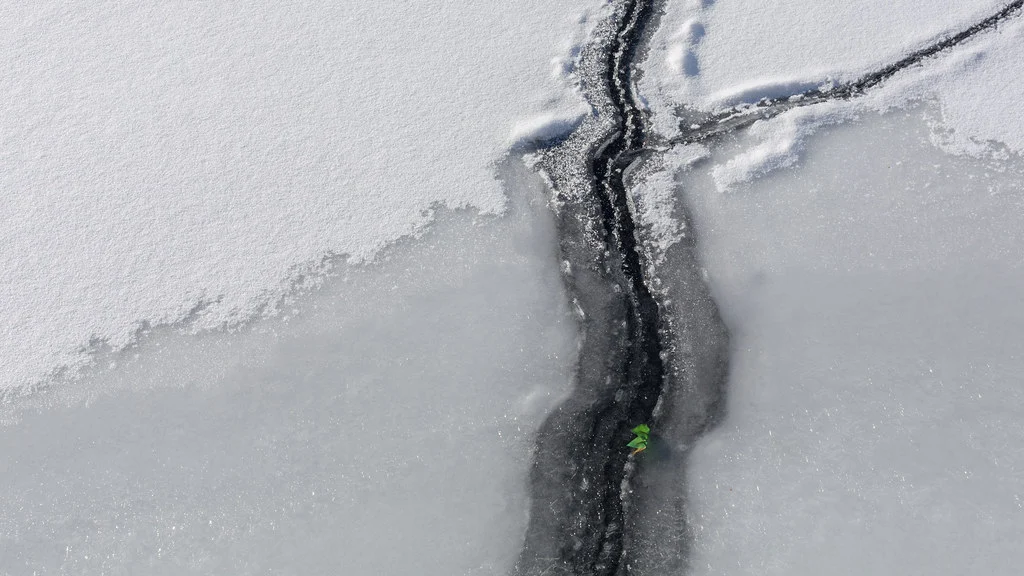
Whether you use intentional camera movement, macro close-ups, long exposures, or simply learn to see geometric patterns in everyday life, abstract photography trains you to look past what something is and focus on what it looks like. This guide covers every major technique, from in-camera methods to post-processing approaches, so you can start creating compelling abstract images with whatever gear you already own.
What Makes a Photograph Abstract
A photograph becomes abstract when it removes enough context that the viewer can no longer immediately identify the subject. Instead of seeing “a red door” or “a wave crashing,” the viewer experiences color fields, sweeping curves, intersecting lines, or rich textures. The image communicates through pure visual elements rather than narrative content.
The key distinction between abstract and representational photography lies in intent and perception. Representational photography aims to show you something recognizable, whether that is a portrait, a landscape, or a street scene. Abstract photography deliberately disrupts recognition. It might use extreme close-ups, unusual angles, selective focus, blur, or creative exposure to transform a subject beyond easy identification.
Abstract images can exist on a spectrum. Some are mildly abstract, where you can still guess the subject if you look closely. Others are fully abstract, functioning almost like paintings where the original subject is completely unrecognizable. Both approaches are valid. What matters is that the image engages the viewer through its visual qualities, through the interplay of color, contrast, rhythm, and form, rather than through its subject matter alone.
This shift in thinking is what makes abstract photography so valuable as a creative exercise. It forces you to see the world differently, to notice the curl of peeling paint rather than the building it covers, or the pattern of shadows on a wall rather than the window that casts them. Every scene contains abstract potential if you learn where to look.
Intentional Camera Movement (ICM)
Intentional Camera Movement, commonly called ICM, is one of the most accessible and dramatic abstract techniques. The concept is simple: use a slow shutter speed and deliberately move the camera during the exposure. The result is a streaked, painterly image that transforms solid objects into flowing ribbons of color and light.
Start with shutter speeds between roughly 1/4 second and 2 seconds. This range gives you enough time to execute a deliberate motion while still capturing color and tonal information from the scene. Set your camera to Shutter Priority or Manual mode and use a low ISO to avoid overexposure at these slow speeds. If conditions are too bright, an ND filter will let you use slower shutter speeds without blowing out highlights.
The direction and speed of your movement determine the character of the final image. Vertical swipes through a forest of trees create elegant parallel streaks. Horizontal pans across a body of water produce dreamy bands of color. Circular rotations generate a whirlpool effect that pulls the eye inward. Diagonal movements introduce a sense of dynamism and energy. You can even combine movements, starting with a vertical swipe and ending with a slight twist.
Unlike most photography techniques, ICM works best without a tripod. You need the freedom to move the camera smoothly in any direction. Hold the camera firmly with both hands and practice the motion before pressing the shutter. Think of it like a brushstroke: smooth, deliberate, and controlled. The more consistent your movement, the more cohesive the result.
Trees, flower fields, ocean horizons, and city skylines are all excellent ICM subjects. Scenes with strong color contrast, such as autumn foliage against a blue sky, tend to produce the most striking results. Once you have a feel for the technique, experiment with varying your speed mid-exposure or pausing briefly before moving to create ghost-like anchor points within the blur. For more on working with slow shutter speeds, see the guide to long exposure photography.
Macro and Close-Up Abstractions
Extreme close-ups are a direct path to abstraction. When you fill the entire frame with a tiny portion of a subject, you remove the context that would make it recognizable. A flower petal becomes a sweeping landscape of color gradients. A rusty bolt becomes a cratered alien terrain. The threads of a fabric transform into an architectural grid. Macro photography reveals hidden worlds that exist at scales the naked eye rarely examines.
You do not necessarily need a dedicated macro lens to get started, though one opens up the most possibilities. Extension tubes are an affordable alternative that fit between your camera body and any existing lens, allowing you to focus much closer than normal. Even a standard kit lens reversed and held against the camera body (freelensing) can produce surprisingly detailed close-ups, though with some light leaks that add their own abstract character.
Everyday subjects become extraordinary at macro scale. Water droplets on a leaf reveal tiny inverted landscapes within each bead. The cross-section of a red cabbage shows a fractal spiral. Ice crystals on a window form delicate branching structures. The surface of a coin, a piece of fruit, corroded metal, or even a sponge can all yield compelling abstract textures.
When shooting macro abstractions, depth of field becomes extremely shallow. At high magnifications, even f/11 might only keep a sliver of the subject sharp. Use this to your advantage. A razor-thin plane of focus surrounded by soft blur naturally directs attention and adds a dreamy, painterly quality. Try shooting at different apertures: wide open for maximum blur and mystery, stopped down for more detail and pattern visibility.
Lighting matters enormously at close range. Backlighting a translucent subject, such as a leaf or a slice of agate, reveals internal structure and saturates colors beautifully. Side lighting emphasizes texture and surface detail. Diffused, even light works well when you want to capture pure color without distracting shadows.
Reflections and Refractions
Reflections naturally distort reality, making them one of the most reliable sources of abstract imagery. A calm lake mirrors the world above it, but even a gentle ripple transforms that mirror into a shimmering, impressionistic version of the scene. The more disturbed the water surface, the more abstract the reflection becomes, until recognizable forms dissolve entirely into undulating bands of color.
Puddles after rain are an urban photographer’s best friend for reflection photography. A shallow puddle on a city sidewalk can reflect neon signs, buildings, and passing figures as warped, elongated shapes. Wet pavement does something similar on a broader scale, stretching streetlights into long ribbons of gold and red. The key is to get low. Crouch or place your camera near ground level to maximize the reflected area in your frame.
Glass and polished metal surfaces offer another avenue for abstract reflections. The curved surface of a chrome bumper, a mirrored building facade, or a stainless steel sculpture distorts reflected shapes into surreal, funhouse versions of reality. Look for buildings with glass curtain walls, which often reflect neighboring structures in warped, fractured patterns.
Refractions, where light bends as it passes through a transparent material, open up even more creative possibilities. Shooting through textured glass (frosted, ribbed, or rain-spattered) breaks the scene behind it into fragmented shapes and smeared colors. A glass prism held in front of the lens scatters rainbow light across the frame or creates kaleidoscopic reflections along the edges of the image. Crystal balls (lensball photography) invert and miniaturize the scene within a perfect sphere, which you can then use as the sharp focal point against a blurred background.
Oil-on-water photography deserves its own mention. A thin layer of cooking oil floating on water in a shallow dish, with a colorful background placed underneath, creates mesmerizing circular patterns of iridescent color. Backlight the setup or place a tablet or printed background beneath the dish, and you can produce images that look like microscopic cell structures or galaxies. It is one of the most controllable abstract photography setups you can build at home.
Long Exposure Abstractions
Long exposure photography extends the principle behind ICM: instead of moving the camera, you let the world move while the camera stays still. Anything in motion during the exposure becomes a blur, a streak, or vanishes entirely, while stationary elements remain sharp. The contrast between the frozen and the flowing is what gives long exposure abstractions their ethereal quality.
Ocean waves are a classic long exposure subject. At exposures of several seconds, breaking waves smooth into a silky mist that wraps around rocks and pilings. At exposures of 30 seconds or longer, the ocean becomes a flat, featureless fog that merges with the sky at the horizon. The longer the exposure, the more abstract the result. Each exposure duration produces a distinctly different mood, from dynamic and energetic to serene and minimalist.
Star trails are another form of long exposure abstraction. With exposures spanning minutes or even hours (often achieved by stacking many shorter exposures), the rotation of the Earth transforms pinpoint stars into concentric arcs centered on the celestial pole. The result is a mesmerizing pattern of curved lines that reveals the motion invisible to our everyday perception.
In urban environments, car headlights and taillights trace ribbons of white and red through the frame during exposures of a few seconds. Longer exposures on a busy highway create dense, overlapping light trails that fill the image with flowing color. Ferris wheels and amusement rides become spinning circles of neon. Even pedestrians, visible only as transparent ghosts or absent entirely, leave the streets looking empty and surreal.
For daytime long exposures, you need neutral density (ND) filters. A 6-stop ND filter lets you use shutter speeds roughly 64 times longer than normal. A 10-stop filter extends that to about 1000 times. These filters are essential for smoothing water, streaking clouds, or blurring crowds in bright daylight. A solid tripod is equally essential since any camera movement during a multi-second exposure will ruin the effect. Use a remote shutter release or your camera’s self-timer to avoid vibration from pressing the shutter button.
Multiple Exposure and Layering
Multiple exposure blends two or more images into a single frame, creating ghostly overlays and surreal combinations that exist nowhere in the real world. Many modern cameras offer a built-in multiple exposure mode that lets you compose the blend in real time through the viewfinder or on the LCD. This in-camera approach has an immediacy and unpredictability that many photographers find more exciting than compositing in software.
The classic double exposure combination is a portrait layered with a texture or landscape. The silhouette of a face filled with tree branches, ocean waves, or city lights is visually striking and emotionally resonant. To achieve this, shoot the portrait against a bright or white background so the subject becomes a dark shape, then overlay a detailed texture. The camera blends the two, filling the dark areas of the portrait with the detail from the second exposure.
For purely abstract results, try combining two texture-rich images: tree bark with flowing water, a flower garden with a rusty surface, or architectural lines with cloud formations. The layering creates unexpected interactions between the two sets of shapes and colors. Slight misalignment between exposures adds visual complexity.
When using your camera’s multiple exposure mode, experiment with the blending options if available. Additive mode simply adds the light values from each exposure, which tends to produce bright, high-key results. Average mode divides the brightness to keep the overall exposure balanced. Some cameras offer a “bright” mode that keeps only the brightest pixels from each frame, ideal for combining light trails or fireworks.
You can also combine multiple exposure with ICM. Shoot one sharp frame and one with camera movement for an image that has both defined structure and painterly blur. Or shoot multiple ICM frames on top of each other with slightly different movements to build up complex layered streaks of color.
Finding Abstract Subjects in Everyday Life
You do not need exotic locations or special setups to shoot abstract photography. Abstract subjects are everywhere. The skill is learning to see them, which means training your eye to notice visual elements independent of their real-world context.
Architecture is rich with abstract potential. Modern buildings offer clean geometric patterns: window grids, repeating balconies, staircase spirals, and the converging lines of a skyscraper shot from its base. Older architecture reveals textured surfaces, ornamental details, and the interplay of weathered materials. Shoot straight up at a glass atrium or straight down a spiral staircase. Fill the frame entirely with a repeating pattern so the viewer loses all sense of scale.
Nature provides organic abstractions in endless variety. The bark of a birch tree, the veins of a backlit leaf, the ripple pattern in sand dunes, the fractal edges of ice forming on a puddle, the layered rings of a cut log. Look at natural subjects the way a painter would: as arrangements of color, line, and texture rather than as botanical specimens.
Urban environments are full of overlooked abstract material. Peeling paint on an old wall creates compositions that rival any expressionist painting. Graffiti layers build up rich textures of color. Manhole covers display intricate radial patterns. Oil slicks in parking lots swirl with iridescent color. Puddle reflections of neon signs fragment and shift with every passing breeze. Even a close-up of cracked asphalt or a rusty fire escape has abstract value.
Light and shadow may be the purest abstract subject of all. Window blinds cast parallel lines across a wall. Dappled light filtering through leaves creates a mosaic of bright spots and deep shadows. Colored glass in a window projects saturated pools of color onto nearby surfaces. A silhouette against a bright background reduces a three-dimensional subject to a flat, graphic shape. Train yourself to look for shadow patterns at different times of day; the low angle of early morning and late afternoon light creates the longest, most dramatic shadows.
Composition in Abstract Work
Abstract photography invites you to loosen your grip on traditional composition rules. The rule of thirds, leading lines, and foreground interest all assume a recognizable subject that the viewer needs help finding and understanding. In abstract work, the visual elements are the subject, so composition becomes more about orchestrating sensation than directing attention toward a focal point.
Color harmony is often the most powerful compositional tool in abstract photography. A frame dominated by complementary colors (blue and orange, red and green) creates vibrant visual tension. Analogous colors (shades of blue and purple, or yellow and orange) produce a more harmonious, meditative feeling. Pay attention to how colors interact across the frame. For deeper exploration of this topic, see the guide to color theory in photography.
Negative space becomes a powerful tool when the subject itself is abstract. A single textured element surrounded by emptiness draws the eye with magnetic force. Minimalist photography and abstract photography share significant overlap: both rely on stripping away the unnecessary to amplify the essential. Large areas of a single color or tone give the viewer’s eye a place to rest between visually complex areas.
Repetition and pattern disruption create visual rhythm. A grid of identical windows is graphically satisfying, but one window that differs, perhaps open or a different color, introduces tension and a focal point. This principle of “pattern with a break” is one of the most reliable ways to compose an engaging abstract image. The regularity draws the viewer in; the disruption holds their attention.
Contrast and visual tension keep abstract images dynamic. This means contrast in every sense: light against dark, smooth against textured, sharp against blurred, large shapes against small. An image with too much uniformity, no matter how beautiful the individual elements, tends to feel static. Look for places where opposing visual qualities collide.
Equipment for Abstract Photography
One of the great advantages of abstract photography is that it does not demand expensive or specialized gear. You can create compelling abstractions with a smartphone or a basic camera kit. That said, certain tools expand your creative options significantly.
A macro lens is the single most useful addition for abstract work. A true 1:1 macro lens (common focal lengths are 90mm to 105mm) lets you fill the frame with subjects as small as a coin, revealing textures and patterns invisible to the naked eye. If a dedicated macro lens is beyond your budget, extension tubes are an excellent and affordable alternative. They fit between your lens and camera body, reducing the minimum focus distance so you can get much closer to subjects. Since they contain no glass elements, they do not degrade image quality.
Neutral density (ND) filters are essential for long exposure and ICM work in bright conditions. A variable ND filter or a set of fixed ND filters (3-stop, 6-stop, and 10-stop) gives you control over exposure duration regardless of ambient light. Without them, you are limited to shooting these techniques in low light conditions.
A sturdy tripod is necessary for long exposure work, though it should be left behind when shooting ICM. Look for a tripod that is stable enough to resist wind and vibration during multi-second exposures. A remote shutter release or wireless trigger eliminates the vibration from pressing the shutter button.
A glass prism or crystal ball (lensball) provides instant refractive effects when held in front of or near your lens. Prisms scatter light into rainbow spectra and create kaleidoscopic reflections, while crystal balls invert and miniaturize scenes within their curved surface. Both are inexpensive and small enough to carry in a jacket pocket.
A Lensbaby or freelensing technique (detaching your lens slightly from the body and tilting it during exposure) creates selective focus effects with dramatic blur falloff. The tilt-shift-like plane of focus can isolate a narrow band of sharpness within a wash of soft color, which is perfect for dreamy, painterly abstractions. Freelensing is free but risks letting dust into your camera body, so proceed with caution.
Editing Abstract Photographs
Post-processing is where abstract photography truly diverges from documentary and representational genres. Since there is no obligation to represent reality accurately, you have complete freedom to push colors, contrast, and tones in whatever direction serves the image. This is not about fixing an image; it is about finishing a creative vision.
Boosting contrast and saturation is often the first step. Abstract images benefit from bold, decisive tonal separation. Increase the contrast to make dark areas deeper and bright areas more luminous. Push the vibrance or saturation to intensify colors, but watch for color clipping, the point where a hue becomes so saturated it loses detail and turns into a flat block of color. Some clipping can be an intentional creative choice; just make sure it is deliberate.
Selective color adjustments let you fine-tune individual hues. You might desaturate everything except a single dominant color to create a near-monochromatic image with one vivid accent. Or shift hue sliders to transform the color palette entirely, turning greens into teals or reds into magentas. In abstract work, the “correct” color is whatever looks most compelling.
Creative cropping can transform a good abstract image into a great one. Since there is no definitive subject that needs to be included, you can crop aggressively to find the strongest composition within the frame. Try different aspect ratios: squares, wide panoramics, or tall verticals. Rotate the image if a different orientation creates better visual flow. The original framing is just a starting point.
Black and white conversion strips color away entirely, leaving only luminance, form, and texture. This can be enormously powerful for abstract images that rely on shape, pattern, and contrast rather than color. When converting, use the channel mixer or HSL sliders to control how different colors translate into shades of gray. A red filter effect darkens skies and lightens warm tones; a blue filter does the opposite. The choice of conversion method dramatically affects the mood of the final image.
Do not be afraid of heavy editing. Representational photography often calls for a light hand in post-processing, but abstract photography is closer to painting. If an extreme curves adjustment, a radical color shift, or an aggressive vignette makes the image more powerful, use it. The only rule is whether the final result works as a visual experience.
Frequently Asked Questions
Do you need special equipment for abstract photography?
No. While a macro lens, ND filters, and a prism can expand your options, you can create abstract images with any camera, including a smartphone. ICM requires nothing more than a slow shutter speed and a deliberate hand movement. Close-up abstractions can be achieved with an inexpensive set of close-up filter lenses. The most important equipment for abstract photography is a trained eye that notices color, shape, texture, and light in everyday scenes.
Is abstract photography “real” photography?
Absolutely. Photography as a medium has never been limited to straightforward documentation. From the earliest days of the art form, photographers have experimented with light, motion, chemistry, and optics to create images that transcend literal representation. Abstract photography sits comfortably within a tradition that includes pioneers like Man Ray, Aaron Siskind, and Minor White. It demands the same understanding of exposure, light, and composition as any other genre, applied in service of a different creative goal.
How do you develop a unique abstract style?
Start by experimenting broadly with every technique you can: ICM, macro, long exposure, reflections, multiple exposure. Over time, you will naturally gravitate toward certain subjects, color palettes, and methods. Pay attention to what excites you most. Developing a style means noticing your own recurring preferences and leaning into them intentionally. Study abstract painters and graphic designers as much as other photographers. Build a body of work, revisit and edit it ruthlessly, and your personal vision will emerge.
What makes a good abstract photograph?
A good abstract photograph holds your attention and creates an emotional or aesthetic response through its visual qualities alone. It has strong composition, whether through color harmony, tonal contrast, rhythmic patterns, or visual tension. It feels intentional rather than accidental. Most importantly, it rewards looking. A great abstract image reveals more the longer you study it: subtle color transitions, hidden textures, or a sense of depth and movement that keeps pulling you back in.