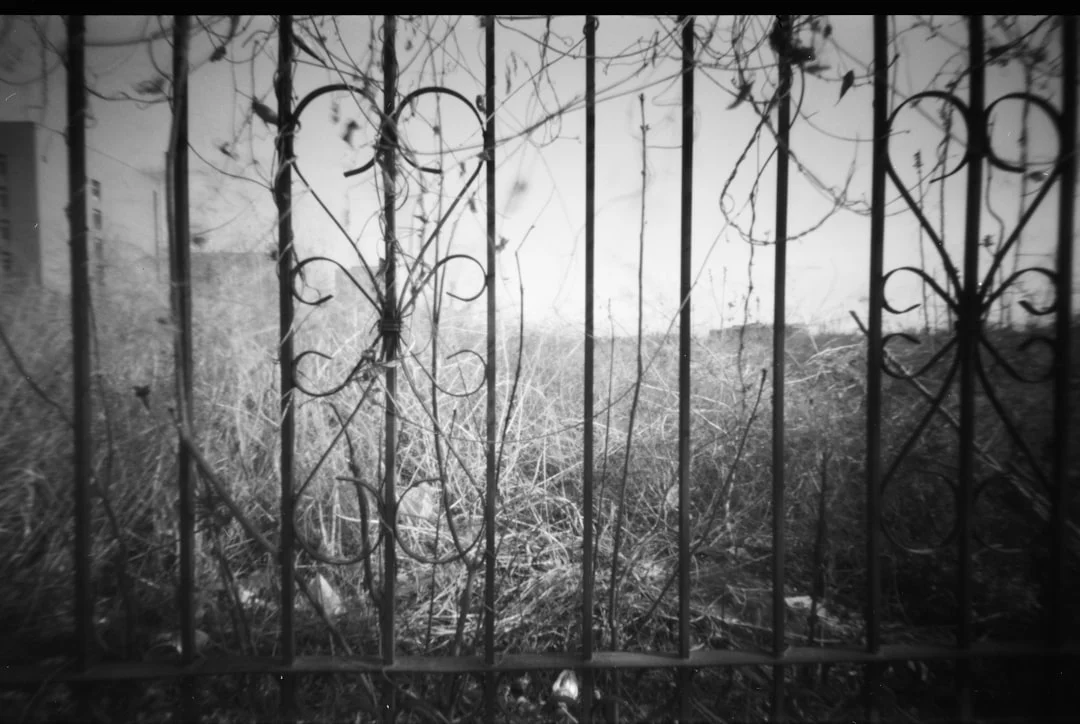
Pinhole photography strips the medium down to its most essential physics: light passing through a tiny hole to form an image. No lens, no autofocus, no electronics. Just a dark chamber, a pinhole, and a light-sensitive surface. The results are unlike anything a modern lens can produce. Soft, dreamlike images with nearly infinite depth of field and a quality that feels both ancient and timeless. Whether you build a camera from a cardboard box, convert a tin can, or drill a hole in a body cap for your digital camera, pinhole photography reconnects you with the fundamental act of making pictures with light.
How Pinhole Cameras Work
A pinhole camera is the simplest possible imaging device. It consists of a lightproof container with a tiny hole on one side and a light-sensitive surface (film or photo paper) on the opposite side. Light from the scene passes through the pinhole and projects an inverted image onto the surface inside. This is the camera obscura principle that artists and scientists have understood for centuries.
Unlike a lens, which bends and focuses light rays to a specific focal point, a pinhole simply restricts which light rays can enter the camera. Each point in the scene sends light in all directions, but only a narrow cone of rays passes through the tiny opening. This produces a soft but recognizable image across the entire frame.
The Physics of Light Through a Tiny Aperture
The pinhole acts as an extremely small aperture. A smaller hole produces a sharper image because it restricts the cone of light from each point in the scene more tightly, reducing the size of each “circle of confusion” on the film plane. However, if the hole is too small, diffraction takes over. Light waves bend as they pass through a very tiny opening, spreading out and softening the image. This is the same diffraction effect that softens images when you use very small f-stops on a conventional lens.
The optimal pinhole diameter balances these two competing effects. Too large and the image is blurry from overlapping light cones. Too small and diffraction blur dominates. The sweet spot depends on the distance between the pinhole and the film plane.
Why There Is No Focal Length (Sort Of)
A pinhole camera does not have a focal length in the traditional lens sense, but it does have a “pinhole-to-film distance” that behaves similarly. A short distance gives a wide-angle view. A long distance gives a telephoto-like narrow view. You can change this by simply moving the film plane closer to or farther from the pinhole, or by building cameras of different depths.
Building a Pinhole Camera
One of the great pleasures of pinhole photography is that you can build your own camera from materials you already have. The simplest designs cost almost nothing and can produce genuinely compelling photographs.
Cardboard Box Camera
A sturdy cardboard box is the classic starting point. Shoebox-sized works well. Paint or line the entire interior with flat black to reduce internal reflections. Cut a small square hole (about 1 cm) on one end, then tape a piece of thin aluminum (from a soda can or aluminum foil layered over several times) over that hole. Use a fine sewing needle to poke a clean, round hole in the center of the aluminum. The smoother and rounder the hole, the sharper your images will be.
On the opposite end, mount your light-sensitive material. For paper negatives, tape a piece of photographic paper (enlarging paper) emulsion side facing the pinhole. Load the paper in complete darkness or under a safelight. Seal the box completely with tape so no light leaks in. Use a piece of black tape over the pinhole as your shutter.
- Choose a rigid box with tight-fitting lid
- Paint all interior surfaces flat black
- Use aluminum from a beverage can for the pinhole plate (flatter and thinner than foil)
- Sand the aluminum piece lightly before poking the hole for a cleaner edge
- Use the smallest sewing needle you have, and push it through gently
- Test for light leaks by placing the sealed box in bright sun, then checking the paper in the dark
Tin Can Camera
A tin can (like a coffee can or paint can) makes an excellent cylindrical pinhole camera. The metal body is naturally lightproof, saving you the trouble of sealing a cardboard box. Use the removable lid end for loading paper or film. Drill or punch a hole in the center of the bottom, then cover it with an aluminum plate and make your pinhole. The cylindrical shape can even be used to create curved-film-plane images with interesting distortion characteristics.
Digital Body Cap Pinhole
If you own a digital camera, you can experience pinhole photography without chemistry. Take a spare body cap for your camera and drill a hole in the center (about 8-10mm). Sand it smooth. Then cover the hole from the outside with a small piece of thin aluminum or brass shim stock and make your pinhole in that. Mount it on your camera like a lens. You now have a pinhole “lens” for your digital body. Set your camera to Manual mode, use live view to compose, and experiment with ISO and shutter speed settings.
The advantage of digital pinhole is instant feedback. You can see the image on the screen immediately, adjust your exposure, and shoot hundreds of frames without the cost of film or paper. The disadvantage is that the tiny hole means your effective f-stop is extremely high (typically f/100 to f/300), so you need long exposures or high ISO settings, which introduces digital noise.
Bothered by the noise that high ISO brings to a digital pinhole? Noise Reduction separates the two kinds of noise and shows what each slider does and where to start.
Calculating the Optimal Pinhole Size
The sharpest pinhole diameter for a given camera depends on the distance between the pinhole and the film. Lord Rayleigh’s formula gives a good approximation:
d = 1.9 x sqrt(f x w)
Where d is the optimal pinhole diameter, f is the focal length (pinhole-to-film distance), and w is the wavelength of light (approximately 0.00055mm for the center of the visible spectrum). For a camera with a 50mm focal distance, this gives an optimal pinhole diameter of about 0.32mm. For a 100mm distance, about 0.44mm.
| Pinhole-to-Film Distance | Optimal Pinhole Diameter | Approximate f-stop |
|---|---|---|
| 25mm | 0.22mm | f/114 |
| 50mm | 0.32mm | f/156 |
| 75mm | 0.39mm | f/192 |
| 100mm | 0.44mm | f/227 |
| 150mm | 0.54mm | f/278 |
You do not need laboratory precision. A well-made pinhole in the right size range will produce good images. If you want to measure your pinhole, place it on a ruler and photograph it with a macro lens or phone camera, then measure on screen.
Exposure Times for Pinhole Photography
Pinhole exposures are long. Very long. Because the effective aperture is so small (typically f/100 to f/300), exposure times measured in seconds or minutes are normal. On a bright sunny day, a pinhole camera loaded with photo paper (around ISO 3 to 6) might need an exposure of 30 seconds to several minutes. On an overcast day or indoors, exposures of 10 minutes to an hour or more are common.
Start by taking a reading with a conventional light meter or your phone’s meter app at a standard aperture like f/16, then calculate the difference in stops to your pinhole’s effective aperture. Each additional stop doubles the required exposure time. From f/16 to f/256 is about 8 stops, so multiply the metered time by 256. A meter reading of 1/125 second at f/16 becomes about 2 seconds at f/256. Factor in reciprocity failure for long film exposures and you may need to add even more time.
Reciprocity failure is the tendency of film and paper to become less sensitive during very long exposures. Most films lose about one stop of effective speed at exposures longer than one second. At 10 seconds, you might need to add another stop. At 100 seconds, another stop beyond that. Paper negatives show similar but less predictable behavior. When in doubt, bracket your exposures by making several at different times.
The Pinhole Aesthetic
Pinhole images have a distinctive look that sets them apart from lens-based photography. Understanding what makes them special helps you use the medium intentionally rather than treating the softness as a limitation.
Infinite Depth of Field
Because there is no lens to focus, everything in a pinhole image is equally sharp (or equally soft, depending on your perspective). Objects inches from the pinhole and objects at infinity receive the same treatment. This is fundamentally different from lens-based photography where depth of field is always a trade-off controlled by aperture.
Softness and Glow
Pinhole images have an inherent softness that gives them a dreamlike, painterly quality. Bright areas bleed slightly into dark areas, creating a natural glow around highlights. This is not a flaw but a characteristic of the medium. Many pinhole photographers specifically seek this quality for fine art and contemplative work.
Want to see pinhole pictures treated as serious work? Tom Baril profiles a photographer known for pinhole seascapes, flowers and toned prints.
Long Exposure Effects
Because pinhole exposures are long, moving subjects blur or disappear entirely. Water becomes smooth silk. People walking through a scene vanish like ghosts. Clouds streak across the sky. These are the same effects sought in long exposure photography with conventional cameras and neutral density filters, but with pinhole they happen naturally because of the tiny aperture.
Film vs. Digital Pinhole
Both approaches have merit. Film and paper pinhole photography offers the full hands-on experience: building the camera, loading in the dark, making the exposure, and developing the result. Paper negatives (photographic enlarging paper used in a camera) are inexpensive and develop quickly. You get a negative that you can contact print or scan.
Digital pinhole (body cap with a pinhole) lets you see results instantly and experiment rapidly. You can try dozens of compositions in an afternoon. The camera histogram helps you dial in exposure. You can shoot RAW for maximum editing flexibility.
| Factor | Film/Paper Pinhole | Digital Pinhole |
|---|---|---|
| Cost per image | Very low (paper is cheap) | Essentially free |
| Instant feedback | No (must develop first) | Yes (live view and chimping) |
| Hands-on process | Complete (build, load, develop) | Partial (mount cap and shoot) |
| Image quality | Unique analog character | Clean but may show sensor dust |
| Exposure help | None (guess or calculate) | Histogram and live view |
| Creative ceiling | Very high | High |
Developing Your Pinhole Images
If you shoot on paper negatives, developing is straightforward with standard black-and-white print chemistry. You need developer (like Dektol or Multigrade developer), stop bath, and fixer. Under safelight, slide your exposed paper into the developer tray and watch the image appear. Agitate gently for about 60 to 90 seconds (follow developer instructions), then move to stop bath for 30 seconds, then fixer for about two minutes. Wash in running water for five minutes and hang to dry.
Thinking of a permanent space for the developer and fixer trays? Darkroom Basics covers choosing a space, essential equipment and making your first print.
If you load your pinhole camera with conventional sheet film or roll film, you develop it using standard film photography processes. The long exposures may require adjusted development times due to reciprocity failure, but the basic process is the same.
Paper negatives can be contact-printed to make positive prints. Place the dried paper negative face down on a fresh sheet of photo paper, expose under the enlarger or a desk lamp, and develop normally. You can also scan paper negatives and invert them digitally for a positive image.
Prefer to scan the negative and flip it on screen? Scanning Film Negatives compares scanning methods, how much resolution you need and a step-by-step flatbed workflow.
Creative Pinhole Projects to Try
- Solargraph: Mount a pinhole camera aimed at the sky and leave it for days, weeks, or months. The sun traces bright arcs across the paper, recording the passage of time.
- Multi-pinhole camera: Make several pinholes in one camera. Each hole creates its own overlapping image for a fragmented, cubist effect.
- Curved film plane: Use a cylindrical container and curve the paper or film along the inside wall. This creates a super-wide-angle image with unique distortion.
- Room-sized camera obscura: Cover your windows completely except for one small hole. Project the outside world onto your walls. Photograph the projection with a conventional camera.
- Pinhole portraits: Ask your subject to hold very still for a 30-second to 2-minute exposure. The slight movement creates an ethereal, painterly quality.
Curious where the camera obscura idea began? The History of Photography opens with the camera obscura and follows the first photographs through to digital.
Common Mistakes
- Pinhole too large: The most common error. If your images are very blurry with little definition, the hole is probably too big. Start small. You can always enlarge it slightly.
- Ragged pinhole edges: A torn or jagged hole scatters light unevenly. Take care to create a clean, round hole. Sand the edges if needed.
- Light leaks: Any gap in your camera body will fog the image. Test in bright sunlight first. Seal every seam with opaque tape.
- Underexposure: First attempts are almost always underexposed. When in doubt, give more time. Double or triple your calculated exposure as a starting point.
- Camera movement during exposure: Even though pinhole images are soft, camera shake during a multi-minute exposure is visible. Use a tripod, a heavy object as weight, or set the camera on a solid surface.
- Forgetting about reciprocity failure: Your calculated exposure is a starting point. Add extra time for long exposures on film and paper.
Try This
- Build a simple pinhole camera from a shoebox. Use photographic paper as your negative. Make three exposures at 1 minute, 3 minutes, and 10 minutes in bright sun and see which works best.
- If you have a digital camera, make a body cap pinhole and photograph a scene you know well. Compare the pinhole image to a photo taken with a conventional lens at a small aperture like f/22.
- Create a solargraph by pointing a sealed pinhole camera (loaded with photo paper) at the southern sky (the northern sky in the Southern Hemisphere). Leave it for one week. The sun will trace its path across the paper.
- Photograph a busy street or park with a 5-minute pinhole exposure. Notice how moving people become transparent or disappear entirely.
Frequently Asked Questions
Can I use any camera body for digital pinhole photography?
Yes. Any camera with interchangeable lenses works. Mirrorless cameras are slightly better because you can use live view to compose and the shorter flange distance means a shorter pinhole-to-sensor distance, which gives a wider field of view. Mirrorless and DSLR bodies both work, but live view is essential for composing since optical viewfinders are too dim with a pinhole.
How do I know if my pinhole is the right size?
The easiest test is to make an image. If the image is recognizable with reasonable definition across the frame, your pinhole is in a good range. If everything is extremely blurry with no definition, the hole is too large. You can measure the hole by photographing it next to a ruler with a macro lens or phone camera. Compare the measurement to the optimal size calculation for your camera’s depth.
What kind of paper works for paper negatives?
Standard black-and-white photographic enlarging paper works well. Resin-coated (RC) paper dries faster and is easier to handle. Fiber-based paper gives a different tonal quality. Use a slow paper (low ISO equivalent, typically around ISO 3-6) rather than a fast paper. Multigrade paper is a good choice because it handles a range of contrast situations.
Can I shoot color with a pinhole camera?
Yes. Load color film (negative or slide) into a pinhole camera built for roll film or sheet film, or use a digital body cap pinhole. Color film requires longer exposure calculations, and reciprocity failure can cause color shifts with very long exposures. Digital pinhole avoids these issues because the sensor responds linearly and white balance can be adjusted.
Is pinhole photography “real” photography?
Absolutely. The pinhole image is older than the lens camera. It uses exactly the same physics of light and the same chemistry (or sensor technology) to record images. Many fine art photographers use pinhole cameras as their primary tool. The lack of a lens is a creative choice, not a limitation.
How long do pinhole exposures typically take?
In bright sunlight with photo paper (around ISO 3 to 6), expect exposures from 30 seconds to several minutes. On an overcast day, 5 to 30 minutes. Indoors, exposures can run from 30 minutes to several hours. With a digital body cap pinhole, you can use higher ISO settings to shorten the exposure, but you trade off noise for speed.
Do I need a darkroom to do pinhole photography?
Not necessarily. If you use a digital body cap pinhole, no darkroom is needed at all. If you use paper negatives, you need a dark space to load and develop the paper, but a closet or bathroom works fine. A full darkroom setup is helpful but not required for basic pinhole work. You can also load paper in a changing bag.