There is something deeply satisfying about a perfectly symmetrical photograph. A still lake reflecting a mountain range. A grand cathedral with identical arches stretching toward a vanishing point. A face captured in perfect alignment. Symmetry taps into a fundamental human preference for order and balance, and when used deliberately in photography, it creates images that feel powerful, harmonious, and visually complete. But symmetry is more than just centering your subject. Understanding the different types of symmetry, knowing when to break it, and learning how to find it in unexpected places will transform your composition skills.
What Is Symmetry in Photography?
Symmetry in photography refers to a balanced, mirror-like arrangement of visual elements within the frame. When an image is symmetrical, one half mirrors the other along an axis. This axis can be vertical (left mirrors right), horizontal (top mirrors bottom), or even diagonal. The mirroring does not need to be mathematically perfect. In photography, approximate symmetry, where the two halves are closely matched but not identical, is often more visually interesting than flawless precision.
Symmetry works as a composition tool because the human brain is hardwired to recognize and appreciate balanced patterns. Studies in visual perception consistently show that symmetrical arrangements are processed more quickly and rated as more aesthetically pleasing than asymmetrical ones. When a viewer encounters a symmetrical photograph, there is an immediate sense of order that creates visual comfort. This makes symmetry a powerful tool for drawing people into your images.
At the same time, perfect symmetry can feel static and predictable. The most compelling symmetrical photographs often include a small element that breaks the pattern. A lone figure walking through a perfectly symmetrical corridor. A single red leaf on the surface of a mirror-still lake. These disruptions inject life and tension into an otherwise orderly composition, giving the viewer something to discover within the balance.
Types of Symmetry
See it side by side
Symmetric composition mirrors the frame across a central axis, producing stillness and formality. Asymmetric composition balances unequal elements through weight and placement, producing tension and movement.
Reflective (Mirror) Symmetry
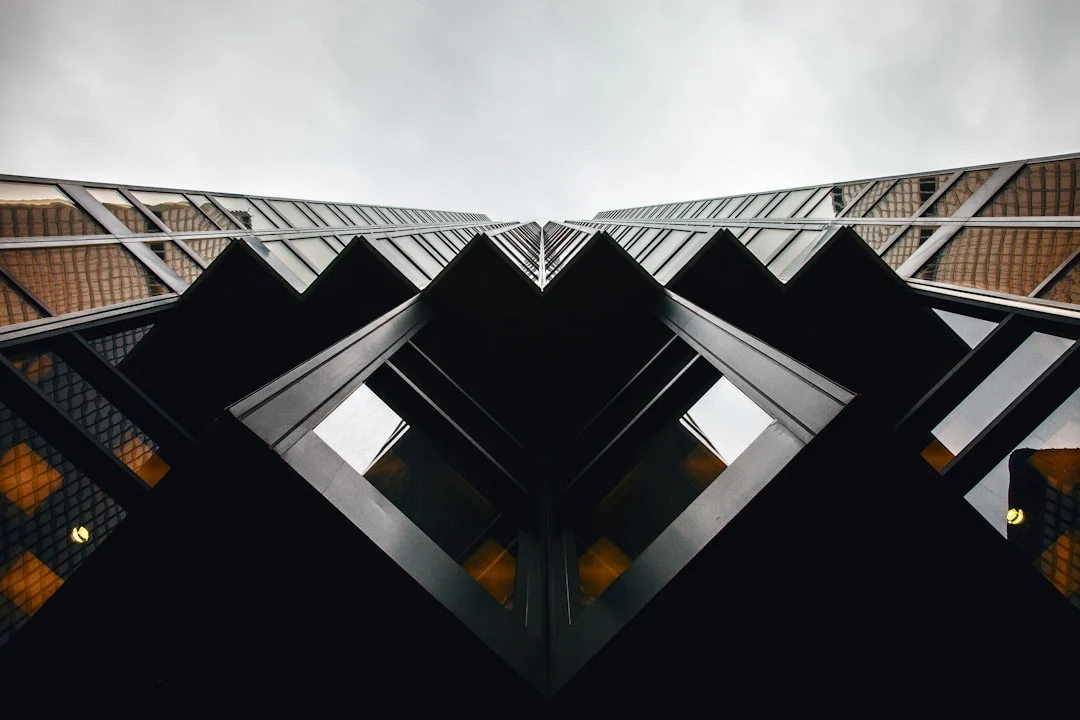
Reflective symmetry is the most recognized form. One half of the image mirrors the other along a central axis. Vertical reflective symmetry, where the left side mirrors the right, is the most common in photography. Think of a grand building shot head-on, a road stretching into the distance with identical scenery on either side, or a person’s face photographed from directly in front.
Horizontal reflective symmetry, where the top mirrors the bottom, is often found in water reflections. A mountain reflected in a calm lake creates a top-bottom mirror image. This type of symmetry creates a dreamy, otherworldly quality and is one of the most popular techniques in landscape photography.
To achieve strong reflective symmetry, position yourself so that you are looking straight down the axis of symmetry. Even a slight angle will break the mirror effect. Use your camera’s grid overlay to ensure your horizon line or central axis is perfectly level. Small adjustments in post-processing can correct minor alignment issues, but getting it right in the field saves time and produces cleaner results.
Rotational Symmetry
Rotational symmetry occurs when elements repeat around a central point. A spiral staircase viewed from above, the petals of a flower, the spokes of a wheel, or a decorative ceiling medallion all display rotational symmetry. The elements look the same after being rotated by a certain angle around the center point.
Rotational symmetry creates a strong sense of movement and draws the eye toward the center of the rotation. It works exceptionally well when photographed from directly above or below, so that the rotational pattern fills the frame evenly. In architecture photography, looking straight up into a domed ceiling or a spiral staircase from the bottom produces dramatic rotational symmetry. In nature, flowers and seed heads photographed from directly above showcase their natural rotational patterns.
Translational Symmetry
Translational symmetry occurs when an identical element repeats at regular intervals across the frame. A row of identical columns, a line of beach huts, a series of windows on a building facade, or a field of lavender rows all display translational symmetry. Unlike reflective symmetry, there is no mirror axis. Instead, the same shape or form simply repeats.
Translational symmetry is closely related to patterns and repetition. The distinction is subtle: translational symmetry emphasizes the regularity and precision of the repetition, while patterns can be more loose and organic. Translational symmetry works well in architecture, urban environments, and any scene where human design has created ordered repetition.
Radial Symmetry
Radial symmetry is a specific form of rotational symmetry where elements radiate outward from a central point, like the rays of a sun or the arms of a starfish. Many natural subjects display radial symmetry: dandelion seed heads, sea urchins, sliced fruits, and snowflakes. In the built environment, wagon wheels, clock faces, and rosette windows in churches are classic examples.
Radial symmetry is visually magnetic. The eye is drawn to the center point and then follows the radiating elements outward. Placing the center of radial symmetry at the center of your frame creates a hypnotic, almost meditative composition. This type of symmetry often works well in abstract photography, where you can isolate the radial pattern and remove contextual distractions.
Where to Find Symmetry
Architecture
Buildings are the richest source of symmetry for photographers. Architects have been designing symmetrical structures for thousands of years, from ancient temples to modern skyscrapers. Facades, interiors, corridors, doorways, staircases, and ceilings all offer symmetrical compositions. Architecture photography and symmetry are natural partners. To maximize the symmetry, shoot head-on from the center of the structure. Use a tripod to ensure precision, and correct any lens distortion in post-processing that might skew the symmetrical lines.
Reflections
Water is the most common source of natural horizontal symmetry. Lakes, ponds, puddles, and even wet streets reflect the world above, creating mirror images. For the sharpest reflections, shoot on calm, windless days when the water surface is still. Early morning is ideal, as wind tends to be lightest at dawn and the golden hour light adds warmth to both the scene and its reflection.
Beyond water, look for reflections in glass, polished metal, mirrors, and shiny surfaces. Urban environments are full of reflective materials. A glass-fronted building reflecting the sky or a neighboring structure creates urban symmetry that can be striking. Puddles after rain create miniature reflection pools that can frame street photography subjects in unexpected ways.
Nature
While nature is rarely perfectly symmetrical, approximate symmetry abounds. Butterfly wings, leaves, flower petals, tree trunks reflected in streams, and mountain ranges mirrored in alpine lakes all offer natural symmetry. The slight imperfections in natural symmetry often make these images more interesting than their architectural counterparts, because the viewer senses the symmetry but also notices the organic variations.
The Human Body
The human face and body are approximately symmetrical along a vertical axis. In portrait photography, shooting straight on to emphasize facial symmetry creates striking, confrontational images. This approach works especially well for editorial and fashion portraits, where the direct, symmetrical gaze commands the viewer’s attention. However, most portrait photographers intentionally break facial symmetry by shooting at a slight angle, which creates a more flattering and dynamic result. Understanding symmetry helps you decide when to use it and when to deviate from it.
Everyday Objects
Symmetry hides in ordinary places. A pair of shoes placed side by side. Two coffee cups on a table. A hallway in your home. Railroad tracks converging toward the horizon. Open books. Bridges. The more you train your eye to see symmetry, the more you will find it in your daily surroundings. This awareness transforms mundane scenes into structured, intentional compositions.
How to Photograph Symmetry Effectively
Get Perfectly Centered
Symmetry demands precision. If your camera is even slightly off-center, the symmetry breaks and the image looks careless rather than composed. Position yourself directly in front of the axis of symmetry. Use the grid overlay in your viewfinder to align vertical and horizontal lines. A tripod helps enormously, as it lets you make fine adjustments without the wobble of handholding. If you are shooting a building facade, stand directly in front of the center of the building. If you are shooting a corridor, position yourself in the exact middle. Take your time with alignment. The difference between good and exceptional symmetry shots is measured in millimeters of camera position.
Use a Tripod and Level
A tilted horizon or a slightly rotated frame will undermine the symmetry of your composition. Use a tripod with a built-in bubble level, or enable your camera’s electronic level. This is especially important for reflection shots, where even a tiny tilt moves the reflection axis and destroys the mirror effect. For architectural symmetry, a tripod also lets you use narrower apertures (f/8 to f/16) with slower shutter speeds to maximize sharpness throughout the frame.
Clean Up in Post-Processing
Even with careful alignment in the field, you may need to make small corrections in post-processing. Use the transform tools in your editing software to correct any remaining tilt or perspective distortion. Crop to fine-tune the centering. These adjustments should be minor if you did the work in the field, but they can make the difference between symmetry that feels approximate and symmetry that feels precise.
Choose the Right Moment
Lighting dramatically affects how symmetry reads in an image. Even, diffused light preserves symmetry because both halves of the scene are illuminated equally. Strong directional light can break visual symmetry by creating bright and shadow sides, even if the physical elements are symmetrical. For pure symmetry, overcast days or soft natural light work best. For symmetry with dramatic tension, use directional lighting that creates a play between the symmetrical structure and asymmetrical light.
Breaking Symmetry for Impact
Pure, unbroken symmetry creates beauty, but it can also feel static and predictable. Some of the most memorable symmetrical photographs introduce a deliberate break in the pattern. A single person walking through a perfectly symmetrical corridor. A red umbrella in a row of black ones. A bird perched on one side of a symmetrical fence. These breaks create a focal point within the symmetry and add narrative tension to the image.
The break works because it leverages the viewer’s expectation. When the brain detects symmetry, it expects it to continue. When something disrupts that expectation, the eye is immediately drawn to the disruption. This is the same principle that makes pattern breaks so effective. The symmetry establishes order, and the break introduces a story within that order.
When intentionally breaking symmetry, make the break obvious. A subtle, ambiguous disruption looks like a mistake. A bold, clear disruption looks like a deliberate creative choice. Place the breaking element where the viewer will find it naturally, and make sure it contrasts with the symmetrical surroundings in scale, color, or form.
Symmetry vs. Asymmetry: Knowing When to Choose
Symmetry and asymmetry are not opposing forces. They are complementary tools. The rule of thirds, which places subjects off-center, is fundamentally an asymmetrical technique. Leading lines often create asymmetrical flow. Negative space frequently involves an asymmetrical distribution of visual weight. Understanding symmetry does not mean you should use it in every image. It means you understand why certain centered, balanced compositions feel so powerful, and you can choose symmetry deliberately when the scene calls for it.
Use symmetry when you want to convey order, formality, grandeur, calm, or perfection. Use asymmetry when you want tension, dynamism, casualness, or energy. A palace photographed symmetrically communicates its architectural grandeur. The same palace shot from an angle with the rule of thirds conveys a more personal, exploratory perspective. Neither approach is better. They simply communicate different things.
As you develop your photography style, you will gravitate naturally toward one approach or the other. Some photographers are drawn to the precision and formality of symmetry. Others prefer the energy of asymmetrical compositions. The most versatile photographers are comfortable with both and choose based on what the scene and their creative intent demand.
Symmetry and Framing
Symmetry and framing work together powerfully. A symmetrical frame, such as an archway or doorway centered in the image, creates a natural entry point for the viewer’s eye. The symmetry of the frame draws the eye inward to whatever is centered within it. This combination is a staple of architectural and travel photography, where grand entrances, colonnaded walkways, and ornate doorways provide both symmetry and framing in a single composition.
To maximize the effect, ensure both the frame and the subject within it are centered. Even small misalignments disrupt the harmonious relationship between the symmetrical frame and its contents. Position yourself carefully, use your grid overlay, and take multiple shots with slight adjustments to ensure you capture the most precise alignment possible.
Symmetry in Different Genres
Architecture
Symmetry is perhaps the defining composition technique in architecture photography. Shooting buildings head-on to emphasize their symmetrical design is a time-honored approach. Look beyond facades to interiors: symmetrical corridors, staircases, ceiling patterns, and atria all provide rich symmetrical subjects. Wide-angle lenses work well for capturing full architectural symmetry, but be aware of lens distortion that can warp straight lines at the edges of the frame. Correct this in post-processing to maintain clean geometry.
Landscape
In landscape photography, reflections provide the most natural symmetry. Seek out calm bodies of water at dawn or dusk. Position your horizon line at the center of the frame to create an equal division between the real scene and its reflection. This centering breaks the traditional rule of placing the horizon on a third line, but in reflection shots, the centered horizon is what makes the symmetry work.
Street Photography
Street photography rarely involves perfect symmetry, which is exactly why it stands out when it appears. A symmetrical subway station with a lone figure in the center. Two people on opposite sides of a bench, mirroring each other’s posture. Urban tunnel with a cyclist at the vanishing point. These moments of order within the chaos of street life create arresting images.
Portrait Photography
Head-on symmetrical portraits have a confrontational, powerful quality. The subject looks directly at the camera, and the viewer looks directly back. This creates a sense of connection and intensity that three-quarter or profile views do not achieve. Symmetrical portraits work particularly well for editorial work, character studies, and environmental portraits where the symmetrical setting reinforces something about the subject’s identity.
Common Mistakes
Almost symmetrical but not quite. Near-symmetry that is clearly unintentional is one of the most common composition errors. If the viewer can tell you were trying for symmetry but did not achieve it, the image feels sloppy. Either commit to precise symmetry or abandon it in favor of a clearly asymmetrical composition. There is no middle ground.
Centering everything. Learning about symmetry can lead to the temptation to center every subject. Not every scene is symmetrical, and forcing a centered composition on an asymmetrical subject produces weak images. Reserve centering for scenes where genuine symmetry exists.
Ignoring the background. A symmetrical subject against an asymmetrical background creates visual conflict. When shooting for symmetry, check the entire frame, including the background, to ensure the symmetrical impression holds throughout the image.
Tilted horizons. A tilted camera is the fastest way to ruin a symmetrical composition. Even a one-degree tilt is noticeable when the image depends on perfect balance. Use your camera’s level and correct any remaining tilt in post-processing.
Boring symmetry. Symmetry alone is not enough to make an interesting photograph. A perfectly symmetrical image of a dull subject is still a dull photograph. The subject, lighting, color, and mood all need to work alongside the symmetry to create a compelling image. Symmetry is a compositional foundation, not a substitute for visual interest.
Overusing symmetry. If every image in your portfolio is symmetrical and centered, the work becomes predictable. Use symmetry as one tool in a diverse composition toolkit that includes the rule of thirds, leading lines, negative space, and the golden ratio.
Try This
The reflection hunt. Spend a morning at a lake, pond, or other calm body of water. Arrive before sunrise when the water is most likely to be perfectly still. Photograph the landscape and its reflection, centering the horizon. Experiment with including and excluding the shoreline to see how it affects the symmetry. Shoot both wide and telephoto to compare how different focal lengths render the reflection.
Architectural symmetry walk. Visit a building with symmetrical architecture (a church, government building, museum, or modern office tower) and spend an hour photographing nothing but symmetrical compositions. Shoot facades, hallways, staircases, and ceiling details. Focus on getting each shot perfectly centered. Review your images and note which ones feel most satisfying and why.
Break the symmetry. Find a strongly symmetrical scene and then deliberately introduce a break. Place an object on one side. Wait for a person to walk into the frame. Look for a natural imperfection that disrupts the pattern. Photograph both the pure symmetry and the broken symmetry, then compare the two images. Which one draws the eye more effectively? Which one tells a more interesting story?
Everyday symmetry. Challenge yourself to find five symmetrical compositions in your home or workplace. Look at hallways, stairwells, bookshelves, kitchen cabinets, and doorways. Train your eye to see the balance that exists in ordinary spaces. This practice builds the visual awareness that allows you to spot symmetry instantly when shooting on location.
Rotational symmetry from above. Find a subject with rotational symmetry (a flower, a wheel, a circular staircase) and photograph it from directly above or below. Ensure the center of the rotation is in the center of your frame. This overhead perspective often reveals symmetry that is invisible from eye level.
Symmetry and color. Find a symmetrical scene and pay special attention to the color distribution. Is the color symmetrical too, or does color create asymmetry within a structurally symmetrical frame? Photograph the scene and then convert it to black and white. Notice how removing color changes the perception of symmetry. This exercise teaches you to see symmetry in terms of both form and tone.
FAQ
Does symmetry mean I should always center my subject?
Only when genuine symmetry exists in the scene. Centering a subject in an asymmetrical scene does not create symmetry. It just produces a static composition. Center your subject when the scene itself is symmetrical and you want to emphasize that balance. In all other situations, off-center placement using the rule of thirds or the golden ratio typically produces stronger results.
How do I find symmetry in nature when it is rarely perfect?
Look for approximate symmetry and embrace the imperfections. A tree reflected in a lake is never a perfect mirror image because of ripples, wind, and light variations. That imperfection is part of the beauty. Nature’s near-symmetry feels organic and alive in a way that sterile perfection does not. Focus on finding the strongest approximate symmetry and let the natural variations add character.
Can symmetry work in black and white photography?
Symmetry often works even better in black and white, because removing color eliminates potential asymmetries in hue and saturation. The viewer focuses entirely on form, tone, and structure. Symmetrical architecture, reflections, and geometric patterns all translate powerfully to monochrome.
Should I correct perspective distortion in my symmetry shots?
Yes, when shooting architecture. Wide-angle lenses cause converging verticals (buildings appear to lean inward), which breaks the symmetry. Use perspective correction tools in your editing software or a tilt-shift lens in the field to keep vertical lines parallel. For natural symmetry like reflections, perspective correction is usually unnecessary.
What is the difference between symmetry and patterns?
Symmetry refers specifically to a balanced arrangement where one part mirrors another, either across an axis (reflective) or around a point (rotational). Patterns refer to any repeated visual element, which may or may not be symmetrical. A row of identical windows is both a pattern (repetition) and translational symmetry. A random arrangement of scattered leaves is a pattern but not symmetrical. The concepts overlap but are distinct.
How do I deal with people or objects that break the symmetry of my scene?
You have two choices: remove them or embrace them. If you want pure symmetry, wait for people to clear the scene, or shoot at times when the location is empty (early morning is ideal). If the breaking element adds interest, embrace it. A single person in a symmetrical scene often makes the image stronger, not weaker. The key is making a deliberate choice rather than accepting whatever happens to be there.
Is symmetry a beginner or advanced technique?
Both. Finding and photographing basic symmetry is accessible to any beginner. But executing it with precision, understanding the different types, knowing when to break it, and combining it with other techniques like framing, depth, and juxtaposition requires experience and a refined compositional eye. Start with simple reflections and architectural symmetry, then progress to more complex and nuanced applications.