Why Camera Settings Matter for Wildlife Photography
Wildlife photography is one of the most challenging and rewarding genres in photography. Your subjects are unpredictable, fast-moving, easily startled, and rarely cooperate with your creative vision. You cannot ask an eagle to hold a pose or a deer to step into better light. The moment happens once, and your camera settings determine whether you capture it or lose it forever.
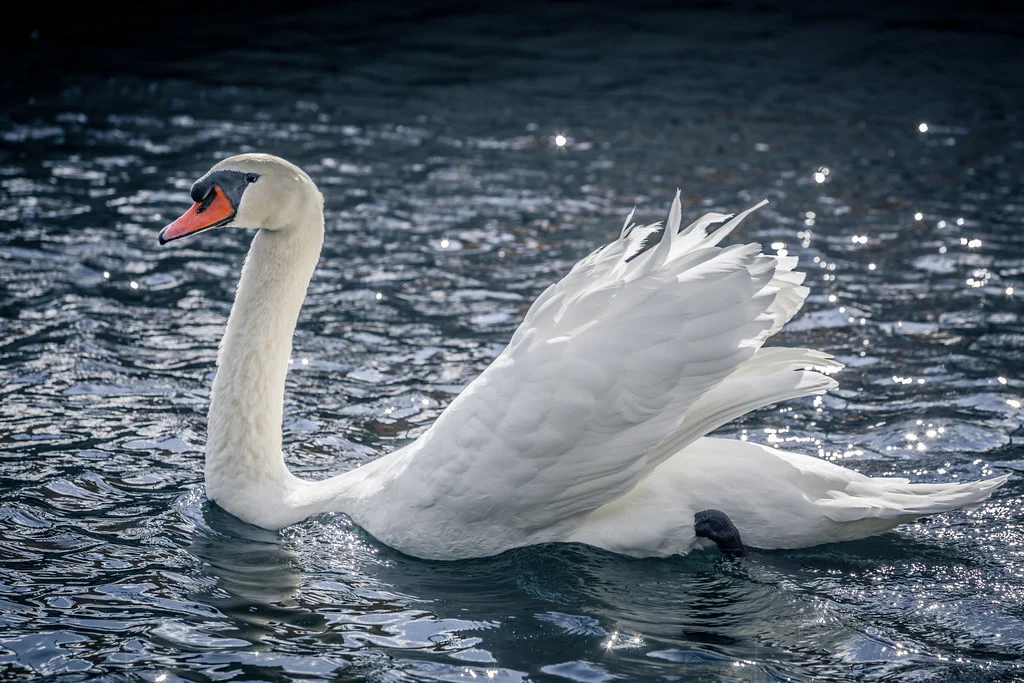
Getting the settings right before the action starts is critical. You rarely have time to adjust settings when a raptor dives or a fox breaks into a sprint. This guide covers the exact aperture, shutter speed, and ISO settings for every common wildlife scenario, from still perched birds to action-packed predator-prey encounters.
Quick Reference: Wildlife Photography Settings Cheat Sheet
| Scenario | Aperture | Shutter Speed | ISO |
|---|---|---|---|
| Perched Bird (still) | f/4 – f/5.6 | 1/500s | 400 – 1600 |
| Bird in Flight | f/5.6 – f/8 | 1/2000s – 1/4000s | 800 – 3200 |
| Large Mammals (still/walking) | f/4 – f/5.6 | 1/500s | 400 – 1600 |
| Running/Action | f/5.6 – f/8 | 1/1000s – 1/2000s | 800 – 6400 |
| Small Animals/Insects | f/5.6 – f/8 | 1/500s | 400 – 1600 |
| Reptiles/Amphibians | f/5.6 – f/8 | 1/250s – 1/500s | 400 – 800 |
| Wildlife at Dawn/Dusk | f/2.8 – f/4 | 1/500s minimum | 1600 – 12800 |
Shutter Speed: The Most Critical Wildlife Setting
In wildlife photography, shutter speed is your most important setting. An out-of-focus background can look artistic, a slightly noisy image can be cleaned up in post, but motion blur from a too-slow shutter speed ruins the image permanently. Animals move faster than you think, and even subtle head turns or wing adjustments create visible blur at slow shutter speeds.
Minimum Shutter Speeds by Subject
- Perched birds (still): 1/500s. Even a “still” bird turns its head, preens, and shifts constantly.
- Walking or grazing animals: 1/500s to 1/1000s. Legs and heads move during each step.
- Birds in flight (large birds, slow wingbeats): 1/1600s to 1/2000s. Eagles, herons, hawks.
- Birds in flight (small birds, fast wingbeats): 1/2500s to 1/4000s. Songbirds, hummingbirds, swallows.
- Running mammals: 1/1000s to 1/2000s. Foxes, wolves, deer in full gallop.
- Lunging/striking predators: 1/2000s to 1/4000s. Kingfisher diving, hawk stooping.
When in doubt, go faster. A higher-than-necessary shutter speed costs you nothing except a small increase in ISO. A too-slow shutter speed costs you the entire shot.
Shutter Priority vs. Manual
Many wildlife photographers use Shutter Priority (S/Tv) mode, which lets you set the shutter speed while the camera adjusts aperture. Combined with Auto ISO, this guarantees your shutter speed stays fast enough regardless of changing light. Set your desired shutter speed (1/1000s for general wildlife, 1/2000s for flight), enable Auto ISO with a maximum of 6400 or 12800, and shoot. The camera handles the rest while you focus on tracking your subject.
More experienced photographers often use Manual mode with Auto ISO, which gives control over both shutter speed and aperture while letting ISO float. This is ideal when you want to maintain a specific aperture for depth of field control (for example, keeping f/5.6 for a balance of sharpness and background blur).
Aperture for Wildlife Photography
Aperture in wildlife photography serves two purposes: gathering enough light for fast shutter speeds and controlling how the background and foreground look.
Wide Open (f/2.8 to f/4)
Shooting wide open maximizes light gathering, which is critical in the low light of dawn and dusk when animals are most active. Wide apertures also produce beautiful, creamy backgrounds that isolate the animal from its environment. At f/2.8 with a 400mm lens, the background dissolves into pure color and texture, drawing all attention to the subject.
The trade-off: shallow depth of field means only a thin slice of the animal is in focus. At f/2.8 and 400mm, a bird 30 feet away has a depth of field of only a few inches. If the bird is angled slightly, one eye may be sharp and the other soft. For static subjects at wide apertures, precise focus on the nearest eye is essential.
Mid-Range (f/5.6 to f/8)
Stopping down to f/5.6 or f/8 provides more depth of field, which is especially important for birds in flight (you need the extra margin for focus accuracy) and animals that are not perfectly perpendicular to the camera. f/5.6 is the “sweet spot” for most wildlife lenses, offering sharp images with enough depth of field for reliable results.
For birds in flight, f/5.6 to f/8 gives you the safety margin you need. The autofocus system does not need to be perfectly precise when you have a deeper depth of field cushioning the result.
Aperture and Lens Sharpness
Most telephoto lenses are slightly soft at their maximum aperture and sharpen up by 1 to 2 stops. A 100-400mm lens that opens to f/5.6 will be noticeably sharper at f/7.1 or f/8 than at f/5.6. If light allows, stopping down one stop from your maximum aperture often yields visibly sharper results, especially in the corners.
ISO: Accept the Noise
ISO in wildlife photography is the setting you sacrifice for the settings that matter more. Shutter speed must be fast. Aperture is often determined by your lens maximum or your depth of field needs. ISO fills the gap.
Wildlife photographers routinely shoot at ISO 1600 to 6400, and ISO 12800 is not unusual for dawn/dusk shooting or overcast conditions. Modern noise reduction software does an excellent job cleaning up high-ISO files. Embrace it. The best wildlife photographers in the world regularly deliver stunning images shot at ISO 6400 and above.
Auto ISO for Wildlife
Auto ISO is standard practice for most wildlife photographers. Set your aperture and minimum shutter speed, set an Auto ISO range (typically ISO 100 to 6400 or ISO 100 to 12800), and let the camera manage the rest. As light changes throughout the day, or as you track an animal moving between sun and shade, ISO adjusts seamlessly.
Make sure to set the minimum shutter speed in your Auto ISO settings to match your subject. For general wildlife, set it to 1/1000s. For birds in flight, set it to 1/2000s. The camera will then only raise ISO when it cannot achieve that shutter speed at your chosen aperture.
Autofocus Settings for Wildlife
Getting sharp focus on wild animals, especially those moving unpredictably, is one of the hardest technical skills in photography. The right autofocus settings make an enormous difference in your hit rate.
Continuous AF (AF-C / AI Servo)
Always use Continuous AF for wildlife. This mode continuously tracks the subject as it moves, adjusting focus right up until the moment you take the photo. Single Shot AF (AF-S) locks focus when you half-press the shutter, which means a moving animal will be out of focus by the time the shutter fires.
Focus Area Modes
- Single point: You select one focus point. Most precise but hardest to keep on a moving subject. Best for still or slowly moving animals.
- Dynamic area / Zone AF: You select a focus point, and the camera uses surrounding points to help track if the subject moves slightly. Best for unpredictable movement.
- Group AF: A cluster of focus points work together to find and track the subject. Good for birds in flight against busy backgrounds.
- Animal/Bird Eye AF: Modern cameras can detect and track animal eyes specifically. If your camera has this feature, use it. It is a game-changer for wildlife, automatically finding and locking onto the eye.
Back-Button Focus for Wildlife
Back-button focus separates focusing from the shutter button, which is extremely useful for wildlife. You press the AF-ON button to focus and track, and a separate press of the shutter button takes the photo. This means you can stop tracking (by releasing AF-ON) when the animal pauses, and resume tracking instantly when it starts moving again, without accidentally refocusing on the background between shots.
Pre-Focusing Technique
When you know where an animal will appear (a perch, a nest, a known flight path), pre-focus on that spot and wait. When the animal arrives, it is already in focus. This works perfectly for birds returning to a nest, animals at a water hole, or raptors perching on a known pole. Combine pre-focusing with back-button focus so the shutter button does not try to refocus when you fire.
Scenario-Specific Settings
Birds in Flight
| Setting | Value | Why |
|---|---|---|
| Aperture | f/5.6 – f/8 | Extra depth of field for focus tolerance |
| Shutter Speed | 1/2000s – 1/4000s | Freeze wingtips and fast flight movement |
| ISO | 800 – 6400 | Whatever needed for proper exposure at these settings |
| Focus Mode | Continuous AF (AF-C) with Dynamic Area or Bird Eye AF | Track the bird as it moves through the frame |
| Drive Mode | Continuous High (maximum burst rate) | Capture the best wing position and head angle |
Birds in flight are one of the ultimate tests of a photographer’s skill and equipment. Track the bird smoothly by following it with your body, not just your arms. Keep the bird in the viewfinder for several seconds before shooting, letting the autofocus system lock on and settle. Fire in bursts of 5 to 10 frames, then evaluate. You will learn quickly which frames have the best focus, wing position, and head angle.
For more detailed bird photography techniques, see our bird photography guide.
Dawn and Dusk Wildlife
| Setting | Value | Why |
|---|---|---|
| Aperture | Wide open (f/2.8 – f/4) | Maximum light gathering in dim conditions |
| Shutter Speed | 1/500s minimum (compromise if necessary) | Maintain enough speed to freeze the subject |
| ISO | 3200 – 12800 | Push ISO to preserve shutter speed |
| White Balance | Auto or Cloudy | Preserve warm dawn/dusk tones |
Dawn and dusk are the “magic hours” for wildlife. Animals are most active, the light is warm and directional, and the low sun angle creates dramatic rim lighting. But the light is also weak, forcing high ISOs. Prioritize shutter speed over noise. If you must compromise, drop shutter speed to 1/250s for a standing animal, but never slower. The warm, golden light of these hours makes for the most dramatic wildlife images.
Macro Wildlife (Insects, Frogs, Small Creatures)
| Setting | Value | Why |
|---|---|---|
| Aperture | f/5.6 – f/11 | Depth of field is extremely shallow at macro distances |
| Shutter Speed | 1/250s – 1/500s | Freeze both subject movement and hand shake magnified at macro distances |
| ISO | 400 – 1600 | Balance between light and noise |
| Flash | Ring flash or macro twin flash (optional) | Adds controlled light at close distances |
At macro distances, depth of field is measured in millimeters. Even at f/11, you may only have a few millimeters of sharpness. Focus stacking (multiple shots at different focus points, merged in software) solves this for cooperative subjects. For insects that will not stay still, use f/8 and accept that only part of the subject will be sharp. Focus on the eyes, and the rest falls into an artistic blur.
Composition Tips for Wildlife
Strong composition elevates wildlife photos from documentation to art. While settings ensure technical quality, composition creates emotional impact.
Eye Contact and Eye Level
The most compelling wildlife photos show the animal at eye level. Getting down low, on your belly if necessary, creates an intimate perspective that invites the viewer into the animal’s world. Eye contact with the camera creates an emotional connection. This single technique transforms wildlife photos more than any equipment upgrade.
Leave Space for the Animal to Move Into
Compose with negative space in the direction the animal is looking or moving. A bird looking left should have space to the left in the frame. An animal running right needs room to run into. This creates a sense of movement and natural balance. Framing the animal with nowhere to “go” in the frame feels cramped and unsettling.
Include Environment for Context
While tight headshots showcase detail, pulling back to show the animal in its habitat tells a story. A bear fishing in a misty river, an owl perched in a frost-covered forest, a fox crossing a snowy field. These environmental portraits are often the most memorable wildlife images because they convey the animal’s world, not just its appearance.
Common Wildlife Photography Mistakes
1. Too Slow a Shutter Speed
The single most common mistake. Even at 1/250s, a turning bird head or a walking leg shows motion blur. Maintain at least 1/500s for still subjects and 1/1000s or faster for any movement. Sacrifice ISO before shutter speed.
2. Not Shooting in Burst Mode
Wildlife moments are fleeting. A single-frame approach means you will miss peak action, the best wing position, the most expressive head angle. Use continuous drive mode and shoot in bursts. You can delete the extras later. Storage is cheap; moments are irreplaceable.
3. Centering Every Subject
Placing the animal dead center in every frame produces static, boring compositions. Use the rule of thirds, leave space for the animal to look or move into, and vary your framing between tight and environmental shots.
4. Ignoring the Background
A beautiful bird against a cluttered, distracting background loses its impact. Before pressing the shutter, check the background. Move slightly to get a cleaner background, or use a wider aperture to blur distractions. A simple, smooth background makes the subject pop.
5. Shooting from Standing Height
Standing and shooting downward at wildlife creates a disconnected, “looking down on the animal” perspective. Get low. Lie on the ground, sit against a tree, or brace on a rock. Eye-level perspectives are almost always more compelling for wildlife photography.
Frequently Asked Questions
What focal length do I need for wildlife photography?
A minimum of 300mm is recommended, with 400mm to 600mm being ideal for most wildlife. A 100-400mm or 150-600mm zoom provides versatility. Longer focal lengths let you photograph from a greater distance, which is both safer for you and less disturbing to the animal.
Is a monopod or tripod better for wildlife?
A monopod is more practical for wildlife because it provides stability while allowing quick repositioning. A tripod is more stable but slower to move. For hides and blinds where you wait in one spot, a tripod with a gimbal head is ideal. For walking and stalking, a monopod or handheld with image stabilization is better.
How important is image stabilization for wildlife?
Very important when shooting handheld with long telephoto lenses. Image stabilization (IS/VR/IBIS) can provide 3 to 5 stops of correction, meaning you can use shutter speeds 8 to 32 times slower than without stabilization. This is invaluable for static or slowly moving subjects. For fast action, you still need fast shutter speeds regardless of stabilization.
Should I use a teleconverter for more reach?
Teleconverters (1.4x or 2x) multiply your focal length but cost you aperture stops (1 stop for 1.4x, 2 stops for 2x). A 1.4x converter on a 400mm f/5.6 gives you 560mm f/8. Autofocus may slow or stop working at f/8 on some camera bodies. A 1.4x converter is usually a reasonable trade-off; a 2x converter is only worth using in very good light.
How do I approach wildlife without scaring them?
Move slowly and quietly. Avoid direct eye contact with the animal (this is perceived as threatening). Wear muted, earth-toned clothing. Approach at an angle rather than walking straight toward the animal. Stop and let the animal become comfortable with your presence at each distance before moving closer. Be patient. The best wildlife photographers spend far more time waiting than shooting.
Try This: Practice Exercises
Exercise 1: Shutter Speed for Motion Freeze
Visit a local pond or park with birds. Photograph the same species at 1/250s, 1/500s, 1/1000s, and 1/2000s. Zoom in to 100% on your computer and note the minimum shutter speed that produces sharp results for that species’ movement speed. This gives you a practical reference for future shoots.
Exercise 2: Autofocus Tracking Practice
Set up for birds in flight (seagulls at a harbor or beach are reliable subjects). Use Continuous AF with Dynamic Area tracking and burst mode. Practice following a bird smoothly for 3 to 5 seconds before firing a burst. Review your hit rate (percentage of sharp images). Do this for 30 minutes and track how your hit rate improves as you develop the tracking skill.
Exercise 3: Background Quality Comparison
Photograph a bird or squirrel at f/4 and f/8 from the same position. Then move to change the background (find a cleaner, more distant background) and shoot at f/4. Compare all three images. You will often find that changing your position to improve the background has more impact than changing aperture.
Related Resources
- Wildlife Photography Hub – Complete genre guide
- How to Photograph Birds – Detailed bird photography techniques
- Focus Modes Guide – Understanding AF-C, AF-S, and tracking modes
- Back Button Focus – Essential technique for wildlife tracking
- Shutter Speed Guide – Freezing motion at various speeds
- Understanding ISO – Managing noise at high ISO values
- The Exposure Triangle – How all three settings work together
- Composition Guide – Strengthen your wildlife compositions
- Macro Photography – Close-up techniques for small wildlife