A half-frame camera uses ordinary 35mm film but makes each picture half the usual size, so a single roll holds roughly twice as many photographs. That simple idea changes the way you shoot. Pictures come out tall rather than wide, frames arrive in natural pairs, and film suddenly feels generous rather than precious. For beginners and curious enthusiasts alike, half-frame is one of the most playful and economical ways to enjoy film.
This guide explains what half-frame really means, how it differs from a standard 35mm camera, why the pictures come out vertical, how to think in pairs, what to expect from grain and detail, and how to get a half-frame roll developed and scanned without surprises.
What half-frame means
A standard 35mm camera exposes a rectangle about 36mm wide and 24mm tall on the film. That is the frame most people picture when they think of 35mm, and it is the same shape as the sensor in a full-frame digital camera. A half-frame camera splits that space in two. Each picture measures about 18mm wide by 24mm tall, so two half-frame pictures fit in the space of one standard frame.
The film itself is exactly the same. You buy the same canisters, load them the same way and develop them in the same chemistry. The only difference is how far the camera advances the film between shots, and the size and shape of the window the light passes through. A roll marked for 36 exposures gives roughly 72 half-frame pictures, and a 24-exposure roll gives about 48.
If the different film formats are new to you, the overview of film photography explains 35mm, medium format and large format, and aspect ratio explains how the shape of a frame affects a picture.
Why half-frame has always had a following
The idea of splitting a 35mm frame is almost as old as 35mm still photography itself. Early still cameras borrowed film from the cinema, where each frame was small and ran vertically, and half-frame is in a sense a return to that shape. The format became especially popular in the middle of the twentieth century, when film and processing were a real expense for families and travelers. A camera that doubled the pictures on every roll, in a body small enough for a coat pocket, made a great deal of sense.
Several compact half-frame designs from that era became much loved, and their simple, sturdy mechanics mean many still work. Interest has returned whenever film becomes precious again, because the arithmetic is the same: twice the pictures for the same roll, the same developing and, often, the same scanning.
There is also a less practical reason the format endures. Half-frame pictures feel personal. The tall frame, the pairs and the gentle grain give them the quality of a notebook rather than a gallery wall. Many photographers keep a half-frame camera as a sketchbook, loaded and ready, alongside whatever else they use. The photographer’s sketchbook explores that way of working.
Why half-frame pictures come out vertical
Here is the part that surprises almost everyone. Because the film runs sideways through the camera, and each half-frame is taller than it is wide, holding a half-frame camera the normal way produces a vertical, portrait-shaped picture. To make a horizontal picture, you turn the camera on its side, which is the opposite of what you do with most cameras.
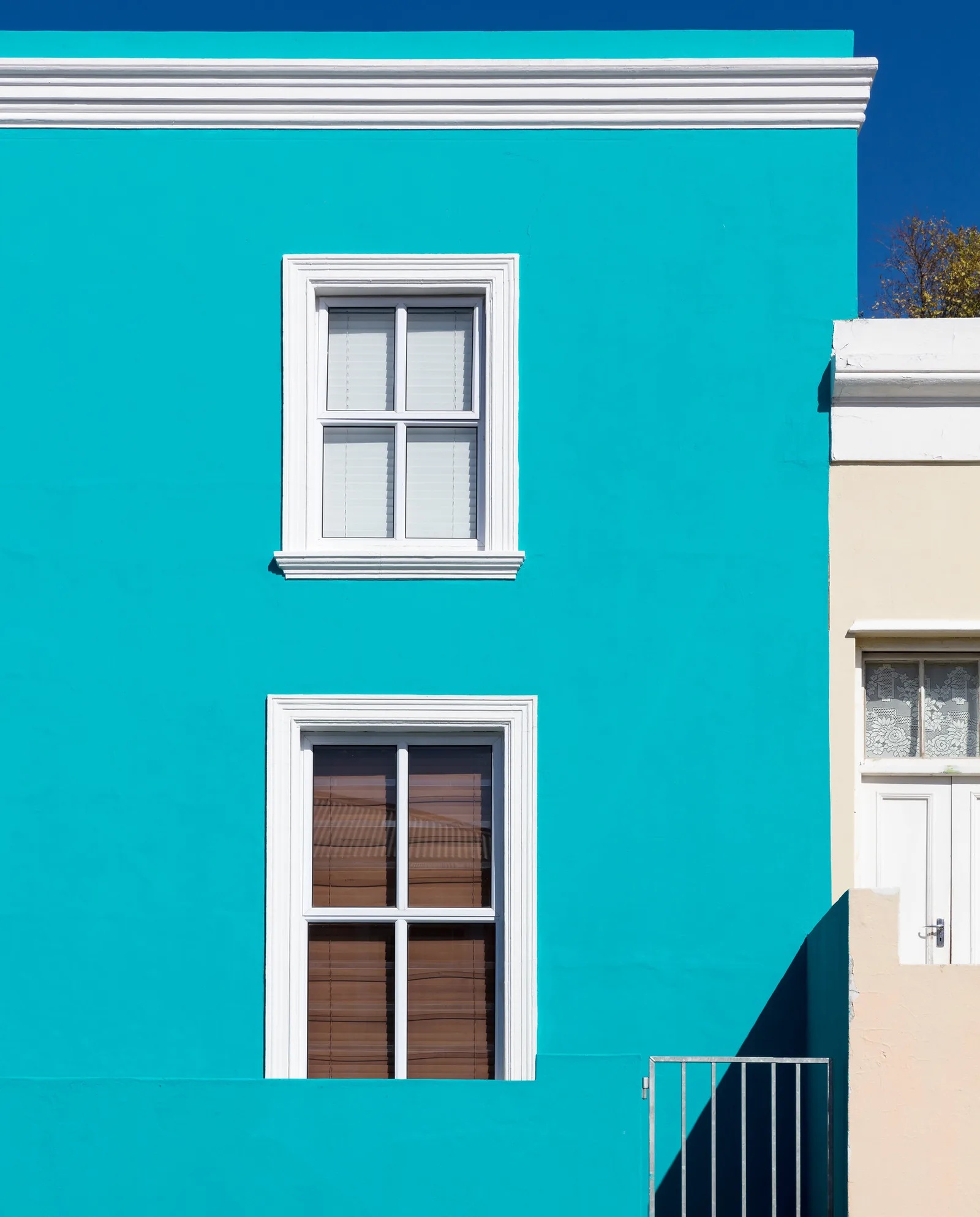
This has a lovely effect on how people shoot. The vertical frame suits people, doorways, trees, street corners, signs and narrow city views. It encourages you to look up and down a scene rather than across it. Many photographers find that half-frame quietly trains them to see vertical compositions they would otherwise miss. Vertical vs horizontal photos explores when each orientation works best.
Look through the viewfinder before your first roll and notice the shape. It takes a few frames to adjust, and then the tall frame starts to feel natural.
Twice the pictures: what that changes
Doubling the number of frames on a roll does more than save film. It changes the rhythm of shooting.
- Less pressure. With seventy or so frames on a roll, you can try an idea, change your angle and try again. That freedom is ideal for learning.
- More of a diary. Half-frame suits everyday life and travel, where many small moments add up to a story. A single roll might cover a whole trip.
- Longer rolls. The flip side is time. A roll can take weeks to finish, and you will wait longer to see your pictures. Some people keep two cameras, one with a fast film for evenings and one with a slower film for bright days.
- More to sort. Twice the frames means twice the culling. That is a good habit to practice, because choosing the best pictures is a skill in itself.
Thinking in pairs
When a half-frame roll is scanned or printed, neighboring frames often appear side by side. Two vertical pictures next to each other make a horizontal image, called a diptych. Sometimes the pairing is accidental and charming; with a little thought it becomes a creative tool.
- Wide and close. Photograph a scene, then step in and photograph a detail from it. Side by side, the pair tells a small story.
- Before and after. A door closed and open, an empty street and the same street with a passing cyclist, a cup full and then empty.
- Color echoes. Pair two frames that share a color: a red door and a red umbrella, blue sky and blue paint.
- Shape echoes. Two circles, two arches, two diagonal lines. Matching shapes across a pair is satisfying to look at.
- Contrast. Light and shadow, old and new, busy and calm.
- A split panorama. Turn the camera sideways, take two frames that overlap slightly, and you may get a single wide view across the pair.
Because you choose the order you shoot in, you choose the pairs. Thinking one frame ahead becomes a quiet, enjoyable game. Pairs also train an eye for sequence, which is at the heart of visual storytelling.
Grain, detail and print size
A half-frame picture is made from half as much film. When it is enlarged to the same size as a full 35mm frame, it has to be magnified more, so grain is more visible and fine detail is softer. That is not a flaw so much as a character. Half-frame pictures tend to have a slightly gritty, intimate, snapshot quality that many people love.
A few practical points follow from the smaller frame:
- Choose film for the light, and lean slower when you can. In good light, a slower, finer-grained film keeps half-frame pictures cleaner. Fast film is perfect for evenings and interiors, with more grain as part of the look. Film stocks compared explains how speed and grain relate.
- Expose generously. Underexposed negatives look grainy on any format and noticeably more so on half-frame. With color negative film, a little extra light is safer than too little.
- Keep prints modest. Small and medium prints from half-frame negatives look lovely. Very large prints will show grain and softness, which may or may not suit the picture.
- Hold steady. Because every flaw is magnified, camera shake shows more. Keep your shutter speed sensible and brace yourself for slower shots.
The kinds of half-frame camera
Half-frame cameras come in a few broad styles, both vintage and modern. They tend to be small, light and simple, which is a large part of their appeal.
- Simple automatic compacts. Many half-frame cameras set exposure automatically and use zone focusing, where you pick a symbol or a distance rather than focusing precisely. Zone focusing explains how to make the most of this.
- Fixed-focus point-and-shoots. The simplest models have a fixed lens and fixed focus, a little like a reusable disposable camera. They work best in good light.
- Cameras with manual control. Some half-frame cameras offer adjustable aperture, shutter speed or both, and a few accept interchangeable lenses. These give more creative control and suit photographers who already understand exposure.
Because the frame is smaller, the lenses on half-frame cameras have shorter focal lengths than on standard 35mm cameras for the same view. A lens that would look normal on a full 35mm frame looks slightly telephoto on half-frame. You do not need to calculate anything; simply look through the viewfinder and see what it includes.
Buying a vintage half-frame camera? Check the light seals, the meter, the shutter and the film advance just as you would with any old film camera. Buying used camera gear and choosing your first film camera both have useful checklists.
Shooting habits that suit the small frame
Half-frame cameras reward a relaxed, observant way of working. A few habits make the pictures noticeably better.
- Hold the camera with both hands. Small cameras are easy to wave around with one hand. Tuck your elbows in and press the shutter gently.
- Get closer than feels natural. Small frames look best when the subject is clear and strong. A face that fills a good part of the frame beats a tiny figure in a big scene. Fill the frame explains why.
- Keep backgrounds simple. Fine detail tends to blur into texture on a small negative, so a busy background competes more with your subject. A plain wall, sky or patch of shade helps.
- Use the light. Side light and soft light bring out shape and texture, which carry well on a small frame. Very flat light can make small pictures look muddy. Direction of light shows what each angle does.
- Check the focus scale. If your camera uses zone focusing, set the distance before you raise the camera. A wrong setting is the most common cause of soft half-frame pictures.
- Do not save frames for later. With so many on a roll, take the picture when you see it.
Projects that suit half-frame
The format practically invites a project. Long rolls and natural pairs lend themselves to ideas that unfold over time.
- A roll a month. Carry the camera everywhere and finish one roll each month. Looking back across a year of rolls is surprisingly moving.
- One street, many visits. Return to the same place in different light, weather and seasons, and build pairs that compare them.
- A travel diary. Let a single roll cover a whole trip. The pairs become pages in a visual journal.
- Color studies. Spend a roll looking only for one color, or for complementary pairs.
- Portraits and places. Pair each person you photograph with a picture of where they were standing.
Looking for a longer project to give your rolls a shape? The 365 photography project explains how daily practice builds a body of work.
Developing and scanning half-frame film
Half-frame film is developed exactly like any other 35mm film, so any lab that handles your film type can develop it. Scanning is where you need to speak up.
- Tell the lab it is half-frame. Write it on the canister and on the order form. A scanner set up for standard frames may cut pictures in half or scan two at a time without warning.
- Ask how they scan it. Some labs scan each half-frame as a single picture, some scan pairs as diptychs, and some offer both. Decide which you would like before you hand over the roll.
- Ask about the negatives. Sleeves hold the same length of film, but with twice as many frames. Ask the lab to keep strips uncut if you plan to scan them yourself later.
- Scan at home if you enjoy it. Home scanning gives you full control over pairs and singles. Scanning film negatives covers the techniques.
The full process, from a finished roll to files on your screen, is explained in getting film developed and scanned.
Sending off your first half-frame roll and unsure what to put on the order form? Getting film developed and scanned explains each option.
Common mistakes
- Forgetting the frame is vertical. Many first rolls are full of tall pictures of wide scenes. Turn the camera sideways for horizontal subjects.
- Not telling the lab. An unlabeled half-frame roll may come back with frames sliced in two.
- Underexposing. Thin negatives look especially grainy on the small frame. Give film plenty of light.
- Treating every frame as disposable. Twice the frames is a gift, but a roll of careless pictures is still a roll of careless pictures.
- Ignoring the pairs. If your lab scans diptychs, random pairings can look jarring. A little thought about order makes them sing.
- Expecting huge prints. Half-frame shines at small and medium sizes. Plan big prints around your best, sharpest frames.
- Leaving a roll in the camera for months. A long roll is tempting to forget. Heat and time affect exposed film, so finish and develop rolls within a reasonable time.
Try this: a 10-minute diptych exercise
With a half-frame camera or any camera at all, practice thinking in pairs.
- Minutes 1 to 2: Choose a small area, such as a street corner, a kitchen or a garden.
- Minutes 3 to 4: Make a vertical picture of the whole scene, then a vertical close-up of one detail in it.
- Minutes 5 to 6: Find two things that share a color and photograph them one after the other.
- Minutes 7 to 8: Find two things that share a shape and do the same.
- Minutes 9 to 10: Make one before and after pair: something changes between the two frames.
If you are shooting digitally, place each pair side by side in any editing app. You will quickly see which pairs work and why, and you will carry that instinct onto your first half-frame roll.
Frequently asked questions
Do half-frame cameras use special film?
No. They use ordinary 35mm film. Only the size of each picture changes.
How many photos do I get on a roll?
About twice the number printed on the box: roughly 72 from a 36-exposure roll and 48 from a 24-exposure roll. A few extra frames are sometimes possible at the start and end.
Is half-frame lower quality than full 35mm?
Each picture holds less detail and shows more grain when enlarged, so it is softer at large sizes. At small and medium sizes the difference is modest, and many people love the look.
Why are my half-frame scans split or doubled?
The scanner was probably set for standard frames. Ask the lab to rescan the roll as half-frame, either as singles or as pairs.
Can I make horizontal pictures on half-frame?
Yes. Turn the camera on its side. The habit feels backward at first, but it soon becomes natural.
Is half-frame good for beginners?
Very. The extra frames reduce the pressure of each shot, and simple half-frame cameras are easy to use. The vertical frame is also a good teacher of composition.
Words such as frame, format and grain are defined in the photography glossary.