Night transforms familiar landscapes into something entirely different. City skylines glow against deep blue skies, car headlights paint ribbons of light through winding roads, and moonlight reveals a subtle, silver world invisible during the day. Night landscape photography bridges the gap between traditional landscapes and night photography, combining compositional skills with technical knowledge of long exposures and high-ISO shooting.
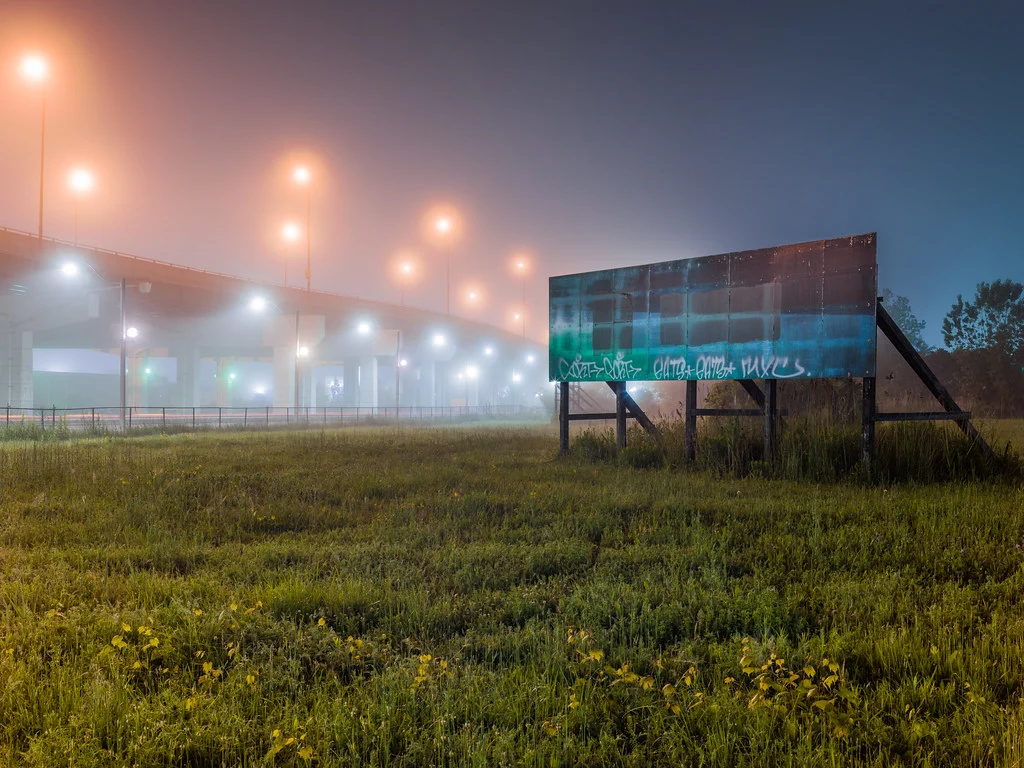
This guide covers the essential techniques for capturing compelling landscape photographs after the sun goes down, from the blue hour transition through full darkness.
Essential Gear for Night Landscapes
A sturdy tripod is non-negotiable for night landscape photography. Exposures of several seconds to several minutes are common, and no amount of image stabilization can compensate for that kind of duration. Invest in a tripod that is stable in wind and on uneven ground.
A remote shutter release or your camera’s built-in timer prevents camera shake when triggering the shutter. Even pressing the shutter button on a tripod-mounted camera can introduce vibration during long exposures.
A headlamp with a red-light mode helps you navigate in the dark without ruining your night vision. Bring extra batteries for your camera, as long exposures and cold temperatures drain them faster. A lens cloth is essential for dealing with condensation that forms on cold glass.
Focusing in the Dark
Autofocus struggles in low light because there is not enough contrast for the system to lock onto. You have several options for achieving sharp focus in the dark.
Manual focus to infinity. Switch to manual focus and turn the focus ring to the infinity mark. On many lenses, infinity is not exactly at the end of the focus ring’s travel, so test this during daylight and note the precise position. Some photographers mark the infinity focus point with a small piece of tape.
Focus on a distant light. If there is a streetlight, building light, or bright star visible, use your autofocus to lock onto it, then switch to manual focus to hold that setting. Any light source at a sufficient distance will be effectively at infinity.
Live View magnification. Switch to Live View, point at the brightest element in the scene, and magnify 5x or 10x. Manually adjust focus until the bright point is as sharp as possible. This is the most precise method for night focusing.
Capturing Light Trails
Vehicle light trails are one of the most popular night landscape subjects. As cars move through the scene during a long exposure, their headlights and taillights create continuous ribbons of white and red light that trace the road’s path through the landscape.
Choose a vantage point that shows a sweeping curve of road, an elevated highway, or a bridge. Set your camera to a small aperture (f/8 to f/16) and use a shutter speed long enough to capture several vehicles passing through the scene, typically 10 to 30 seconds. Busy roads produce dense, overlapping trails, while quieter roads create isolated streaks.
Experiment with even longer exposures of several minutes using your camera’s Bulb mode. Multiple vehicles during a long exposure create complex patterns of crossing and merging light trails that give the image energy and movement.
Moonlit Landscape Techniques
A full moon illuminates the landscape with enough light to create surprisingly detailed photographs. Moonlit landscapes have a unique quality that looks like daylight but with longer shadows, cooler tones, and visible stars in the sky above.
Under a full moon, typical settings might be ISO 800-3200, f/2.8 to f/4, and 15 to 60 seconds depending on the scene. The moon rises and sets like the sun, so plan your shoot around the moon’s position and phase. A moon that is low on the horizon provides directional lighting that creates depth and shadows across the terrain.
Be aware that exposures longer than about 20-25 seconds will show star movement as slight trails rather than pinpoints. If you want sharp stars along with your moonlit landscape, keep exposures under this threshold and compensate with wider apertures and higher ISO.
Blue Hour to Night Transitions
The blue hour, the period of deep blue twilight about 20-40 minutes after sunset (or before sunrise), produces some of the most stunning conditions for night landscapes. During this window, the sky retains rich blue color and enough ambient light to illuminate the landscape, while city lights and streetlights are already glowing.
This brief window offers the best balance of sky color and artificial light. Buildings with interior lights, bridges with decorative lighting, and cityscapes all look their best when the sky still provides a colorful backdrop rather than pure black.
Arrive early and set up before the blue hour begins. It moves quickly, and the optimal conditions may last only 15 to 20 minutes. Shoot continuously through this transition, adjusting your exposure as the light fades. You will likely need to increase ISO or lengthen your exposure every few minutes as darkness deepens.
Managing Noise at High ISO
Night photography often requires high ISO settings, which introduce digital noise (grain) into your images. Modern cameras handle high ISO much better than older models, but noise management is still an important consideration.
Use the lowest ISO that gives you a usable exposure. If you can use a longer shutter speed instead of a higher ISO, do so. Shoot in RAW format, which preserves more data for noise reduction in post-processing. In-camera long exposure noise reduction can help but doubles your capture time for each shot.
Image stacking is a powerful technique for reducing noise without losing detail. Take multiple identical exposures of the same scene and combine them in software. The random noise patterns in each frame cancel out when averaged together, resulting in a much cleaner final image. This technique works well for static subjects like buildings and terrain.
Light Painting the Foreground
In night landscapes, foreground elements like rocks, trees, or fences often fall into complete shadow. Light painting involves using a flashlight or headlamp to manually illuminate these elements during a long exposure.
During an exposure of 15 seconds or longer, sweep a flashlight across the foreground elements. Move the light continuously to avoid creating hot spots. A warm-toned light adds a golden glow that contrasts nicely with the cool blue tones of the night sky.
Practice is essential. The amount of light needed depends on the power of your flashlight, its distance from the subject, and the exposure settings. Start with brief, gentle sweeps and review the results, adjusting on the next exposure. With practice, light painting becomes an intuitive way to add dimension and interest to night landscapes.
Exposure Settings and Long Exposure Techniques
Night landscape exposures vary enormously depending on available light. At blue hour, you might use ISO 200, f/8, and 2 seconds. Under a full moon, ISO 1600, f/4, and 20 seconds. In remote areas with no moonlight, ISO 6400, f/2.8, and 25 seconds.
Use your camera’s histogram to evaluate exposure rather than the LCD preview, which can be misleading in the dark. A histogram shifted slightly to the right (without clipping highlights) captures the most data and produces the cleanest results when brightened in post-processing. This technique, sometimes called “exposing to the right,” is especially useful for night photography.
For very long exposures (several minutes), use Bulb mode with a remote shutter release. Keep notes on your exposure times so you can make informed adjustments. Night photography involves more trial and error than daylight shooting, and keeping records accelerates the learning process. Check best camera settings for night photography for more detailed starting points.
Common Mistakes in Night Landscape Photography
Forgetting to check focus. An entire night shoot can be ruined by slightly soft focus that is invisible on the small LCD screen but obvious when viewing images at full size. Zoom in on your LCD to 100% on the first few shots to confirm sharpness.
Not bringing enough batteries. Cold weather and long exposures drain batteries rapidly. Bring at least two fully charged batteries and keep spares warm in an inside pocket.
Arriving too late. The best night landscape conditions occur during the blue hour transition. If you arrive after the sky is completely dark, you miss the most photogenic window. Plan to be set up at least 30 minutes before the time you want to start shooting.
Ignoring the foreground. A compelling sky over a featureless black foreground is only half an image. Use light painting, choose a location with interesting foreground elements, or time your shoot when moonlight illuminates the terrain.
Frequently Asked Questions
What is the best time to photograph landscapes at night?
The blue hour (20-40 minutes after sunset or before sunrise) offers the best balance of sky color and artificial light. For pure night shots, a night with a quarter to full moon provides enough light to illuminate the landscape while still allowing some stars to be visible.
How do I avoid star trails in night landscape photos?
The old “500 rule” (divide 500 by your focal length for the maximum exposure time in seconds) was designed for lower-resolution cameras and lets modern high-resolution sensors show visible star trailing. Use the stricter 200-300 rule instead: divide 200 (high-resolution sensors) or 300 (lower-resolution sensors) by your focal length. For a 24mm lens that is roughly 8 to 13 seconds, not the 20 seconds the old rule suggests. Wider lenses allow longer exposures without trailing. Check your first frame at 100% zoom and shorten the shutter speed if the stars are not tight points.
Do I need a full-frame camera for night landscapes?
Full-frame sensors generally perform better at high ISO settings, which is an advantage for night photography. However, modern crop-sensor cameras produce excellent results at ISO 1600-3200. Good technique with any camera will outperform poor technique with the most expensive equipment.
How is night landscape photography different from astrophotography?
Astrophotography focuses primarily on celestial objects like the Milky Way, nebulae, and star fields. Night landscape photography emphasizes the terrain, buildings, or environment with the night sky as context. The techniques overlap, but night landscapes prioritize the earthbound elements over the sky.