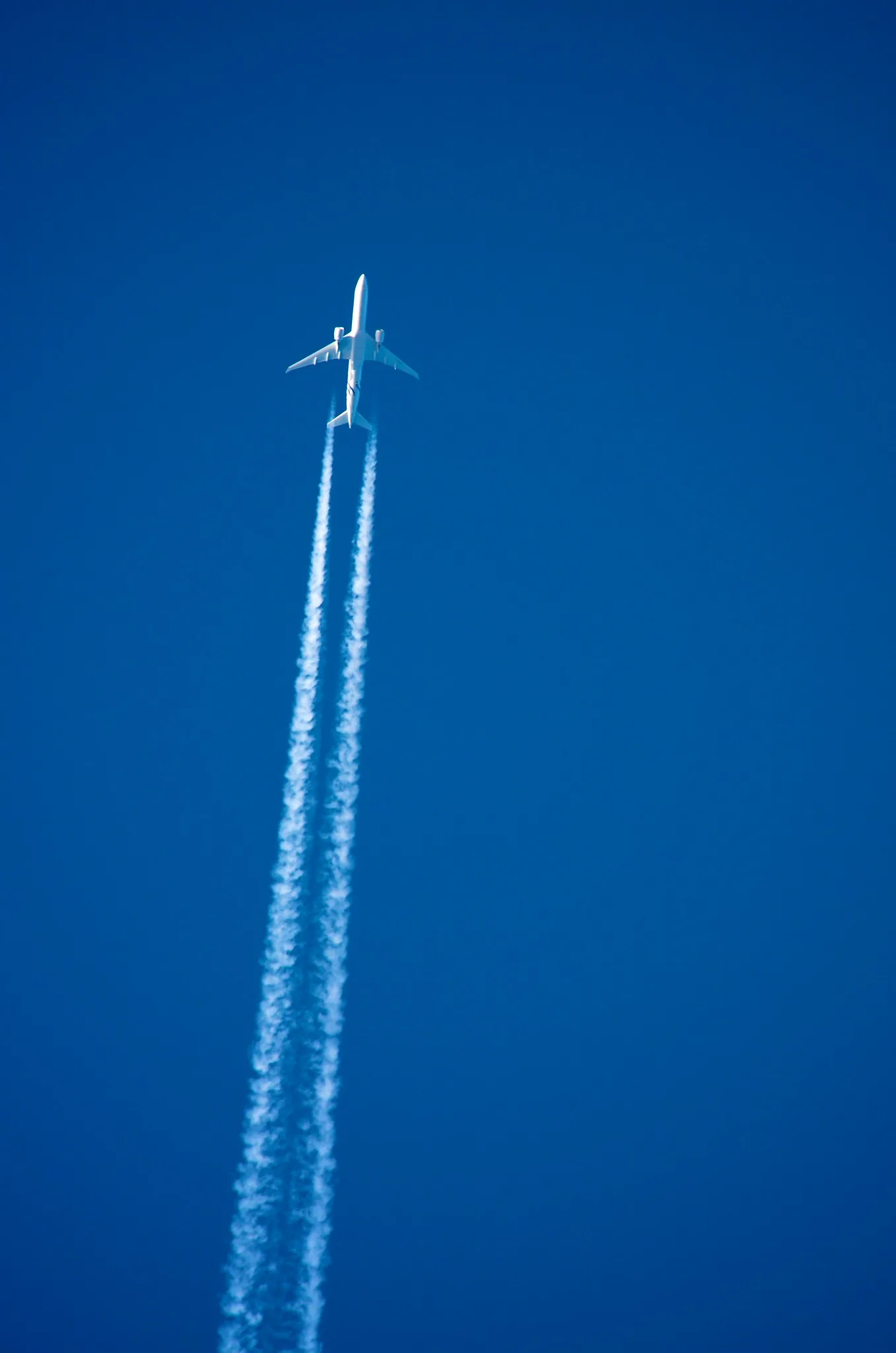
Airplanes are everyday marvels. A jet drawing white lines across a blue sky, a float plane skimming over a harbor, a passenger plane lifting off at sunset or the view of clouds from a window seat all capture the wonder of flight. Airplane photography covers planes overhead, near airports, on the water and from the air, and it is a wonderful way for beginners to practice tracking moving subjects, reading light and finding fresh compositions in the sky.
This beginner guide covers why planes make great subjects, planes overhead, contrails, plane spotting near airports, takeoffs and landings, seaplanes and small aircraft, planes with landmarks, light and weather, window seat views, safety and rules, settings, phones, editing, common mistakes and a short practice exercise. For fast flying displays, see the guide to air show photography.
Why airplanes make great subjects
Planes offer graceful shapes, motion and a sense of adventure, often right above your head.
- Clean shapes. Wings, tail and fuselage make elegant silhouettes against the sky.
- Motion. Planes are perfect for practicing tracking, panning and timing.
- Contrails. White trails across blue skies create bold, graphic lines.
- Travel stories. Airports, gates and window views tell the story of a trip.
- Everywhere. Almost every place has planes passing overhead.
You do not need special access to start. A clear day, a camera with some zoom and a little patience in a park under a flight path can produce wonderful pictures.
Kinds of aircraft
Different aircraft suggest different pictures. Large passenger jets show grace and scale, especially on approach with gear down. Regional jets and turboprops fly lower and slower, which makes them easier to frame. Small private planes and gliders suit pictures of personal adventure. Float planes and seaplanes add water and splashes. Helicopters hover and turn, which gives you time to compose. Vintage aircraft at museums and fly ins show rich colors and history. Learning to recognize a few shapes helps you predict how each will move.
Planes overhead
The simplest airplane picture is a plane in the open sky. Make it count with careful composition.
- Use a long lens. A telephoto brings high planes close enough to show their shape.
- Leave space. Give the plane room to fly into the frame.
- Clean skies. A deep blue sky or a few white clouds make simple, striking backgrounds.
- Use the moon. A plane crossing the moon is a rare and rewarding picture that needs planning and patience.
- Vertical frames. Portrait orientation suits planes with long contrails behind them.
A small plane alone in a big empty sky can be a powerful minimal picture. Place it on a third line and let the space tell the story. The guide to minimalist photography explains how empty space can strengthen a picture.
Patience pays off overhead. Many planes pass at similar heights and angles, so watch a few go by to learn the pattern, then pick a spot where a tree branch, rooftop or cloud makes a better frame for the next one.
Contrails
Contrails, the white trails left by high flying jets, turn the sky into a canvas.
- Look up on cold, clear days. Contrails form best when high air is cold and moist.
- Follow the line. Use the trail as a leading line toward the plane.
- Crossing trails. Several contrails crossing make patterns and shapes.
- Sunset contrails. Trails catch warm light after sunset, glowing pink and orange.
- Silhouettes. A contrail above a tree, tower or mountain adds a sense of place.
A polarizing filter deepens blue skies and makes white contrails stand out, though it works best at right angles to the sun. The guide to polarizing filters explains how to use one.
Plane spotting near airports
Plane spotters photograph aircraft near airports, and many airports have public viewing areas that welcome them.
- Viewing areas. Many airports have public parks, decks or hills with good views of runways.
- Approach paths. Planes on final approach fly low and predictable routes.
- Wind direction. Planes take off and land into the wind, which tells you which runway is in use.
- Sun position. Choose a spot with the sun behind you so planes are well lit.
- Flight tracking. Flight tracking apps show which planes are arriving and when.
Respect airport rules and boundaries at all times. Never photograph from restricted areas or climb fences, and be ready to explain your hobby politely to security if asked. Local spotter groups often know the best legal locations.
Airports and travel stories
Airports themselves are full of pictures. Large windows frame planes at the gate against the sky. Long corridors, moving walkways and departure boards make strong lines and patterns. Travelers waiting with coffee, watching planes or sleeping on benches tell quiet stories of journeys. Reflections in terminal glass can layer planes and people together. Keep pictures of strangers small and respectful, and follow any rules about photographing security areas, which are usually off limits.
Takeoffs and landings
The moments when planes leave or touch the ground are the most dramatic.
- Fast shutter speed. Use 1/1000 second or faster to freeze jets.
- Continuous autofocus. Track the plane as it moves toward or across you.
- Burst mode. Shoot short bursts as the wheels lift or touch down.
- Rotation. The moment the nose lifts on takeoff makes a dynamic angle.
- Heat haze. Hot runways cause shimmer. Shoot early in the day or closer to the plane.
For propeller planes, a slower shutter speed of around 1/250 or 1/125 second blurs the propeller into a disk and shows motion, while a fast speed freezes the blades and makes the plane look parked in the air. The guide to panning photography explains how to follow a moving subject smoothly.
Seaplanes and small aircraft
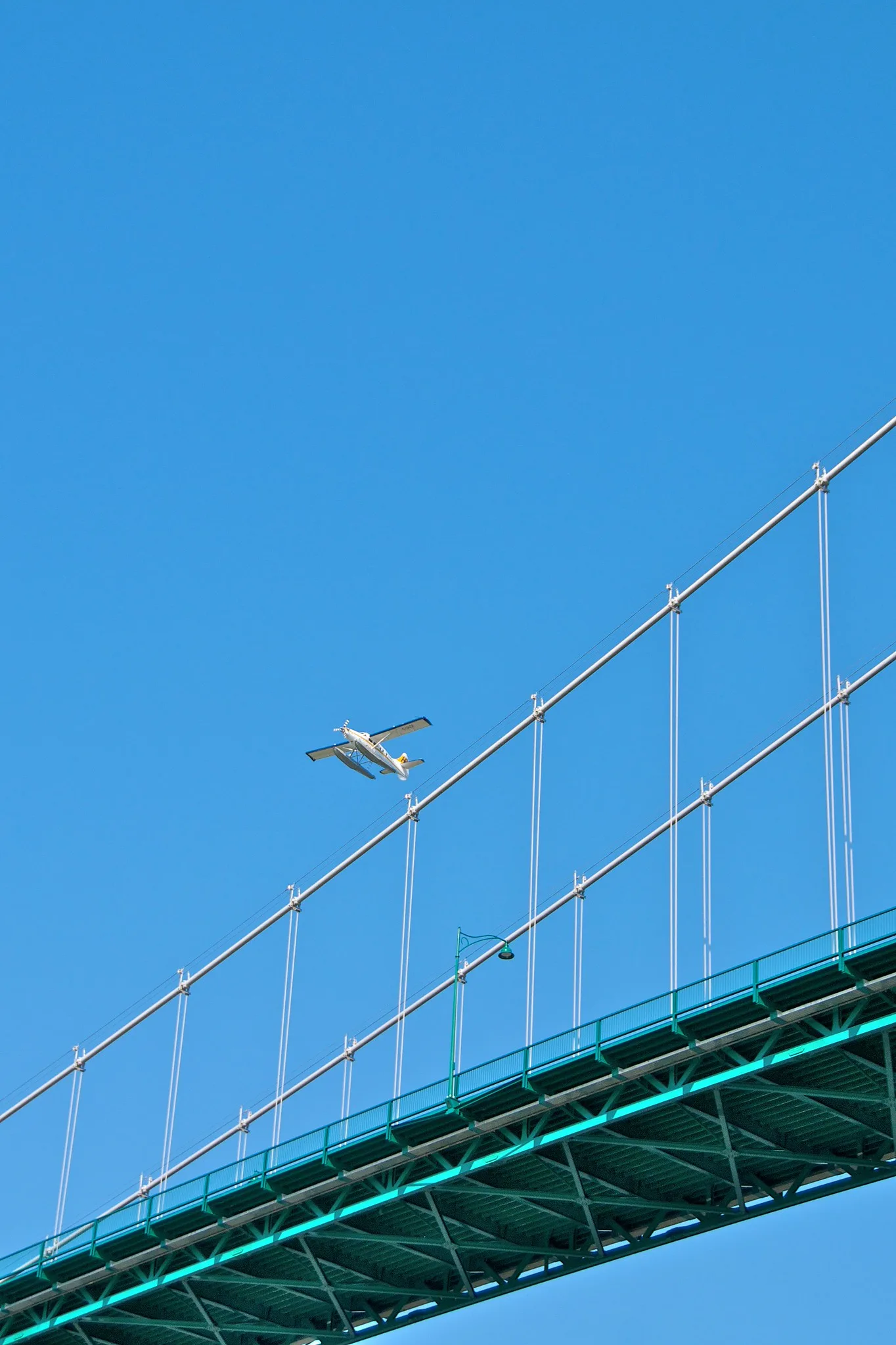
Float planes, bush planes and small private aircraft offer a gentler, more personal kind of airplane photography.
- Harbors and lakes. Float planes take off and land on water, creating splashes and wakes.
- Docks. Planes tied up at a dock make colorful, close subjects.
- Small airfields. Local airfields and fly ins often allow close views of light aircraft.
- Mountain scenery. Small planes flying past peaks or glaciers show adventure and scale.
- Pilots and crew. With permission, people preparing for flight add story.
Water takeoffs are especially photogenic. Watch for spray behind the floats and the moment the plane lifts free of the water.
Harbors with float plane docks are often public waterfronts, so you can watch arrivals and departures from a seawall or pier. Learn the schedule, note which way the wind is blowing and position yourself where planes will pass with the water, boats and shoreline behind them. A plane reflected in calm morning water can make a lovely, peaceful picture.
Planes on the ground
Parked aircraft at museums, open days and small airfields let you slow down and study shape and detail. Walk around the plane to find a three quarter view that shows the nose and wing together. Get low to make the plane look powerful against the sky. Move closer for details such as rivets, propellers, painted numbers, cockpit gauges and faded nose art. Soft, overcast light shows shiny metal without harsh reflections, while golden hour adds warmth to painted surfaces. Always ask before touching or climbing on any aircraft.
Planes with landmarks
A plane alone shows flight. A plane with a landmark shows place.
- Bridges. A plane crossing above a bridge creates lines and scale. See the guide to bridge photography.
- Skylines. Planes on approach over a city show the connection between travel and place.
- Towers and monuments. Line up a plane beside a famous structure for a travel picture.
- Mountains. A plane above snowy peaks feels adventurous.
- Moon and sun. A plane crossing the moon or setting sun needs planning and a long lens.
Find your position first, frame the landmark and wait for a plane to fly through the gap. Patience is the key, since many planes will pass in the wrong place before one lines up perfectly.
Composition ideas
Try a few approaches each time you photograph planes. Fill the frame with the underside of a low jet for a dramatic, graphic view. Place a tiny plane in a huge sky for a calm, minimal picture. Use a contrail as a diagonal line across the frame. Frame a plane between two trees, cables or buildings. Show a plane small above a landscape, such as a beach, city or mountain range. Each choice tells a different story, from power and speed to freedom and distance.
Light and weather
- Front light. Sun behind you lights the plane evenly and shows colors.
- Golden hour. Warm low light makes metal glow.
- Backlight. Planes against a bright sky become silhouettes.
- Dramatic clouds. A plane against storm clouds adds mood.
- Night. Landing lights and long exposures create streaks of light over runways.
Bright skies can fool the camera into making planes too dark. Add a little exposure compensation or expose for the plane itself.
Planes at night
After dark, planes become streaks of light. On a tripod, an exposure of several seconds to a minute turns a landing or departing plane into lines of white and red light across the sky. Choose a spot with the runway approach in view, frame a landmark or skyline and start the exposure as the plane appears. Blue hour, just after sunset, keeps some color in the sky. The guide to light trails explains long exposure technique for moving lights.
Window seat views
Some of the best airplane pictures are taken from inside one.
- Choose your seat. A window seat ahead of or behind the wing gives a clear view.
- The wing. Including part of the wing tells viewers they are in the air.
- Clouds and coasts. Takeoff and landing give the best views of land, water and cities.
- Reduce reflections. Put the lens close to the window and shade it with your hand or a dark cloth.
- Sunrise above clouds. Early flights can show spectacular light above the cloud layer.
Follow crew instructions about devices during takeoff and landing. The guides to aerial photography and photographing through glass cover window views in more depth.
Want to see the world from above? The aerial photography guide covers flights, drones and high viewpoints.
Look for patterns below as you fly: fields like patchwork quilts, rivers winding through valleys, the grid of city streets and the soft tops of clouds. Turning off the cabin screen and wearing dark clothing helps reduce reflections in the window.
Safety and rules
- Respect boundaries. Stay in public areas and follow all airport signs.
- Be polite. If security asks what you are doing, explain calmly and cooperate.
- No drones near airports. Flying drones near airports is dangerous and usually illegal.
- Watch traffic. Roads near airports can be busy. Park legally and stay off the shoulder.
- Protect your eyes. Never look at the sun through a lens when tracking planes near it.
Settings and lenses
- Telephoto lens. Essential for planes overhead and on runways.
- Wide lens. Window seat views and planes on the ground.
- Shutter speed. 1/1000 or faster for jets, slower for propeller blur.
- Aperture. f/5.6 to f/8 for sharp aircraft.
- Focus. Continuous autofocus with a group of points.
- ISO. Auto ISO helps keep shutter speeds fast as light changes.
Using a phone
Phones work well for window views, planes on the ground and contrails across wide skies. Use the longest built in lens for planes overhead, and burst mode for takeoffs. Tap on the plane to set focus and exposure, and keep the phone steady against the window when flying.
Editing airplane photos
Straighten the horizon in scenes that include land or water. Crop to place the plane well, leaving space in front. Lower highlights to save bright clouds and lift shadows on the plane’s belly. Remove dust spots, which show clearly against plain skies. Keep blue skies natural rather than overly saturated.
Common mistakes
- Tiny planes. Use a longer lens or wait for closer passes.
- Dark planes. Add exposure compensation against bright skies.
- Cramped framing. Leave space for the plane to fly into.
- Heat haze. Shoot early or closer to avoid shimmer.
- Ignoring rules. Stay in public, legal places.
- Window reflections. Press close to the glass and shade the lens.
Try this: a 10-minute sky watch
On a clear day, find an open spot under a flight path and spend ten minutes watching the sky.
- Set a fast shutter speed and continuous focus.
- Photograph one plane alone in open sky, leaving space in front.
- Find a contrail and use it as a leading line.
- Frame a tree, building or bridge and wait for a plane to pass beside it.
- Review your frames and choose the cleanest composition.
Return at sunset to see how warm light changes the same scene.
Curious about photographing the stars and sky at night? The guide to star trail photography covers long exposures of the night sky.
Frequently asked questions
What shutter speed is best for airplanes?
1/1000 second or faster for jets, and around 1/250 for propeller planes to blur the blades.
Is it legal to photograph planes near airports?
Usually yes from public areas. Follow all signs, stay outside restricted zones and cooperate with security.
What lens do I need for plane spotting?
A telephoto zoom is most useful, since planes are often far away.
How do I photograph out of an airplane window?
Choose a window seat away from the wing center, press the lens close to the glass and shade reflections.
How do I photograph contrails?
Look up on cold, clear days, use the trail as a leading line and try a polarizer to deepen the blue sky.
Can I photograph a plane crossing the moon?
Yes, with planning. Find a spot under a flight path when the moon is up, use a long lens and wait patiently.
Fascinated by fast movement? The guide to photographing moving subjects covers tracking and timing.
For terms such as contrail, panning and continuous autofocus, see the photography glossary.