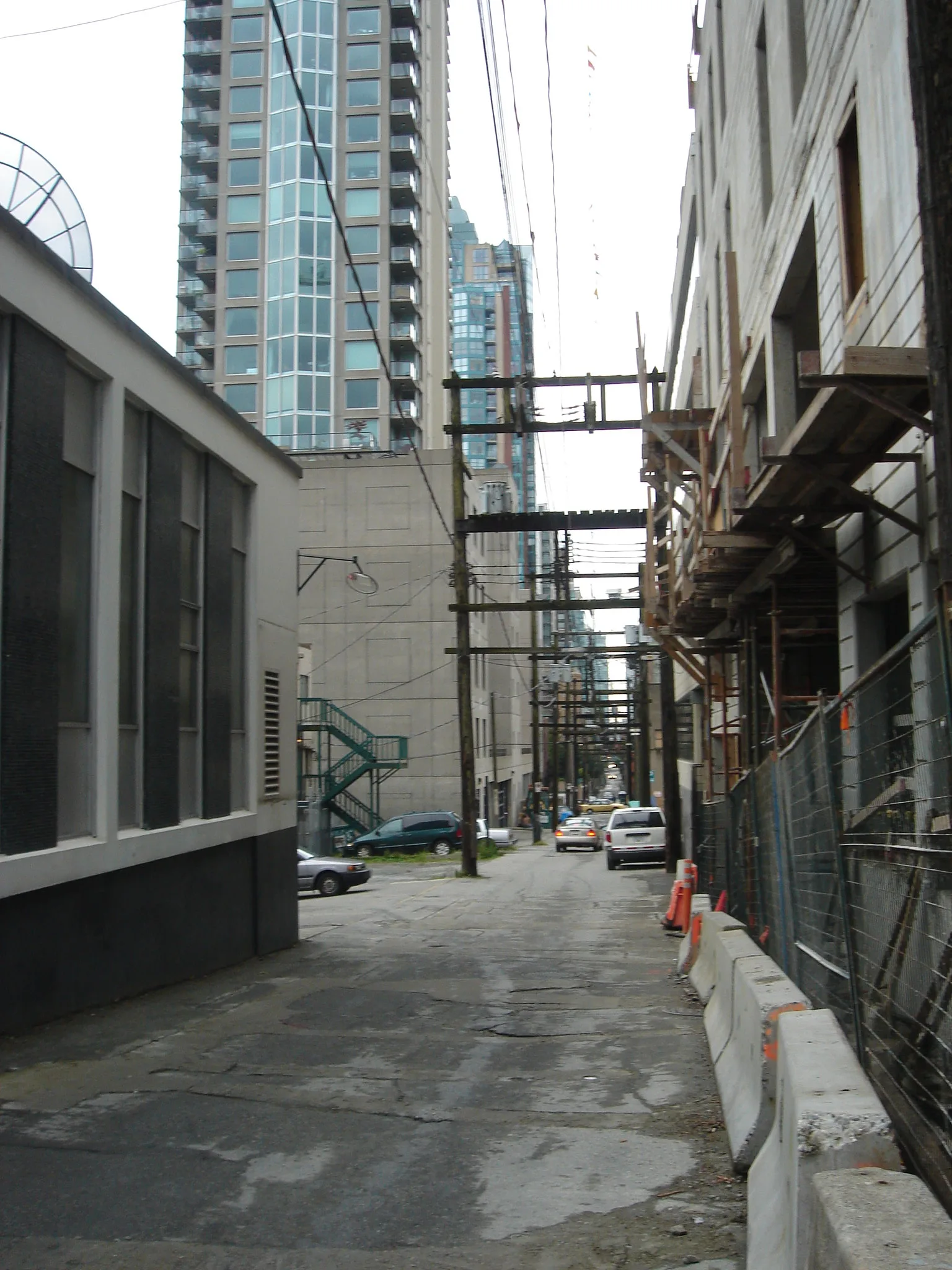
Behind the main streets of every town lies a second, quieter city of alleys, lanes and back streets. Fire escapes zigzag up brick walls, power lines crisscross overhead, murals and graffiti brighten old doors and narrow strips of light fall across worn pavement. Alley photography is about seeing beauty in the overlooked places, and it is one of the best ways for beginners to practice lines, light, texture and mood without traveling far from home.
This beginner guide covers why alleys make great subjects, finding them, leading lines and depth, light and shadow, texture and color, framing, alleys at night, rain and weather, people, details, safety and respect, settings, phones, editing, common mistakes and a short exercise. It pairs well with the guide to street photography.
Why alleys make great subjects
Alleys pack a lot of visual interest into a small space. They are often quieter than busy streets, which gives you time to compose carefully and wait for the right light.
- Strong lines. Walls, wires, gutters and pavement all converge toward a vanishing point, creating instant depth.
- Dramatic light. Tall buildings on both sides create bright slices of sun and deep pools of shadow.
- Texture. Brick, peeling paint, rusty doors and cracked concrete reward close looking.
- Character. Back doors, delivery ramps, hanging signs and fire escapes show how a city really works.
- Color. Murals, painted doors and neon signs pop against gray walls.
Many alleys change completely from morning to night, from dry to wet and from summer to winter. Returning to one lane again and again teaches you a great deal about light and mood.
Finding good alleys
Every town has alleys, but some are far more photogenic than others.
- Old town centers. Historic districts often have narrow lanes, archways and courtyards with plenty of character.
- Arts districts. Many cities have alleys filled with murals and street art. See the guide to mural photography.
- Restaurant rows. The lanes behind busy dining streets have lights, signs, steam and activity.
- Small towns. Brick passageways between storefronts make charming frames into the street beyond.
- Hillside towns. Stepped lanes and stairways wind between houses in many older towns.
Walk slowly and look down every side street as you pass. Some of the best alleys are hidden behind ordinary buildings, and the view from one end can be completely different from the view from the other. Note which way an alley runs, since that tells you when sunlight will fall into it.
Stairways, passages and courtyards
Not every alley is a straight lane between walls. Covered passages tunnel through buildings, stepped lanes climb hillsides and small courtyards open unexpectedly behind gates. These spaces often have the most interesting light, since a single opening lets in a pool of sun. Stairways make strong diagonals and invite the viewer upward, while tunnels and arches create natural frames. Pause at each turn, since the view around the corner may be the picture you were looking for. The guide to staircase photography has more ideas for steps and stairs.
Leading lines and depth
Alleys are natural lessons in leading lines.
- Stand in the middle. A centered view makes walls converge symmetrically toward the far end.
- Step to one side. Standing near one wall turns it into a strong diagonal that sweeps through the frame.
- Look up. Power lines, fire escapes and the sliver of sky between rooftops make lines overhead.
- Look down. Gutters, cobblestones and painted lines on the pavement lead the eye forward.
- Give it a destination. A bright opening, a distant tower or a person at the end gives the lines somewhere to go.
A wide lens exaggerates depth and makes the walls rush away, while a longer lens compresses the alley so layers of signs, wires and buildings stack together. Try both from the same spot. The guide to leading lines explains why these lines work so well.
Light and shadow
Light in an alley is often dramatic and changes quickly.
- Slices of sun. At certain hours, a single beam of light falls between buildings. Watch for it and be ready.
- Open shade. Much of an alley sits in soft shade, which is lovely for texture and color.
- Bounced light. Sun hitting one wall reflects warm light onto the opposite wall.
- Backlight. Looking toward a bright street at the end of a dark alley creates silhouettes and glowing edges.
- Midday. In narrow north and south alleys, the sun may only reach the ground around noon.
Expose for the brightest important area, so a sunlit wall does not turn pure white. Deep shadows can stay dark and mysterious. The guide to shadow photography has more ideas for working with strong contrast.
Spend a few minutes simply watching how the light moves. A beam of sun creeping down a wall, across a doorstep and onto the pavement can give you several different pictures in a short time. If someone walks through the beam, you may catch a striking moment of light and shadow that lasts only a second.
Texture and color
Alleys are full of surfaces worn by time and weather.
- Brick and stone. Old walls show patterns, patches and repairs.
- Peeling paint. Layers of old color flake away to reveal history.
- Rusty metal. Doors, pipes, drains and dumpsters show warm orange rust. See the guide to rust photography.
- Graffiti and murals. Bright colors and bold shapes enliven gray lanes.
- Painted doors. A single red or blue door in a gray wall becomes a strong focal point.
Side light brings out texture, so look for walls where the sun skims across the surface. Fill the frame with a wall for an abstract picture, or include a door or window to give it a sense of place.
Color in alleys often comes in small doses. A green door, a yellow pipe, a bright sticker or a pot of red flowers can lift an otherwise gray scene. Place that spot of color carefully in the frame, often on a third line, so it draws the eye without overwhelming the picture.
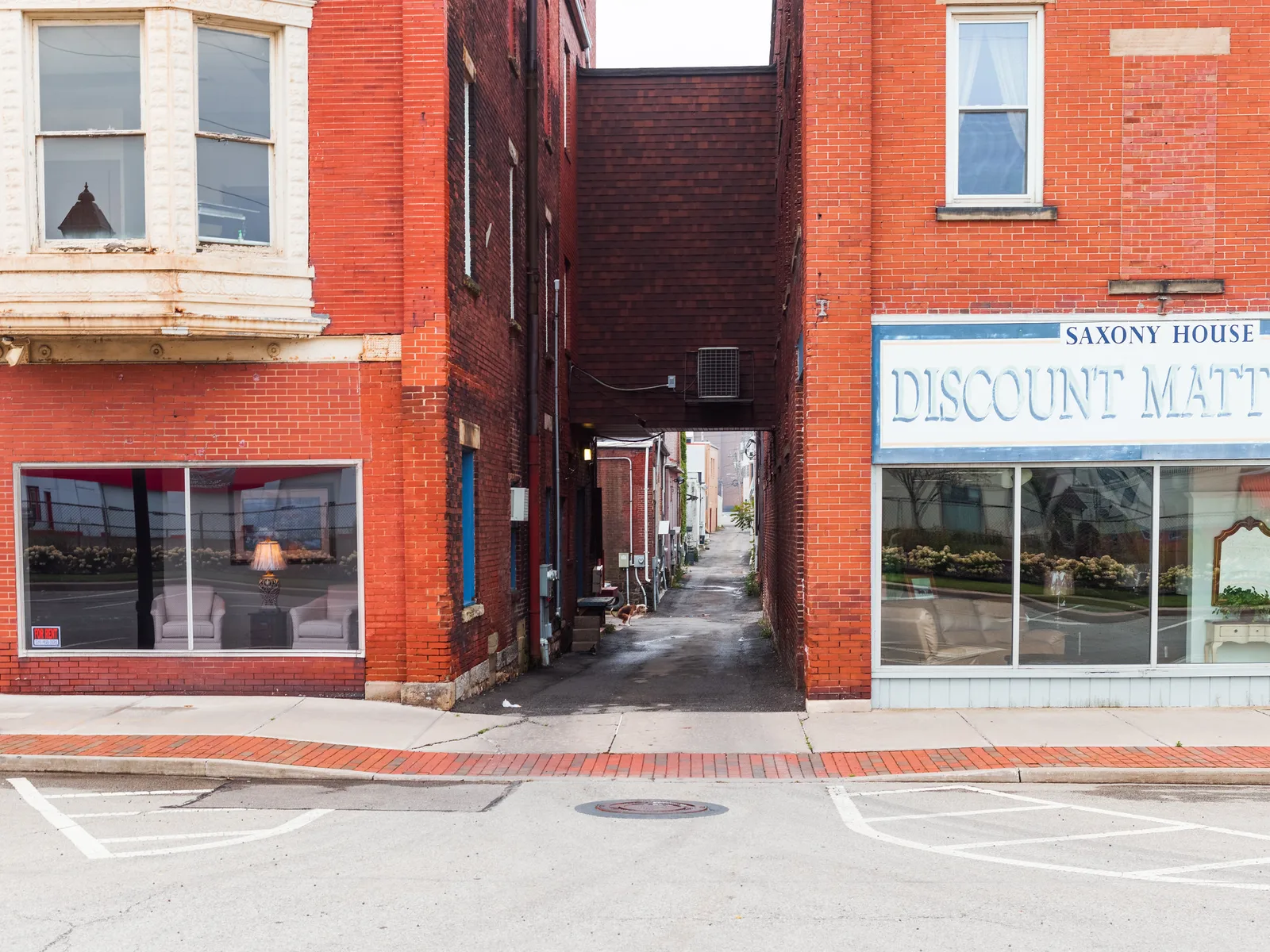
Framing and layers
Alleys offer many ways to frame a scene.
- Looking in from the street. The gap between two buildings frames the alley like a doorway.
- Looking out from inside. The bright street at the end of a dark lane makes a glowing frame.
- Archways. Covered passages and arches frame the view beyond.
- Fire escapes and stairs. Metal stairs and railings make geometric frames.
- Layers. Signs, wires, balconies and lamps at different distances add depth.
Look for a clear foreground, middle ground and background. A doorstep or crate in front, a person in the middle and a bright street at the end gives a rich, layered picture. The guide to framing in photography explains more.
Alleys at night
At night, alleys become moody, cinematic places.
- Pools of light. A single lamp over a back door makes a dramatic spotlight.
- Neon and signs. Glowing signs paint walls and puddles with color. See the guide to neon sign photography.
- Steam and haze. Vents and kitchen exhausts add atmosphere that catches the light.
- Mixed light. Warm lamps and cool signs create a striking color contrast.
- Silhouettes. A figure walking past a lit doorway makes a strong graphic shape.
Raise the ISO, use a wide aperture or rest the camera on something steady. A tripod lets you use low ISO and longer exposures for empty, atmospheric scenes. Only visit at night where you feel safe, ideally with a friend.
Blue hour, the short time after sunset when the sky is deep blue, is a great moment for alleys. There is still enough light in the sky to show the shape of rooftops and wires, while lamps and windows begin to glow warmly against the cool tones.
Drawn to cities after dark? The guide to night street photography covers light, color and mood in the evening streets.
Rain and weather
Bad weather is good weather in alleys.
- Wet pavement. Rain turns the ground into a mirror that reflects lights and signs.
- Puddles. Low angles over puddles double walls, lamps and people.
- Fog. Mist softens the far end of the alley and adds mystery.
- Snow. Fresh snow simplifies a messy lane into clean shapes and lines.
- Umbrellas. A person with an umbrella adds color and story.
Protect your camera with a simple rain cover or plastic bag, and shoot from under an awning or doorway when the rain is heavy. The moments right after a storm, when the ground is still wet and the light returns, are often the best.
Alleys through the seasons
The same alley can look completely different through the year. Summer brings flower boxes, open doors and long evenings of soft light. Autumn scatters bright leaves on dark pavement. Winter adds snow on fire escapes, icicles on gutters and the warm glow of windows on early evenings. Spring rain leaves puddles that mirror the walls. Photographing one favorite alley in every season makes a lovely series and teaches you how much weather and light change a familiar place.
People in alleys
A person adds life, scale and story to an alley.
- Wait for someone. Compose the scene, then wait for a walker or cyclist to pass through the light.
- Small figures. A distant person at the end of the alley shows scale and keeps privacy.
- Workers. Cooks on a break, delivery drivers and shopkeepers are part of alley life. Ask before close portraits.
- Silhouettes. Backlit figures keep the picture anonymous and graphic.
- Portraits. Alleys make great portrait backdrops with textured walls and soft shade.
Be friendly, smile and respect anyone who does not want to be photographed. Alleys are working spaces and sometimes people’s homes, so be considerate and discreet.
Details
Move closer to find smaller pictures within the alley. Old doorbells, hand painted signs, tangled cables, numbered back doors, rusty drainpipes, flower pots on a step and cats sleeping on crates all tell stories. A set of details next to a wide view creates a full portrait of the lane. Look up for laundry lines, shutters and balconies, and look down for manhole covers, painted arrows and cobblestones.
Building an alley series
Alleys work beautifully as a collection. Try photographing every alley in one neighborhood from the same centered viewpoint, so the differences in walls, light and color stand out side by side. Or choose a theme, such as back doors, fire escapes or alley cats, and gather examples over many walks. A series turns scattered pictures into a story about a place, and it gives you a reason to keep exploring. The guide to creating a photo series explains how to plan and edit a set of pictures.
Safety and respect
- Trust your instincts. If an alley feels unsafe, leave and come back another time.
- Go with a friend. Especially at night or in unfamiliar areas.
- Watch for vehicles. Delivery trucks and cars use alleys. Do not block them.
- Respect private property. Do not enter gated yards, loading docks or private courtyards without permission.
- Be discreet. Keep gear simple and avoid photographing people in vulnerable situations.
Settings and lenses
- Wide lens. Emphasizes converging walls and depth.
- Standard lens. Natural views and portraits.
- Telephoto lens. Compresses layers of signs, wires and buildings.
- Aperture. f/8 for depth in daylight, wider at night or for portraits.
- Shutter speed. At least 1/125 for walkers, slower on a tripod for night scenes.
- ISO. Low in daylight, higher at night and in deep shade.
Using a phone
A phone is perfect for alleys, since it is small and discreet. Turn on the grid to keep walls straight, tap on the brightest area to set exposure and try the ultra wide lens for dramatic depth. Night mode handles dim lanes surprisingly well. Hold the phone low over puddles for reflections.
Editing alley photos
Straighten verticals first. Lower highlights to save bright skies and sunlit walls, and lift shadows just enough to show detail while keeping mood. A touch of clarity brings out texture. Alleys often suit black and white, which emphasizes lines and light. In color, keep neon and murals vivid but natural.
Common mistakes
- No destination. Give the lines something to lead to, such as light, a person or a landmark.
- Blown highlights. Expose for bright walls and skies.
- Crooked walls. Keep the camera level.
- Ignoring the light. Return when sun falls into the alley.
- Intruding. Respect workers, residents and private spaces.
- Only shooting wide. Details and compressed views add variety.
Try this: a 10-minute alley walk
Choose one alley near you and spend ten minutes exploring it.
- Make a centered view looking down the alley with walls converging.
- Step to one side for a diagonal view along one wall.
- Find one texture or color detail and fill the frame.
- Look up and photograph the lines overhead.
- Wait for a person to pass through the light at the end.
Return at night or after rain and repeat the same five pictures. Compare how much the alley changes.
Want to see more of the city around the alley? The guide to cityscape photography covers skylines, viewpoints and urban light.
Frequently asked questions
What lens is best for alley photography?
A wide lens shows depth and converging walls, while a telephoto compresses layers.
When is the best time to photograph alleys?
When sun slices between buildings, at blue hour, at night and right after rain.
Is it safe to photograph alleys?
Many are, but trust your instincts, go with a friend and avoid places that feel unsafe.
Should alley photos be in black and white?
Black and white suits lines and light, while color suits murals, neon and painted doors.
How do I make an alley photo feel moody?
Use low light, wet pavement, fog or steam, and keep shadows dark.
Love the art painted on alley walls? The guide to graffiti photography covers tags, pieces and the walls they live on.
For terms such as vanishing point, leading lines and compression, see the photography glossary.