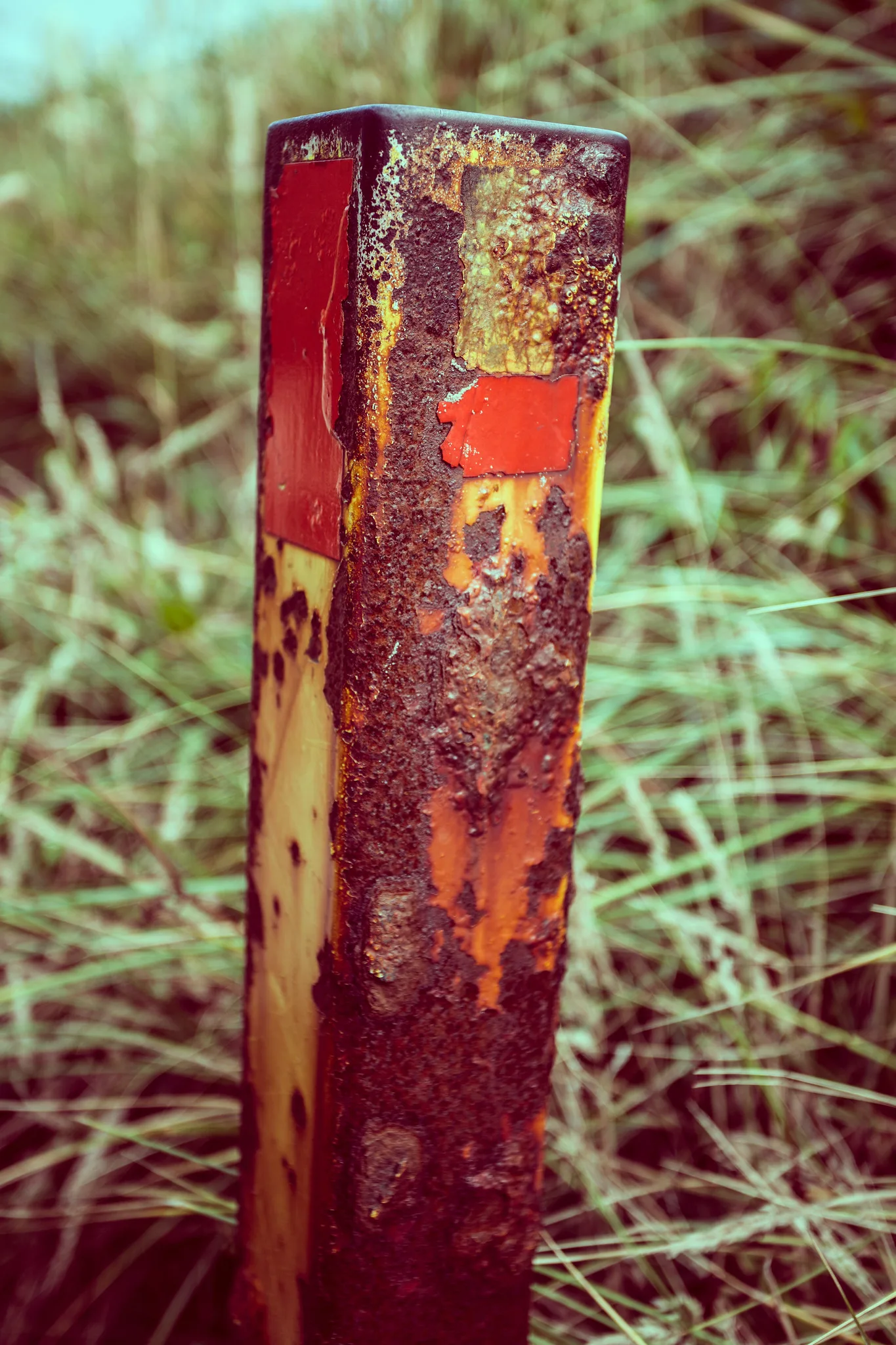
Rust is one of the most surprisingly beautiful subjects in photography. Flaking orange on an old post, deep brown blooms on a forgotten truck, streaks of red running down a steel wall and layers of peeling paint over corroded metal all make rich, colorful pictures. Rust shows time at work. It turns ordinary metal into a canvas of color, texture and pattern, and it rewards anyone willing to slow down and look closely.
This guide covers why rust makes a great subject, where to find it, rust as abstract art, old cars and machinery, peeling paint and layers, color, texture and light, close-ups, rust in its setting, staying safe, settings, phones and editing. For the broader world of surfaces, see the guide to texture, and for flat, close studies of walls and surfaces, see the guide to abstract photography.
Why rust makes a great subject
Rust brings together several of the things that make pictures interesting.
- Warm color. Oranges, reds, browns and golds glow, especially against blue sky or green grass.
- Rich texture. Flakes, bubbles, pits and cracks make surfaces you can almost feel.
- Pattern. Rust spreads in organic shapes, streaks and blotches that look like maps, clouds or paintings.
- Story. A rusty object suggests age, use, neglect and the slow work of weather.
- Everywhere. Rust is found on fences, signs, bridges, boats, cars, farm tools and city railings.
Rust is also a patient subject, and a forgiving one for beginners. It does not move, it looks different in every light and the same rusty wall can give dozens of pictures. Many photographers find that rust teaches them to see color and texture in a new way, and that lesson carries into every other kind of photography.
Where to find rust
Once you start looking, rust is everywhere.
- Farms and countryside. Old tractors, plows, water tanks, gates and barn roofs.
- Harbors and coasts. Salt air rusts boats, chains, anchors, bollards and piers.
- Industrial areas. Pipes, tanks, rail yards, shipping containers and old factories.
- Roadsides. Signs, guard rails, old cars and abandoned gas pumps.
- Cities. Railings, fire escapes, manhole covers, bridges and street furniture.
- Your own neighborhood. A rusty bike, a garden tool or a mailbox can be just as interesting.
Dry places preserve old machinery for a long time, so deserts and dry plains often have wonderful rusty vehicles. Wet and salty places rust things quickly, which gives bright, fresh orange rust. Keep a list of rusty spots you pass often, and visit them in different light and weather to see how they change.
Rust as abstract art
Get close, and rust becomes pure color and shape. Without context, a patch of rust can look like a satellite view of a desert, a galaxy or an expressive painting.
- Fill the frame. Exclude edges and anything recognizable so only the surface remains.
- Keep the camera parallel. Hold it square to the surface so the whole frame is sharp.
- Look for contrast. Bright orange next to a band of blue paint, or smooth metal next to rough flakes, makes a strong picture.
- Turn it. Rotate the picture later. Abstracts often look better upside down or sideways.
Photographers have long made rust and peeling surfaces into art, treating walls and metal like canvases. A series of rust abstracts printed together can look like a gallery of paintings.
Want to see more ways to find abstract images? The guide to abstract photography explains how to see shape and color first.
Old cars and machinery
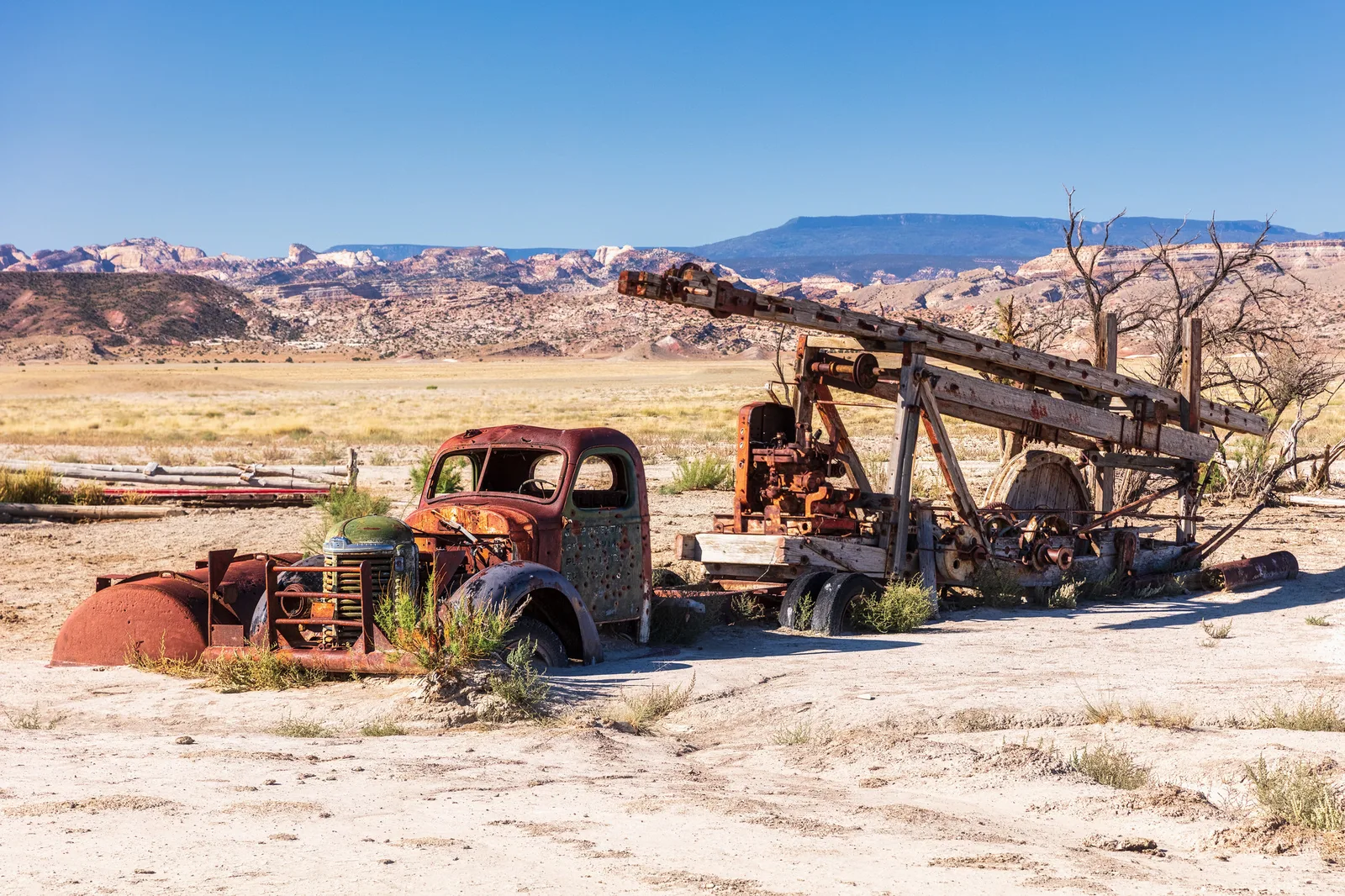
Rusty vehicles and machines are classic subjects. An old pickup sinking into the grass, a tractor left in a field or a train car at the end of a siding all carry nostalgia and character.
- The whole vehicle. Show it in its setting, with the land and sky around it, so the viewer understands where it has rested for so long.
- Three quarter view. Stand at an angle to the front corner to show both the face and side.
- Details. Grilles, headlights, badges, door handles, gauges and wheels make lovely close pictures.
- Nature taking over. Grass growing through the floor or a bird nesting in an engine adds story.
Never climb on old vehicles or machinery, which can be sharp, unstable or full of hidden hazards. Ask permission before entering private land, since many old cars sit on farms and private yards.
Boats, chains and anchors
Harbors are full of rust, as the guide to boat and harbor photography shows. Old fishing boats show streaks running down their hulls, heavy chains coil on docks and anchors lie on the shore. Salt water rusts metal quickly, leaving bright orange stains against blue and white paint. Low tide often reveals rusty wrecks, pilings and mooring rings. Watch your footing on wet, slippery surfaces, and stay clear of working areas.
Bridges, rails and towers
Large steel structures rust in grand ways. Old iron bridges show rivets streaked with orange, rail yards are full of rusty wheels, couplings and tracks, and water towers and silos weather into patchwork colors. Photograph the whole structure against the sky for scale, then look for repeating rivets, bolts and beams for pattern. Stay on public paths and never walk on active railway tracks. The guides to bridge photography and train photography have more ideas for these big subjects.
Peeling paint and layers
Rust often comes with peeling paint. As metal corrodes, paint bubbles, cracks and flakes away, revealing layers of color beneath.
- Show the layers. A blue surface flaking to reveal red primer and orange rust tells the history of the object.
- Find the edge. The line where paint meets rust is often the most interesting part.
- Curls and flakes. Side light makes curling flakes cast tiny shadows, adding depth.
- Lettering. Faded words and numbers on rusty signs or trucks add mystery.
Painted metal surfaces like doors, shutters, containers and signs are wonderful places to look. Each one is a unique collage made by weather and time.
Rusty signs and lettering
Old metal signs are among the most charming rusty subjects. Faded advertisements, road signs riddled with rust and painted lettering on the side of an old truck all carry a sense of history. Photograph the whole sign straight on to keep its shape square, then move closer to a single letter or a patch where the words dissolve into rust. Avoid making a brand the star of the picture, and focus instead on color, shape and the marks of time. The guide to sign photography covers more ways to photograph signs.
Color in rust
Rust is full of warm color, and pairing it with other colors makes it shine.
- Blue sky. Orange rust against blue sky is a natural color contrast, since orange and blue sit opposite each other on the color wheel.
- Green plants. Grass, moss and leaves around rusty metal make red and orange pop.
- Old paint. Teal, turquoise and blue paint over rust are especially striking.
- Monochrome rust. A frame of only browns and oranges makes a warm, harmonious picture.
Rust colors look richest in soft light or just after rain, when wet metal deepens in tone. The guide to color in photography explains how to use contrast and harmony.
Texture and light
Light decides how rust looks.
- Side light. Low sun raking across a surface reveals every bump, pit and flake. This is the best light for texture.
- Soft light. Overcast days give even light that shows color and fine detail without harsh shadows.
- Golden hour. Warm, low light makes rust glow even more orange.
- After rain. Wet rust is darker, deeper and more saturated.
- Avoid harsh midday sun. Overhead light flattens texture and creates glare on shiny areas.
If you cannot wait for good light, use your body to shade a small surface, or move around the object until the light falls across it from the side.
Want to make surfaces look even more tactile? The guide to texture shows how light and angle bring out every detail.
Close-ups and macro
The closer you get, the more there is to see. Tiny bubbles of rust, crystal like flakes and threads of corrosion become landscapes in miniature.
- Use a macro lens or close focus. Many lenses and phones can focus close enough for small details.
- Steady the camera. At close range, small movements cause blur. Use a tripod or rest the camera on something.
- Use a smaller aperture. Depth of field is very thin up close, so use f/8 to f/11 to keep more in focus.
- Keep the surface flat. Hold the camera parallel so the whole frame is sharp.
Water drops on rusty metal make beautiful macro subjects, with the rust reflected in each drop. A short walk after rain can turn up many of these small scenes. Frost on rusty metal in winter makes another lovely contrast, with cold white crystals over warm orange.
Ready to go even closer? The guide to macro photography covers lenses, light and focus for tiny subjects.
Rust in its setting
Close-ups are powerful, but wider pictures tell the bigger story. A rusty truck in a vast desert, a corroded water tower over a small town or a rusty shipwreck on a beach all show how rust fits into the landscape.
- Include the land. Show the field, desert, shore or city around the rusty object.
- Use contrast. A rusty object against clean new buildings or a bright sky shows the passing of time.
- Mix wide and close. A wide view with a few details makes a complete set.
Abandoned places are often full of rust, and they make powerful pictures. The guide to urban exploration photography covers how to photograph them safely and respectfully.
Staying safe
Rusty places can be risky, so take care.
- Do not touch sharp edges. Rusty metal can cut, and cuts from rusty objects need prompt care.
- Wear sturdy shoes and gloves. Old sites often have broken glass, nails and loose metal.
- Stay off unstable structures. Rust weakens metal, so never climb on old bridges, tanks or machines.
- Respect property. Ask permission for private land, and follow signs and fences.
- Leave things as they are. Do not move, break or take anything.
- Tell someone where you are going. Remote sites and old yards can be isolated, so share your plans.
Settings for rust photography
- Aperture. Use f/5.6 to f/11 for flat surfaces and wider scenes, and f/2.8 to f/4 to blur backgrounds behind a rusty object.
- ISO. Keep it low for clean detail.
- Shutter speed. Use a tripod in low light, or raise the ISO to keep shutter speeds safe.
- White balance. Auto usually works, but check that rust looks natural rather than too red or too yellow.
- Focus. Use a single focus point on the most interesting part of the surface.
Using a phone
Phones are great for rust. Get close with the main lens or macro mode, tap to focus and slightly lower the exposure to keep rich colors. Hold the phone parallel to the surface, and shade it with your hand if the sun causes glare.
Editing rust photos
Rust looks best with gentle edits that respect its natural, earthy palette. Add a little contrast and clarity to bring out texture, and adjust vibrance carefully, since rust oversaturates easily into an unreal orange. Lower highlights to restore detail on shiny spots. For abstracts, try rotating and cropping freely. Black and white turns rust into pure texture and tone, which suits heavy, crusty surfaces. The guide to black and white photography explains how to judge which pictures work without color. The guide to clarity and texture explains how to use those sliders without overdoing them.
Common mistakes
- Oversaturated rust. Too much saturation makes rust look fake. Keep it natural.
- Flat midday light. Harsh sun hides texture. Use side light or soft light.
- Blurry close-ups. Steady the camera and use a smaller aperture.
- Uneven focus. Tilted cameras leave parts of a flat surface soft. Hold it parallel.
- Only close-ups. Mix in wider views to tell the story of the place.
- Unsafe climbing. Rust weakens metal. Stay on solid ground.
- Trespassing. Get permission for private land.
Try this: a 10-minute rust hunt
Walk around your neighborhood for ten minutes, and find three rusty things.
- Photograph each one in its setting.
- Get close and fill the frame with its surface.
- Find the most colorful patch and make an abstract.
At home, rotate the abstracts and see if they remind you of anything: a map, a sky, a painting. Choose your favorite three and arrange them side by side, as if they were small paintings hung together on a wall. You will never look at a rusty railing the same way again. Repeat the hunt in a different place, such as a harbor or a farm, and compare how the rust changes in color and form.
Frequently asked questions
What is the best light for photographing rust?
Side light for texture, soft overcast light for color and detail, and golden hour for warm glow.
How do I make rust abstracts?
Get close, fill the frame with only the surface, keep the camera parallel and look for strong color and shape.
Why does my rust look too orange?
Saturation or white balance may be too strong. Lower vibrance or saturation, and check the white balance.
Is it safe to photograph old machinery?
Yes, from a safe distance. Do not climb or touch sharp edges, and respect private property.
Do I need a macro lens for rust?
No. Many lenses and phones focus close enough. A macro lens helps for very small details.
How can I make a rust series?
Pick a theme, such as rusty doors, rusty cars or rust abstracts in one color, and photograph each the same way for a consistent set.
Can rust photos work in black and white?
Yes. Black and white shows texture and form strongly, especially for crusty, heavily pitted surfaces.
For terms such as texture, side light, macro and saturation, see the photography glossary.