Exposure value (EV) is a single number that stands for every combination of aperture and shutter speed that lets in the same amount of light. Each step of 1 EV is one stop, a doubling or halving of light, and by convention the numbers are quoted at ISO 100: a sunlit scene is about EV 15, an overcast day about EV 12 to 13, a street at night about EV 5 to 8, and a moonlit landscape about EV -3 to -2. Once you think in EV, you can compare scenes, read camera specifications and estimate exposure without a meter.
What an EV number actually means
Exposure value is defined by a simple formula: EV equals the base-2 logarithm of the f-number squared divided by the shutter time in seconds. You never need to calculate it by hand, but the definition tells you three useful things.
- EV 0 is f/1 at 1 second. Every other value is counted in stops from that point.
- Each whole number is one stop. Going from EV 12 to EV 13 halves the light reaching the sensor; going from EV 12 to EV 11 doubles it.
- Higher EV means less light admitted. A higher number is a smaller aperture, a faster shutter, or both. This is the opposite of what most people expect, and it causes most EV confusion.
Strictly, EV describes camera settings: an aperture and shutter pair. But because a correctly exposed photo of a given scene needs a particular setting, photographers also use EV to describe how bright a scene is. When someone says “a sunny day is EV 15”, they mean that at ISO 100 the correct exposure for that scene has an exposure value of 15, for example f/16 at 1/125 second. Some writers call this scene brightness the light value to keep the two ideas apart, but in everyday use both are called EV.
One EV, many different pictures
Every EV number covers a whole family of settings that give the same exposure. Open the aperture a stop and halve the shutter time, and the EV stays the same. Here is the family for EV 12, a typical overcast day at ISO 100:
| Aperture | Shutter speed | What changes in the picture |
|---|---|---|
| f/2.8 | 1/500 s | Shallow depth of field, motion frozen |
| f/4 | 1/250 s | Soft background, most action frozen |
| f/5.6 | 1/125 s | Moderate depth, walking people sharp |
| f/8 | 1/60 s | Deep focus, fast movement starts to blur |
| f/11 | 1/30 s | Near to far sharpness, handheld shake risk |
| f/16 | 1/15 s | Maximum depth, water and crowds blur |
All six frames would have the same overall brightness. They would not look alike. This is the practical heart of EV: the scene fixes the exposure value, and your job is to choose where on that line to sit, trading depth of field against motion. The exposure triangle adds ISO as a third lever, which shifts the whole family up or down.
How bright is the world? Typical scene EVs at ISO 100
These values are widely used starting points for a correct exposure at ISO 100. Real scenes vary by a stop or so either way, but the spread from top to bottom is the useful part: it shows how enormous the range of everyday light is.
| Scene | EV at ISO 100 | Example setting |
|---|---|---|
| Snow or pale sand in bright sun | 16 | f/16, 1/250 s |
| Typical landscape in full sun, distinct shadows | 15 | f/16, 1/125 s |
| Hazy sun, soft shadows | 14 | f/11, 1/125 s |
| Bright overcast, no shadows | 13 | f/8, 1/125 s |
| Heavy overcast, or open shade on a sunny day | 12 | f/5.6, 1/125 s |
| Just after sunset | 9 to 11 | f/4, 1/60 s (EV 10) |
| Neon signs and brightly lit shop fronts | 9 to 10 | f/2.8, 1/125 s (EV 10) |
| Stage shows, indoor sports arenas | 8 to 9 | f/2.8, 1/30 s (EV 8) |
| Offices and bright work spaces | 7 to 8 | f/2.8, 1/15 s (EV 7) |
| Night street scenes and window displays | 5 to 8 | f/2.8, 1/8 s (EV 6) |
| Home interiors at night, lamp light | 5 to 7 | f/2, 1/8 s (EV 5) |
| Floodlit buildings and monuments | 3 to 5 | f/2.8, 1 s (EV 3) |
| Landscape under a full moon | -3 to -2 | f/2.8, 30 s (EV -2) |
Notice the gap between a sunny landscape and a moonlit one: about 17 to 18 stops, a factor of more than 100,000. Even a well lit living room at night is roughly eight to ten stops darker than the street outside at noon, which is why indoor photos need so much more ISO or so much slower a shutter than your eyes suggest. Your eyes adapt; the sensor does not.
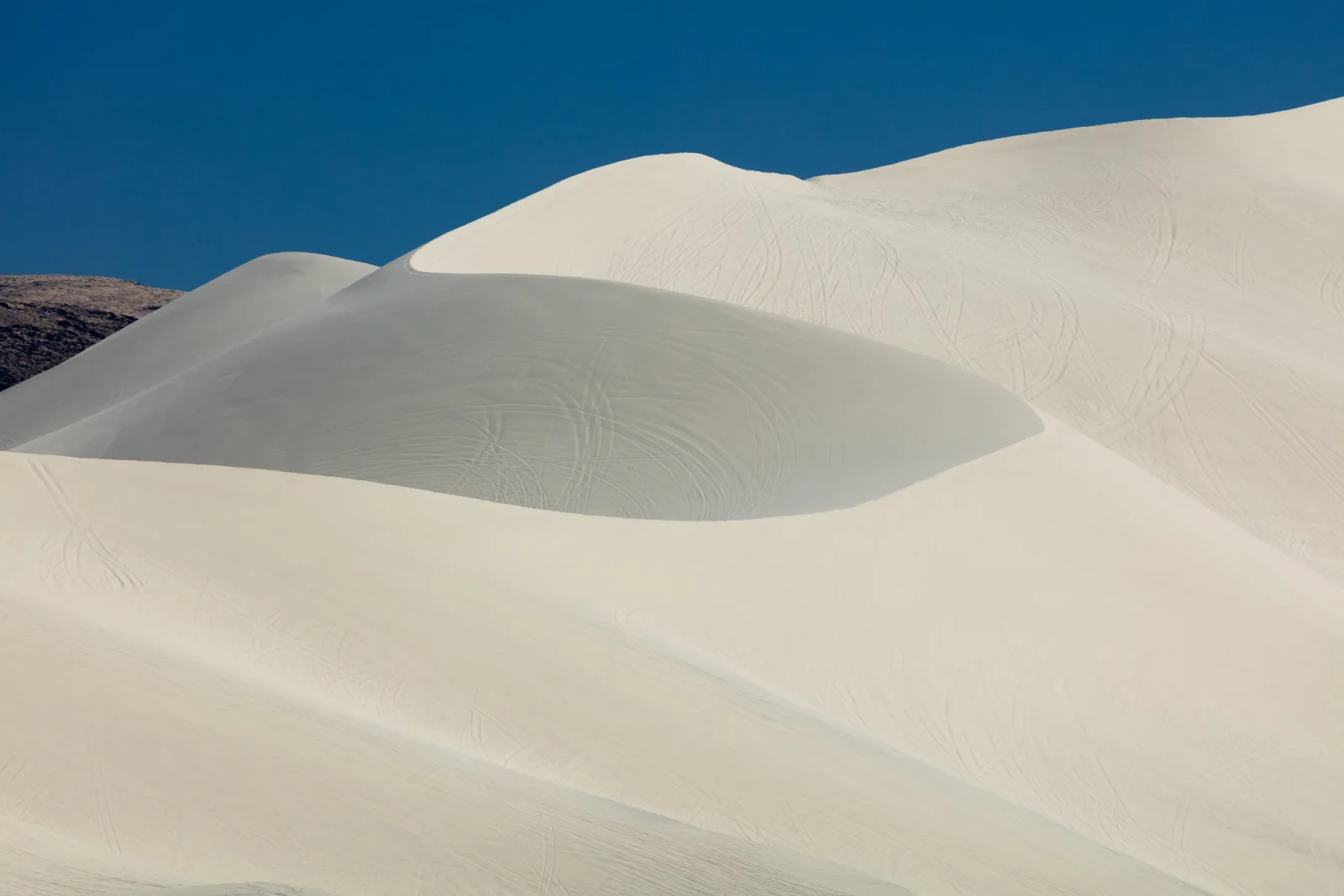
The top half of the table is where the sunny 16 rule comes from: EV 15 at ISO 100 is f/16 at about 1/100 to 1/125 second. Each row below it is simply that rule with the aperture opened by the number of stops the light has dropped.
Converting EV to your ISO
Scene EVs are quoted at ISO 100 so everyone uses the same scale. When you shoot at a different ISO, add one to the EV for every doubling of ISO above 100 to find the camera settings you need.
| ISO | Add to the ISO 100 EV |
|---|---|
| 100 | 0 |
| 200 | +1 |
| 400 | +2 |
| 800 | +3 |
| 1600 | +4 |
| 3200 | +5 |
| 6400 | +6 |
Worked example, night street. A lit street at night is around EV 7 at ISO 100. At ISO 1600 you add 4, so you need settings worth EV 11. At f/2.8 that is about 1/250 second, fast enough to freeze pedestrians. At ISO 100 the same street would need 1/15 second at f/2.8.
Worked example, moonlight. A landscape under a full moon is around EV -3 at ISO 100. At ISO 3200 you add 5, giving EV 2. At f/2.8 that is about 2 seconds on a tripod. At ISO 100 it would be more than a minute.
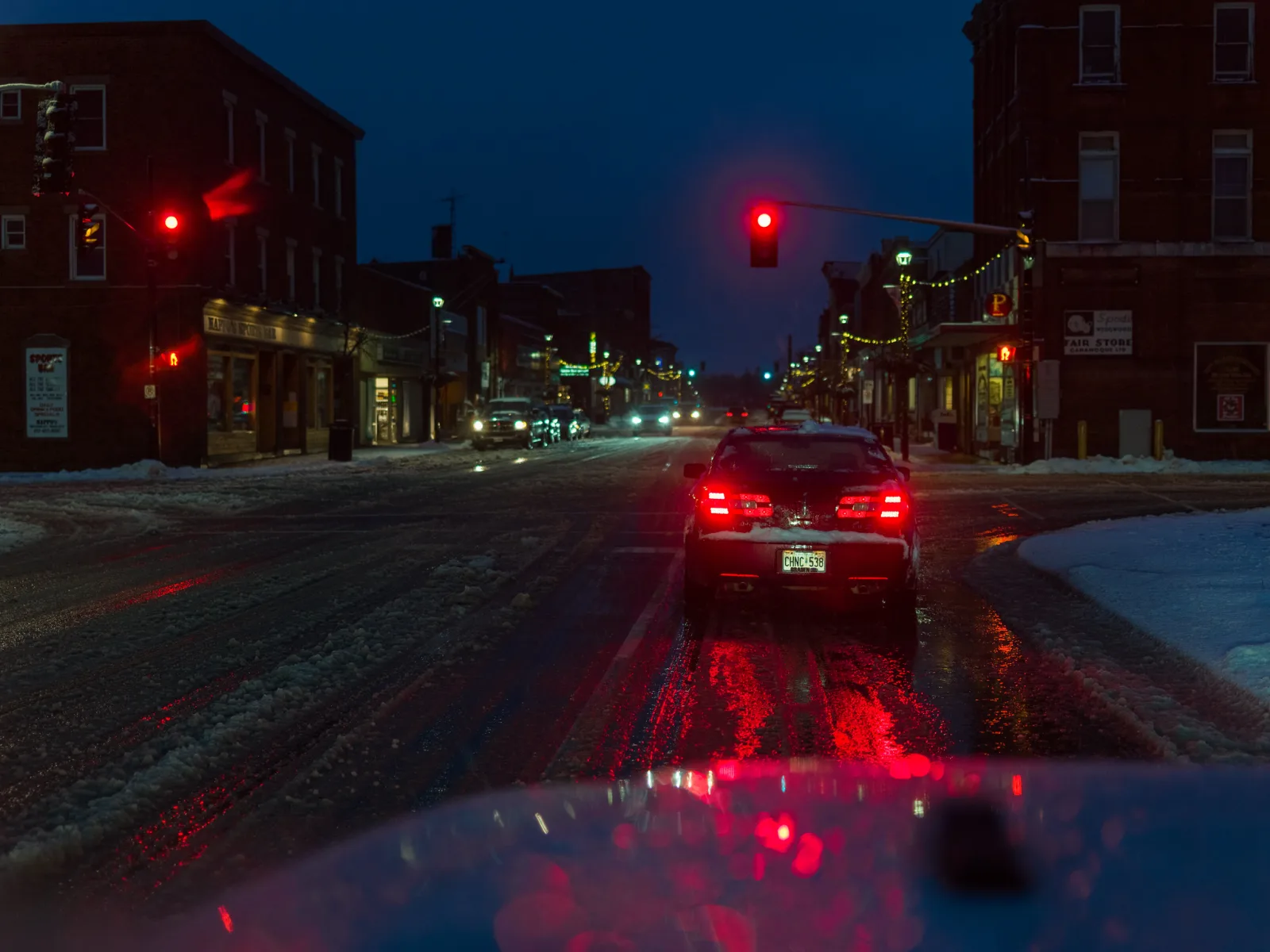
It works in reverse too. You can take the settings from any photo, work out the EV, and subtract the ISO correction to learn how bright the scene was. The street below was shot at f/2.8, 1/80 second and ISO 800. That is about EV 9.3 as a camera setting; subtracting 3 for ISO 800 gives a scene of roughly EV 6 at ISO 100, right in the night street row of the table.
The sign problem: EV versus exposure compensation
This is where most people get tangled. Cameras label exposure compensation in EV, and +1 EV of compensation makes the picture brighter. Yet a higher exposure value on the scale above means less light and a darker picture. Both are correct, because they are describing different things.
- Exposure value is a position on a scale of settings. Higher numbers are smaller apertures and faster shutters, so less light.
- Exposure compensation is a change in the resulting exposure, measured in EV-sized steps. Plus means more light on the sensor; minus means less.
So +1 EV of compensation actually moves the camera to settings with an exposure value one lower. If the meter wants f/8 at 1/125 (EV 13) and you dial in +1, the camera shifts to something like f/8 at 1/60 (EV 12). The simplest way to keep this straight: when talking about compensation, brackets or dynamic range, read “EV” as “stops”. When talking about a scene or a setting, remember that bigger numbers mean brighter scenes and darker settings.
EV in camera and lens specifications
EV shows up in specification sheets, and once you can read it the numbers become meaningful.
- Metering range, often written as something like “EV -3 to 20 at ISO 100”, tells you the dimmest and brightest scenes the camera’s meter can measure accurately. EV -3 is roughly moonlit landscape territory; EV 20 is far brighter than any natural scene except the sun itself, so the top end rarely matters.
- Autofocus sensitivity uses the same scale. A focusing system rated to EV -4 or lower can find focus in light darker than a full-moon landscape, usually measured with a fast lens. The more negative the number, the better it copes in the dark.
- Dynamic range is often quoted in EV or stops, meaning the number of doublings between the darkest and brightest tones a sensor can record. A sensor with 12 stops of dynamic range can hold a brightness ratio of about 4,000 to 1 in a single frame.
- Stabilization is rated in stops of shutter speed. A four-stop system claims you can hand-hold four stops slower than you otherwise could, for example 1/4 second instead of 1/60.
EV steps in bracketing and ND filters
Because EV is counted in stops, it is also the natural unit for anything that changes exposure by a fixed amount.
Bracketing settings are written as EV offsets. A three-frame bracket at ±1 EV gives one frame at the metered exposure, one a stop darker and one a stop brighter. For merging into a high dynamic range image, brackets of ±2 EV over three or five frames cover most sunlit scenes with bright skies.
Neutral density filters are sold with several naming systems, and all of them map to EV reductions:
| Filter factor | Optical density | Light reduction |
|---|---|---|
| ND2 | 0.3 | 1 EV |
| ND4 | 0.6 | 2 EV |
| ND8 | 0.9 | 3 EV |
| ND64 | 1.8 | 6 EV |
| ND1000 | 3.0 | about 10 EV |
Each 0.3 of density is one stop, and the filter factor is 2 raised to the number of stops. To use one, add its EV reduction to the shutter time in stops. A 1/125 second exposure behind a 10-stop filter becomes about 8 seconds, because ten doublings of 1/125 is 1024/125, a little over 8.
Estimating exposure without a meter
Knowing a handful of scene EVs lets you set a camera by eye, check a meter that seems wrong, or work with an old camera that has no meter at all. The method is short:
- Identify the scene from the table and pick its EV at ISO 100.
- Add the ISO correction for the ISO you are using.
- Pick the aperture you want for depth of field.
- Count stops to find the shutter speed. Start from f/16 at 1/125 for EV 15 and move one stop for each EV of difference.
- Check the histogram after the first frame and adjust by whole stops.
This also explains why reflected-light meters get fooled. A meter assumes the scene averages to middle grey. Point it at snow and it reads a very high EV and underexposes, turning the snow grey; point it at a black cat and it overexposes. If your meter reports EV 17 on a sunny snow field that the table says should be about 16, trust the table and add compensation. A grey card or an incident meter avoids the problem by measuring the light rather than the subject.
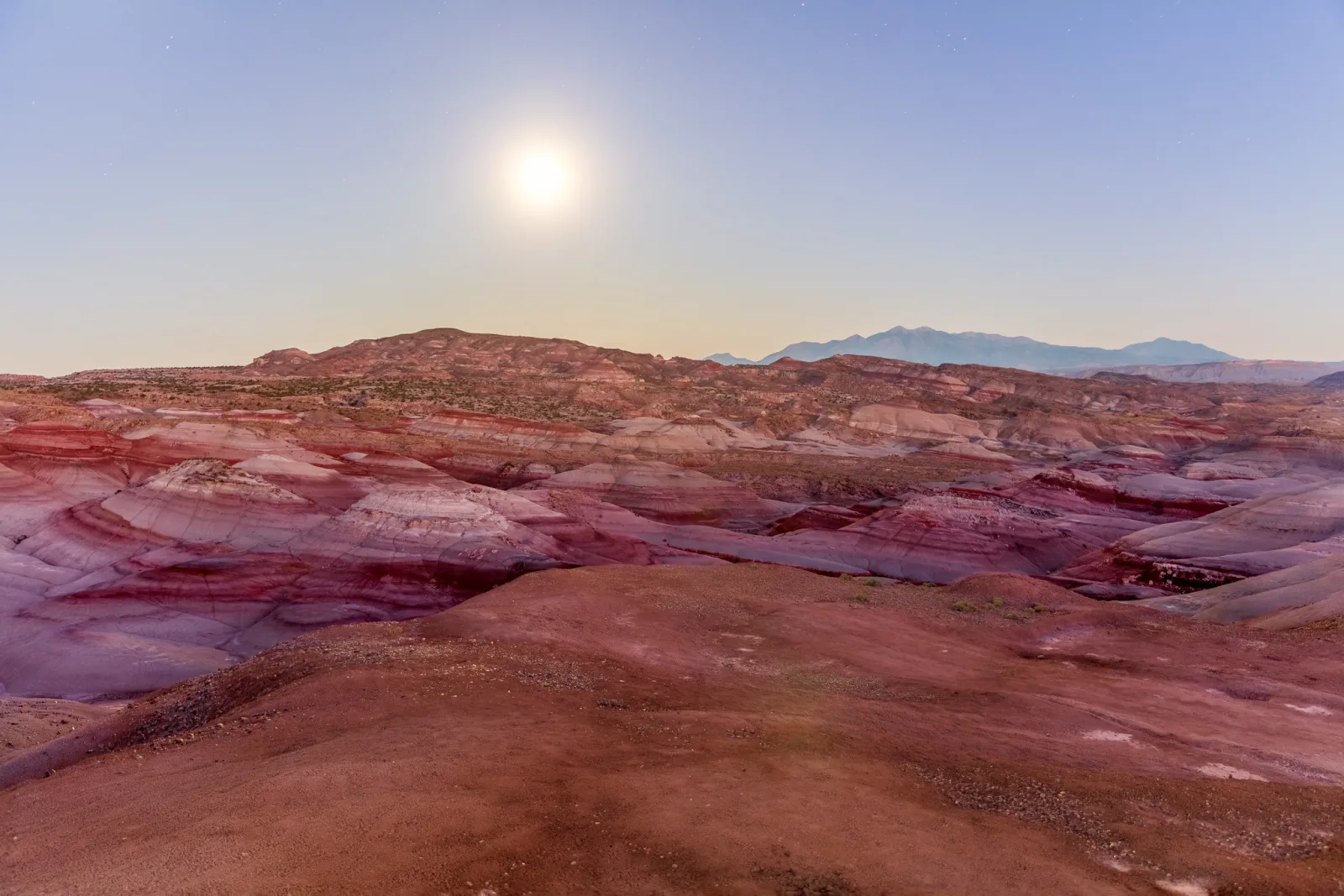
Working backwards like this is a good habit. When a photo’s settings do not match the scene you remember, the gap tells you something: a lingering glow in the sky, a brighter light source nearby, or an exposure that was deliberately pushed or pulled.
Common mistakes
- Reading a higher EV as more exposure. On the scale, higher means less light. Only compensation and bracketing use plus to mean brighter.
- Forgetting the ISO in a scene EV. A value is only meaningful with its ISO. Always convert to ISO 100 before comparing scenes.
- Treating table values as exact. They are starting points, accurate to about a stop. Take a test frame and check the histogram.
- Assuming equal EV means an equal picture. Same brightness, different depth of field and motion. Choose the combination for the picture you want.
- Trusting the meter on very bright or very dark subjects. A reflected meter pushes everything toward middle grey. Cross-check with the table when a reading looks off.
Try this
Set your camera to manual mode, ISO 100, and spend twenty minutes walking from bright outdoor light into shade, then indoors, then into the darkest room you have. In each place, let the meter find a correct exposure and write down the aperture and shutter speed. Afterwards, convert each pair to EV: start from f/16 at 1/125 as EV 15 and count stops. Compare your list with the table above. Then go back to one location, cover the meter, and set the exposure from memory. After a few rounds you will be able to guess most scenes within a stop.
Frequently asked questions
Is EV the same as a stop?
A change of 1 EV is the same as one stop. EV itself is a position on a scale; a stop is a step along it.
Why is EV always given at ISO 100?
So scenes can be compared on one scale. At another ISO the same scene needs different settings, so the reference is fixed at ISO 100 and you add the ISO correction yourself.
Can EV be negative?
Yes. Negative values mean scenes darker than one that needs f/1 for 1 second at ISO 100, such as moonlit landscapes or starry skies.
What does “+0.3 EV” mean on my camera?
One third of a stop brighter than the meter’s suggestion. Most cameras adjust in thirds, so +0.7 is two thirds and +1.0 a full stop.
Related guides
- Stop: the unit every EV step is counted in.
- Sunny 16 Rule: the classic shortcut built on the EV 15 anchor.
- Exposure Compensation: nudging the meter in EV steps.
- Metering: how the camera measures a scene’s brightness in the first place.
- The Exposure Triangle: how aperture, shutter and ISO share the exposure.
- ND Filter: removing a fixed number of EV for longer exposures.
- Best Camera Settings for Night Photography: putting low EV numbers into practice.