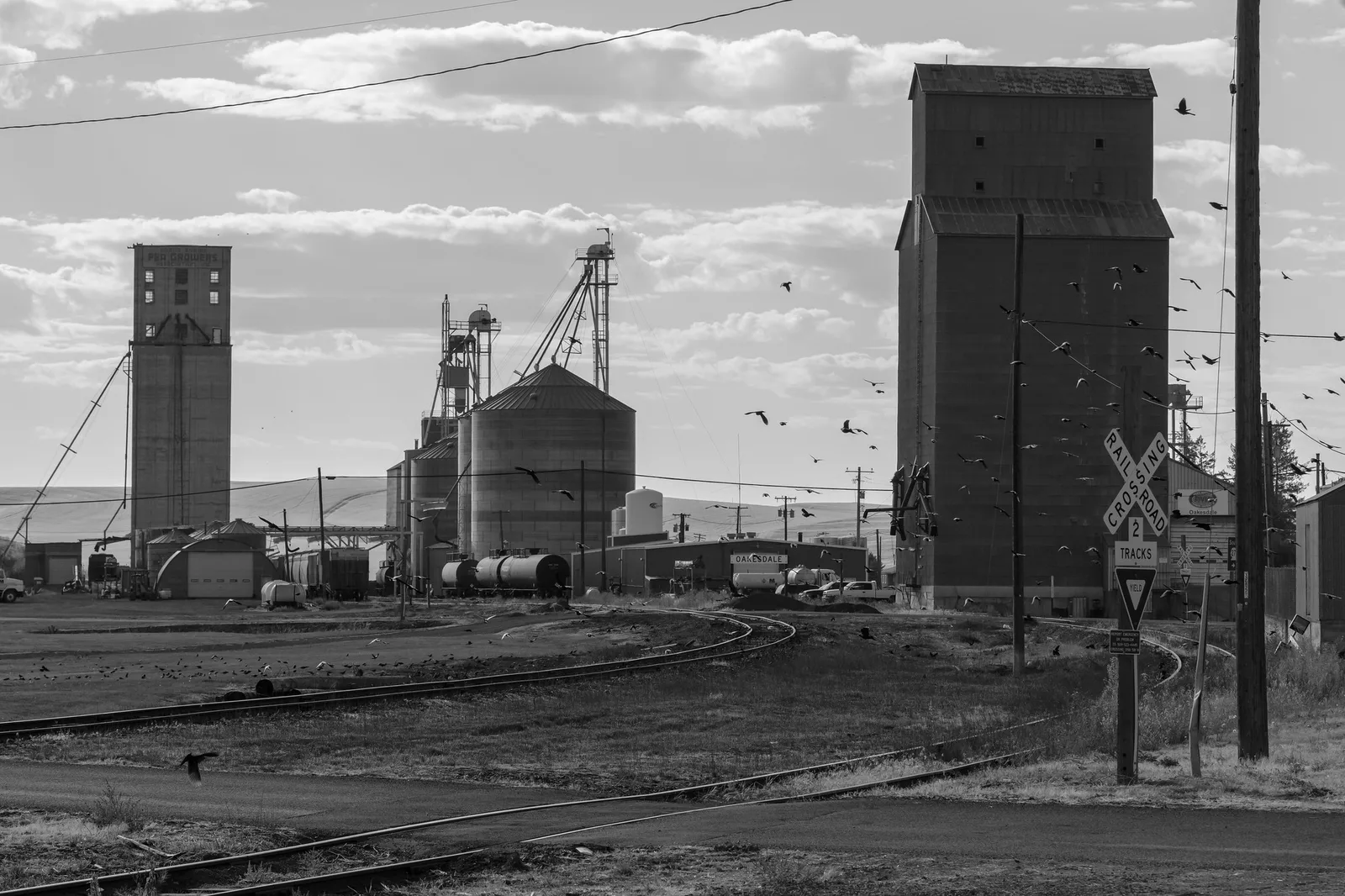
On the open plains, a grain elevator can be seen long before the town it serves. These tall wooden, concrete and steel towers, often called prairie sentinels, rise above flat fields like cathedrals of farming. Beside them stand clusters of round silos, rail sidings, scales and sheds. Grain elevator photography mixes architecture, landscape and rural history, and it is a rewarding subject for anyone who loves big skies, strong shapes and quiet country roads.
This beginner guide covers why elevators and silos make great subjects, finding them, showing scale, light and weather, big skies, rail lines and roads, color and texture, details, interiors and safety, typologies and series, night views, settings, phones, editing, common mistakes and a short practice exercise. It pairs well with the guide to prairie photography.
Why grain elevators make great subjects
Grain elevators are simple, tall and full of character. That combination makes them easy to frame and endlessly interesting.
- Bold shapes. Tall boxes, cylinders and peaked tops read clearly against the sky from miles away.
- Scale. Towering over houses, trucks and trains, they show how vast farming country is.
- History. Painted town names, faded company letters and old wooden siding tell local stories.
- Texture. Weathered wood, ribbed steel, stained concrete and rust reward close study.
- Setting. Flat fields, long rail lines and endless skies give them a dramatic stage.
Many wooden elevators have been taken down or replaced, so photographing the ones that remain also preserves a piece of rural heritage. A simple picture made now may become a valued record of a place that changes.
Kinds of grain storage
You will see several kinds of structures in farm country. Classic wooden elevators are tall, narrow towers with a small cupola on top, often clad in painted siding or metal. Concrete elevators are rows of huge joined cylinders, sometimes stretching for a city block. Steel bins are round, ribbed silos with cone roofs, often grouped in clusters on farms. Tower silos beside barns store feed for animals. Each type suggests a different picture, from a lone wooden sentinel to a graphic wall of concrete tubes.
Finding grain elevators
- Follow the railroad. Elevators were built along rail lines, so tracks lead you to them.
- Small towns. Many farm towns grew up around an elevator, which still stands at the edge of main street.
- Back roads. County roads crossing open farmland reveal elevators on the horizon.
- Maps. Satellite views show tall shadows and round bins along rail lines.
- Local history. Heritage groups and small museums often know which old elevators survive.
Elevators are working sites or private property. Photograph from public roads and sidewalks, park well off the road and never cross active tracks or enter fenced yards without permission. The guide to small town photography covers the towns that grew up around them.
Keep a simple list of the elevators you find, with notes on which way each faces and when the light looked best. On the plains you can often see the next elevator on the horizon, so one good find can lead to a whole day of exploring along the same rail line.
Showing scale
The sheer size of an elevator is one of its most impressive qualities. Help viewers feel it.
- Something small in front. A house, shed, car, truck or person beside the elevator shows its height.
- Rail cars. A line of grain cars at the base of the tower makes a strong sense of size and purpose.
- From far away. A distant view shows the elevator as a lone tower in an endless landscape.
- From close up. Standing near the base and looking up makes it soar.
- Compression. A long lens from a distance stacks the elevator against a town or hills.
Keep vertical lines straight when the elevator is the main subject. Hold the camera level, step back and crop later rather than tilting up, or tilt boldly from close up for a dramatic view. The guide to architecture photography explains how to keep buildings upright.
Light and weather
On the open plains, light and weather are part of every picture.
- Golden hour. Warm, low light makes painted wood glow and casts long shadows across the fields. See the guide to golden hour photography.
- Side light. Light from one side gives shape to cylinders and texture to siding.
- Storms. Dark clouds behind a sunlit elevator are dramatic and common on the plains.
- Overcast days. Soft light suits black and white and close detail.
- Snow. A winter elevator in white fields makes a simple, graphic picture.
Round silos show light beautifully. With sun from one side, a cylinder grades smoothly from bright to dark, which makes it look solid and three dimensional. Flat front light, by contrast, can make silos look like flat shapes, which also works for graphic pictures.
Elevators through the seasons
Farm country changes dramatically through the year, and the elevator changes with it. Spring brings fresh green shoots in dark soil and puddles that mirror the tower. Summer gives tall golden wheat, wildflowers along the tracks and towering thunderheads. Harvest is the busiest time, with trucks lined up, dust in the air and grain cars waiting on the siding. Winter wraps everything in snow, frost and low, pale light. Returning to one elevator in each season makes a lovely set of pictures and shows how the whole year revolves around it.
Big skies
Grain elevators stand under some of the biggest skies anywhere, so let the sky play its part.
- Low horizon. Place the horizon low and give most of the frame to dramatic clouds.
- Clean blue. A clear sky makes a simple backdrop for bold shapes and painted names.
- Sunrise and sunset. Silhouettes of elevators against glowing skies are classic prairie scenes.
- Storm light. Sun breaking through storm clouds can spotlight the elevator.
- Birds. Flocks circling elevators add movement and life.
A polarizing filter deepens blue skies and makes clouds stand out, but turn it slowly, since wide skies can become uneven. The guide to cloud photography explains how to read the sky.
Rail lines and roads
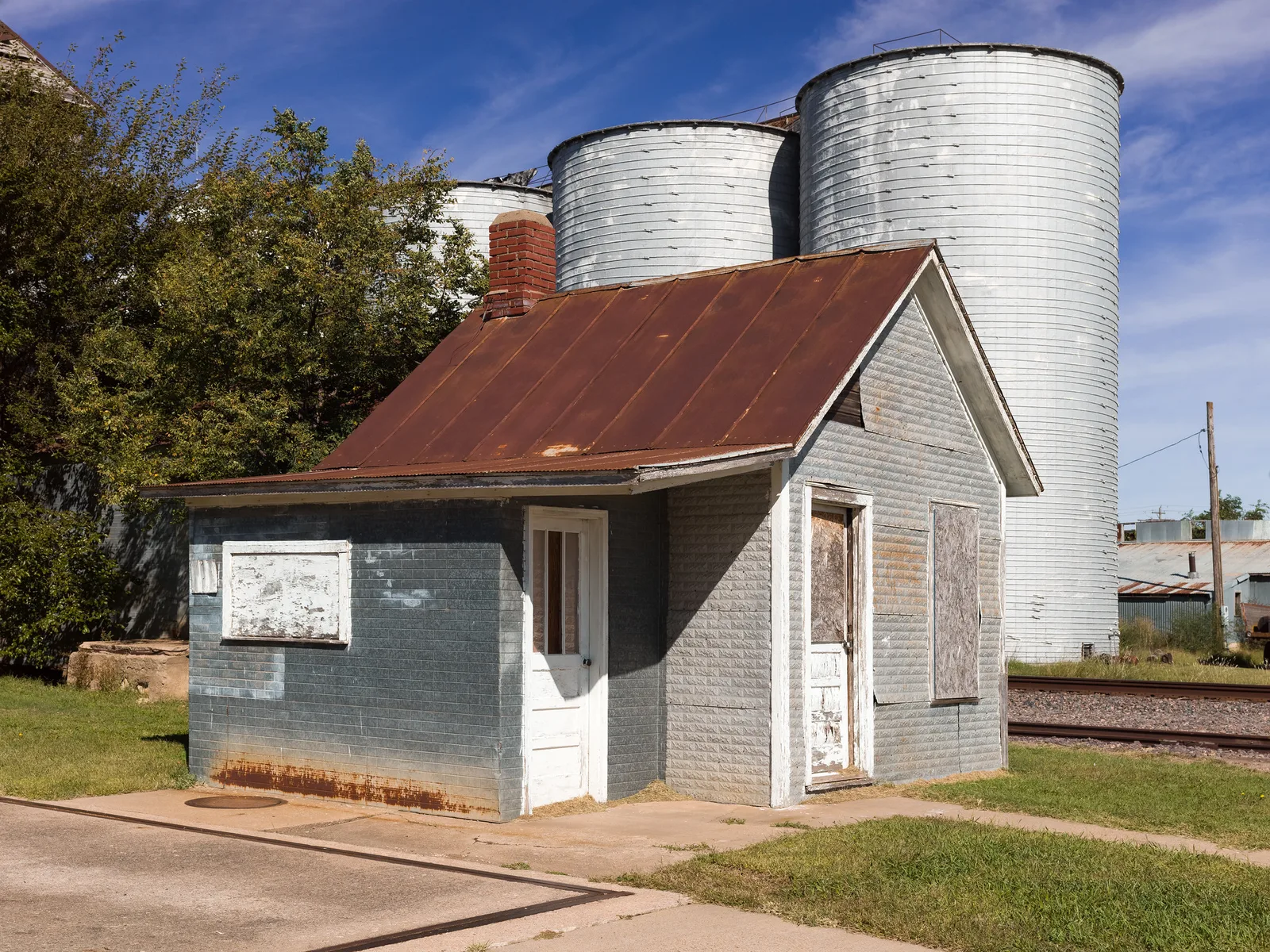
Elevators exist to move grain from farm to rail, and the lines that connect them make strong compositions.
- Tracks. Curving rails lead the eye from the foreground to the tower.
- Crossings. A crossing sign or signal adds a graphic shape and a sense of place.
- Trains. A train passing the elevator, or grain cars waiting, tells the story of the harvest. See the guide to train photography.
- Roads. A straight country road running toward a distant elevator shows the scale of the plains.
- Power lines. Poles and wires can lead the eye or clutter the frame. Move to control them.
Never stand on tracks or walk along a rail line. Photograph from public crossings, roads and safe distances, and remember that trains can be quiet and fast.
Color and texture
- Painted names. Big letters spelling a town or company name add history and graphic interest.
- Weathered wood. Gray siding, peeling paint and patched boards show decades of weather.
- Ribbed steel. Corrugated bins catch light in rows of stripes.
- Rust. Orange streaks on metal roofs and bins add warmth. See the guide to rust photography.
- Concrete. Stained, smooth cylinders make subtle, sculptural shapes.
Color pictures suit red, green and blue painted elevators under blue skies. Black and white suits weathered wood, stormy skies and graphic shapes, as the guide to black and white photography explains.
Details
Move closer and a grain elevator offers many smaller pictures.
- Spouts and chutes. Angled metal pipes make strong diagonal lines.
- Ladders and catwalks. Long ladders climbing the side show height and rhythm.
- Doors and scales. Old scale houses, sliding doors and loading docks show working life.
- Signs. Faded painted ads and safety signs add character.
- Bolts and seams. Rows of bolts on steel bins make tidy patterns.
A telephoto lens helps reach details high on the structure without going near it. A set of details alongside one wide view makes a complete portrait of an elevator and its yard.
Look for the human traces too: a worn path to the office door, a lunch bench in the shade, a calendar in a window or a hand painted sign with the price of grain. These small details give the giant structure a human scale and remind viewers that people built and worked it.
Safety around elevators
Grain elevators are industrial sites with real dangers. Never climb ladders or enter bins, which can trap people in flowing grain. Stay away from moving machinery, trucks and rail cars, and never enter fenced or posted areas. Abandoned elevators can be structurally unsafe, with rotten floors and loose metal. The best pictures are almost always made from public ground, with a longer lens if needed.
Typologies and series
Grain elevators are perfect for a series. Photographers have long made typologies, collections of one kind of structure photographed in the same way and shown in a grid.
- Same view. Photograph each elevator straight on, in similar light, from a similar distance.
- Same weather. Overcast days give even light that makes comparisons easy.
- Same framing. Center the structure and leave similar space around it.
- Show differences. When everything else is the same, the differences in shape and material stand out.
A road trip across farm country can become a wonderful project of elevator portraits. The guide to photography project ideas has more ways to plan a series.
Telling the story of a town
In many farm towns, the elevator is the tallest building and the heart of the local economy. Try pairing a picture of the elevator with pictures of the main street, the café, the rail depot, the church and the fields beyond. Together they tell the story of a community shaped by grain and rail. Talking with locals can lead to wonderful details, such as the year the elevator was built, the families who ran it or the harvests people still remember.
Planning a long drive across farm country? The guide to road trip photography covers stops, light and storytelling on the road.
Elevators at night
Many elevators have work lights that glow at night, and rural skies are often dark and full of stars.
- Blue hour. Lit elevators against a deep blue sky make striking scenes.
- Stars. Far from cities, an elevator makes a strong foreground for the night sky.
- Tripod. Use long exposures and low ISO for sharp, clean results.
- Harvest nights. During harvest, trucks and lights can make busy, glowing scenes.
Scout in daylight first, so you know where you can safely and legally stand after dark.
Composition ideas
Try several approaches at each site. Frame a lone wooden elevator against empty sky for a simple, minimal picture. Line up a row of concrete cylinders so they repeat across the frame. Use tracks or a road as a leading line toward the tower. Shoot through a gap between bins to frame the elevator beyond. Place the horizon low under dramatic clouds. With every frame, decide whether the picture is about size, shape, texture or story, and arrange the elements to support that idea.
Settings and lenses
- Wide lens. Close views looking up and dramatic skies.
- Standard lens. Natural portraits of the elevator and yard.
- Telephoto lens. Distant elevators, compressed scenes and high details.
- Aperture. f/8 to f/11 for sharp detail from front to back.
- Shutter speed. Hand held in daylight, tripod at dusk and night.
- ISO. Low in daylight, higher for hand held low light.
Using a phone
A phone is perfect for elevators spotted on a drive. Turn on grid lines to keep the tower straight, tap on the sky to keep it from turning white and use the telephoto lens for distant elevators. Portrait orientation suits tall, narrow towers.
Editing grain elevator photos
Straighten verticals and horizons first. Lower highlights to save bright skies and pale concrete, and lift shadows on the shaded side. Add a little clarity for wood and steel texture. Try black and white for weathered elevators and stormy skies, and keep painted colors natural in color versions.
Common mistakes
- Leaning towers. Keep the camera level or tilt boldly on purpose.
- No sense of scale. Include a house, truck, train or person.
- Flat midday light. Return in the morning, evening or under storm skies.
- Trespassing. Stay on public land and off the tracks.
- Cluttered frames. Move to hide wires, trash and parked vehicles.
- Only one view. Mix distant, close and detail pictures.
Try this: a 10-minute elevator study
Find one grain elevator or group of silos you can see from a public road, and spend ten minutes on it.
- Make a distant view with the elevator small under a big sky.
- Make a straight, level portrait of the whole structure.
- Include something small in front to show scale.
- Use a longer lens for one detail, such as a painted name or ladder.
- Try a black and white version of your favorite frame.
Repeat the exercise at the next elevator you pass, and start a small series.
Curious about the farms these giants serve? The guide to farm and countryside photography covers fields, barns and rural life.
Frequently asked questions
When is the best time to photograph grain elevators?
Golden hour, storm light and blue hour make the most dramatic pictures.
Can I go inside a grain elevator?
Only with the owner’s permission and a guide. Grain bins and old elevators can be very dangerous.
What lens is best for grain elevators?
A standard zoom for most views, with a telephoto for distant towers and details.
Should elevator photos be in color or black and white?
Color suits painted elevators and blue skies. Black and white suits weathered wood and storms.
How do I show how tall a grain elevator is?
Include a familiar object, such as a house, truck, train car or person, near its base.
Drawn to other big working structures? The guide to industrial photography covers factories, refineries and machines.
For terms such as typology, compression and polarizer, see the photography glossary.