Small towns are full of pictures. A quiet main street at dawn, a hand-painted shop sign, a water tower above the rooftops, a diner where everyone knows each other, a parade that the whole town turns out for: these are the subjects that make a place feel like itself. They are often overlooked in favor of grand scenery and big cities, which is exactly why they are worth your time.
This guide covers when to visit, how to photograph main streets, landmarks and storefronts, how to find details that say small town, how to photograph people and local events with respect and how to tell the story of a whole town in a set of pictures. Whether you are passing through on a road trip or photographing the town you live in, the same ideas apply.
Why small towns make good subjects
A small town is a whole world at a scale you can walk around in an hour. That makes it a perfect place to practice observation and storytelling.
- Character. Older buildings, independent shops and local landmarks give each town a distinct personality, unlike the uniform look of many newer areas.
- Pace. Fewer people and less traffic mean more time to compose, and less rush.
- Change. Many small towns are changing: shops closing, others opening, old buildings restored or left to fade. Photographs record that change for the future.
- Community. Local events, markets and gathering places show how people live together, which is the heart of documentary work.
Small towns also tend to be friendly to photographers. People are often curious, sometimes proud to share the history of their town and generally relaxed about someone admiring their main street with a camera.
When to visit and photograph
Timing changes everything in a small town, both the light and the life on the street.
- Early morning. Streets are empty, light is soft and low, and you can stand in quiet places without traffic. This is the best time for clean pictures of main streets and buildings.
- Morning bustle. As shops open, owners sweep steps, set out signs and greet regulars. These small rituals make lovely candid pictures.
- Midday. Light is harsh, but this is when cafes and diners are busiest. Head indoors or photograph signs and details, which work in any light.
- Late afternoon and dusk. Warm light rakes across storefronts, shadows lengthen and lit windows begin to glow. The golden hour and blue hour are especially beautiful on a main street.
- Market days and events. Many towns come alive on a particular day of the week or season. Check local listings before you go.
Seasons matter too. Autumn leaves, winter snow and summer flower baskets each give the same street a different mood. Returning to one town across the year can make a rewarding project.
Photographing the main street
The main street is the backbone of most small towns, and it is where most visitors start.
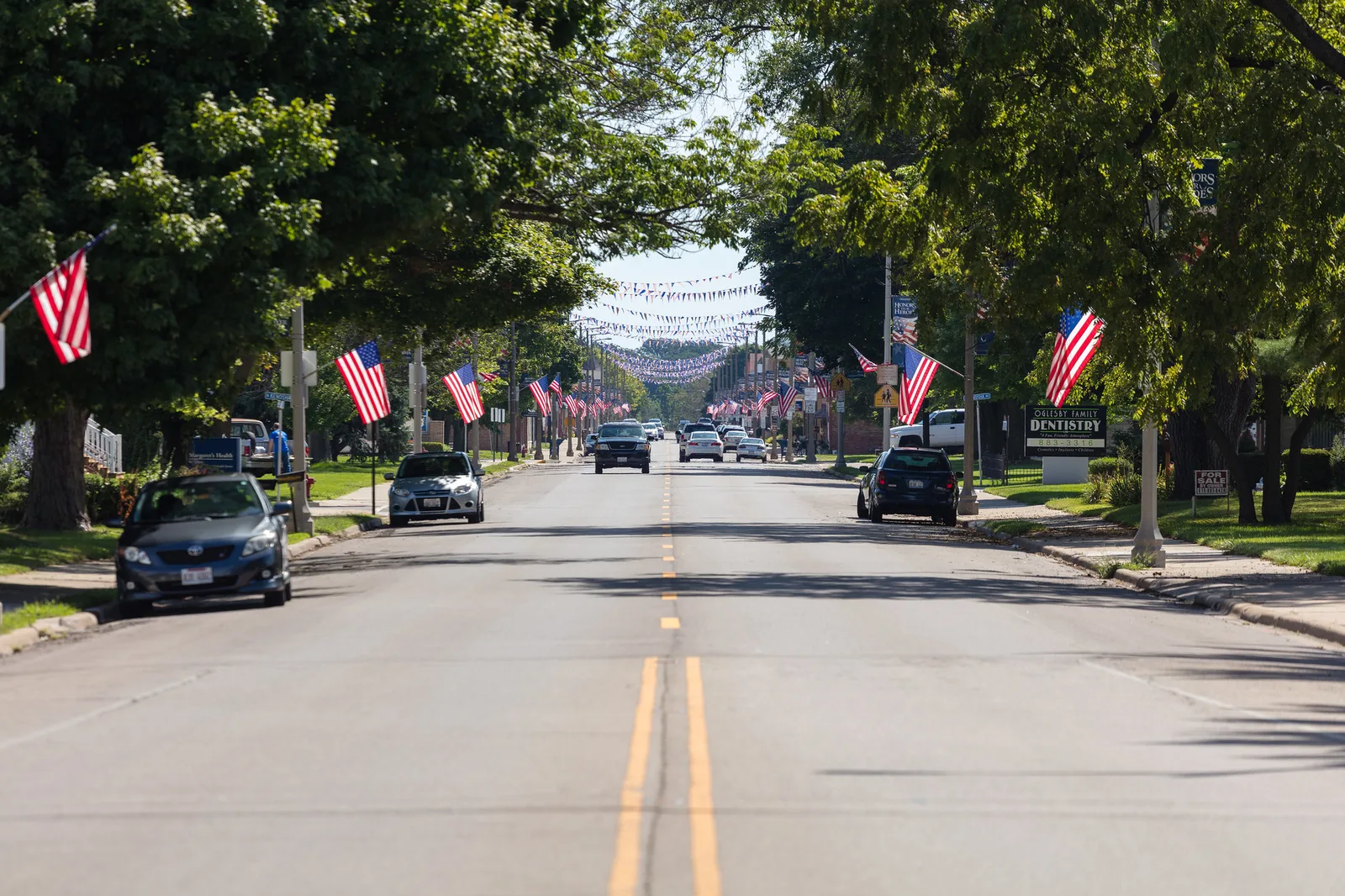
- Look down its length. A street stretching into the distance, like the one at the top of this page, makes a strong establishing picture. Stand safely on the sidewalk or at a crossing, never in traffic, and use the lines of curbs, lampposts and storefronts as leading lines.
- Use a longer lens to stack storefronts and signs together, which makes a street feel full and lively. The page on lens compression explains how this works.
- Photograph single storefronts square on. Stand directly across the street and keep the camera level so the building’s lines stay straight.
- Look up. Upper floors often keep their original details, such as cornices, dates carved in stone and painted names, even when the ground floor has changed.
- Walk the side streets. Alleys, back lots and side streets show the working side of a town: delivery doors, old garages and gardens.
Parked cars are part of the scene in most towns. Rather than fighting them, use them. An old pickup outside a hardware store says as much about a place as the store itself.
Landmarks and buildings
Every town has buildings that define it. Learning to spot them is the key to telling its story.
- Water towers and grain elevators rise above rural towns and can be seen for miles. Photograph them from the edge of town with fields or rooftops in front.
- Churches, town halls and courthouses are often the grandest buildings in town. Photograph them head on for a formal look, or from a corner to show their shape.
- Old theaters, banks and train stations often have distinctive architecture and signs.
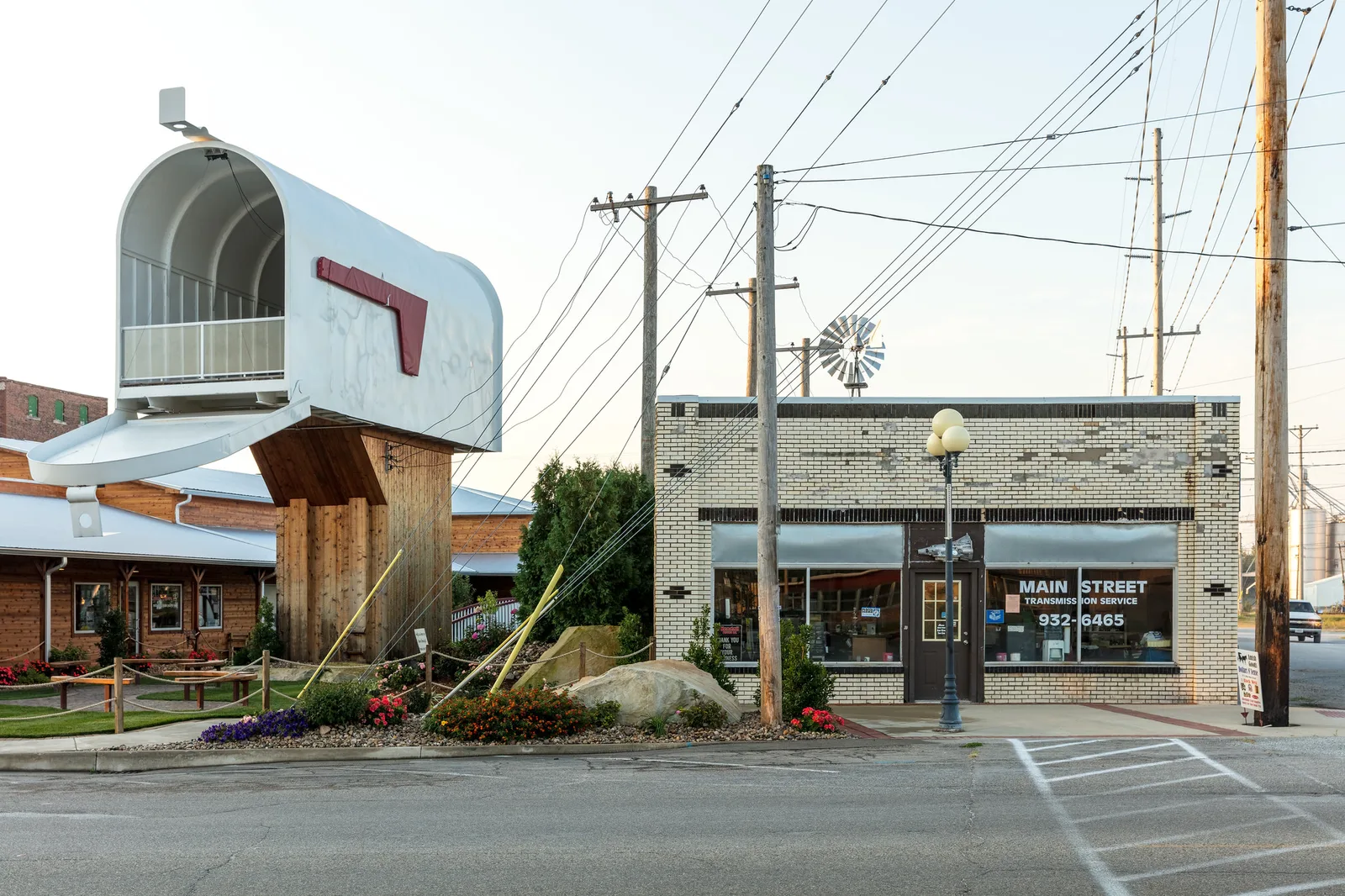
- Quirky landmarks such as giant statues, oversized objects and murals are a proud part of many towns. Include enough of the surroundings to show their scale, like the giant mailbox shown on this page.
- Homes and porches show local style, but remember that they are private. Photograph from the street, avoid people’s windows and be discreet.
For more on buildings, from keeping vertical lines straight to choosing the best light, see the guide to architecture photography.
Want to frame buildings and streets in ways that show their setting? The guide to sense of place in photography explains how to show where you are.
Signs, windows and small details
Small details often say more about a town than its landmarks. They are also perfect for the middle of the day, when wide scenes look flat.
- Signs. Hand-painted names, faded advertisements on brick walls and vintage motel signs are full of character. The guide to sign photography covers framing and light for signs.
- Shop windows. Displays in an old hardware store, a bakery or a barber shop are miniature portraits of a business. Press the lens close to the glass to cut reflections.
- Notice boards. Flyers for bake sales, lost pets and community dances show the life of a town.
- Textures. Worn steps, peeling paint, old brick and weathered wood carry the age of a place.
- Everyday objects. Mailboxes, benches, bicycles, flags, flower baskets and fire hydrants all add to the story.
People and community
A town is its people, so a set of small town pictures with no people in it often feels empty. Photographing people well comes down to respect and patience.
- Start with a smile and a conversation. In a small town, a friendly chat before raising the camera goes a long way. Explain that you like the town and ask if you may take a picture.
- Photograph people at work. A baker at the counter, a mechanic in a garage, a farmer at the market. People at ease in their own setting make the strongest portraits. The guide to environmental portraits covers this style.
- Take candid pictures from a distance of people walking, chatting or waiting, so that they appear as part of the scene rather than the subject. The guide to candid photography has more on this.
- Respect a no. If someone declines, thank them and move on.
- Offer to share. People often love a copy of a picture of themselves or their shop. Sending one is a kind way to say thank you.
Be especially careful around children and in places such as schools and playgrounds. Ask a parent first, and if in doubt, do not take the picture.
Local events and gatherings
Parades, fairs, farmers markets, sports games and holiday celebrations bring a town together. They are some of the best times to photograph, because everyone is out and the mood is festive.
- Arrive early to photograph setup: tables going up, decorations being hung, volunteers at work.
- Find a good position for parades, such as a corner or a slight rise, and stay there rather than pushing through crowds.
- Look for reactions, not just the main event. Spectators laughing, children waving and neighbors talking often make better pictures than floats and stalls.
- Use a fast shutter speed for moving parades and games, such as 1/500 or faster.
- Photograph the end of the day too: packing up, empty streets and the last few people heading home.
The guide to festival photography covers crowds, color and moving subjects in more depth.
The edges of town
Small towns are often defined by what surrounds them. Walking or driving to the edge gives you a wider view.
- The welcome sign at the town limit is a classic opening picture.
- Railroad tracks and grain elevators tell the story of how many rural towns grew.
- Fields and farms beyond the last houses show the land that sustains the town. The guide to landscape photography helps with wide views.
- A view from above, from a hill or a safe public high point, shows the whole town in its setting, with rooftops, steeples and trees.
Telling the story of a town
The best way to photograph a small town is to think of it as a story rather than a list of sights. A small set of varied pictures tells far more than many similar ones.
- An establishing picture: the main street, the welcome sign or a view from above.
- Landmarks: two or three buildings that define the town.
- Details: signs, windows, textures and objects.
- People: residents at work, at events or simply passing by.
- Moments: a gathering, a quiet evening, the light changing on the street.
- A closing picture: dusk on the main street, lit windows or the road leading out of town.
If you live in a small town, consider photographing it over a whole year. Seasons, events and gradual changes will build into a record that becomes more valuable with time. The guide to documentary photography explains how long projects like this come together.
Ready to turn your pictures of a town into a finished set? How to create a photo essay walks through choosing and sequencing images.
Simple settings for town streets
Small town photography does not need special equipment or complicated settings. A few sensible starting points cover almost everything.
- Streets and buildings: f/8 keeps a whole street sharp from the nearest lamppost to the far end. Keep ISO low in daylight and let the shutter speed follow.
- People and moments: 1/250 or faster freezes people walking and talking. Use auto ISO so the camera keeps the shutter speed up as the light changes.
- Portraits: a wider aperture such as f/2.8 to f/4 softens a busy background behind a shop owner or a market stall holder.
- Interiors: diners, shops and halls are darker than they look. Raise the ISO rather than using flash, which changes the mood and draws attention.
- Dusk and lit windows: brace the camera on a post or bench, or use a small tripod on a quiet sidewalk, and expose for the sky so windows glow rather than burn out.
A phone is perfectly suited to small town work. It is quiet, discreet and quick, and people often feel more relaxed in front of a phone than a large camera. Turn on the grid to keep storefronts straight, and tap to set exposure on bright skies or dark interiors.
Want a more structured way to explore a town on foot? The photo walk guide explains how to plan a route and see more on the way.
Common mistakes
- Only photographing buildings. The town looks empty and lifeless. Fix: include people, events and signs of daily life.
- Arriving at midday only. Harsh light flattens streets and storefronts. Fix: come early or late, and save midday for details and interiors.
- Leaning buildings. Tilting the camera up makes storefronts lean back. Fix: keep the camera level and step back across the street.
- Intruding on privacy. Photographing homes, windows or children without thought. Fix: be discreet, ask permission and respect a no.
- Standing in the road. Fix: use sidewalks, crossings and safe corners, and watch for traffic.
- A pile of similar pictures. Fix: aim for a mix of wide views, landmarks, details and people.
Try this: a 10-minute main street walk
Choose one block of any main street and walk it slowly with your camera.
- Minutes 1 to 2: Stand at one end and make a picture down the length of the street.
- Minutes 3 to 5: Photograph three storefronts straight on, each with a different style or sign.
- Minutes 6 to 7: Find two small details: a window display, a door handle, a notice board.
- Minutes 8 to 9: Look up and photograph one detail above street level.
- Minute 10: If someone is nearby, smile, say hello and ask if you may take their picture.
Put the pictures in order and see whether they give a sense of the place. If something is missing, that is what to look for next time.
Frequently asked questions
Is it okay to photograph people in a small town?
In public places it is generally legal, but in small communities manners matter even more. Ask before photographing people up close, explain what you are doing and respect anyone who says no.
What lens is best for small town photography?
A standard zoom covers most situations. A wider lens helps with tight streets and interiors, and a longer lens is useful for stacking storefronts and isolating details.
How do I make my own town look interesting?
Photograph it at unusual times, such as dawn, in fog or during an event. Look for details you walk past every day, and imagine you are a visitor seeing it for the first time.
What should I do if someone asks why I am photographing?
Be friendly and honest. Most people are happy once they know you simply like their town. Offering to share a picture often turns a question into a conversation.
Can I photograph inside shops and diners?
Ask the owner first. Many are happy to say yes, especially if you are a customer. Be quick and quiet, and avoid photographing other customers without their permission.
How many pictures should a small town set include?
A tight set of ten to twenty pictures is usually enough to tell the story of a town. Choose a mix of wide views, landmarks, details and people, and leave out near duplicates so each picture adds something new.
What if the town looks run down?
Faded paint, empty shops and old signs are part of many towns’ stories. Photograph them honestly and with respect, and balance them with signs of life, such as open businesses, gardens and people, so the set feels fair.
For terms such as leading lines, lens compression, golden hour and blue hour, see the photography glossary.